
Gymnosperms - conifers
Of the two kinds of seed plants, gymnosperms appear much earlier than angiosperms in
the fossil record. Gymnosperms lack the enclosed chambers (ovaries) in which
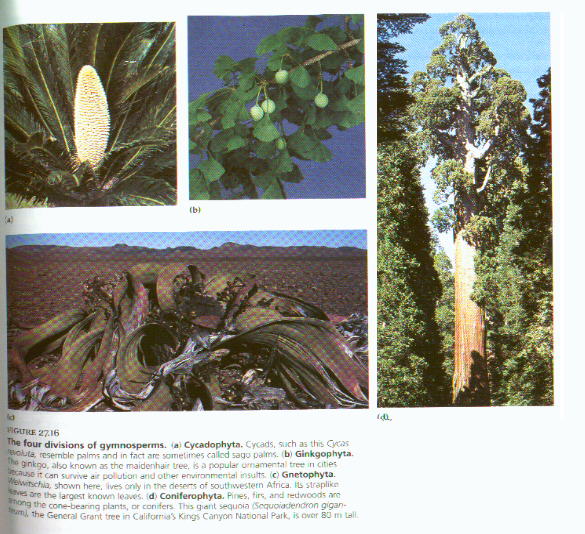
angiosperm seeds develop. There are 721 gymnosperm species and four divisions of
gymnosperms. Cycadophyta, Ginkgophyta, and Gnetophyta are small divisions. The
cycads resemble palms but arent palms, which are flowering plants. The ginkgos have
fanlike leaves that turn gold in the fall, and unusual trait for gymnosperms. Gnetophyta
have three genera that are probably not closely related: Weltwitschia Gnetum (grows in the tropics as trees or vines), and Ephedra (a shrub in the american
deserts. The largest of the four is the conifers.
Division CONIFEROPHYTA
The term conifer comes from the reproductive structure of these plants, the cone. Pines,
firs, spruce, larches, yews, junipers, cedars, cypresses, and redwoods all belong to this
division of gymnosperms. Most are large trees. Although there are only about 550
species, conifers dominate vast forested regions of the northern hemishpere.
Nearly all conifers are evergreens. During the winter, a limited amount of photosynthesis
occurs on sunny days. When spring comes, conifers already have fully developed leaves
that can take advantage of sunnier days.
The needle shaped leaves of pines and firs are adapted to dry conditions. A thick cuticle
covers the leaf and the stomata are located in the pits, reducing water loss. The conifer
needle is a megaphyll like all the leaves of seed plants. Coniferous trees are among the
tallest, largest and oldest organisms on Earth.
