Have you ever wondered what happened to the 56 men who signed the Declaration of Independence?
Five signers were captured by the British as traitors, and tortured before they died. Twelve had their homes ransacked and burned. Two lost their sons serving in the Revolutionary Army, and another had two sons captured. Nine of the 56 fought and died from wounds or hardships of the Revolutionary War. They signed and they pledged their lives, their fortunes, and their sacred honor. What kind of men were they?
Twenty-four were lawyers and jurists. Eleven were merchants, nine were farmers and large plantation owners. Men of means, well educated. But they signed the Declaration of Independence knowing full well that the penalty would be death if they were captured.
Carter Braxton of Virginia, a wealthy planter and trader, saw his ships swept from the seas by the British Navy. He sold his home and properties to pay his debts and died in rags.
Thomas McKeam was so hounded by the British that he was forced to move his family almost constantly. He served in the COngress without pay, and his family was kept in hiding. His possessions were taken from him and poverty was his reward. Vandels or soldiers looted the properties of Dillery, hall, Clymer, Walton, Gwinnett, Heyward, Ruttledge, and Middleton.
At the battle of Yorktown, Thomas Nelson, Jr., noted that the British General Cornwallis had taken over the Nelson home for his headquarters. He quietly urged General George Washington to open fire. The home was destroyed, and Nelson died bankrupt.
Francis Lewis had his home and properties destroyed. The enemy jailed his wife, and she died within a few months.
John Hart was driven from his wifes bedside as she was dying. Their 13 children fled for their lives. His fields and his gristmill were laid to waste. For more than a year he lived in forests and caves, returning home to find his wife dead and his children vanished. A few weeks later he died from exhaustion and a broken heart. Norris and Livingston suffered similar fates.
Such were the stories and sacrifices of the American Revolution. These were not wild-eyed, rabble rousing ruffians. They were soft spoken men of means and education. They had security, but they valued liberty more. Standing tall, straight, and unwavering they pledged: "For the support of this declaration, with firm reliance on the protection of the divine providence, we mutually pledge to each other, our lives, our fortunes, and our sacred honor."
They gave you and me a free and independent America. The history books never told you a lot about what happened in the Revolutionary War. We didn't fight just the British. We were British subjects at that time and we fought our own government. Some of us take these liberties so much for granted, but we shouldn't. So, take a few minutes while enjoying your 4th of July holiday and silently thank these patriots. It's not much to ask for the price they paid.
Remember ... freedom is never free. Patriotism is not a sin and the 4th of July has more to it than beer, picnics, and baseball games.

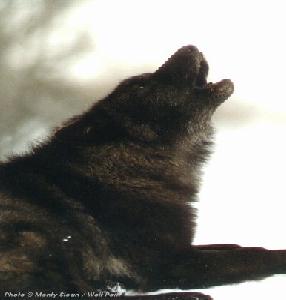
Chinook ©Monty Sloan/Wolf Park
What Is A Veteran?
Some veterans bear visible signs of their service: a missing limb, a jagged scar, a certain look in their eye. Others may carry the evidence inside them: a pin holding a bone together, a piece of shrapnel in the leg. Or perhaps another sort of inner steel: the soul's ally forged in the refinery of adversity. Except in parades, however, the men and women who have kept America safe wear no badge or emblem. You can't tell a vet just by looking. What is a vet?
He is the cop on the beat who spent six months in Saudi Arabia sweating two gallons a day making sure the armored personnel carriers didn't run out of fuel.
He is the barroom loudmouth, dumber than five wooden planks, whose overgrown frat-boy behavior is outweighed a hundred times in the cosmic scales by four hours of exquisite bravery near the 38th parallel.
She or he is the nurse who fought against futility and went to sleep sobbing every night for two solid years in Da Nang.
He is the POW who went away one person and came another - or didn't come back AT ALL.
He is the Quantico drill instructor who has never seen combat - but has saved countless lives by turning slouchy, no-account rednecks and gang members into Marines, and teaching them to watch each other's backs.
He is the parade - riding Legionnaire who pins on his ribbons and medals with a prosthetic hand.
He is the career quartermaster who watches the ribbons and medals pass him by.
He is the three anonymous heroes in The Tomb Of The Unknowns, whose presence at the Arlington National Cemetary must forever preserve the memory of all the anonymous heroes whose valor dies unrecognized with them on the battlefield or in the ocean's sunless deep.
He is the old guy bagging groceries at the supermarket - palsied now and aggravatingly slow - who helped liberate a Nazi death camp and who wishes that his wife were still alive to hold him when the nightmares come.
He or she is an ordinary and yet extraordinary human being - a person who offered some of their life's most vital years in the service of their country, and who sacrificed their ambitions so others would not have to sacrifice theirs.
He or she is a soldier and a savior and a sword against the darkness, and he or she is nothing more than the finest, greatest testimony on behalf of the finest, greatest nation ever known.
So remember, each time you see someone who has served our country, just lean over and say "Thank You." That's all most people need, and in most cases it will mean more than any medals they could have been awarded or were awarded. Two little words that mean a lot, "THANK YOU".
 ~Author Unknown~
Spring Chorus ©Monty Sloan/Wolf Park
Twas The Night Before Christmas (A Soldier's Tale)
Twas the night before Christmas
He lived all alone
In a one bedroom house
Made of plaster and stone
I had come down the chimney
With presents to give
And to see just who
In this home did live
I looked all about
A strange sight I did see
No tinsel, no presents
Not even a tree
No stocking by mantle
Just boots filled with sand
On the wall hung pictures
Of far distant lands
With medals and badges
Awards of all kinds
A sober thought
Came through my mind
For this house was different
It was dark and dreary
I found the home of a soldier
Once I could see clearly
The soldier lay sleeping
Silent, alone
Curled up on the floor
In this one bedroom home
The face was so gentle
The room in such disorder
Not how I pictured
A United States soldier
Was this the hero
Of whom I'd just read?
Curled up on a poncho
The floor for a bed
I realized the families
That I saw this night
Owed their lives to these soldiers
Who were willing to fight
Soon round the world
The children would play
And grownups would celebrate
A bright Christmas Day
They all enjoyed freedom
Each month of the year
Because of the soldiers
Like the one lying here
I couldn't help but wonder
How many lay alone
On a cold Christmas Eve
In a land far from home
The very thought
Brought a tear to my eye
I dropped to my knees
And started to cry
The soldier awakened
And I heard a rough voice
"Santa don't cry,
This life is my choice.
I fight for freedom,
I don't ask for more,
My life is my God,
my country, my Corps."
The soldier rolled over
And drifted to sleep
I couldn't control it
I continued to weep
I kept watch for hours
So silent and still
And we both shivered
From the cold night's chill
I didn't want to leave
On that cold, dark night
This guardian of honor
So willing to fight
Then the soldier rolled over
With a voice soft and pure
Whispered, "Carry on Santa,
It's Christmas Day.
All is secure"
One look at my watch
And I knew he was right
"Merry Christmas my friend.
And to all a good night."
~Written by a Marine stationed in Okinawa, Japan~

Thank you from the bottom of my heart and on behalf of my daughter.
 18 June 2004

Visitors since 18 June 2004

Background & buttons created by