
The Oxygen Sensor is a device that connects from the exhaust manifold to the Emissions Control Unit (ECU). By analyzing the gasses in the exhaust manifold, the ECU adjusts the air/fuel mixture to help regulate emissions. The Oxygen Sensor should be replaced every 50,000 miles along with the Catalytic Convertor. The Oxygen Sensor in my car is most likely the one installed at NUMMI when the car was built. When the Oxygen Sensor goes bad, the ECU can not get accurate readings and the car my not run well. In my case, the car would hesitate upon acceleration, and after the hesitation, the "Check Engine" light would turn on. It would do this in hotter weather and after sitting at a red light for a long time. It never did it in cooler weather because the Oxygen Sensor is "turned off" in the cold. After the engine warms up, it will "turn on" and start working. When the Check Engine light illumminates, it is indicative of one of two things. There is either a problem with the electrical or emissions system. When the car is tested for SMOG, if the "Check Engine" light is on, then your car will fail no matter if the emissions are at a safe level. I was lucky last July when I got my car smogged; the "check engine" light did not illuminate during that entire day, and the car passed...barely. The symptoms I described were indicative of a bad Oxygen Sensor. These parts are expensive, over $100 at the dealer, so I had to wait in order to save up enough money. There is a really interesting story behind my purchase of the Oxygen Sensor. After Christmas, I always seem to buy car parts at the dealer since I get money as gifts. This past holiday was no exception, and Pacific Beach Toyota was the first place I went to when the shops opened the next day. After buying the Oxygen Sensor, I took it home, ready to install, but I was unsure of how to do it, or if I would harm any components, so I waited. Not even a week later, I got a mailer from Pacific Beach Toyota with coupons...one of which was a 25% discount on any Toyota Part! I quickly called their parts dapartment and asked about their return policy. They said I could return my Oxygen Sensor provided I didn't install it, which I didn't. I went straight down there and said that I would like to return it, and the clerk opened it up and inspected it. When he was putting it back in the box, I told him that he neednt put the box back on the shelf, that I was going to buy the part again with the 25% off coupon. He quizzically looked at me, and said "you can't...well...hey...OK, I'll do that for you" He knew I got him by asking about return policy and not a price match policy, since I knew they wouldn't price match. I left the dealer with the coupon, Oxygen Sensor, and $30 in my pocket!
Four months later, still unsure whether I had to diagnose the problem, or just install the new part without any professional opinion, I decided to just do it. The same person who taught me how to do brakes got me ready for the Oxygen Sensor installation. After spraying the nuts with Liquid Wrench, I disconnected the Oxygen Sensor's cable from the ECU. As the lubricant penetrated the metal, I found a 12mm socket and mini ratchet to unscrew the two nuts holding the sensor in the manifold. After extraction, the old sensor was inspected. The grey residue at the tip was indicative of a somewhat lean mixture. The rust around the gasket proved that there was a bit of a leak. Preventing this problem for the future, I rubbed a thin layer os silicone rubber compound on the new gasket and let it dry. While the rubber dried, I cleaned the manifold surface with a rubber sander using a Dremel tool. When the rubber dried, and the surface was clean, the Oxygen Sensor was placed in the manifold, nuts tightened, and cables conected to the ECU. By the time this was done, the car had been sitting for almost 20 hours, and I wanted to take the car for a test drive. The choke was engaged, and I could instantly hear a difference in the way the engine sounded. I let the car idle at a higher speed while the ECU readjusted itself. After I took the choke off, the engine sound returned to normal. I drove far enough for the engine to warm to normal operating temperature and encountered no hesitation. The Catalytic Convertor will be replaced next. Possibly with a HI-Flow cat-convertor.
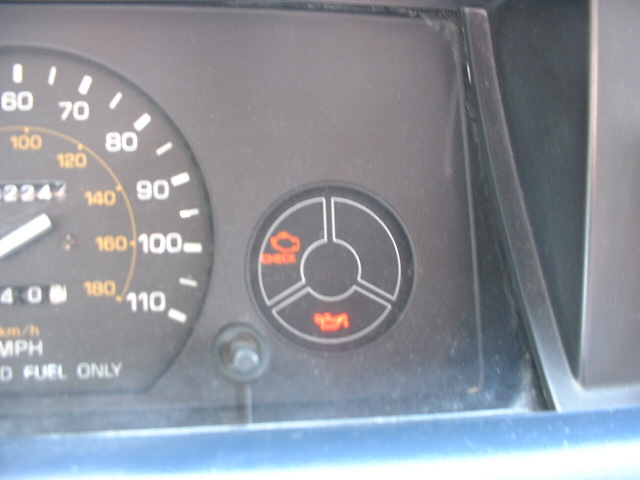 Arrgh! The Check Engine light is on!
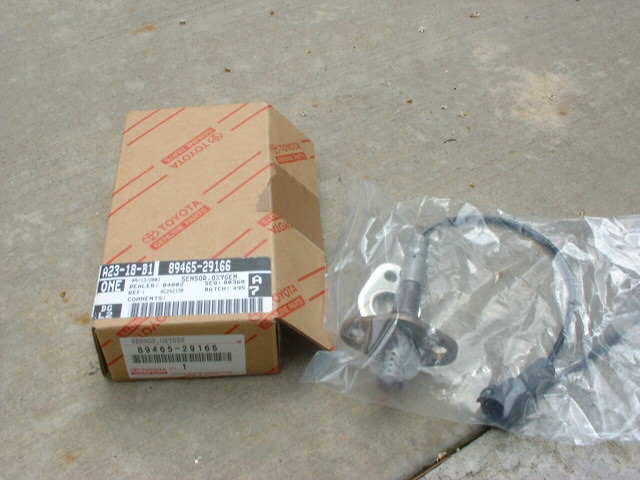 The new Oxygen Sensor.
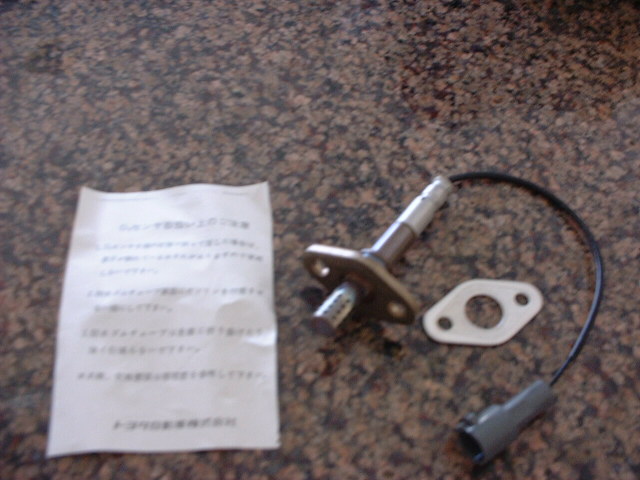 The Oxygen Sensor, Gasket, and Instructions...what do they say?
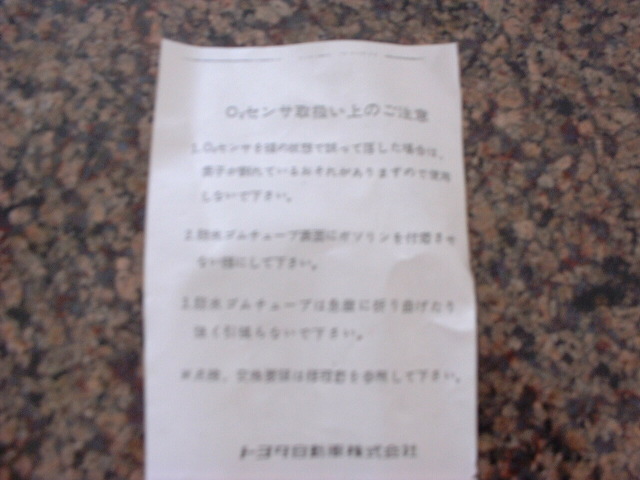 Is that Hiragana, Katakana, or Kanji? Either way, I can't read it!
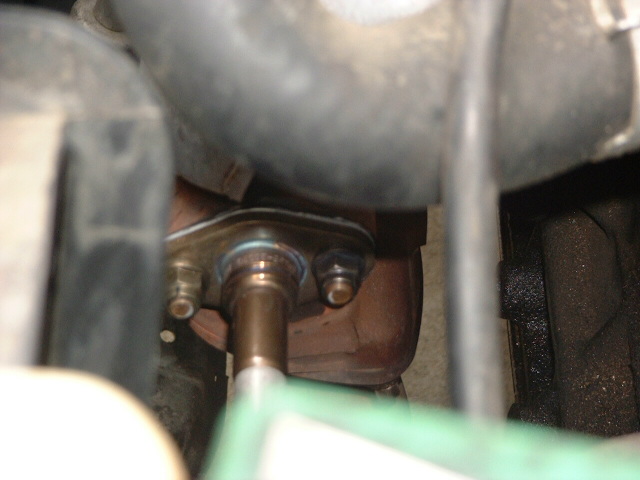
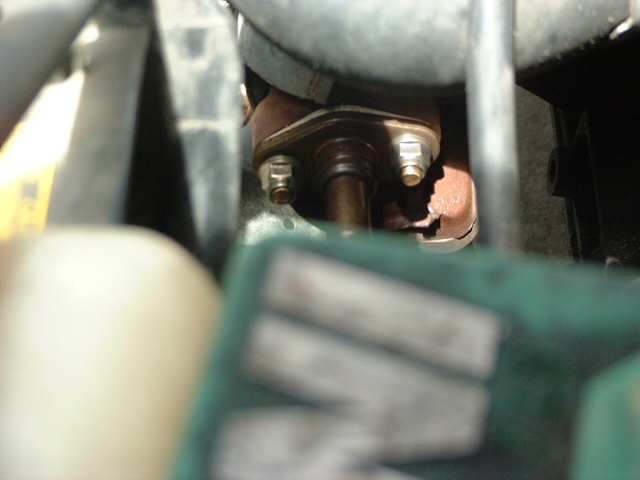 There is the Oxygen Sensor, ready to be taken out.
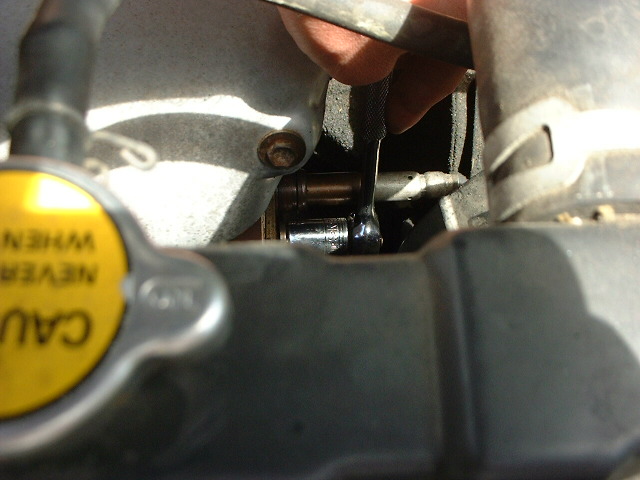 Here I am, using a 12mm socket wrench, to unscrew the bolts holding it in.
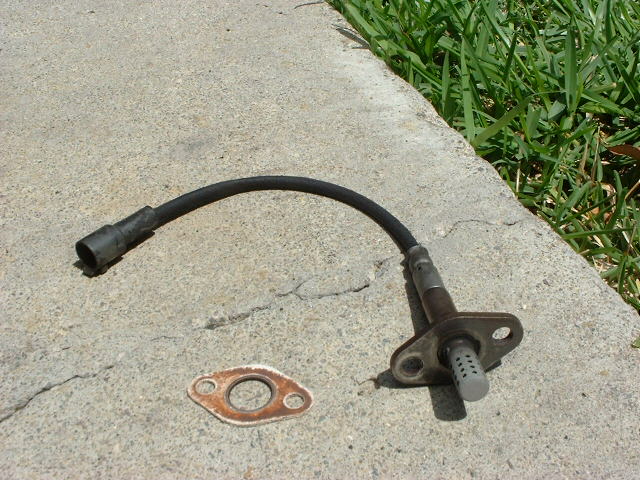 The old Oxygen Sensor, now removed. Look at the grey residue around the tip, and the rusted gasket.
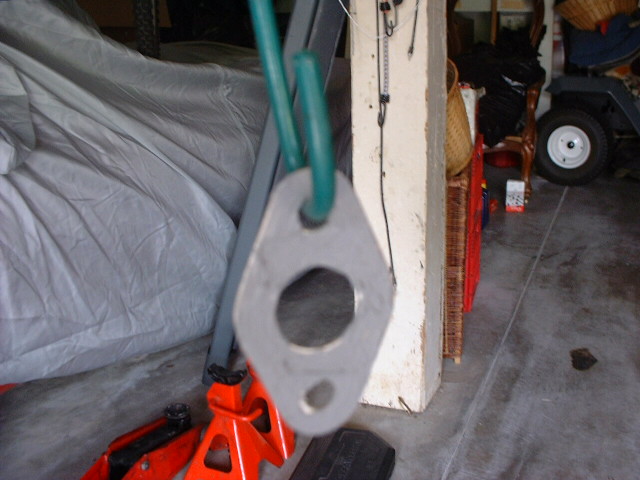 The new gasket was coated with Silicone Rubber to prevent further leakage found in the old one.
 Connected and ready to go. Better than new!
