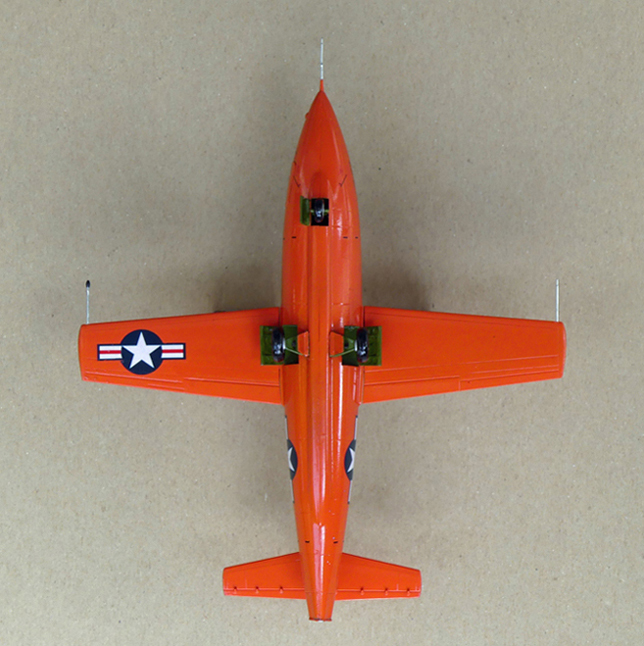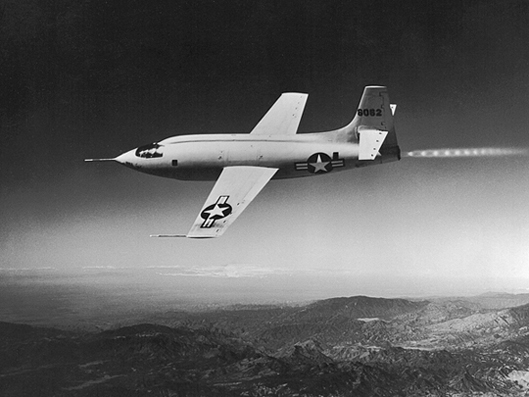

The Bell X-1 (Bell Model 44) is a rocket engine–powered aircraft, designated originally as the XS-1, and was a joint National Advisory Committee for Aeronautics–U.S. Army Air Forces–U.S. Air Force supersonic research project built by Bell Aircraft. Conceived during 1944 and designed and built in 1945, it achieved a speed of nearly 1,000 miles per hour (1,600 km/h) in 1948. A derivative of this same design, the Bell X-1A, having greater fuel capacity and hence longer rocket burning time, exceeded 1,600 miles per hour (2,600 km/h) in 1954. The X-1 piloted was the first of the X-planes, a series of American experimental rocket planes (and non-rocket planes) designed for testing new technologies.
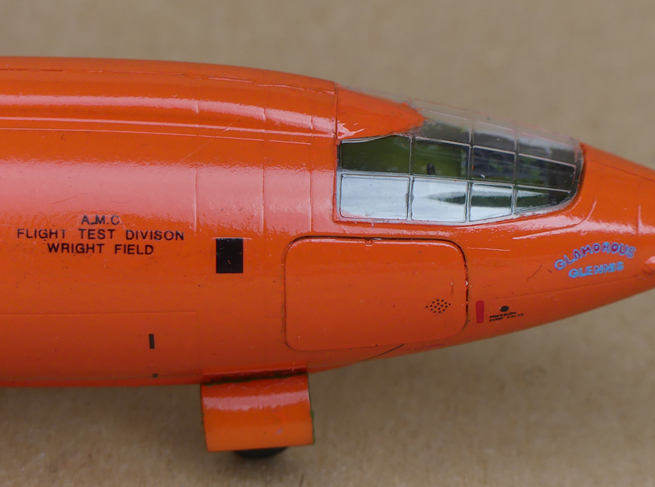
The first manned supersonic flight occurred on 14 October 1947, less than a month after the U.S. Air Force had been created as a separate service. Captain Charles "Chuck" Yeager piloted USAF aircraft #46-062, nicknamed Glamorous Glennis for his wife. The airplane was drop launched from the bomb bay of a B-29 and reached Mach 1.06 (700 miles per hour (1,100 km/h). Following burnout of the engine, the plane glided to a landing on the dry lake bed. This was XS-1 flight number 50.
The three main participants in the X-1 program won the National Aeronautics Association Collier Trophy in 1948 for their efforts. Honored at the White House by President Truman were Larry Bell for Bell Aircraft, Captain Yeager for piloting the flights, and John Stack for the contributions of the NACA. The story of Yeager's 14 October flight was leaked to a reporter from the magazine Aviation Week, and The Los Angeles Times featured the story as headline news in their 22 December issue. The magazine story was released on 20 December. The Air Force threatened legal action against the journalists who revealed the story, but none ever occurred. The news of a straight-wing supersonic aircraft surprised many American experts, who like their German counterparts during the war believed that a swept-wing design was necessary to break the sound barrier. On 10 June 1948, Air Force Secretary Stuart Symington announced that the sound barrier had been repeatedly broken by two experimental airplanes.
On 5 January 1949, Yeager used Aircraft #46-062 to perform the only conventional (runway) launch of the X-1 program, attaining 23,000 ft (7,000 m) in 90 seconds.
Facts and General Characteristics of the X-1:
Contractor: Bell Aircraft Co.
Total Built: 7 including 5 variants
Crew: One
Wingspan: 28 ft. 0 in. (8.53 m)
Length: 30 ft. 11 in. (9.42 m)
Height: 10 ft. 10 in. (3.30 m)
Weight: Empty 7,000 lbs. (3,175 kg), Gross 12,250 lbs. (5,557 kg)
Power Plant: 1 × Reaction Motors XLR11-RM-3 4-chamber liquid-fueled rocket engine,6,000 lbf (27 kN) thrust
Max speed: 1,612 mph (2,594 km/h)
Endurance: 5 minutes powered flight
Service ceiling: 70,000 ft. (21,000 m)
Facts and General Characteristics of the Model:
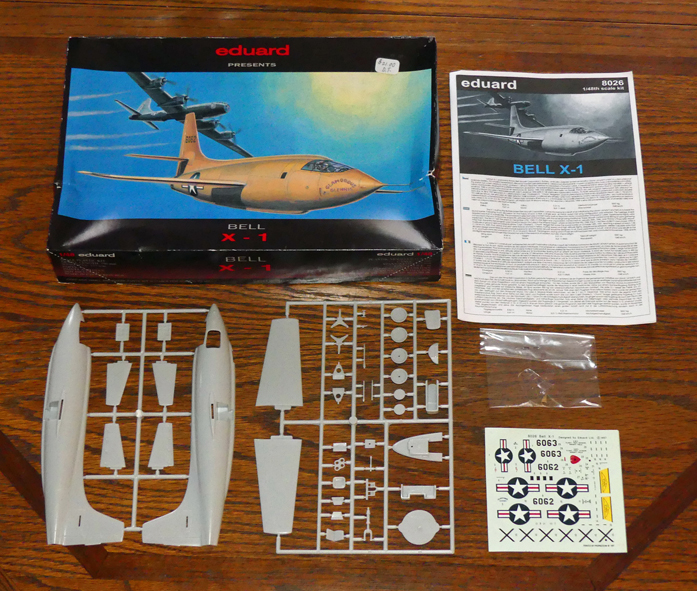
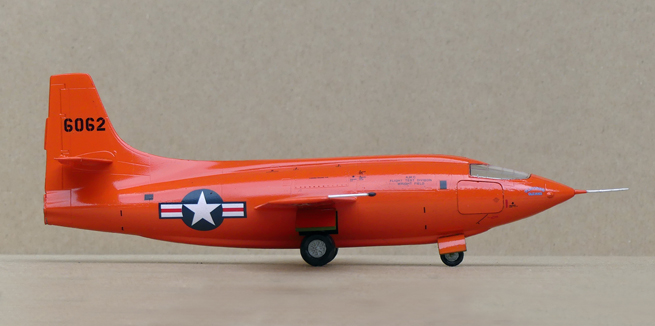
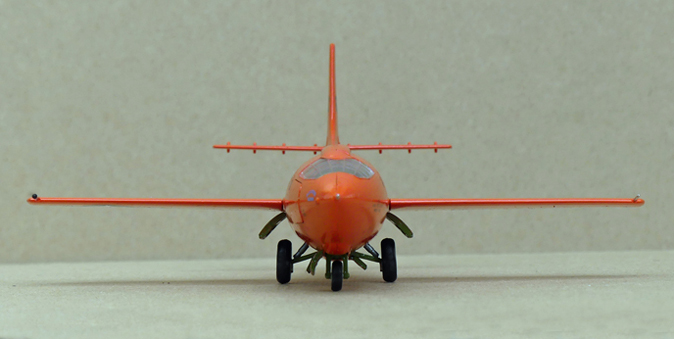
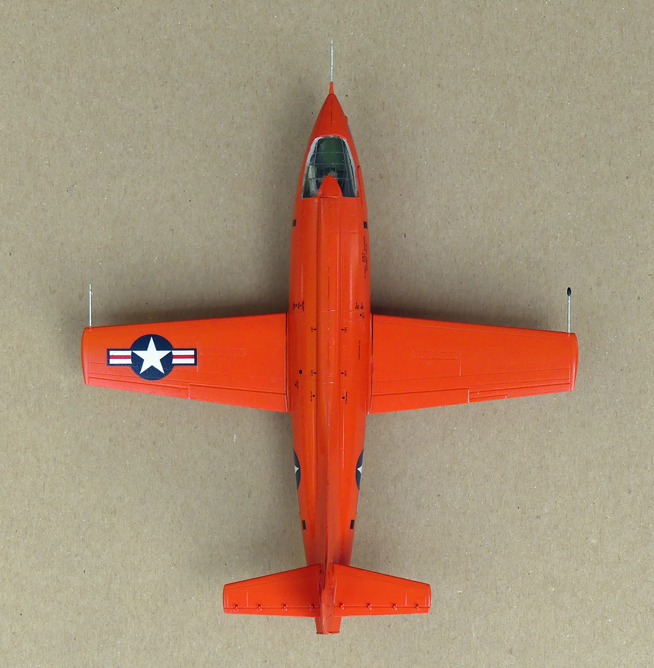
The model depicts aircraft #46-062 Glamorous Glennis piloted by Captain Chuck Yeager at Edwards Air Force Base. It was a ca.1990 used consignment model kit. Several parts did not fit well and the instructions were vague about how a few parts should fit.
Manufacturer: Eduard, Czech Republic
Scale: 1/48
Wingspan: 7”
Length: 7.3”
Height: 2.5”
Parts: 34
Decals: 40
Hours to build and paint: 12
Mistakes:
1. The spray paint ran in a few places. One day, I might invest in an airbrush and learn how to use it.
2. The decals were very thin and tore easily. Fortunately, two complete sets of decals were included as I ruined several decals.
3. I didn’t mask and paint the canopy as the frame lines were very thin.