
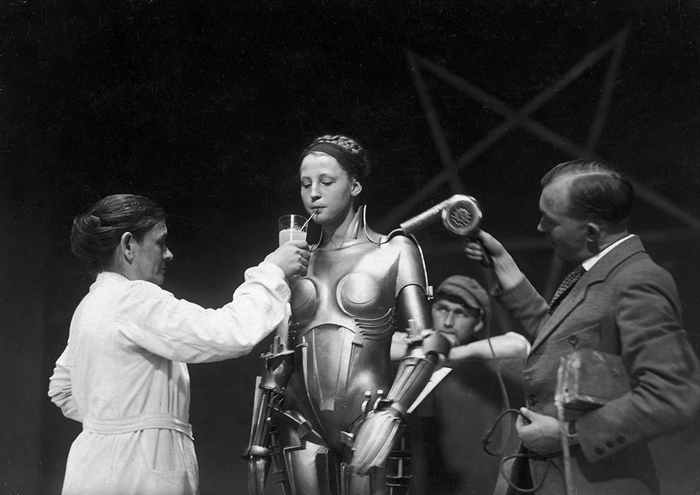
In Fritz Lang's 1927 silent film Metropolis, the character Maria is a young woman who works as a mediator between the city's wealthy elites and its oppressed working class. A robot, also named Maria (or Maschinenmensch, meaning "machine-human" in German), is created by the inventor Rotwang to impersonate her and incite chaos among the workers. This robot Maria is a key figure in the film's exploration of technology, social inequality, and the potential dangers of unchecked technological advancement.
The Human Maria:
In the film, the human Maria is a compassionate and hopeful figure who works to bring the two classes of Metropolis together. She is also associated with religious imagery and is seen as a kind of prophet figure who speaks of a "Mediator" who will unite the classes.
The Robot Maria:
Created by the inventor Rotwang, the robot Maria is a double of the human Maria, but with sinister intentions. Rotwang intends to use her to control the workers and destroy the city.
Symbolism:
The robot Maria is a powerful symbol of the anxieties surrounding technology and the potential for machines to be used for destructive purposes. Her design, with its metallic appearance and Art Deco aesthetic, has influenced countless robot designs in science fiction, including C-3PO in Star Wars.
Impact:
The film Metropolis, and particularly the character of robot Maria, had a significant impact on science fiction cinema and popular culture. It explored themes of class conflict, the dangers of unchecked industrialization, and the potential for technology to be both a tool for progress and a source of destruction.
Facts and General Characteristics of Maschinenmensch “Maria”:
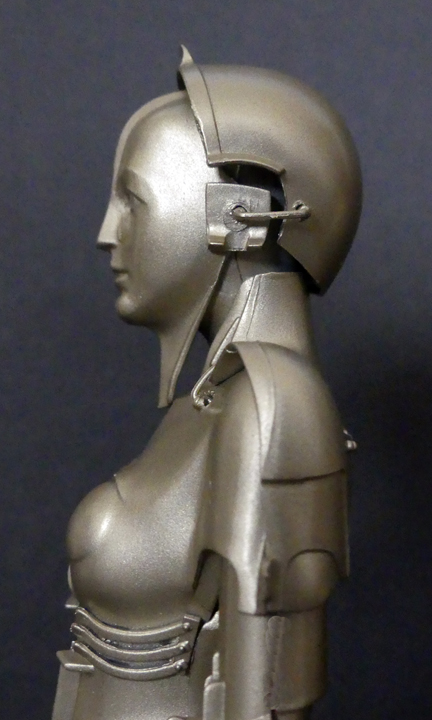
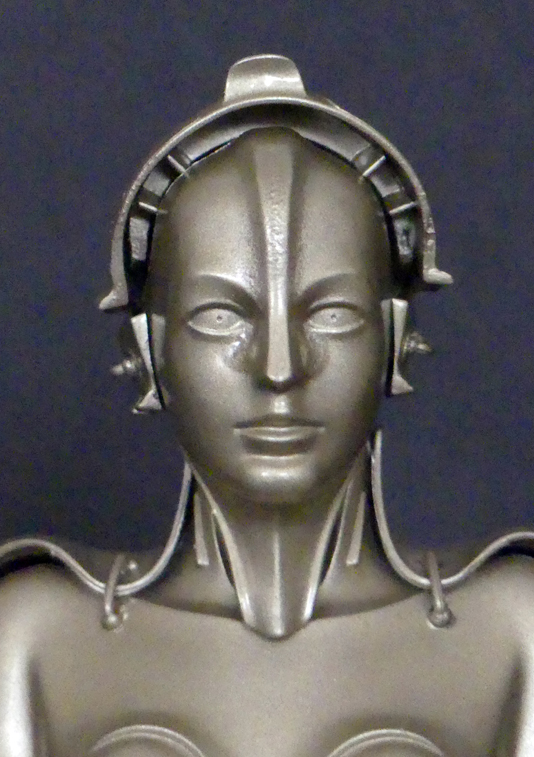
Walter Schulze-Mittendorff designed the robot costume. He had considered making the robot from beaten copper, but it would be too heavy to wear and difficult to achieve. He then discovered a sample of "plastic wood", a new material which was easy to sculpt into the required shape. Using a plaster body cast of actress Brigitte Helm, Mittendorff cut large chunks of plastic wood, rolled them flat, and molded them onto the cast like pieces in a suit of armor. Once the material had dried, a layer of spray-on cellon varnish mixed with silvery bronze powder was applied, giving the appearance of polished metal to the costume. >P>The robot costume was worn by 17-year-old German actress Brigitte Helm (born Brigitte Gisela Eva Schittenhelm). She also played Maria’s double named “Futura” in the film. After Metropolis, Helm made over 30 other films, including talking pictures, before retiring in 1935. Helm stated that she retired from films because she was "...disgusted with the Nazi takeover of the film industry..." In 1935, she moved to Switzerland, where she had four children with her second husband Dr. Hugo Kunheim. She died in June 1996. Though some props and costumes from Metropolis did survive, the iconic Maschinenmensch apparently was destroyed during filming, but its actual fate is unknown.
Facts and General Characteristics of the Model:
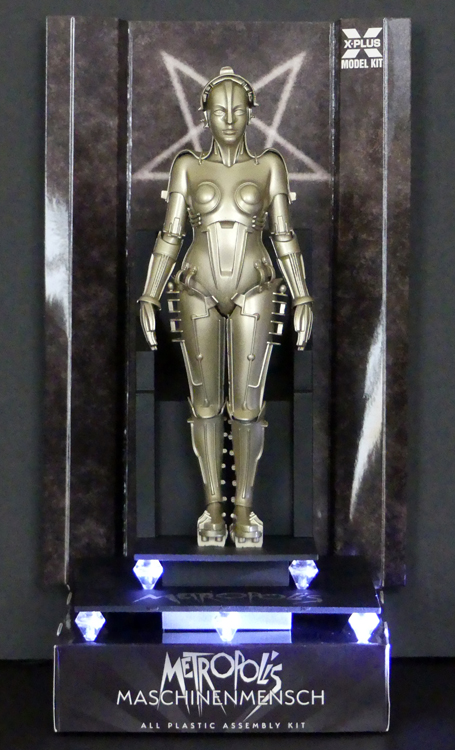
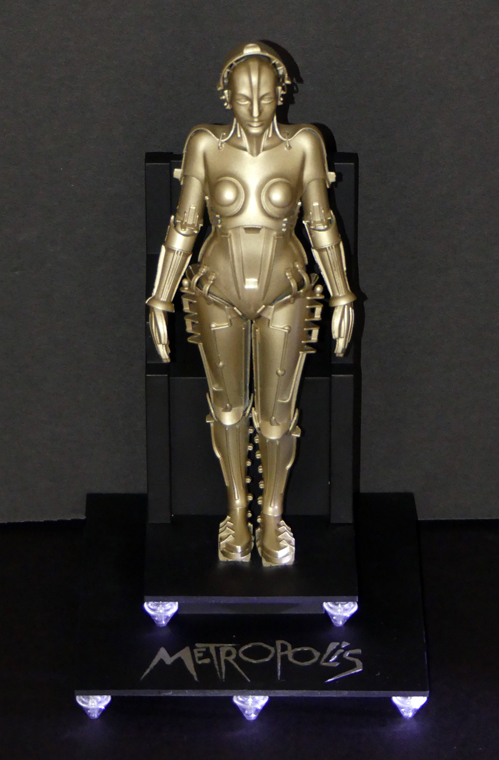
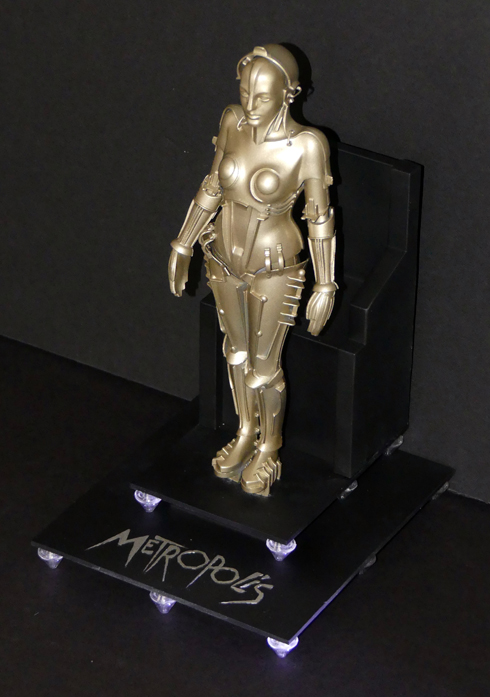
The model depicts Maria after she rose from her chair after being created by Rotwang. It came with a foldable cardboard display stand with the pentagram shown in the film.
Manufacturer: X Plus. Co. LTD., Osaka, Japan (model made in China)
Scale: 1/8
Height: 8.8 inches (not including stand)
Hours to build and paint: 5.5

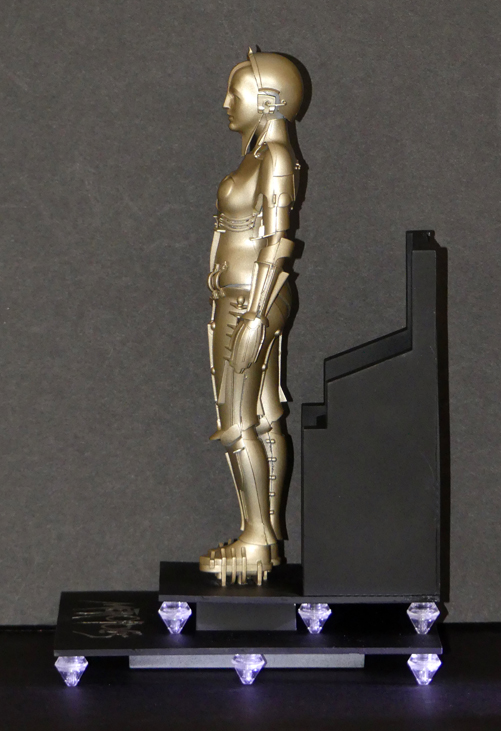

This is the inscription on the back of the model chair and translates as:
Born
To my fortune, a blessing to all
Lost
To Joh Fredersen.
Gone,
As she gave life to Freder, Joh Fredersen’s son.