This part contains some information about 3-D pictures, it will contain a description of the way one can see the image 3 dimensional, as well as some simple examples which I've made quite some time ago...
The basic idea behind the 3-D images is that the brain merges the two images
which it receives from the eyes into one 3-D image, in natural life this is the
way the brain 'simulates' the depth, this implies that one at least needs to be
able to look with both eyes, otherwise one can never see depth.
Since the depth we perceive is thus merely a simulation we can fool our brain
into thinking we're seeing depth in a 2-D image, this is the method which is
being employed to see the third dimension in the pictures.
When you closely study the 3-D pictures you'll see that they consist of horizontally
repeating structures, ideally (but not necessarily) these structures are located
at some 2,5 cm distance of one another.
By making small variations in the distances between the repeating structures our
brain is fooled into believing that it notices depth; repeating structures which
are close to one another appear to come to the foreground whereas structures which
are further apart appear to be located in the back.
By properly making use of small variations in the repeating structures it is thus
possible to 'fake' the third dimension.
The first method is (IMO) the most difficult one since I find it very hard to
keep my eyes cross-eyed for enough time to see the image (as a matter of fact
I've never succeeded to see the third dimension this way), a funny sidenote is
that one will see the 3-D image mirrored this way.
The second method is a method which is pretty often used, this is also the reason
why the majority of the professional books have reflecting pictures, what one
basically does is to search for a recognisable reflection (e.g. of yourself) in
the drawing and to focus on that reflection, this way one doesn't focus on the
drawing itself, thus (when done properly) one will see the third dimension.
The third method is the method which I used to apply, I think this is the simplest
method, at first you hold the drawing against your nose, because of the small
distance between the eyes and the image you're unable to focus on the drawing,
which is exactly what we want to achieve.
After comfortably staring a while at the drawing you'll notice that the image
starts to change, it becomes a bit blurry, this is the moment when you start to
perceive the depth, at this time you have to slowly(!) move the image away from
your face and try to make out the 3-D images.
This method will eventually work although you probably won't see a thing on your
first attempts, keep trying though since it's worth the trouble and with a bit
of practice it's easy to see the third dimension on later attempts.
Success!
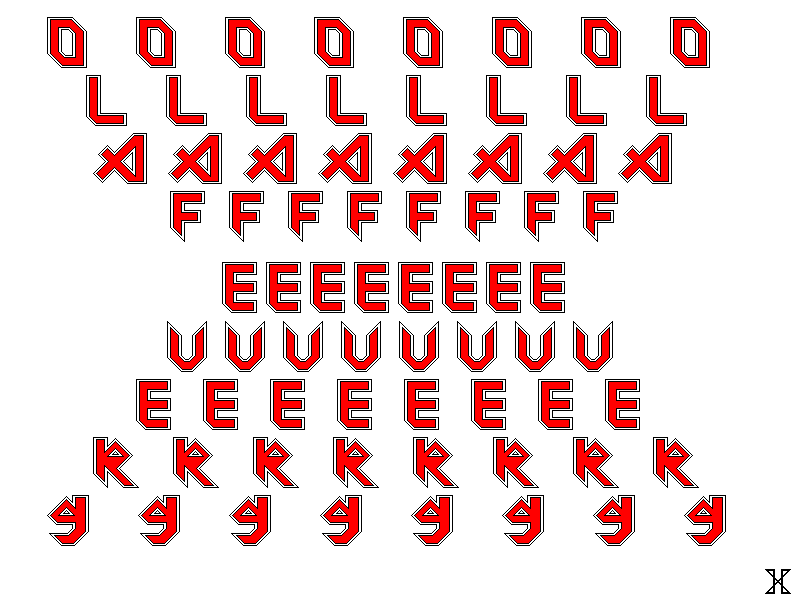
The first image just contains my name (15 Kb) written in 3-D,
the letters will form a kind of pyramid-like depth, this image doesn't contain
a hidden 3-D image but rather the difference in depth.
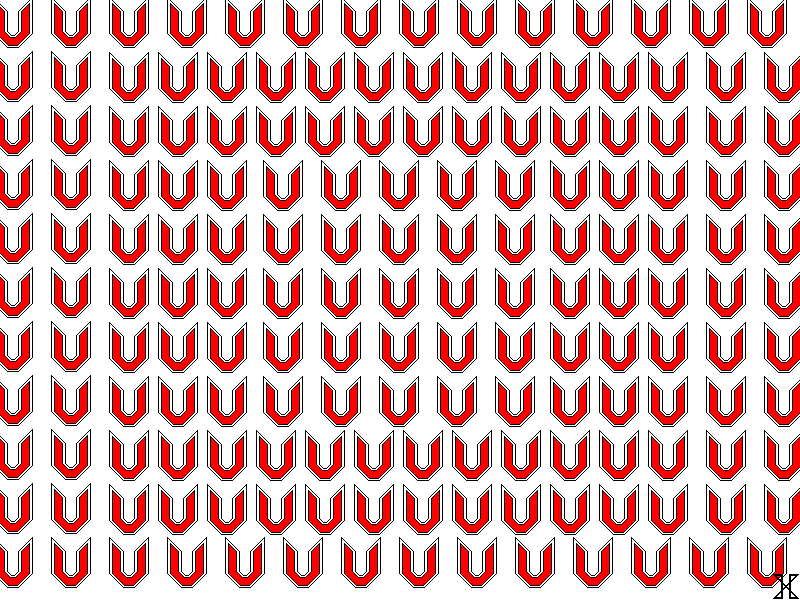
The second image contains a small hidden object, being a
simple square (27 Kb), this drawing effectively shows the way to
'hide' an object in a 2-D picture.
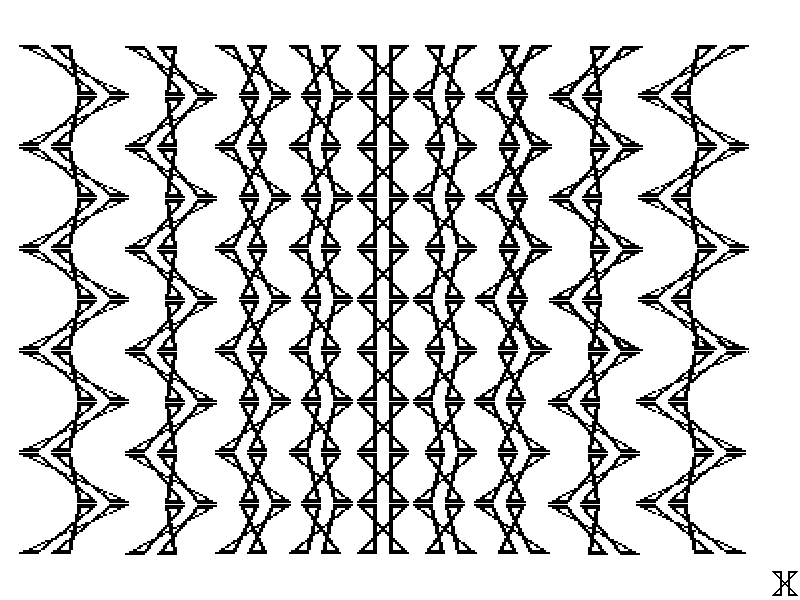
The third image contains my sign (18 Kb) in such a way that
it will appear to fold when one sees the 3-D effect.
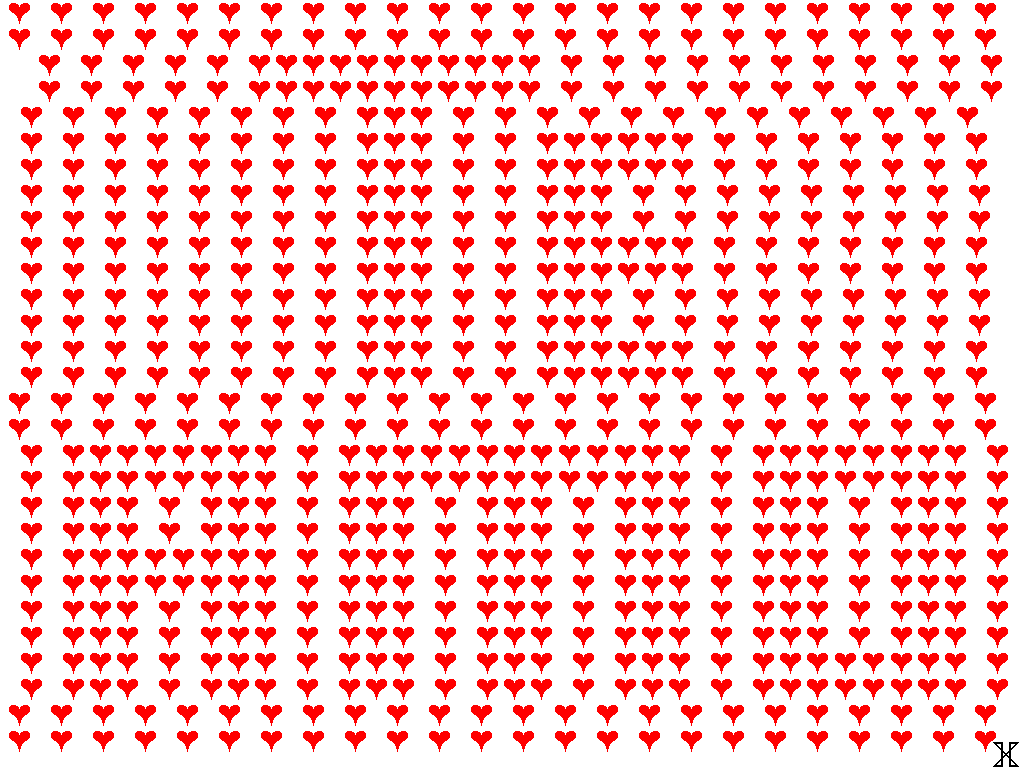
The fourth image contains a message (34 Kb) which I made for my
ex-girlfriend some time ago, please don't take this message personally...:)
Good luck in viewing the 3-D images and I'm always available for nice comments or
hints...!