Bugs Around Us
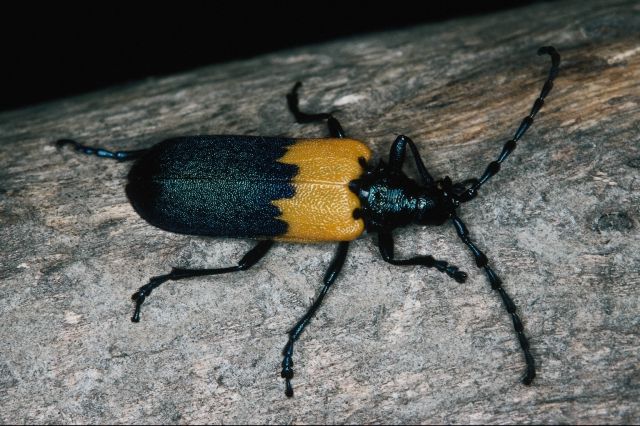
A Bug
All About Bugs
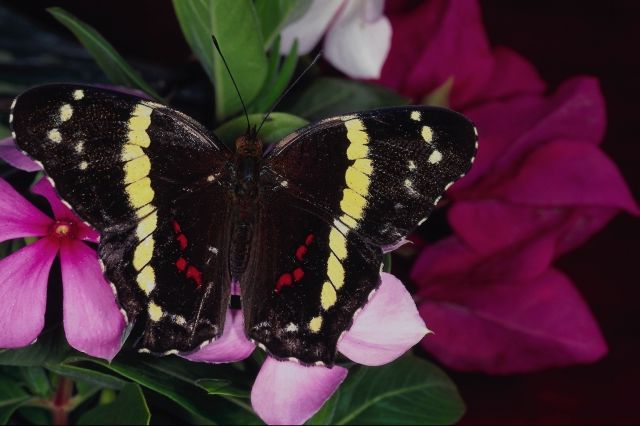
Did you know that there are more types of insects on this planet than any other existing creatures? Insects compose more than 95% of all the animal species! Scientists have discovered more than a million species, but there still could be ten times that many species that haven't even been named yet!
These species have been divided into 32 orders. The largest order by far would be the the beetles, which contain 125 separate families and about 500,000 different species. Scientist suggest that 10% of the animal biomass in the world is ants, while another 10% consists of termites. This means that the 'social insects' compose an amazing 20% of the total animal biomass of the world!
Insect Anatomy
Insects have a light, but durable exterior called an exoskeleton. This multi-layered exoskeleton protects the insect from its enemies and the environment. The exoskeleton has numerous sense organs for sensing light, pressure, sound, temperature, wind, and smells.
Insects have three main body parts called the head, thorax, and abdomen. The head is used primarily for eating, sensing things, and collecting information. Insect mouthparts have evolved for
-chewing(beetles and caterpillars)
-piercing or sucking(aphids)
-sponging (flies)
-sucking (moths)
-chewing or lapping (wasps)
That's a lot of different ways to eat!
The head has a pair of antennae on the front of it to sense the world around them. Whether they are long, short, thin, or thick, insects use them to feel, smell, or taste!
The thorax protects the body and has 6 legs and a pair or two of wings attatched to it.
The abdomen includes the organs utilized for digestion and reproduction.
The inside of an insect has an open circulatory system. It also has numerous breathing tubes, and a digestive system. An insect also has
~a few blood vessels
~breathing tubes
~blood
~a heart
~a digestive system
Air enters through slits in the exoskeleton called spiracles. From there, air travels through the insect's body through breathing tubes, which travel throughout the body. The "stomach" is long and tube-like, and is often divided into three sections.
The nervous system sends messages from the sensory organs to and from the brain.
Insect Reproduction
Most species of insects have both males and females that mate and reproduce sexually. Sometimes, there aren't many males around. When this happens, females may still reproduce! This has been found to be common among aphids and other insects. In some species of wasps, fertilized eggs become females while unfertilized eggs become males.
Arthropods
Arthropods compose more than 90% of the animal kingdom. They are recognized by
-an exoskeleton
-jointed legs and limbs
-six legs connected to the thorax
-two antennae used to sense their surroundings
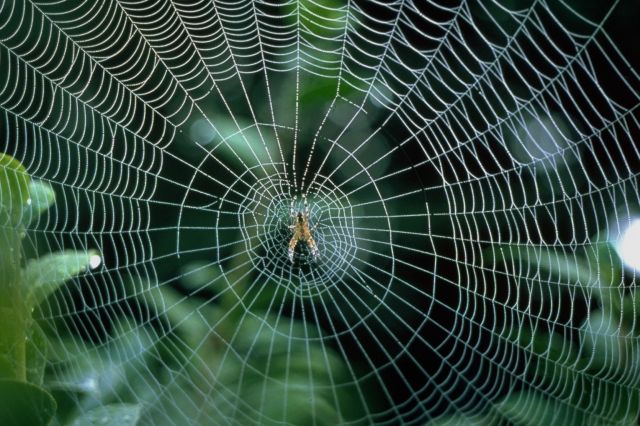
If all of these are not true, then an animal cannot be classified as an insect! Spiders are not insects because they have eight legs, not six, and they also don't have three body parts. Centipides and millipedes also have too many legs to be called insects!
Some scientists believe that insects are thriving because
-they are smaller than most creatures
-have a protective exoskeleton
-most can fly
Their small size and capability to fly helps them to escape from predators and move to new environments. Because insects are tiny, they only need minor amounts of food. Insects can also live in narrow cracks and spaces. Another factor contributing to the number of insects is that they produce large numbers of offspring rapidly.
Bugs Bug Me!
Insects aren't as harmful to humans as commonly thought. They produce honey, silk, wax, and other products. They also are of monument in that they pollinate crops, eliminate pests, and provide food for other animals. However, insects are extreme pests to humans and other domesticated animals because they transmit diseases and destroy crops. In reality, less than 1% of insect species are pests, and only a few hundred are consistantly an irritation.
Links and Bibliography


 Insects Hotlist
Tree of Life
The Wonderful World of Insects
Desert USA
Google Search: Insects
Insects
Insects and Ancient Insects
Insects on WWW
Information Sheets on Insects
Amazing Insects
Smithsonian
Mosquitoes in Your Life
Insects Hotlist
Tree of Life
The Wonderful World of Insects
Desert USA
Google Search: Insects
Insects
Insects and Ancient Insects
Insects on WWW
Information Sheets on Insects
Amazing Insects
Smithsonian
Mosquitoes in Your Life