| Various Spring Guestbook | ||
 |
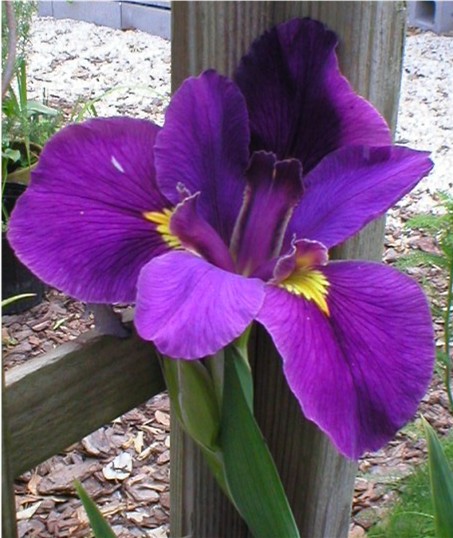
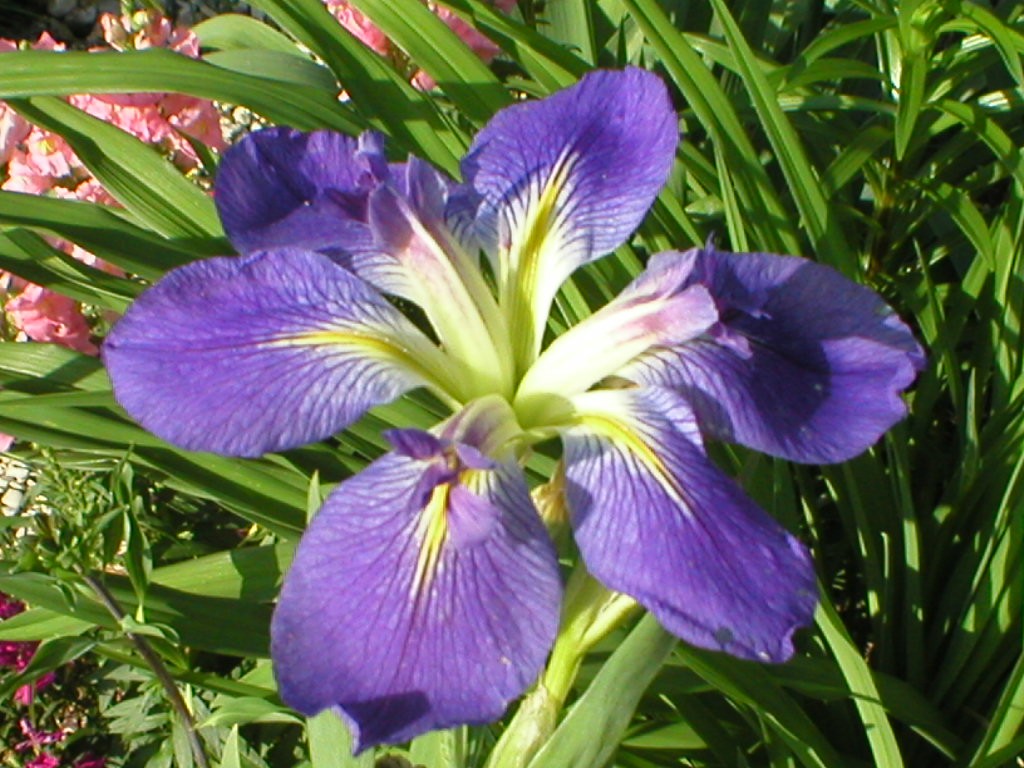
A-1. This purple iris lives among various other plants in a semi-shaded spot in my backyard. I first noticed the buds in late March; the buds bloomed in early April. When I planted the very small rooting, I was concerned that it wouldn't get enough light to bloom since it only gets two-three hours of direct sunlight during midday, but the rather small plant produced a stem with four buds. The blooms were so heavy for the stem that I had to prop it on the archway (see picture below). |
|
| Depending on the time of day and the intensity of light, the color seems to change. The above bloom is from the same stalk as the one on the right, yet the one on the right seems to be a much bluer purple than the above. I wondered whether it was possible that the age of the bloom caused the differences in color, so I watched these for a period a time and the other blues in the yard, but the others didn't seem to have as much a contrast in color as these two seem to have. |
|
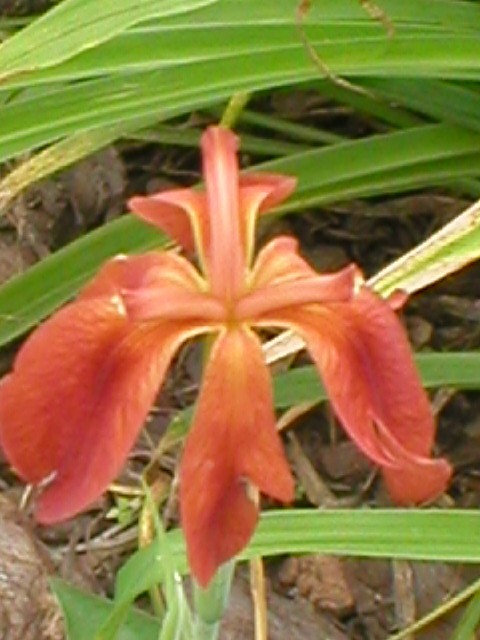 |
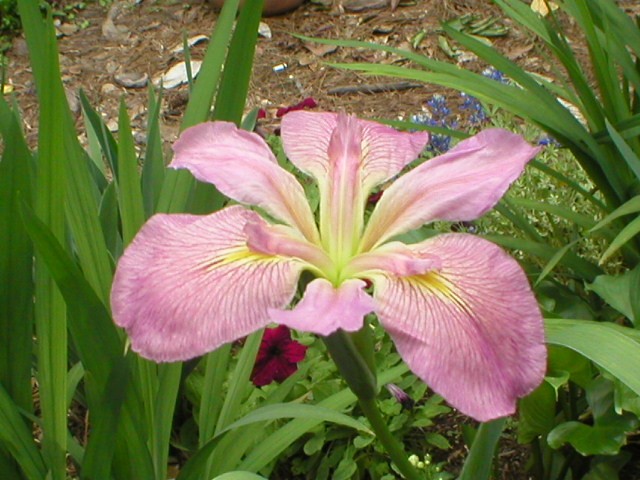
A-2. This Louisiana brown iris is growing in a very dry, full sun spot, which surprises me since most need plenty of water and partial shade. I have another in the backyard that grows in partial shade, dry conditions, and doesn't bloom as well as this one. |
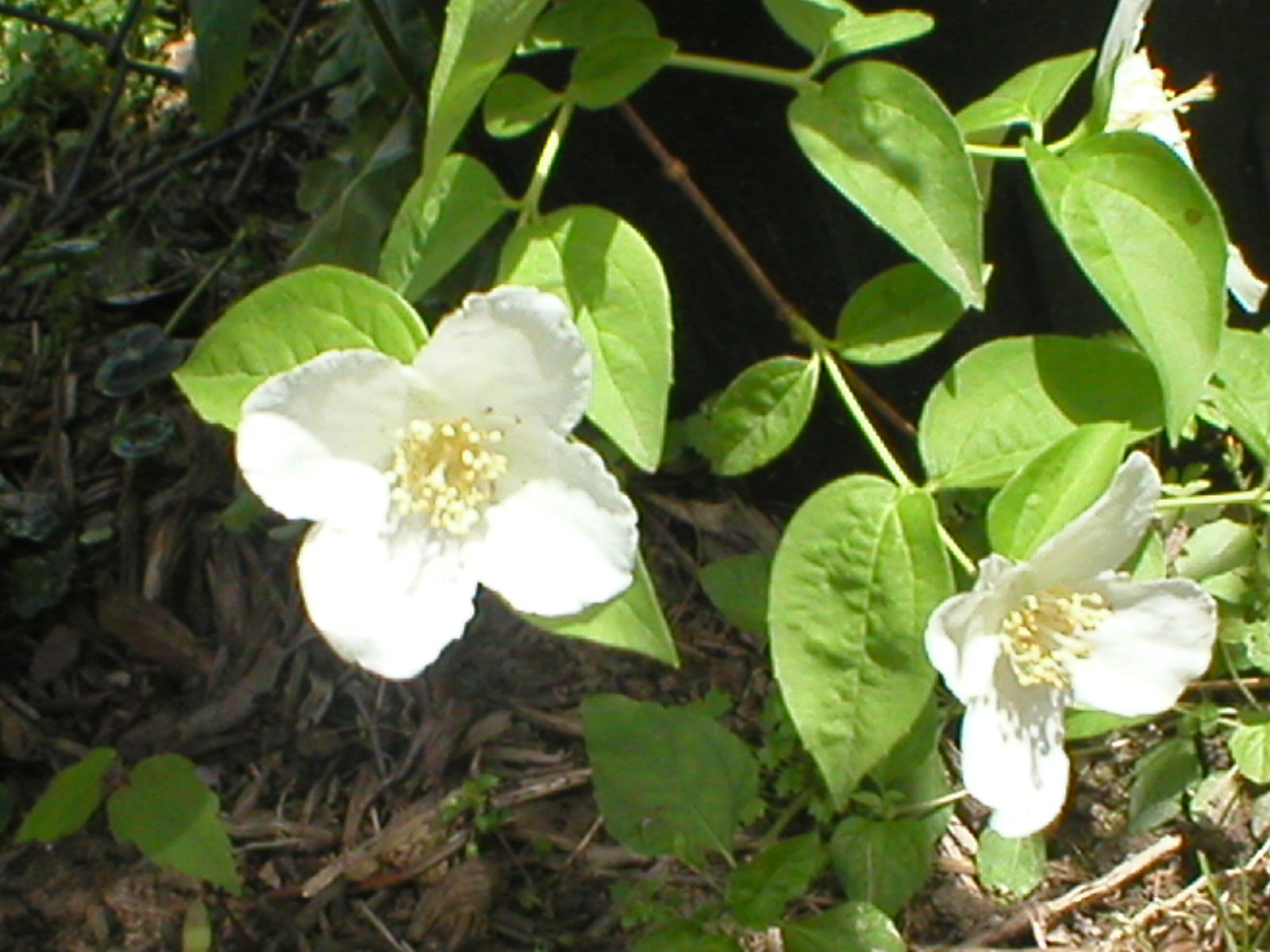 |
A-3. The following Mock Orange is from a seedling that I got from a friend's yard almost seven years ago. It has lived in a pot and was very neglected since then. I planted it in the fall and was very happy to see blooms its very first spring in the ground. |
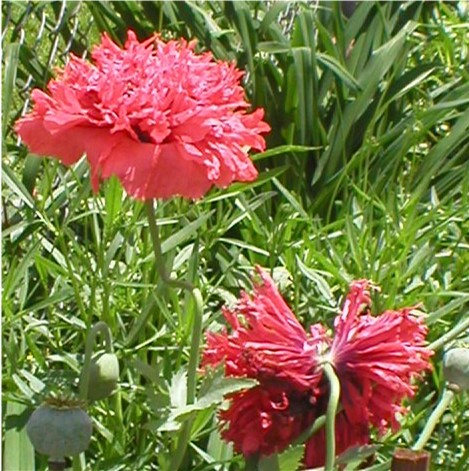 |
A-4. When I first saw the smallest sprout in early January, I anxiously waited for the buds and then bloom. I was very surprised when I walked out one morning and saw that the bloom wasn't what I expected. I've grown poppies before, but never before have I seen one like this. I can't remember where I got the seeds for this particular plant and would love to know which variety it is. I will certainly collect the seeds and plant more next year. |
| A-5. This lavender iris grows in partial shade, two-three hours of direct sunlight per day. It adds a pleasant contrast to the many blue and purple irises that grow nearby. |
 |
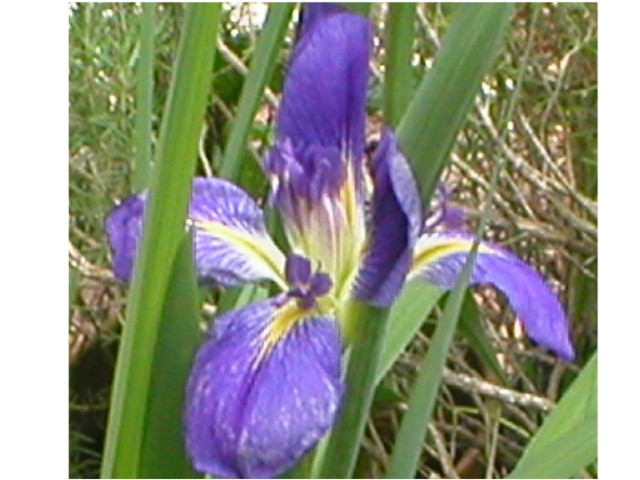 |
A-6. I'm not sure where I got this blue from; I have several patches throughout my beds. This one is growing with Rosemary in an area that receives at least four hours of direct sunlight. Many of the stalks on the blues have fallen with the weight of the flowers, and I'm not sure why this is occurring. I don't know whether it is because I didn't plant deep enough or it is simply a characteristic of the variety. |
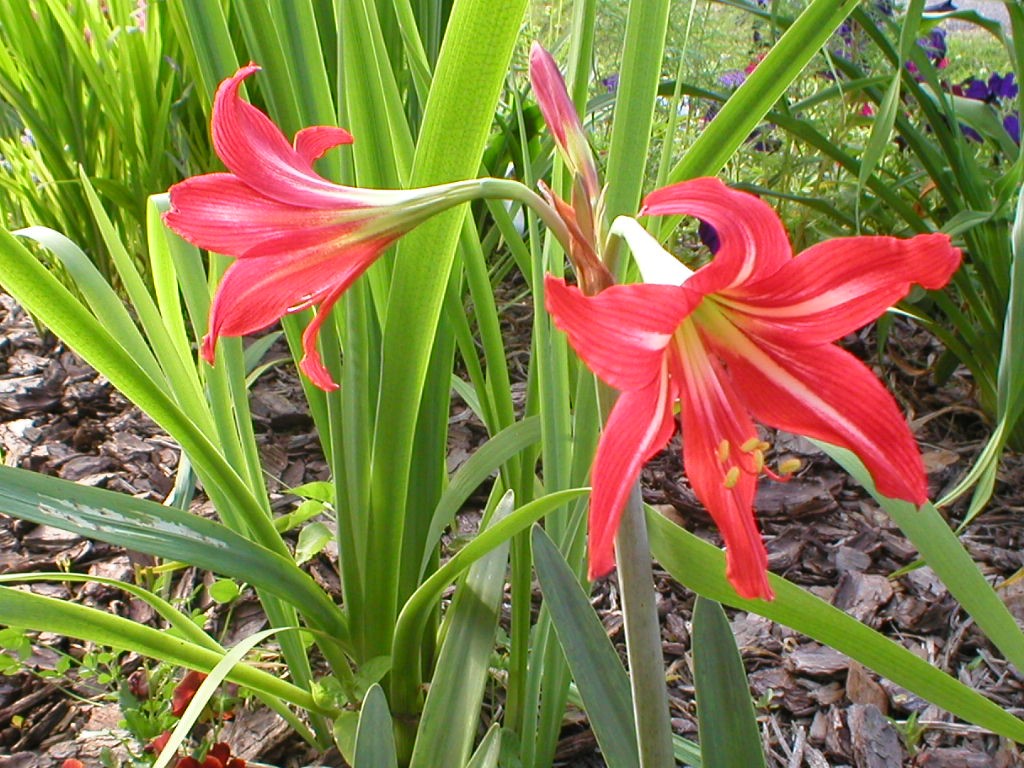 |
A-7. This particular variety is very common in the South. I see them growing in huge patches in a variety of conditions. This amaryllis grows in full sun, but I have some that are doing just as well in partial shade. |
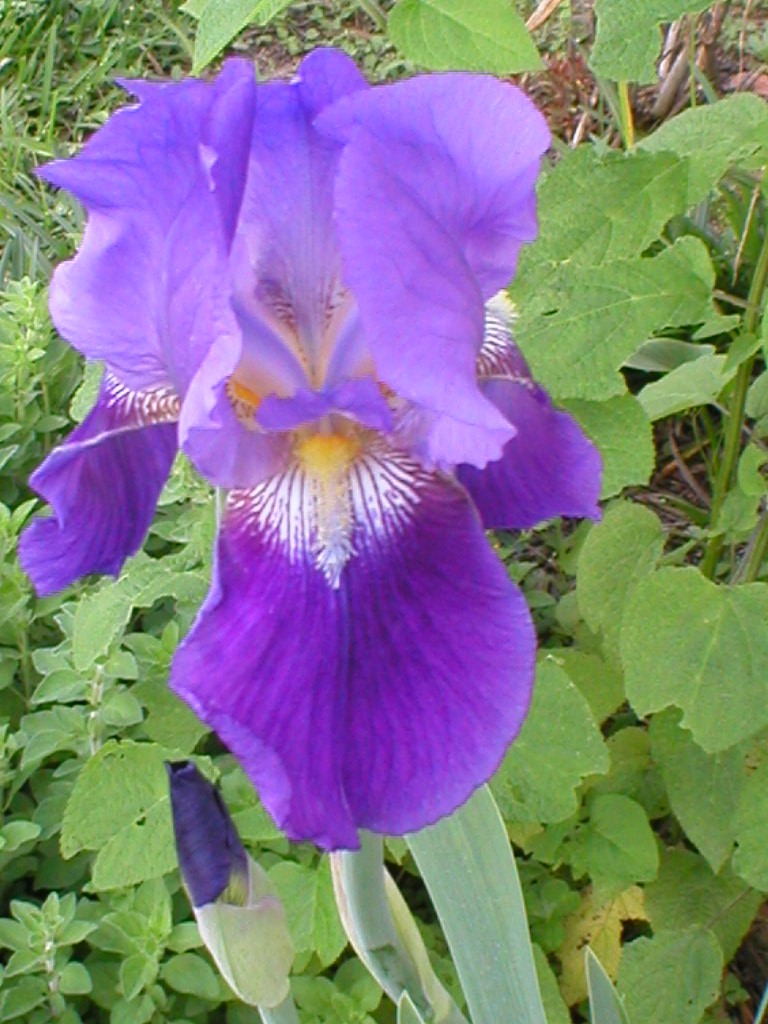 |
A-8. This bearded iris is surrounded by a low-growing Oregano and salvia. It only gets two-three hours of morning sun and grows in very dry conditions. This particular plant bloomed at least two weeks later than the plant of the same species in another that receives afternoon sun. Another bearded iris that I have which is white bloomed in early March, and it grows in a semi-shaded spot. |
 |
A-9. The difference between this blue iris and the purple is remarkable. I'm not sure whether this is a Louisiana blue or not. This plant is in full sun, and it competes with numerous others in a rather small bed. It has only been in this spot for two years, so it has not spread that much. |
| A-10. This must be a different variety than A-6 because of the difference in the amount of petals each has. The colors are very similar, though. The stalk on this plant has also fallen. |
 |