
A Photographic Retrospective By John Robert Rowlands
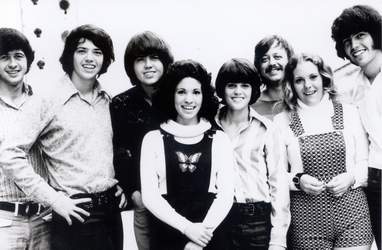

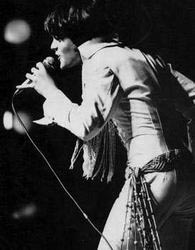
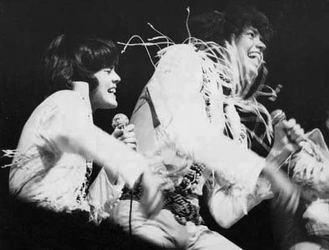
The Osmonds
Following the
breakout success of the Jackson 5 in 1970, it was practically
inevitable that
a pre-existing quintet of brothers, who had already enjoyed
almost a decade
in the national spotlight, would follow them to teen-idol
superstardom. With
dynamic youngest brother Donny as a focal point (much
like Michael was for
the Jacksons), the Osmonds did exactly that, enjoying
a run of massive
popularity during 1971-1972. While their success as a unit
began to wane and
had flickered out by the end of 1974, the Osmonds spun
off a long-lasting
show-business career for Donny (as well as sister Marie),
and the other
members of the group even enjoyed a successful comeback as
country
artists.
Born to George and Olive Osmond of
Ogden, Utah, brothers Alan (b. June
22, 1949), Wayne (b. August 28, 1951),
Merrill (b. April 30, 1953), and
Jay (b. March 2, 1955) began singing
together in 1959, honing their
performance skills at family-entertainment
venues such as county fairs and
amusement parks. At this point, the brothers
chiefly sang barbershop harmony,
mixing some gospel tunes into their
repertoire as well. In 1962, George took
the boys to Los Angeles, hoping to
secure an audition for The Lawrence
Welk Show; after Welk refused to see the
group, their father eased the
disappointment with a trip to Disneyland, where
the brothers gave an
impromptu concert with another barbershop quartet
employed by the park.
The Osmonds were signed on as regular nighttime
performers, and luck smiled
on them just a few weeks later when the father of
popular singer -- and newly
minted variety-show host -- Andy Williams caught
their act and
recommended them to his son. Five days before Christmas in
1962, the
Osmonds made their national television debut on The Andy Williams
Show,
on which they would continue to appear regularly until its cancellation
in 1967.
About a year after that initial appearance, younger brother Donny
(b.
December 9, 1957) officially joined the group as well, and the Osmonds
soon
began to broaden their musical range with clean-cut pop
songs.
Following the demise of the Williams
series, the Osmonds moved on to The
Jerry Lewis Show, where they stayed until
1969. In 1970, the commercial
explosion of family bubblegum groups such as
the real-life Jackson 5 and the
fictional Partridge Family made the Osmonds
obvious candidates for pop
stardom. MGM president Mike Curb signed the
Osmonds and sent them to
work with Muscle Shoals studio owner and famed
R&B producer Rick
Hall. Hall's staff songwriter George Jackson had penned
a surefire hit titled
"One Bad Apple," which appeared on the group's debut
album Osmonds.
Released as a single at the very beginning of 1971, "One Bad
Apple" shot up
the charts and landed in the top spot for five weeks, finally
establishing the
Osmonds as recording stars after nearly a decade in the
public eye. A steady
stream of hits continued unabated through 1972,
including "Double Lovin',"
the Top Five hits "Yo-Yo" and "Down by the Lazy
River," "Hold Her
Tight," and "Crazy Horses." Their albums sold well too;
Osmonds went
gold, as did its four followers -- 1971's Homemade and the 1972
triumvirate
of Phase-III, The Osmonds -- Live, and Crazy Horses. What's
more,
Donny's concurrent solo career was in full swing as well, with "Go
Away
Little Girl" topping the singles charts in 1971.
The Osmonds' momentum was slowed a bit
in 1973 with The Plan, a
concept album about their Mormon faith that failed
to connect with the
record-buying public to the same degree (although it was
surprisingly popular in
the U.K.). Younger sister Marie Osmond began making
public appearances
with the group later that year at the age of 13 (although
she was never an
official member), and scored a solo hit with "Paper Roses."
In the end,
changing tastes and an excess of spinoff projects proved to be
too much for the
original Osmonds to last as a group; 1974's "Love Me for a
Reason" was
the quintet's last Top Ten single, by which point Donny and Marie
had
established their own separate careers (although they often recorded as a
duet
act over the next few years). The group didn't officially disband until
1980, but
as a unit, they had long since ceased to be a commercial force in
pop music.
The early '80s found the four eldest
members of the Osmonds performing
together as a country act under the name
the Osmond Brothers, and
achieving respectable commercial success; Marie
followed a similar musical
path after the Donny and Marie variety show (which
ran from 1976-1978)
was cancelled. Donny made a brief comeback in the late
'80s as a
contemporary dance-pop singer, and he reunited with his sister in
the late '90s
for a daytime talk show, also called Donny &
Marie.
Photographs of The Osmonds in 1973 by John Robert Rowlands

