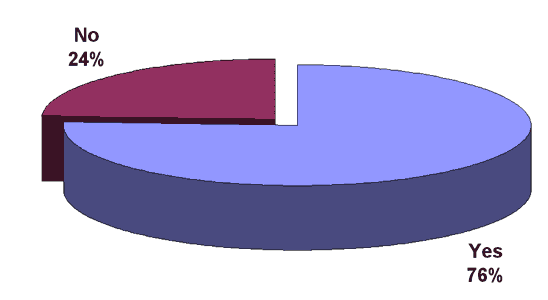
For the e-commerce to boom, cash transactions should have to be minimized giving the way to their counterpart electronic modes of transactions.
The forthcoming statistics will be of special interest to Banks that issue credit cards. These findings will help them devise better marketing strategies & customer service.
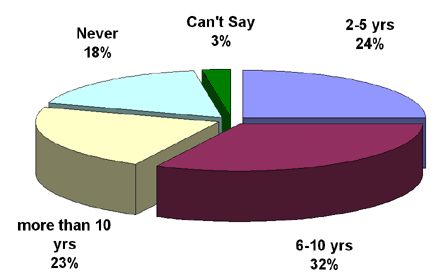
The question was about the period of time that credit cards and other electronic modes of payments would take to replace ordinary payment systems like cheques or cash. The response to the above question could be any of the four time periods, 2-5 years, 6-10 years, more than 10 years and Never.
Majority people think it will take 6 to 10 years to replace the ordinary non-electronic modes of transactions. According to our findings, this seems to be most correct, at least in the urban Pakistan.
This figure should not be misinterpreted as 'in Pakistan ratio of credit card
holders is high'. In fact more than half of the people surveyed belonged to the
second category & therefore the huge number should not be
surprising.
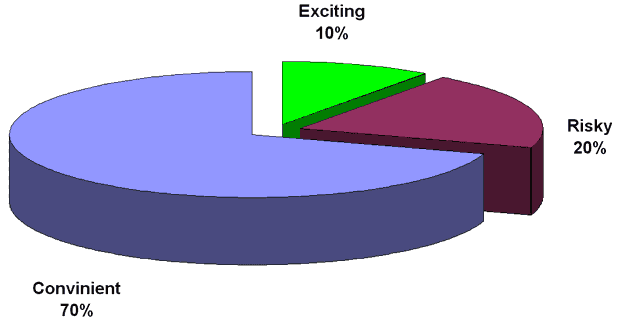
It is found that convenience is the major factor behind the use of credit cards in Pakistan, therefore we can assume these people will also be attracted to webstores due their customer friendly nature.
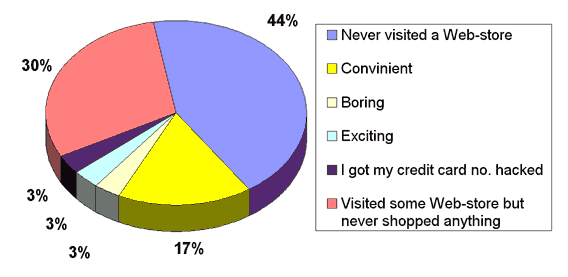
The large number of people who never visited a webstore, is quite discouraging. It is interesting to note that 30% of the people are merely 'lookers', they just go to web stores for surfing. This also explains that why webstores have more clicks but lesser sales.
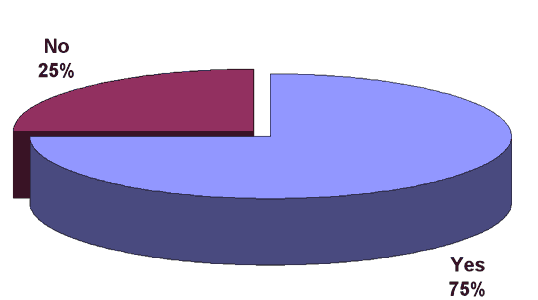
This statistic is an encouraging one. Major reasons for preference given were quicker delivery, can be located & contacted in case of returns or damage and national interest. It reveals that if Pakistani webstores are setup, they will get sales from within the country.
It seems that people who don't currently hold credit cards are allergic to it.