|
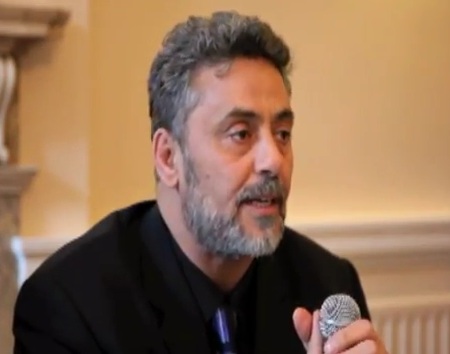
Biography
|
|
|
|
Faheem
Bukhatwa received his primary and secondary education in Libya and completed
it in 1973. He started apprenticeship training in aircraft maintenance with
“AerLingus” (The Irish Airlines) at Dublin Airport. The training was
completed in February of 1978 when he joined Libyan Arab Airlines as an
Aircraft Maintenance Engineer.
In April 1979 Faheem was appointed as the “Technical Director” in Libyan
airlines, responsible for six sections and over 600 employees. His main aim
then was to improve performance and coordination of the technical services
and maintenance of the airlines fleet (10 Boeing 727, 10 F27 and 4 F28 Fokker
aircrafts). He
was also responsible for setting up the basis and the initiation of a scheme
involving the gradual replacement of the maintenance and technical crews by
trained and qualified local personnel.
Faheem Bukhatwa left Libyan Arab Airlines to further his educational career
and started in University of Dublin (Trinity College) in Ireland in 1983. He
received his B.Sc. degree in Computer Science in 1987. He received his M.Sc.
degree in Computer Science from The National University of Ireland - UCD
(University College Dublin) in 1991.
The M.Sc. research project in UCD, involved the investigation, design and
implementation of an X.32/X.25 protocol based mobile communication station
with dial up access. Topics covered are communications, networks, management,
security and protocols. The project was jointly developed with “Cornel
Electronics Ltd.”, of Tallaght in Dublin Ireland.
In February 1991 Faheem joined Euristix Ltd. of Dublin and took part in the
Project team (PT 13V) of the European Telecommunication Standards Institute (ETSI) at Sophia
Antipolis, France. The team produced a draft European
Telecommunication Report (ETR) based on the Open Network Provision (ONP). The
draft ETR specifies the ONP X.32 requirements for network operators. The
project team also produced a draft European Telecommunication Standard (ETS)
for the standards required for the equivalent of X.32 based terminals. This
document was considered the Candidate NET 6 (the European Telecommunication
Standard 6)
In September 1994 Faheem joined the department of Computer Science at the
University of Garyounis in the city of Benghazi, Libya, as an assistance
Lecturer and became a Lecturer in 1999. Faheem was nominated, and was awarded a scholarship to
pursue a Doctorate degree, which he completed at University
College Dublin, Ireland in 2004. Faheem is currently a senior lecturer at Griffith College Dublin in Ireland; teaching courses in communications and networks
at BSc, Higher Diploma and a Master degree levels.
|
|
|
Top of document
|
|
|
|
|
|
|
|
|
First name
Family name
Place of birth
Date of birth
Marital Status
Number of Children
Correspondence address
Phons: Day (GCD)
Mobile
Email
|
Faheem
Bukhatwa
Derna, Libya.
01, May 1956
Married.
Five.
35, Oakdale Close,
Firhouse,
Dublin 24,
Ireland.
00 353 -1 - 4163392
00 353 – 86 7823555
faheem.bukhatwa@gcd.ie
|
|
|
|
|
|
|
|
|
|
|
Education
|
|
|
|
National University of
Ireland,
University College
Dublin (UCD), Belfield, Dublin
4.
Jan 2000 to July 2004.
PhD Degree
in Computer Science \ Security of Communications
Thesis title:
Performance
Evaluation of Re-Organised Access Lists in Packet Filters for Communication
Devices.
(Thesis in pdf)
National University of
Ireland,
University College
Dublin (UCD), Belfield, Dublin
4.
March 1989 to January
1991.
M.Sc. in Computer Science.
(By research)
University of Dublin,
Trinity College, Dublin 2.
September 1983 to June
1987.
B.Sc. in Computer
Science.
Aerlingus Irish, Dublin
Airport.
November 1973 to
February 1978.
Aircraft Maintenance
Engineer’s Certificates.
Shuhada Yanaer
Secondary School, Benghazi, Libya.
September 1970 to June
1973.
General Secondary
Certificate
|
|
|
Technical Qualifications
(Aviation)
|
|
|
|
1)
Basic
Propeller and Jet Turbine (Part 4) Certificate, Number 389, issued by the
Department of Transport and Power, Ireland. (Aug. 1977)
2)
Basic
Pressurized Airframe (Part 2) Certificate, Number 418, issued by the
Department of Transport and Power, Ireland (Feb. 1978)
3)
Aircraft
Maintenance Engineer’s Type License, Number 171, (Pratt & Whitney J.T. 8D
Turbine Engine), Issued by the Department of Civil Aviation, Libya (1981).
Top of document
|
|
|
|
|
|
|
|
Subjects
Lectured
|
|
|
|
At the Department of
Computer Science, University of Garyounis, Benghazi, Libya, I lectured the
following:
|
|
|
9104 Introduction to Computer Science
|
1st
Year Science
|
|
|
9205
Introduction to Programming in Pascal
|
2nd
Year Science
|
|
|
9311 Data Structure
|
3rd
Year Science
|
|
|
9402 Computer Graphics
|
4th
Year Science
|
|
|
9431 Operating Systems
|
4th
Year Science
|
|
|
9452 Introduction to Computer Networks
|
4th
Year Science
|
|
|
|
|
|
Projects
Supervised
|
|
|
|
|
The
following are samples of the final year graduation projects that I offered
and supervised. This was at the Department of Computer Science, University of
Garyounis, Benghazi, Libya:
1.
PC to PC Communication. Message exchange between two
PCs connected back to back through a parallel cable. (Students: Adel Aniaba)
2.
Remote Computing. Control of one PC by another when
the two PCs are connected back to back. (Students: Asma A. Arraibi, Reem A.
Saeiti)
3.
Automatic Code Generator: A general application that
accepts specifications of a program’s requirements for a database application
and produces the necessary code in Clipper. ((This project represented the
University of Garyounis in the 3rd Young Scientist Exhibition in
Tripoli, Libya 1997, and was evaluated as one of the top ten)) (Students:
Reem M. Fannoush, Elham O. Saad.)
4.
OSI Network Layer Implementation. Some of the
Network layer functionalities of a communication system. (Students: Husam ….,
Ghaith Ferjani.)
5.
OSI Link Layer Implementation. Some of the Data Link
layer functionalities of a communication system. (Students: Amin Hazan (Gana), Muhammad
Ammari.)
6.
Automation of Examination System. A system which
allows instructors to input exams, administrations to enter exam schedules,
and students to access and set exams at particular times. Finally marks are
calculated and students results became available. (Students: Basma, Salwa.)
7.
General Simulation Application: An application that
can allows the buildup of a simulation model by accepting number of servers,
queues, and parameters. It also performs the simulation and produces results.
(Students: Waleed Muftah, Waleed Nasr.)
8.
Graphical Interface for Simulation Systems. This
application allows images and icons representing servers, queues and links to
be manipulated to construct a system model for simulation. (Students: ? ? ? ?
)
9.
Language Learning on the computer. A Multimedia
application that displays images, letters and words and produces the sounds.
(Students: ??????????, ????????)
10. Face image construction. Building up a human face by
selecting the different parts of the face from pre-saved images. (Students:
Sarah M. Kablan, Hanan S. Gsaibat, Suad M. Ibraheem.)
11. Virtual communication. Implementation of a number
channels communication on a single physical link between two machines.
(Students: Randah M. Bu-Madian, Rania K. Ben Amer, Reem Saleem Mahdi.)
12. Automation of a Telephone exchange charging system.
(Students: Mahmoud A. Shalwi, Abdul-Menim M. Abd-Salam, Esam y. Abd-Rahman.)
13. Implementation of Unscheduled Maintenance. For the
PC machines at a major company (Man Made River) (Students: Aminah B. Ali,
Nawal T. Ahmed.)
14. General Project Management System. An general
application to allow management of different projects. (Students: Ahmed
Shibani, Hanan Omar.)
15. Random Number Generation. An application allowing
the generation of highly random list of numbers plus the functionality of
testing the randomness of a list of numbers. (Students: Samia Gebriel.)
16. RSA Encryption and Decryption. RSA is considered the
most common and secure method used in encryption and decryption in
communication system. This application consists of two parts: an encryption
part and a decryption part.. (Students: Ashwaq S.
Dirih, Zainab H. Masri.)
17. Arabic Pascal. An application which provides syntax
for Arabic code to be entered representing Pascal instructions, the
application translates the Arabic instructions to produce standard English
Pascal code. (Student: Hatim El-Bashari.)
18. CRC Error Detection. An application that performs
CRC functionality to send, receive and detect for errors as implemented in
the ISO recommendations. (Students: Fatma S. Nanees, Hanan Hmeed Bubaker)
19. Automatic Flow Chart Generation. A general
application that accepts specifications of a program’s requirements for a
database application and produces the necessary graphical flow chart
necessary for coding. (Students: Ismael A. Ismael, Jalal S. Tayrah.)
20. Graphical Project Management Project. An application
that allows graphical process and nodes to be entered representing a model of
a system (Students: Mariam Bashoun, Fatima Shaikhi)
21. Automation of a Training Department with Multi user
functionalities. (Students: Samiah H. Ghariani, Mirfat H. Abu-Saif)
22. Assembler Self Teaching and Demonstrating. An
application that teaches machine language and CPU operations in a number of
graphical and presentations. (Students: Muftah El-Fezzani.)
23. Database and ACAD. An application using the ACAD
facilities connected with a database to provide better interfacing with
users. (Students: Ahmed N. Hawat, Samira Muhammed.)
24. Automation of Operations in Egg and Chicken
Plant. (Students: Warda K.
Muhammed, Salem K. Muhammed.)
25. Assembly code generation from a machine code. (Students: Shukri Kawafi.)
Top of document
|
|
|
|
|
|
Demonstrations and Tutorials
|
|
|
|
At the
department of Computer Science, UCD, Belfield, I participated and assisted in
the following:
·
Tutorials
of COMP 1002 (Formal Foundations & Hardware) with Dr. T. Kechadi.
·
Tutorials
of COMP 3002 (Operating System I) (BSc and Hdip.) with Dr. T. Kechadi.
·
Tutorials
of COMP 3008 (Computer Networks) with Dr. A. Patel.
·
Network
Configuration Courses for Hdip. With Dr. H. McLoughlin.
·
Demonstrating
for COMP 3008 (Computer Networks) with Dr. A. Patel.
·
Marking
Essays for the COMP 3008 (Computer Networks)
|
|
|
|
|
|
|
|
|
|
Programming Languages:
I have a very good knowledge of
the programming languages: “C”, Pascal, Visual Basic and a good knowledge of HTML
coding for Web pages. In the past I knew the following Basic, Fortran,
Clipper FoxPro (database application language), Assembly language and
G.P.S.S. (General Purpose System Simulation).
|
|
|
Operating Systems:
Strong knowledge of the workings
and theories and science of Operating Systems. As a user, I knew DOS
extremely well, and I have relatively good knowledge of Microsoft Windows,
Unix and Novell Netware.
|
|
|
General Applications:
Data bases (Access and FoxPro),
Word processing (MS word, WinEdt), Spreadsheet (Lotus). Old knowledge of
ACAD.
|
|
|
|
|
|
|
|
|
|
|
|
A number
of computer specific courses for beginners and professionals have been
designed, developed (including course material) demonstrated and tutored. The
courses were designed to suit different individual or organizational needs,
the latest of which was a Novell local area network course. The course
comprised three different parts:
Ø
Familiarization
with computer networks and introduction to using Novell LAN.
Ø Novell LAN Design, Installation
and Management
Ø
Applications
Programming for Multi-user Environment
I
lectured a number of these Network courses to programmers and engineers from
the following organisations:
1.
Wahda
Bank, Computer Department, Benghazi, Libya.
2.
Arabian
Gulf Oil Company, Benghazi, Libya.
3.
Department
of Computer Science, University of Garyounis, Benghazi, Libya.
Top of document
|
|
|
|
|
|
|
|
|
Telecommunication
Standards:
I participated in Project team
(PT-13V) of the European Telecommunication Standards Institute (ETSI) at
Sophia Antipolis, France. I joined ETSI as an “Expert” in Telecommunications.
The team produced a draft European Telecommunication Report (ETR) based on
the Open Network Provision (ONP). The draft ETR specifies the ONP X.32
requirements for network operators. The project team also produced a draft
European Telecommunication Standard (ETS) for the standards required for the
X.32 based terminals. This document was the Candidate NET 6 (the European
Telecommunication Standard 6)
|
|
|
High
Diploma and BSc. Curricula:
Saqr Computer Center is an educational and training
establishment in Benghazi, Libya. The management wanted to seek an approval
from the Department of Education in Libya for a High Diploma and later for a
BSc Degree. Three lecturers from the University of Garyounis including my
self produced the full specifications and requirements of the courser modules
for both the High Diploma and the BSc degree. Approvals were subsequently
issued by the Department of Education for both.
|
|
|
|
|
|
|
|
|
|
|
|
Technical Report:
|
1)
Bukhatwa, F., "High Cost
Elimination Method for best class permutation in Access Lists", Submitted
to the IADIS International Conference - WWW/Internet 2004 Conference, 6-9
October 2004, Madrid, Spain.
(http://www.iadis.org/icwi2004/)
(pdf)
2)
Bukhatwa, F., "Packet-Rule
Cost Weighting Method for Best Organisation of Access Lists in Packet
Filtering.”, The 2004 International Conference on Computers,
Communication and Control Technologies CCCT’04, August 14-17, 2004 - Austin, Texas, USA.
(short pdf)
(long pdf)
3)
Peintner, M., Bukhatwa, F. and Patel,
A., 2003. "Analysing Dynamic Memory Allocation in Embedded Systems for
Multi-Channel Modems". In Proceedings of 2003 International
Multi-Conference in Computer Science and Engineering, CIC’03 – The 2003
International Conference on Communications in Computing, Volume VIII, pp.
294–299, In. Proc. of the International Conference on Communications in
Computing (CIC'03), pp. 234-241, Ed. Brian J. d'Auriol, Assoc. Ed. H.R.
Arabnia and Jan Smid, Las Vegas, NV USA, June 23-26, 2003, CSREA Press. (pdf)
4)
Peintner, M., Bukhatwa, F. and Patel,
A., 2003. "Modelling a Program’s Storage Use". In
Proceedings of 2003 International Conference on Computers, Communication and
Control Technologies CCCT’03 – The 9th International Conference on
Information Systems Analysis and Synthesis ISAS ‘03, Volume III, Orlando,
Florida USA, July 31, Aug 1-2, 2003. (http://www.iiis.org/CCCT2003/website2003/)
(pdf)
5) Bukhatwa, F. and Patel, A., 2003.
"Effects of Ordered Access Lists in Firewalls", In
Proceedings of IADIS International Conference - WWW/Internet
2003, Algarve, Portugal, 5-8 November 2003, Full paper 8 pages. (http://www.iadis.org/icwi2003/)
(pdf)
6) Gautam
V. and Bukhatwa, F. and Patel, A., 2010.
"Keyword
Code Optimization Technique System", In
Proceedings of
the
International Conference on Computer and Software Modeling (ICCSM 2010)
,
on 4-5, December
2010, Manila, Philippines, Full paper 8 pages. (http://www.iacsit.org/proceeding/iccsm10.toc.pdf)
(pdf)
Performance analysis of reorganised
Access Lists in packet Filtering
(pdf)
Top of document
|
|
|
|
|
|
|
|
|
|
|
Up until the 1980s, systems based
on the X.25 protocol were used by terminals to access services offered by
packet switched data networks. Access was mostly available via leased
dedicated lines to a fixed location. Dial-up access to such services was only
offered when the PAD protocols were introduced. The PAD allowed one way
dial-up by terminals to the networks only, at low data rate with no
protection. The X.32 recommendation (Issued 1984 and 1988) defined the
interface between a DTE and a DCE. It allowed a DTE to access a packet
switched public data network through a public switched telephone network. The
X.32 standard provided protocols for intelligent terminals (PCs) to access
data networks through telephone networks. Dial up was provided in two
directions, error protection, higher speeds and mobility of the DTE location
with levels of security to suit various applications. I had investigated,
analysed, designed, implemented and tested the code for an X.25 with the
functionalities of the X.32 mobile communication station. The research work
formed the core of my Masters degree thesis which I presented in January
1991. The prototype of this work was utilised by Cornell Electronics of
Tallaght, Dublin in the design of their new modems range at the time.
|
|
|
|
|
|
|
|
My Research Interests
|
|
|
|
Communications, Networks
Protocols, Network Security, Access-lists, Systems Simulation, User
Interface.
|
|
|
|
|
|
|
|
My Teaching Interests
|
|
|
|
Ø
Introduction
to Computer Networks.
Ø
Introduction
to Operating Systems.
Ø
Data
Structures.
Ø
Introduction
to Computers
Ø
Programming
in Pascal, C.
|
|
|
|
|
Top of document
|
|
|
|
1) “Intensive
Programme on Information and Communication Technologies Security" (IPICTS 2002), The fifth European program at the University of
Aegeans, Karlovassi, Samos Island, Greece. (July 2002).
2)
“Cobol Programming” course at System
Dynamics Training Institute Limited, Dublin, Ireland. (March - May 1988 ).
3)
“UNIX operating system and the “C”
programming language” course at the Department of Computer science, UCD,
Dublin, Ireland. (November 1986 - March 1987).
4)
“Computer
maintenance” course at “HI-TECH” Training Limited, Dorset street, Dublin 1,
Ireland. (September - December 1986).
5)
“Armdroid
1 Robotic arm” operation, assembly, repair and troubleshooting course at
Colne Robotics Limited, London, UK. (June 1983).
6)
“The
Boeing 727 aircraft and the Pratt & Whitney J.T. 8D Jet engine
maintenance” course at Lufthansa, Hamburg, Germany. (August - October 1982).
7)
The
Airbus A300 aircraft and General Electric C.F. 6 jet engine “Aircraft and
Engine Maintenance” course at the Airbus Industries, Toulouse, France.
(January - March 1982)
8)
The
Boeing 727 aircraft “Airframe and Systems” course, at the Boeing company,
Seattle, Washington, USA. (March 1979).
9)
The
Pratt & Whitney J.T. 8D jet engine “Line maintenance and Troubleshooting”
course at Pratt & Whitney Manufacturing Center, Hartford, Connecticut,
USA. (March 1979)
10)
“Basic
Jet and Turbine Propeller Engines” evening course at Bolton Street College of
Technology, Dublin, Ireland. (September 1976 - May 1977).
11)
“General
mechanical engineering” course including pneumatics, hydraulics, maintenance
fitting, welding, sheet-metal, center-lathe and milling machines operations
with ANCO (FAS), Pearse street, Dublin, Ireland. (May - September 1974).
|
Top of document
Employment History
|
Dates
|
Employer’s name
and address
|
Post held
|
|
Sep 05 – Now
|
Faculty of Computing, GCD, Dublin 8, Ireland.
|
Senior Lecturer.
|
|
Jan 00 – Sep 04
|
Department of Computer Science, UCD, Belfield,
Dublin 4, Ireland.
|
Assistant Researcher.
|
|
Sep 94 - Nov 99
|
University of Garyounis,
PO Box 9480,
Benghazi, Libya.
|
Lecturer.
Part-time for 1st year
|
|
Jan 94 - Sep 95
|
The Arab Computer Center, Sherief street,
Benghazi, Libya.
|
“Training Manager” then “Programming & Systems
Manager”
|
|
Sep 91 - Dec 93
|
Saqr Computer Center,
Nasser street,
Benghazi, Libya.
|
Tutor
|
|
Jan 91 - Jul 91
|
(Euristix Ltd., Dublin).
ETSI, Sophia Antipolis, South of France
|
Consultant
placed at ETSI as “Expert”
|
|
Mar 89 - Jan 91
|
Departartment of Computer Science, UCD, Belfield,
Dublin 4, Ireland.
|
Assistant Researcher.
|
|
Mar 88 - Aug 90
|
System Dynamics Training Institute Ltd.,
Fitzwilliam Street, Dublin 2, Ireland.
|
Computer Science & Programming Tutor. (Full time
for one year)
|
|
Feb 88 - Jun 88
|
Ballymun Comprehensive School for Girls, Ballymun,
Dublin, Ireland.
|
Basic language programming tutor.
(Evening Course )
|
|
Mar 86 - Mar 88
|
The Computer Center,
UCD, Belfield,
|
Student Advisor.
(part-time)
|
|
Mar 83 - Dec 85
|
Rapid Shu-Nu Ltd.,
7 Crampton Quay,
Dublin, Ireland.
|
Technical services engineer.
|
|
May 78 - Oct 82
|
Libyan Arab Airlines, Libya. (Benghazi
&Tripoli)
|
Aircraft maintenance engineer promoted to
“Technical Manager”
|
Top of document
|
|
|
|
|
I am a
non-smoker non-drinker.
|
|
|
|
|
|
Spoken languages:
1) English: fluent in speaking, reading and
writing.
2) Arabic: fluent in speaking, reading and writing.
3) French: little knowledge.
4) Italian: Poor knowledge.
|
|
|
Driving License:
Full
valid and clean Irish driving license.
|
|
|
· (1999 to 2010) Actively involved in managing the
Libyan community children school in Dublin. Plus developing software programs
needed for managing, maintaining records of students, teachers and subjects.
·
(1999-2004) Creating
and maintaining some UCD Society Web pages and mailing list.
·
(2007-2010) Chairperson of the North Dublin Muslin National School. This
school was badly managed and run and received the worst evaluation report in
the history of the state of Ireland. Faheem took over the school when it was
in a state of collapse and managed with the help of others in the board of
management, and teachers and staff at the school, and department of
education to turn the school round into one of the best schools in Ireland.
·
February 17th, 2011. Faheem has been involved with raising funds and
humanitarian relief for the victims of the conflict in Libya. He is also
involved in a strong media campaign in support of the revolution in Libya.
·
May
2011: Faheem has been elected as the Prsident of the Libyan Society in
Ireland.
|
|
|
Sports:
Swimming,
Cycling, Tennis, Soccer.
|
|
|
Hobbies:
DIY,
Photography.
|
|
|
|
|
|
Top of document
|
|
|
|
|