
| (NOTE: The following information is accurate to the best of the author's knowledge. If there are errors or ommissions please contact the author so that corrections can be made. The intent of this document is not to be viewed as a legal document, but rather as a general summary of the events that took place in the history of the Prince George Fire Department.) |
| History Of The Prince George Fire Department |
| Prince George |
|
To accurately understand why, and how, the Prince George Fire Department originated and grew into what it is today, it helps to understand some of the history of the Prince George area. It wasn't until 1793 that Simon Fraser passed this point while traveling across the Rockies to the Pacific Coast. In 1807 Fraser built a tiny outpost at the river junction where the Nechako River enters the Fraser River and named it Fort George after King George III, who was then in his 47 year as king of Great Britain. A monument to this can still be seen at the corner of George Street and 1st Ave. It wasn’t until 1910 that the first white woman arrived in the area aboard a stern-wheeler on the river.
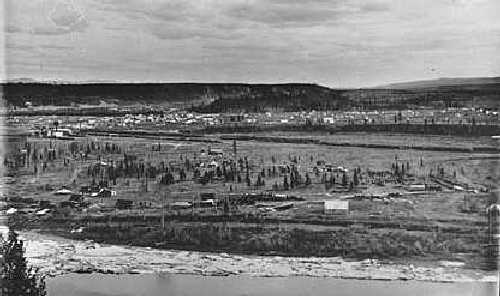
The Hudson's Bay Company later opened a trading post on the banks of the Fraser River in the area of South Fort George. Both Fort George and South Fort George remained small trading posts for nearly 100 years until the Grand Trunk Pacific Railway's route to the west passed through this area in 1914. These communities developed almost simultaneously in the first decade of the new century. South Fort George developed quickly as a trading post along the Fraser River where the present day Museum is located. Central Fort George was located on the south side of the Nechako River (near where the present day Central Street and the Hart Bridge are located). Fort George - later to be renamed Prince George after Prince George Edward Alexander Edmund Hanover of Wales (1902-1942), was a planned townsite that was developed rather quickly during the years of 1914 and 1915. The town was planned around George Street, the rail station on 1st Ave, and the piece of land that now holds City Hall (initially called Princess Square).
Initially this area was the Fort George Indian Reserve that was bought from the Carrier Indians in 1912 by the Rail Company to be developed into a "railway townsite". The fact that the town was planned around the railway is seen in how the downtown streets run magnetic north-south on a grid, perpendicular to the rail lines, while the majority of the rest of the city street are laid out on a true north-south grid. The plan to have George Street as the main commercial thoroughfare can still be seen in the fact that it is the only street with its lots facing east and west.
|
| During the years of 1909 to 1913 the population in the two Georges grew from just a handful to over 1,000 in Central Fort George to about 1,200 in South Fort George. When Prince George was first developed, these three communities struggled to outgrow each other and to be the first to become incorporated. |
|
| It was Prince George though, as a result of having the railway access and receiving early services such as power and telephones, that succeeded in becoming the dominant community, and by the end of 1915 both Central Fort George and South Fort George were showing signs of decline. The ultimate establishment and growth of a Fire Department in Prince George was a result of the achievements in each of these individual communities. |
| The Fire Department |
|
The need for an organized fire department was quickly recognized after a number of devastating fires in the townsites of South Fort George and Central Fort George. On July 1st, 1911, a fire destroyed the Hotel Northern in South Fort George. Hand-held fire extinguishers, bucket brigades, and wet blankets were the only fire fighting methods available. As a result of a number of destructive fires, the newly formed South Fort George Board of Trade took the initiative to establish a Fire Committee. What resulted was the enactment of the "Village Fire Protection Act" and the appointment of three fire wardens and a Fire Chief (J. Campbell). Their job was to get information about purchasing fire equipment and to determine the requirements for an alarm system for the townsite. To raise funds a fire tax was imposed to pay for the fire brigade to purchase fire-fighting equipment. Businesses paid $10, residences paid $5 and tents and shacks paid $2.50. At this time the main responsibility of the chief and wardens was to enforce stovepipe standards in an attempt to reduce fires from unsafe heating appliances. Fines of up to $50 could be imposed. By November 1911 plans were finalized for three fire alarms throughout the village, and for the first fire hall in South Fort George, even though no equipment would arrive from Vancouver for over a year.
A number of devastating fires and the destruction of at least 5 more hotels in the village in the next few years was a major contributing factor in the development of a formal Fire Department. In 1913 a fire destroyed the Alamo Theatre and Nechako General Stores at the corner of Central and Hammond in the Fort George townsite. In 1914 two fatalities resulted from a fire in the Palace Rooms Hotel in South Fort George. Central Fort George also had its share of fires and in 1914 an early morning fire on Friday, the 13th of November, destroyed two hotels and 12 stores in the area. One person died in this fire. In late 1914 two more hotels and one other building burnt down, and in January of 1915 the Empress Hotel on the corner of 4th and Hamilton burnt down.
By 1913 the community of Central Fort George, who had also formed a Fire Committee, formed the Fort George Citizen's Water Company. They immediately began to lay wooden water mains under the streets of the townsite as well as construct a large water tank on Central Avenue to supply water for both domestic needs and fire protection. Water was pumped up from the Nechako River into the reservoir by small gasoline pumps, which often froze in winter.
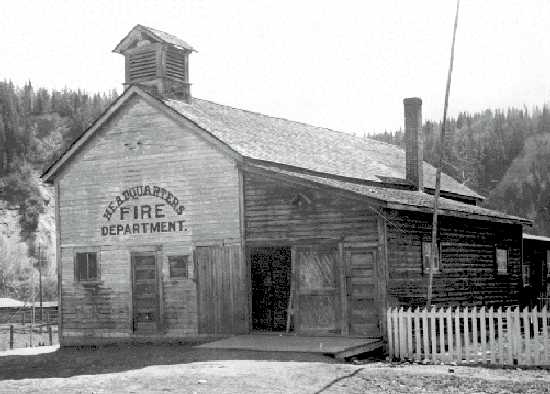
In the community of South Fort George, the local fire committee had become quite established and by 1913 three mounted chemical extinguishers with a combined capacity of 120 gallons and 45 hand extinguishers arrived. One 60 gallon chemical extinguisher was carried on a horse drawn sleigh in winter and on a cart in the summer, while two 30 pound chemical extinguishers were placed on Second Street (now called Regents Crescent), and on Hamilton Avenue. In those days when the alarm was sounded, the first person to arrive at the fire hall pulled a rope, which dropped the harnesses on the waiting horses. He then opened the door and they were ready to go pulling the chemical engine either on the sleigh in the winter or on the cart in the summer.
|
| By 1914 Fire Chief Campbell, in South Fort George, reported the total value of fire equipment as $5,000 consisting of a fire hall, a 60 gallon chemical fire engine, two 33 gallon engines, two fire stations, hook and ladders, ropes, lanterns, buckets and chemicals. The South Fort George Fire Department is considered by many to be the "birthplace" of the Prince George Fire Department. |
|
|
By 1914 it was clear that the community of Fort George was to be the dominant community and all three communities were working together toward the incorporation of the City of Prince George. Previously there had been a lot of rivalry between the two communities of South Fort George and Central Fort George to incorporate on their own. In fact, both communities had requested incorporation from the government and been denied. With the arrival of the rail line to Fort George, and speculation about Prince George being a major supply center for the north, the city quickly began to grow and the need for a formal fire department was quickly recognized. In the fall of 1914 the Fire Department, in what was then Fort George, was formed. Roy London full-filled the role of Fire Chief until the City was incorporated.
In 1915 the City of Prince George was finally incorporated and the name was changed from Fort George to Prince George. The new City included 1092 acres - about 1.7 square miles. Before this there were basically two towns, South Fort George and Central Fort George, with populations at only about 1500 permanent residents and about 1000 construction workers who were building the new town of Prince George. By the end of 1915 Prince George grew from a town with only a couple buildings into a one with hundreds of buildings and a growing population. City boundaries extended from 1st Ave to 17th Ave, and from the Fraser River up to what is currently Carney St. Prince George was quickly recognized as being the hub for business in the area and many businesses moved to the newly formed City. What started out as a population boom in the area would quickly become stagnant for the next 30 years, until ironically the Second World War would bring thousands of soldiers into the area.
During this first year one of the many City Bylaws that was adopted by city coucil was Bylaw No. 28. This is the first of many Bylaws to follow dealing with fire services in the City. This Bylaw basically gave the fire wardens powers to inspect wood stoves and chimneys in businesses and to enforce rules about the cleaning of chimneys on a regular basis. This Bylaw would stay in effect until it was repelled by Bylaw 52 just three years later.
|
|
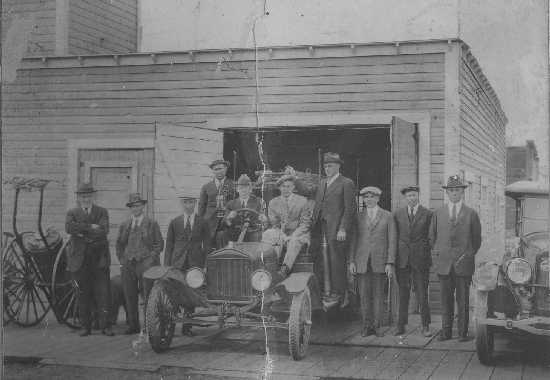
It was on March 6th, 1916 when the Prince George Fire Department was officially formed. Since George Street was the hub of the City the Fire Department was located on the south-west corner of 4th and George. During the next few decades the Fire Department, with the exception of getting updated fire fighting equipment, underwent little growth. |
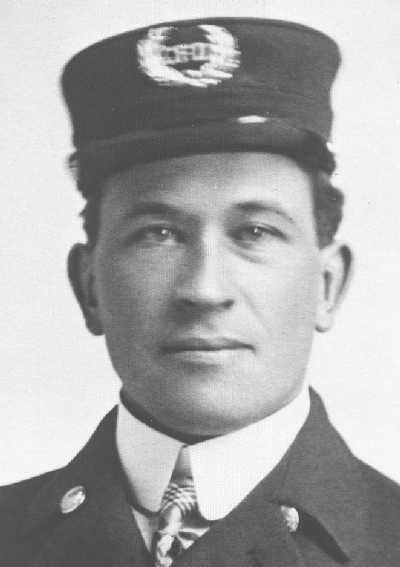
| One year after Prince George became a city, J.C. McKenzie became Fire Chief and remained Chief until 1937. He was also an engineer for the City and had overseen the installation of the water works in Prince George prior to 1916. It wasn't long until he was put to the test and on one of the coldest nights of the year (January 12) a fire destroyed the entire block of buildings on the east side of George St. between 3rd and 4th Ave. |
|
| In 1918 Bylaw 54 was passed. Since the Fire Department was now officially established this new Bylaw gave alot of attention to the duties of the Fire Chief, the fire fighters, the "fire apparatus" (which still included a team of horses), and the duties of the department members. One of the duties of the Fire Chief at this time was to ensure that all fire fighters "...obeyed the rules promptly and cheerfully..." which as everyone knows is exactly how the fire fighters follow the rules even to this day! |
|
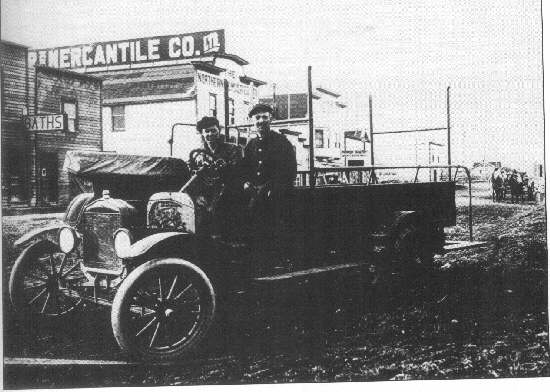
By 1920 the department equipment consisted of a chain-driven Ford truck for the summer and a two-horse team pulling the fire-sleigh in the winter. The horses would come out into special stalls where the harness, suspended above them, would be dropped onto their backs for quick hitching. One time the doors in front were opened slightly too soon and the horses shot dutifully into the night a second before the harness crashed onto the stall floor. |
|
In these early years many of the fireman also worked both as "teamsters" (driving horse teams for the Fire Department) and collecting garbage and plowing the wooden sidewalks with a wooden plow in winter. At this time the Fire Department was located on the West side of George Street between 4th and 5th Ave, just north of the initial Prince George Hotel, now the site of P.G. Men's wear. Later it would be relocated directly across the street, and then to a new fire hall beside the original city hall, before arriving at its present location (7th and Dominion) in 1956.
In 1920 the Grand Trunk Railway became part of the Canadian National Railway bringing the end to the era of steamboats as a means of travel to Prince George. Two stern-boats, the Operator and the Conveyer, were left on the banks of the Nechako River by Island Cache to later be dismantled. This was a major contributor to the decline of South Fort George where the steam ships would dock. In 1921 the population of Prince George was still only officially at about 2100 people, but access to Prince George was greatly improved when in 1926 the highway was completed from Prince George to Vancouver and the Simon Fraser Bridge was built. During this time a number of saw mills were also popping up around Prince George and the importance of the City as a lumber producer was being recognized.
By 1927, August Dornbierer had began to fight fires in Prince George. He recalled that those volunteers who responded to a call were paid $ 1.50 each time, and competition was fierce among the "George St. Boys". These were army "boys" temporarily posted in Prince George who made extra money by fighting fires.
|
|
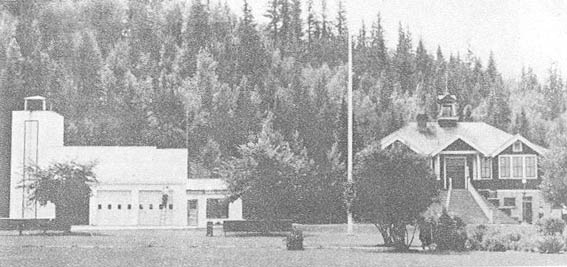
It was in the late '20s that the fire hall found a permanent home at the base of Connaught Hill, beside the original City Hall on Patricia Ave. This would serve as the fire hall for the next 25 years. |
| The population of Prince George in 1931 was still estimated at only about 2,500 people. Because of the continued growth in the logging industry, and the steady growth to the north of the City, that the current one-lane bridge across the Nechako River was constructed. |
| It was also in this same year that the Fire Department placed the 1927 Reo Speed Wagon fire truck in service to replace the chain-driven Ford truck. It was used until 1956 when it was sold to the South Fort George Fire Department for $1, where it remained in use until 1970 when it was returned to the City of Prince George for $1. One year later the Prince George Fire Fighters Association purchased it and it now rests in Hall #4 during the summer and is displayed at the Railway Museum during the summer. |

|
|
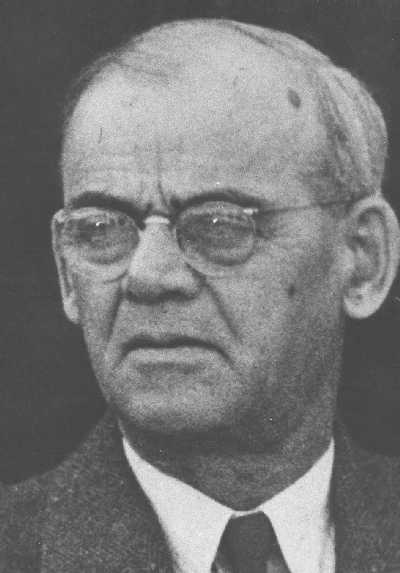
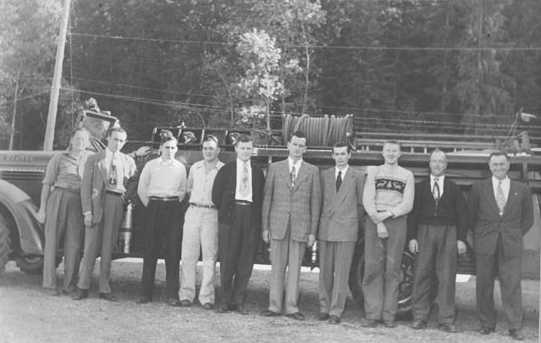
In 1938 Dave Fraser became the Fire Chief, and it was in this year that the position of Fire Chief finally became a full-time paid position. In 1938 the Fire Department also purchased a new 1938 La Praum fire truck. |
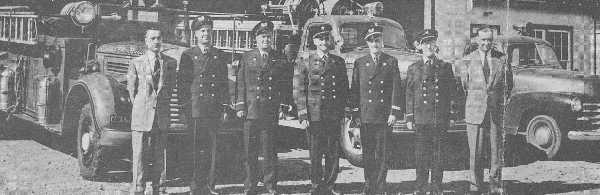
| By 1942 the Fire Department had a permanent force of three fire fighters and two officers. This was the year that the fire fighters recieved their first uniforms. |
|
|
This is also the year the construction begins on the Alaska Highway, though the John Hart Bridge would not be constructed until 1959.
Another factor contributing to the growth of Prince George was when in 1943 the airport was moved from a location about 1 mile south of the City (present location of the junction of Hwy 97 and Hwy 16) to the current location beside the Caribou Highway. Between 1920 and1928 the location of the airport had been on Central Street in Central Fort George. At this point in time the population of Prince George is still at only about 4000 people. |
|
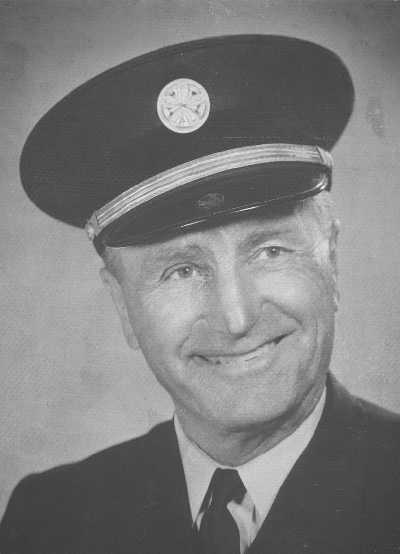
In 1949 August Dornbierer was appointed as Fire Chief and would continue as Chief until 1964 when he retired.
The Department now had one truck, four full-time men, and a building that was showing its age. |
| In 1950 the population boom that would last for the next 25 years begins when post war migration begins and three pulp mills in Prince George are built. Even with the rapid growth the Fire Department responded to only about 100 calls each year. |
| A second fire truck was purchased in 1951 by the City of Prince George which was too large to get into the old hall's doors. The truck was purchased in spite of strong opposition from Chief Dornbierer. Council approved spending $ 16,000 on the ladder truck, which ironically was never to be used even once. The truck now sits in Fort George Park as a children's recreational item. |
|
| 1953 began the first of many amalgamations and Central Fort George finally became a part of The City of Prince George. This expansion of 1,456 acres increased the total City area to almost 4 square miles. Street names that were originally assigned by George Hammond, who was the initial developer of the area in 1909, were now renamed with the names of former city officials or pioneer residents in alphabetical order. |
|
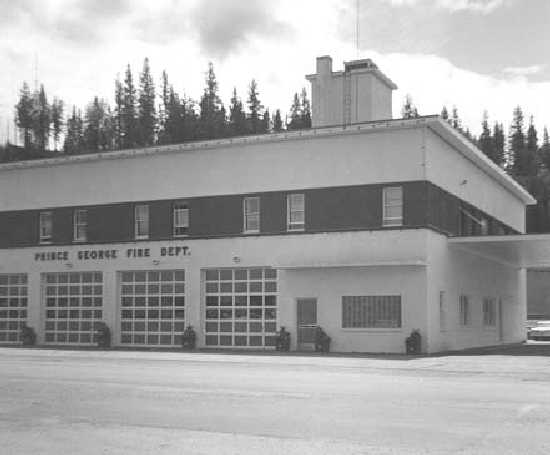
In 1956 the Department moved to a new hall just a block west (at its present location on the corner of 7th and Dominion). Along with their regular duties the fire fighters were also required to operate the City weigh scales which were located on the West side of Hall 1 where the offices are now located. Fire fighters weighed the vehicles, recored the information, pocketed the payment, then at the end of the month, and often with some difficulty, had to pay the amount back to the City. Its interesting to note that in 1956 the wage for a full time fire fighter was only $240 per month. This was far below that paid to the sawmill workers who worked in an industry that was now considered an essential industry in BC. |
| 1956 was also the year that the Reo Speed Wagon fire truck was sold to the South Fort George Fire Department for $1.00. In addition to inheriting a number of fire trucks from Central Fort George as a result of the amalgamation, the Fire Department begans to purchase a number of "newer generation" fire trucks. |
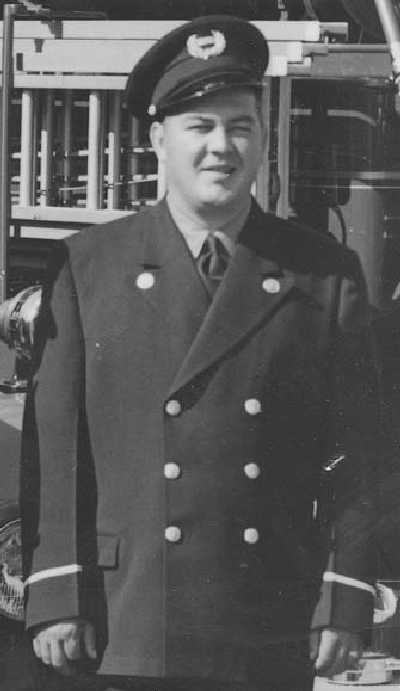
| But 1956 will be remembered for another reason as it brought the first lose of life in the "line-of-duty", when fireman Jasper Assman died when he was overcome by smoke while fighting a house fire at 7th and Winnipeg. (The second would occur only four years later.) |

|
|
In 1958 another expansion of the city occurred with the construction of the three pulpmills. Over 2300 acres were added west and south of the By-pass Highway, which meant that much of the Bowl was now in city limits. Between 1961 and 1968 five more expansions would take place bringing in 1,500 more acres to make the total area in the city limits to nearly 10 square miles.
The construction of the current hospital began in 1959 for the initial 125-bed building. This new facility would replace the army hospital that had been located nearby at the corner of 13th and Lethbridge. |
|
Tragedy strikes again in 1960 when fireman Fred Burr is killed "in-the-line-of-duty" when he is thrown from the tail boards where he was riding when it is struck broadside by another vehicle. Ironically he was responding to a house fire at the very same address where only two years earlier fireman Jasper Assman died. It was shortly after this that more visible flashing lights were added to the sides of fire trucks in Prince George. |
|
During these early years of the Department having full time members, the fire fighters rotated through three eight hour shifts. Probationary fire fighters earned $280 per month then recieved a raise to $300 per month when they went "on-shift" full time. Most of the fire fighters lived close to the hall so they could respond quickly to the hall if they were needed. During this time there were 8 full time fire fighters with two on shift at any one time.
When there was a fire the electric siren one the roof of the hall would be set off to notify the rest of the fire fighters that they were needed. At times this siren would not stop wailing after it completed its cycle and one time it rang for hours until the fire chief's mother finally came and shut it off. The siren was also used to notify the general population of the 10 p.m. cerfew each evening.
By 1963, a result of the amalgamation that took place in the proceeding years, the number of calls that firefighters responded to had increased to 259, but with a property loss of only $30,000. (This amount will surge to over $200 thousand in the next two years.) There were however two lives lost this year (a natural gas explosion causes the death of one woman). Its interesting to note that by this same year fire fighters regularly participate in broomball competitions and are raising money for charities throughout the city.
By 1964 the Department had grown to two trucks, 11 men, a chief's car, and was located at 7th and Dominion. There were also about 25 volunteer firemen. In addition to fighting fires during their time at the fire hall, the fire fighters also operated weigh scales out of Hall #1. In 1964 the firefighters handled over 3,000 loads with revenue of about $1,000. It's interesting to note that this same year the fire fighters received a wage increase of 12 cents per hour. 1964 was also the year that the Fire Department implemented fire inspections of all building in Prince George. In the first year 983 inspections were completed, and eight condemned buildings were burnt. It was also in this year that firefighters began putting on "fireman's badges" courses for the Boy Scouts. Some of the more interesting fires that occurred during this year were the destruction of the C.N. Building on 1st Ave, and the fire at the Bowl-a-Drome (in a basement on 5th Ave). Fireman Mike Dornbierer, who would later go on to become Fire Chief, was injured when a roof collapsed on him during a garage fire on Johnson St.
A significant advancement in the means of signaling the firemen when they were needed occurred in 1964. The outdoor siren was replaced by a $6,000 paging system (transistor alarms) where all firemen could be contacted in their homes with one call either from the fire hall or from the fire trucks. It is also in 1964 that local fire fighters begin annual muscular dystrophy campaigns - a tradition that is still in place today.
By 1966 the Department has grown to include 14 men on the payroll. Some may remember the loss of 10 horses that perish in a stable fire at the Exhibition Grounds. It during this year the Nechako Fire Brigade and Prince George fire fighters work together to minimize the damage to the Hart Elementary School during an August fire.
|
| August Dornbierer had been Chief for almost 20 years (since 1959). In 1967 Harold Dornbierer continued the family tradition and was appointed as the Departments 4th Fire Chief. |

|
|
Today the fire engines in Prince George are yellow (technically they're "lime-green"), but that wasn't always the case. In 1968 red was the accepted color and the controversy over fire trucks painted red, white or "yellow" began. It was Chief Harold Dornbierer's position at this time that red fire trucks, especially during winter, are best seen. It would not be until the late '80s that "yellow" fire trucks would find their way into the Department's fleet.
Another improvement was made in the way that emergency services in the City communicated when during this year all R.C.M.P. vehicles were fitted with fire-call warning devices so they could be notified of fires where they might be needed to provide crowd and traffic control.
In 1968, the week of October 8th through 14th is declared "Fire Prevention Week" in Canada. Some may remember the old Byron Bing School that had been built in 1913 and was located beside the present day Duchess Park School. Because of safety concerns it was destroyed during a controlled burn by the Fire Department. This was also a special year in the growth of the Fire Department as the second hall at 5th and Ospika was opened. In addition to a new fire hall, the Department significantly increased its fleet of fire engines - a ladder truck with a 100 foot extension was purchased for $55,000.00 and PG # 3 and PG #4, two pumpers, were purchased. A tradition for many fire departments throughout the country is the annual fireman's ball. The fire fighters in Prince George joined this fine tradition by holding their first Fireman's Ball in 1968.
For over two years the City enjoyed there being no major fires, but this all changed in 1069 when fires at the Bargain Center Bldg. (547 George St), and an ex-army building at 510 George St. were both destroyed on the same night. It was at the first fire on George Street where Captain Floyd Stene suffered a broken wrist when he was pinned below a metal structure that he had been standing on when it broke away from the second floor and fell 12 feet. Later this year the ladder truck that had been purchased years earlier, and never used by the City, was placed in the Fort George Park as a toy for children to play on.
The City of Prince George once again expands its boundaries in 1970 by adding more than 5,700 acres in the industrial areas across the Nechako and Fraser Rivers. Island Cache, formerly known as "Foley's Cache" was also brought into the city. (This is the area north of the CN rail lines where the Railway Museum is now located).
|
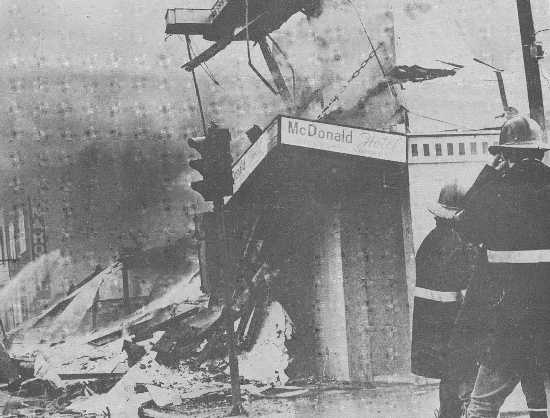
| A point of interest here is that 1970 is the year that the Mac Hotel burnt down for the first of three times. |
|
|
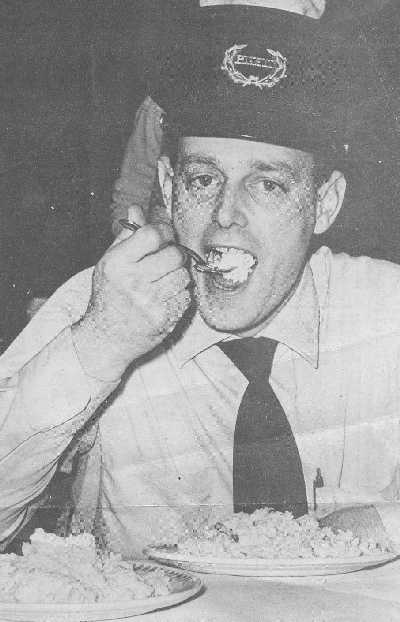
In 1970 the fire fighters once again demonstrated their "creative" community spirit by joining forces with the Knights of Columbus to raise funds for the burn unit at the Vancouver General Hospital by holding the first annual "Egg-a-thon". It would be just five years later, in 1975, that fireman Stan Matthews would eat 74 eggs to raise almost $7,000 in pledges (the record was 101 eggs). In following years the fire fighters would raise between $10 and $30 thousand each year. Another of the fire fighter's endeavors during this year was to use 20 tons of ice to assemble Queen Aurora's icy throne outside the Civic Center during a January festival. A favorite fire truck of many is the Reo Speed Wagon, and it was in 1970 that the fire fighter's association purchased the fire truck from the City. It presently rests at Fire Hall #4.
By 1971 the Department had slowly grown to include 27 permanent firemen. This would soon need to be increased drastically as over the next two years further boundary changes would take in more than 4300 acres on Cranbrook Hill. The total area needing fire protection from these fire fighters now included over 26 square miles.
In 1974 the manning did improve significantly with an increase to 34 fire fighters, two Assistant Chiefs, in addition to the Fire Chief. There were however only two fire halls in the City at this time. One notable addition to the City landscape during this year was the opening of The College of New Caledonia at its current location.
The final and most dramatic amalgamation occurred in April of 1975 when in one giant gulp more than 63,000 acres were absorbed into the city. The area of Prince George increased almost five times to nearly 79,000 acres - about 125 square miles (70 times larger than it was when it was incorporated in 1915). The South Fort George Fire Department is taken over by the Prince George Fire Department. Amalgamation of the Fire Departments in the area also gave the City the Nechako Fire Department on the Hart Highway (called the "Hart Hall"). Before the amalgamation the Fire Department on the Hart was totally independent of the City, and had only two full time members - Dave Ovington and Warren McLean. As a result of this sudden growth spurt, the Fire Department, over the next few years, would undergo drastic changes in an attempt to meet the needs of the "new" City of Prince George. One direct result was the hiring of nine new fire fighters bringing the total to 43. This would be increased again in 1976 as seven more fire fighters were hired bringing the Department manning up to 50.
Not only was there a new for more fire fighters, but there was also a need for more fire stations. As a result of the growth in 1977 Vanway Fire Hall (Hall #3), was opened to serve the College Heights area. As well, on the North end of the City manning at the Hart Hall (presently the Search and Rescue Bldg.) was increased from one fire fighter to two.
With these increases in service more fire fighters were required and in 1978 the Department manning was increased to include 62 fire fighters. Just as was the case in 1968, the sudden growth of the city in the mid '70s required more fire fighting apparatus. Warren McLean, Harold Dornbierer, Mike Dornbierer and Ernst Westphal traveled to Florida to pick up four new fire trucks for the Fire Department. These were: PG #15, which is now used as the Fire Prevention vehicle; PG #16 which is now backup pumper E-12; and two mini-pumpers that have since been sold. The mini-pumpers were one ton trucks with a hose reel, one 11/2" pre-connect and some 21/2" hose. One was kept at the Hart Hall and the other down town. They were used as rapid response vehicles and for grass or brush fires. The min-pumpers were generally driven by the officer in front of the main pumper truck on the way to the fires. These four trucks were a huge improvement as they were the first of the diesel trucks and used automatic transmissions for the first time. The tank and pump capacities also drastically increased.
In 1979, as a direct result of efforts by the fire fighters, manning increases once again from 70 to 86. Inspite of the high call volume in the area, Hall #2 only had a staffing of two fire fighters at this time. A major development with regard to fire fighting techniques was the introduction of the 4" supply line and stortz connections on new PG #17 (now backup E-11). Though the idea was good this initially caused a problem as there were no air bleeders on any of the pumpers and the truck's prime was often be lost when receiving water from fire hydrants. The 4" supply lines and storz connections are now standard features in most departments. It may be coincidental but this is also the year that Fire Chief Harold Dornbierer orders more than 1,700 fire hydrants to be painted standard colors. Dozens of hydrants throughout the city had been painted to resemble "little people" and were confusing to locate in the event of a fire. Another improvement introduced this year was the arrival of PG #19, (now E-40) which was the first pumper to arrive with the air-packs built into the seats for the fire fighters to strap on while on the way to the fire. Some may remember a strange site behind Hall # 1 when fire fighters were asked to test a new high-expansion foam which filled the entire parking area with foam over 3 feet deep.
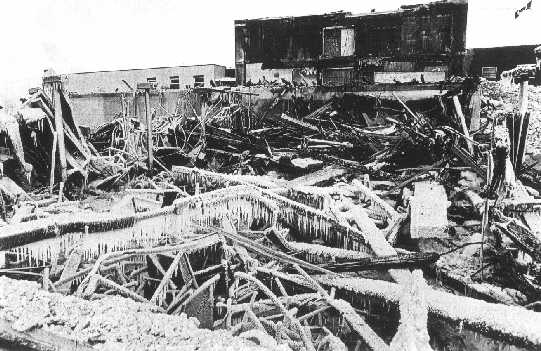
1979 will also be remembered by many fire fighters as the year that the city burned. There were a number of major fires during the year that adding fuel to these memories: The Old Fort George Elementary School burnt down; the Mark V Office Building was destroyed by fire resulting in a $1.5 million loss; the Victoria Medical Building sustains heavy damage in a fire; fire destroys the Alcohol and Drug Counseling Unit, and fire fighters see first hand the dangers of putting even a small amount of gasoline into a clothes washer after responding to an explosion on Aspen Lane - the entire home shifted on its foundation as a result of the blast. Total alarms during this year were 1,114.
|
|
The Connaught Junior Secondary School was also destroyed by fire resulting in a 2 million dollar loss. Due in a great part to these devestating fires the fire losses in the City totaled $4.44 million. |
|
It isn't until 1998 that the Fire Department formally forms it Hazardous Materials Response Team, but in 1979 two "chemical suits" are purchased and trained with in the event that an incident did occur in the City.
In 1980 the fire fighters continued showing their community spirit by presenting St John's Ambulance instructors with their first "Ressci-Baby". Fire fighter Stan Matthews, top money raiser for the Knights of Columbus, raised $35,000 by eating only one egg. His record was 79 eggs - far behind the overall record of 199 eggs. Fire fighter Rick Brown downed 75 eggs while fire fighter Drew Larsen finished second with 60 eggs. It was also a good year for fire fighter Earl Steel as he received the "Golden Helmet" after a 15 pound bracket fell 55 feet from the top of the hose tower to the ground landing on his helmet.
Another major step in the growth of the Fire Department came in 1980 when Hall #4 was built on the corner of West Austin and Kelly Road South. At this time the original min-pumper (PG #18) and the main pumper (PG #6) were moved from the "Hart Hall" (presently the location of Prince George Search and Rescue) to the new Hall 4. The "Kelly Hall", a small building beside the Kelly Road School that was used to house a pumper and spare turnout gear, was also closed at this time. Previous to this when there was a fire in the Hart area the fire fighters would respond to the Kelly Hall to get turnout gear and the spare pumper truck before responding to the fire location. At this time there were 74 full time fire fighters, and 25 volunteers who each week would join the full time fire fighters for training at Hall 4.
|
|
1981 was another year that stands out in the minds of many fire fighters. First it was the year that fire fighters raised $12,000.00 in an "Eggathon" fundraiser in conjunction with the Knights of Columbus. $3,000.00 was used to send local medical professionals to the annual burns conference in Vancouver. Prince George firefighters provided over 80% of the annual donations to the VGH burns unit this year. |
|
This was also the year that the Fire Department began installing smoke detectors in the homes of senior citizens for free. This was primarily due to the initiative of fire fighter Bob Johanson. . Some may remember an incident that occurred in 1981 when a huge wooden storage tank at Intercontinental Pulp blew its top off injuring six workers.
1981 was also a significant time for contract negotiations. At the time a fire fighter's wage, which was considerably lower than that of workers in other professions, started at only $7.33 per hour. As a result of negotiations that wage was raised to $10.47 per hour, still significantly lower than that of workers in the local pulp mills.
For the fire fighters though, 1981 is significant for another reason. It was on October 29 of that year when fire fighter Gerald Douglas Zimmerman, age 35, was killed in a car accident. Gerald was a captain with the Prince George Fire Department and was not only well liked as an individual, but was considered by many to be an exceptional fire fighter.
1982 brought a record snowfall to Prince George. To ensure that fire fighters could effectively respond to fires Fire Chief Harold Dornbierer requested that vehicles parked on City streets be towed, without notice, to avoid a disaster if fire trucks could not get down narrow streets. It was during this winter that eight student residences were destroyed in a fire at the Prince George College.
This was also the year that the Centaur Villa apartment complex was destroyed by fire resulting in $4.5 million damage. Local radio reports inaccurately reported that it took the fire fighters 45 minutes to respond to the call, when in fact the tape recording of the call showed the response time to be under 6 minutes from the time the call was received until fire fighters were on scene fighting the fire. During the early '80s nomex came on-line and the Prince George fire fighters began wearing "yellow" turnout gear, as opposed to the black gear, for the first time. The fire at Centaur Villa was one of the first fires where this new nomex gear was tried. Some fire fighters had the nomex gear while others had the old style, and the difference was so evident that it wasn't long after that all the fire fighters had the new gear. The shields used on the helmets of fire fighters weren't introduced until the late '80s. Previous to this it was common to turn the helmet around and use the long brim to protect ones face from the heat of the fire. This gear improvement coincided with W.C.B.'s introduction of new health and safety regulations for B .C. fire fighters, aimed at standardizing equipment and protective clothing. Regular turnout gear inspections were a part of these regulations.
1983 was another year that it seemed like the city was burning. An arsonist keeps fire fighters busy fighting fires in City churches. In just nine days the Calvary Apostolic church on Village Street, the Westside Pentecostal Tabernacle church and the Full Gospel Fellowship church were destroyed by fire. Next the Northern Linen laundry was went up in flames. If that wasn't enough the worst was yet to come. April 23 will be remembered by many as the day the jail burnt, resulting in $2.5 million in damage. The rioting inmates and security issues hampered fire-fighting attempts resulting in fire fighters being on scene for two days until the final spark was extinguished. At one point the fire was almost out when 40 inmates surged back into the burning building forcing fire fighters to retreat temporarily. Many fire fighters worked around the clock without breaks or nourishment.
When spring arrived things went from one extreme to another. As a result of high water levels Fire Hall #1 sat in about 6 inches of water. The local paper printed a picture of one fire fighter making the best of things with a fishing rod beside the fire hall on Dominion St.
In 1983, the B.C. Ambulance service began responding to all house fires to provide standby support for fire fighters. This support has continued and is very much appreciated by the fire fighters
On January 1st, 1984, the City of Prince George made a significant decision to utilize full time, professional fire fighters only. Initially there had been two groups of volunteers - one on the Hart and one in the Vanway area. The volunteer's role had been to provide fire support in their respective areas, but did not respond into the bowl area. The move to full time professional fire fighters significantly increased both response times and the ability to provide a high quality of service to the community. A number of the volunteers were hired which resulting in Fire Department now having 88 full career fire fighters.
In 1984 the fire fighters were once again called on to respond to a number of large incidents. Fire fighters battled a fire at the Lake Land Mill. Dollar Saver Lumber was destroyed by fire. Fire fighters found the bodies of two murdered people when they respond to a fire on West Beaverly Road. And, as a result of high winds, a fire at Balfour Forest Products spreads to two other mills in the BCR Industrial site before the 30 fire fighters on scene extinguished it.
A special event for fire fighters anywhere is a Fireman' Ball. In 1984 over 400 people attended the second annual Prince George Fireman's Ball. 1984 is also the year that fire fighters begin asking for traffic lights to be installed on Highway 16 West by the Vanway Fire Hall to improve safety when accessing the highway. These lights were finally installed 15 years later.
|

|
In 1985 Ed Parent became Fire Chief after serving for 29 years with the Department. |
|
By this time fire fighters were responding to about 1,400 emergency calls each year. This dramatically increased when fire fighters began responding to medical calls after receiving the basic S.O.F.A. training from St. John's Ambulance. Previous to this the Fire Department had only gone to motor vehicle accidents if requested to do so by the R.C.M.P. This change immediately increased the number of calls, and in the following year fire fighters responded to nearly 1,800 calls, with about 400 being medical or rescue related.
Fire fighters are always looking for an opportunity to use their skills, and an interesting application of the new first aid training was seen in the fall of this year when fire fighters administer CPR to successfully revive a house cat at a Glenview Crescent house fire. Three other significant fires during this year occurred at the 15th Ave Post Office, at the Prince George Precut Planner mill, and at Dollar Saver Lumber (which was destroyed by fire for the second time in eight months).
In 1986 fire fighters once again increased the quality of service to the community by becoming the first in B.C. to take the First Responders course. Over the next twenty years their role as first responders in the city has increased to where medical calls now comprise over half of the yearly call volume. By this time the Department had grown to include 89 staff, including 83 fire fighters, and an annual budget of $4.5 million. One significant purchase the Department made during this year was that of a compressor system for filling air cylinders. 1986 is also the when the fire fighters held the first annual charity hockey game against the Spruce Kings. The tradition of playing hockey for charity has continued and the fire fighters currently raise in excess of $9,000 each year during the Old-Timer's Hockey Challenge.
In 1987 the Fire Safety House was built and has been used since to training thousands of children each year how to "get out alive". During this year Ruff's Green Houses, on the Giscomb Road, was destroyed by fire and the Prince George fire fighters act as judges in the Exhibition's annual "chili cookoff".
Though not directly related to the Fire Department, a decision was made in 1988, after great opposition by the residents of Prince George, to move the dispatch center for the Ambulance Service from Prince George to Kamloops. 1988 was also the year that the Department purchased a new pumper truck and rescue truck (R-10), fire fighters fought a stubborn fire at Netherlands Overseas Mill at the BCR Industrial Site, and the McGill Shopping Center was destroyed by fire. During this year fire fighters also built and raffled off a "fire-truck bed" to raise about $1,000 for the burn unit of the Vancouver General Hospital.
Usually the Prince George fire fighters protect life and property within the City limits, but this was not the case when in 1988 fire fighters from Prince George were requested to leave the City limits and attend a tragic accident on Highway 97 north of Salmon Valley. Many remember this accident between a loaded logging truck and a van that claimed the lives of six youth from the Dawson Creek basketball team.
In 1990 another change came to the protective clothing for fire fighters with the introduction of the nomex belaclava that was worn under their helmets. This greatly reduced the risk of receiving burns to the neck and face when in extreme temperatures. One notable fire during this year was when Fox Glass, and 3 other businesses on Nicholson Avenue (including McBride Industrial Sales), were destroyed by fire.
Fire fighters are deeply effected when fire takes a life, and one of these times was in 1991 when fire fighters responded to a disturbing fire on First Avenue where two boys were filling a motorcycle with gasoline inside the basement. One boy died from his burns. As a result of recognizing the stress associated with these types of calls, just a few years later the fire fighters would form a Critical Incident Response Team to provide support for fellow fire fighters.
In 1991 the 9-1-1 service becomes a reality in the Prince George area. In anticipation of an increased call volume, not only did Hall 1 undergo renovations in the dispatch room, now referred to as the F.O.C.C. (Fire Operations Communications Center), but also significantly improved their communication system.
To meet new standards for the safety of fire fighters, in 1992 the Department purchased their first fire engine (E-20) with a closed in cab for all the fire fighters. During this year the Triad Racquet Center is gutted by fire, two duplexes become engulfed in flames as a result of a tank from a barbecue exploding (one woman dies when she reenters the building), and off duty fire fighters tend to a serious motor vehicle accident on the Hart Highway where two young girls are killed.
In 1993 tragedy again strikes home for the fire fighters when Warren Edward McLean, who was at the time the Chief Training Officer, died while volunteering his time at the Prince George Railway Museum.
As a point of interest, Greenwood Street was, before the 1975 amalgamation, called McLean Street after Warren McLean. There are in fact a number of streets in Prince George named after former firefighters. Graeme Street is named after an early fireman Billy Graham. Jorganson Road was named after Chris Jorgenson who was a fireman in South Fort George. Ovington Road is named after David Ovington who was a member of the Nechako Fire Department under Chief Warren McLean. McKenzie Avenue was named after John C. McKenzie, who was both a city engineer and Fire Chief in 1916; and Dornbierer Crescent which is named after Fire Chief August Dornbierer who was Chief from 1942 until 1964.
In 1993 Mike Dornbierer became the third Dornbierer to be chief, following his father and brother, and served as Fire Chief until 1999 when he retired.
In 1995 minimum manning at Hall # 2 was raised to 4 members. At this point the Department is composed of 94 staff with 85 of these being fire fighters. One unique call that the fire fighters attended to was when they rescued a skydiver who was hanging more than 30 meters above ground near the Prince George Airport.
In 1996 the University Of Northern British Columbia becomes a reality, and the number of times that Engine 20, from Hall 2, had to climb Cranbrook Hill each year significantly increased.
With the large number of rail cars that pass through Prince George each day carrying hazardous materials, it was only a mater of time until the fire fighters were called upon to handle a serious incident. The most recent on happened in 1996 when a B.C. Rail car leaked 1,000's of liters of propane-butane into the Fraser River as it sat on the tracks across from South Fort George Park. The 26-hour incident put 6,000 residents on evacuation alert as fire fighters monitored the air surrounding the incident.
In 1997, once again as a result of fire fighter safety standards, the manning at Hall 3 increased from three to four fire fighters on shift.
Technology is constantly changing and in 1998 it was time to retire the old ladder truck from Hall1, as it no longer met safety test for fire fighting. As a result the City made one of its larger purchases with the purchase of the $1.3 million aerial platform truck. This apparatus is presently stationed at Hall 2 and responds to all "high-life" hazard calls (such as calls to schools, the hospital, senior citizen homes and apartments).
In 1999 the formation of "specialty teams" was also started. Assigning members to various "teams" is one way to increasing the level of training for fire fighters, while at the same time ensuring that fire fighters are not required to specialize in more than two or three unique skills in addition to their basic fire fighting skills. The first of the specialty teams formed was the Hazardous Materials Response Team which consists of 24 fire fighters and 6 instructors. One spectacular fire that occurred in 1998 was when 7 vehicles and the carport were destroyed at the Centaur Villa Apartment Complex.
1999 brought the development of a special initiative called the "Students-in-the Workplace" program, where four senior high students spend 4 shifts "on-the-job" learning to be fire fighters. This program has grown to the point where it now runs three or four times each year and is coordinated and supervised by fire fighters.
In July of 1999 George Crawford became Fire Chief after 29 years in the fire service, and is the current Chief of the Department. During this year the development of specialty teams is continued with the formation of the High Angle/Rope Rescue Team. Just one year later the next team would be formed - the Water Rescue Team. In 2001 this group of fire fighters added to their skills by certifying in ice rescue, and the name of the team was changed to Swift Water/Ice Rescue Team.
The Prince George Fire Department officially received its name in 1916 when it was formed, but in 2000, the name was officially changed to Prince George Fire/Rescue to more accurately represent the service that is provided to the community.
An excellent opportunity became available for training in 2000 when it was decided by Alcan to burn a number of the homes at Kemano. Five new fire fighters had the privilege of spending 3 days participating in controlled burns. In 2001 another 16 fire fighters and 4 officers again attended the training at Kemano.
As the Prince George Fire Department nears its 100th anniversary in 2005, it continues to undergo constant changes in its attempt to provide the highest level of service to the community. From their humble beginning in 1915, to the present, the fire fighters of Prince George continue dedicated themselves to protecting life, property and the environment, and to serve those who call this City their home.
It is very possible that there are errors or omissions in this "unauthorized" record of events that shaped the Fire Department since its inception almost 100 years ago. If there are mistakes or inaccuracies, please feel free to contact the writer so that corrections can be made. Thank you. |
