| Trevor C. Rabin |
|
|
|
History Family Trees Members Recordings Credits & Links
Articles & Pix Updates Sources
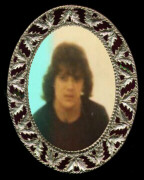
Trevor Charles Rabin was born in Johannesburg, South Africa on January 13, 1954. He started his musical instruction at the age of 6 on piano but gradually gravitated to guitar by age 12. He was the son of a South African violinist and his piano teacher wife. His first group that can be traced was probably a neighborhood group with his older brother, Derek, on drums that gradually merged into the Conglomeration part of Rabbitt. Conglomeration lasted for the years 1968 to 1971 during which time the group won the prestigious South Africa's Battle of the Bands title. When the band disbanded in 1971?, Trevor for a time worked in a Greek restaurant playing piano.
Trevor joined the session lineup of Rabbitt which consisted of Errol Friedman, Ronnie Robot's older brother, on guitar. They recorded "Locomotive Breath" which was produced on a modest $200 budget. It hit the charts and stayed on for 14 weeks. The band, however, broke up and Trevor then joined Freedom's Children in 1973? along with Ronnie Friedman and recorded the single "State of Fear" with the group but they both left within the year.
The late 1973? lineup for Rabbitt showed Selwyn Schneider as second guitarist, Neil Cloud on drums, Ronnie Robot on bass and Trevor Rabin on vocals, guitars, and keyboards. They began playing various clubs around South Africa but within the year, Selwyn had decided to leave the band and embarked on forming his own band, Nexus.
By the spring of 1975, Duncan Faure, who was spotted by Rabin, Robot and producer Patric Van Blerk at one of his performances, was brought into the fold as keyboardist. The group started playing the 'Take It Easy' club using original material and soon became popular. Within a couple of months Rabbbittmania took over and lines outside the club started to stretch down the block. The group released their first LP "Boys Will Be Boys" in 1976. It turned gold and won a Sarie award for Best Contemporary Pop Music and gave Trevor a Sarie award for his arrangements on the album. In 1977, Rabbitt released its second LP "A Croak & A Grunt in the Night" which became gold upon release but the constant pressures within and outside the band begin to take its toll. Ideas for a worldwide tour are scrapped due to political pressures outside the country. The band members start to pull away from each other as outsiders try to grab their share of the money and control of the band. By the end of 1977, Trevor Rabin has had enough and leaves the band. He does session work on several recordings and then sets his sights on London, England.
Arriving in England and still feeling the fishbowl atmosphere of Rabbittmania, Rabin finds himself surprised by the relative inattention he receives in the country. Hardly anyone recognizes him and he struggles for a while finding work but does so as a producer and session musician until he finally lands a solo deal with Chrysalis Records. He produces 3 LPs: "Trevor Rabin" (a remix of his "Beginnings" LP), "Face to Face" and "Wolf". As soon as his contract runs out he starts producing and working with other artists again. He receives a call from John Kalodner of Geffen Records, who had heard about Trevor from Mutt Lange (a producer?), and he wants to know if Trevor is interested in joining a supergroup. The members of this group are Carl Palmer, John Wetton and Rick Wakeman. Trevor meets the members for a while but nothing comes of it.
Trevor continues to search for a solo deal in England until John Kalodner convinces him to move to LA, California. He moves to LA and sets up a studio and starts writing songs. At one time, he puts together a small garage band but nothing comes of it. Then John calls him again about another band in London. This time its members are Carl Palmer, John Wetton, Steve Howe and Geoff Downes - the future supergroup, Asia. Trevor reluctantly goes back to London to meet the group but it's obvious from the start, it won't work. "It turned out Steve Howe hadn't been told I was going to play guitar. He thought I was just going to sing."1 Feeling there was going to be friction if he stayed, Trevor leaves without ever joining and goes back to LA.
For a while he does session work as his sole source for income but fearful of being labeled a session musician, he quits and goes back to his studio and back to writing. Meanwhile, he also tries to get a solo deal. This time he gets it with RCA and is about to sign the deal when he gets another call. Richard Steinberg of Atlantic Records tells him of 2 bands being formed: one with Keith Emerson (ELP) and one by Chris Squire (Yes). The Keith Emerson one doesn't follow through but Chris Squire is still interested and asks to see him in England. Trevor goes to England and meets with Chris Squire and Alan White (Yes) and they invite him to jam with them. The two parties feel right with each other and Chris Squire asks ex-Yes keyboardist, Tony Kaye, to come into the group. They name the group Cinema in 1982. They start recording some preliminary tapes and Trevor Horn (Buggles, Yes) produces them; however, he is not fully satisfied with just using Trevor's lead vocals. Chris Squire makes the suggestion of having Jon Anderson (Yes) listen to the tapes and having him experiment with them. Jon listens to the tapes and is impressed and records his own vocals to some of the tracks. The others are called in to listen to the newly revised tapes and like what they've heard. Jon decides to join the group and they rename it Yes.
1983, Yes releases its first LP "90125" after the 1980 breakup of the band. The single, "Owner of a Lonely Heart" quickly climbs the charts in the US to #1. They do an extensive tour - many to sold-out concerts. "Cinema" wins a Grammy for "Best Rock Instrumental" in 1984. Yes produces their second LP, "Big Generator" in 1987 and does a tour but already the group starts to fall apart once Jon Anderson decides to form his own group, Anderson Bruford Wakeman Howe, and records Yes similar music with them. Trevor, meanwhile, does a solo LP "Can't Look Away" including former Rabbitt, Duncan Faure, on backup vocals.
Yes reunites after a dispute over use of the Yes name between Yes and Anderson's group. Forgetting the lawsuits, both parties combine and become one Yes. They record the album "Union" in 1991 and do the "Around the World in 80 Days" tour. Soon after, the 3 ABWH members Bruford, Wakeman and Howe leave and the group is back down to the original re-formed Yes. The album "Talk" is released in 1994 - a largely computer-generated album produced by Trevor Rabin. They do a tour but Trevor leaves shortly after.
Trevor now works largely behind the scenes since his departure from Yes. He is involved mostly with movie soundtracks and occasionally pops up on another artist's recordings. He has a wife named Shelley and a son, Ryan, (14), who aspires to be a drummer.
| -T. H. Cutler 12-7-00 Note: The above mentioned information was from fans, articles, and various websites. As best to my knowledge it is correct. However, there could be errors. Please do not shoot me - don't shoot the rabbitt - don't shoot the rabbit! He's just there for decoration - just tell me what it is and I'll try to correct it as soon as possible. Thanks. 1"Sounds" magazine; pp. 22-23; June 16, 1984 |