**Note: You can see a larger image of a picture by clicking on it. To return to this page, right-click and select the "back" button. This way, I don't have to link back to this page from all the images'.
Barcelona
Sagrada Familia
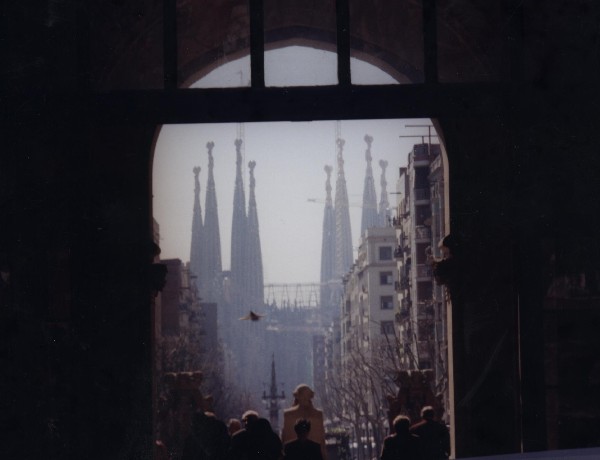
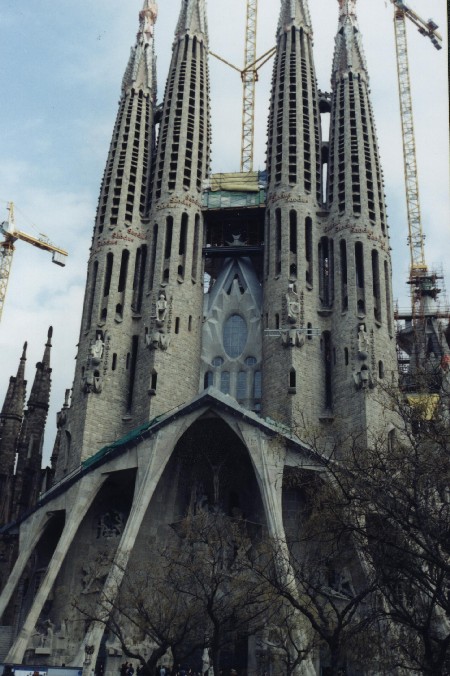
La Sagrada Familia is Antoni Gaudi's masterwork. In 1884, Gaudi was assigned to build a Roman Catholic
basilica, and he worked on the project for over 40 years. (The last 15 years of his life were
completely devoted to it.) When it is completed, Sagrada Familia will be the largest basilica in the
world.
*Gaudi died in 1926, and parts of the original design were destroyed during the Spanish
Civil War.
The design is enriched with Christian symbolism: Gaudi intended the church to be the "last great
sanctity of Christendom." When complete, it will feature a total of 18 towers, representing in
ascending order of height: the 12 Apostles, 4 Evangelists (surmounted by a man, a bull, an eagle,
and a lion), the Virgin Mary, and Jesus Christ (surmounted by a giant cross). This tower's total
height (approximately 172 meters) will be one meter shorter than the mountain Montjuīc, as Gaudí
believed that his work should not surpass that of God.
This photo was taken from Sant Pau Hospital (see below).
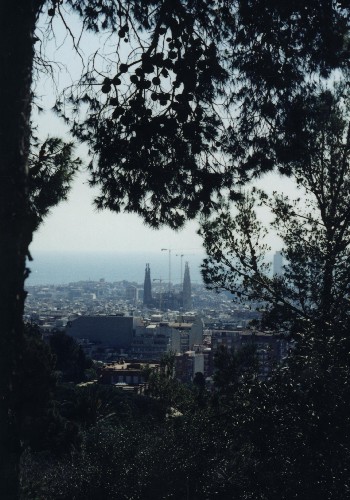
This photo was taken from Parc Guell (also, see below).
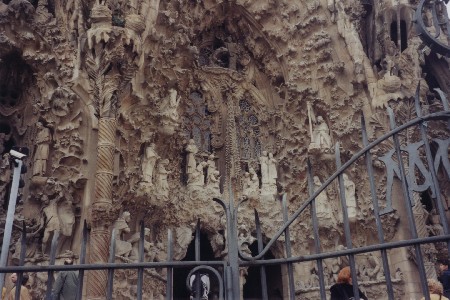
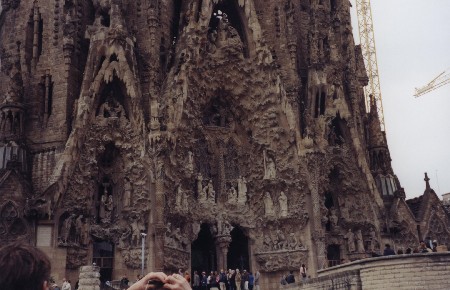
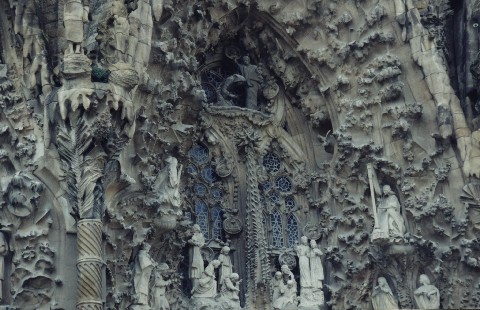
These next images were taken of the church's Nativity Facade, which detailed Christ's life
These photos are of the Passion Facade
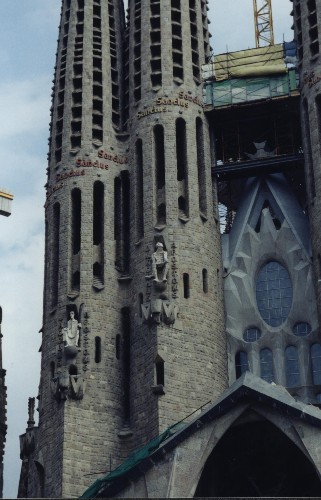
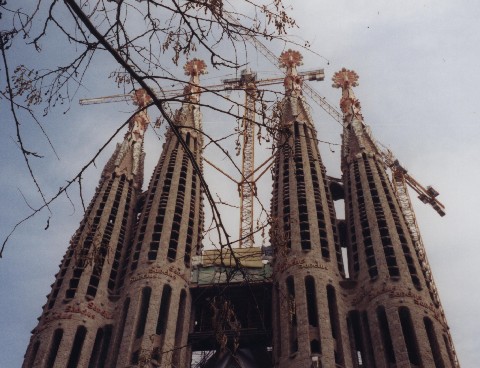
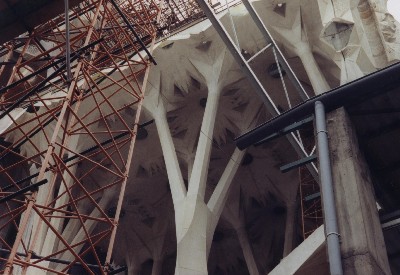
Some contruction going on on the opposite side of the Passion Facade
For information, click here.
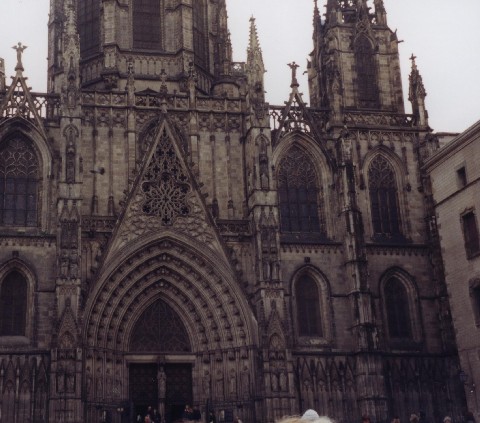
Cathedral of Santa Eulālia
The Cathedral of Santa Eulālia is the seat of the Catholic Archbishop of Barcelona. It was built
between the 13th and 15th centuries over the top of a former Visigothic church.
The cathedral is dedicated to Saint Eulalia, the patron saint of Barcelona. The young virgin suffered
martyrdom during Roman times. According to Catholic tradition, she was exposed naked in a public
square, and a miraculous snowfall in spring covered her nudity. Angry, the Romans stuffed her in a
barrel with knives stuck into it and rolled her down a street.
The cathedral has a secluded Gothic cloister where 13 white geese are kept (Eulalia died at the age of 13).
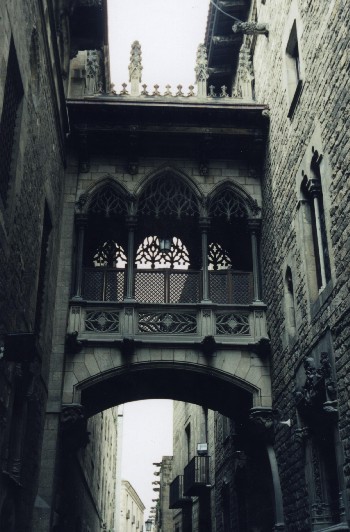
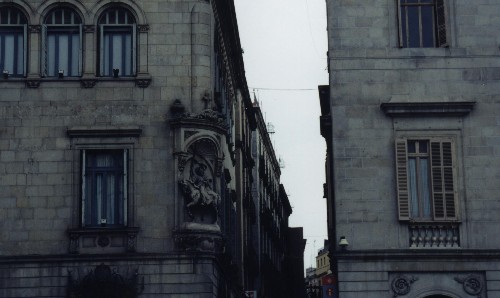
Gothic Quarter
Parc Guel
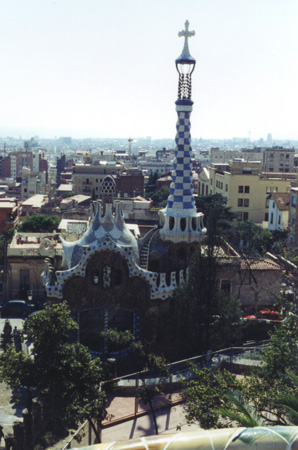
Parc Guel, designed by Antoni Gaudi, is located on the hill El Carmel of Barcelona. It was built in
the years 1900 and 1914, originally planned to be a garden city based on English models, but as a
housing site, it was a commercial failure. It has since been transformed into a municipal garden.
Gaudi's unique style is evident in the architecture of the park. The buildings have
fantastically shaped roofs with unusual pinacles.
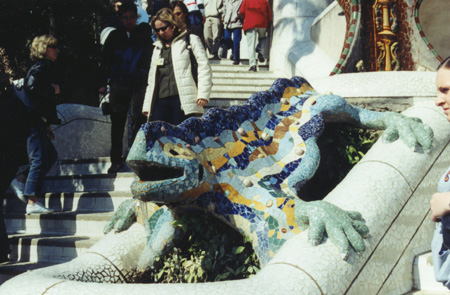
The entrance to the park is a large stairway featuring a mosaic sculpture of a lizard or dragon.
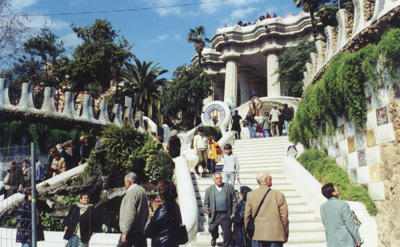
At the top of the steps awaits a huge pavilon with over 84 columns, designed to be the marketplace.
The ceiling of the pavalon is entirely mosaic.
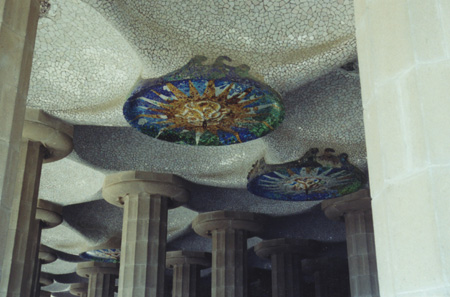
The roof of the pavilon functions as a terrace overlooking the Mediterranean Sea, and a mosaic bench
in the shape of a giant sea-serpent winds around the entire perimeter.
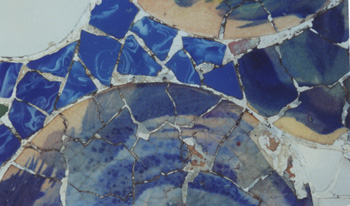
*Close up of the mosaic on the serpent
The Doric-columns surrounding the park and supporting the outer edges of the terrace, and upper
levels of the park are tree-like and natural in shape. There were also a number of forest trails.
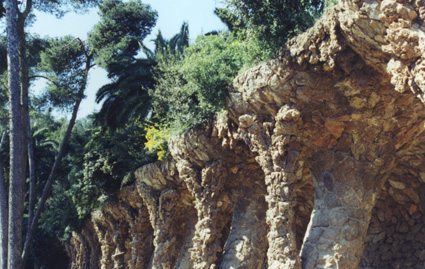
In my opinion, the park is very skillfully designed, and although it was quite crowded, peace
and calm were maintained. The park was fantastic, it seemed to have almost come straight
from images of a dream.
Escola del Trevail
We visited an industrial high school, and I was impressed by quality of the architecure and
administration of the building. All of the rooms showcased student-work (very high quality wood/metal
work, sculpture, machinery, ect..), and there were up-to-date computers for every student in
every classroom! We even saw a room that Albert Einstein gave a lecture on relativity in.
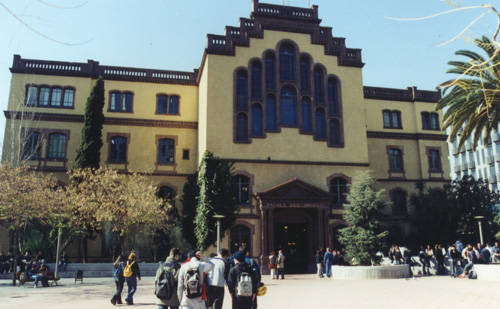
This picture is taken in the doorway entrance of the dorms. Amazing, huh?
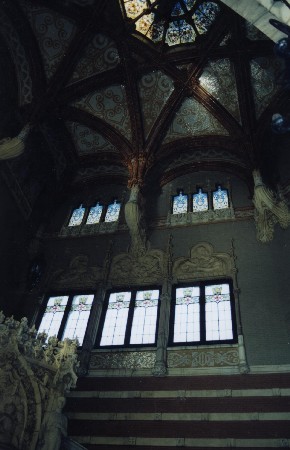
Sant Pau (San Pablo) Hospital
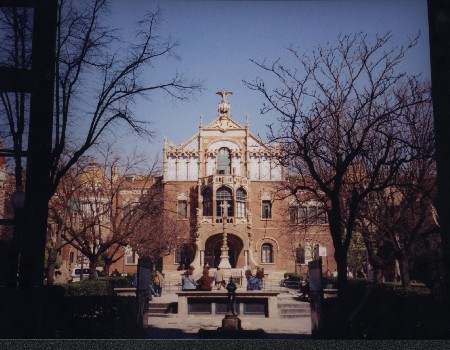
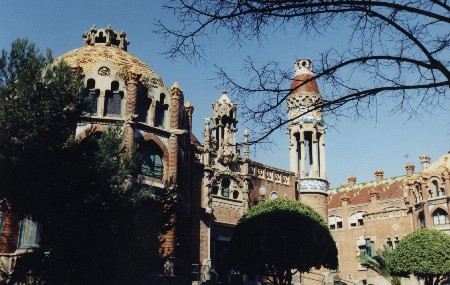
It's full name is L'Hospital de la Santa Creu i Sant Pau, and it has its origins in 1401, when all of
Barcelona's existing hospitals merged into one. At the end of 19th century architect Lluís Domčnech i
Muntaner re-vamped the buildings, and it is one of Catalunya's best examples of Modernism.
The hospital is fully functioning and offers FREE, yes FREE, healthcare. It is located right near
Sagrada Familia (see the picture at top).
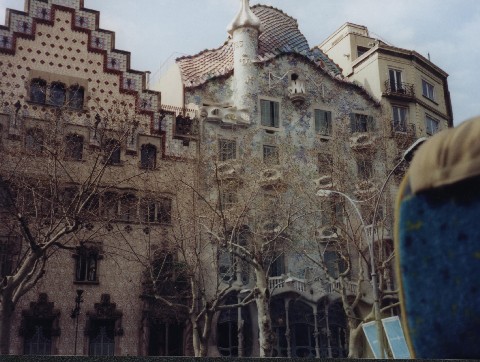
Other Gaudi Architecture
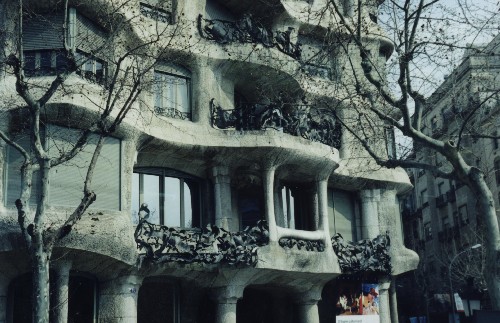
These are apartment buildings, Catalunya-style!
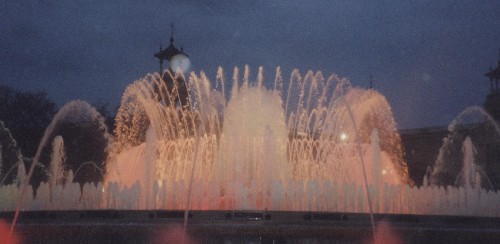
Font Māgica
The Magic Fountain was built for the 1888 Expo World Fair, and then redesigned in 1929. Once a week,
there is a light show beginning at 8:00 p.m. (I think that was it)
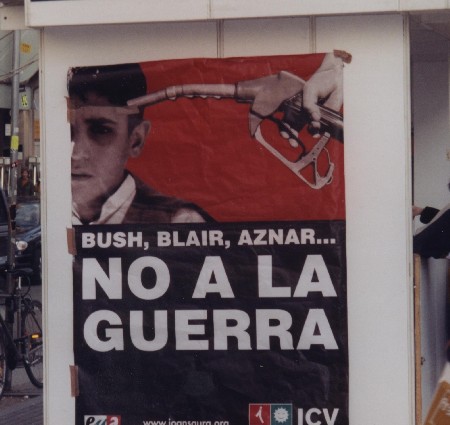
We also saw a number of different signs protesting the war.
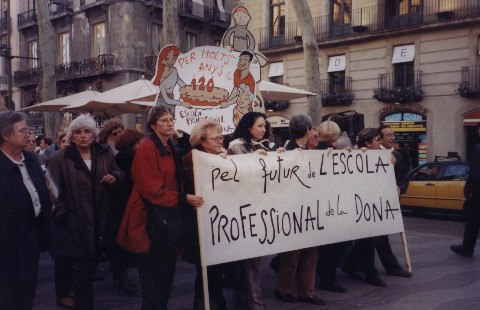
Public rally...
Mallorca
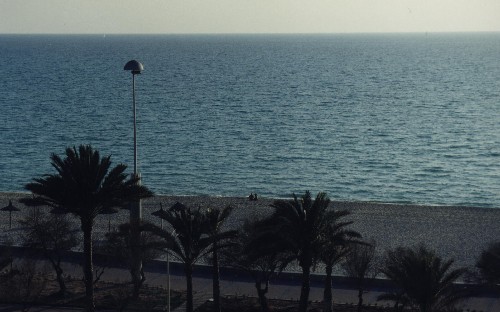
The view from our hotel room. Niiice.
Castell de Bellver
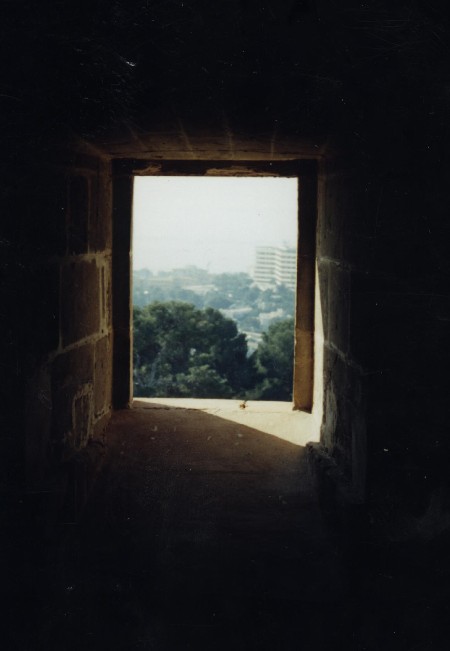
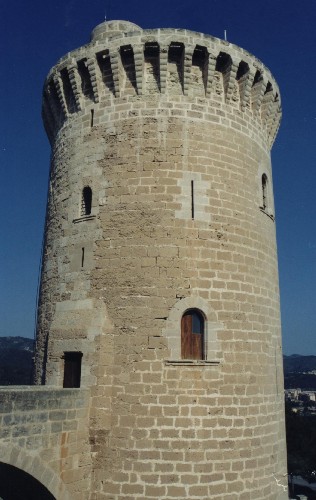
Built in 1309, the Castell de Bellver is the only castle in Spain that is entirely circular in
structure. The castle began as a summer Royal residence, and was later converted into a prison.
There is even grafitti on the walls left by French prisoners.
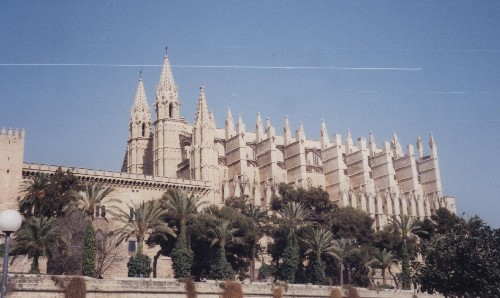
Catedral de la Seu