The 4 macromolecules of life are all found in the foods that we eat.
 Carbohydrates = simple sugars + simple sugars
Carbohydrates are the body's main source of energy. These can be found in sugars and starches.
A carbohydrate molecule is converted into glucose and used to make ATP (energy). Excess glucose that is not used for energy will turn into fat and be stored in the body.
 Lipids = Fatty acids + fatty acids
Lipids are concentrated energy sources. They provide twice as much energy as a carbohydrate.

Proteins = amino acids + amino acids
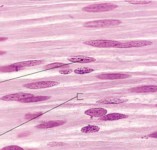
Proteins are the major building block of tissue in the body. Your body is made up of hundreds of different types of proteins such as:
collagen = strength & support in connective tissue
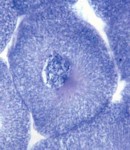
keratin = make hair and skin waterproof
enzymes = speed up chemical reactions
 Vegetarians must be careful to monitor their diets because they do not get all of the essential amino acids. Vegetarians must balance out their diets with beans, nuts, and grains which are rich in proteins.
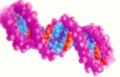 Nucleic Acids = nucleotides (adenine, guanine, thymine, and cytosine) The building blocks of DNA.
All cells contain a nucleus with DNA. The cells that are eaten are recycled within the body.
Vitamins are essential to our diets to help activate enzymes. There are 2 classes of vitamins:
1. fat-soluable = dissolves in fat. Needed in low doses.(vitamins A,D,E, K)
2. water-soluable = dissolves in water and is excreted with urine.(vitamin C and the B vitamins)
 Minerals are inorganic compounds for growth and maintenance of body structures. Some examples are calcium, iodine, iron, phosphorous, potrassium, and sodium.
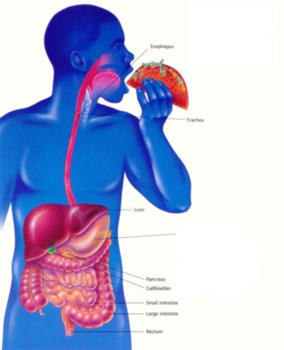
Digestion begins with the mouth. Your teeth grind up food into small balls that can be swallowed easily. Your saliva contains an enzyme, amylase, which breaks down the carbohydrates.
Food is swallowed down the esophagus. The esophagus has smooth muscle which contract and move by peristalsis. Did you know you can stand on your head and swallow food up into your stomach?
The stomach has glands which secrete hydrochloric acid and pepsin. The acid and pepsin break down the foods into amino acids and sugars.
The liver and pancreas add secretions to further digest food.
The duodenum breaks down any remaining food. It then sends the food particles to the small intestine to absorb nutrients through tiny structures called villi. Capillaries inside of the villi absorb the nutrients and circulate them throughout the blood.
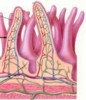
Once the food has passed through the small intestine it will enter the large intestine (colon). Whatever is left from the food is stored until ready to be excreted. Water is reabsorbed and vitamin K is made from E. coli bacteria living inside of the colon.
The cells of your body use up the nutrients and then they create waste products. These wastes are absorbed into the blood and must be cleaned out. This is the job of the kidneys.
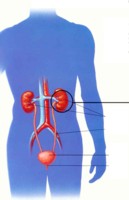 The kidney filters out ammonia, urea, wastes, and regulate the amount of water in the blood. The wastes are stored in the bladder until the body is ready to excrete them.