 |
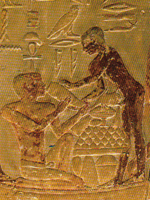
Artists have created self-portraits as early as 2350 BC in Egypt to show competence, to share self expression, and to craft a statement. Its popularity moved onto center stage, out of the fringes through the talents of Albrecht Dürer and other High Renaissance artists of the sixteenth century. The self-portrait, on a social level, helped to push the artist into a higher status. On a practical level, better mirrors manufactured during the Renaissance assisted artists in producing more self-portraits. |
| The self-portrait is an exercise of individuality and, in some cases, of self promotion. These exercises are not merely about vanity, but about disappointment, mortality, idealism and honesty. The body or face becomes a matter of exploration: "How do I look?" "Who am I and why?" The self-portrait exercise enables the artists to see not only a face, but the self and to display it expressively, realistically, ideally or abstractly. We can take the resources of past self-portraits and learn about nearly any media, technique, or style. | 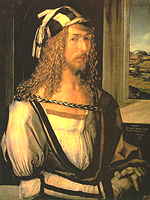 |
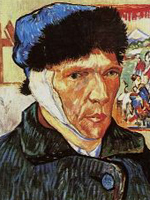 |
Self-portraiture as an artistic tradition continues today as an important technique in learning the trade. Van Gogh's self-portraits paved the way for artist to paint primarily as a way of expressing emotion. Through self-portraiture, a student can learn to reveal the self, to express inner feelings on paper, and to consider thereby one's identity and purpose. | |||||||||||||||||||||
 |
|
|||||||||||||||||||||