When I told my family, friends and anyone for that matter, I was going to Somaliland, the reaction was the same: 'Where? Shaheera, surely you mean Somalia.' - 'No, Somaliland.
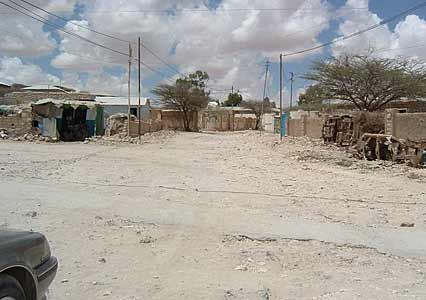
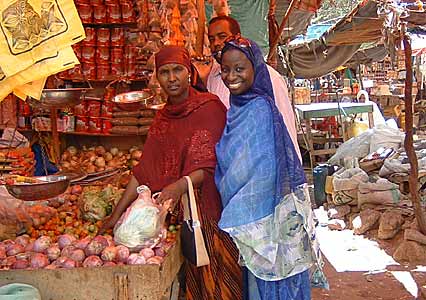
In March this year, I travelled to Hargeisa, a dusty, busy and vibrant city - and Somaliland's capital. We were there to record a documentary for Radio 3, about this unknown and unrecognized African country and its connection to Wales - where there has been a Somali community for over 100 years.
Not forgetting my beloved, Africa on Your Street, I thought I'd check out the Somali music scene. Unlike other African countries, music was not blaring from every street corner. Due to it being an Islamic state, music is not banned but its presence is subdued. There is however, a lively scene of musicians, writers, poets and creative types made up of locals and expats who have returned from as far away as Australia to rebuild Somaliland.
The music of Somaliland is hard to describe. It's a mixture of Arab, Indian and North African rhythms. Traditional sounds originate from the rural areas, where most of the country's population lived for hundreds of years.
Popular songs were created from personal poems and stories - accompanied by the music of the Arab Oud, with chanting and drumming. As the population grew and many migrated to the city and travelled abroad, western instruments such as the electric guitar were added. Today the sounds are both traditional and modern.
Popular music can be heard inside the dozens of CD music shops sprawled across the city. Otherwise, it's mostly heard at weddings and social gatherings rather than at gigs and concerts. Unlike the UK, in Somaliland women and men do not mix publicly, and alcohol is forbidden due to it being an Islamic state.
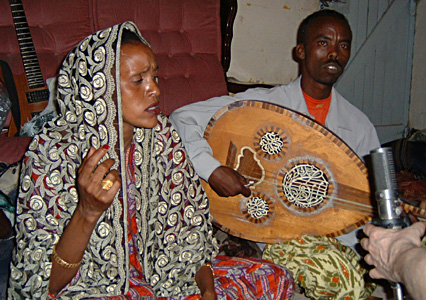
Ikram Jama and Oud player, Mohamed Miyir
The traditional songs and music of Somaliland have survived through the years of turmoil and now as peace reigns throughout the country, it is kept alive by traditional singers like Ikram Jama, one of the country's most popular entertainers. Together with her Oud player Mohamed Miyir they gave my producer and I an excellent impromptu performance one hot afternoon.
Ikram was born in Hargeisa over 30 years ago (she wouldn't tell me her age), and has never left Somaliland. Bursting into song with her Oud player by her side, her voice echoed the collective spirit of Somaliland - a country desperate for international recognition but also a nation proud to have survived its past and rebuilding its future.
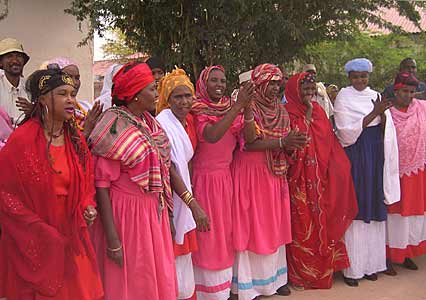
As a crowd gathered around us clapping and enjoying the moment, one onlooker told me, 'We grew up with music, it has always been part of our culture, and in Somaliland music reflects the damage of the country and helps things to heal.'
Background on Somaliland
Somaliland, or the Somaliland Protectorate as it used to be known, was under British rule from 1884, until its independence on June 26th, 1960. A week later it joined the former Italian Somalia to form a Somalia Republic. The intention was to form a unified country, with all Somalis joined.
Unfortunately, as with many other African countries that have been affected by colonialism and lets face it, social and political interference from an outside source - tension and injustice prevailed.
The north, where Somaliland is situated, felt betrayed and ignored by the South due to the fact that most of the resources, access to jobs, healthcare and a decent education were concentrated in the Italian-ruled South.
Following civil unrest in the late 1980s, Somalia's leader, Said Barre led military operations against his own people, literally, sending planes off from Hargeisa airport (Somaliland's capital) to bomb the very same city.
With the collapse of the Somali republic, the people of Somaliland held a congress and in 1991 broke away for good from Somali and formed the Republic of Somaliland.
Today, 14 years after it declared independence, Somaliland is a country of true African endurance, it has an elected president, a multi-party democracy, and works towards a life of peace and prosperity. However, having come so far as a people, Somaliland has not yet received recognition as an independent nation by the international community. Recognition is key to retaining the relative peace and stability of the country.
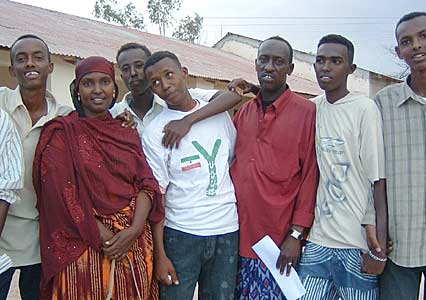
I will certainly go back to Somaliland. I had a wonderful time there and I'd like to say a big MAHAD SANID! to all my fab new friends in Hargeisa; you know who you are
Peace and Love
Shaheera - BBC Radio 3Don't forget to lisent on 29th May 2005 (Sunday) on BBC Radio3 at 9.30pm London Time