THAI BUDDHIST AMULETS MAKING PROCESSThe following are some photographs from the scenes of Thai Buddhist amulets making process, of course, I do not have details of the procedures, and therefore I am only able to provide a very brief introduction based on some photographs.
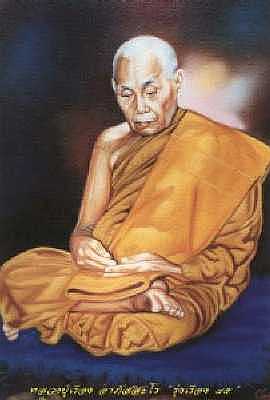
Luang Phor Liam of Lopburi
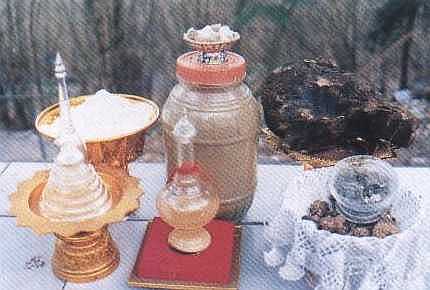
Some of the holy ingredients and material used for making Nur Phong amulets, note the container containing some brown colour powder and the bowl of white colour powder, and liquid substances and some other ingredients which had yet to be powdered.
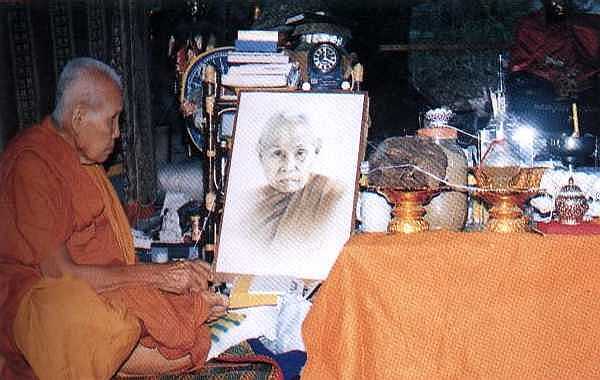
Luang Phor Liam chanting and consecrating the ingredients and materials to be used.
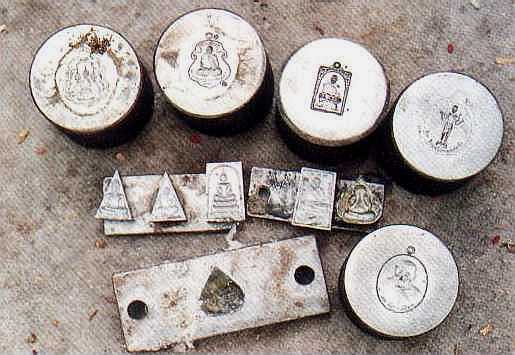
The moulds/Blok used for the moulding of the amulets. The round moulds are the moulds used for the medal amulets/Rian, it is a two-piece part, for moulding the shape of front and back. The individual metal pieces are the moulds bearing the shape of would-be powder based amulets/Nur Phong, the final mould is the rectangular mould which is actually a metal tray filled with plaster bearing the shape of the would-be amulet formed from the individual metal pieces. The metal tray in fact is a part of the moulding machine, which it will be attached to later.
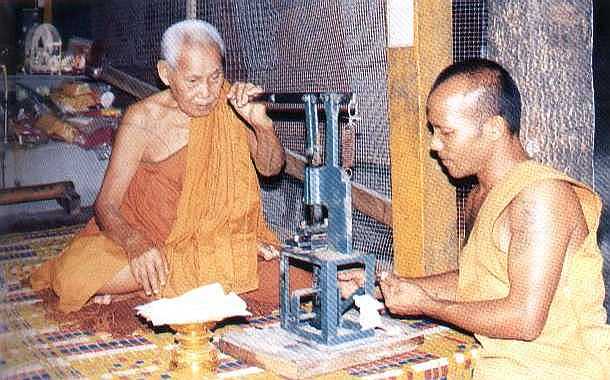
Luang Phor Liam hand-moulding the powder based amulets/Nur Phong, a disciple is helping him.
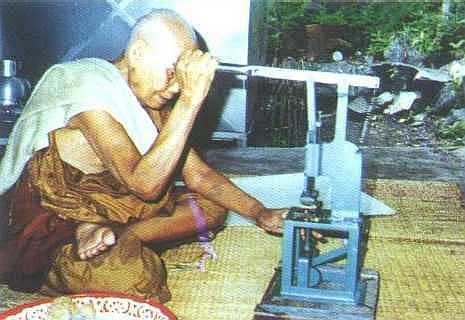
Luang Phor is using the hand mould machine, the earlier rectangular mould is attached to the machine. After the amulets are moulded, they are left on trays for drying. After drying, they are packed into boxes.
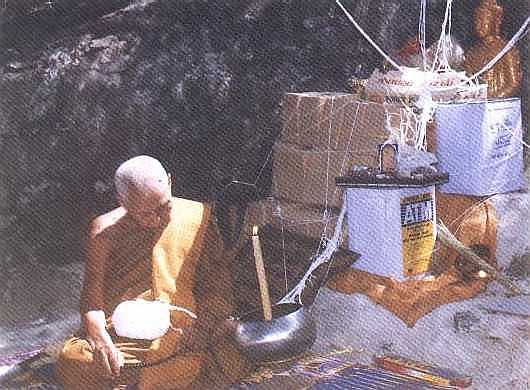
Luang Phor Liam chanting and consecrating the amulets after all the amulets were made. The boxes of amulets were tied together by a white string, known as Saisin, and one end was probably tied to a main Buddha image too, Luang Phor holds the balled end of the Saisin while chanting or meditating. Note the bowl of holy water with a candle lighted within, the water is known as Nammon, which was sprinkled upon the amulets.
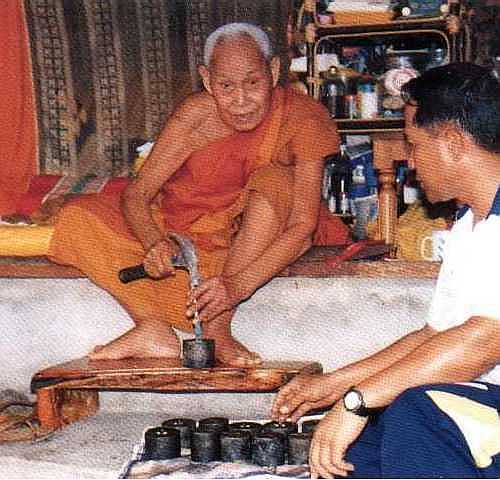
After all the amulets were made, the moulds/Blok were delibrately damaged and broken to prevent any unauthorised reproductions of the amulets. A common practise.
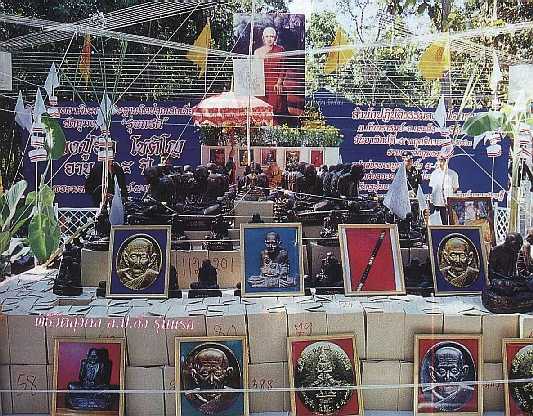
A scene from a mass chanting/consecration ceremony, it appears to had took place outdoors in the temple compound. Notice that the amulets were likewise packed into boxes and piled up with the statues to be consecrated together stacked on top of them, the Saisin were tied around the amulets and statues, and arranged in a spiderweb manner above the stack of amulets and statues.
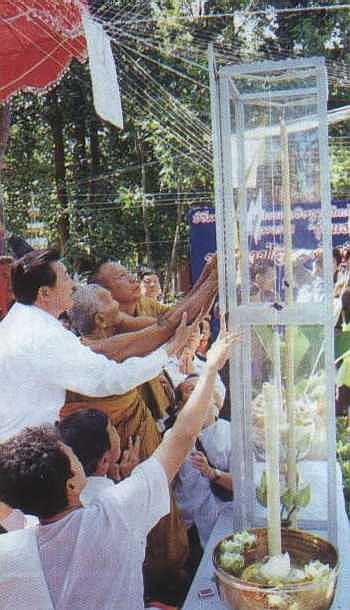
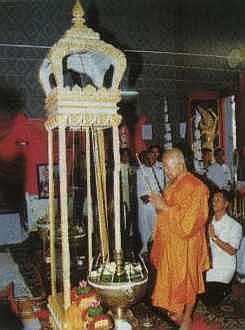
A Luang Phor lighting the consecration candle, the long candle was placed in a transparent wind shelter, to prevent it from extinguishing during the consecration. Note the bowl of Nammon placed beside the consecration candle, where lotus flowers were placed within the Nammon.
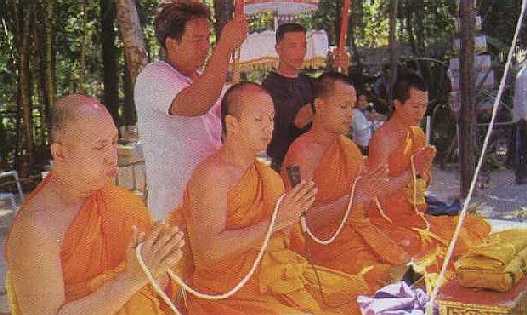
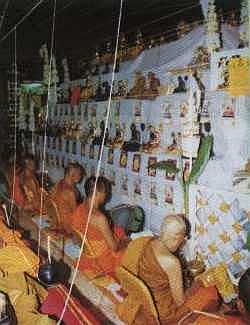
During the consecration, the monks sat in rows holding on to the Saisin while chanting.
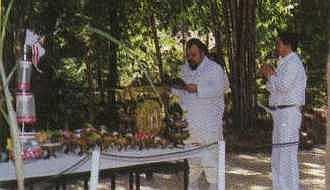
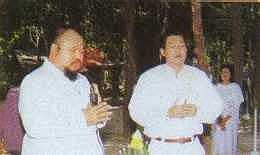
Brahim priests were sometimes invited to participate in certain parts of consecration ceremonies, they were oftenly invited in mass chanting ceremonies.
The person in white robes with beard and tied up hair is the Brahmin priest, the person wearing white shirt and pants is probably a temple committee member.
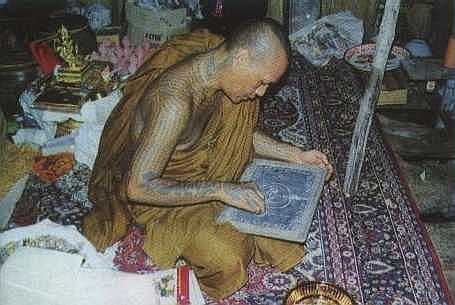
A monk drawing Takruts.
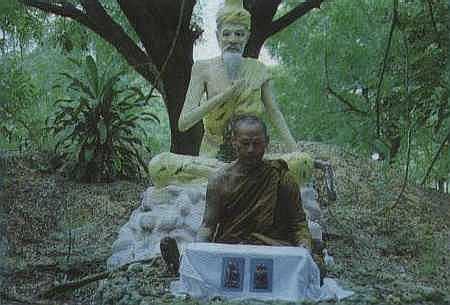
Consecration ceremonies can be elaborate and involving many high monks taking place in the temple hall/Bosth of a well known temple, or it can take place in the wilderness involving only one monk alone, like the above photograph.
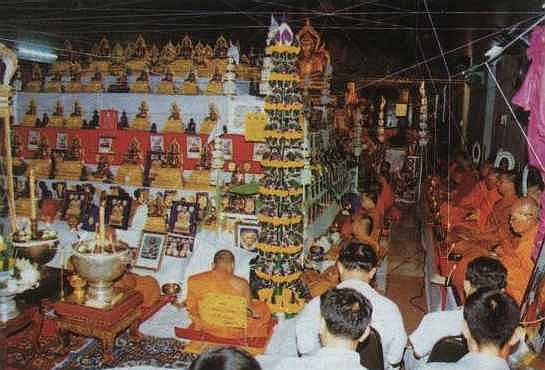
Another scene from a mass chanting ceremony where lots of monks were involved. This ceremony took place in the main hall/Bosth of the temple. Notice how the amulets and statues were packed and stacked up, and Saisin were tied around them and joined to the hands of the monks in a network array.
Note how the many monks sat lined up in the temple hall around the amulets and each monk had a small bowl of Nammon beside him.
A Luang Phor lighting the consecration candle, notice that there is also a big bowl of Nammon beside the consecration candle. Back to Home Page |