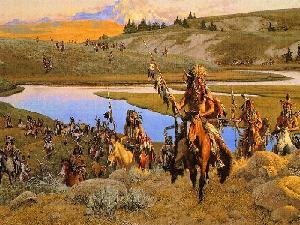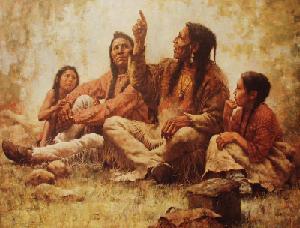
Indian scout
In the old days, when a Indian warrior found himself in the very jaws of destruction, he might offer a prayer to his father, the Sun, to prolong his life. If rescued from imminent danger, he must acknowledge the divine favor by making a Sun Dance, according to the vow embraced in his prayer, in which he declared that he did not fear torture or death, but asked life only for the sake of those who loved him. Thus the physical ordeal was the fulfillment of a vow, and a sort of atonement for what might otherwise appear to be reprehensible weakness in the face of death. It was in the nature of confession and thank-offering to the "Great Mystery," through the physical parent, the Sun, and did not embrace a prayer for future favors.
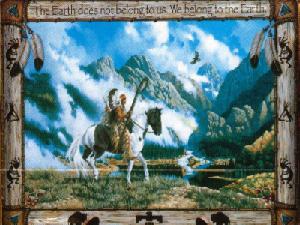
The hunt
The Indian loved to come into sympathy and spiritual communion with his brothers of the animal kingdom, whose inarticulate souls had for him something of the sinless purity that we attribute to the innocent and irresponsible child. He had faith in their instincts, as in a mysterious wisdom given from above; and while he humbly accepted the supposedly voluntary sacrifice of their bodies to preserve his own, he paid homage to their spirits in prescribed prayers and offerings.