
ANKYLOSING SPONDYLITISAnkylosing spondylitis is a form of chronic inflammation of the spine and the sacroiliac joints. The sacroiliac joints are located in the low back where the sacrum meets the iliac bones. Chronic inflammation in these areas causes pain and stiffness in and around the spine. Over time, chronic inflammation (spondylitis) can lead to a complete cementing together of the vertebrae, a process called ankylosis. This also causes total loss of mobility of the spine. AS is also a systemic rheumatic disease. Therefore, it can cause inflammation in other joints away from the spine, as well as other organs, such as the eyes, heart, lungs, and kidneys.
 The disease course is highly variable, and while some individuals have episodes of transient back pain only, others have more chronic severe back pain that leads to differing degrees of spinal stiffness over time. In almost all cases the disease is characterized by acute painful episodes and remissions. AS is a member of the family of diseases that attack the spine. These are named spondylarthropathies. In addition to AS, these diseases include Reiter’s syndrome, some cases of psoriatic arthritis and the arthritis of inflammatory bowel disease. 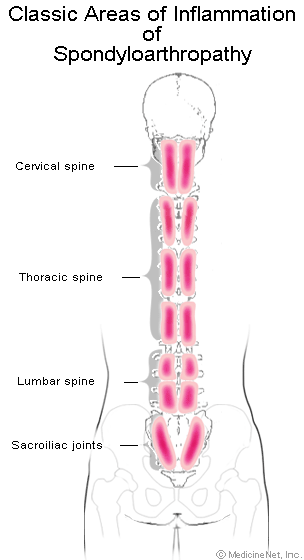


 Patient with ankylosing spondylitis complicated by rigid flexion deformity.
The exact cause is unknown. AS tends to run in families: approximately one in five people affected by AS have a relative with the same disorder. Just as we inherit our hair color and blood type from our parents, we also inherit our tissue type. The tissue typing system is the Human Lymphocyte Antigen (HLA) system. One of the tissue types, HLA-B27, is found in only 6% of the broad population but occurs in approximately 93% of individuals with AS. The HLA-B27 tissue type, while not causing AS, does predispose individuals with the B27 tissue type to developing AS. Thus we see AS tending to occur in families. Having the tissue type itself does not mean you will get AS, it simply increases the possibility. Identifying the activating agent that later triggers AS is the focus of much current research.
Almost all people with AS can expect to lead normal and productive lives. Despite the chronic nature of the illness, only a few people with AS will become severely disabled. The management of pain and the control of inflammation can reduce the daily problems that may occur with AS. Some ways to manage the pains and inflammation: Medicine
Exercise
Heat/Cold
Protect Your Joints
Relaxation
Surgery
You have an important role to play in the early diagnosis and treatment of arthritis. Early treatment can mean less disability in the long run. If you have symptoms of arthritis, report them to your doctor. An examination, and sometimes x-rays and blood tests, will help your doctor to decide if you have AS. A treatment program can then be set up to reduce the pain and disability that AS can cause.
|

 It affects between 150,000 and 300,000 Canadians (as many as 1 in 100)

