
Exoteric means "outer" and effects the body and self in ways which you can see and we can discuss those here. Esoteric means inner. The effects vary and cannot really be expressed with words. You have to experience these sensations first before you can really express them adequately. It's like trying to explain what the color "red" looks like to a blind person.
Concentrative meditation is the most popularized and practical style.It has been brought to light by both "sorcerors" and "scholars" alike. The Theosophy society even promotes it. Concentrative meditation affects the mind directly. It allows you to focus and gives you discipline. Most people stop here because the exoteric benifits are overwhelming. You may experience increased intelligence, quicker reflexes, tighter reign on emotions, the need for sleep decreases, if practiced regularly( at least an hour a day), to name a few. Concentrative meditation focuses the mind and "tightens the bow" so to speak. But if you tighten the bow too much, it will SNAP. We need to work practicing in gradually but steadily. Too much too soon and you will overwhelm yourself.
Once we have developed significant skill in concentrative meditation we can begin insight meditation. Insight meditation "expands" the mind and allows us to take in more. Insight meditation relaxes the mind in its own natural state and allows the wisdom we already have to surface. It seems as if we understand things better, but we are just more "aware" of our own inherent understanding. The benefits of wisdom are obvious, but I will elaborate.
Wisdom is experience. By applying our intelligence we turn it into wisdom by practicing what we know. We normally only practice, at the most, a quarter of what we learn. When we properly meditate we practice closer to 100 percent. At that rate it takes a lot of intelligence to make a little wisdom. Wisdom is really quite hard to measure since we normally take it for granted and focus primarily on the intelect. Practice, however, can make these results known in "hindsight" meaning we look back at what we have done and notice the improvement.
There are many things that happen when we begin to meditate. Think of your mind like cloudy water. Our toughts cloud our mind and when we meditate we allow the solids to settle. We calm our minds. As these thoughts settle they are filtered out. As they leave, we experence them leaving (because we are more aware).
When the emotions we have bottled up leave, we experence them that is how they disapear. We cry, we feel angry, we laugh, we become afraid. Eventually these sensations end and we can see these emotions before they start and express them properly. We gain emotional freedom.
Later we manifest certain "psychic abilities": Telekenisis, The ability to move objects without touching them. Telepathy, being able to read thoughts. Empathy, sensing others' emotions. Heightened reflexes, increased senses i.e.: hearing, sight, touch, smell, taste. We pretty much just open up and quit fighting ourselves.
Compassion is a side effect of wisdom also. These two go hand in hand. As you get wiser you get kinder. In retrospect when you get kinder (compassionate) you get wiser. A lot of people think compassion and meditation make you weak and soft. This is not true. You may not want to harm helpless beings, but it wont make you soft. Basically meditation will help you hone the skills you already have and rediscover the ones you have long forgotten. What you do with these skills is completely up to you.
Meditation techniques can be separated into two types: sitting meditation and moving. The former is the most effective and even moving styles should be accompanied by a formal sitting style. The main goal here is FOCUS.
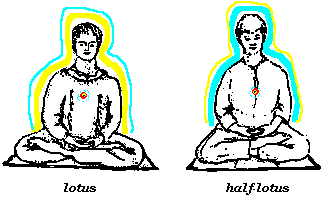
The "full lotus" is the position that is desired most. Although a lot of us Westerners find this position uncomfortable at first, if it is practiced young enough it is feasable. Find a comfortable space where you wont be bothered and you can forget about time and responsabilities (at least for the duration of the session). It is important to have this "sacred space" set aside and I will explain later about "energy centers." You should meditiate here and do nothing else in this spot. You will build up a "familiarity" with it any it will help you relax.
With your BACK STRAIGHT, chin level, eyes focused about 6" out from the tip of your nose. Place your right foot on your left thigh, your left foot on your right thigh and your hands folded on your lap, or traditionally, your hands with palms facing up on your knees. You should breath in for a full four seconds, hold you breath in for two, breath out for four and hold your breath there for two. Repeat this over and over. (I usually do this ten times before I even begin.) This is the hardest part and the most important: THINK OF NOTHING. Focus on your breath and count the repititions. If you loose count, stop, take a break and start over. When you can do this for 500 breaths you can say you are making progress.
Moving meditation is just that- meditation that encompases movement. This kind of meditation is especially helpfull if your range of motion is bad or if you have arthritis, or any kind of ailment that effects the joints or muscles. Just like in sitting meditation you should find a serene spot and do not think of anything while meditating. At first, this will be extremly hard because you will concentrate on the movements of your body. As these movements become "second nature" you will become more relaxed and able to just let your thoughts go.
There are thousands of diffrent systems and movements for this kind of meditation. The important thing is to pick one you body is comfortable with and/or one that suits your specific needs (range of motion, arthritis, bad back, weak bones etc.) A knowledgable teacher (like the ones here at D's Metaphysical) will be able to advise you about which method to choose. The most popular systems are Tai Chi and Tien Gunn because they are general pratices that are easy to learn and arnt very ailment specific.
Pratice for moving meditation is a bit more lengthy than that of sitting meditation (usually about 20 to 45 minutes), but the effects on the body as well as the mind are well worth giving this type of meditation a shot.
You should pratice a routine that is comnfortable for you. Don't FORCE anything! Set aside at least 10 minutes a day (20 for moving) to do this either before bed or (preferably) when you first wake up (the mind is fresh and clear then). If you can't set aside this time (which is not asking much) at least do it around the same time every day. Most preferably do it when you first wake-up (before anything else), in midday and right before bed. See if you can pratice for an hour or so once a week so your 10 minutes will go farther. Ideally we should take small "retreats" to pratice and the 10 minutes a day sort of keeps our mental state from deterioration.
Well, good luck and quit thinking so much.
D

