Your are here: Home > Communication > Radar > Basic Principle
Basic principle
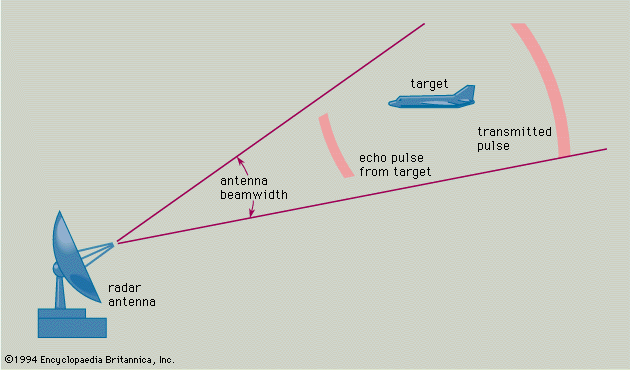
Principle of radar operation. The transmitted pulse has already passed the target...
The narrow antenna beam is scanned to
search a region where targets are expected. When a target is illuminated by
the beam, it intercepts some of the radiated energy and reflects a portion
back toward the radar system. Since most radar systems do not transmit and
receive at the same time, a single antenna can be used on a time-shared
basis for both transmitting and receiving. A receiver attached to the output element of the antenna extracts the desired reflected signals and (ideally) rejects those that are of no interest. For example, a signal of interest might be the echo from an aircraft. Signals that are not of interest might be echoes from the ground or rain, which can mask and interfere with the detection of the desired echo from the aircraft. The radar measures the location of the target in range and angular direction. Range is determined by measuring the total time it takes for the radar signal to make the round trip to the target and back . The angular direction of a target is usually found from the direction in which the antenna points at the time the echo signal is received. Through measurement of the location of a target at successive instants of time, its track can be determined. Once this information has been established, the target's location at a time in the future can be predicted. In many surveillance radar applications, the target is not considered to be "detected" until its track has been established.
|