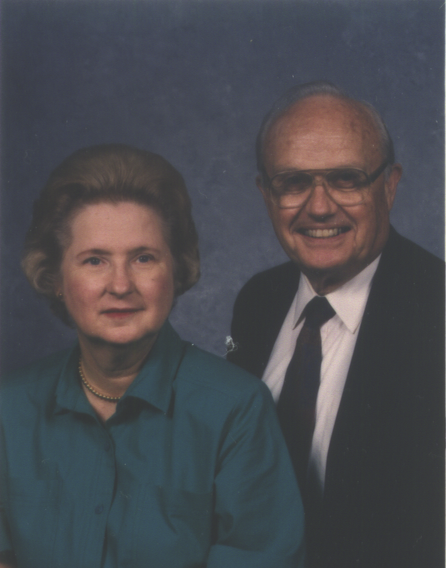
Ralph Reynard Norman, Jr., was born March 11, 1928, in his mother's family home in Greenville, Butler County, Alabama. His parents, Ralph Reynard Norman and Esther Dunn, had married on September 1, 1926, and made their home in the Lowndes County town of Fort Deposit, located about 12 miles North of Greenville.
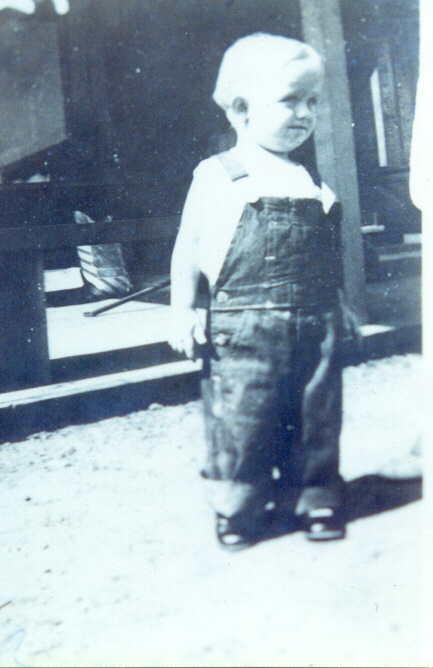
Bunk at age 2? (1930?)
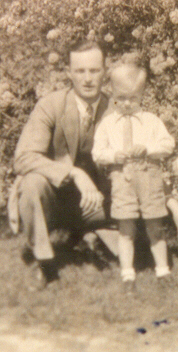
Ralph Sr. and Ralph Jr. at age 2? (1930?) Joe Norman and Bunk (c. 1934) Bunk at 16 (1944) Mock up of Queen Elizabeth’s wedding photo with Bunk’s college senior photo and Iris’ high school senior photo (c. 1949) Bunk and Iris (c. 1949) Iris, Rose and newborn Pat in the apartment (1951) Iris, Rose and Pat in their Easter finest in the living room of the house (c. 1956)
Bunk went to work in his father's business upon graduation, starting at $40 per week. That seems to be a paltry sum by today's standards, but it was enough to support a family of four, purchase a home and employ a full-time nurse/maid. They did not, however, have a car. We once had 8mm movies showing the girls on their way to church in their Easter dresses getting into the pick-up truck, which was used as a delivery truck in the business. [Comparing wages, a lawyer friend tells me that upon graduating from law school at Vanderbilt he returned to Birmingham in 1952 and took a job making $150 per month, by which time Bunk's salary had risen to $50 per week.] Norman’s store (1966) Bunk and Iris (c. 1995) Bunk and Iris with their granddaughters: Alice, Amy and Jessie (2009)
Young Ralph, nicknamed "Bunk" by his mother, a name derived from the nursery rhyme "Bye Baby Bunting," was known by his aunts as "Ralph Jr." He attended Lowndes County High School from first grade through tenth grade.
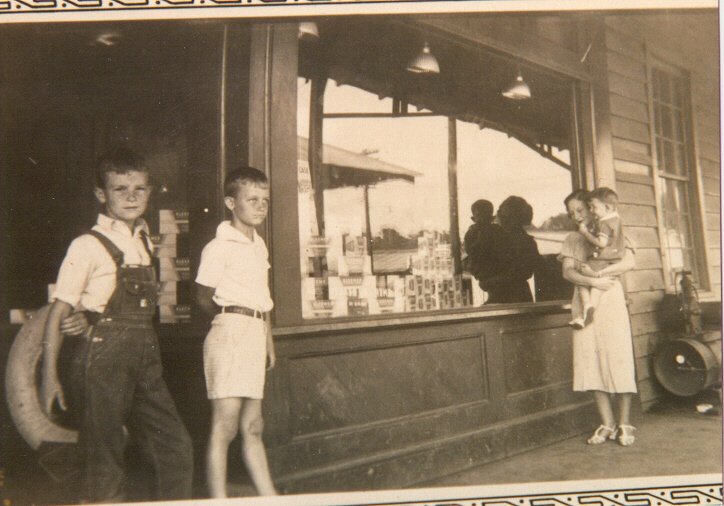
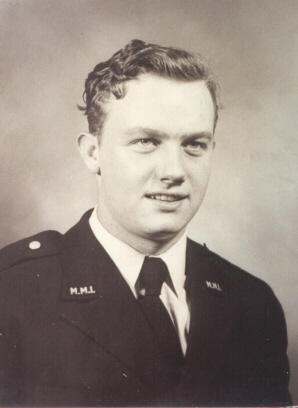
At the age of 16 he left Fort Deposit for Marion Military Institute, located in Perry County, where he completed his final high school requirements in one year.
In the fall of 1945 he enrolled in the University of Alabama, which had a student population at that time of about 4,000. At age 17, he was among the youngest of freshmen that semester, but he enjoyed college life and pledged Sigma Alpha Epsilon social fraternity. The Crimson Tide football team also enjoyed a good season, ending with what would be its last visit to Pasadena's Rose Bowl on January 1, 1946. A package deal to attend the game cost $100, which included the bus ride and a ticket to the game. However, $100 was also what it cost a student to live in Tuscaloosa for a whole month, including tuition. Looking back on it years later, he wished he had found a way to make the trip, and had he known it would be Alabama's last visit, he would have tried even harder.
With the end of the war, enrollment at the University more than doubled for Bunk's second semester. Most of the "new" students were at least five years older than Bunk and had seen extended action overseas. School did not seem as much fun anymore, so Bunk concentrated on his work and dropped out of the fraternity life. His senior year, he married Iris Little of Greenville, and then received his Bachelor of Science in Business and Commerce in the Spring of 1949.
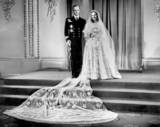
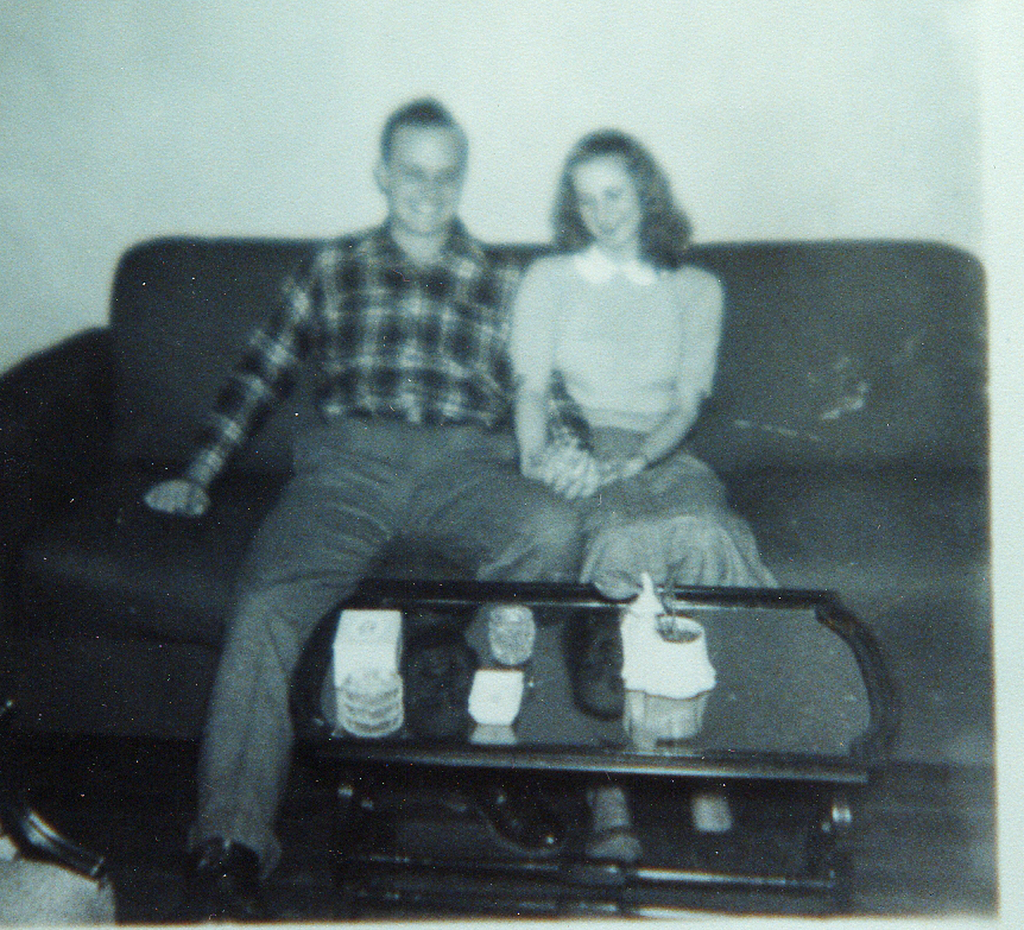
Bunk and Iris were married January 29, 1949. After spending the final semester in a co-ed apartment house in Tuscaloosa, they moved in with his parents in Fort Deposit until an apartment came available in the Weaver house located in the curve on what is now called Ellis Street. Bunk’s grandmother Norman also lived in this apartment house. Their first children were born while they lived in the apartment, daughters named Rose Lynn, in 1949, and Patricia Ann in 1951. In 1951, while Pat was still an infant, they purchased the home across the street from the apartment from Golson Hawkins, whose parents, Cecil and Marie, had built the home about ten years earlier.

Notice the baby bed in the background. This bed was first used by Bunk as a baby, then by all of his siblings, then by all of his children, most of his nieces, and two of his grandchildren.


The old frame house they called home was a two story structure, with a porch across part of the front that included a second story balcony. The first floor had been designed to accommodate piano concerts by the original owners' son. The room used by the Normans as a den featured 8-inch cypress paneling, with window seats on each side of the East-facing window. Bookshelves flanked each side of the seats, and a central bookcase was constructed below the window. This room, which was sunken two steps below the rest of that story, served the original owners as the piano room, and had access to the front room by double doors, allowing plenty of sitting room for visitors to enjoy piano concerts. The two front rooms were separated by the center hall, dining room on the west and living room on the east, each with a full fireplace and mantle. Upstairs, the west side of the hall served as the master suite, with another fireplace in the bedroom immediately above the dining room, and a dressing room in the back, immediately above the kitchen. On the east side were two more bedrooms, both very large, with the front room heated by another fireplace immediately above the living room.
In 1961, they began to renovate the 20-year old house, enclosing it in red brick, removing the second-story balcony across the front, and removing all the fireplaces except in the living room. [Mr. William Barganier, who was hired for the masonry work, had done the brick work on chimneys when the home was originally built.] In the den, the two South-facing windows were replaced with a new entry doorway and a large, nine-pane picture window. Eight-inch pine paneling was eventually added to the kitchen and breakfast room. A bath and shower was added in the master bedroom suite. Always very good with his hands, Bunk was able to do much of this work himself. In his leisure time, he continued his boyhood hobby building model airplanes in the front bedroom, with the girls using the back bedroom together.
The hobby room had to give way to the increasing family, as a son was born in 1957, Ralph Reynard Norman, III, nicknamed "Reyn" by his mother. Another daughter, Mary Elizabeth, was born in 1962. The two younger children shared the front bedroom for a few years, with Reyn finally moving to a bed positioned at the North end of the hall. Finally, they added a wall to enclose a room just large enough to hold bunk beds, a dresser and a desk.
Rose Lynn, known in Fort Deposit as "Rosie," graduated from Lowndes County High School as Valedictorian of the Class of 1967. She attended her mother's alma mater, Judson College, where she was editor of the school newspaper and, in 1970, received a Bachelor of Arts, magna cum laude. She then attended her father's alma mater to obtain a Master of Arts, and later earned a Ph.D. from the University of Tennessee. In 2006, she became head of the English Department at the University of Alabama Huntsville, and retired in 2010. She continues to live in Huntsville, directly across the street from the cemetery where her mother’s great-grandparents are buried.
Patricia Ann, known by all as "Pat," is a 1969 graduate of Lowndes County High School, and also attended Judson College, where she was editor of the newspaper two years. She received her BA from Judson in 1972 and a Master of Library Science from the University of Alabama in 1973. Today she is retired from Gadsden State Community College, but continues to work there part-time as a librarian. Her home is in Jacksonville, Alabama.
Like his sisters before him, Reyn graduated from Lowndes County High School in 1975, and then attended Samford University, receiving a BS in Business Administration in 1979. He received his JD from the Cumberland School of Law, Samford University, in 1982. After eight years in the private practice of law with an office in Hayneville, county seat of Lowndes County, he joined the legal staff of the Alabama Department of Insurance in 1990. In 2005 he became the agency’s General Counsel.
In 1983, Reyn married Helen Theresa Crawford of Birmingham. They have two children, Alice Dunn, born June 30, 1985, and Ralph Reynard Norman, IV, born November 10, 1988. Since 1992 they have made their home in Greenville.
Mary graduated from Fort Deposit Academy in 1980. She has two daughters, Amy Elizabeth, born May 4, 1986, and Jessica Lee, born March 18, 1993. Today, Mary works in the Alabama Power Company office in Greenville, but makes her home in Fort Deposit.
In 1982, Bunk suffered a minor heart attack, spending his 54th birthday in the hospital. It was determined that the stress of trying to keep a small-town general store in business was not good for his health. The family decided to sell the business and Bunk went into semi-retirement. He maintained a small office downtown, where he continued to operate an insurance agency, as an adjunct to his brothers' agency in Greenville. When they sold their agency in 1987(?), he continued to maintain the office, mainly as a place to keep his "stuff." The back room of the office had become his hobby room, where he had revived his childhood hobby making model airplanes. He and his brother Alex both enjoyed the hobby, which included maintaining a "landing field" in a pasture just outside of town.
Having been raised to be very civic-minded, Bunk served many years as the town's volunteer Fire Chief and became a Fort Deposit town council member in 1976, selected by the council to fill the seat left vacant by the death of his father. In 1979, when the office of mayor became vacant, the council selected him for the position, which he held until 1992, having faced no opposition in three straight elections. He was selected "Man of the Year" by the Chamber of Commerce on three separate occasions. He served many years on the South Central Alabama Development Council, including several years as its chairman.
Bunk has always been a very active member of Bethel Baptist Church in Fort Deposit, where he has served as a Deacon since the age of 21. He was the teacher of the "Couples" class for about 40 years, beginning in the 1960's, when the class was made up of young newlyweds [when he stopped in the 2000’s most of the members were grandparents, some even great-grandparents]. He has also been active in the Montgomery Baptist Association and Alabama Baptist State Convention, serving twice as Chairman of the Baptist Foundation of Alabama.
After closing the store, Bunk became active in the local AARP chapter. In 1984 he became a teacher of the AARP’s "55 Alive" defensive driving course and was also appointed as area coordinator for AARP’s state housing committee. In 1986 he was coordinator for their Health Advisory Service and served several years as the State Coordinator of the “55 Alive” program. He was named to Alabama’s Senior Citizen Hall of Fame in 1990 and was elected to the “Silver Haired Legislature” in 1994. As a part of his work with AARP, he began to lobby the Alabama Legislature to pass a law designed to encourage senior citizens to take a defensive driving course by requiring insurers to offer a discount for those completing such a course. His determination paid off in 2000, when the Alabama Legislature finally passed the law.
Bunk's civic-mindedness took him and Iris to a program in Auburn once in October 1991 that required an overnight stay. While away, lightning struck their home in Fort Deposit, which burned to the ground, destroying virtually everything in a matter of minutes. With only a suitcase of clothes, they returned to find their home of 40 years a smoldering pile. Gone were the 8mm movies depicting various family occasions since the 1950's. Gone were the electric trains that had entertained children (of all ages). Gone were the photographs and portraits of family and friends. Gone was his grandfather's pocket watch, two original editions the "History of Butler County" written by her grandfather in 1885, the baby bed that had served three generations and countless antiques collected over a lifetime together. Strangely though, in digging around through the rubble, his class ring from Marion Institute was discovered unharmed; an old train car from the train set he received at age two was located, tarnished from the heat but intact; and a few porcelain figurines were saved.
In 1992 they moved into a new home, built on the very site that had been their home for so many years. Finally they had what they had always planned to have in the old home: a master bedroom suite on the ground floor, a two-car garage attached to the house, and all new kitchen appliances. The home of their golden years would be nice and new, no "long lists and short lists" of home improvement jobs. No soot falling from the cracks every time they used a hammer, reminiscent of the days when wood fireplaces provided their heat. No more drafty old house, still heated upstairs by gas space heaters. Even with all the improvements, if given a choice, however, they would have chosen to live out their existence in the old house, with all its faults, just for the opportunity to keep the photographs, the movies, the electric trains, the books, and yes, even the old kitchen appliances.