In the centre of Australia surrounded by red desert lies Alice Springs and was once a remote outpost but is now the second largest town in the Territory. While the original Alice Spring is still there - the permanent waterhole that clinched the location of the Overland Telegraph Station in the 1870s and named after the wife of Sir Charles Todd, Postmaster General of South Australia. It was originally called Stuart but officially became Alice Springs in 1933 when only 400 people lived there.
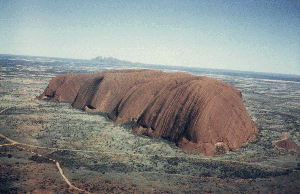
Australia's best known landmark "ULURU" formerly known as Ayers Rock, which was discovered by explorer William Gosse in 1873, towers 348 meters (about 1143 feet) above Mulga plains and being 9 kilometers (about 6 miles) in circumference is situated within range of Alice Springs along with Olgas, known as Kata Tjuta or 'Many Heads are 36 dome shaped peaks. Made of sandstone, Uluru is spectacular at sunset, when its color appears to change from red to purple. While Uluru and Alice Springs are often linked together, they are in fact more than 450 kilometers apart. The park is 126,132 hectares (311,672 acres) in area, is owned by the Aborigines and leased to the Australian National Parks and Wildlife Service.
Central Australia has mountains which are the highest mountains in Australia west of the Great Dividing Range. Set in the majesty of the clear skies and the ghost gums and the sandy dry rivers, set in the unique Australian Outback with its starkness, solitude and space.