Daves Colorfull Radios From The 1920s
Welcome to page 2 of Daves Colorfull Radios. Lets start in the 1920s. In the 1920s radios in the beginig of the decade were in boxes of various sizes. The boxes were made out of sawed oak,mahogany, and maple were commonly used.
The front panels were also made from wood,metal and bakelite. Bakelite was one of the first man made plastic materials. The other plastic material before bakelite was invented was cellulose. Billard ball manufactures offered a $10,000 grant if someone could come up with a inexpensive material for billard balls instead of expensive ivory.
After the civil war Cellulose was invented but had some very prominent shortfalls. The two main problems with cellulose was it became brittle with age and was very combustible. There were many explosions in the manufacturing process when making cellulose so chiemists in the 1880s started to look for other materials.
Leo Baekeland a young Belgian immagrent came to New York City and set up a garage laboratory and came up with Velox. Velox was a plastic film that he sold the rights to George Eastman who sold it as photo film for his cameras. Baeleland used this money from the selling of Velox and continued research on more types of plastics.
In the early 20th century he came up with a mixture of phenol from coal and formaldehyde and under compression it formed a hard but durable synthetic material. The other advantage it could be molded into various shapes. He patented Bakelite in 1909. This was the starting point of wide use of bakelite.
Its first uses were for small items such as washers and small panels in the auto industry and electrical industry. By 1912 Edison was using it for his records. About the same time Western Electric started useing bakelite in its telephone equipment. Adams-Morgan was the first radio parts company to use bakelite in radio parts. They used bakelite in its varocouplers and varometers. They also used it for the front panel on the first regenitive radio receiver in 1916. The molding technology would take 10 years more before more complex shapes would be able to be made.
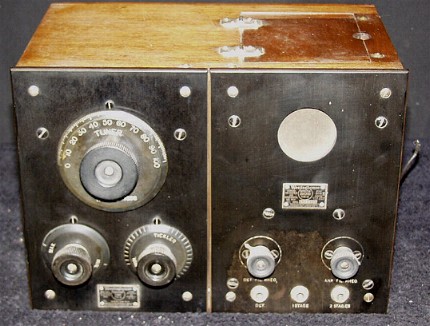
1922 Westinghouse Ra Da Detector Amplifier Radio Set
In the early 1920s the bakelite panels were black or brown. The finish was either dull or glossy. By 1925 bakelite started to get some color to it. Some panels were actually molded to look like wood. Grebe with its MU1 Synchrophase the front panel had a very dark maroon tint to it. Some manufactures of knobs began to have some swirling of colors molded into them. Garod on its Model V has some brown swirls in its knobs.
Atwater Kent changed from breadboard radios to wood cabinets in the mid 1920s. Then Atwater Kent started making his cabinets all metal. He did this on table and some console models. This was less expensive then wood cabinets to manufacture. They came in green, brown, black, and even some custom paint designs were made. Other manufactures picked up on this and made all metal cabinets.
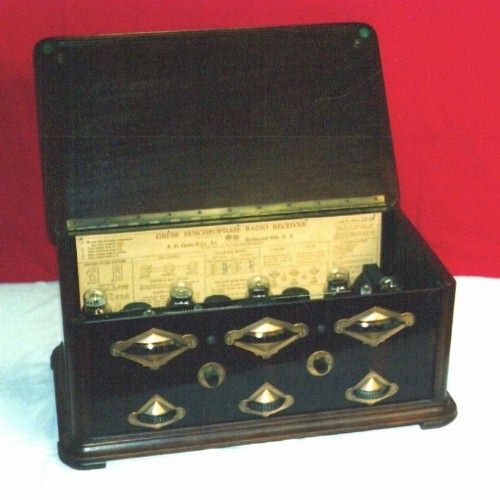
1925 Grebe Synchrophase MU-1
Durring the 1920s styling became more importent in the over all scheme. By 1927 when ac sets came to the market over 1/3 of new furniture were radio sets. There was a wide variety of styles to choose from. Most though were in styles from past periods. Spanish, colonial, Queen Ann, Chineese, and combinations of them.
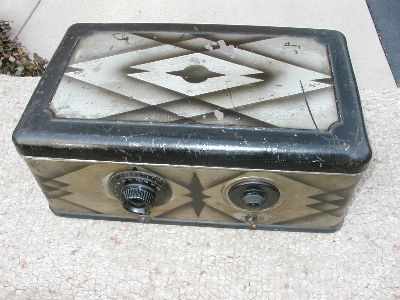
Atwater Kent specail custom factory painted radio
In 1929 Weston Electric Company brought to market its Model 547 tube tester. This was the state of the art in test equipment and in its all molding of bakelite. It was the largest item to be molded in bakelite at 14"x10"x4". The case,front panel,fittings, and carrying case were molded bakelite. In the next decade this would be taken much further by the radio manufactures.
Click here to go to page 3 of Daves Colorfull Radios. Click here to go back to page 1 of Dave's Colorfull Radios. Click here to go back to the hompage.

