|
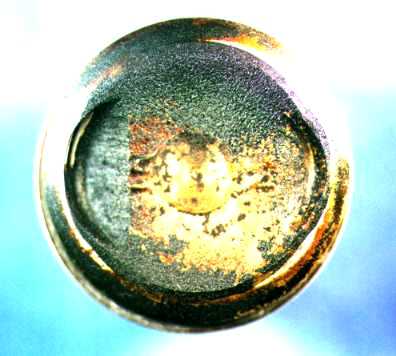
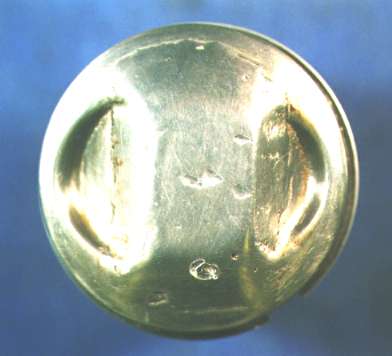
Ecorun 1999 PreparationAfter the success that we got last year at the Suzuka circuit, we were confident that we could do even better this year: getting among the first 50! This year, we will participate again on October 4th at Suzuka as usual. Registrations completed, I was named by unanimity manager of the "international" team comprised of Canadian, Swiss and of course, Japanese members. I organized the Ecorun season launching at my preferred French restaurant in Kariya, the "Petit Arome". Nishimura-san, who never had eaten French cuisine before, was more than delighted. A very joyful group with an unstoppable optimism, we are ready for Ecorun season 1999! With a meeting every Wednesday night, we needed to set up many objectives for our two cars: Aiming 2 and Aiming 3 (we keep the same cars as last year). The most important one is drastic cutback on overall weight including both the cars and the drivers. The cars weighting about 47 and 42 kg respectively will be on a weight-reduction plan until they slim down by 7 kg each. Of course, that would be cool to do systematically on the drivers as well but I think we should look around for thinner drivers... For example, every little nut will be changed from steel one to a lighter titanium nut. This saves us 0.3g each. Gambaro! After two weeks of bolt changing and polishing and cutting unnecessary parts, it is a big challenge. We don't want the car to fall apart during the race! We also evaluated the actual automobile parts in order to improve the engine performance. The most important part of the engine is none other than the piston and the valve cylinders. Aiming 2 has run for three years (in practice and during the race) and its piston shows a very dirty and corroded surface (see picture). Shining edges are the proof that the piston is knocking into the valve chamber. This is really not gasoline efficient! A similar problem occurs on the piston Aiming 3 that presents a cleaner surface (it is only one year old) but bumping into the spark plug leaves a deep cavity. Looking at these, I am just wondering how the piston of my scooter, which is, may be ten years old must look like. Burk! Finally, the inside of the exhaust pipe does not look any better either! These problems are example of small things that must be corrected to enhance gasoline consumption performance.
Gilles and myself will be looking at the aerodynamics with a special care to the wheels air entrainment. We have begun the rear wheel cover of Aiming-III made of carbon fiber composite. There are different steps in fabricating the part and every little one is important. The first step is to produce the shape of the cover with a "skeleton" of wood as shown in the picture below. The second step is the filling up of the body with styrofoam (see picture where Gilles is smiling). Afterwards, what turns out to quite a tricky step was the application of a very smooth surface of putty (also used for filling whole in walls during renovation of houses). Four long evenings were barely enough to apply and polish the surface. And we were finally ready for the spreading of the resin mold. The resin is very viscous and smells very bad when mixed with the hardener solution. I simply bathed the carbon fiber meshes in the resin and applied it quickly on the polished surface. I used my hands to extend it and that turned out to be the "first" mistake. Bubbles started to appear at the interface between the resin and the polished surface. Oups! Three layers were enough once solidified (after one day) to hold a very rigid mold. The problem was that it was totally impossible to extract the body out of the mold! It could have been a problem with the poor wax or the insufficient polishing (going to 400# paper was may be not enough?) or even the shape of the body which is small and curved. Thus, we were left with the only alternative, destroy the body. A real torture considering the amount of time we spent of making it. The putty was completely stuck to the mold and only a driver and a hammer could remove it! But that was the beginning of further problems... We had to fill the bubble holes on the resin mold back with the same putty and again polish the surface. Time was running out and a trip to Malaysia just before the event (I agree that it was a bad timing) forced us to precipitate things a little bit. Hiratsuka and I went to buy a special black gel coating, which we hoped, could save us a lot of trouble. I applied it as soon as I got to the laboratory. Again, the liquid was hardening very fast and this time, it was much more fluid. I used a normal scoop to distribute the liquid on the surface. The finish was very nice but also very irregular. I hoped that polishing the gel coating would be easy but it turned out to be nightmare. Oups! Maybe a very soft brush would have been better... It is so hard to get the perfect method the first time. But I am learning from mistakes. This time, we must say good bye to the rear wheel protector. As the Ecorun 1999 event will unfold, the need of that particular section on Aiming-3 will not be necessary (see next page for details!).
Finally, another area of improvement is the electronics. We "hired" an electrical engineer that will be able to implement new circuiting and ameliorate the super-secret device that is attached to the engine itself. This device helps us to control the entry of gasoline into the spark chamber and thus, reducing gasoline consumption. Within a group of metallurgical engineer, he is almost god sent! With these small improvements, we are ready for Ecorun 1999 season. Bye Bye I am going to Malaysia and I will see you back on Saturday 2, the day of the qualifications! 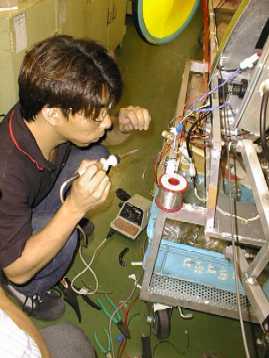
 
|