
Vocals

Guitar

Guitar

Bass

Drums

Decks
Lostprophets bio and photos
|
|
|
|
|
|
|
|||||
|
Vocals |
Guitar |
Guitar |
Bass |
Drums |
Decks |
|
|
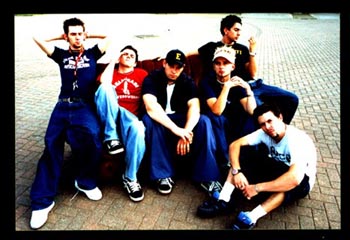 lostprophets |
|
|
|
They were the town freaks, the dark-eyed punk tribe with the twitching limbs, the devil’s own haircuts and the thick black crosses on the back of their hands. They only came out after dark and not to drink themselves braindead in the pubs or beat each other’s brains out in the nightclubs of Pontypridd like normal, healthy young lads. Instead they’d gather late at night in dark rooms and make clamorous, infernal, incredible noises. They called themselves Lostprophets, this cult of tattoo’d misfits, but no local priests ever arrived to save them. It’s only in a place like this that the Lostprophets – the UK’s most incendiary, explosive, melodic and ground-breaking punk metal band since the Manics – could thrive: in the last outpost of South Wales civilisation before you get to “hillbillyville, the deep valleys and Tom Jones”, under the terrified glare of the small town small minded. They were familiar faces around the Cardiff sattelite town of Pontypridd; they grew up a few doors from each other, attended the same schools, formed teenage bands to play Metallica and Police covers and spent their endless summers hanging out together, drooling over Duran Duran and Annihilator records with equal passion. It was Ian Watkins and Mike Lewis that broke out of Pontypridd first. Aged 16 they formed a hardcore band called Public Disturbance (with Watkins on drums) and hit the stinking metal grimeholes of Britain on a mission to napalm the hoary old UK rock scene unrecognisable. They returned disheartened by the fact that the hoary old UK rock scene didn’t much fancy being napalmed, cheers, and vowed to create a whole new electro-metal beast that’d stomp rock to mincemeat beneath its mighty heel. They would be the Lostprophets and they would preach a savage salvation. For that, they’d need their old mates Lee Gaze and Mike Chiplin on board. And seeing as though neither of them could sing, Ian crept from behind his drum-kit, pulled on his bouncing shorts and became the world’s most reluctant rock superstar-in-waiting. “I don’t really like being a frontman,” he admits, stroking his cheek with a hand marked with a thick black cross. “I like singing and making up melodies but I hate performing. It’s a pain in the arse. You’re the focal point and you’ve got to think of all the witty remarks. I like playing drums because you can go there and fuck everything else, just play.” Lostprophets’ life was charmed from the start. From their inception in late 1997 they scorched the Cardiff pub circuit with their raw concoction of frenetic breakbeats, flamethrower riffage and the kind of ace tunes that rock thought it’d been allergic to for the previous fifteen years. Their first demo received a 10/10 review in Metal Hammer and landed them a slot at a Kerrang! live show, where the head of the Visible Noise label cornered them demanding a single release. The band responded by hiding out in Frontlines demo studio in Caerphilly (where their new bassist Stuart Richardson worked) for the entirity of 1999, writing around 40 songs and avoiding the evils of bad booze like the plague. “We hated going out to clubs,” says Ian, “we don’t like sport, we’re not big drinkers so we didn’t go to pubs. That was our social life. We’d go up there every night, hang out, play Playstation, jam a bit, record a bit, mess around, experiment with breakbeats and keyboards.” They emerged in February 2000 with a new demo ‘The Fake Sound Of Progress’ and Visible Noise landed on them like a Serengeti tiger on a wounded gazelle. In two weeks that July the Prophets recorded their astounding debut album ‘Thefakesoundofprogress’, a vitriolic nu rock masterpiece that swerved between spitting bile at the small town hypocrites and backbiters on ‘Kobrakai’ and ‘Still Laughing’, pouring scorn on a music scene full of rehash merchants on the title track and reminiscing over long hot youthful summers spent playing video games in chip shops on ‘Ode To Summer’ and ‘Shinobi VS Dragon Ninja’. With nu metal eating America and winking suggestively in the direction of Britain, here was a defiant UK roar in response, a visceral and thoroughly modern statement that anything California can do, Wales can do more tunefully, more energetically and in better trousers. Most reviewers shat themselves and most subsequent headliners (including Linea 77, Taproot, Pitchshifter, Run DMC and Linkin Park) found themselves blown offstage as the band ripped support slots apart all over the UK. And the Prophet headline shows of 2001, with the last of the old Pontypridd posse Jamie on board as permanent DJ, were like the house band breaking out of Bedlam. “The kids coming up after the shows,” remembers Ian, “it was just insane. We were, like, ‘fuckin’ hell!’ They were fuckin’ nuts! We sold out the Underworld and there were kids all over the stage. It was a disaster but it was brilliant at the same time.” Like all the best religions, meanwhile, Lostprophets were recruiting influential new converts over the internet. “There’s a website called prp.com,” says Mike, “and the guy who runs it, all the American A&Rs worship him, they see him as the voice of youth. He started putting our name around and all these A&R people started contacting us. They started flying over to see a few shows and then they started flying us out. We were out in LA and it just snowballed because once a few labels are in on it the rest get interested. We got the limos, the meals, the shopping trips.” As a result the band signed up with the Chili Peppers’ management and then - outside Europe where they remain on Visible Noise - to Columbia Records through Visible Noise. But their ascendance from underground Welsh punks into the metalgnescenti doesn’t mean they’re going to turn into Boyo Roach. “There’s only a handful of UK bands that are any good,” says Ian. “A lot of them are shit and just want to copy the American bands but you’ve got to put your own slant on it. Don’t take things lock, stock and barrel. To us, melody is really important. Anything with a good melody on it is gonna be timeless. Rap metal is just a phase.” “We wanna show the rest of the world that Britain has got cool bands,” says Ian, “and they’re not all crap, thousand-generation rip-off metal bands.” Lostprophets are already a thousand generations ahead of their contemporaries and accellerating fast. They’re already gurus to the thousands of boggle-eyed moshers that tore the Brixton Academy a dozen new arseholes during their Linkin Park support slot in June and they are the fastest growing cult since, um, The Cult we suppose. And your mark of membership? That mysterious cross on the hand… “Three of us are straight edge and three of us aren’t,” Ian explains. “It’s a personal choice, but we put crosses on our hands to make people aware that there is a movement out there and we’re not under peer pressure to drink or smoke or anything. It comes from New York in the mid-80s with Minor Threat and stuff, whenever you’d go into a club they’d put an X on your hand if you were underage so they wouldn’t serve you. It got adopted as a symbol.” The Lost Prophets have arrived to show you the light. Spread the word.
|