>>>|||<<<
An updated excerpt of text originally from Virdainas ©
* Warning - RWA xenophobes may find this content emotionally disturbing.
PROTO INDO-EUROPEAN
>>>|||<<<
An updated excerpt of text
originally from Virdainas
©
* Warning - RWA xenophobes may find this content emotionally disturbing.
" People
lie. The
evidence doesn't lie"
- Grissom.
|
The Indo-European pre-proto-language originated in a homeland in Eurasia by a collection of semi-nomadic clans and pastoral tribes which more or less could understand each other (approx 6th Millennium BCE). As such, we might better conceive of Pre-Proto Indo-European ( R1a & R1b ) as a group of related dialects which evolved from one group* ( Indo-Uralic ) of another ( Uralo-Siberian ) group of an earlier ( Eurasiatic) group of the proposed primitive Nostratic parent language macro-family ( Vladislav Illich-Svitych ). The Uralo-Siberian regional origins of Haplogroups R1 & N1 reflect the Indo-Uralic cultural interaction of ages past. A Eurasiatic cultural refuge ties in Proto-Altaic nicely, as well. From the very beginning, repeated multi-ethnic additions have helped shape Indo-European's path thru time to the present. Scholars have determined the location based on an extensive reconstructed vocabulary of Proto Indo-European, and the habitat it describes. This was an adaptive language, one with which they sang, joked, loved, lamented and prayed. Linguistic evidence indicates that they prayed to * deiu̯os ( heaven ). The introduction of the wheel & burial orientation ( SW ) correspond to trade with the Maikop culture to the South.. These Proto Indo-European dialects were either of the peripheral tribes, or of the central tribes. Innovations which occurred within the central tribal dialects might not be reflected in some of the peripheral dialects. Migrations due to climate shifts further differentiated the dialects, as various groups dispersed to seek opportunities. Outside influences on the peripheral dialects might not be felt by the central dialects. Multi-ethnic influences were a constant thru many migrations due to climate change. Thus, it is difficult to say what "Proto Indo-European" was like if we do not accept the diversity of that proto language and it's speakers. PIE was a diversity of dialects from a culture of poly-ethnic roots - a hybrid, so to speak, of Steppe and North Caucasian ( R1 ) people. It's a faded puzzle where most of the pieces surviving don't fit together easily. Even today, Europe is much like an unmarked ancient sack of mixed genetic seeds. The migrations ( aka "Zarzian" pov ) from Northeast of the Black Sea (approx. 6th Millennium BCE) & the steppes of Russia and beyond to settle the expanse in the North near the Ural mountain range must have coincided with climatic changes. The "Epoch" or early origin of Proto Indo-European in the Samara area of Russia was (approx. 5th Millennium BCE) characterized by slow dissolution of tribal groups dispersing due to climate changes and eventually migrating to distant lands. The spread of Y-chromosome DNA haplogroup R1a1, R1b-Z2103+, & B blood type is associated with the spread of the Indo-European languages, especially R1a1 with the Satem branches. The vocabulary of these groups adapted to new environments, but enough "core" terms survived to enable the reconstruction of those terms. Click here for more about the reconstructed terms. It is ironic that there are now more students of PIE than there were speakers.
Close to the homeland of Proto-Uralic, the
Lyalovo
(5500-3650 BCE) culture on the upper Volga, it is the
Khvalynsk ( /w. R1b &
R1a-M459 ) culture
(5000-3900 BCE) on the middle Volga &
Sredny Stog / Repin ( /w R1a
M417+
) culture (4300-3350
BCE) in Ukraine that spoke variants of PIE. It was itself the local
continuation of the Samara culture (5500-4900
BCE), around the present-day
Russian city of Samara, which must have spoken a more archaic version of
PIE. So now, at any rate, the PIE cradle-land is known with some
precision.
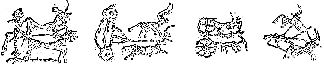
The R1a Y-DNA* & Language Tree. Many migrations (especially Corded Ware w/ R1a Z283+ ) coincide, as reflected in their Indo-European lexicons, with the new revolutionary technology of the wheeled wagon, dated 3,500-3,250 BCE at numerous excavated sites. It isn't until more than a millennia later that wagon-chariots show up in China. The Beijing Chinese word for wheel is KuLu, which bares an interesting resemblance to a nearby Repin Centum ( re: Xinjiang - Xiaohe w/ R1a M417+, Z93 neg ) derived Tocharian kokale. |
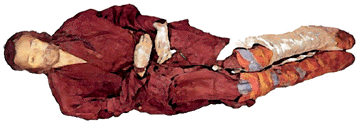
And who were these people? What did they look really like?
Simple. Google "Cherchen Man". His silence speaks volumes.
|
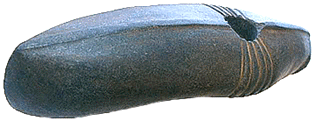
The proto-language dialect of each of these migrating tribes evolved differently from the other dialects. Chalcolithic stone hammer-axes appear in male burials in Bulgaria ( K. Boyadzhiev 2009 ), reflecting new immigrants from the East. Many encountered various different ethnic groups that were assimilated and changed the spoken languages. Poly-ethnic Globular Amphora ( w/ I2a2a1, & some R1a M417? ) was an amalgamation of Danubian Cucuteni-Tripolye with Centum Repins merging with TRB-Funnel Beaker populace. The Satem Middle Dnieper Cultures (Y-DNA R1a1a1-, Z280 multiple variants ), which later yielded Baltic and Slavic, was a "vortex" of multi-ethnicity, a fusion of various Indo-European Satems, some Centums, and assimilated central European indigenous populace ( TRB, Tripolye C2 ). Some dialects maintained contact ( R1a Z645 > Z93 & Z283 ) with each other, as in the case of East Baltic Fatyanovo-Balanovo and Pre-Vedic Poltavka by Sintashta - Arkaim in the Ural region ( О.Д. Мочалов 2001-2002 ), or E. & W. Baltics and Slavic via Globular Amphora trade. The lexical correspondences between Thracian, Dacian, Baltic, and Slavic imply a large Satem dialect area and similar substrate ( Dacian place name " Clevora ", Lith " Klevas " maple, Lith. place-names "Liepora, Beržorai " w/ distributive -or- suffix ). This explains the complex similarities between those four groups, of which they have many archaic features still worthy of serious study. Also, some Proto-Indo-European tribes (dialects) maintained tribal / linguistic contact ( sometimes via assimilated substrate) prior to their various distinct Proto-Stages, as in the example of Tripolye C2 and Pre-Baltics/ Pre-Thracian/ Pre-Slavic/ Pre-Germanic GAC, or Pre-Greek Catacomb / Pre-Tocharian Don-Repin ( w/ R1a M417+ ) which closely followed a Pre-Graeco/Armeno/Indo-Iranian alliance. The Volga Finnic Erzya / Moksha "Mordvin" languages have loanwords from early Indo-Iranian, East Baltic, and a Tocharian like Ural Volga area Repin Centum language ( VRC ), inferring another contact period. Re: haplogroup U5, Tokharian A " wäs ", Tokharian B " yasa " - gold ( PT *w'esā ), Kamassian " waza ", Uralic Mari " waž ", Votyak " az-veś ", Hungarian " vas ", Mansi " atvės ", Forest Nenets " wyesya ", whereas Sámi " vieške ", Moksha " uśkä ", Estonian " vask " reflect Tokharian A wsā-yok < *w'esā-yāku - gold colored. The distribution of haplogroup U4 in those very same groups reflects the breadth of such exchanges. Seven males tested from the Xiaohe cemetery in the Tarim basin were Y-DNA R1a M417+, Z93 neg ( Chunxiang Li et al 2010, & reference by co-author Hui Zhou ), and dated to about 2,000 BCE. The "Proto-Tocharian" Afanasievo ( R1a1a M417+, Z93 neg ) also shared physical characteristics with the early Catacomb period people of the Ukraine.
THE BALTIC & URALIC IN VEDIC SANSKRIT / AVESTAN Indo-Iranian "Soma"
preserved the native N1c1
Uralic word (
Sŏma
) for a hewn wooden mortar-bowl
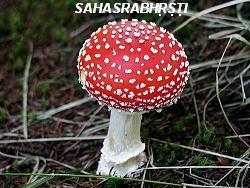
that was used as the dried Fly Agaric ( Amanita muscaria )
was pressed with stones in water ( Skt. "saumya"-
soft ). The misnomer was perhaps just a simple case of Balanovo-Volosovo-Garino
( Goldin 1999; 130, )
cross-cultural
verbal misunderstanding (
re: EV 141 ) of what was pointed at
( Pliss
et al. 2005, Derbeneva
et al. 2002 ). Balts (
R1a1a1 Z280 Northern variants & N1c1 poly-ethnics ) to this day still partake
dried / žalas
Amanita muscaria with milk & honey, as they have done for well over four
thousand years. It is "Senasis Takas"-
The Ancient Way ( Skt. Sanas Takas ).
That there is possibly a Ural-Baltic Daina, Ratas, or Šapalas in Sanskrit or Avestan should not come as a surprise,considering Uralic ( re: Sŏma ) is indisputably present. (re: N1c1 Khanty "Sŏma" hewn mortar-bowl ) Such drift of semantics can be seen even today in the English phrase "Do you want to do a bowl?"
BALTIC
RATAS > VEDIC RATHAS
All the Satem languages are inherently related, yet differ in various degrees or another. Certain lexical correspondences ( or isoglosses, such as in Lithuanian "šapalas" and Indic "śapharas" - chub-carp / "śāpharikas" - fisherman ) are rather unexpected ( as cognates are absent in Avestan, and even Slavic ), and will require closer scrutiny with the emergence of new archaeological evidence from Sintashta & Arkaim. That a central European culture ( 3,400 BCE - Baden, w/ R198 / Globular Amphora, w/ I2a2a1 ) centered new "wheel" term ( Old Irish masc. sg. roth / pl. rothai, Latin sg. rota / pl. rotae, Albanian diminutive w/ th from a * t > sg. rreth / pl. rrathë ), reflected in Corded Ware East Baltic baritone masc. "ratas / ratai ", was loaned into Finnic languages is uncontested (re: Finnish ratas, North Sámi ráhtis ), but where does a baritone masc. sg. Āryan ráthas - "vehicle" figure in the pre-Sintashta ( 2,100 BCE ) Graeco-Armeno-Indo-Iranian shared lexicon? It doesn't !
And why would some Indo-Europeans want to rename the wheel? ( PIE: * kʷekʷlo- ). Perhaps they needed to. Celtic Y-DNA ( w/ R1a M420, M198, & R1b ) appears to be very old, and Old Irish "cul" - vehicle, needed an update. European cognates of a Proto-Celtic *rotos may well merely reflect an innovation from contact & areal proximity. The verbal root *ret- "run", is found only in Celtic ( w/ Mtdna W6a ). The Italio-Celtic gen. sg. "- ī " replacement of *-oiso- illustrates such shared innovations from contact. Fatyanovo jewelry ( Latvian "Ruota" ) designs ( twin spiral pendants ) explicitly reveal close trade contacts with the distant emerging Unetice culture, unlike the more distant Pit Grave Culture, and Finnic loanwords ( North Sámi ráhtis ) from Fatyanovo exemplify such contacts. The Funnel Beaker ( Mtdna V7 ) Bronocice pottery wagons are reflected by Novosvobodna ( Mtdna V7 ) connections and artifacts. Globular Amphora culture assimilates some Funnel Beaker. Fatyanovo assimilates some Globular Amphora with Unetice contacts & take their new "ratas" word with them into the northern Ural forests. Pit Grave is still located out on the Volga steppes. East Baltic ( LWb antigen - LW*07 allele, R1a1a, Z280 Northern variants, & Z283 ) Corded Ware Fatyanovo-Balanovo ( 3200 - 1800 BCE ) copper metallurgy in the Urals has it's roots in central European cultural traditions, including Euro-Repin-Centum ( ERC ) Globular Amphora ( Berezanskaja 1971 ), which were ethnic contributors in the multi-ethnic "vortex" of the Middle Dnieper ( eg. R1a1a1- M458 GAS > Czech " pýř " fire embers ) & Fatyanovo cultural horizons. The old Carpathian metal trade of central Europe, & ancient flint or amber trade routes, provided for tribal contacts and cultural exchanges between language groups like Baden pre-Celts, pre-Albanian Dacians and Middle Dnieper Balts / Slavs ( Albanian lopë - cow / Latvian Luops - id ), as well as Triploye C2, TRB & Centum Globular Amphora substratum. To the West of the Middle Dnieper, C-14 dates reflect an amalgamation of ERC Globular Amphora ( Y-DNA I2a2a1 ) w/ TRB, or Funnel Beaker culture for near a millennium in Poland & Germany ( I2a2a1 ), then along with other Corded Ware variants assimilated Erteboelle natives while on towards Scandinavia, as some GAC did earlier while expanding the flint-amber trade with the Narva of the Baltic region, and their Uralic neighbors. Some outlier GAC Centum speakers were assimilated by the pioneering Satem Balts moving North.
The Centum
influenced features of East & West Baltic are like a window into one
component of an archaic pre-creolized Proto-Germanic,
just as Uralic languages have frozen old Baltic words in time.
The Middle Dnieper Repin
( R1a- M417+ ) contribution to poly-ethnic ERC Globular Amphora is
reflected by Tocharian / Germanic proclivities, and the
ERC Globular
Amphora substratum ( "GAs " )
influence on variations in the Baltic languages ( klau-
/ šlav-, or akmuo-
/ ašmuo- ) and their lexicons (
peku ). Albanian also exhibits
inconsistencies with Satemization, perhaps due to bilingual dynamics. The study of Baltic languages
provides a unique perspective for Tocharian / Proto-Germanic
Repin-Centum
(w/ R1a- M417+ ) investigations. Trade networks between
ERC GAC subgroups were conduits for
isoglosses even beyond
the other Balts in the West. Comb & Pit Ware ( N1c1
) amber contacts & Uralic bilingual substratum, or Funnel Beaker /
Globular Amphora bilinguals may be a phonetic (
secondary allomorphy ) impetus
for dative plural
"-M-"
type linguistic transitions away from a "-B-"
( Baltic
žambas / Estonian
hammas ), as well as the use of
chamotte ceramic admixture. The Dative
Plural /
-m-
/ from
/ -b-
/ probably
reflects early Baltic area GAC
trade network contact / dialects, or or Funnel Beaker (
w/ Mtdna V7
) GAC substratum. Language is not
genetic, it is acquired. Note N1c1 (
N-M178 ) Baltic speakers in Lithuania & Latvia, or
R1a1a ( w/ Z92, LWb antigen )
Uralic speakers in Estonia, or Yoeme speakers of
" Yoi Noki ".
Latvian " Ruota " Poly-ethnic Narva-Globular Amphora outliers
added substratum cultural influence ( Brjussow 1957;
Ozols 1962;
Česnys et al., 1990 ) to
Fatyanovo-Balanovo, contributing a "
residual "
non-Satem substratum vocabulary of their
central Euro-Repin Centum (
ERC
) words like "pẽku
" - livestock
( vs.Satem Lith. "pešti
", OCS
"pьsъ
" ) into East
Baltic. The impact of a Centum Globular Amphora as a poly-ethnic substratum (
GAS
) also influenced the incongruities in Baltic Satemization
&
partial
RUKI
( eg. Finnish "laiha
", GAS Lith. "liesa",
ipo *lieša
).
Make no mistake, the impact of this Centum / Satem tango went both
ways ( GAS > pre-proto Germanic 11,12 leftover term & 1,000, etc.).
The Fatyanovo-Balanovo ( & Volsk-Lbishche culture )
jewelry ( Latvian "Ruota"
) from the Urals emulates specific
twin spiral pendant designs ( as well as engraved armband
bracelets ) of a
Central European
provenance, perhaps derived
from the integrated poly-ethnic Globular Amphora substratum of Fatyanovo-Balanovo
and Middle
Dnieper - and were found at Sintashta. Fatyanovo-Balanovo
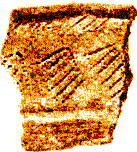
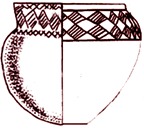
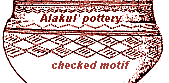
pottery often exhibits unique
trademark *darža
"checkered"
double row diamond ceramic ornamentation motifs not found on the steppes ( О.Д. Мочалов 2001-2002
), thus allowing their contacts to be tracked -
even into Sintashta & beyond - to Kandahar
valley's
Mundigak Period VI ceramics in Afghanistan
( Kuz'mina 2007, p.
716, fig
101, # 14 /
re: Lith. piešalas, Sanskrit peśalas
).
The "parallel
lines "
motif may well represent a *darža,
or a tilled garden plot ( re: Finnish
tarha
< Fatyanovo
) of barley or hemp
(
*©jp
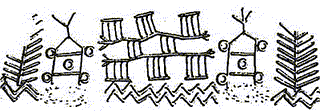
), evoking comparison to a similar motif on the famous Bronocice
pot ( see above ). This European farmer's motif was perhaps inherited from early Dnieper Satems or
the more probable Fatyanovo-Balanovo GAS ( re: Perkūnas
velar
below ). Corded Ware Fatyanovo-Balanovo Ural copper metallurgy preceded Corded Ware Abashevo and
later Sintashta metalworking, predating them by near half a millennium.
Unique Fatyanovo checkered *darža
East Baltic motifs on Andronovo pottery - and
even on
Mundigak VI ceramics in Kandahar valley,
Afghanistan. Cool !!!
The terminology of the typical dual wheeled cart (
Lith. dviratis )
of the early
East Baltic Fatyanovo-Balanovo (Goldina
1999) farmers & metallurgist-woodsmen and multi-cultural Abashevo
successors may have been a quasi-bilingual
source for a unique northern imported term, " ratH2as
> *
ratʔas
> ratas
" wheel ( *- circa
2,400 BCE ), for an Āryan masculine
singular "
* ratʔas
> ráthas
", upgraded intact as a nominative singular word for
the new chariot of the Abashevo - Sintashta era metallurgic bonanza.
Semantic incongruity is a hallmark of
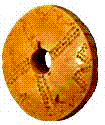
loanwords in traditional linguistics. The Baltic amber sun disc talisman, or solar halo (
rẽtis ) wheel
-
Saulės
Ratas, is found distributed in central European
cultures, particularly the Centum Globular Amphora (
I2a2a1 ) - which also contributed substratum to Fatyanovo, which in turn eventually contributed to the
Corded Ware Abashevo culture
and finally poly-ethnic Sintashta / Arkaim
( О.Д. Мочалов 2001-2002
).
If the Sun's wheel became the Sun's
chariot -
Saulės Ratas became
Sauryās
Rathas.
Latvian " Ruota " ! "Saule" is
also a common traditional Kazakh & Central Asian (
Afghan, Kyrgyz, etc. ) female name (
w/o Indo-Iranian "R"
ipo "L",
or a Slavic "N" ). The
meaning of the name is translated as sunlight, or
Sun, just
like the feminine East Baltic
"Saulė", which is also used for a female name.
Artifacts of the CWC
Volsk-Lbishche Baltic culture have been
found by a distant swamp of Tenteksor, Kazakhstan
(
!
) of the trans-Caspian
region ( Kuz'mina
2007, p. 354
) Another "coincidence" to be avoided
( or
omitted ) by "professional" academics?
The rare LW7 allele ( aka
LWb+
antigen of ICAM4
), more commonly found among Latvians,
Lithuanians, & Samogitians
(
Sistonen et al., 1999 ), was also
detected in a Turkmen from the North Hindu Kush region of Central Asia (
Mazieres, et al., 2013 ).
Vedic Sanskrit has the somewhat (15
times ) obscure word "Dhēnā
", meaning "hymn, song", which reflects East Baltic "Daina
", meaning "dance > song". From IE *dei-
("move, spin, whirl") we have Latvian "deinis
" dancer, "daiņa " restless person, "dainēt / daināt " to
dance, sing, "deja" dance, Lithuanian "dainuoti "to sing"
( vs. somuoti ) clearly illustrating the core
Baltic etymology (It is also attested in West Baltic
toponyms). But creole Vedic "Dhēnās" hymn-prayer, lacks any
such "dance" etymology. The Avestan "Daēnā " (
Middle Persian "Dēn" ) is even more semantically vague -
"that which is revealed, revelation". This implies a loanword, and like in
Vedic - a word without a clear etymology. The closet indigenous
Indo-Iranian cognate is Avestan "Dian", meaning "fast" (re:
Grk. " δινεύω
" whirl ). Scholars
interpret the actual pronunciations of the old Vedic Sanskrit "Dhēnā"
and Avestan "Daēnā " as "Dainā".
Eventually, an East Baltic Fatyanovo-Balanovo "daina " provided
a term for the new Monotheism ( Daēnā )
that was later emulated to it's West. Small world. An East Baltic
Fatyanovo-Balanovo loanword proposal
for post-Sintashtan
dhēnā,
śapharas,
and especially ráthas, is not only
linguistically practical, it is
archaeologically probable
( О.Д. Мочалов 2001-2002
).
We do know
the Corded Ware Abashevo cheek-pieces
were copied - but what else? Given the " boatload " of
Corded Ware (
including
the Volsk-Lbishche Baltic culture ) influenced artifacts at Sintashta and Arkaim (re: ceramics
with talc / chamotte / or shell & unique *darža "checkered"
diamond rhombus trademark design-motifs ), continuing on thru Alakul',
Fedorovo & Mundigak VI, maybe one or two
Corded Ware words leaked out. Just maybe.
To quote M. Witzel (2003) quoting J.P.
Mallory (2002) "there are still degrees of geo-linguistic plausibility".
Or to quote the Sage of Scotland -
Billy Connolly, "They say 'that's crap ! It isn't crap – you just
don't get it, and you never will."
Sintashta Pottery
"Some
ornament traits let us to link Sintashta with northwest forest Fatyanovo
culture".
One period of earlier mutual contact coincides with the more poly-ethnic "Europeanized IE" Corded Ware culture zone ( R1a1a- M417, Z283, Z282 ) after the advent of the wheeled wagon. It was perhaps a combination of climate change ( re: the Blytt-Sernander Sub-Boreal phase ) and the revolution of the new oxen drawn wagon which prompted the widespread Corded Ware migrations. Interaction between central European Dniester Tripolye C2 and the northern Dnieper Tripolye C2, TRB, and Globular Amphora populace may well account as a medium of some archaisms ( re: tauras ), cognates, and as a trade conduit for innovations ( dative plural "m" < phonetics of Uralic N1c1 bilinguals? ) in poly-ethnic East Baltic ( re: mtDNA N1a1 ), as well as a link for traditions of central European copper metallurgy. The combination of kurgan and flat graves, reflecting the integration of Tripolye C2 with I.E. steppe ethnicities ( eg. Centum Usatovo-Tripolye ), is found in the diverse Middle Dnieper cultures ( R1a1a1-, Z280 multiple variants ), Fatyanovo-Balanovo ( LWb antigen - LW7 allele, R1a1a1 Z280 Northern variants, & older Z283 ), and Corded Ware Abashevo. Sintashta kurgans account for about a third of the burials - the rest are, interestingly enough, flat graves. Estonian CWC Fatyanovo ceramics exhibit a protruding or projecting rim, as does later Corded Ware Abashevo pottery ( re: mtDNA N1a1a1 294 < ? GAS ). Volosovo & Balanovo pottery are even found in the same room. Words were spoken. Corded Ware Abashevo cultural integration at Sintashta is indicated by various artifacts, including unique *darža "checkered" diamond rhombus designs ( О.Д. Мочалов 2001-2002 ) & talc in ceramics from the Volosovo N1c1 admixture with the Corded Ware Balanovo & Abashevo, and the foreign mycologic sŏma tradition of these quasi-trilingual misfits. Fly Agaric is the fruit of the forests, not the wide open steppes. The Fatyanovo-Balanovo forest dwelling quasi-trilinguals stubbornly clung to their Euro-farmer identity, and never did quite fit ( ārya- ) in. A genetic study of the genealogy of Eurasian taurine cattle ( J Kantanen et all., 2009 ) suggests a relationship between taurine breeds of the Baltic ( Fatyanovo ) region and Sakha ( Andronovo ) cattle, or Yaroslavl - Siberia. Then there is the intriguing Baltic Perkaunis, Votiak Perkino, Erzya Pəŕgəńä, Vedic Parjanya legacy - the Ural elephant in the room, so to speak. Why are Parjanya cognates with an "alpine" velar plosive absent in the multitude of other surrounding Iranian-Dardic-Nuristani Satem languages and dialects, - or even related Satem Slavic? See below. Note Pashto "Perūney ", Slavic "Perun ", Nuristani "Pärun " vs. Gas Lith. " Perkūnas ". Slavic Ruki & velarless Perun' vs. Gothic alpine Fairguni suggest a ERC GAC velar plosive borrowed from a P-Celtic influenced *Perku- < alpine *Kerku- was assimilated into Baltic Perkūnas-Perkaunis-Perkōns type variants ( Greek " Κέρκυρα ", Lith. "Kerkūrė "- mountain summit ), and at an early date. Uralic " residuals-loanwords " agree ( Finnish Perkele & Votiak Perkịno ). Archaeological support for such a linguistic assertion is beyond debate. And that zone of Centum / Satem contacts has been thoroughly dated with C-14. If linguists can ignore pots, they can ignore DNA. But an odd "alpine" velar < plosive might actually elicit curiosity. Don't hold your breath. Perunaš /
Peraunas
Perunaš, a knotty boulder-cliff Hittite deity ( Myth of Ullikummi, Ivanov 1958; 108-9 ) closely resembles the Middle Dnieper culture's velar-less "knotty" Peraunas cumulonimbus we all know and love ( Slavic Perunŭ, Czech Peraun, Polabian Peräune- ). An interesting parallel exists with Sanskrit velar-less Paru / Parv-ata "mountain" ( Hittite Peru, Perunant-, Avestan Paruuatā ), that was also used for a cloud, especially a massive knotty cumulonimbus cloud cluster, the kind which usually precedes violent Spring thunderstorms ( RV 1.64.11 ). Spring Thunderstorms were associated with the Taurus constellation ( Latv. Vērsis ), and it's Pleiades star cluster ( Pashto Perūne ). An affiliation of Peraunas with cumulonimbus thundercloud clusters, geologic uplifts, lightning-bolts and magic "ceraunium" stones ( Tocharian kärweñe, pāreṃ ) is still noted. Neighboring Catacomb Culture provides a later Greek Keraunos - thunderbolt ( Grk. Poimenes / Lith. Piemenes, Kerauninkas ). Lithuanian kerauti translates as "to make magic, sorcery". Globular Amphora & Northern Dnieper Satems assimilate, uniquely blending the Satem Peraunas cloud cluster & Centum alpine Perkūnija by "tying the knot" of sky & earth. Perkaunas-Perkūnija unite the poly-ethnic Baltic GAs Centum & Satem farmers, which also head East with the new ERC alpine velar wedding attire, as Uralic words record. Perkaunas adopts the mycological magic orphans of the forest folk along the way to the Urals with the Fatyanovo-Balanovo metallurgic pioneers. Sintashta was still just an empty meadow. For paru / peru " jointed, knotty " etymology, see Karl Hoffman 1974. In addition, I note Sanskrit Paru - knotty ( esp. of reed, or cane ) and Lith. Peras - jointed plant shoot ( e.g. of reed ) cluster, as well as a cluster of white "knotty" larvae, or brood cluster, bear close etymological affinities ( for -as vs.-us, note Lith. Vėjas vs. dialect Vėjus ). This "cluster" could be of stones, clouds, rock, eggs, sprouts, larvae, chicks, church goers, reeds or stars. From the eggs & seeds of Nostratic > PIE * per- to bear, begets the "cluster". That cluster becomes a cloud ( Czech Peraun, Latv. Per(k)aunis ), or if stone ( Hittite Perunaš ), becomes a mountain ( Perunant-, Paruuatā ). Many things are native to the vast steppes of Russia - with the notable exception of alpine peaks. The visual connection of a puffy cloud cluster with a tight cluster of cute fluffy chicks or squirming larvae ( Lith. Peras ) may be easily comprehended by a native Oaxacan, but many scholars to date just don't get it. Distant snowcapped mountains resembled the towering clouds of the earlier endless steppes. Perūne, Perōni, Peräune, Peraun, Perunŭ, Perunaš are all related "cluster" cognates. GAS influenced Perkons & Parjanya are also related, and especially to each other - due to specific inter-ethnic Volga-Ural contact. ©Virdainas ( Mochalov O.D. 2001-2 « checked » ornaments )
Oaks are "strikingly" knotty, as are firs, fingers, posts, backbones, ribs, cliffs and clouds. Oaks are also, like mountains ( re: Fairguni ), "strikingly" tall, or as they say in Hittite, Parku-, or Tocharian Pärk--, and "long" when felled ( Tocharian Pärkär- again ) - as when one makes a 26 ft. dugout canoe - or perga - pergas ( Finnish haapio < Fatyanovo aspen canoe ). ( Greek Πέργ- implies a European substratum "p" inclination for expected "b". ) Khotanese bulysa also prefers the horizontal orientation. A Proto-Kartvelian dialect root for acorn, dialect for oak, reflects *ḳrḳo-, which bares a striking similarity to Italic "Kerkus " cork oak ( with many branches ), Venetian "Querquerni ", Thucydides' mountain " Kirkine ", Celtic alpine "Hercynia " > Gothic mountain Fairguni, > O.N. "Fjörgyn", Greek " Κέρκυρα ", Lith. "Kerkūrė "- hill, mountain summit, Lith " Kerkulė " many branched stump ( trunk ), Lith " Kerkutys " branching trunk, Lith. "Keras" bush ( with many branches ), Welsh "Perth " bush ( with many branches ), Old Norse "Fjörr " tree, etc, etc, etc. Lith. kerkoti - to " stick " out - like the "alpine" velar in Perkons or Parjanya, *darža « checked » Alakul' & Mundigak VI Afghan pottery, or z280 Northern variants by Samara & points East. Initial, or medial Q > T? > P is early Lengyel / BBC, influencing GAC, TRB traders, & Baden outliers. Follow the Money. Jātarūpa amber. Lengyel / Bell Beaker culture creole influence is easily perceived in various numerals, such as Breton: pemp, Swedish: fem, Old High German: fimf, Oscan: pompe - 5, or Welsh: pedwar, Old English: fēower vs. Lithuanian: keturi, Sanskrit: chatur- 4. ( Greek Πέργ- implies a Balkan area substratum "p" inclination for expected "b". ). The 2,800 BCE Corded Ware / GAC connection of O.N. "alpine" "Fjörgyn" & E. Baltic elevated "Perkūnija" is fairly obvious, given current archaeological & DNA evidence. Perūne, Perōni, Peräune, Peraun, Perunŭ, Perunaš are all related "cluster" cognates ( re: Lith. Peras - brood-larvae-sprout cluster ). GAS influenced Perkaunis & Parjanya are also related, and especially to each other - due to Sintashta-Arkaim era, Volga-Ural region inter-ethnic contact. ( Mochalov O.D. 2001-2 ) The arboreal *Perkus & Unicorns are just myths. Roth, ratas, rathas. Embrace the Chaos. ©Virdainas In East Baltic Mythology, Perkūnas-Perkaunis-Perkons is closely associated with the Bull. In Nuristani Mythology, Pärun is a war god ( kariaunas ). In Pashto, Perūne is the Pleiades star cluster ( re: Old Prus. Perōni - group, Lith. Peruotas - brood cluster, Peras - brood-larvae-sprout cluster ). The reason Perkūnas-Perkaunis is associated with the Bull is due to the ancient correlation of the Taurus constellation's importance to the agricultural Dnieper Satem Tripolye R1a1a- Z280 substratum of East Balts. The Taurus constellation ( Latv. Vērsis ) signaled the start of the growing year, and the arrival of Perkaunis' loud Thunder storms. The Pashto Pleiades Perūne star cluster is in ( you guessed it ! ) - the Taurus constellation ( Casino "ding-ding-ding" sounds ). The stars brought the rain of the Bull representing the magic of fertility to the Z280 Satem farmers. When the Satem East Balts assimilated the poly-ethnic Globular Amphora-post-Narva substratum with their pre-Fairguni, a Centum "alpine" velar was added to Peraunas by his alpine wife Perkunija, hence the E+W poly-ethnic Perkūnas-Perkaunis-Perkons. Uralic "loanwords" attest to this antiquity of the East Baltic "alpine" velar plosive variant. Perkūnas was very important to farmers, unlocking the start of a new growing year by his loud return. In Lithuania, the first ritual plowing of the Spring was done by two sacred black ( kirsna- ) bulls. His two stones ( not red ) release fire. The goatish echoes of flying snipes before a storm warn of his arrival. Stricken lightning locations are šventas. The *darža "checkered" ceramics ( Mochalov O.D. 2001-2 « checked » ornaments ) in Sintashta and Alakul' pottery track contacts with Fatyanovo-Balanovo Z92 farmers. Parjanya later appears in the Rig Veda as an peripheral, obscure deity, even though he is a son of Heaven ( Divas putrāya ). He is associated with Soma, Vāyu, and has Bull ( Latv. Vērsis ) symbolism. He gladdens the Earth. He has a trace of a misplaced "alpine" velar unlike Pashto Perūne ( Pleiades - in Vērsis ! ) star cluster, Pärun, or Peraun / Perunŭ cloud cluster. Parjanya has lost his militaristic affinities & exploits. Early Mitanni contacts may connect Ashur / Marduk to the Asuras / Maruts. There were no copyrights back then. Like the wheel itself, this "core" IE myth is probably just another export of southern agricultural civilizations, which the evolving shepherd-nomads of the open sky ( deivas ) steppes found compelling. The characters themselves, and even their props, appear plagiarized. Old habits are hard to break. The blissful Elysian fields of Valhalla, Latv. veļu, Tocharian A walu, reflect an archaic steppe culture, and a nomadic shepherd vintage. The "evil serpent " import and various keraunophobic oriented belief systems have remained quite popular to this day. It is the hero Indra who now frees the cattle from the "Vala" cave, slays the Vritra "ahi-" serpent, and throws the "wheel" of the "kerauninkas" Kāvya Uśanas ( Latv. milna < *mildna, O. Prus. E-52 mealde, Balto-Slavic *meld- / *mald- / *mild-, Tocharian kärweñe ). See Proto-Baltic for more detailed info. Let it Rain
In the old Baltic dainos folksongs, Perkūnas was to wed the Laumė Indraja. One role of Indraja is as a mushroom guide spirit. Vedic Parjanyas is the father of Soma. The Abashevo used talc in their ceramics, as was common with their Uralic neighbors. The pottery of the two cultures have been found in the same room. Note ( N1c1 ) Mari " paŋgə" mushroom, Udmurt " paŋχəl- / paŋχət- " to howl and "carry on" after partaking of Fly Agaric. The Lithuanian version " Ar prisiėdęs musmirių ", refers to the partaking of the Fly Agaric mushroom, and exhibiting a skewed, altered state of reality. It is a quite common, courteous way of calling someone stone crazy. If they ate too much dried - žalas Fly Agaric mushroom, and there upon glare ominously "wild-eyed ", howl ecstatically, see " the Unseen", & "carry on" - that person would be labeled "aršus ". The Avestan term for " an ecstatic, seer " is " ǝrǝšiš ", which is a close cognate to Sanskrit " ṛṣiḥ "- a Seer. Back in the Ural forests, Uralic Khanty still has a word " sŏma " for a hewn wooden mortar-bowl, as well as one for the partaking of Amanita muscaria. Mixed Balanovo-Volosovo sites were mediums of cross-cultural interaction for sharing ethnic customs preceding, and contributing to Sintashta, which influenced Alakul' ( Grigory'ev 2000 ) groups ( О.Д. Мочалов 2001-2002 - re: Fatyanovo-Balanovo "checkered" ceramic designs > Sintashta ). Sharing the Uralic hewn sŏma-mortar-bowl with it's entheogenic contents, like a diplomatic cross-cultural peace pipe, evidently sparked it's legendary admiration. The misnomer was perhaps just a simple case of cross-cultural Balanovo-Volosovo verbal misunderstanding. "... mmm, sŏma good "! Uh-oh. East Baltic neuters did not require a final consonant. They still don't. Fatyanovo-Balanovo is the link, the panta, between the two disparate cultures of Poltavka and Volosovo. Fatyanovo-Balanovo *darža checkered diamond rhombus pottery connects Poltavka & Volosovo, revealing the conduit for cultural exchange. This would all be quite coincidental if these people had never met - but, they did. Archaeology has already provided the where, when, and why. Let it rain. "Balto-Slavic" is a generalization of the diverse poly-ethnic Middle Dnieper culture horizon of regionally related, distinctly archaic, Satem dialects - somewhat like collectively describing the nearby neighboring proto "Graeco-Armeno-Aryan" cultural horizon, or the central European poly-ethnic Centum proto "Celto-Italic" dialects. Peripheral contingents of Centum Globular Amphora ( Brjussow 1957; Ozols 1962 ), Corded Ware, TRB & Lengyel, Tripolye C2 peoples, outlying Carpathian & Maykop metal traders, and Dnieper Repins may well have also contributed to the multi-ethnic "vortex" that was becoming the diverse Middle Dnieper culture horizon ( note R1a1a- Z283 & Z280 sub-branches ) and related Fatyanovo culture - imbuing them with an "retro" centralist character from the collective peripheral archaisms - on an already retro-core Satem (re: RUKI, absent perfect reduplication). This explains why one finds a unique Celtic-East Baltic term, separate Greek-East Baltic isoglosses, or Indo-Iranian-East Baltic isoglosses. The Corded Ware Eulau ( GAS type w/ R1a- M417 Y-DNA ) connection to two Shughnans in Asia highlights the Abashevo Corded Ware component of Sintashta & Arkaim ( Mochalov O.D. 2001-2 « checked » ornaments ). Mycenaean mtDNA had a match in SE Poland. CWC GAs? MVK-Monteoru romance ? Structured linguistic theories are a poor match to interpret the formative chaos of the past with the multicultural Middle Dnieper culture horizon and related Fatyanovo & Abashevo migrations. DNA has come of age. Embrace the chaos.
LW*07 ( LWb+ ) in the North Hindu Kush Region From historical accounts and ancient traditions, it is certain that
hemp use was
more than just for cord, cloth, and seed food. Reading from the archaeological
record, one can associate dates starting at 3,200 to 2,300 BCE with
various material artifacts and increased plant
(
hemp
and wheat )
pollens that appear to indicate
the arrival of "Baltic"
speaking farmers in the
region around present day Lithuania and Latvia.
Recent
archaeological finds of Triticum and Cannabis
pollen circa 5,600 BCE from the Akali Neolithic
Narva-Kunda settlement in East Estonia
(2006 A. Poska, L. Saarse) place the use of Cannabis cultivation in
the Baltic region much further back into antiquity than even the Corded
Ware era. Baltic cannabis use
for nets and medication is over seven thousand years old, or perhaps
older, since the region was part of it's native range.
A high incidence of Pan-Baltic Y-DNA from the haplogroup
N1c1 [old name N3] with
allele DYS19*15
indicates Baltic admixture with older Uralic substrate, as does haplogroup
U4
( Lith šeškas,
Mari šāškə,
Veps hāhk,
re: Sanskrit śaśakas
) & the rare
LWb+
antigen / LW*07
allele blood marker - which is unique to East Baltic
speaking people, like Fatyanovo was. The Tocharian mummies of the Tarim Basin also share Haplogroup
U4,
as do the Kalasha people of North Pakistan, as well as some lineages in India.
The uncommon
LWb+
antigen ( LW*07 allele )
gene
is more specifically a peculiar
East Baltic speakers related genetic marker that appears to have been rare
or virtually absent in West Baltic speaking peoples. Recently, frequencies
of this very rare Baltic speakers oriented
LWb+
antigen
/ LW*07
allele have been
documented in the distant North Hindu
Kush region of Central Asia ! The archaic nature of the distinction between East and West Baltic
( or Slavic, for that matter ) is well supported by
Y-DNA (
R1a1a- Z280 Z92
vs
L366 ), skeletal-cranial remains, archaeological artifacts, and by the disparity of the
unique rare
LWb
antigen ( LW7
allele ) gene between them. >>>
LWb PDF <<<. Elevated
CCR5
DELTA32 mutation frequencies
are also found among modern Balts & Uralic speakers. MtDNA
H1 frequencies are very, very low among Lithuanians and virtually non-existent
with the Sámi.
In Lithuania, mtDNA H1 is mainly confined to
only Northern Žemaitians. The
Aukštaičiai ( LT Highlanders ), like the
Sámi, have none. South Aukštaičiai
R1a1a has a
61.8%
frequency ( Kasperavicuite
et al., 2004 ).
Less the above referenced genetical
info be misinterpreted as some form of encrypted "cracker-code-speak", I
will stress that the fiction of ethnic or racial "purity & superiority" is
clinical insanity, and definitively reflects a quantifiable
low
IQ by conservative adherents
( G. Hodson
et al., 2012 ). People are people - some individuals shine,
some hide in their cruel fear. Most of our DNA is
African. As my friend Robbin said, " It's all good ". |
|
The Proto Indo-European language slowly evolved from a dialect of Nostratic, primitive at first, but expressive. With time, it's speakers innovated and assimilated new ways to render it more precise and effective. One innovation lead to another, and eventually the everyday speech of these people resembled something somewhat similar to the reconstructed synthetic proto-language theorized by scholars. It is doubtful that it ever possessed the elegant complexity often set forth about it, or will we know what long lost assimilated ethnic group influenced what. That complexity was nonetheless accomplished later, in both humble and renown languages, all derived from Proto Indo-European. Such are the languages as elevated as Sanskrit, or humble as Lithuanian. Click Here for examples of Prayer in various Indo-European languages. |
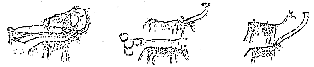
|
The transition from active ( fientive ) to the later, and more complex, declensional system |
|
Only nominative, genitive, dative and accusative
forms have constant intercrossing functions in various Indo-European languages,
while forms used for the instrumental or locative cases (traditionally
declared to be "Common Indo-European"), have related functions: e.g.
the IE * /-ois / may occur in the instrumental case in one language
and in the locative case in other ones, or */-ō / (apophonically) /-ē
/ occurs as /-āt / in the Indo-Iranian ablative and
as /-it / in the Hittite instrumental. Such intercrossing elements were
used for semi-paradigmatic adverbial forms, differently paradigmatized
in the various Indo-European languages. (V. Toporov, V. Maziulis) |
|
"The traditional
academic construct of a seven case declensional system for early Proto Indo-European
|
|
Certain innovations (eg. " thousand " participle ) that occurred in the Eastern Baltic ( LWb+ antigen / LW*07 allele, R1a1a1 Z280 Northern variants, & Z92 / N1c1 ) dialects are not reflected in the Peripheral ( R1a1a-, Z280, L366 ) Western Baltic dialects ( with compromised attrition to 4 core declensional cases, re: neighboring Gothic ) . Each area also had different mixtures of substratum populations ( EHG + WHG ) involved in their ethno-genetic formations, and later neighboring influences. The Peripheral West Baltic dialects exhibit an archaic appearing declension which gives one a unique window into both W. & E. Baltics, and the "Northern" Indo-European GAs & EHG-WHG influenced dialects, and the creole influence of substratum on varied evolutions. The differentiation between each dialect became more pronounced as time went by and different ethnic groups were assimilated. If GAC Centum influence defines what is Baltic, does Steppe Iranian influence define what is Slavic? Those dialect tribes that remained in closer contact later resembled each other more, as in the case of Baltic, Indo-Iranian, Germanic, and Slavic (each with their somewhat similiar grammatical innovations). In the case of the Baltics and Slavic, with many of their supra-archaic "retro" qualities, a clear window into past developments is possible to determine how such innovations took place. Thus, Baltic & Slavic Studies, along with Albanian and Armenian, will continue to enrich and redefine Proto-Indo-European Studies, now and far into the future. Somewhere in Lietuva this evening, a farmer will beckon - "ašva ", "ašva ". Embrace the chaos.
The Sūdovian greeting "Kailas"
re-affirms that we are all One, poshka@hotmail.com |
___________________________________________________
BE HERE NOW
>>>|||<<<
More than
half of the planet's 7,000 or so languages are facing extinction within this
century.
We are losing around two languages a month - or about one every two weeks.
Learn an endangered language, or at least help
conserve one - as if it was your
own. They are.
PLEASE DONATE TODAY TO:
The ARVAS FOUNDATION
a non-profit organization
This webpage
was FREE, after all. Don't be cheap.
DO IT NOW ! ...
BE
A MAN !
And as a special way of saying "Thank You"
for your generous contribution,
we will provide you a link to exciting new
Sámi music on YouTube absolutely
FREE
OF CHARGE!.
___________________________________________________
The magic of language is a gift,
from mother to child,
living as a memorial to all Women,
who gave it to us.
____________________________
| Proto Baltic | ~ | Nostratic Language | ~ | Mažiulis |
Click Here for Indo-European linguistic studies.
|
Suggested essential readings include: The Origin of the Indo-Iranians, Volume 3, by Elena E. Kuz'mina, edited by J. P. Mallory, p 222, Brill NV, Leiden, The Netherlands 2007 ISBN: 978 90 04 16054 5 , The Horse, The Wheel, and Language, by David W. Anthony, Princeton University Press, ISBN10: 0691058873, and especially «ШАХМАТНЫЙ» ОРНАМЕНТ КЕРАМИКИ КУЛЬТУР РАЗВИТОГО БРОНЗОВОГО ВЕКА ПОВОЛЖЬЯ И УРАЛА, by О.Д. Мочалов, Stratum plus, №2, 2001-2002. pp 503-514 ( The «chess» ornament on the pottery of the Middle Bronze Age in the Volga and Ural regions, by O.D. Mochalov. Stratum plus, №2, 2001-2002. pp 503-514 ) - available as a PDF from here ( page 116 ), or from Stratum. Note title mistranslation of « chess » for « checked ». The ceramics track the East Balt cultural assimilation into various pre-Indo-Iranian sub-groups prior to later regional creolization.
|
*
The Seroglazovo culture may have been an Indo-Uralic group of related Pre-Proto Indo-European dialects
located in areas by the Ural River near the Caspian lowlands around the 7th-8th millenium B.C.E.
*
Baltic " Deivas " - The Divine Spirit of Heaven, influenced Finnish " taivas " & Estonian "
taevas " heaven, perhaps
Sámi
" taiw ", and also Hungarian " táj " - Khanty " tai ".
The often ignored semantics of East Baltic celestial " Deivas " are illustrated in phrases from Latvian dainās ( eg. " Saule noiet dievā " - Nav saulīte dievā gaiša ).
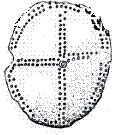
Saulės
Ratas
(Amber Sun Halo-Wheel)
East Baltic Lithuanian also has "
rẽtis
" - halo
circle around sun
/ moon, risti / rita,
raitėti - rieta, retėti,
etc
- related to Lithuanian "
ratas
" wheel, Latvian " rats ".
Why rename the wheel? Farmers
vs. Cowboys.
Baltic Saulė is feminine.
A Solar Ratas may have gained popularity with widespread assimilated
agricultural oriented substrate (GAS < TRB, Tripolye C2),
Magic talismans known as
Amber Sun-Discs, found in southern Globular Amphora sites
and elsewhere ( GAS ), may be key to the cross cultural " ratas " term of central
Europe.
(Linear B ideogram 243), Latin "
teres-retis
"-
rounded, well-turned, and
East Baltic Lithuanian "
retis
" provide a fresh etymology for
PIE *roteH2
/ *rotH2os ( spokes included! ).
As for Fatyanovo-Balanovo " ratas " and Aryan " rathas " >>> Estonia and India alone share the 294 single marker of mtDNA N1a1a1. ( 147A-172-223-248-294-320-355 )
Mitochondrial haplogroup N1a phylogeography with implications to the origin of European Farmers, 2010, BMC Evolutionary Biology Publication 10:304
Mordvin Erzya
t'ožon / t'užən, Moksha t'ožän, Estonian root stem tuhante
1,000, may reflect an early Fatyanovo East Baltic
participle * tūśante / * tūšanti,
preceding a poly-ethnic GAS Centum * tūskanti, and GAS-ed East Baltic *
tūstantis 1,000 ( > Old Latvian " tuustosch- " )
re: Finnish laiha / GAS Lith. liesa / Fatyanovo *laiša (
also Latvian " tūkst, sing. pret. tūska " )
Perhaps *
tūḱsa- >
* tūšant- > + GAS > * tūstantis
1,000, huge - note Old Latvian " tuustosch- "
The Uralic words may well reflect an early East Baltic pre-GAS ( pre-compromised
RUKI ) Upper Dnieper Satem word that evolved with poly-ethnicism.
( East Baltic Dnieper Satem evolved on a non-IE Narva substratum, w/ N1c1 early
Uralics, and ERC Globular Amphora = poly-ethnic )
Follow the Money.
But back in 3,000 BCE, it was follow the copper & amber.
It has been suggested
Germanic " thousand " reflects " * tū-skont- ", which may reflect
a Gas poly-ethnic ( š > sk ) trade variant * tūskanti by Centum
Globular Amphora.
The Globular Amphora flint-amber trade network may have used a Centum modified ( š > sk >
* tūskant- > * tū-skont- ) variant
while the Uralic variants reflect an E.Baltic * tūšant- ( > later
GAS-ed * tūstant- ) variant from Fatyanovo-Balanovo ( East Baltic
Dnieper Satem ).
A 2,800 BCE
amber trade GAC * tūs-kont- was perhaps interpreted by trade contacts as a * tūs-šimt-
compound word > W. Baltic * tūsimt-
.
The chronology of CWC regional variants is critical for untangling the
etymology of 1,000.
Slavic RUKI indicates far less early integration of GAC, although cultural
trade contacts are plainly evident.
Variations of GAC integration may explain the absence of a velar plosive in
Slavic Perun- vs. Baltic
Perkūn-.
A 2,800 BCE
Slavic / -s- / from
/ -sk- / appears plausible, considering dative pl. /-m-/ became
/-b-/,
and the perceived participle reflecting "e/o" type variations of 1,000.
Pots don't talk, they speak - volumes!
Perhaps an early
Satem East Baltic "* tūśante / tūšanti ", and later poly-ethnically
compromised " * tūstantis " thousand,
reflects an East Baltic ( Latvian " tūkst, sing. pret. tūska " ) based
participle ( Estonian stem "tuhante" )
or maybe a present stem * tūša with an Indo-European " -nt- " collective suffix.
Globular Amphora culture contacts evidently adopted a Centumized variant * tūskanti, as did others from
them..
One out of 3 Kalash have mitochondrial DNA belonging to haplogroup U4. In fact, the most prevalent mitochondrial haplogroup of the Kalasha people is U4.
Haplogroup U4 lineages have also been found in India. MtDNA Haplogroup U4 is common among northwestern Siberian populations, and is also found among the Mari, Mordvin,
and Mansi of the Volga-Ural region of Russia, as well as the Estonians, Finns, Balts, Tocharian and Śaka kurgan mummies.
*
The round "kurgan" mound tradition of the Buddha's Śākya tribe in Nothern Bihar, India also resembles Śaka Steppe kurgans of Eurasia & Russia.
The Digha Nikaya of the Tipitaka Pali Buddhist canon describes Siddhartha Gautama as having very blue eyes ( Pali: abhi nila netto ).
The Chinese described Bodhidharma as "
藍眼睛的野人
"
*
Of Soma, the original entheogen ingredient of dried Amanita muscaria ( Fly Agaric ) became extremely scarce with later Aryan migrations
and was eventually substituted with a mixture of Ephedra, Cannabis, and opiates. It was a very poor imitation of the genuine Uralic "Soma" rite.
( Volgaic Erzya, Mokša " Sjuma / Səma " - hewn wooden trough, Estonian "Soim" hewn wooden manger, Khanty "Sŏma" hewn wooden mortar-bowl. )
The Indo-European use of Amanita muscaria survived intact in Lithuania - hidden away in forests beyond the reach of ethnocidal "Christians".
According to Marija Gimbutas, Lithuanians used to supply quanties of Amanita muscaria to the
Sámi in the North for use by Sámi Shamans.
The Eastern Balts of today have thus preserved a Continuum of Cultural Tradition for Indo-European use of Fly Agaric
in collective celebratory use (such as weddings) from the very mists of antiquity - before Abraham,
Moses and the Shasu "YHW", or even the Rig Veda itself.
Hungarian " gyentar > gyantar " amber, " gyenta " resin,
Chuvash " jandar " glassy, Mari " jamdar " transparent, suggest
the amber trade with East Balts.
Old adjectival -tar neuter suffix in East Baltic " *gentar
" - amber < " *genta " - resin, gum < nasal PIE *gʷet - resin (
re: O.N. kvaða, Skt. jatu resin, aśvatara- mule )
The original PIE adjectival -tar neuter suffix was also later used in a
comparative sense ( ie: " wet-ter " ), although originally it was mainly adjectival.
Gintaras reflects the Sembian dialect pronunciation with their typical
narrowing of " en " to " in ", adopted as such in some
neighb
With
the now irreversible Climate Change accelerating
and the inevitable extinction of all Humanity before 2100,
please try to keep the occasional typo in perspective.