Other Resources: Dallas
It also featured the elimination of the remnants of Reconstruction, decreased funding for education, and provided no protections for ex-slaves. In Texas, it had become something of an honor to be identified as an ex-Confederate, especially if running for public office. Though slaves were gone, segregation spread and the future of African-Americans in Texas was uncertain in 1877.
The future was also uncertain for Tejanos. Many Texans were still fighting the Mexican War that had actually ended in 1848. Violence and discrimination continued in 1877.
There were some new things in Texas that Texans embraced. They liked the image of cowboys that cattle drives brought and the good times in cowtowns like Ft. Worth. Texans also liked the railroads that came to Dallas in 1872 and Ft. Worth in 1876. Texans did not like all the results, though. Railroads brought crime and by 1876 some 3,000 wanted criminal fugitives were in Texas. 100,000 horses stolen 1875-8.


DOC HOLLIDAY came to Texas for the climate due to tuberculosis and began practicing denistry but couldn't due to his illness. He turned to gambling. His first violent confrontation in Dallas was with a saloonkeeper, Jan. 2, 1875. He was arrested but after his release he shot a prominent citizen and fled to near Jacksboro at Ft. Richardson. He became Faro dealer but killed soldier so fled to Colorado, Wyoming, New Mexico and back to Texas. At Ft. Griffin, Texas, he met "Big Nose" Kate Elder, a prostitute/dancehall girl. They had a tumultuous relationship. He also met Wyatt Earp, the legendary lawman of Dodge City, Kansas. Eventually Doc and Kate went to Dodge City after he killed another man. In Dodge City, Doc Earp in a confrontation and they became friends but Doc continued to move around. He met up with Earp again in 1881 at the Gunfight at the OK Corral in Tombstone, Arizona. No one was convicted for that incident. Doc Holliday died in 1887 in Glenwood Spring, CO.
But, they had been replaced by a new breed of criminal, the train robbers. In 1877, the talk of Dallas was the big Mesquite train robbery by Sam Bass. He was illiterate and orphaned at 13. He grew up in Denton as a cowpoke where he herded cattle to Kansas. He would take his pay to Deadwood, South Dakota, and loose it so began robbing trains. In 1878, he was killed at Round Rock, Tx, by lawmen. By then he had become a hero to some Texans. He was known as the "gentleman bandit" since he never molested women and left victims a dollar for food. Here's a song about him: Sam Bass.
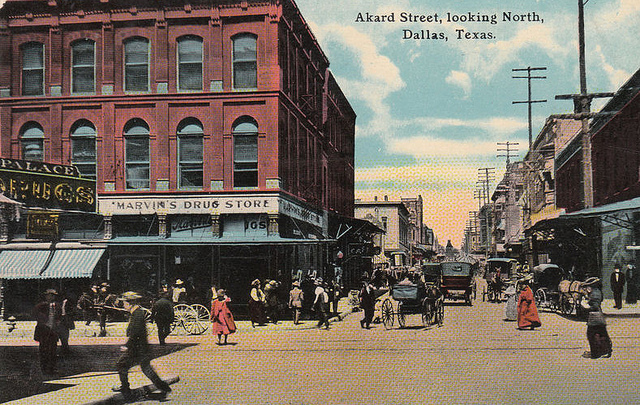
By then, Dallas was a bustling city, and by 1890, the biggest city in Texas only to be surpassed by Houston and San Antonio in 1900. The Industrial Revolution was having a big impact on Dallas. Economic class became more evident with opening of "poor farm" near Hutchins in 1870s for those who could not pay their bills. More exciting was the Trinity River Navigation Co. that brought steamships to Dallas in the 1890s. Commerce St. had a toll bridge and the first railroads and fire engines arrived. Dallas also was one of first Texas city with telephone service originally to Galveston. Also one of the fist phones in Texas was at today's El Centro College. At that time it was the Sanger Brothers Department Store and had a phone to the Sanger estate
By 1881, Dallas had a water system and the electric lights came in 1883. The State Fair organized 1887 and Oak Cliff was founded 1890 but merged with Dallas in 1903. In 1888 Dallas had the Hams Baseball team (named after the meat processing companies in today's West End) and the first skyscraper (North Texas Building). Electric cars replaced mule drawn trolleys and in the 1891 football game, Dallas beat Ft. Worth. In 1897 the first movie house opened as the development of the soft drink industry revealed the push for industrialization. And it was a southern development.
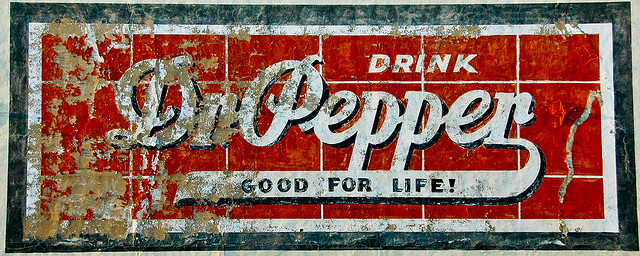
The first soft drink invented may surprise you. It was Dr. Pepper in Waco (1885) and moved to Dallas in 1923. Next came Coca-Cola out of Atlanta (1886). Of course, it's famous because it had cocaine in it. All of the original soft drinks were invented by pharmacists and sold as a healthy drink for various problems. Coca-Cola established it's first syrup factory in Dallas, too. Meanwhile, in 1890 Pepsi was introduced in North Carolina.
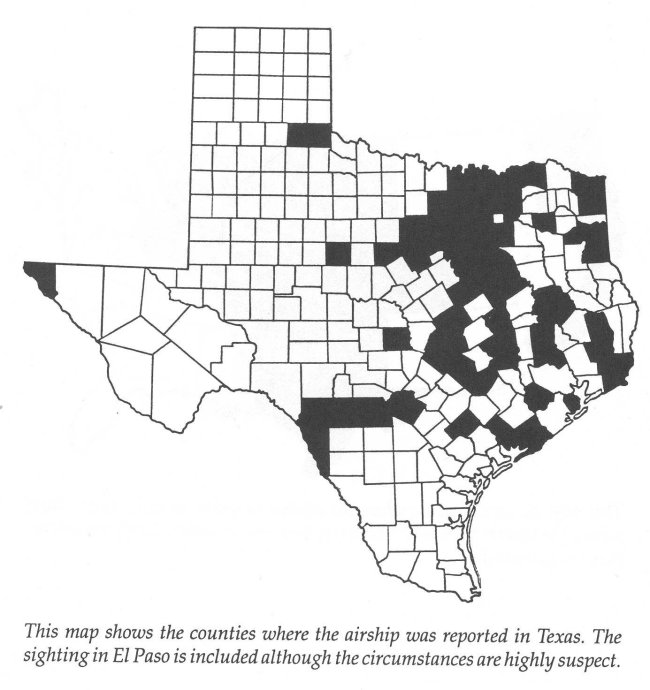
With all the technological developments, perhaps the imaginations of Texans got carried away. Or maybe that's not what happened. Who knows? But, in the 1890s there was a flood of UFO reports in Texas and elsewhere. This was the first real UFO scare. Back then they referred to them as "airships." Most were described as looking somewhat like dirigibles although they would have never seen one. There is the possibility they saw pictures of them, however, since dirigibles were being developed at the same time.
In a Dallas sighting, the airship was described as a luminous, hazy cloud with wings and cigar-shaped with large fans rotating on the front and back and about 200 feet long. In Ft. Worth, it was described as a 60 foot long "passenger coach" with pointed ends and wings like a bat.
In Farmersville, witnesses claimed to hear "unintelligible talking" but one said it sounded like Spanish to him. A City Marshall reported he saw two men and a dog in the ship. In Cleburne, a man claimed he saw an airship above the tops of houses and a passenger gave him the "go ahead sign" used by railroad workers. But the most famous indicent was not for from Dallas. The Aurora sighting is similar in many ways to the Roswell story if you know that. Here are some links if you are interested in the topic.
UFO Sightings in Texas
UFO Crash, 1891
Aurora UFO Crash, 1897
Denison Sighting, 1878
1949 - Day of Paranormal, Ft. Hood
Dublin, TX, Sightings
Levelland, 1951
Texas UFOs
Airship Sightings Map
Marfa Lights Youtube
Marfa Videos
Airship Mysteries in Texas
UFO Sightings in Texas
Top Ten Amazing UFO Sightings (See #10, Huffman, TX)
UFOs and Lightning in Texas
Mystery Airships