<XMP><body> </xmp> The Moria Aquaduct on the island of Lesbos or Lesvos, the beaches, apartments, information and pictures.
ALL ISLANDS
LESBOS HOME
LESBOS HOTELS
Lesbos Travel
Lesbos Birds
Lesbos History
Lesbos Monasteries
Lesbos Map
Real Estate
Lesbos Restaurants
Sigri Museum
Petrified Forest
Naturist Beaches
Lesbos Car Rental
Lesbos Taxi
Lesbos Picture Page
Lesbos Dia-show
Achladeri
Agias Paraskevi
Agiassos
Agias Ermogenis
Agios Fokas
Agios Issidoros
Agios Pavlos
Agios Stefanos
Agra
Andissa
Apothikes
Aspro Potamos
Charamida Beach
Eftalou
Faneromeni Beach
Fteli Beach
Gavathas
Ipios
Ipsimetopo
Kagia Beach
Kallonis
Kampos Beach
Kapi
Karini
Lisvori
Loutra
Mantamados
Maragos Kaap
Mesotopos
Molyvos
Moria (Aquaduct)
Mitilini
Nyfida
Panagiouda
Pelopi
Perama
Petra
Pigadakia
Pigi
Pirgoi
Plomari
Polichnitos
Polichnitos Hot Springs
Pyrra
Sigri
Sikounta
Skala Eressos
Skala Kallonis
Skala Mystegnon
Skala Neon Kydonion
Skala Polichnitos
Skala Sikamineas
Skalochori
Skamioudi
Skoutaros
Stipsi
Tavari
Thermi
Tsonia Beach
Vassilika
Vatera Beach
Vrisa
moria Lesbos moria Lesbos moria Lesbos moria Lesbos
moria Lesbos
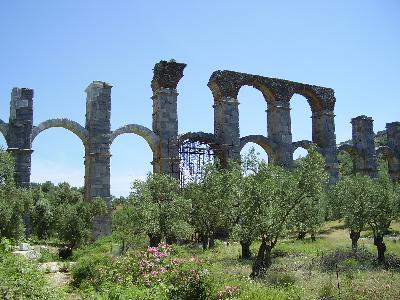
MORIA AND THE ROMAN AQUADUCT ON LESBOS
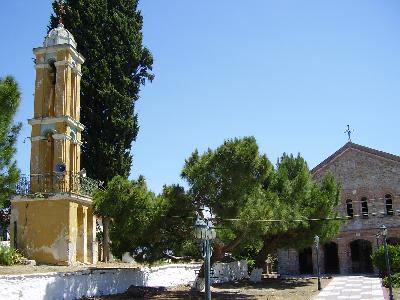
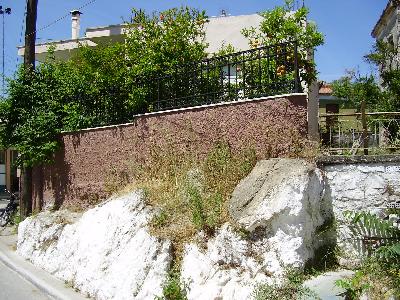
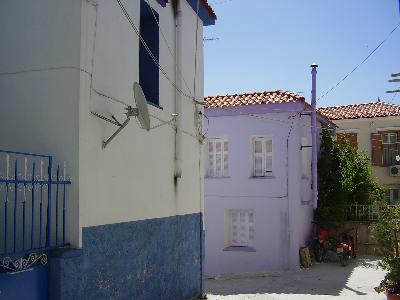
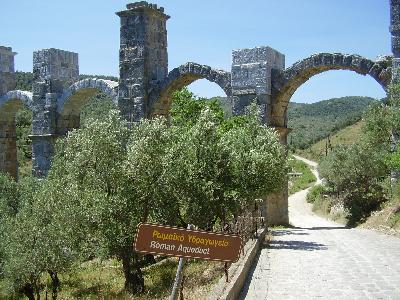
The village of Moria, its brightly coloured houses, beautiful church, yellow tower and its beautiful Roman aquaduct, is situated a little bit north of the capital of Mytilini. In the village there are quite some tavernas and souvenirshops for the people that come to take a look at the aquaduct. In the mainstreet where all the traffic passes there is a sign pointing towards this Roman sight. The aquaduct lies at the end of a 500 meter long path. It leads along some agricultural grounds with goats, chickens and vegetables to a small river where the aquaduct is situated. It's possible ti reach it by car, but the roads are very narrow. Inside the village there are fruittrees, and lots of light blue, green, yellow and beige houses, and sometimes an old house. In the tavernas it is busy and the people speak very loudly. On the main road there is also a minimarket and an old fountain from the Turkish period. On the edge of the town you can find the big church with its yellow tower, and a monument surrounded by cypres trees.

Hans Huisman, www.angelfire.com/super2/greece 2009
<XMP></body></xmp>