BIO


Pennsylvania


My Bio and Picture Pages
It should be called my Fender Page


Note - I have not posted any new songs in the past year. This is not because I stoped playing, but because I feel I have done just about all the oldies I like and have music for. I may occasionally upload a few new songs to my 70's and on page from time to time, but spend most of my time just playing along with my MIDI's and other MP3's for my own enjoyment. I also don't often answer emails because of all the junk mail I receive, but if you put (about your music) in the subject line I may answer in a week or two.

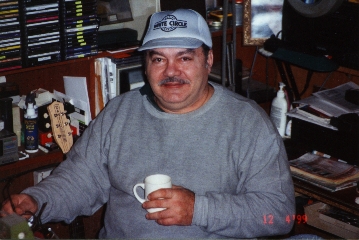
I like everything from 50's and 60's oldies to rock, blues, newage and some classical music. Mark Knopfler, Eric Clapton, Peter Frampton and Ted Nugent are my favorite musicians. The Mighty Sparrow and Merle Haggard are my fovorite singers. I played guitar in a band called the countdowns in the late fifties to 1965. I started in computers around 1985 with a 2k computer connected to a B/W TV. This was before real graphics, let alone sound. Twelve years ago I started in computer music by modifing MOD and CMF music files to my liking and later found there were programs where I could compose my own music. I got myself a Kawai Midi keyboard that I could hardly play and worked day and night until I composed some music using an old version of Midisoft Studio. Later I learned to compose with computer programs like cakewalk using my knowledge of guitar cords and notation. I did some of this music years before I decided to start a website. So some of this music is an accumulation of work I have done over 12 years ago. I have done most of the melody an solos with the virtual piano in Cakewalk 4 through 7 in my older sequences, but in the newer sequences I use an old Peavey Patriot guitar with the strings adjusted to the MIDI pickup I have installed on it. I found this gives me greater accuracy and quicker response. I input most of the solos, even Sax with the guitar and on screen notation. I then edit each track until it sounds the way I want. I now have over 50 songs on my originals pages. I have a separate page with over 200 of my favorite oldies and standards. I have sequenced some completely from memory. Some are done partly from sheet music with the melody and harmony added from memory. I also have a 70's and on page and a new MP3 and Real Audio page with some 40 year old sound clips of the Countdowns. These clips were salvaged from the original old dried out real to real tapes of the Countdowns performing live at an after hours club. I have just added a few real time clips of recordings of me playing and singing....... Listen at your own risk.

The songs on the site represent years of work and are only a small part of the music I have done. They have been done mostly by trial and error methods using various software programs from simple algorithm programs in the early days, to Midisoft Studio, Powertracks, BBW and Cakewalk. I use these programs to paint an overall musical picture in the same way someone would use a drawing or art program. Almost all of the songs were finalized and edited in Cakewalk where tracks were added and notation adjusted by sound one track at a time, even one note at a time. How do I find the time? Well, this is about all I can do now that I am disabled for health reasons and had to retire 4 years ago. I have hours of music here for your entertainment and listening pleasure, which is the main purpose of this web site.



The Technical Stuff

For my equipment - I use a 650 MHg. Pentium III with 512 meg. of memory, a Romtec Trios with three selectable drives, 1 60gig and two 40 gig bootable drives, a 160 gig accessable D drive and a 100 gig USB drive from all three. This lets me transfer file from one operating systems to another and test the sound. It also lets me store and do my work free of hackers and virus infections since I only access the internet from one bootup drive only. For sound I use a Creative AWE64 sound card with 8meg. of memory on board. Three sets of amplified stereo speakers with a sub-woofer. This system is almost equal in output and quality to my smaller guitar amplifiers. I use a Kawia MIDI keyboard with MIDI in and out to the sound card. A GVOX MIDI pickup on a guitar to the serial port and microphones directly to the sound card with software interpretation to MIDI. I also have a new 1.5 gig Pentium IV with a Sound Blaster Live sound card in it. I use it mostly for recording CD's and as a backup music computer.

My Guitars and other Equipment

I have 8 guitars including a Gibson Epiphone Les Paul 56 Gold Top, 7 Fenders including a 1993 Black Fender 60's strat with 9 way parallel series switching, and Gold Lace Sensor pickups, a new Inca Silver Telecoustic, a 1997 Brown Sunburst U.S. Telecaster with Custom Shop Texas Special pickups and 4 way Merle Haggard style parallel series switching, a 1996 Natural finish Japanese Fender 50th Anniversary Thinline Telecaster, a Vintage Yellow colored Ash Body 1993 Japanese reissue 70's Strat with the large CBS type headstock with Fender Gold Lace Sensors and TBX switching, a custom built homemade Strat with a Tobacco burst lacquered solid Ash body, maple neck with Ebony fretboard and Lace Transensor Pickups with 9 way parallel series switching, a US. made 80's Peavey Patroit. My Favorite guitars for the 50's sound are the Telecasters and the Strats through an original 100 watt 70's Fender Twin Reverb Tube amp.with 2-12" Orange JBL Speakers (You can't get a better SOUND than that for oldies!).

Some info I found on the internet about the JBL Speakers in this amp.

JBL speakers were optional (at additional cost) for nearly all models from 1960 to about 1980. JBL D-series speakers had orange baskets and Fender by JBL labels in the 1970s. JBL D-series speakers can generally handle upwards of 60 watts each. A pair of JBL D-120Fs in a Twin Reverb are only seeing about 40-watts each (no sweat), but remember that no speaker likes to see square waveforms. So, driving the Twin with any amount of distortion lowers the power handling capacity of the speaker, which makes any speaker more susceptible to damage even a high-wattage type like the JBL.

I also have a Randall RG 80-112SC 80 watt amp. that I sometimes use with the Les Paul Custom and the Les Paul Gold Top for a diferent sound. The amps. I use most are a Fender Roc-Pro 700 70 watt hybrid amp.that has a single 12AT7 tube preamp for distortion. I use it along with a Fender Princeten 65 amp. I sometime switch on the Princeten and run the Roc-Pro into the Princeten through a mixer. I find this gives me a sound close to my Twin Reverb Tube amp. by using 2 solid state amps. This way I can get more volume when I want it while limiting the output of both amps. It also gives me a fuller range of sound since I use diferent tone setting on each. I also have in storage my mint and playable original 1957 Premier 120 Tube amp. with the original Jensen loudspeaker in it.
I use several pedals, but lately found that running any of my guitars through a lineup of first, a Seymour Duncan Pickup Booster, then a Digitech Synth Wah and finally a Boss RV2 digital delay gives me everything I need tonewise. The Pickup Booster can make my Fender single coils sound like Humbuckers and my Humbuckers sound like single coils. The Synth Wah lets me get funky Shaft to Peter Frampton like sounds and more. I sometimes add a Ibanez FZ7 Fuzz and a Morley PWA II Wah to the lineup. The only effect I use on the Twin Reverb Amp is a Tremolo Pedal. It has more control than the Amp tremolo and can not do any harm to the old Vintage Amp Speakers that can't be replaced. I use amp Distortion, but Personally I like the Twangy clean sounds better.


Some older pictures of my Electric Guitars and Fender Amp.


My Real Audio and MP3 Page with recorded sound clips of the Telecaster and Me trying to sing. (HA, Ha, Ha!)
Real Audio and MP3 Clips Page


My favorite Guitar - a "MINT" 1993 Japanese reissue of a 1972 CBS Strat. (Simular to Yngwie Malmsteen's Strat)
This Guitar feels better than any American strat I ever tried for under $1400
I now have a U.S.Fender made tortoise pickguard with Fender Gold Lace Sensors and TBX in it.
As you can see, I love Maple Fretboards!

This Guitar was discontinued in 1994 due to the fact that it was made better than the American Strats at the time with individual routed pickup slots and good tone woods. Fender made a business decision to stop importing them and go to Mexico to make their Standerd models.Using Poplar bodies and a 1 ply pickguard and complete routing out of the bodies for the pickups. The routing was done on not all, but some of the US. strats as well to save on production time. I don't know what they are doing with the Squiers Strats made in Indonesia and other countries. The last time I picked one up at the music store I almost cut my hand on the unfinished frets. They still use the cheeper Poplar body and standard pickups on almost all the Mexican models except the reissues, artist and surf models, but the quality is very good....Lately I see the are starting to go back to to good wood on all the Standard models, but the Squiers are still junk. The Japanese models are all good through the 1990's, but questionable before that. They were still experimenting and learning how to make a good strat by making other brand name strat copies. The Japanese reissues are now back in production with an alder or basswood body (1993 models were alder or Ash bodies). The new production models come with US. made Fender Vintage or Texas Special pickups for around $600. The only problem is, they are not being imported for the US market and import taxes, shipping cost from Japan and transfer rates bring it over the cost of a good American made Strat.


The 60's style Head Stock on the 60's re-issue Strat with no Truss Rod Adjustment Nut and beautiful vintage lacquered finish.


">Instruction for Installing Strat 9 Way Switching
(Recomended only on project guitars. Do not try on your new Strat.)

3 of my other Fenders and Twin Reverb Amp.

My Fender 70's Twin Reverb Amp from the back showing the Orange JBL speakers

1997 Sunburst US. Fender Telecaster (after installing a Tortoise Pickguard)

1996 Thinbody Fender Telecaster

New Fender Telecoustic

All original 1957 Premier 120 Tube amp.

Natural Finish Peavey Patroit

Gibson Epiphone Les Paul 56 Gold Top.


My Harmonicas.


To My Family Pictures Page

for the curious


I use "Ersatz" sounds to bring out harmonics that normaly would not be heard. The best example I can give of what I am talking about is in "Scorched Land" Mid. Listen closely to the sounds in the background. In this song I make use of Ersatz sounds to a high degree. -(You can almost feel the heat!) In some songs I use multiple melodies and several complex harmonies on different tracks all at one time, with slightly different timing to achieve the sound I want. I also blend unusual instruments to achieve new and strange sounding instruments without the use of special patches. I do this on the drum tracks as well as instrument tracks.
One of my original compositions "Five Live" Mid is an an example of this harmonic and timing use.

For Sax and Trumpet I edited notes one at a time for volicity and timing to put some feeling in these instruments.


I can think of a melody and play whatever I want on my new musical instrument the computer. If I get it wrong I just delete or move the notes on screen and arrange the music the way I like it. I had some 8 years of real on the job playing experience composing and arranging for my band the Countdowns and playing up to as many as 6 to 8 gigs a week in the late 50's and early 60's. We played in the Philadelphia, Pa. and South N.J. area.of the U.S.A.
In the old days I had to transpose the sax music by hand. Today I just click with the mouse and the melody is transpsed. Isn't it great ! I just hope you enjoy this music as much as I do creating it.

Updated 5/1/2006


A better explanation of composing on a computer and MIDI.
by Donald S. Griffin

Back to Page 1