The Korean
War
Welcome To SuperNed's
The Korean War

American Flag Here
My time in the forgotten war
(The Korean
War)
July 1951 to 1952 (11 Months)
5th Air force, 502nd Tactical
Control Group, First Shoran
Beacon
Unit
(attached to the 1st Marine
Division)
I was a radio operator and graduated from The
Southeastern
Signal School, United
States Army, Camp
Gordon,
Georgia on July 7, 1951. I shipped out of camp
Stoneman, California on a ship to Japan and an air ride (C47) to Kempo
air field,
Korea. My orders said to the First Shoran Beacon Unit. No one could
tell
us what
this Unit did in the War.
Since Camp Gordon is a Army Base,
this was our Sergeant
I received the following radio training at the SSSUSA.
Basic
Signal Communications,
International Morse Code, Radio Procedures, Field Radio Sets, Tactical
Traffic
(Net Operations), Operation of Field Radio Equipment, Tape Relay
SHORAN
is an acronym for SHOrt RAange Navigation
and
is the name given to precision radar beacon
type electronic
navigation/bombing
system used by both the B-26 and
B-29 for precision bombing
in the
Korean
War. Its origin lies in WWII, when the Army Air Force was striving to
develop
an accurate
navigation
system for flying in the often less than ideal European weather. In
1943,
an early system was
demonstrated
to the 8th Air Force in the UK and was well received. Unfortunately all
experienced engineers
and
technicians involved in the design and development of the system were
killed
in a plane crash in
Newfoundland
on the return flight from the UK. The system had to be
reconstructed
and redesigned from
the hand written notes and
sketches
left by the original design crew - a long-term tedious operation. Do to
its
short inherent range (-300 miles) it was not used extensively in the
European
theater, though it did
receive
use in the Italian theater where it proved to be very accurate and
successful
and in addition
permitted
the bombing of targets not achievable with visual bombing.
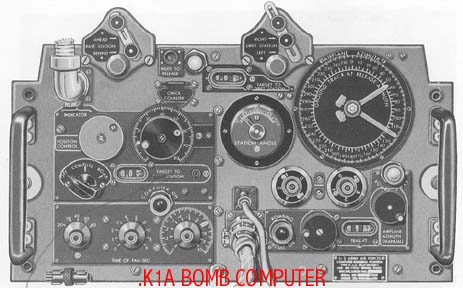
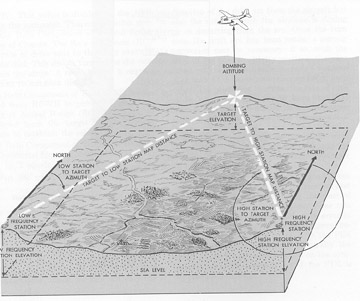
The
system requires an airborne AN/APN-3 set and two AN/CPN-2 or -2A ground
stations. The airborne
equipment
consists essentially of a transmitter, receiver, an indicator and a
K-1A
bombing computer
(shown
below). While the system was designed primarily as a navigation
system,
it was soon recognized
that
its inherent accuracy could be used to perform "blind" bombing with a
degree
of accuracy previously
unattainable.
Integrating the K-1A bombing computer with the previously designed
navigation
system
produced
the SHORAN, as we knew it in Korea.
DEPARTMENT OF THE AIR FORCE Manuals I have acquired
AF Manual 101-6, Operation of Airborne
Shoran
AF Manual 102-4, Shoran Ground Station
Operation
AF Manual 52.19, Antenna Systems
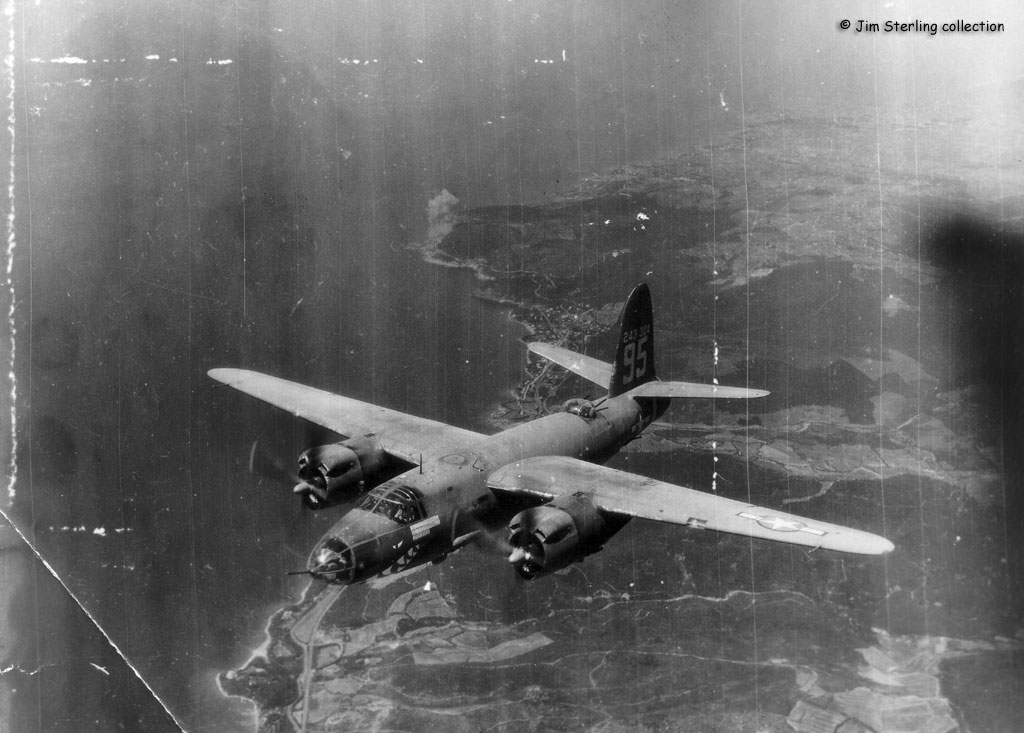
The A-26, a follow-up airplane to the
A-20
Havoc, made its first flight on July 10, 1942. Production delivery
began
in August 1943, and on November 19, 1944, it went into combat over
Europe.
It was used for level bombing, ground strafing and rocket attacks. By
the
time production halted after VJ-Day, 2,502 Invaders had been built. The
A-26 was re-designated the B-26 in 1948. During the Korean War, the
airplane
entered combat once again, this time as a night intruder to harass
North
Korean supply lines. Early in the Vietnam conflict, the Invader went
into
action for the third time. Also, the USAF ordered 40 modified B-26Bs
having
more powerful engines and increased structural strength. Designated the
B-26K, the airplanes were designed for special air warfare missions. In
1966, the B-26K was re-designated the A-26A. The A-26C was flown to the
U.S. Air Force Museum in September 1957. It appears in the colors and
marking
used during the Korean War by the 34th Bomb Squadron flying night
intruder
missions.
Wanted - A26 - B26 Invader parts and Shoran
equipment Needed for the restoration of Invader 313. Invader 313
flew combat missions durinig the
Korean War. - Cleck here
The following was taken from
“The Air Force Historical
Research Agency”. (Under
USAF Organizations in Korea)
Korean Service 1950-1954
Other
Organizations
1st Shoran
Beacon Squadron
In August 1950 the 1st Shoran Beacon
Unit moved to Japan
from the United States,
and by October 1 had moved to South Korea. It broadcast
short
range navigation (Shoran) signals from ground sites to guide 3rd
Bombardment
Group B-26s and 162nd Tactical Reconnaissance Squadron RB-26s on night
missions
over targets in Korea.
The first two sites in South Korea were too far
away from the bomb line
to be effective. In November the unit set up two new sites at Wonsan
and Pyongyang in North Korea, but mountains around the Wonsan site
interfered with its signals, and
a Communist Chinese offensive soon forced evacuation of both sites. Two
new
beacon sites set up in South Korea in December
demonstrated the
inadequacy of the unit's equipment. That and the continued advance of
enemy
troops forced the 1st Shoran Beacon Unit to move temporarily back to
Japan at
the end of the year, where it recalibrated and refurbished its
equipment. In
early 1951, it returned to South Korea and set up
Shoran beacon sites at
several locations, some of which it had to defend periodically against
enemy
guerilla assaults. During the year, the unit established four sites,
two on
islands off the coast of Korea
and two on mountain tops just south of the 38th parallel. It also
maintained
other sites in Japan
and Okinawa to train aircrews in
Shoran operations.
Redesignated the 1st Shoran Beacon Squadron in February 1952, the unit
provided
electronic signals that guided 3rd Bombardment Group B-26 bombardment
missions
until the armistice in mid-1953.
Stations
Kimpo AB, South Korea, October 1, 1950; Iwakuni AB, Japan,
December 19,
1950; Taegu AB, South Korea, February 20, 1951; Seoul, South Korea,
June 16,
1951; Pyongtaek Airdrome, South Korea, April 24, 1953-.
Campaigns
UN Offensive; CCF Intervention, First UN Counteroffensive; CCF
Spring
Offensive; UN Summer-Fall Offensive; Second Korean Winter; Korea,
Summer-Fall
1952; Third Korean Winter; Korea, Summer 1953.
Decorations
Two Distinguished Unit Citations for actions January 25-April 21,
1951
and May 1-November 30, 1952.
Republic of Korea Presidential Unit Citation for period January
24-April 21,
1951.
Click
here for - 502nd Tactical Control Group
Visit The Following
Pages
For More Information:
Headquarters
at Seoul
Able
Site (An Island In The Yellow Sea)
Baker
Site
(Mainland 38th Parallel)
South
Of Seoul (Top Of Mountain Think Easy Site)
Going
Home (June 1952)
WAR
- YEARS OF STALEMATE
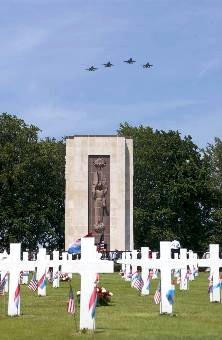
Airmen Remembered

Read USAF Major Lu
Coley's memories of his time Sept. 1950 -
Dec. 1951 with the 1st Shoran Beacon Unit in the forgotten WAR
........ Click
Here
.......
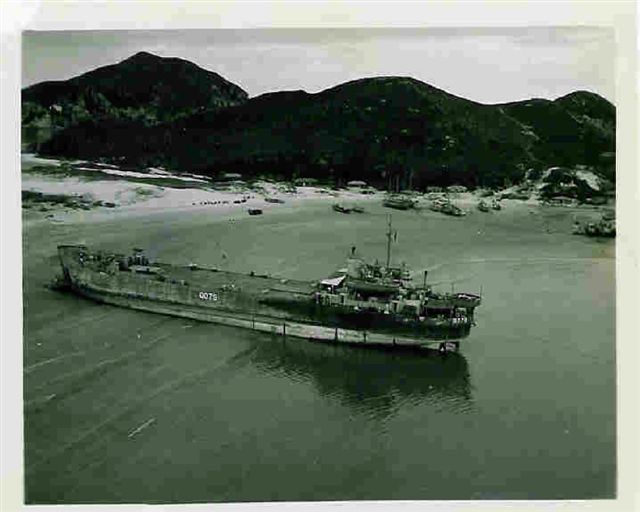
LST assigned to Lu for shipment of supplies
and men to Island detachments
John McManushas
provided some very good information about the history and development
of
the SHORAN SYSTEM. First of all, he came upon what appears to be an
original
SHORAN Technical Manual that predates anything we have seen.
Maybe
1947 or earlier. It looks new and never copied. The staples were rusted
in place. John sent a request to NOAA asking the librarian if he could
point him in the right direction to donate the document in NOAA's
library.
The reason he went to NOAA first is the part they played in the
development
of SHORAN. He advises he will send more information after NOAA
evaluates
it.
He made a couple of copies and would probably send
one
if you would want one. He can be reached at this email address;
heathersgrandpa@cs.com
John has read the
autobiographies
of some of the legends of map making and problem solving. SHORAN was
one
of their main programs. He has a copy of the unpublished autobiography
of Carl Ingman Aslakson (retired NOAA), it is also a history of SHORAN.
It contains information he had never seen before.
Should you wish to access NOAA History - Stories and
Tales
of the Coast & Geodetic Survey, Just Click
Here
to print a copy or just read from the Web Site.
Snoopy's Sopwith Camel
Be Sure and visit
the
following Korean War Sites
Korean
War 50th Anniversary
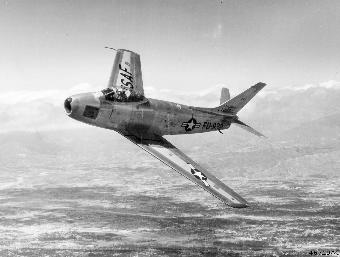
F86
Please email me if you
would
like to correspond about the Korean War at:
nedscholz@yahoo.com
VISIT TOMB OF
UNKNOWN
SOLDIER
Taking Care of Our Vets - Our Armies, Ourselves
Your Getting Older - Before You Go
click here
CLICK HERE
FOR EVERYTHING YOU EVER WANTED TO KNOW ABOUT KOREA - WIKIPEDIAS
KOREAN WAR AND BACKGROUND
 State
of Wyoming Flag
State
of Wyoming Flag