Updates
[Introduction] [Parts Selection] [Parts List] [Specifications] [Preparation] [Assembly] [Installation] [Results] [Updates] [FAQ's]100 miles: Checked the cooling system and it was free of air. The engine runs beautifully and it's a torque monster! Idle is smooth and is settling at 750rpm. The idle speed will occasionally drop to 600rpm for a second or two when I pull up to stop but only when the A/C is running. Engine oil temp. 187*F on the highway.
200 miles: Checked the plugs and the engine still seems to be running lean so I raised the MAP voltage to 5.5v. Idle speed is steadier and doesn't drop as often.
350 miles: First tankful of gas averaged 18.1mpg. Not bad considering that the engine's still breaking in. Oil temp. down to 182*F and coolant temp. 205*F on the highway with A/C running and outside temp. 117*F. Engine also running slightly cooler in city driving.
600 miles: Gas mileage increased to 18.7mpg. Break-in period is over and the engine's loosening up nicely. Oil and filter changed. Since it's still mid-summer, I'm running Castrol 20W-50. Now I can extend the engine beyond 3000rpm and have some fun!
1,150 miles: The engine starts faster and runs cooler with the MAP voltage set at 5.9v. Oil temp. not going beyond 210*F in slow traffic. Just installed my modified Mustang Cobra 65mm TB and it works beautifully. The whistling noise from the intake has gone and there are no more rpm drops with the A/C running.
1,800 miles: Plugs look good, valvetrain noise is minimal, and the engine seems quieter. Oil level on dipstick hasn't moved since last oil change indicating that piston rings have seated nicely. There's a slight harmonic resonance at 4000rpm but beyond that, the stroker is more refined than my old 4.0L engine and it pulls hard all the way to the 5200rpm rev-limiter.
2,300 miles: I finally got my junkyard 4-wire O2 sensor plugged into the header collector of my exhaust, installed my Autometer Phantom Air/Fuel Ratio Gauge, completed the wiring (very easy), and tested it. The gauge works great and the O2 sensor behaves as it should. To my surprise, the engine was running rich under all conditions except hard deceleration. I'd set the MAP adjuster voltage too high (duh!) and that explained why I was only getting 17-18mpg lately. I tweaked it and found that a setting of 5.35v was optimum. Intake manifold vacuum is a healthy 16"Hg at idle and 20"Hg when the throttle is snapped shut.
3,000 miles: Second oil and filter change. This time, I'm using Mobil 1 0W-40 synthetic oil.
4,500 miles: Fabricated and installed DIY Oil Catch Can
5,000 miles: Gas mileage has improved to an average of 19.3mpg. MAP adjuster voltage reduced to 5.15v.
10,000 miles: The engine has become smoother and stronger especially at higher rpm. Average fuel consumption is 19.9mpg. Emissions test showed an excellent 0.2% CO and 40ppm HC at idle.
20,000 miles: Average fuel consumption improved to 20.2mpg.
25,000 miles: Replaced old stock oil pump with a new Melling high volume unit and I'm very happy with the result.
27,000 miles: Modified Borla header with 3.0" collector and had custom 3.0" downpipe made. Take a look here. I've found the holy grail with this stroker and I'm loving every minute of it! Who needs a V8 when you've got a straight six with V8-like grunt? With this stroker configuration, the Jeep ran the 1/4 mile in 14.55 @ 95.2 in full street trim and 14.32 @ 96.2 with 170lb of weight reduction. Now that's haulin' ass!
34,000 miles: Valvetrain noise has steadily increased over the last 4000 miles and is becoming a real concern, so I pulled off the valve cover to investigate. Some rockers had become sloppy due to fulcrum wear so it was an opportunity to upgrade the valvetrain with Yella Terra 1.6 ratio roller rockers and Crower chromemoly hardened pushrods. While I was installing the new rockers I found a nasty surprise. The no.6 exhaust valve lifter wouldn't preload on the camshaft base circle when I torqued down the new rockers. My heart sank knowing that I had to pull the head to investigate further and my worst fears were confirmed. The no.6 exhaust valve lifter had collapsed altogether, the no.6 intake valve lifter was badly cupped, and the corresponding cam lobe was flattened.
Luckily I'd kept my good original stock camshaft and valve springs/retainers as spares so I reused them together with new lifters and gaskets to minimize the expense of the valvetrain rebuild. The engine was quickly back up and running again with a valvetrain as quiet as a mouse so it was a job well done. The only further required adjustment was to reduce the MAP sensor input voltage to 5.10v to optimize the fuelling. In this configuration, the engine is the same as the 4.6L "poor man's" stroker featured on my stroker webpage and it's a peach.
37,000 miles: Compared to the Crane camshaft, WOT acceleration with the original stock camshaft is slightly reduced but it's compensated by quicker acceleration at part throttle and slightly better fuel economy. A malfunctioning JET Stage 2 PCM was causing the rev limiter to cut in at 4500rpm, and removing it promptly restored the rev limiter back to the original 5200rpm.
41,000 miles: Revised my homebrew FIPK by replacing the corrugated rubber pipe with a Simota 3" diameter smooth silicon pipe, and I moved it away from the throttle linkage to gain clearance. I also routed a length of 3" diameter flexible dryer hose around the brake master cylinder. The final length of PVC pipe together with the air filter goes straight towards the driver's side headlamp housing instead of going diagonally, and this enabled me to simplify the heatshield.
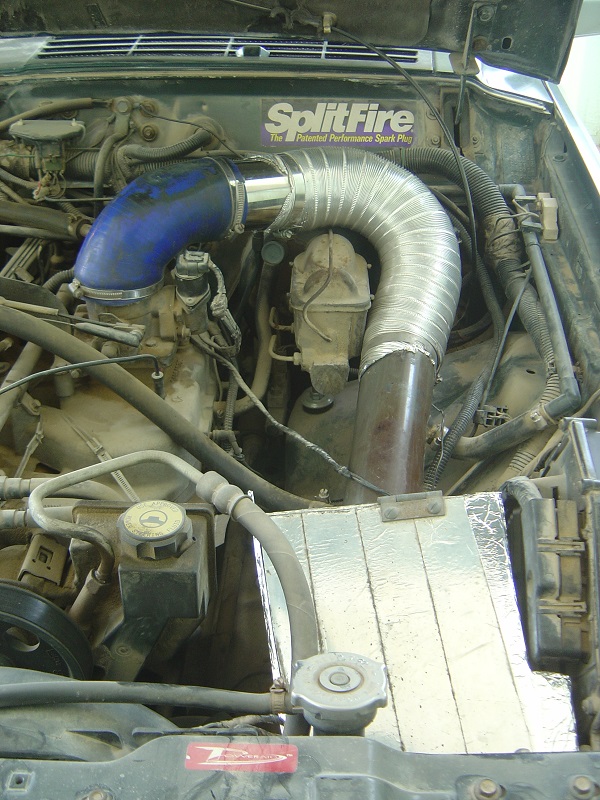
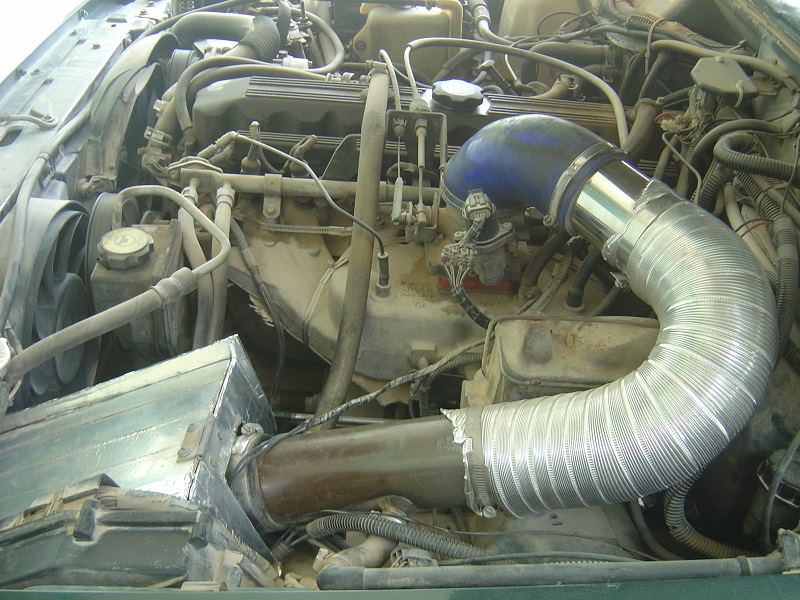
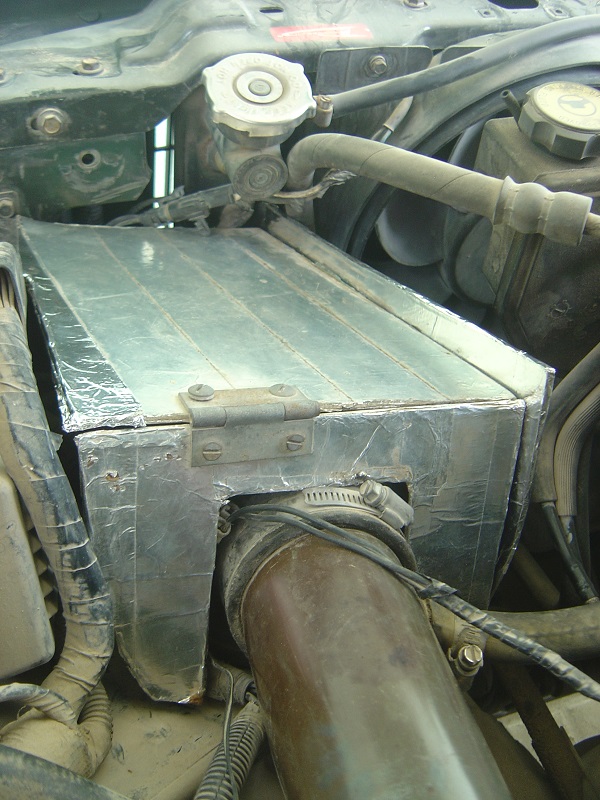
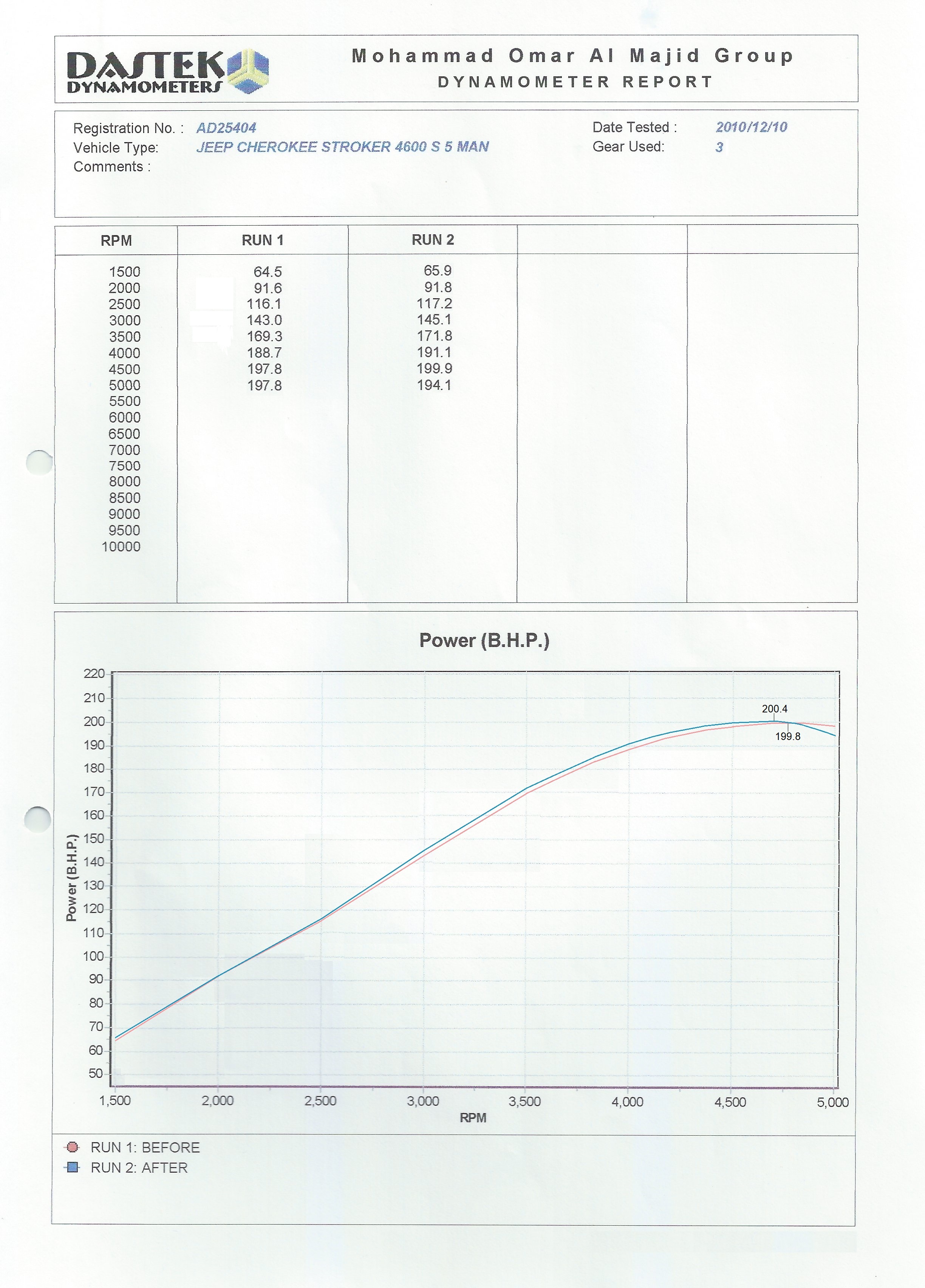
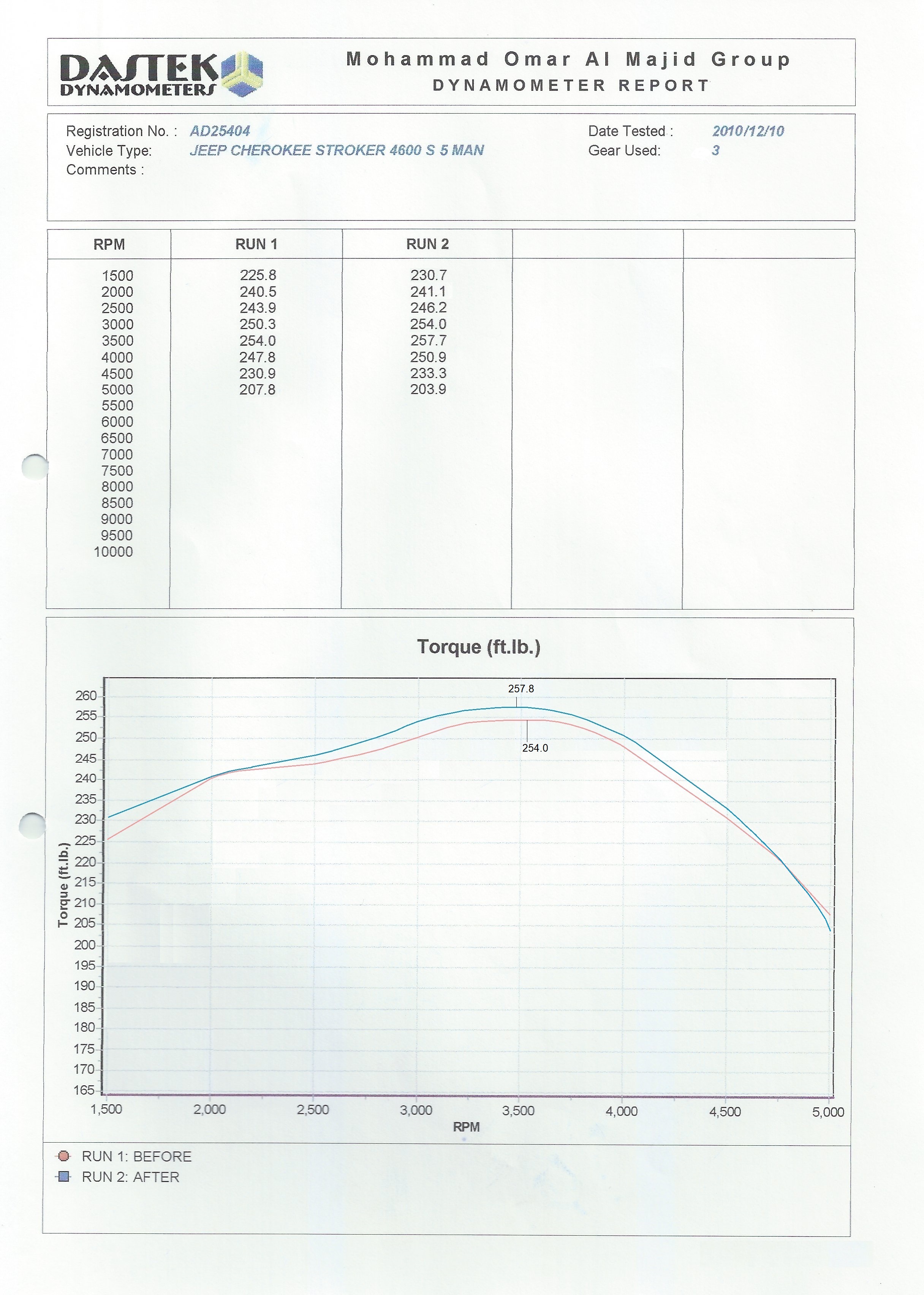
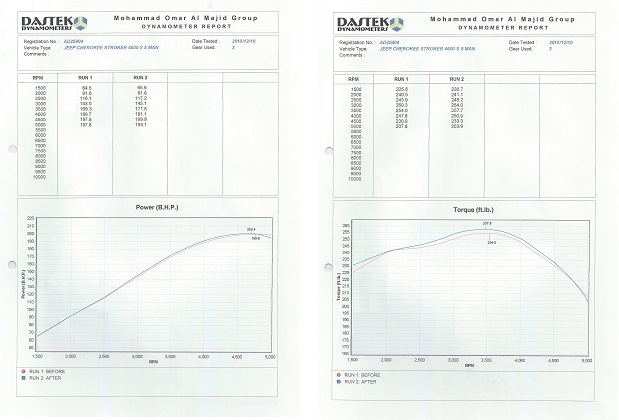
45,000 miles: Ran the Jeep on a Dastek Dynamometer at MOCA Performance in Sharjah with the freer-flowing intake. The result was 200rwhp @ 4750rpm with 254rwtq @ 3500rpm and I was very happy.
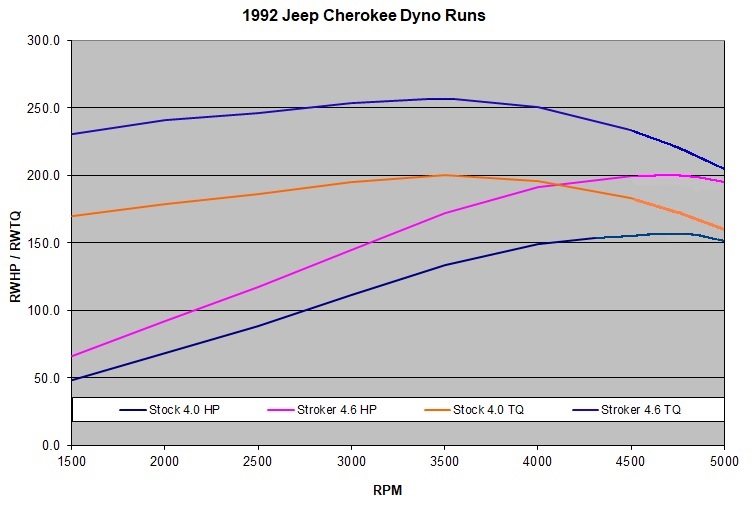
54,000 miles: I swapped the new style curved-runner intake manifold with power steering pump, PS pump mounting bracket, and tensioner pulley from a junkyard 2001 Jeep Cherokee into my Jeep. Installation was straightforward and the only modifications required to complete the job were lengthened wires to the IAT sensor, slight modification to the routing of vacuum lines, and a longer drivebelt. On the Dastek dyno, the newer intake manifold yielded peak-to-peak gains of 0.6hp/3.8lbft and the HP/TQ peaks came at slightly lower rpm (see dyno chart below). Torque increased by up to ~5lbft from off idle to 4750rpm with just a small loss in the last 450rpm before the rev limiter.
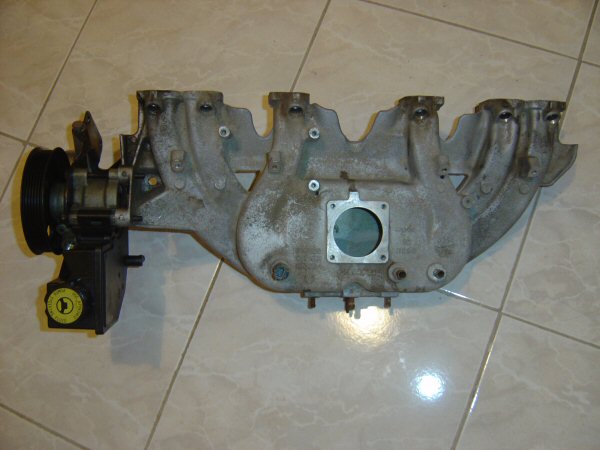
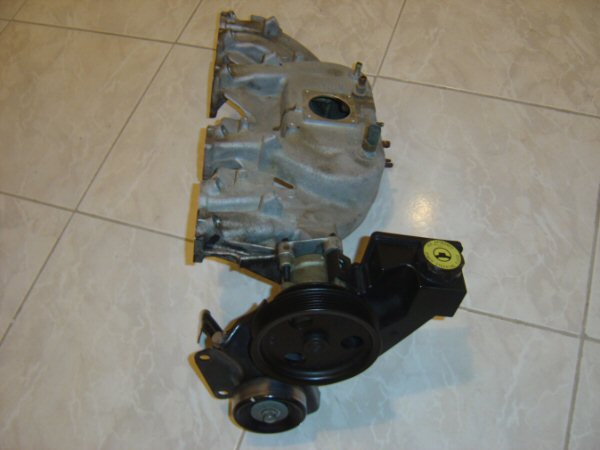
The latest 1/4 mile run of 14.63 @ 94.4 in full street trim is only marginally slower than the time recorded when the Crane camshaft was in the engine, and the hair trigger throttle response makes the Jeep huge fun to drive on the street.
61,000 miles: Fuel economy is the best it's ever been in my Jeep's 18-year history (19mpg city, 23mpg at 75mph highway cruise) with the newer intake manifold responsible for a ~1mpg gain. As a bonus, the engine also runs on cheap 87 US octane fuel (91 RON) without pinging when it's less than 90*F outside.
Jeep sold on 13 December 2016 with 86,110 miles on stroker engine. Still going strong with a very happy new owner!
 Ford Mustang Cobra 65mm Throttle Body
I bought a '93 Ford Mustang Cobra 65mm TB (F67U-BA) from e-bay for just 79USD, stripped it down to the bare bones, and modified it for use in my Jeep.
I also taper bored my Poweraid TB spacer to 65mm at the top and 62mm at the bottom (intake manifold plenum inlet is 62mm). With the larger TB and tapered spacer, throttle response is really aggressive and the engine pulls smoothly from very low rpm with no bogs or hesitations. Nice job!
 Air/Fuel Ratio Gauge
I installed a 2-1/16" Autometer Phantom Air/Fuel Ratio Gauge (44USD from e-bay) in a pod that I mounted on the inside of the driver's side A-pillar. The gauge comes with a full set of installation instructions that make the job easy.
The red wire is connected to a 12v source from the ignition switch via a 5A fuse, the black wire is connected to ground, and the purple wire is connected to the signal wire going from the O2 sensor to the engine computer.
The lean range is 0.050v-0.249v (four red LED's), the stoich range is 0.250v-0.749v (ten yellow LED's), and the rich range is 0.750v-1.000v (six green LED's). At idle and light throttle cruise, the gauge should fluctuate across the stoich range. Under WOT acceleration, it should be two to three LED's inside the rich zone (0.80-0.85v), while under hard deceleration the gauge should show full lean or even go off the scale altogether.
 Dyno Run
On the dyno my 4.6L stroker engine produced 200hp @ 4700rpm & 258lbft @ 3500rpm at the rear wheels, which translates into a healthy 246hp and 311lbft at the flywheel. With at least 90% of maximum torque being available from 1500rpm to 4500rpm, the Jeep can be comfortably driven in the higher gears to improve fuel economy.
The only performance-enhancing internal changes to the engine (apart from the increased displacement) were the higher compression ratio (9.25:1 instead of 8.8:1) and DIY-ported cylinder head. Even the roller rockers are the same 1.6 ratio as the OEM stamped steel units. External bolt-on breathing enhancements and higher-flowing injectors account for the rest of the 28% HP & TQ gain over a bone stock 4.0L engine.