
Dinosaur life size statues Dinosaur sculptures Dinosaur Models

TaylorMadeFossils.com


Taylor Made Fossils

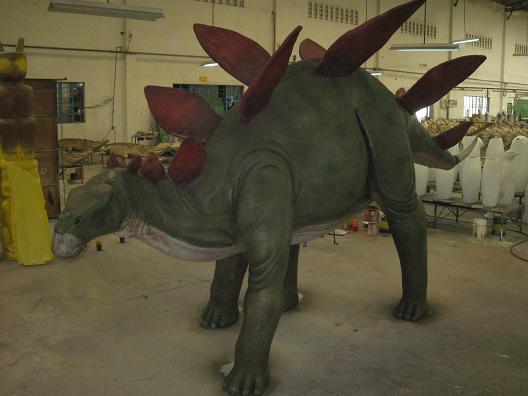
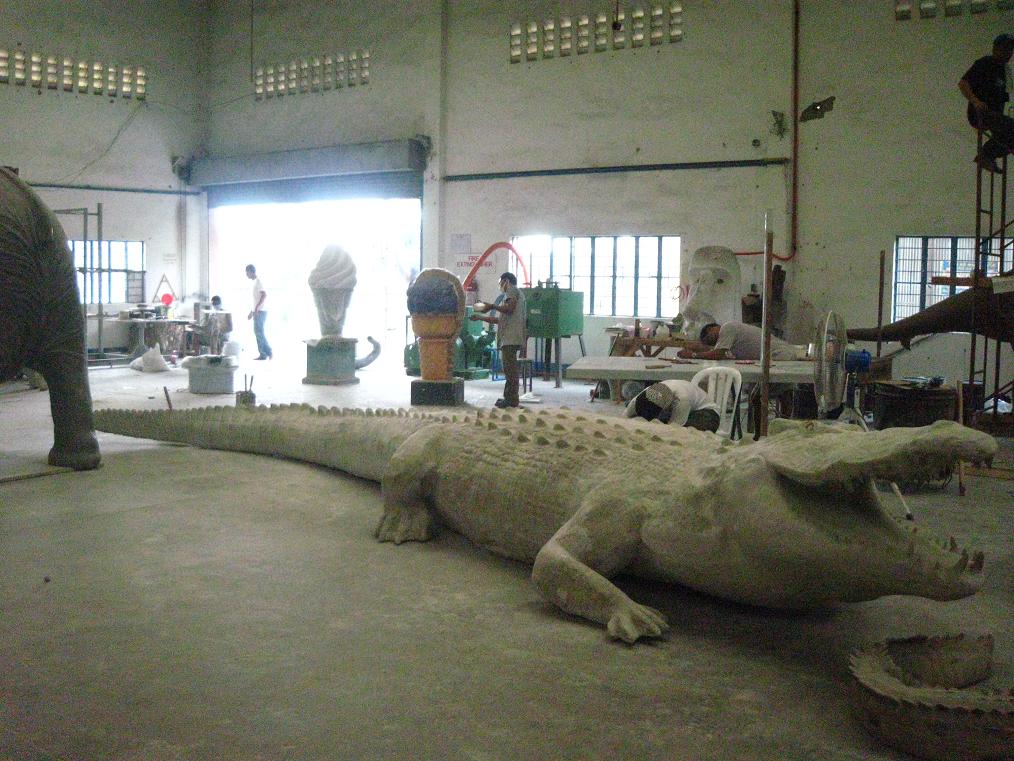
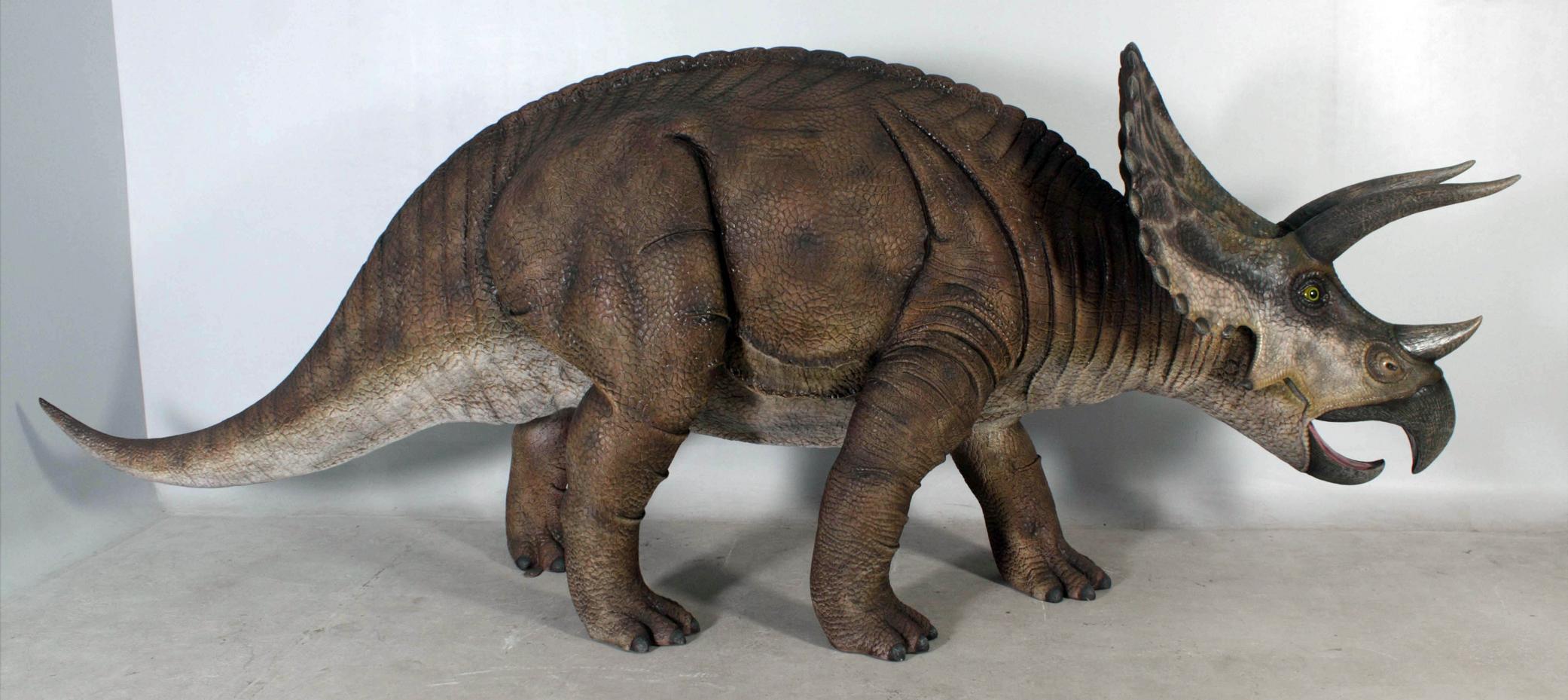
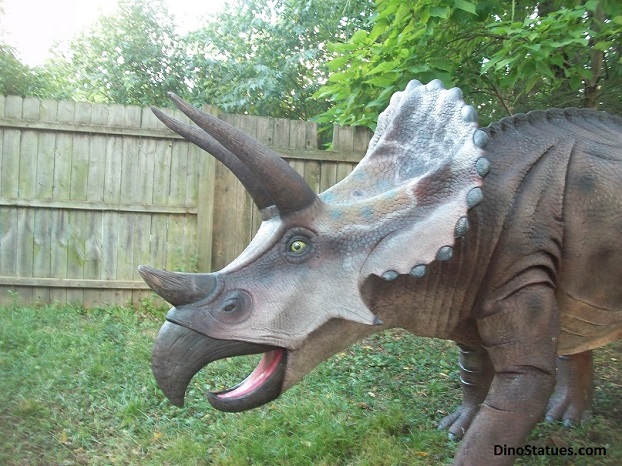
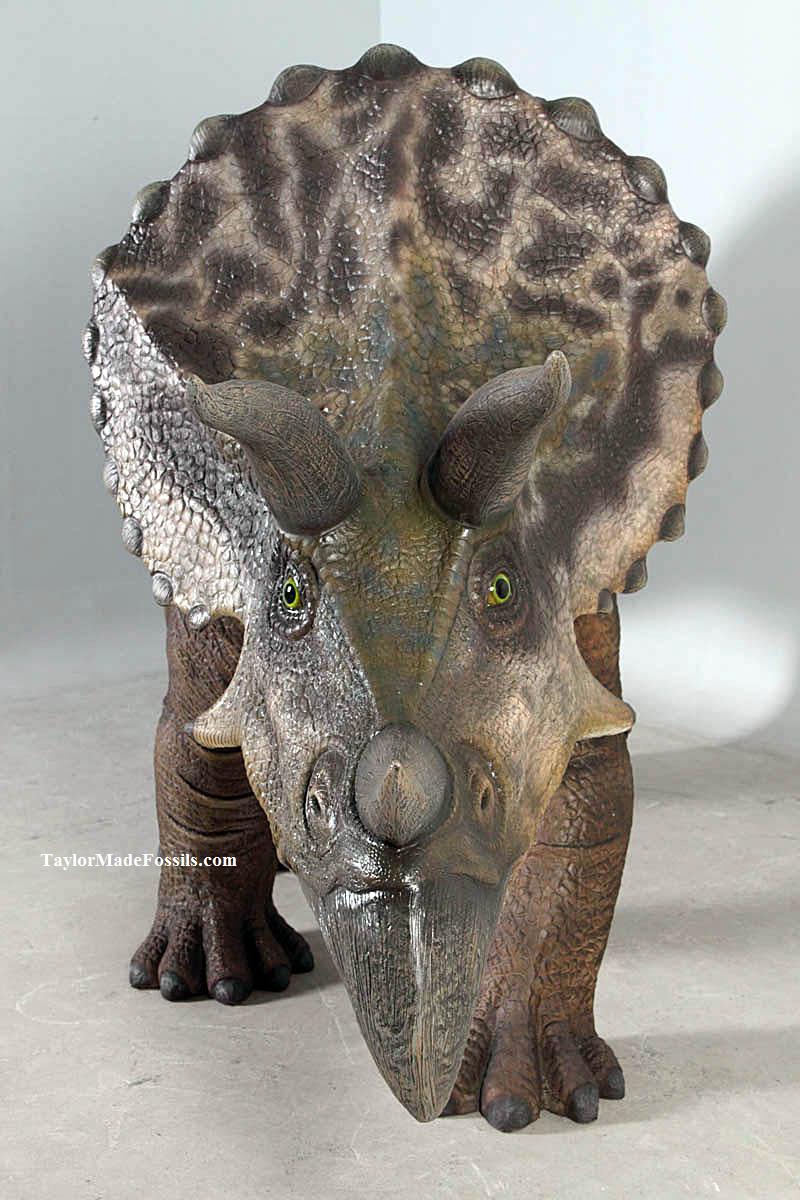
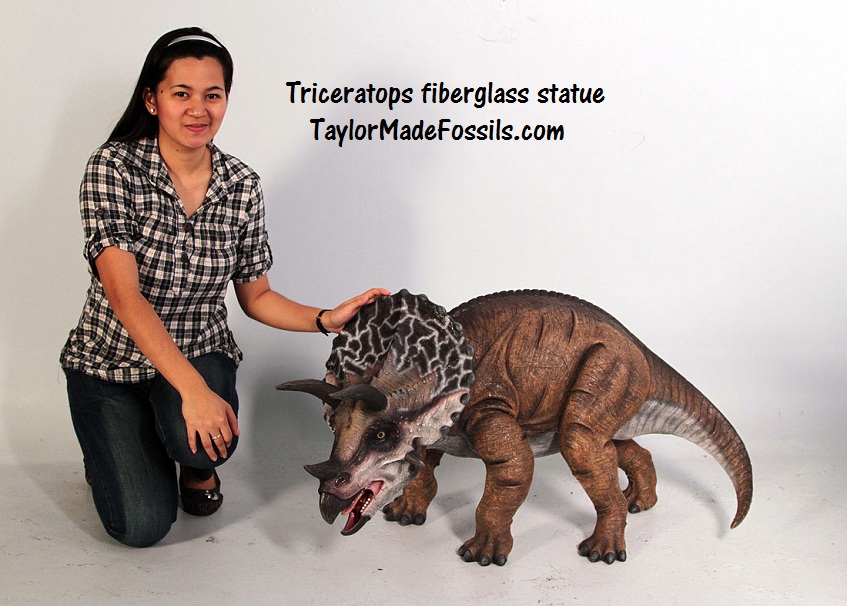
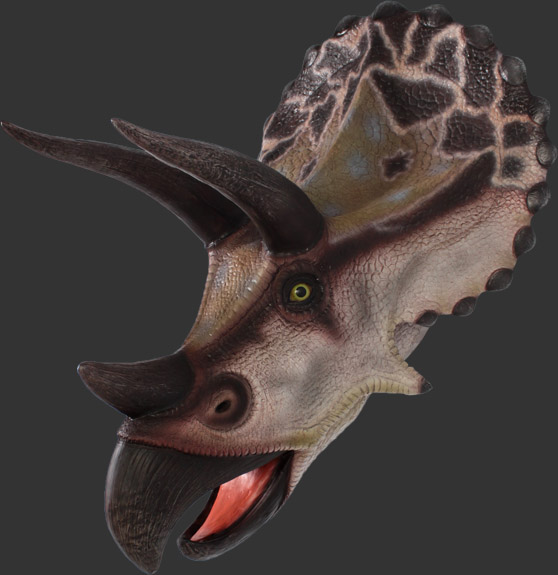
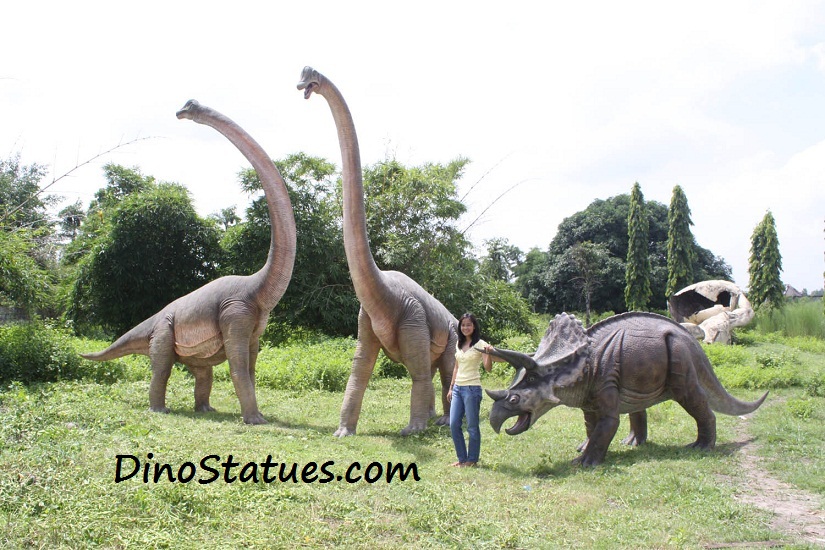
We have just added a new line of life size dinosaur sculptures (dinosaur statues). They are made of resin and fiberglass and will make a great addition to your museum, school, golf course or home.

All items are made when ordered. Production time varies based on existing orders and also on items ordered. Please contact us for price and ordering information.


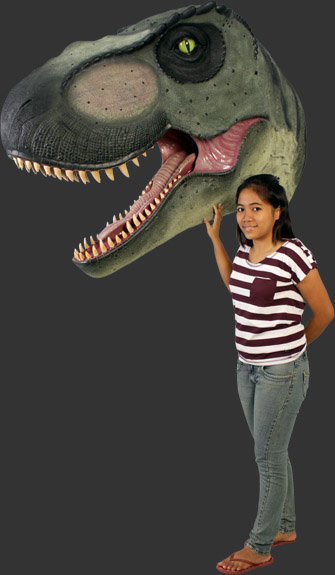
Allosaurus sp: Big Al Sculpted Bust

Here is a beautiful sculpted bust of the allosaurus known as "Big Al Two". It is wall mounted ( floor mount also available). Measures approx. 48 inches long x 32 in high (123cmx82cm) without base. It is made of foam-filled fiberglass.

$3,750.00

Please email us for more pictures.


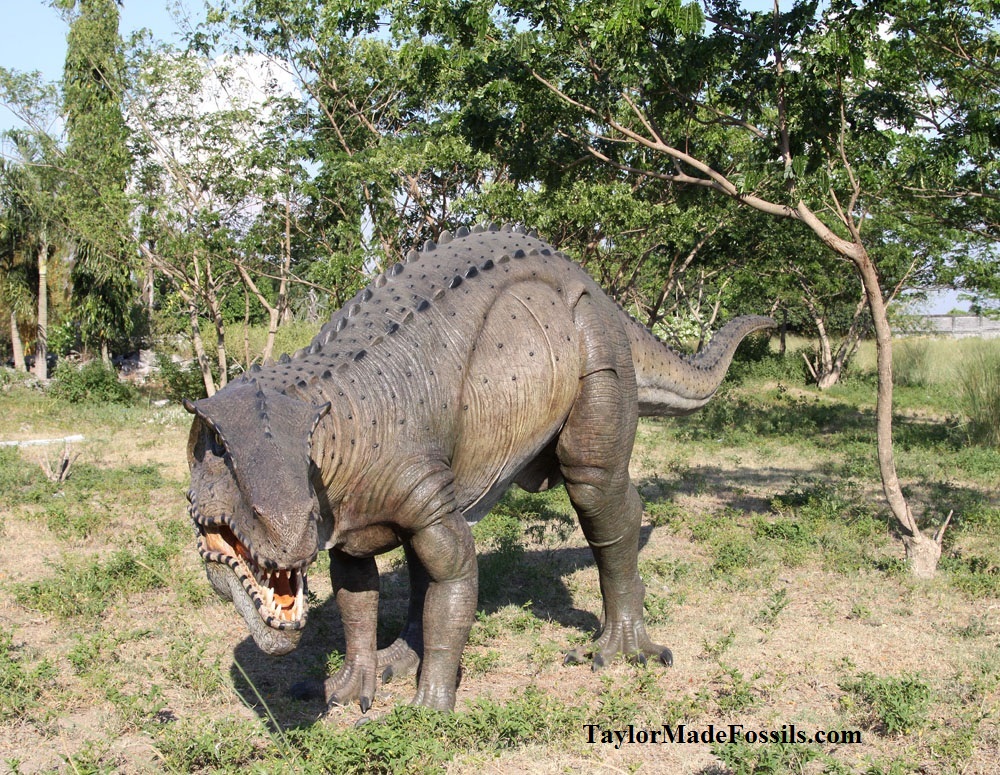
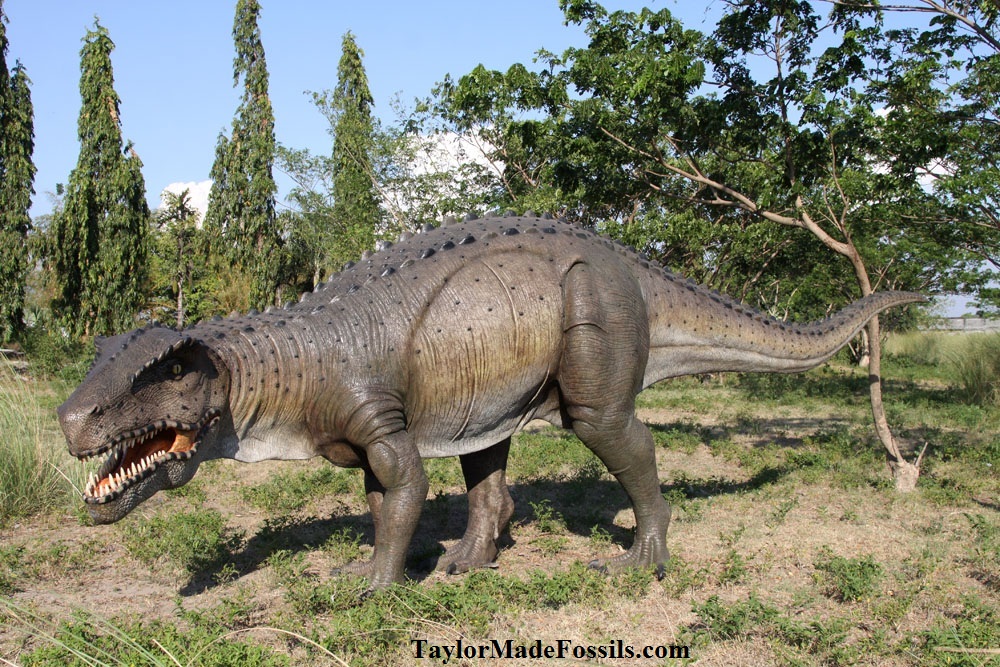
Allosaurus life size model


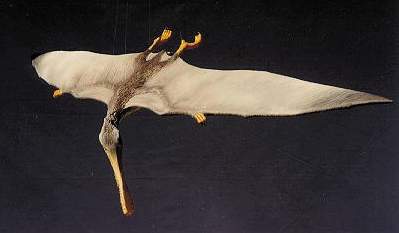
Anurognathus the tiny pterosaur

Anurognathus was a tiny pterosaur and a cousin of the dinosaurs. Its body was very small (9 cm) compared with its extensive wings (50 cm) and it had a stubby tail. Anurognathus was a specialized insectivore and had a compact 2 cm head full of needle-like teeth. This short, deep skull was characteristic of the primitive pterosaurs.

Paleontologists believe that Anurognathus ate insects like lacewings and damselflies, but that some of the dragon flies may have been too big for it to tackle. There is a theory that it may have conducted operations from the backs of large sauropods, such as Diplodocus. This is what some birds do today, sitting on the backs of animals in grazing herds, in order to feed on the insects that they disturb and attract.


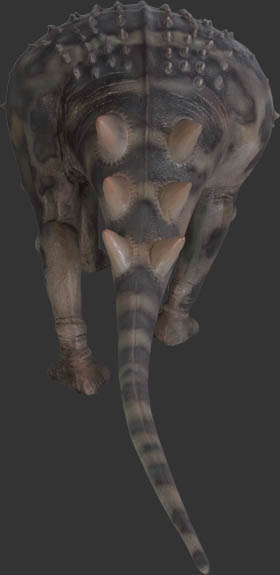
Bagaceratops rozhdestvenskyi

Bagaceratops rozhdestvenskyi
Etymology: "small horned face"
Classification: Ceratopsia, Protoceratopsidae
Epoch: Late Cretaceous Place/Formation: Khulsan (South-western Mongolia)
Length: 1m

Bagaceratops, a herbivorous (plant-eating) dinosaur, moved about on all four limbs (quadruped), was one of the typical members of Protoceratopsids that lived in Mongolia.

This smallest Protoceratopsids is considered as a primitive ceratopsians. However, it already had a slender frill at the back of the skull and a small horn on the snout which later became more remarkable in more advanced, huge, horned dinosaurs of North America, the ceratopsids. Bagaceratops already lost upper jaw teeth as well, but its cheek teeth and sharp beak indicate that it fed on tough-leaved vegetation


Brachylophosaurus

Brachylophosaurus (brak-ee-LOH-fo-sawr-us) meaning "short-crested lizard" (Greek brachy = short + lophos = crest + sauros = lizard, referring to its small crest) was a mid-sized member of the hadrosaurid family of dinosaurs. It is known from several skeletons and bonebed material from the Judith River Formation of Montana and the Oldman Formation of Alberta (Weishampel and Horner, 1990).

It was first described by C.M. Sternberg in 1953, on a skull and partial skeleton at first thought to belong to Gryposaurus (or Kritosaurus as it was known at the time). This animal is notable for its bony crest, which forms a flat, paddle-like plate over the top of the skull. Some researchers have suggested it was used for pushing contests (Weishampel and Horner, 1990), but it may not have been strong enough for this. Also notable are the unusually long forelimbs.

Jack Horner described a second species in 1988 from Montana, B. goodwini, but later work indicated that the differences were probably not enough to justify the second species (see for example Prieto-Marquez, 2005).

In 1994, Paleontologist Nate Murphy discovered an immaculate, complete and uncrushed bracylophosaur skeleton which he dubbed 'Elvis'.

Incredibly, more impressive finds lay ahead for Nate and his team from the Judith River Dinosaur Institute.

In 2000, Leonardo, a fully articulated and partially mummified skeleton of a subadult brachylophosaur was discovered (Murphy et al., 2002). It is considered one of the most spectacular dinosaur finds ever, and was included in the Guinness Book of World Records.

They subsequently excavated 'Roberta,' an almost complete gracile skeleton, and "Peanut", a partially preserved juvenile with some skin impressions.


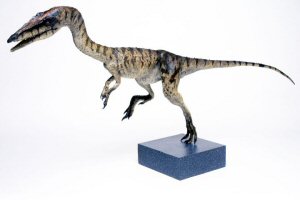
Coelophysis

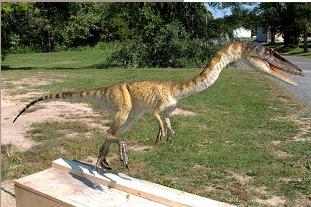
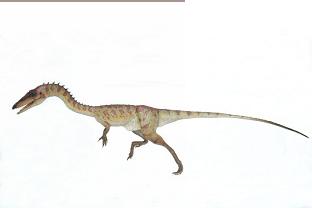
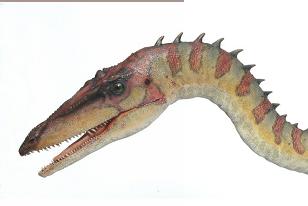
Coelophysis (pronounced SEE-low-FIE-sis) was a small, lightly-built dinosaur that walked on two long legs. This predator was about 9 feet long (2.8 m). It had light, hollow bones (hence its name), a long, pointed head with dozens of small, serrated teeth, three clawed fingers on its hands, and a long neck. Two types of Coelophysis fossils have been found, 'robust' and 'gracile.' These two forms probably represent males and females.

WHEN COELOPHYSIS LIVED, CLIMATE: Coelophysis was one of the earliest-known dinosaurs. Coelophysis lived in what was then a seasonally dry, desert-like environment, a savanna-type climate perhaps like modern-day Kenya without the grasses (since flowering plants hadn't evolved yet).

DIET: Coelophysis was a carnivore, a meat eater. It may also have been a scavenger. Coelophysis' fossilized stomach remains have been found containing small reptiles, fish, and other Coelophysis bones of different sizes, indicating that it was a cannibal.

BEHAVIOR: Coelophysis probably lived and hunted in packs; this is suggested by the existence of fossil bonebeds of hundreds of Coelophysis (collections of many fossils at one location) found at the Ghost Ranch in New Mexico, USA.

REPRODUCTION: Coelophysis most likely reproduced by laying eggs. Thousands of fossilized Coelophysis skeletons were found at the Ghost Ranch, New Mexico, USA. Many of them contained the bones of young Coelophysis in their abdomens - this evidence showed that Coelophysis either ate its young or gave birth to live young. It is more likely that they were cannibalistic (like many modern-day reptiles) since the tiny Coelophysis skeletons within the adult Coelophysis were not embryos, but young Coelophysis.

LOCOMOTION: Slightly built, long-legged, and very light because of its hollow bones, Coelophysis was a very fast, bipedal runner. Dinosaur speeds are estimated using their morphology (characteristics like leg length and estimated body mass) and fossilized trackways. Coelophysis tracks have been found; the footprint is 4 inches long and the stride length is 2.5 ft (0.75 m).

DISCOVERY OF FOSSILS AND NAMING THEM

Coelophysis was discovered in 1881 by David Baldwin. It was named by US paleontologist Edward Drinker Cope in 1889. The type species is Coelophysis bauri (named by Cope and Colbert in 1964). There is some confusion about the naming of this genus arising from the fragmentary nature of the type specimen.

Thousands of Coelophysis fossils, including bonebeds (collections of many fossils of the same species in one location), have been found at Ghost Ranch, New Mexico, USA (these dinosaurs were called Rioarribasaurus at one time, but this name was later dropped). Several hundred Coelophysis fossil skeletons have been found in Arizona, New Mexico, and perhaps Utah. Both adults and juveniles have been found. There are two types of adults, "robust" and "gracile" - these two morphs may represent males and females.

CLASSIFICATION: Coelophysis was a saurischian ("lizard-hipped") dinosaur, and a theropod. Its further classification is disputed, but it may be a ceratosaurian. It is closely related to Rioarribasaurus (or may be the same genus; the name Rioarribasaurus has been discarded).

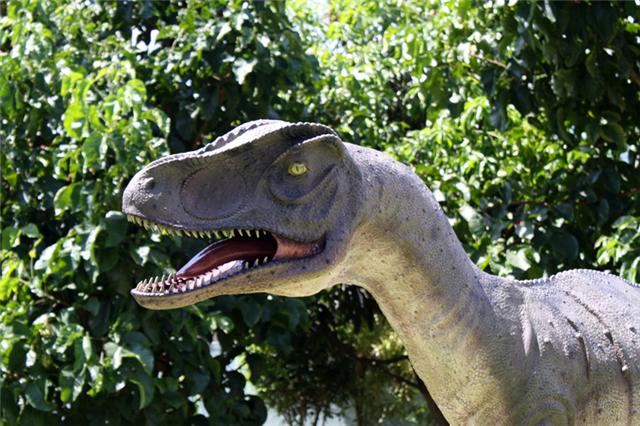
Coelophysis life size dinosaur sculpture $8,900


Daspletosaurus

Meaning - Daspletosaurus means "frightful lizard"
Pronounced - das-PLEET-oh-SAWR-us
Named By - Dale Alan Russell
When Named - 1970
DIET: Carnivore (meat-eater)
SIZE: Length - 26-33 feet (8-10 m) long
Height - 9 ft (2.7 m) tall at the hips
Weight - 2-3.5 tons (2300 kg)

Late Cretaceous

WHERE IT LIVED: Fossils have been found in Alberta, Canada, and in Montana, USA, North America. FOSSILS: A nearly complete skeleton has been found, plus one skull and a few assorted bones.

CLASSIFICATION: * Kingdom Animalia (animals) * Phylum Chordata (having a hollow nerve chord ending in a brain) * Class Archosauria (diapsids with socket-set teeth, etc.) * Order Saurischia - lizard-hipped dinosaurs
* Suborder Theropoda - bipedal carnivores
* Tetanura - advanced theropods with three fingers
* Infraorder Coelurosauria - lightly-built fast-running predators with hollow bones and large brains
* Superfamily Maniraptoriformes - advanced coelurosaurs with a fused wrist bone
* Family Tyrannosauroidea
* Genus Daspletosaurus
* Species D. torosus (type species named by D. A. Russell, 1970)

INTERESTING FACTS: Daspletosaurus was a bipedal meat-eater that lived in marshes by streams. It had tiny horns behind its eyes and its arms were a bit longer than those of T. rex. It may have been an ancestor of T. rex.

Please call or email us for price


Protoceratops andrewsi life reconstruction
PROTOCERATOPS andrewsi life-like reconstruction.

This great life-size model makes a great companion to a Protoceratops skeleton or any museum display.

This sturdy fiberglass model measures Aprox 8 1/2 ft (250cm) long

$7,300 (or less, please inquire)

A B C D E F G H I J K L M N O P Q R S T U V W X Y Z

Fossils starting with "V" (Click Here to Return to Top of page)


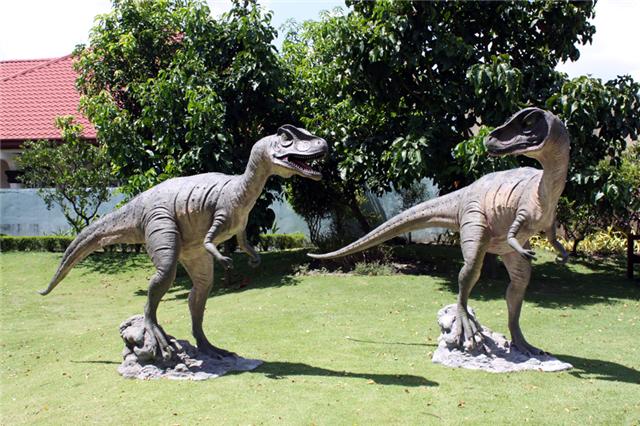
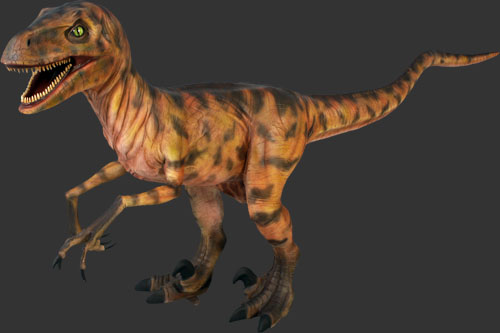
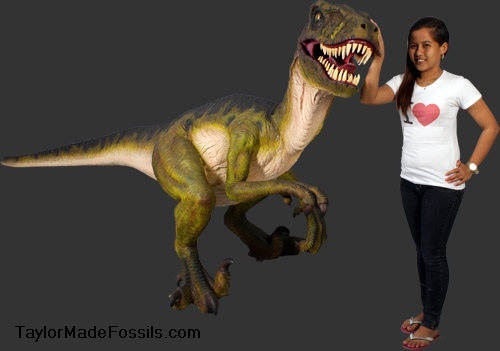
Velociraptor reconstruction

VELOCIRAPTOR mongoliensis life-size reconstruction.

Meaning of Name: "Speedy predator"

THEROPODA; Dromaeosauridae

Late Cretaceous (Campanian), Djadokhta Formation.

Size: 250cm long

Fleshed Models are sculpted using all available reference material to achieve accurate interpretations. Models are cast in durable fiberglass and can be painted to customers preferred colors scheme

$7,400

A B C D E F G H I J K L M N O P Q R S T U V W X Y Z

Fossils starting with "W" (Click Here to Return to Top of page)


Taylor Made Fossils

Ordering information

For ordering information please contact:

Taylor Made Fossils
6160 Gambleton Place
Saint Louis, Missouri 63133 USA
(314) 725-5265
We are open 24 hours. Call anytime day or night
Email us at: taylormadefossils@yahoo.com

Earn Commision

Post a link on your website and earn commision. We will pay you a percentage on everything we sell as a result of someone coming from a link on your site!

Join my MySpace friends!

We give something back

We give a percentage of all sales to various charities. Please help us support the causes we believe in.


Taylor Made Fossils main page