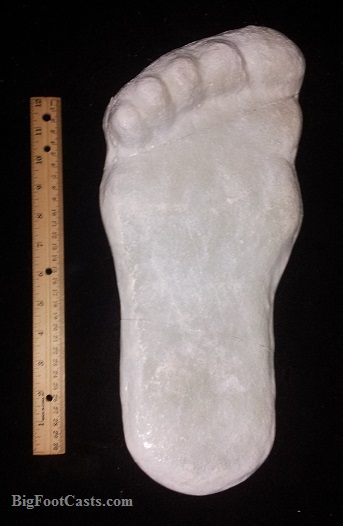
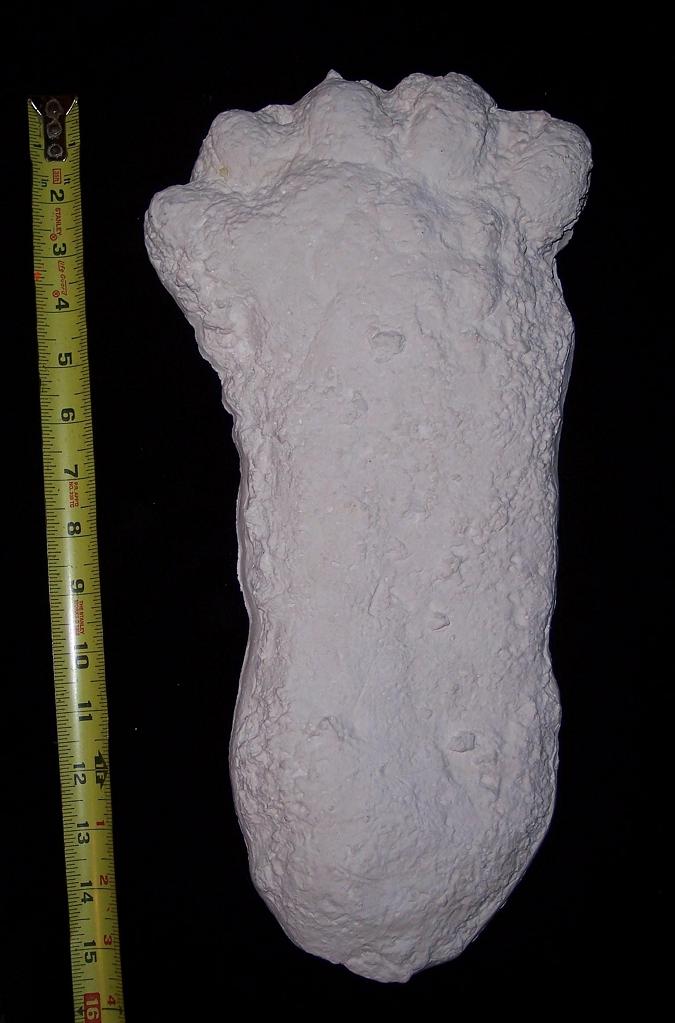
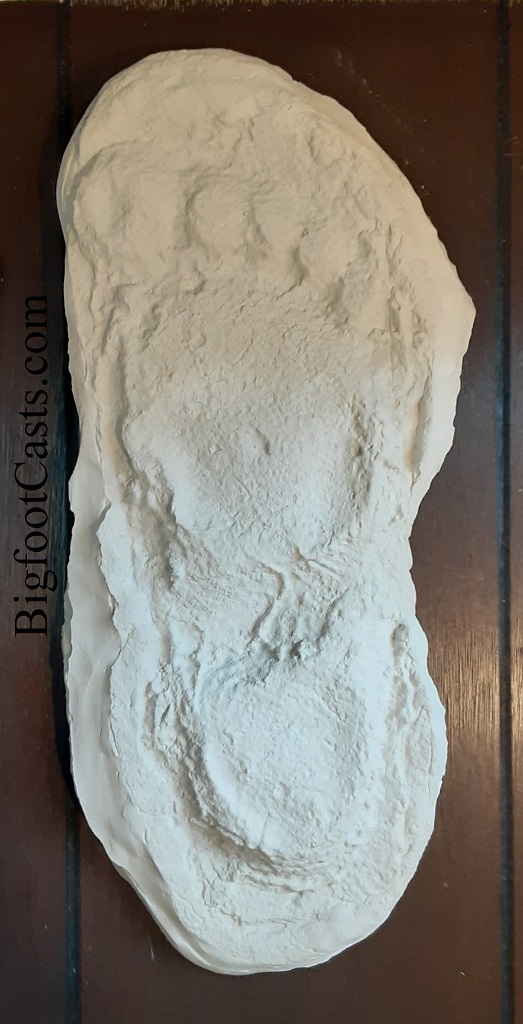
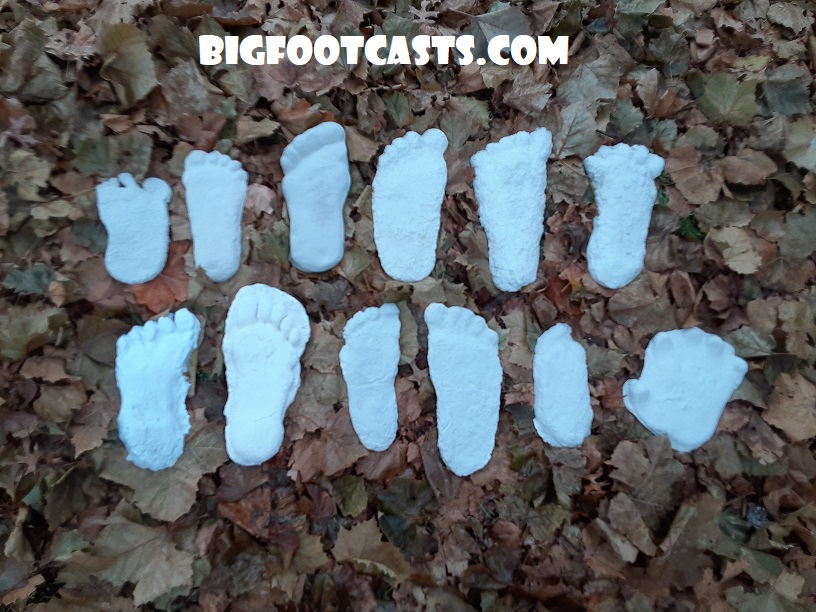
We have the largest collection of Bigfoot (Sasquatch / Yeti) footprint casts for sale anywhere.
We ship anywhere in the world and accept checks, money orders, and credit cards via PayPal.
Would you like to save $5 Sign up for the cash app using this code: TTCKJPK
https://cash.me/app/TTCKJPK
ALL sales on Bigfoot casts are final. Damaged casts will be replaced with new casts only. Box and all packing material must be kept for the shipping company to pay for a replacement. Luckily this only happens once or twice a year.
USA shipping cost is added in the shopping cart for most bigfoot casts. This is standard priority mail or UPS ground shipping only. If you want your cast sent by overnight mail or UPS there will be an additional charge not reflected in the shopping cart. We are more than happy to ship to other countries outside the USA. If your order is outside of the USA you will be responsible for shipping costs that will not be displayed or added to the shopping cart.
or
For ordering information, or have questions or would like to be added to our mailing list, please
Email us.
We offer all things Bigfoot, Sasquatch, and Yeti related. We have the largest collection of top quality footprint cast replicas available for sale anywhere online and are adding more all the time.
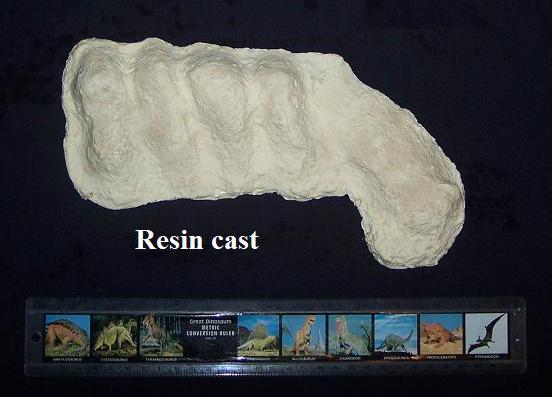
Most bigfoot casts are available in hydrostone (which is stronger than plaster). The "cripple foot" prints #1 and 2 are in resin only.
We are always looking for new specimens if you have anything you would like to sell or trade please email me at: fossils@yahoo.com and let me know.
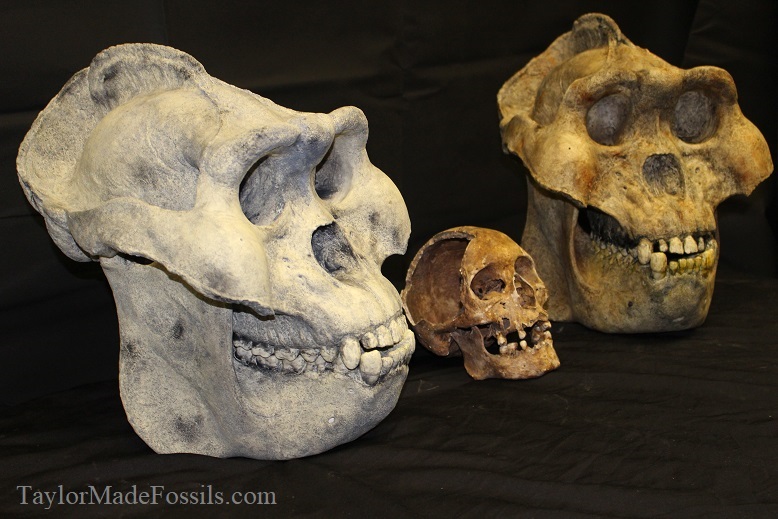
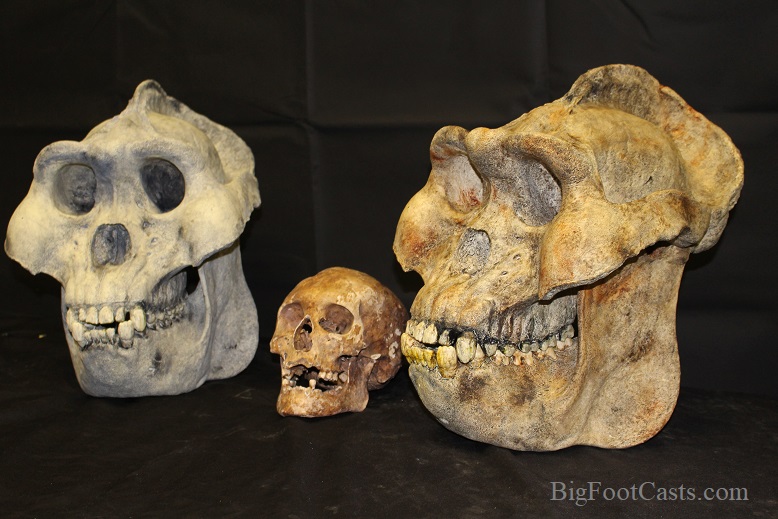
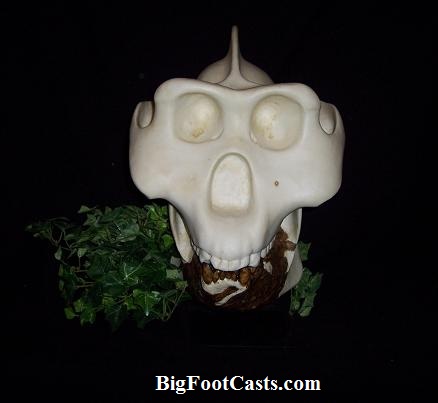
New for 2019 the newest reconstruction of Gigantopithecus skull. This new reconstruction more accurately reflect the true size of the largest Ape to ever live.
Skull cast measures:
$
The shopping cart will show "USA Shipping cost included". However if you live outside the USA you will be responsible for any additional shipping costs which can not
be calculated in the shopping cart. We will contact you about additional shipping costs if applicable.
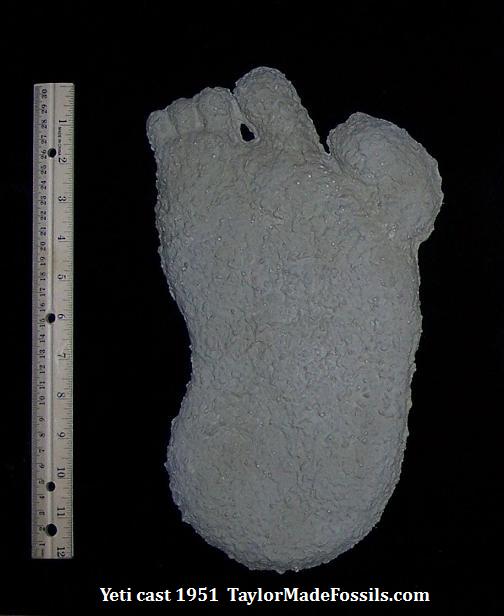
The Yeti or Abominable Snowman is an apelike animal cryptid said to inhabit the Himalaya region of Nepal and Tibet. The names Yeti and Meh-Teh are commonly used by the people indigenous to the region, and are part of their history and mythology. Nepalese have various names for Yeti like "Bonmanche" which means "wild man" or "Kangchenjunga rachyyas" which means "Kanchanjunga's demon."
Many in the scientific community largely dismisses the Yeti as a fraud supported by legend and weak evidence, yet it remains one of the most famous creatures of cryptozoology. The Yeti can be considered a Himalayan parallel to Bigfoot (Sasquatch).
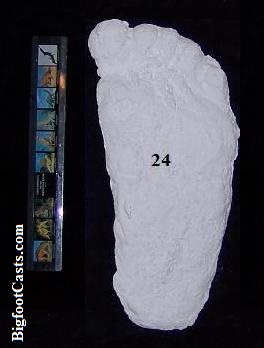
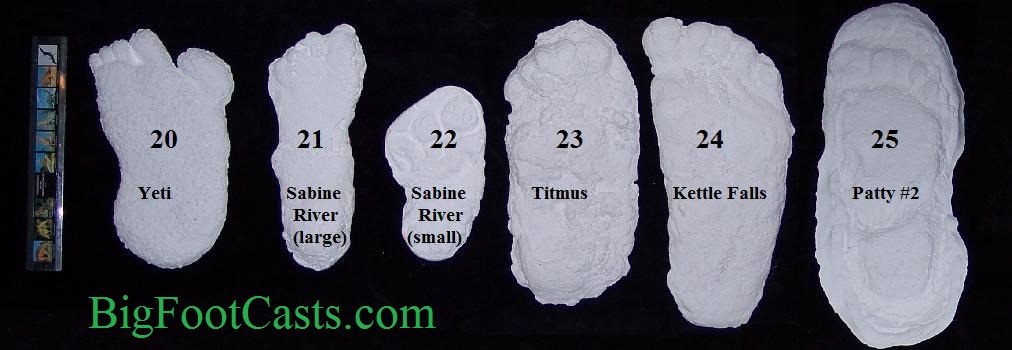
A number of prints were discovered in snow and ice by Eric Shipton (1907-1977) a distinguished British Himalayan mountaineer. Shipton photographed the prints in 1951 in the Gauri Sankar Range, Himalayas. This print shows an opposable big toe common to all apes.
$40 (plus shipping/handling)
The shopping cart will show "US Shipping cost included". However if you live outside the USA you will be responsible for any additional shipping costs which can not
be calculated in the shopping cart. We will contact you about additional shipping costs if applicable.
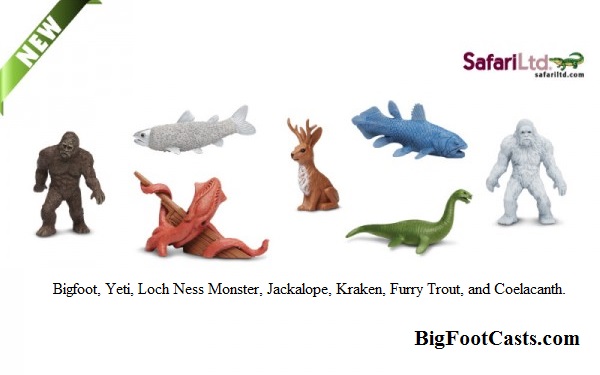
Attention mystery lovers: Legends, myths, and age-old stories have united in our Cryptozoology Designer toys collection.
Explore the wonders and mysteries of the past with these superior-quality miniature toys. They are specially designed collections of small, hand-painted replicas featuring vibrant colors and professional sculpting. The active poses and accurate details of these collectibles are ideal for projects and dioramas. Most importantly, children can learn while playing with the tiny replicas. This set features seven cryptid toys: Bigfoot, Yeti, Loch Ness Monster, Jackalope, Kraken, Furry Trout, and Coelacanth.
Measures: 10.5" H x 1.75" W (26.5 x 4.5 cm)
Recommended Ages: 3+
These toys are lead free and thoroughly safety tested
This cast is claimed by some to be one of Ray Wallace's hoaxed prints. We sell casts of this print not to perpetuate a hoax, but to aid other researchers in their quest for more information. Great for a comparison piece
on real vs. faked prints.
After spending nearly 3 months trekking up Nepal's Arun River Valley on a recon mission for a
future expedition with Tom Slick, Peter Byrne found a set of yeti footprints in the Chhoyang
Khola at 10,000 feet altitude. The prints were identical to those Byrne had seen before in
years past. They were approximately ten inches in length and of similar construction. Slick,
working with a separate party in another area discovered a second set of footprints, some of which he casted.
In 1957, Tom Slick financed and led an expedition to the mountains of Nepal to search for the
Yeti. They wanted to uncover solid proof that there was an unknown primate living there. They
hoped the discovery would help science and medicine learn more about illness and disease from
a species that reportedly is very similar to man. They found bedding areas that were similar
to ones made by the mountain gorilla. They also took many hair and dropping samples that were
packed away and forgotten for many years. When the items were finally tested, they found parasites
from an unknown primate in the dropping samples
Zack Clothier's Reconstruction Track Cast Replica of Loren Coleman's "NAPE" (North American Ape) Footprint/Track
The footprint was allegedly discovered in a side branch (a dry creek bed) of the Steven's Creek, near Decatur, Illinois and was Documented by Loren Coleman in 1962 allegedly of a North American Ape (NAPE) During his Investigation of a Wave of Sightings of a Upright Bipedal Chimpanzee-Like Creature. The Track Coleman Documented was Old & Heavily Weathered. See Loren Coleman's "Cryptozoology A to Z" for full Case details.
This is a Reconstruction of the Track as it Might Have Originally Appeared, Based on the Original Weathered Track. It was Created & Sold by Zack Clothier about 8 Years or so ago.
This Track Cast Measures 9 1/2 Inches Long, 6 Inches Wide & 1 inch thick.
The prints from Hyampon, (Northern) California were found by Bob Titmus in April 1963.
A black and white picture of the Hyampom cast appears on page 9 of John Green's Encounters With Bigfoot which is an 1980 update of Year of the Sasquatch originally published in 1970.
A different track from Hyampom is pictured in Year of the Sasquatch on page 61.
Hyampom is an unincorporated community located within Trinity County in California. Hyampom, California is at coordinates: 40°37'03"N 123°27'05"W / 40.6175, -123.45139
Jeff Meldrum has made statements indicating that the Hyampom cast (which may exhibit Sasquatch dermal ridges) was made in mud. Murphy includes a photograph that even shows standing water in one of the Hyampom tracks.
Hyampom "A" $50 (plus shipping/handling)
The shopping cart will show "US Shipping cost included". However if you live outside the USA you will be responsible for any additional shipping costs which can not
be calculated in the shopping cart. We will contact you about additional shipping costs if applicable.
The shopping cart will show "US Shipping cost included". However if you live outside the USA you will be responsible for any additional shipping costs which can not
be calculated in the shopping cart. We will contact you about additional shipping costs if applicable.
Patterson/Gimlin Film "Bluff Creek" or "Patty" Bigfoot Cast / Patterson Bigfoot print replica 1967
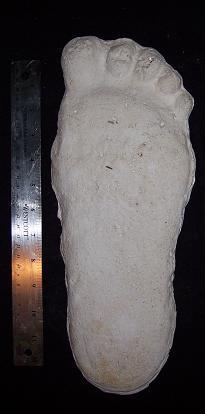
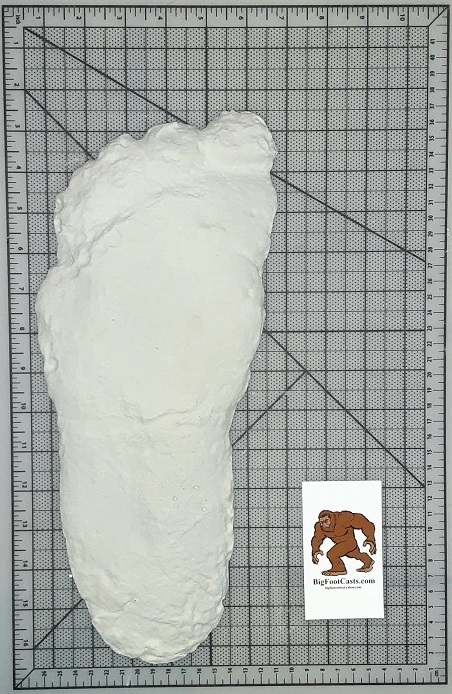
Here is the footprint that started it all! Available now is the famous "Bluff Creek" (or "Patty") footprint cast. The Patterson print was made after Roger Patterson filmed his famous Bigfoot video in October 1967 in the Bluff Creek sandbar. This cast is 14 1/2 inches long and 6 inches wide.
Meldrum: "Patterson-Gimlin Film Subject.
On October 20, 1967, Roger Patterson and Bob Gimlin claimed to have captured on film a female Bigfoot retreating across a loamy sandbar on Bluff Creek, in northern California. The film provides a view of the plantar surface of the subject's foot, as well as several unobstructed views of step cycles. In addition to a prominent elongated heel, a midtarsal break is apparent during midstance and considerable flexion of the midtarsus can be seen during the swing phase. The subject left a long series of deeply impressed footprints. Patterson cast single examples of a right and a left footprint. The next day the site was visited by Robert Laverty, a timber management assistant and his sales crew. He took several photographs including one of a footprint exhibiting a pronounced pressure ridge in the midtarsal region. This same footprint, along with nine others in a series, was cast two weeks later by Bob Titmus, a Canadian taxidermist."
Here is a second print from the famous Roger Patterson video.
This print has a mid-tarsal break (as found in the original) from the original Patterson / Gimlin site. This print was cast 9 days after the sighting by Bob Titmus on October 29, 1967.
It is labeled (on the back of our original) "Titmus / Gimlin print".
It also includes the following information: "It was found October, 29, 1967 in Bluff Creek, California"
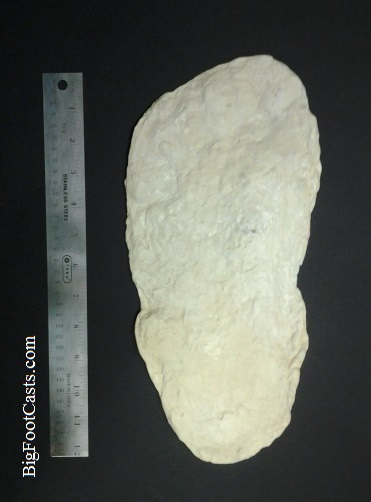
This cast measures 14 inches long and 5 3/4 inches wide at its widest point.
In personal communication Loren Coleman has recently (5/17/13) stated that this cast and the Patterson "Patty" cast (above) "....appear to be different merely due to copying processes. Or as Cliff Barackman stated it simply to [Loren] in an email, "These two are the same, just different generations of the same cast."
We provide them both here as they show varying degrees of detail in different parts of each print.
We appreciated Mr. Coleman's expertise and information in regards to this issue.
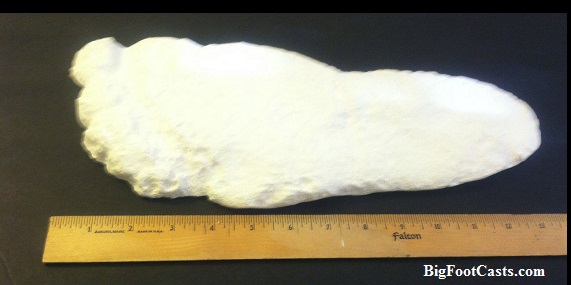
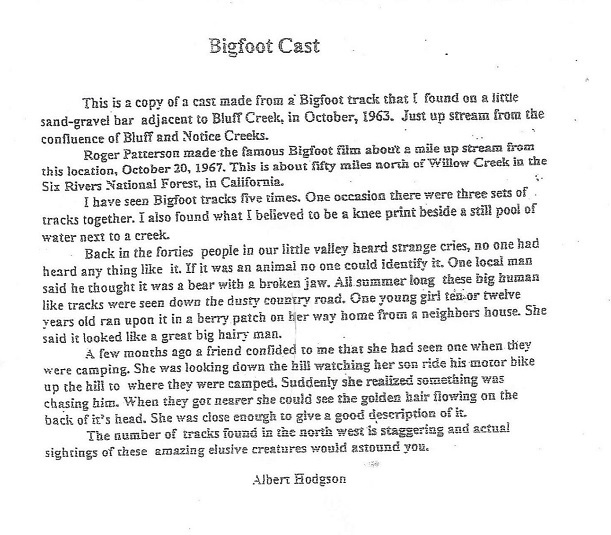
This is the information we received from the gentleman who sold us this cast:
"This is a duplicate cast of a 13" Bigfoot foot print that was cast in 10/67 by Al Hodgson, Willow Creek resident whom I have known for about 25 years. As most followers of Bigfoot know, the Patterson-Gimlin pictures were filmed in Bluff Creek, about 25 miles from Willow Creek. Patterson and Gimlin said that Al was the first person they told about their filming upon returning to Willow Creek from their famous sighting on 10/20/67. Whether you are a Bigfoot Believer or Bigfoot Skeptic, this is a great conversation piece and collectors item. Unless you are Searching for Squatch this cast is probably as close to a Bigfoot as you will ever get. I know Al to be a person of integrity and trust the authenticity of the cast. Bigfoot's authenticity, as you know, has been under discussion for many years."
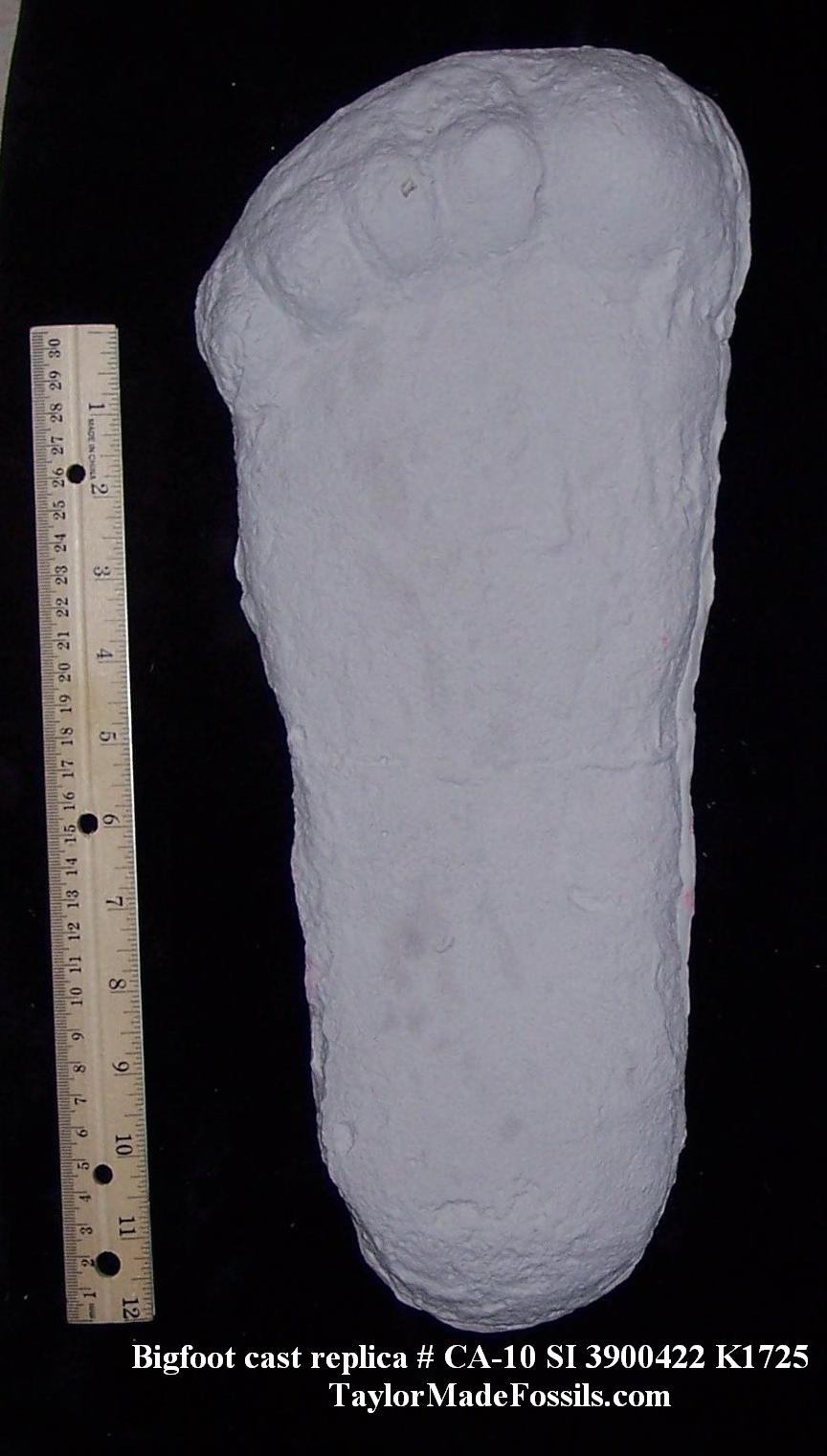
Bigfoot cast replica print # CA-10 SI 3900422 K1725 (1967?)
Bigfoot cast replica print.
I am unsure of the locality of this print, but believe it was part of the Patterson / Gimlin print site as there was a series of numbers on the back of the print: # CA-10 SI 3900422 K1725
This is a really beautiful print with nice detail.
If you have any more information on this print please email us.
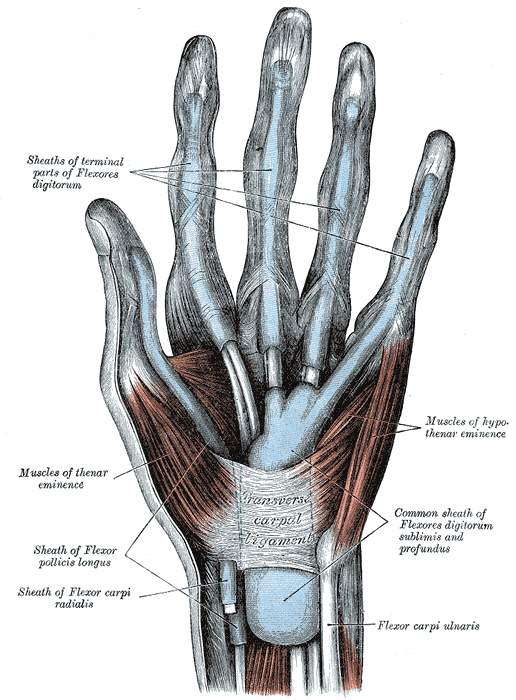
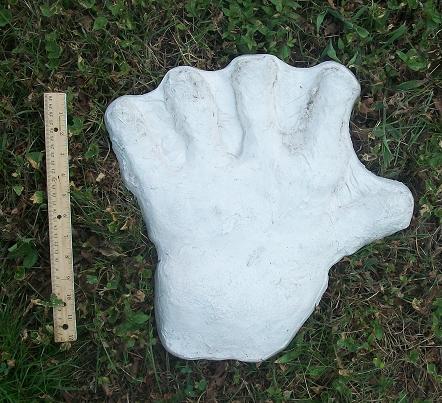
Two plaster casts have been obtained of handprints of the reputed Sasquatch. The prints measure more than half again greater than normal human hands and are relatively very broad. The thumb is non-opposable and there is correspondingly no elevation of the thenar eminence
During the summer of 1970, handprints of two of these animals were photographed and plaster casts of them were made by Ivan Marx, a game guide in northeastern Washington state. Marx loaned the original casts to Grover Krantz who then made latex molds from them in order to produce exact duplicates for further study.
Dr. Krantz passed away in 2002, but copies of this hand print are available here at BigFootCasts.com
An unexpected trait is the non-opposable thumb. The hand strongly suggests one designed for digging into the ground and for raking berries from bushes rather than being primarily for manipulating objects. Flexing all five digits in the same direction would best facilitate the suggested functions. Heavy callousing, including along all margins, would also be expected to follow from such uses.
Cast from a Texas Bigfoot case investigated near Bandera Texas.
Information from the gentleman that supplied the print to us:
"It was made from a print in Texas that I investigated back around
1973. I hope you enjoy it as much as I have all these years
I was in Texas investigating the case back in the 70's. It was
actually made by a Deputy while I was on scene with him. Quite a few
witnesses. The location was in a place called Bandera, near Medina
Lake Texas. there were several prints but only one survived the rain
before we got there. Since a rancher who was a witness had the smarts to cover it
with a metal box and protect the sides with waterprof material so water would not
ruin it.
That's about it Thanks, Phil.
This foot print is mentioned in the book "Files From The Edge".
The print measures 18 inches long by 8 inches wide.
Photo shown is a copy but was claimed to be the original cast taken on site.
Update 5/13/13: It appears that this print was not discovered in the 70's as claimed by Phil, but actually just a copy of the Umatilla print (available for $40 below). Why he would claim it was a different footprint is anyone's guess. It is sad that so much misinformation exists in this field of research.
This print was discovered by Paul Freeman in 1982.
It was found in Umatilla National Forest Walla Walla, Washington (USA).
The Umatilla National Forest, located in the Blue Mountains of southeast Washington and northeast Oregon, covers 1.4 million acres of diverse landscapes and plant communities. The Forest has some mountainous terrain, but most of the Forest consists of v-shaped valleys separated by narrow ridges or plateaus.
$40 (plus shipping / handling)
The shopping cart will show "US Shipping cost included". However if you live outside the USA you will be responsible for any additional shipping costs which can not
be calculated in the shopping cart. We will contact you about additional shipping costs if applicable.
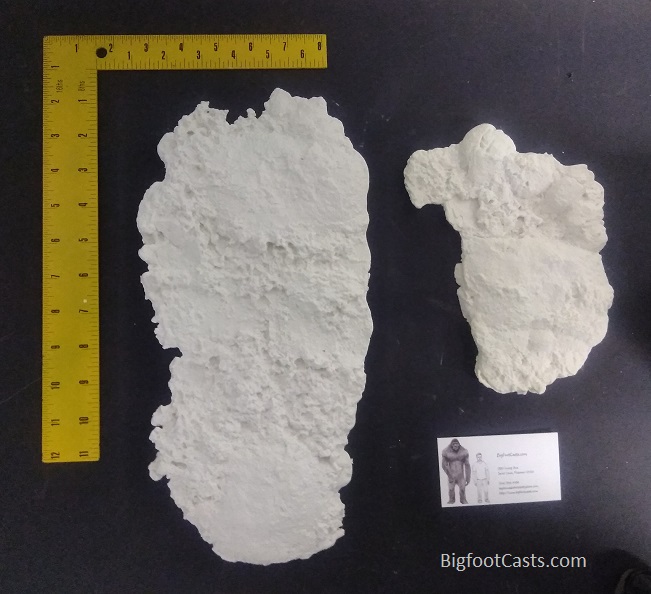
Paul Freeman's "Wrinkle Foot" casts 1984 "Wrinkle Foot" Bigfoot Left and Right Prints
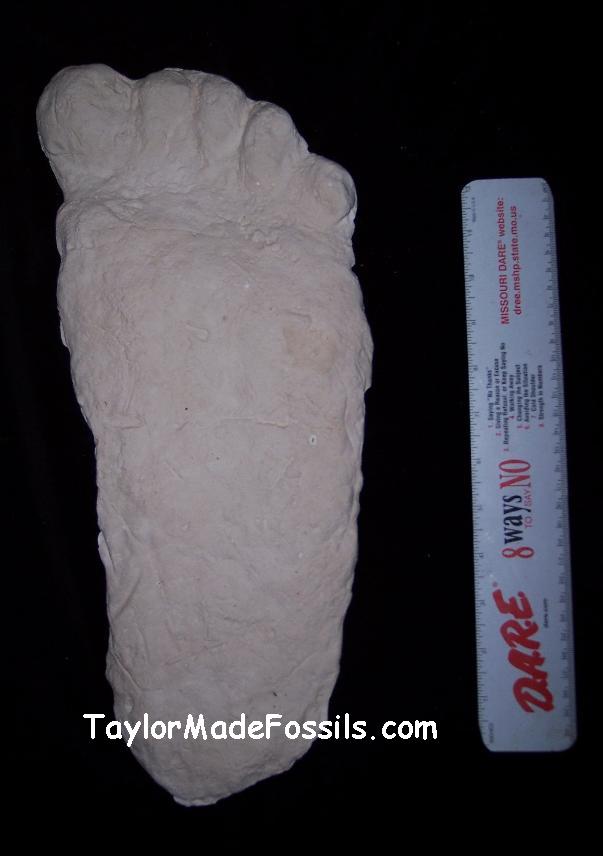
"Wrinkle Foot" Left and Right footprints of a slightly small bigfoot individual. These were cast by Paul Freeman in the Blue Mountains in 1984.
Edward Palma and Robert Olsen saw small patches of dermal ridges in the casts, but there are almost overwhelmed by extensive wrinkling over much of the foot surface. Thse tracks are also not very good mirror images [the left is different from the right] in the gross relief of their bottoms. I suspect that this is a very old female individual who is semi-crippled.
Print "A" $40 (plus shipping / handling)
The shopping cart will show "US Shipping cost included". However if you live outside the USA you will be responsible for any additional shipping costs which can not
be calculated in the shopping cart. We will contact you about additional shipping costs if applicable.
____________________
Print "B" $40 (plus shipping / handling)
The shopping cart will show "US Shipping cost included". However if you live outside the USA you will be responsible for any additional shipping costs which can not
be calculated in the shopping cart. We will contact you about additional shipping costs if applicable.
In 1984, Paul Freeman cast a set of both right and left tracks in the Blue Mountains of Washington/Oregon states. This is not the same place as Blue Creek Mountain of California. Another bit of confusion? These casts became known as "Wrinkle foot". Not very well documented in the literature. Grover Krantz almost off-handedly mentions them in his book "Bigfoot-Prints: A scientific inquiry into the reality of Sasquatch".
Over the years, Paul Freeman developed a shady reputation concerning the subject, some saying even resorting to hoaxing evidence, so not much attention was given to this man or his evidence, except by the local media.
Grover Krantz attempted to duplicate the ridge patterns he found on these casts with combs and other items. Later, even others explored this approach with the serrated edge of butter knives. The results were all less then successful. They lacked details such as what appeared to be sweat pores, symmetrically placed along the tops of the ridges. The over all dimensions were also grossly enlarged caricatures of what now Grover felt might be definitive proof for these animals existence. (cryptomundo).
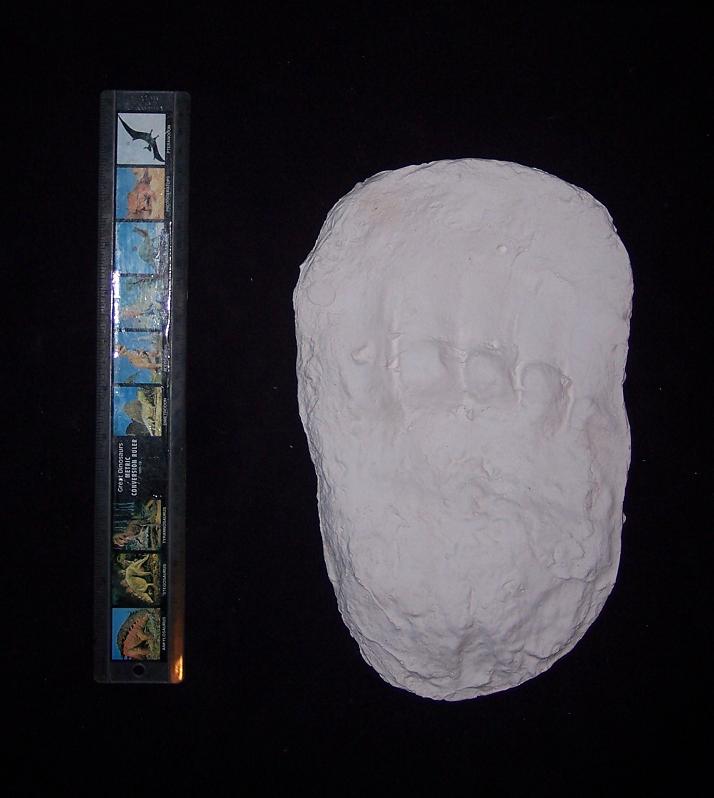
Bigfoot/Sasquatch Paul Freeman 1984 Wrinkle Foot half print cast
Paul Freemans rare Wrinkle Foot half print cast (only the ball of the foot and toes left an impression). Casted 1984 in the Blue Mountains of Washington State. Grover Krantz surmised this is most likely a very old and crippled female. Wrinkle footprints have been found in California, Oregon, Washington, Idaho and Canada. First cast by Freeman in 1984, she was found throughout the Pacific Northwest until the late 1990s. Named Wrinkle foot by Dr. Krantz due to the extensive wrinkling covering the soles of her feet. Cast is documented with date and location. Cast by Paul Freemans son, Michael Freeman.
This item is for available for trade only (for other bigfoot casts)
The shopping cart will show "US Shipping cost included". However if you live outside the USA you will be responsible for any additional shipping costs which can not
be calculated in the shopping cart. We will contact you about additional shipping costs if applicable.
$30 (plus shipping / handling)
The shopping cart will show "US Shipping cost included". However if you live outside the USA you will be responsible for any additional shipping costs which can not
be calculated in the shopping cart. We will contact you about additional shipping costs if applicable.
This is a half of a Bigfoot foot print discovered by Jeff Meldrum at Mill Creek, LA 2/18/96
Jeff Meldrum on the half track:
"Evidence of a Midtarsal Break
Perhaps the most significant observation relating to this trackway was the evidence of a pronounced flexibility in the midtarsal joint. Several examples of midfoot pressure ridges indicate a greater range of flexion at the transverse tarsal joint than permitted in the normal human tarsus. This is especially manifest in the footprint figured below, in which a heel impression is absent. Evidently, the hindfoot was elevated at the time of contact by the midfoot. Due to the muddy conditions, the foot slipped backward, as indicated by the toe slide-ins, and a ridge of mud was pushed up behind the midtarsal region."
$30 (plus shipping / handling)
The shopping cart will show "US Shipping cost included". However if you live outside the USA you will be responsible for any additional shipping costs which can not
be calculated in the shopping cart. We will contact you about additional shipping costs if applicable.
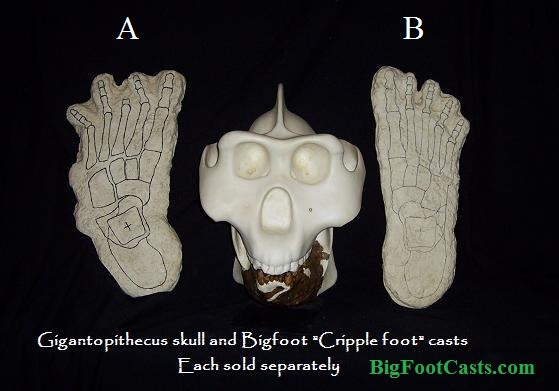
Bossburg "Cripple Foot" casts A and B (#1 and 2) 1969
"Example of Foot Pathology
The track of an individual with a presumed cripple foot was discovered in Bossburg, Washington in 1969. The malformed right foot has been previously misidentified as a case of talipes equinoverus (clubfoot). However, it is consistent with the general condition of pes cavus, specifically metatarsus adductus or possibly skewfoot. Its unilateral manifestation makes it more likely that the individual was suffering from a lesion on the spinal cord rather than a congenital deformity. Regardless of the epidemiology, the pathology highlights the evident distinctions of skeletal anatomy. The prominent bunnionettes on the lateral margin of the foot mark the positions of the calcaneocuboid and cuboideometatarsal joints, which are positioned more distal than in a human foot. This accords with the inferred position of the transverse tarsal joint and confirms the elongation of the heel segment. Furthermore, deformities and malalignments of the digits permit inferences about the positions of interphalangeal joints and relative toe lengths, as depicted in the reconstructed skeletal anatomy depicted below."
The injured foot measures 17 1/2" long, 7" wide, and the normal foot is 16 1/2" long by 9 1/2" wide.
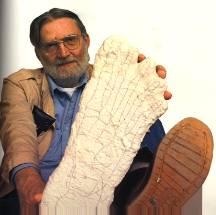
Bossburg "Cripple foot" casts. This is a pair of footprint impressions from a crippled Sasquatch, or Bigfoot, from Northeastern Washington State, cast and reconstructed by Dr. Grover Krantz, Professor of Anthropology at Washington State University.
Photo of Dr. Grover Krantz
By analyzing the differences between the deformed and normal prints, Dr. Krantz reconstructed the skeletal structure of the feet, and concluded the prints were made by a non-human, large-massed bipedal animal consistant with descriptions given in bigfoot sightings, and that due to their precise conformity to adaptations needed for the bipedal locomotion of such a large animal, fakery would be nearly impossible.
Resin casts.
This set is available in resin only. Produced by "Bone Clones", these casts are licensed by the estate of Grover Krantz and a royalty is paid to his estate for each purchase. The "Cripple foot" Bigfoot / Gigantopithecus blacki casts.
The tracks were found by Rene Dahinden, Ivan Marx, and John Willison Green.
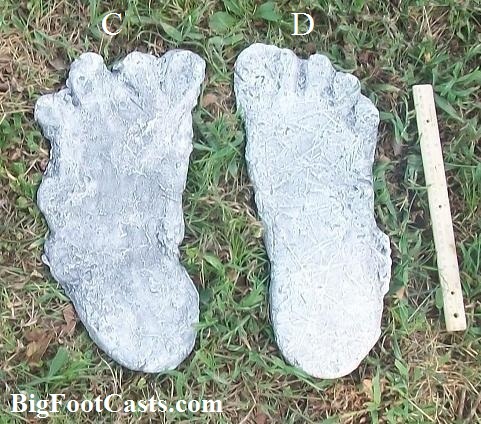
These prints come from the same site, (but are different prints) as the other "Cripple Foot" casts (above). They are 2 more of the approx 180 tracks that were found.
These prints do not have
the anatomical drawing that Grover Krantz added to the other 2 prints.
Cripple foot cast C $50 (plus shipping / handling)
The shopping cart will show "US Shipping cost included". However if you live outside the USA you will be responsible for any additional shipping costs which can not
be calculated in the shopping cart. We will contact you about additional shipping costs if applicable.
-----
Cripple foot cast D $ (plus shipping / handling)
The shopping cart will show "US Shipping cost included". However if you live outside the USA you will be responsible for any additional shipping costs which can not
be calculated in the shopping cart. We will contact you about additional shipping costs if applicable.
Onion Mountain (Blue Creek) John Green Bigfoot cast replica 1967
$40 (plus shipping / handling)
The shopping cart will show "US Shipping cost included". However if you live outside the USA you will be responsible for any additional shipping costs which can not
be calculated in the shopping cart. We will contact you about additional shipping costs if applicable.
In
August of 1967, John Green cast an old track he found on a dirt road running between Blue Creek and Onion Mountain. It soon became labeled the Blue Creek Mt cast. He wrote of it in some of his earlier publications.
Here was a cast that had many ridges running in circular formations all over it, showing all the signs of friction ridges found on all primate feet and hands. John made a statement once about seeing these lines in an actual track but later corrected this by saying that one night while there (northern California) he was called over to a track by some of his companions and by flashlight saw ridges in its sole. He thought – Oh No! Someone is faking these tracks with wooden feet. The misconception about all of this was the name given the track and cast – Blue Creek Mt. – when years later he realized that the shadows in pictures placed these tracks closer to Onion Mt, so the name was changed. This didn’t make front-page news but did confuse people who were studying it. The ridges he witnessed that night was also assumed to have been in the bottom of the track producing this cast. It was not. (cryptomundo)
Also available for trade.
Casts have a wire on the back for hanging.
Grays Harbor Hereford Bigfoot print casts
Here are 5 casts of Big Foot / Yeti / Sasquatch (Footprint casts. Left and right) The prints are from Grays Harbor County, Washington.
The Bigfoot "Hereford prints" (sic: "Heryford prints"), also called the "Abbot Hill prints", were cast by Sheriff Dennis Hereford on April 22, 1982 (one source gives the date as "mid 1960s") in Grays Harbor County, Washington.
Meldrum: "Deputy Sheriff Denny Hereford was one of several officers investigating footprints found by loggers on the Satsop River, in Grays Harbor County, Washington, in April 1982. The subject strode from the forest across a logging landing, then doubling its stride, left a series of half-tracks on its return to the treeline. Note the indications of the fifth metatarsal and calcaneocuboid joint on the lateral margin of the cast. The proximal margin of the half-track approximates the position of the calcaneocuboid joint."
$48 each (plus shipping / handling)
Grays Harbor "A" cast $48 (plus shipping / handling)
The shopping cart will show "US Shipping cost included". However if you live outside the USA you will be responsible for any additional shipping costs which can not
be calculated in the shopping cart. We will contact you about additional shipping costs if applicable.
The shopping cart will show "US Shipping cost included". However if you live outside the USA you will be responsible for any additional shipping costs which can not
be calculated in the shopping cart. We will contact you about additional shipping costs if applicable.
The shopping cart will show "US Shipping cost included". However if you live outside the USA you will be responsible for any additional shipping costs which can not
be calculated in the shopping cart. We will contact you about additional shipping costs if applicable.
The shopping cart will show "US Shipping cost included". However if you live outside the USA you will be responsible for any additional shipping costs which can not
be calculated in the shopping cart. We will contact you about additional shipping costs if applicable.
------------
Grays Harbor "E" cast (this is a variant of print "D") $48 (plus shipping / handling)
The shopping cart will show "US Shipping cost included". However if you live outside the USA you will be responsible for any additional shipping costs which can not
be calculated in the shopping cart. We will contact you about additional shipping costs if applicable.
Measuring 16 inches in length by 7.5 inches across this cast of a Bigfoot/sasquatch footprint has incredible detail. This particular print was located with numerous other foot prints in Grays Harbor Washington in 1982. The creature is estimated to be 9 feet tall weighing 700 pounds with a 6 foot stride.
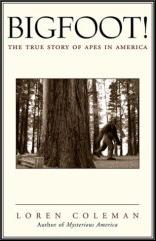
The prints are documented in Appendix B of Bigfoot expert Loren Coleman's book: "Bigfoot: The True Story of Apes in America".
These prints capture the finest detail and will help you increase your knowledge about bigfoot. Prints measure approx. 15 inches long and 6 inches wide (38 x 18 cm). Detail is excellent.
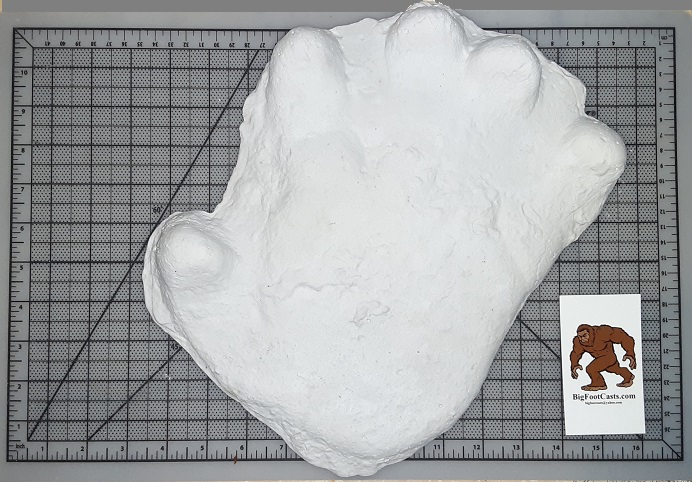
These knuckle prints come from a line of prints known as the "dermals" which were discovered in 1982. This cast displays the knuckles of four fingers along with the thumb. The thumb shows a fingernail which is rotated in a position that is non-opposed (ape-like) position. This cast is 10 inches wide. This cast comes ready to display on a wall (loop on back) or flat on a table or shelf.
(I am also willing to trade casts for others you may have)
The shopping cart will show "US Shipping cost included". However if you live outside the USA you will be responsible for any additional shipping costs which can not
be calculated in the shopping cart. We will contact you about additional shipping costs if applicable.
This footprint was found by Pat Graves on Laird Meadow Road, near Bluff Creek, California in 1964. During a conversation, Pat mentioned to Roger Patterson he had found the tracks just the day before. Roger hurried to the location, hoping to see the footprints himself; what he found was extraordinary.
The creature that made the tracks came down from a mountain, crossed Laird Meadow Road, continued down an old logging landing, and finally disappeared over a bank and into the woods, with an average stride of 52 inches. Each footprint was 17 inches long and 5 wide at the heel. The tracks were imprinted an inch and a half deep, far deeper than Roger's own footprints. Evidence of a flexible foot was seen in the prints, particularly when the foot had stepped on small rocks; the toes curled over them.
Patterson then made casts of the footprints. This is one of the casts made; it was left by a right foot. The life form that made this footprint is presumed to be a (large) male sasquatch, who's tracks were found in the area on several other occasions ranging in time from 1958 to 1963.
The Laird Road track has also erroneously been sold/traded under the name
"Bend OR 1971" and also "Kettle Falls 1969"
Mill Creek print. This cast was found (some say hoaxed) by
Leon Paul Freeman on 2/18/1996, in Mill Creek, Washington (USA).
Whether it truly is a cast of a bigfoot creature or a hoax it is a very nice print with excellent detail.
Mill Creek Bigfoot cast $40 (plus shipping)
The shopping cart will show "US Shipping cost included". However if you live outside the USA you will be responsible for any additional shipping costs which can not
be calculated in the shopping cart. We will contact you about additional shipping costs if applicable.
Casts have string or wire on the back for hanging.
Here is another print from the famous Bluff Creek, N. California. From the Patterson-Gimlin Film site. This print was discovered by Bob Titmus on Oct 31, 1967
My original was labeled "Cast number 114-12" on the back. I believe this may be the frame number from the film that corresponds to the print.
$30 plus shipping
Bigfoot cast #114-12
$40 (plus shipping / handling)
The shopping cart will show "US Shipping cost included". However if you live outside the USA you will be responsible for any additional shipping costs which can not
be calculated in the shopping cart. We will contact you about additional shipping costs if applicable.
Kettle Falls, Washington 1969 discovered by Vauhn Bryant
The information given to us with this cast is as follows:
Kettle Falls Bigfoot print. Discovered in 1969 by Vauhn Bryant, PhD. Near a road by Kettle Falls, a city in Stevens County, Washington. It is named for the nearby Kettle Falls on the Columbia River, an ancient and important fishing site for Native Americans.
Loren Coleman clarifies that this is in fact the Laird Meadow track (available above).
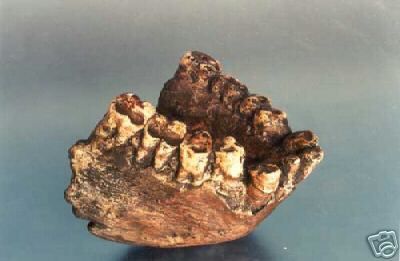
Partial jaw replica of the largest primate that ever lived, found in Pleistocene China and Vietnam. This jaw measures 3.9x3.6x2.8in.(100x90x70mm). Many Bigfoot enthusiasts believe that Gigantopithecus might provide fossil evidence of Bigfoot.
Resin cast $50 plus shipping
The shopping cart will show "US Shipping cost included". However if you live outside the USA you will be responsible for any additional shipping costs which can not
be calculated in the shopping cart. We will contact you about additional shipping costs if applicable.
Reconstruction by Dr. Grover Krantz based on large Chinese male fossil jaw, assuming bipedal posture and ape-sized brain. Produced by "Bone Clones" this cast is fully licensed by the estate of Grover Krantz.
The shopping cart will show "US Shipping cost included". However if you live outside the USA you will be responsible for any additional shipping costs which can not
be calculated in the shopping cart. We will contact you about additional shipping costs if applicable.
----- Gigantopithecus Skull cast with stand
$430.00
Bigfoot cast discovered in Keuterville, Idaho. It was found by a 13 year old boy on his families property.
The original print was cast by Brian Smith on July 11, 2001.
This cast is unique in that it shows mushroomed toes, dermal ridges, skin folds and creases and what may be toe nails.
Some have called this the best Bigfoot track.
This track measures approximately 14.5 inches long by 6.5 inches wide.
The shopping cart will show "US Shipping cost included". However if you live outside the USA you will be responsible for any additional shipping costs which can not
be calculated in the shopping cart. We will contact you about additional shipping costs if applicable.
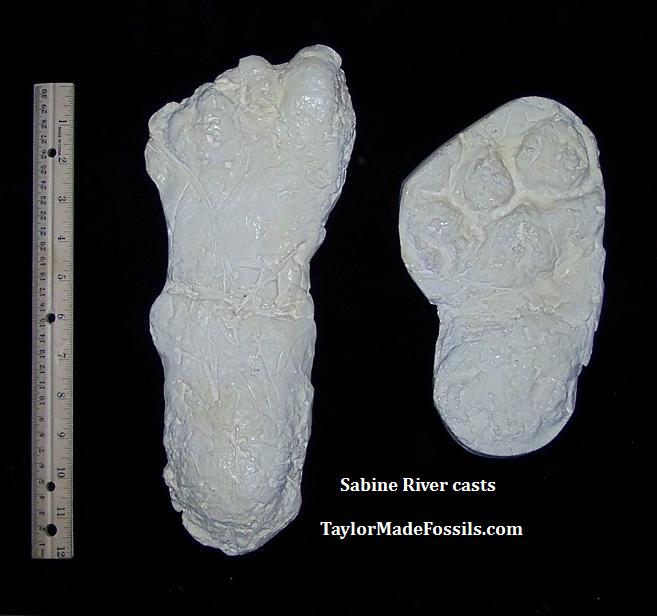
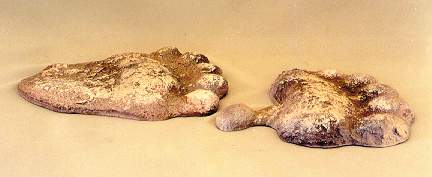
This set of prints was discovered in Texas, in the Sabine river bottoms. One is a complete bigfoot print, the shorter of the two is a partial print.
These were discovered in the Spring of 2003 by Chester Moore.
These casts were made from a 2nd generation cast. There have been several sightings at this location.
$30 for the set of 2 prints.
Sabine River Bigfoot cast (set of 2) $40 (plus shipping / handling)
The shopping cart will show "US Shipping cost included". However if you live outside the USA you will be responsible for any additional shipping costs which can not
be calculated in the shopping cart. We will contact you about additional shipping costs if applicable.
The original was found in the Laurel Highland Mountains in
Central Pennsylvania in 2005.
The mountains making up the Laurel Highlands are the highest in Pennsylvania, with Mount Davis in Somerset County the highest point in the state at 3,213 feet (979 m). Because of the elevation, weather in the Laurel Highlands are generally cooler and wetter than in most other parts of the state.
The cast measures about 7" long.
$25(plus shipping/handling).
The shopping cart will show "US Shipping cost included". However if you live outside the USA you will be responsible for any additional shipping costs which can not
be calculated in the shopping cart. We will contact you about additional shipping costs if applicable.
Bigfoot print cast from Yosemite National Park 2008
This is a great track. It was discovered in 2008. I have molded this from an original Bigfoot print which I own, so the quality and detail is excellent in this first generation cast.
The print
measures 13". It was found Near Yosemite National Park in east central California, United States. The track has been studied and is well documented.
Bigfoot foot cast (From the motion picture Stomping Ground)
Deep in the Uwharrie Forest there have been many Bigfoot sights over the decades. Finally, now we know them to be True.
'STOMPING GROUND' shot in North Carolina's Uwharrie National Forest captures on film that Bigfoot does, in fact, EXIST. Whether you are a Bigfoot believer or closet Bigfoot believer here is the chance to own what you may have only seen on Monster Quest or Animal Planet, an actual plaster cast from a Bigfoot print found in the Uwharrie National Forest.
The cast measures almost 17 Inches from toe to heel and 6 inches in width.
The cast was made for Promotional use. There were fifteen plaster casts made.
$40 (plus shipping / handling)
The shopping cart will show "US Shipping cost included". However if you live outside the USA you will be responsible for any additional shipping costs which can not
be calculated in the shopping cart. We will contact you about additional shipping costs if applicable.
Orang pendek footprint cast replica (Orang pendeck)
$25 (plus shipping)
Orang Pendek (Indonesian for "short person") is the most common name given to a cryptid, or unconfirmed animal, that reportedly inhabits remote, mountainous forests on the island of Sumatra.
The animal has allegedly been seen and documented for at least one hundred years by forest tribes, local villagers, Dutch colonists, and Western scientists and travelers. Consensus among witnesses is that the animal is a ground-dwelling, bipedal primate that is covered in short fur and stands between 80 centimetres (31 in) and 150 centimetres (59 in) tall
This cast was made from a footprint discovered by 3 British men, Adam Davies, Andrew Sanderson and Keith Townley while traveling in Kerinci. This, along with hair which was also found was analyzed by scientists from 2001 to 2003. Dr. David Chivers, a primate biologist from the University of Cambridge, compared the cast with those from other known primates and local animals and concluded: "...the cast of the footprint taken was definitely an ape with a unique blend of features from gibbon, orang-utan, chimpanzee, and human. From further examination the print did not match any known primate species and I can conclude that this points towards there being a large unknown primate in the forests of Sumatra." (Sanderson, Andrew and Adam Davies (2003). "Extreme Expeditions".)
This is a cast replica made from the original footprint of Orang pendek. It was discovered by Adam Davies in Sumatra.
Orang pendek footprint cast replica (Orang pendeck) cast #2
$25 (plus shipping)
Orang Pendek (Indonesian for "short person") is the most common name given to a cryptid, or unconfirmed animal, that reportedly inhabits remote, mountainous forests on the island of Sumatra.
This is a cast replica made from the original footprint of Orang pendek.
Orang pendek footprint cast replica (Orang pendeck) cast #3
$25 (plus shipping)
Orang Pendek (Indonesian for "short person") is the most common name given to a cryptid, or unconfirmed animal, that reportedly inhabits remote, mountainous forests on the island of Sumatra.
This is a cast replica made from the original footprint of Orang pendek.
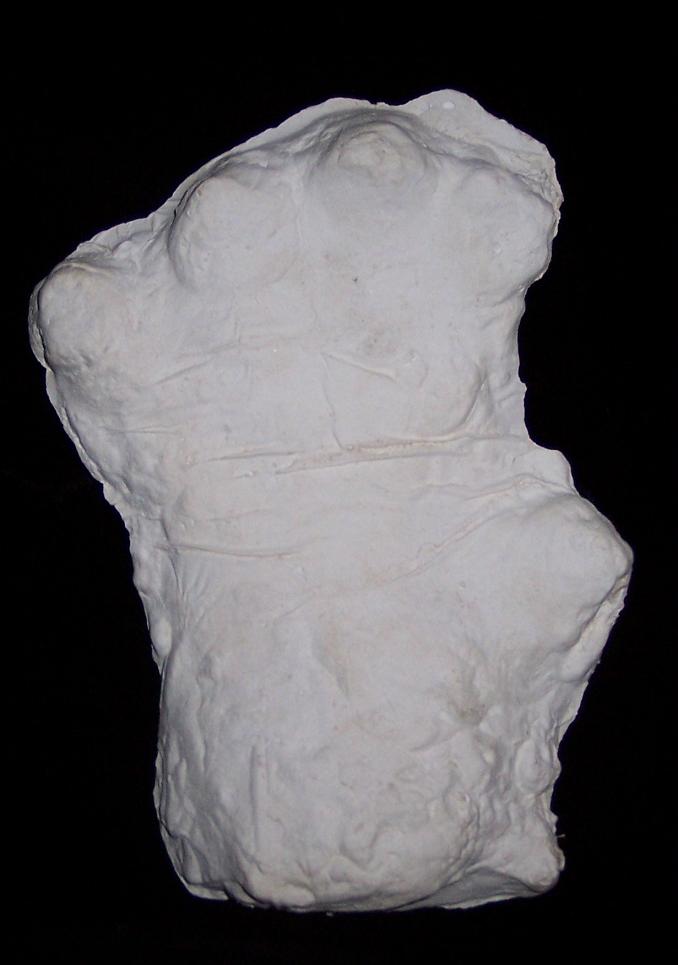
Here is your chance to own a cast of this elusive creature.
This small track has nice claws.
$25 plus shipping / handling.
The shopping cart will show "US Shipping cost included". However if you live outside the USA you will be responsible for any additional shipping costs which can not
be calculated in the shopping cart. We will contact you about additional shipping costs if applicable.
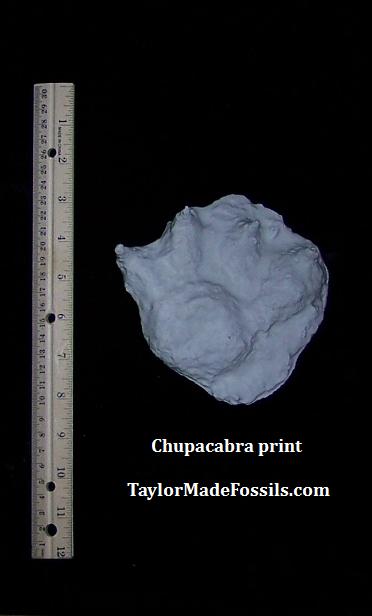
The Chupacabra, also called el Chupacabras, from the Spanish words chupar, meaning "to suck", and cabra, meaning "goat"; literally "goat sucker") is a legendary cryptid rumored to inhabit parts of the Americas. It is associated more recently with sightings of an allegedly unknown animal in Puerto Rico (where these sightings were first reported), Mexico, and the United States, especially in the latter's Latin American communities. The name comes from the animal's reported habit of attacking and drinking the blood of livestock, especially goats.
Video still of an alleged Chupacabra caught by a DeWitt County, Texas Sheriff's Deputy on August 8, 2008.
Physical descriptions of the creature vary. Eyewitness sightings have been claimed as early as 1990 in Puerto Rico, and have since been reported as far north as Maine, and as far south as Chile.
Sometime during the last few days of July, 2013, a man named Pak Saril witnessed an orang pendek near Hutang Gunung Sangkar, which roughly translates to the “Debt of the Caged Mountain.” Word spread of the encounter, and Jhonisa, one of my Sumatran contacts, heard of the encounter and visited the site on July 30. A footprint was found, and was later cast. It is not known if more than one footprint was found.
The cast shows leaves and forest debris from the jungle floor, some of which was buried in the mud in the impression. A right foot made the print, and the adducted, or divergent hallux is pronounced and well-defined all the way down the toe stem. It connects to the medial cuneiform bone just a little forward of halfway down the inside of the foot. The cast shows a subtle bulge at the front of the foot pad near the base of the toes. This seems corresponds to where the metatarsal head meets the base of the phalanx, or the proximal phalanges.
$25 plus shipping / handling.
The shopping cart will show "US Shipping cost included". However if you live outside the USA you will be responsible for any additional shipping costs which can not
be calculated in the shopping cart. We will contact you about additional shipping costs if applicable.
The Chupacabra, also called el Chupacabras, from the Spanish words chupar, meaning "to suck", and cabra, meaning "goat"; literally "goat sucker") is a legendary cryptid rumored to inhabit parts of the Americas. It is associated more recently with sightings of an allegedly unknown animal in Puerto Rico (where these sightings were first reported), Mexico, and the United States, especially in the latter's Latin American communities. The name comes from the animal's reported habit of attacking and drinking the blood of livestock, especially goats.
Physical descriptions of the creature vary. Eyewitness sightings have been claimed as early as 1990 in Puerto Rico, and have since been reported as far north as Maine, and as far south as Chile.
We're always looking for new bigfoot casts. If you have any we don't please let us know. We will gladly buy copies from you or we can trade if you'd like.
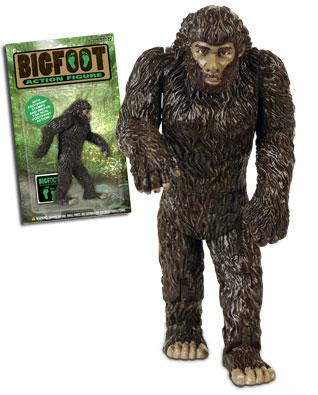
Bigfoot Action Figure
Bigfoot Action Figure.
They’re big, they’re hairy, and they’re notoriously elusive! This 7-1/4" (18.4 cm) tall, hard vinyl Bigfoot Action Figure has stamps on the bottom of its feet and comes with a stamp pad so you can leave mysterious footprints on letters, walls and skin. Intricate articulation allows it to be posed just like frame 352 of the famous film footage. Illustrated blistercard.
Cryptozoological Play Set
Have we discovered all of the major species on this planet or are there some out there that have managed to avoid our prying eyes? This Cryptozoological Play Set features some famous creatures that most people have heard of, but few have ever seen. Are they real or are they just figments of an active imagination?
Each set includes five 1-3/4" (4.4 cm) to 4-1/2" (11.4 cm) tall, hard vinyl creatures: Chupacabra, Jersey Devil, Bigfoot, Mothman and the Loch Ness Monster. Includes illustrated blistercard.
Cryptozoological Play Set Price per set: $16 plus shipping.
The shopping cart will show "US Shipping cost included". However if you live outside the USA you will be responsible for any additional shipping costs which can not
be calculated in the shopping cart. We will contact you about additional shipping costs if applicable.
Paul Freeman video shot in 1994. This is one of the more compelling bigfoot videos. There appears to be more than one creature, possibly a female. Apes are typically social animals. Upright walking apes like Homo erectus are often found in family groups. The best example of this is of "Peking man" whose fossils are found in China.
The shopping cart will show "US Shipping cost included". However if you live outside the USA you will be responsible for any additional shipping costs which can not
be calculated in the shopping cart. We will contact you about additional shipping costs if applicable.
The shopping cart will show "US Shipping cost included". However if you live outside the USA you will be responsible for any additional shipping costs which can not
be calculated in the shopping cart. We will contact you about additional shipping costs if applicable.
Vintage 1974 Montana Grizzly Bear Track 15" x 12" - Sun River Montana
The Grizzly Bear front paw was molded and cast in Bob Marshall wilderness, on the bank of the north fork of the Sun River in Montana. It was 3 seasons of packing in the wilderness, toting a bag of casting material with him before he found this track. Although the hind feet of the Grizzly ar much arger than the front, it is the front feet that have the long, saberlike claws.
The Grizzly Bear at one time ranged over the mountainous terrain of the entrire west coaST of the lower 48 states, but now is close to extinction with few eremaining except in areas such as Glacier National Park and the Bob Marshall Wilderness in Montana.
The shopping cart will show "US Shipping cost included". However if you live outside the USA you will be responsible for any additional shipping costs which can not
be calculated in the shopping cart. We will contact you about additional shipping costs if applicable.
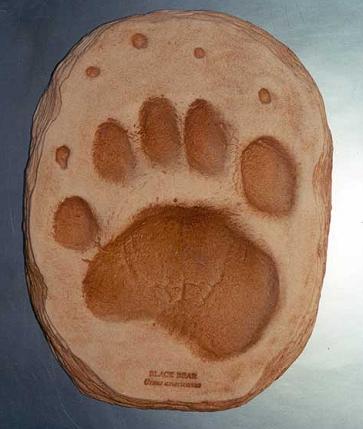
American Black Bear Ursus americanus hand print cast replica.
Black bears live in the forests of N America, upper central Mexico.
Measures 9.75in (247mm)
$20 plus shipping
The shopping cart will show "US Shipping cost included". However if you live outside the USA you will be responsible for any additional shipping costs which can not
be calculated in the shopping cart. We will contact you about additional shipping costs if applicable.
American Black Bear Ursus americanus foot print #2.
Forests of N America, upper central Mexico. Measures 11 in (280mm)
$20 plus shipping
The shopping cart will show "US Shipping cost included". However if you live outside the USA you will be responsible for any additional shipping costs which can not
be calculated in the shopping cart. We will contact you about additional shipping costs if applicable.
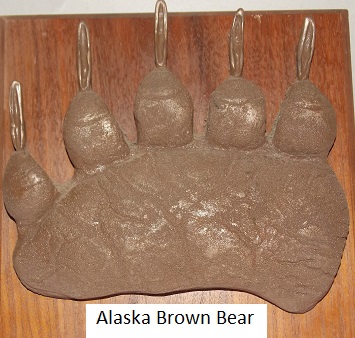
Brown Bear (Palmer, Alaska) Ursus Arctos footprint cast.
Measures 9x9 inches
Resin cast of an original specimen found in Alaska.
Resin cast: $40.00 (plus shipping).
The shopping cart will show "US Shipping cost included". However if you live outside the USA you will be responsible for any additional shipping costs which can not
be calculated in the shopping cart. We will contact you about additional shipping costs if applicable.
The shopping cart will show "US Shipping cost included". However if you live outside the USA you will be responsible for any additional shipping costs which can not
be calculated in the shopping cart. We will contact you about additional shipping costs if applicable.
The shopping cart will show "US Shipping cost included". However if you live outside the USA you will be responsible for any additional shipping costs which can not
be calculated in the shopping cart. We will contact you about additional shipping costs if applicable.
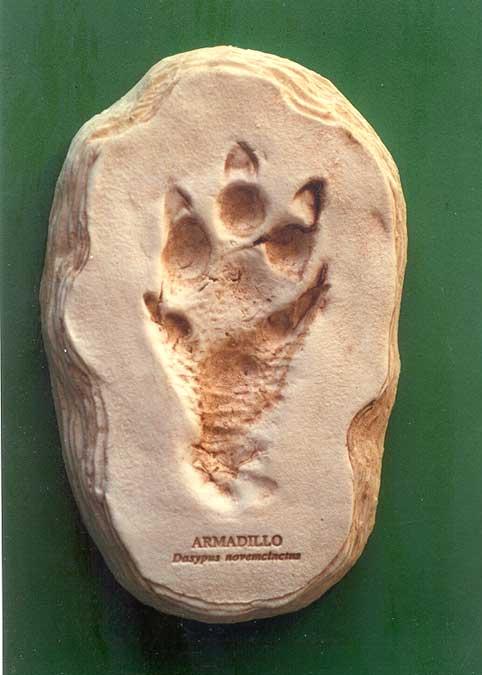
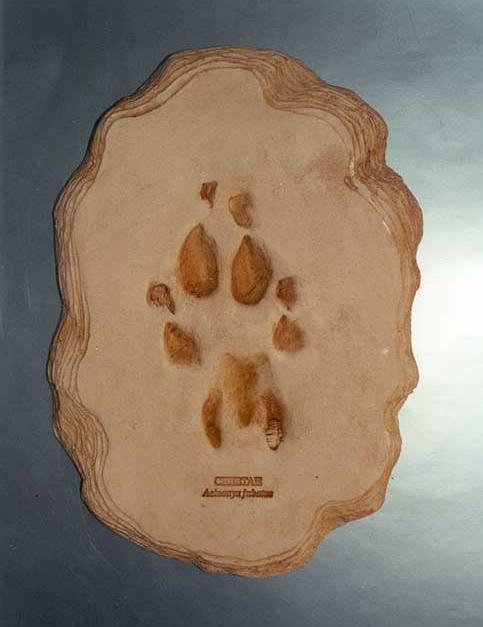
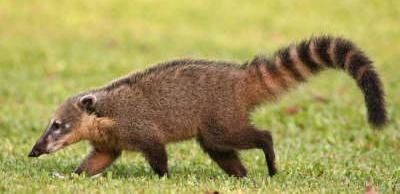
Coatis, genera Nasua and Nasuella, also known as Brazilian aardvarks, Mexican tejon, hog-nosed coons, pisotes, and snookum bears, are members of the raccoon family (Procyonidae). They are diurnal mammals native to South, Central, and south-western North America. The word "coatimundi" is a commonly used misnomer applied to solitary adult males of N. nasua. The term is reported to be derived from the Tupi language (Brazil).
Molded from an actual footprint. Cast in Resin
$7.00 plus shipping
The shopping cart will show "US Shipping cost included". However if you live outside the USA you will be responsible for any additional shipping costs which can not
be calculated in the shopping cart. We will contact you about additional shipping costs if applicable.
The shopping cart will show "US Shipping cost included". However if you live outside the USA you will be responsible for any additional shipping costs which can not
be calculated in the shopping cart. We will contact you about additional shipping costs if applicable.
The shopping cart will show "US Shipping cost included". However if you live outside the USA you will be responsible for any additional shipping costs which can not
be calculated in the shopping cart. We will contact you about additional shipping costs if applicable.
The shopping cart will show "US Shipping cost included". However if you live outside the USA you will be responsible for any additional shipping costs which can not
be calculated in the shopping cart. We will contact you about additional shipping costs if applicable.
The shopping cart will show "US Shipping cost included". However if you live outside the USA you will be responsible for any additional shipping costs which can not
be calculated in the shopping cart. We will contact you about additional shipping costs if applicable.
The shopping cart will show "US Shipping cost included". However if you live outside the USA you will be responsible for any additional shipping costs which can not
be calculated in the shopping cart. We will contact you about additional shipping costs if applicable.
The shopping cart will show "US Shipping cost included". However if you live outside the USA you will be responsible for any additional shipping costs which can not
be calculated in the shopping cart. We will contact you about additional shipping costs if applicable.
The shopping cart will show "US Shipping cost included". However if you live outside the USA you will be responsible for any additional shipping costs which can not
be calculated in the shopping cart. We will contact you about additional shipping costs if applicable.
The shopping cart will show "US Shipping cost included". However if you live outside the USA you will be responsible for any additional shipping costs which can not
be calculated in the shopping cart. We will contact you about additional shipping costs if applicable.
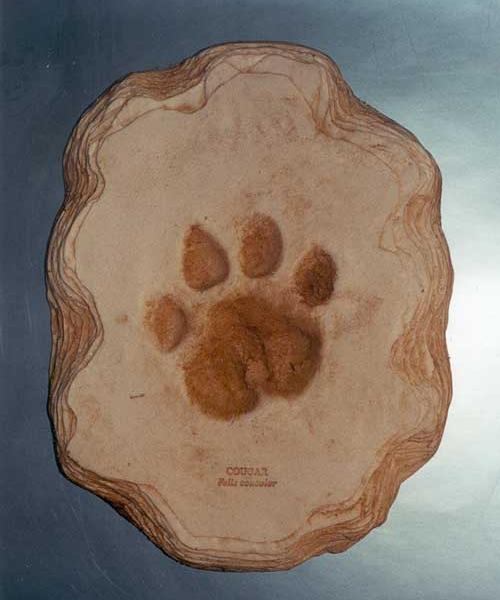
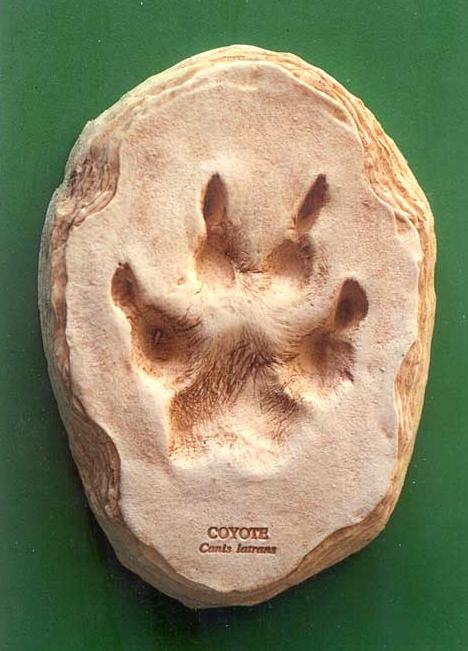
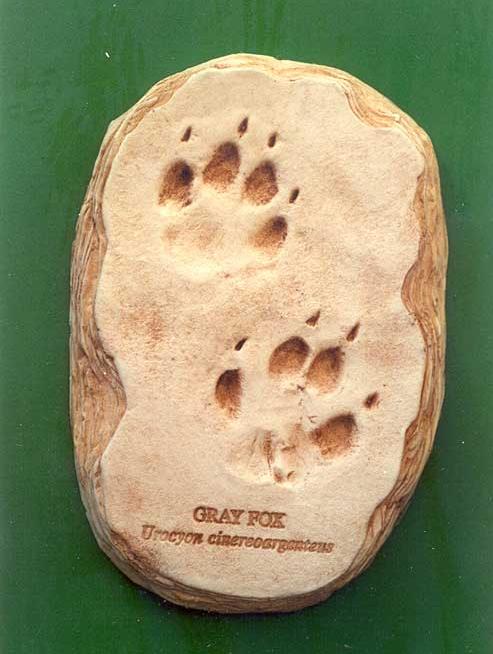
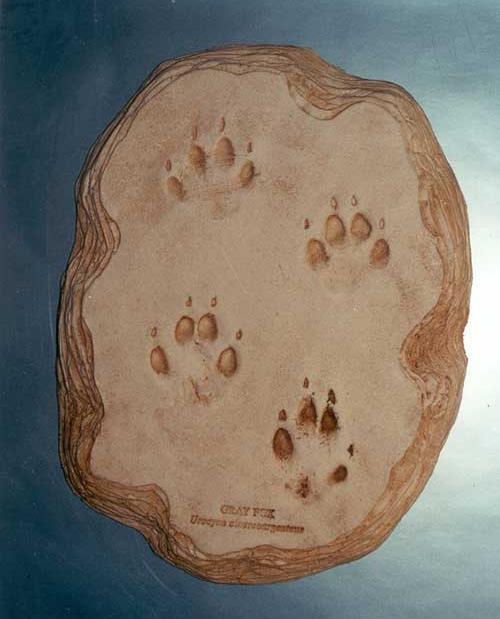
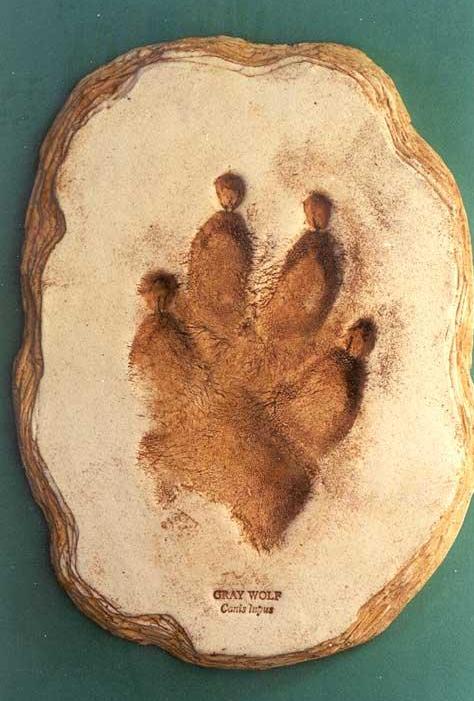
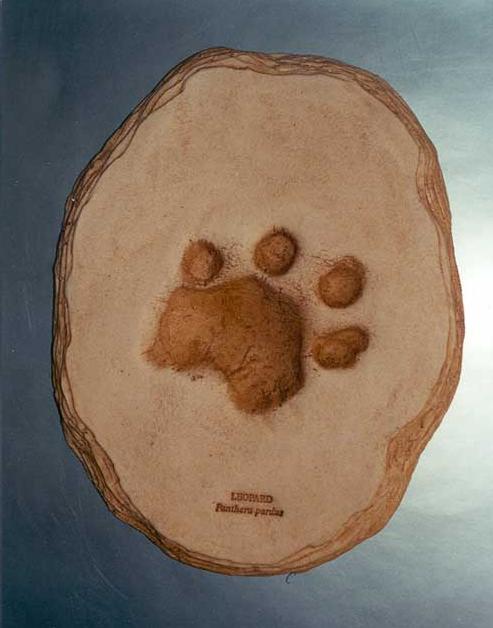
North American Mammal Predators footprint cast (item #WLC100)
North American Mammal Predators footprint cast replica.
Molded from an actual footprint. Cast in Resin
Includes: Gray fox, Bobcat, coyote, gray wolf, and cougar
$26.40 plus shipping
The shopping cart will show "US Shipping cost included". However if you live outside the USA you will be responsible for any additional shipping costs which can not
be calculated in the shopping cart. We will contact you about additional shipping costs if applicable.
The shopping cart will show "US Shipping cost included". However if you live outside the USA you will be responsible for any additional shipping costs which can not
be calculated in the shopping cart. We will contact you about additional shipping costs if applicable.
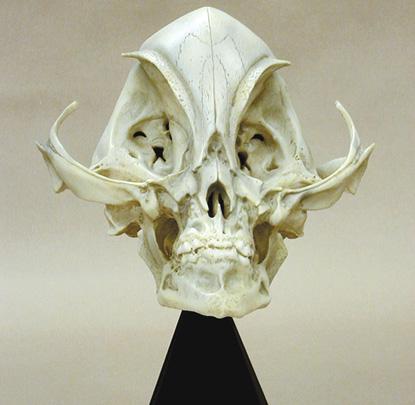
The Alien Grey skull has been created by accomplished special effects artist, Matt Falls of Sideshow Inc. Capturing all
of the nuances of this hybrid breed,
the skull has the complete look and feel of the real thing. These life-size replicas are expertly cast, using the highest
quality resins available and show a high level of detail. Offered as a finished piece, you will find nothing on the market quite like it. Each skull comes with a smoked plexiglass stand for display purposes. If you're a believer, order this museum quality casting today!
Alien Grey (item #CC-05)
Measures 10" Long, 9" Wide, 9" high.
$235.00 (plus shipping)
The shopping cart will show "US Shipping cost included". However if you live outside the USA you will be responsible for any additional shipping costs which can not
be calculated in the shopping cart. We will contact you about additional shipping costs if applicable.
If you enjoyed this website, be sure to tell your friends about it.
I love Bigfoot. I have been interested in Bigfoot and cryptozoology since I was a
kid and saw my first book on "unknown creatures". I have searched for the best cast replicas of Bigfoot footprint casts for years, slowly building my collection. It was a fun but frustrating pursuit as many of these prints were not easily available. I have molded and cast these prints and put them all in one place, keeping my prices low enough so that all those interested in the subject can afford to study it. Do you have a print that I don't? I'd love to buy a copy. I am also willing to make trades for these casts. I can make molds of your prints if needed.


 or
or