American Military Patches, Other Insignia and Decorations
of World War Two by Dr. Howard G. Lanham c.2003
Variations of Shoulder Sleeve Insignia
Second World War
Army Air Forces Shoulder Sleeve Insignia
Machine-Embroidered on Twill Air Force Forces Patch
from the following photograph
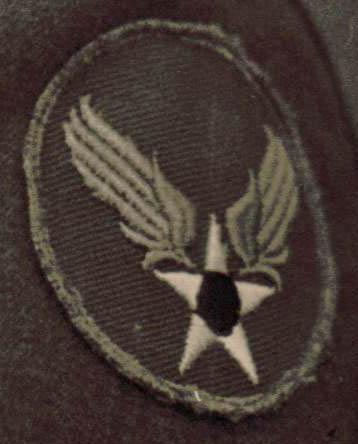
|
|
Corporal wearing Army Air Forces Patch
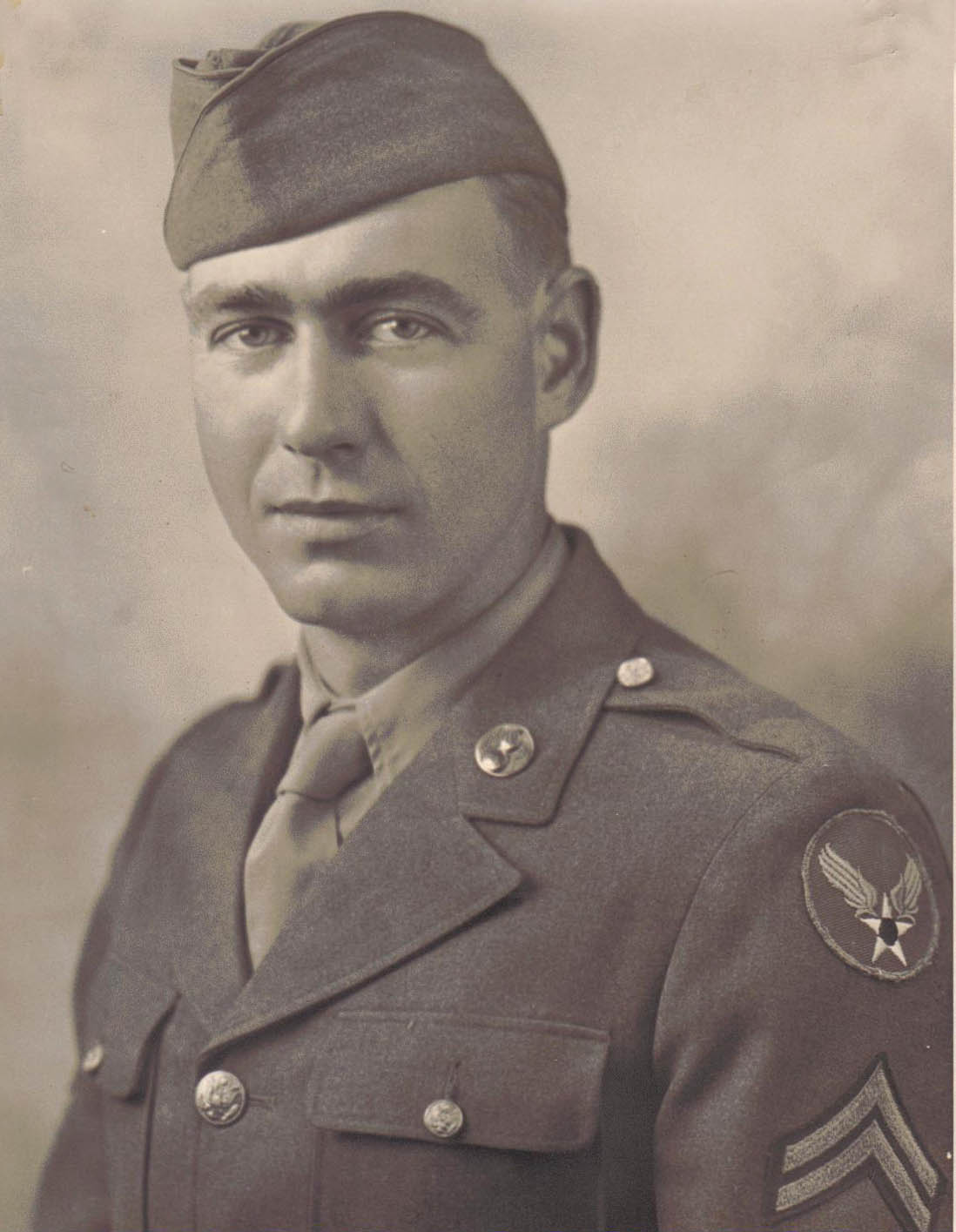
|
|
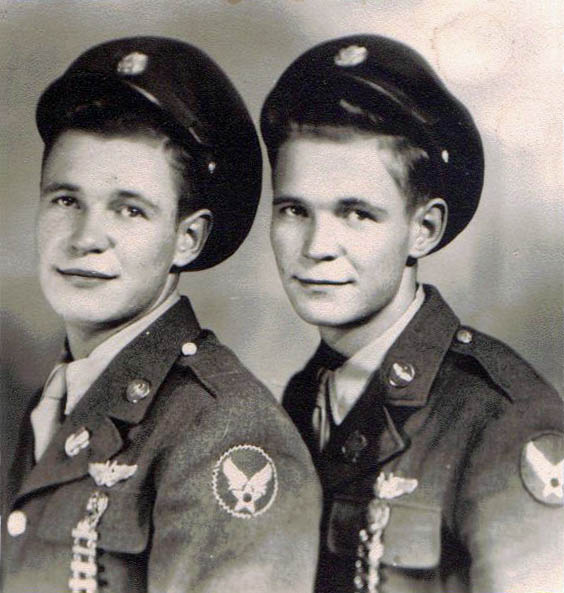
A Pair of Twins with Army Air Forces Patches
One has a fanny border.
|
|
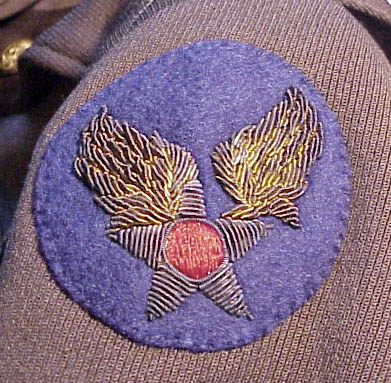
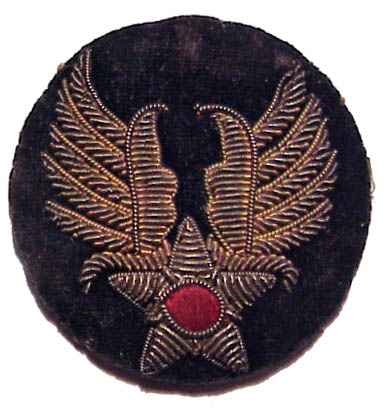
The Army Air Forces shoulder sleeve insignia is presented as a study in variations that exist for a given shoulder sleeve insignia. I do not claim that I show all existing variations. The United States Army Air Corps was renamed United States Army Air Forces effective May 1, 1942. It controlled the air units of the United States Army and was led by General Henry A. (Hap) Arnold with about two and one-half million personnel.
The shoulder sleeve insignia of the Army Air Forces was approved March 19, 1942. Its blue and orange colors are that of the Army Air Force and the central symbol was that used as an aircraft marking early in the war. This patch was perhaps the single most widely worn patch of the war. All Air Force personnel not assigned to an individually
numbered Air Force, such as the 8th Air Force, would have worn this patch with very few exceptions. Although there were more personnel assigned to ground units there were also a wider variety of patches approved for them to wear. It is conceded by authorities on shoulder sleeve insignia that more machine embroidered varieties of the Army Air Forces patch exists than any other single shoulder sleeve insignia of the Second World War. Despite the number of variations that exist the minor differences between the varieties are not that memorable and unless displayed next to each other one would hard pressed to remember the differences. With the establishment of the United States Air Force in 1947 the patch was discontinued and would have been worn on the right sleeve as a former war service patch by personnel that remained in the Army.
Machine Embroidered on Blue Wool

| 
| 
|
| Centered Higher Yellowish Wings
| Orange Wings
| Fuller Yellowish Wings
|

|
| Light Blue Background
|
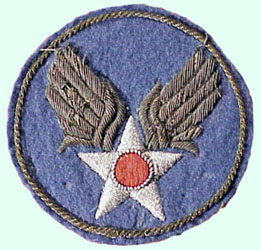
Gold Thread Embroidered on Felt
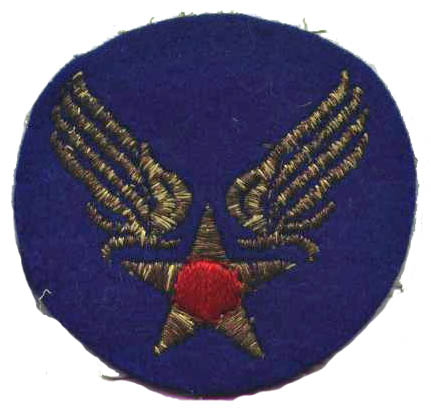
Unusual Manufacture
Machine Embroidered on Blue Twill

| 
| 
|
| Two Inch Size for Cap
| Full Size
| Border of Air Force
Cording Added (1)
|
Fully Machine Embroidered

| 
| 
|
| Full Wings
| Open Yellowish Wings
| Long Narrow Wings Pentagonal Circle
|

| 
| 
|
| Less Full Wings
| Full Wings Large Circle
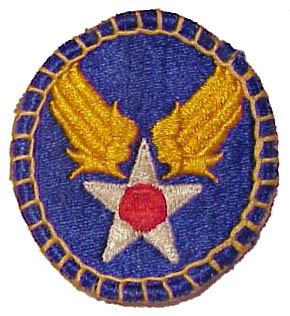
| Added Chain-Stitched Border in Yellow
|
Fully Machine Embroidered with Olive Drab Border
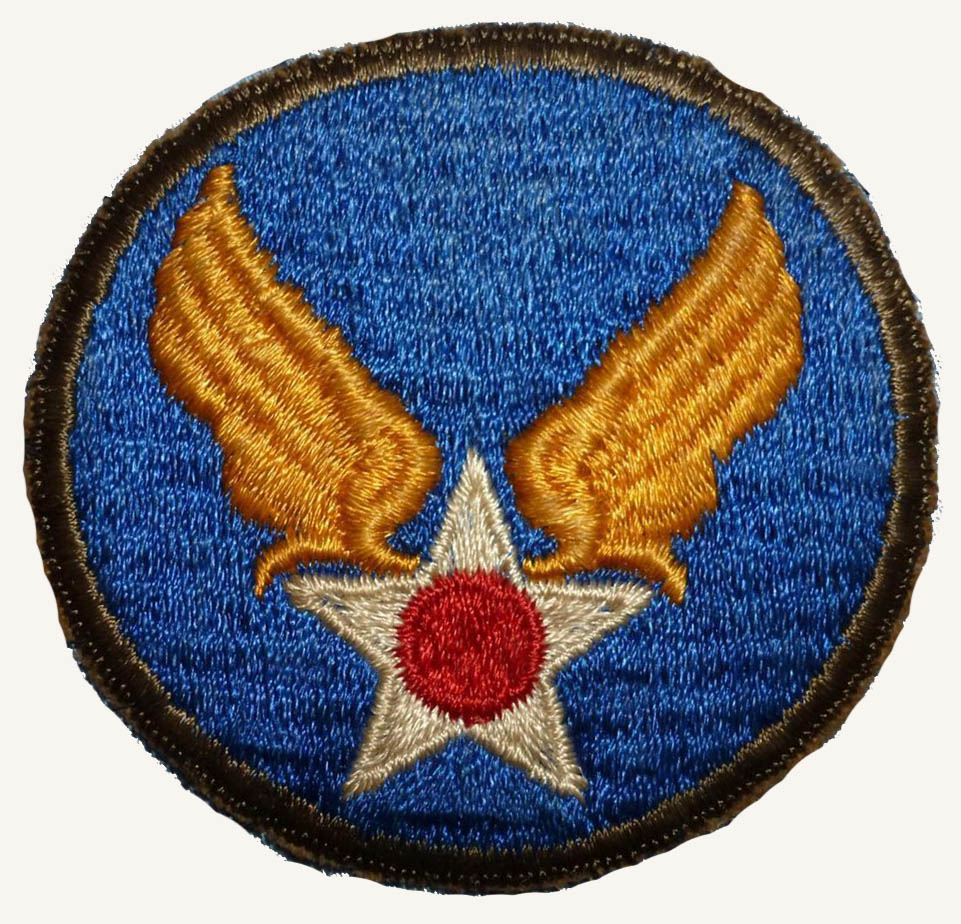
This is an unusual variation and it is uncertain in an error or intentional.
Theater-Made

| 
| 
|
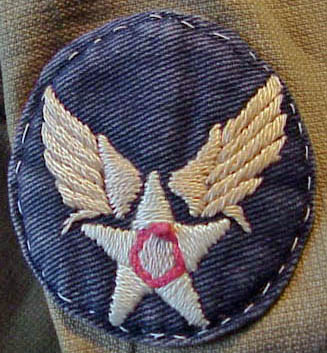
| China Burma India Manufacture (2)
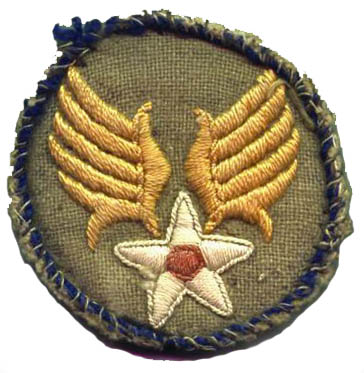
| China Burma India Manufacture
| China Burma India Manufacture
(yellow border on twill)
|
| 
|
China Burma India Manufacture
(central white circle)
| China Burma India Manufacture
(blue field faded) (3)
|
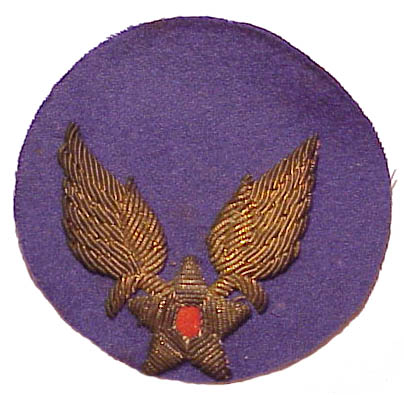
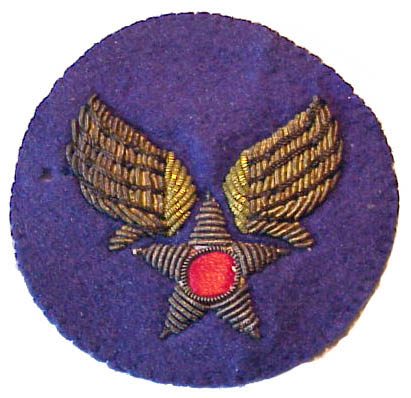
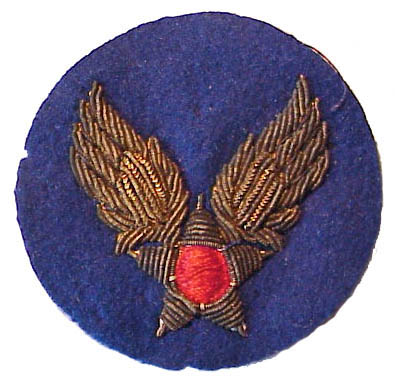
Bullion Embroidered Without Border

| 
| 
|
| Very Deep Blue
| Larger Red Circle (4)
| Wings not Centered Correctly on Star
despite its flaw still was worn on a uniform
|
| 
| 
|
| Design off center
| Red central circle outlined in Jaceron Wire
| Red inverted pentagon
|
|
| Dark Blue Velvet and Full Wings
|
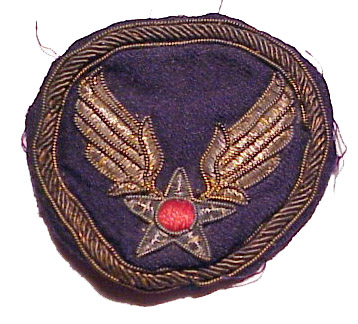
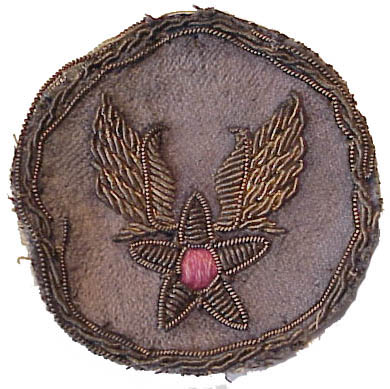
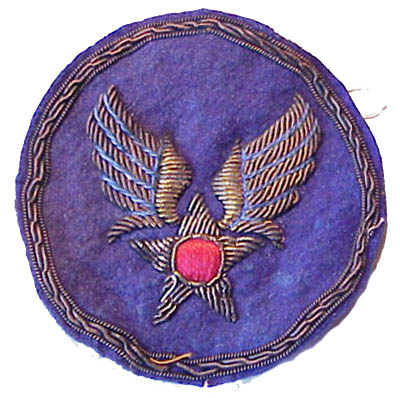
Bullion Embroidered With A Border of Jaceron or Embroidery

| 
| 
|
| Jaceron Wire Border
| Fancy Border Background Purple Velvet
| Cable Pattern Border with White Star
|
| 
| 
|
| Cable Pattern Border Outlined in Jaceron Wire
| Cable Pattern Border Outlined in Jaceron Wire Purple Hue
| Cable Pattern Border Outlined in Jaceron Wire with Blue Thread Accents in Wings
|
Bullion Embroidered over Machine Embroidered

|
A common machine embroidered patch
was used as a pattern.
|
The 1946 catalog of Roy Paris, Dallas Texas offered overbullion patches, which were bullion embroidery done on top of and using a regular machine embroidered patch as a guide. The typical prices ranged from $2.75 to 5.00 a piece.
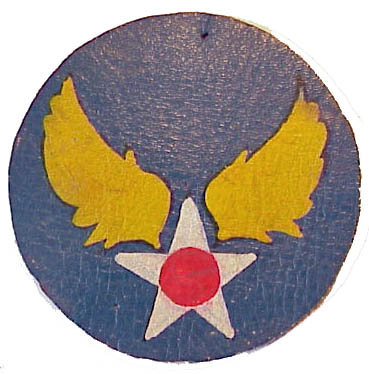
Stenciled on Leatherette
|
| These were worn on flight jackets
|
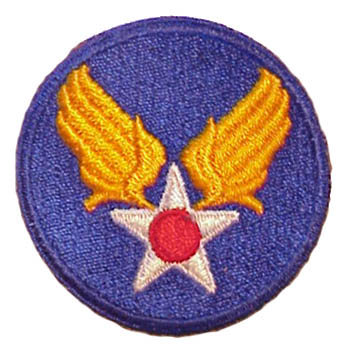
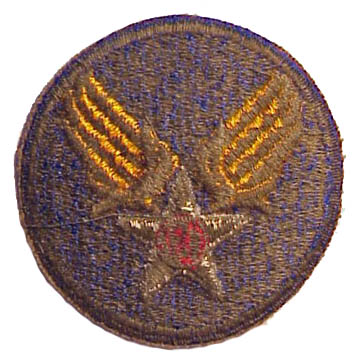
Green Backed
| 
|
| Front of a Green Back
| Back showing Olive Bobbin Thread
|
Green backed patches are distinctive for the olive green appearance of their backs, which is the result of using green bobbin or pick up thread during the manufacture process. Some collectors place a premium on these as a distinct class of shoulder sleeve insignia that date from during the Second World War. The vast majority of patches use white bobbin thread but these are not that uncommon in groups of period patches.
NOTES:
- Courtesy of Henry Johns (The cording is the same that borders the garrison cap.)
- Courtesy of Jay Graybeal
- CBI patches were at risk because of frequent laundering and inferior dyestuffs.
- Courtesy of Jay Graybeal
Back to Variations
Index to Site
Back to Home Page

