WHAT KIND OF PERSON ARE YOU, AND WHAT PLEASURES AND OBSTACLES AWAIT YOU IN THE FUTURE?
YOUR DESTINY COULD BE WRITTEN ALL OVER YOUR FACE, ACCORDING TO THE ANCIENT CHINESE ART OF FACE READING!
We all know about palm reading and astrology and tarot and the like, but according to the Chinese, the great events of your life can also be read in your face. Not only that, but from the general shape of your face, your personality and soul mission can be interpreted, and revealed! As if that was not amazing enough, it is also possible, according to Chinese wisdom, to diagnose health problems and imbalances in your body, just by looking at your face in the mirror!
The skin is the largest organ in the body, and given its communicative function, the skin on the face is the most expressive when it comes to revealing the health of the other organs. For example, "redness, puffiness and breakouts around the nostrils and lower cheek" are said to "indicate too many dairy products which produce mucus and congestion in the lungs." (Dhyansanjivani.org) Furthermore, large, thick eyebrows are said to denote forceful, possible aggressive personalities. Again from Dhyansanjivani: "The elements present in a face indicate the strengths and weaknesses that the person has to deal with in this life; the shape of features set the pattern and timing of events in a life. The zones show current and potential health patterns." It is a fascinating area worthy of exploration, so in the lines which follow here, let me begin my worthy exploration!
HISTORY OF FACE READING ----
ACCORDING TO THE EXCELLENT ASIAN THERAPY AND MEDICINES SITE Dhyansanjivani, "Face reading first appeared in China during the 6th century BC, possibly as the speciality of "magic men" not affiliated to any religion. It is thought that they were probably Taoist shamans from rural areas such as Szechwan who specialised in non-traditional divinational arts. By 220 BC, the art of face reading was established in Chinese life and classic treatises, such as the... Bamboo Chronicles were written at this time."
Prominent face reading authority Charles Yarborough wrote in his article Chinese Face Reading for the Single Woman: "Chinese Face Reading is a tradition that reaches back thousands of years. It is based on the theory that the face broadcasts your core energetic profile as well as aspects of character and personality. Time lines can also be deciphered. How do we read all this? By observing the shape and size of features, along with tonicity of muscles, shape of bone and any wrinkles or lines that may be etched in the face. The first step to reading a face--your own, for instance--is to determine which of the five energetic "elements" you represent..." (More on that later!)
Chi of Earth writes: "In China, the father of face reading is often credited to the philosopher Gui-Gu Tze, who lived during the Warring State Period (481-221 BC). His book Xiang Bian Wei Mang is still in print to this very day and is studied by serious students of physiognomy.
"The Chinese art of face reading is a very involved system that classifies facial features individually by judging the color, shape and disfigurements of specific areas of the face. Basically, the face is partitioned into 108 areas. Each area is a specific age & life situation and by observing the Five Elements of the productive/destructive cycle and the Taoist theories of yang & yin, it may be possible to predict events, diagnosis illnesses or to understand a person's personality.
"To become proficient in face reading it is important to memorize the bagua and to understand what each trigram represents..."
TYPES OF FACES ----
ANCIENT CHINESE WISDOM HOLDS THAT THERE ARE FIVE DISTINCT KINDS OF FACES, relating to the Five Elements of traditional Chinese thought (wood, fire, earth, metal, and water). The Five Elements are known as 五行 or Wu Xing in Chinese (literally the Five Movements or Five Phases.) The choice of the Chinese character 行 (move) is a deliberate one, and important: in contrast to the Western elements which are more or less fixed (especially the atomic elements!), Chinese elements are constantly in motion, endlessly rotating around each other, crashing against each other, consuming each other, in the eternal dance of Yin/Yang polarities. Wood is nurtured by water but gives way to fire when it is set alight, for example, while water will put the fire out. Metal is mined from the earth, and can be made into an ax, to chop down wood. Metal seems to be all powerful, the strongest element of all, but it can be melted by fire, which doesn't even have a body! One might recall the popular East Asian "Rock, Scissors, Paper" game (called janken in Japan), which illustrates the organic perspective and awareness of Oriental thought. No one element is superior to the other, and they all live with each other as part of a (sometimes tumultuous) harmony (but then again, harmony and tumult are but two sides of the same coin, and are constantly squaring off!) There can be no stability without change, nor change without stability. As the year progresses from one season to the next, or a human soul migrates from one lifetime to the following, the elements give way to each other, as part of this grand cycle. Whatever element is dominant in this lifetime will be evident in the face, as well as other parts of the life/mind/body continuum, such as the birth-chart or palm. Naturally, in a mixed up world such as the one we live in, pure elements are rare, and most people display a mixture, a blending of elements. You might be mostly water and earth, say, but with a bit of metal and fire thrown in. Personally, I think it all relates to your soul lesson in this incarnation. And of course, even within this lifetime, the shape of your face can change. Anyway, before you even start with the facial examination, you could try this online personality quiz, to determine exactly what balance of elements you have in your soul.
1: THE WOOD FACE ----
WOOD (木) IS THE FIRST ELEMENT OF THE WU XING, and brings with it the energy of saplings, buds, birth, spring and new starts. It is an Ariean, yang energy, and like a bamboo shoot rocketing from the forest floor, those with strong Wood tendencies are full of youthful vigor, restless, and idealistic. Like Aries, Woods are the young souls. The face they possess (in pure form) is long with a long nose, a broad and high forehead and narrow cheeks. The eyes should have a kindly look, and the hair and eyebrows should not be thick or wiry. The forehead should be high and wide in wood as mental direction is important for this elemental type. Wood has the energy of growth, seeing the overall picture and a vision of the future, planning and seeing through projects. Wood types with balanced faces are leaders, administrators and organisers with strong ideals. They need to grow and achieve, as this is the way they learn about themselves and their path in life. One of the challenges of the wood element is to be able to "see the wood for the trees" and not get enmeshed in structures.
Anger is a negative expression associated with the wood personality. When wood types can't get what they want, or find their growth curtailed, anger is a typical response. This anger can be explosive (yang), or depressive (yin). If the wood type cannot put out "new twigs" every year the "tree" gets very stunted and this can translate into irritability, frustration and indecisiveness instead of good judgement, self motivation, precision and sound planning. Blockages in the free and easy flow of wood energy makes the liver and gall bladder susceptible to disease as well as causing headaches, PMT, digestive problems, gallstones, and ulcers.
2: THE FIRE FACE ----
RUB TWO PIECES OF WOOD TOGETHER, and from the friction fire (火) is born. The fire element brings warmth and enthusiasm to the personality with a capacity to inspire and get people fired up. They are active and outdoorsy, goal centered, fast paced and adventurous. They can sometimes take crazy risks, and constantly seek stimulation and excitement. The fire type is long with narrow, prominent cheekbones, pointed chin and a more pointed forehead than the wood type. The face may feature freckles, red, curly or wiry hair, and be accompanied by rapid speech and quick body movements.
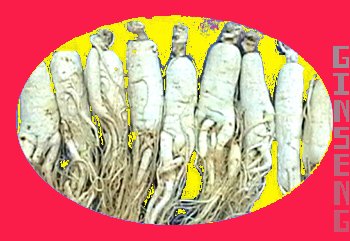
If the fire goes out, the fire type becomes a rather withdrawn and timid character, lacking in joy and motivation. The challenges of the fire element are to find that warmth and positive joy inside. Excess fire can make you prone to heart problems, anxiety and insomnia or skin rashes. Blood nourishing foods and herbs are an important consideration for them. Some do very well on ginseng. For photos of a typical fire face in reallife action, click here.
3: THE EARTH FACE ----
EARTH PERSONALITIES ARE CHARACTERISED BY SHORT SQUARE FACES WITH DISTINCT JAWLINES, sallow complexions, thickset bodies and deep voices. The features can be large, especially the mouth which relates to the stomach and intestines. Earth has the ability to be still and to build a solid base in life.
Earth types are practical, persevering, reliable, stoical and careful with money and make good treasurers. They are not so dreamy or idealistic as wood types and not as swayed by emotion as water types. They tend towards the traditional ways of doing things and can have problems with worry, food issues, stomach and spleen disorders, and assimilating food (and life) and transforming these into Qi energy. The stomach channel runs along the jaw line and a weak earth can mean no jaw line. Conversely, too much earth can signify a tendency to stubbornness, selfishness and a reluctance to change.
The emotion of sympathy is associated with the earth element -- this can manifest as over-caring and nurturing, or a lack of sympathy and inability to nurture oneself. Nutritional advice, supplementation and digestive enzymes are often suitable for earth types. A diet which avoids sugar and dairy is suitable as these foods tend to "blow out" the digestion and create what the Chinese call "damp" -- a form of internal mucus which gets trapped in the connective tissue and causes symptoms such as heavy legs, bloating, excess catarrh, muzzy heads and lethargy. The challenges for earth personalities are to be in the material world and to experience fruition, harvest, nurturing of self and others, rhythms, stillness and a sense of being centred and grounded. For photos of a typical earth face, click here.
4: THE METAL FACE ----
IN TRADITIONAL CHINESE THOUGHT METAL IS THE FOURTH STAGE OF WU XING, and is associated with autumn and old age (I got this from Wikipedia.) As you would expect from the name, metal is a hard element, with hard qualities, such as rigidity and persistence. The metal face is thus chiseled as if out of stone, and strong featured. Usually good looking (with their "chiseled good looks", the bearers of a pure metal face have clear, shining eyes with a lot of energy coming out of them. The eyebrows are pale, the speech is clipped and the hair is usually straight. They make good advisers, lawyers and counsellors. Metal is the element of the mind and so they are strong willed and solve their own problems. A good sense of humour, lively outlook and hardworking attitudes are all facets of metal at its best. At its worst, it can become toxic with negative thoughts, cut off and caustic. Metal types also make good teachers and healers. When depressed, they suffer with diseases of the respiratory system and lower intestines. It is important for them to breathe deeply to let in the heavenly Qi and to make sure that they eat good quality food with lots of minerals, and stay away from junk food which can be difficult for them to eliminate. They tend to respond well to psychotherapy, homoeopathy, Bach flower remedies and treatment protocols which are rational and well thought out. For photos of a typical fire face, click here.
5: THE WATER FACE ----
WATER PERSONALITIES CAN BE RECOGNISED BY THEIR ROUND, chubby, soft faces and sometimes, rotund bodies. Large soft eyes are a water feature as is dark hair and colouring. Water people are quiet and gentle, much ruled by sensation and susceptible to any appeal to the emotions (this, then, could make them prone to migraines or panic attacks.) They are good communicators and storytellers and are sensitive, and aware of trends either at work or society. They can be psychic and make good listeners, carers and counsellors. There is an aliveness and vitality about clear water which can attract what it needs like a magnet, unlike wood types, for example, who decide what they want and then make a plan about how to get it. If the water is clear, they have strong reserves and the ability to flow freely in any situation. If it gets stagnant through unexpressed emotions, the skin can develop a blue tinge with dark rings under the eyes.
Water types love travel, and that certainly includes me! Excess soft tissue means held in anxieties and deep emotions which may be affecting the kidney energy. Although the water type is often very ambitious, too much yin can mean that they get bogged down and lethargic. The water element rules the kidneys which hold the essence of life and are the foundation of yin and yang. Long term stress, particularly mental stress and overwork, deplete kidney yin which can no longer cool the body, giving rise to inflammatory conditions and inner heat.
THE HUMBLE FOREHAED ----
YES, THE FOREHEAD SPEAKS, just as eloquently as body language! Face Reader Dadhichi Toth says a wide forehead indicates cleverness, practicality and diligence and people with a wide forehead are full of ideas, according to Britain's Mirror newspaper. Meanwhile, the Australian Astrology site records: "A high rounded and deep forehead depicts your idealism, but with a focus on strong friendship. A narrow forehead is considered an obstacle to fulfilment,especially in social situations. Constraints in family life. Need to think things through." A shallow forehead with a low hairline may cause career obstacles between the ages of 15 to 30, while a flat forehead denotes a pragmatic nature and a receding or "flying" forehead betrays an impatient and spontaneous manner. Possessing an "indented forehead" is said to be bad luck for employment and business, and people with indented foreheads plus powerful eyebrow ridges are "quick tempered, impulsive and ambitious".
FOREHEAD CREASES ----
WHAT DO THE CREASES ON AN INDIVIDUAL'S FOREHEAD TELL US, apart from the fact they are old or they worry too much? As one web source has pointed out: "The FOREHEAD represents the soul. If you see high vertical creases, you can expect that there are problems in personal relationships, problems in career experiences, and problems in the physical body. If you see a vertical crease in the mid section of the forehead, this means that a conflict is standing in the way of achievement.
Markings on the upper right quarter of the forehead means that a person will resent hardships of all kinds. It means that they spend too much energy, and have been having difficulties in life. Marking on the upper left quarter of the forehead means that the person resists learning and changing. This person thinks that others need to change, yet doesn't see change is necessary for himself."
RELATIONSHIP BETWEEN THE FACE AND BODY ORGANS ----
AS WELL AS INDICATING THE BASIC PERSONALITY, Chinese face reading can also be used to yield further information about the owner of the particular specimen being studied. For example, parts of the face correspond directly to different parts of the body (internal organs), as shown in this face map. Colors shown in the face can also be read and interpreted -- subtle shades of blue, yellow and green tell a lot about what is going on, especially mineral deficiencies. And lines on your face aren't necessarily an indicator of your age but what the problems are in your body.
For instance, the dark blue under the eyes relates to overwork and imbalance in the kidneys and adrenals. This could be caused by simply not drinking enough water or feeling very stressed. If there is a yellow tinge to the skin, you have a weak digestive system and redness can mean poor circulation or too much hot, spicy food.
A lined, puffy or red forehead could mean you are eating too much rich, oily food such as meat, take-aways, fried food, cream and butter which affect the gallbladder. A puffy face is what the Chinese say results from damp. It relates to allergic reactions to food, which affect the stomach and spleen and lead to the body being unable to digest food efficiently.
Finally, we move to the possibility that, like the lines on your hand, the face can be read as your entire life story. That is right, the events of your life are written all over your face, including events that have yet to occur.
For example, the ears and the top part of your face are said to represent the early part of your life when you are in your pre-teens, teens and early twenties. As you live through your life, you progress down your face towards your eyebrows, nose, cheeks, lips and finally, your chin.
Marks, discolorations, spots, creases and indentations indicate problems. And where they are found on your face gives you an idea at what age you will be facing such problems. The bigger and the darker the mark on you face, the more serious the problem you will face.