At the same time she also received a
W-chromosome from her mother but the W-chromosome does not provide any
possibility for this color dilution grouping. It is this Z/W
combination that
has made her a female. (Z and W are the chromosome
designations used in birds while X and Y are used in other animals
including man).
A cock on the other hand will always receive a Z-chromosome from each
of his parents and will therefore inherit two possibilities for color
intensity or lack of it. Since he will have two
possibilities, the more dominant of these two will govern his phenotype
color.
Lets review this in simpler terms. The dilute gene is found
on the sex chromosome Z and is therefore sex linked. Since a hen only
has one Z-chromosome she can only possess one possibility or copy of
these genes. If its full color she is full color or intense.
If it's pale she becomes a pale and if it's dilute, she will
be a dilute and of course if it is extreme dilute she will be an
extreme
dilute. For a cock to be a cock, he must possess two
Z-chromosomes. Therefore he will carry two genes for his
amount of color intensity or dilution. If he has either one
or two for full color that's what he will be. If its pale and
dilute, he becomes a pale and of course if they are both dilute then
that's
what he becomes. In order for him to display extreme dilute
he would have to be homozygous for extreme dilute. In other
words, the full color or non-dilute condition overrides the effect of
the lesser and so on. This is why dilute and extreme dilute
cocks are not as common as dilute and extreme dilute hens are.
Unless you breed for them, the odds of a dilute or extreme
dilute cock occurring by chance are half that of a hen.
Pales,
Dilutes and Extreme Dilutes are born with very little down fuzz.
They appear naked so to speak. Dilute, when on the
color brown, produces the color we call "Khaki". On blue, it
produces the color known as silver dun, which appears brownish and is
often confused with being the color brown. You have the color
yellow when you combine either ash red or recessive red with
dilute.
Recessive red dilutes (yellows) are very attractive. They are
considered to be in the rare color grouping but are not all that
uncommon in some show breeds such as Giant Homers. The same
is true for ash red dilutes which are also a yellow but are often
referred to as cream. An extreme dilute will have pink eyes
at birth which change at
about six weeks of age, into a false pearl. Some browns will
also do this while dilutes normally do not.
Dr. Willard Hollander, long before his death predicted we would someday find a mutation for extreme dilute in pigeons. Some time during the 1990’s a breeder in South Africa by the name of Jack Barkel was on one of his lecturing trips to Kimberly SA.. While there Jack encountered a hen of the Slimme line which was of an unusual light color, one that he had never before encountered. Not only was Jack taken by this new color but he was equally impressed by the bird’s eye and after some persuasion was able to procure the bird. This was the first known extreme dilute pigeon of record and Jack recognized it was something different but did not fully understand the genetics behind it. He bred more of the same and gave them the name Barkel’s Biscuits which he has later changed to Lemon and used them to developed a family of racing homers of the same Lemon name.
In 2003, Jim Muckerman purchased some of Barkel's lemon stock and shared them with Dr. Paul Gibson and Jerry Sternadel. In 2004 Larry Davis also purchased some of Jacks new lemon stock. All of these gentleman were intent on doing genetic testing to see what this new mutation was genetically. From reviewing Barkel's breeding results Larry was able to show that this gene was sex linked on the Z chromosome and later that same year also demonstrated it was an allele in the dilute series. Its phenotype and order of dominance marked it as being more dilute in nature than either pale or dilute and in so doing brought full circle Dr. Hollander’s predictions form years previous.
In March 2005 Jim Muckerman, Jerry Sternadel and Dr. Paul Gibson jointly published a report in the Pigeon Bebut giving it the name Ecru and symbolized it as "ec". However, after confirming Davis’s later findings they corrected their symbol to d ec but kept the name Ecru. Not everyone, myself included, agreed with this new Ecru name. Instead our choice was to honor Dr. Hollander by using his original “Extreme Dilute” name. This name is more descriptive than a color name and is in keeping with the other names of this series which describe the amount of intensity displayed. In addition we suggested the symbol d ex be used.
For the time being and until this debate is resolved I shall use to the name Extreme Dilute and its symbol d ex and leave the term Lemon to describe the phenotype produced when on wild type blue. The naming of the phenotype on blue as being Lemon is in keeping with the original finders intentions as the correct color name. Genetic names are not the same a phenotypical color discriptive names. Barkel intended for the original blue form to be kown a Lemon and that should be respected. Since I was the first to demonstrate an ash red extreme dilute I so named this phenotype to be Beige and brown to be Tan.
Currently (July 2011) Dr. Gibson and Jerry Sternadel have concluded that their Ecru mutation resided somewhere On the Z Chromosome between the dilution locus and the reduced locus. It such a mutation does exist then it has nothing to do with this extreme dilute find and as such the name Ecru should not be confused with it.
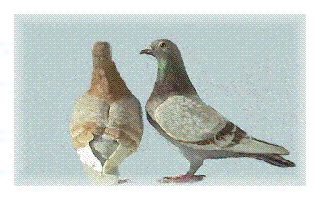
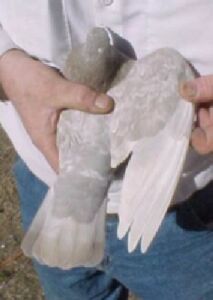
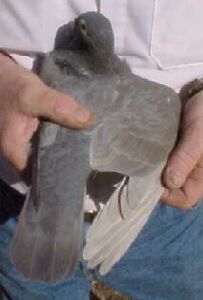
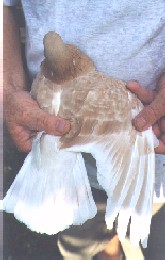
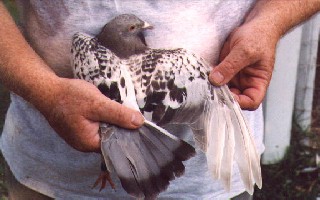
Left
is a Spread Khaki (Dilute Brown), in the center a Spread Dun (Dilute
Blue) and on the right a Yellow Checker (Dilute Ashred).
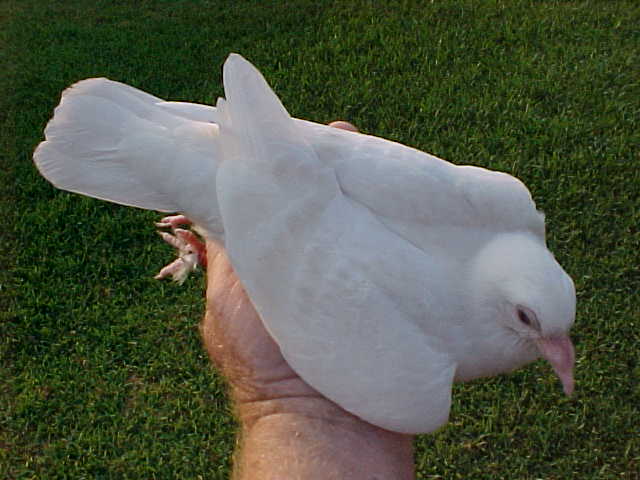
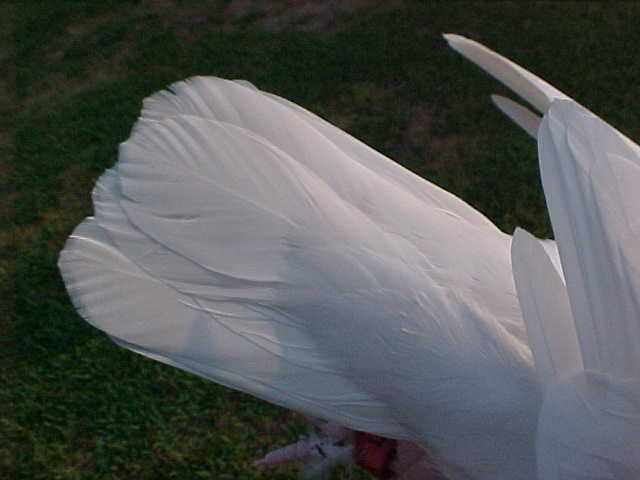
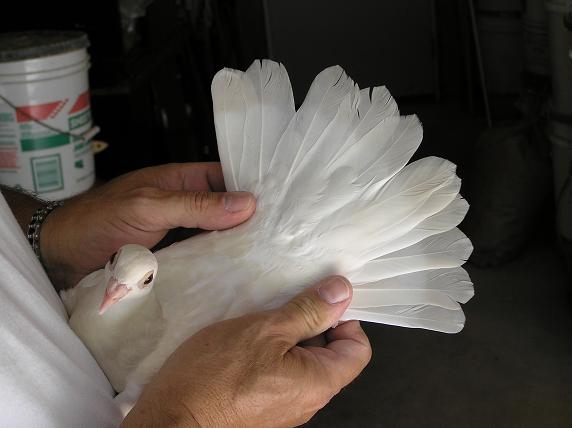
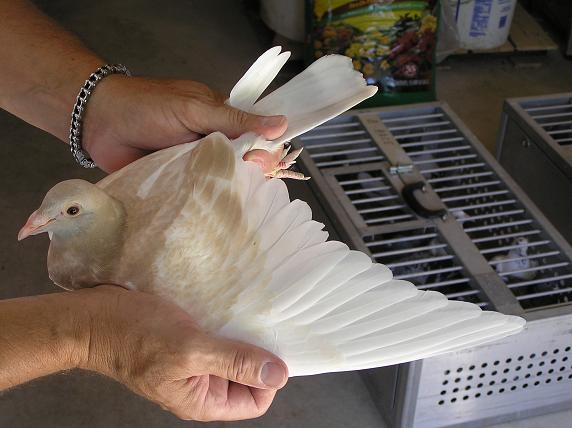
Left
is a young ash red checker Beige Extreme Dilute, same bird showing the
tail
on the right.
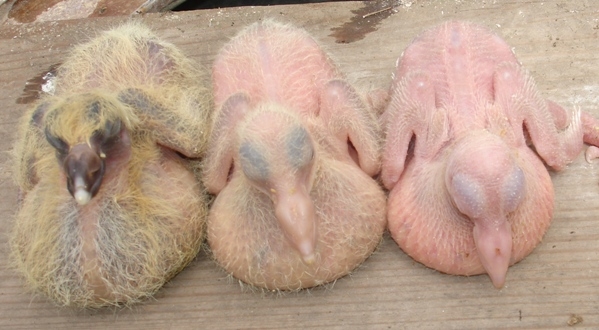
The
photo to the left is an example of three down lengths; long,
medium and short. Short down is typical for dilute
and or extreme dilute.
On the right is a photo of one
of my ash red extreme dilute Beige hens
with her eye coloring beginning to change
from pink to false pearl.
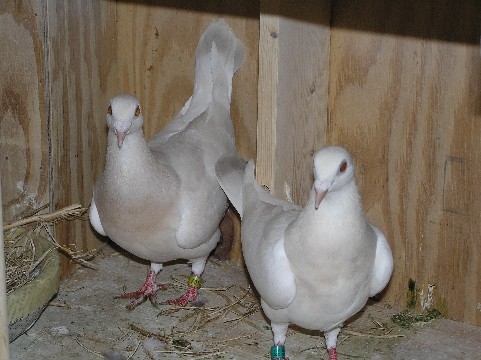
A pair of
blue base colored Lemons on the left with a typical blue base colored
lemon tail showing its light tail bar color. Look closely at the two on
the left and you will also see their light colored tail bars On the
right is a typical ash red dilute young cock. Note how much darker in
color a dilute is as compared to a extreme dilute. Dilute
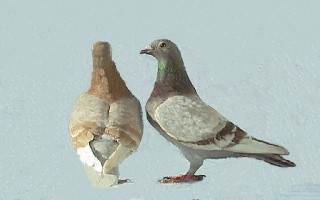
spread brown or Khaki left, Dilute Ash Red Qualmond on the right.
Left
is a Silver Dun checker or dilute blue checker. On the right
is a dilute ash red bar (Ash Yellow or Cream bar) with a Dilute Blue
Bar (Silver Dun) standing
beside her. In this photo the silver dun hen does looks sort
of ash red but its not, she is a dilute blue bar.


Both pale blue and pale brown are hard to distinguish from normal blue
and normal brown since the amount of color change produced by pale is
normally not very noticeable. However,
when dealing with either red or bronze the change is very noticeable as
the rust red colors now take on a golden look. Note how
striking these colors are of the gimple bronze and the recessive red
pale shown below. All the red plumage has been changed into a
soft golden color.
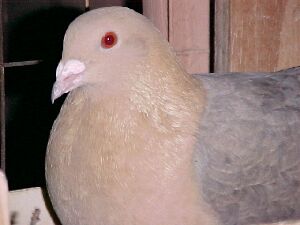
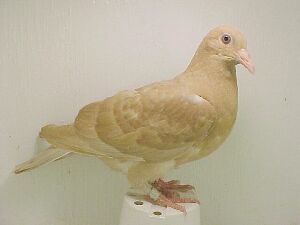
Pale on blue with gimple left and Pale with recessive red on the right.
