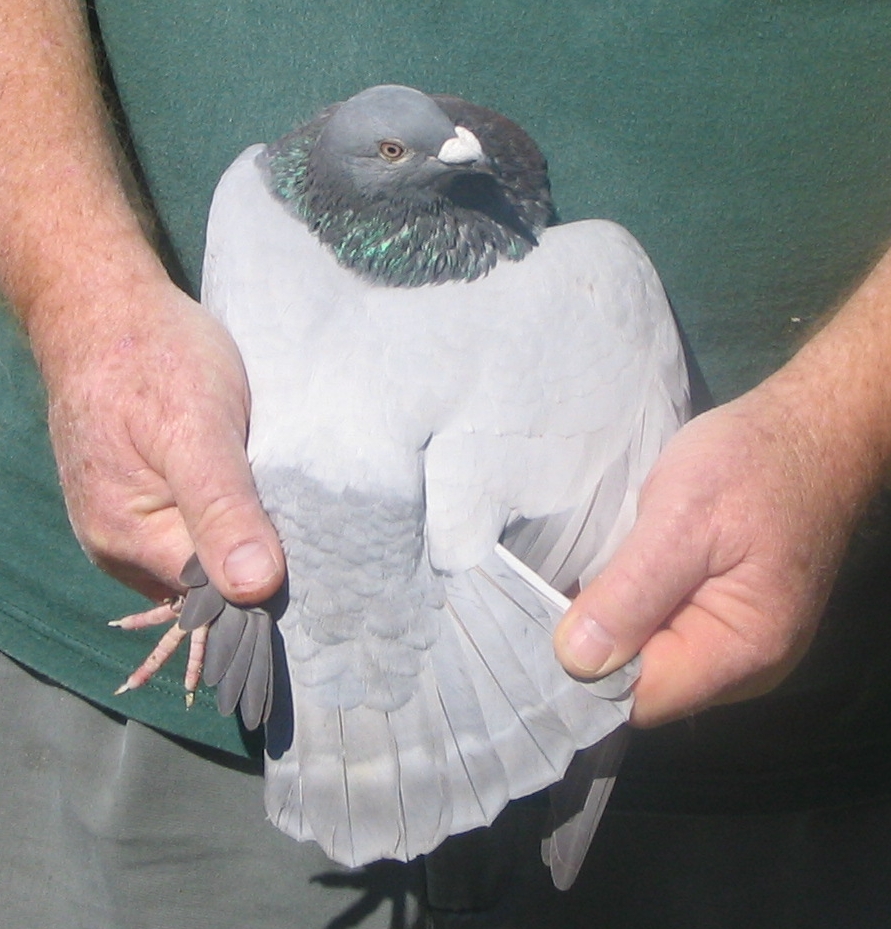
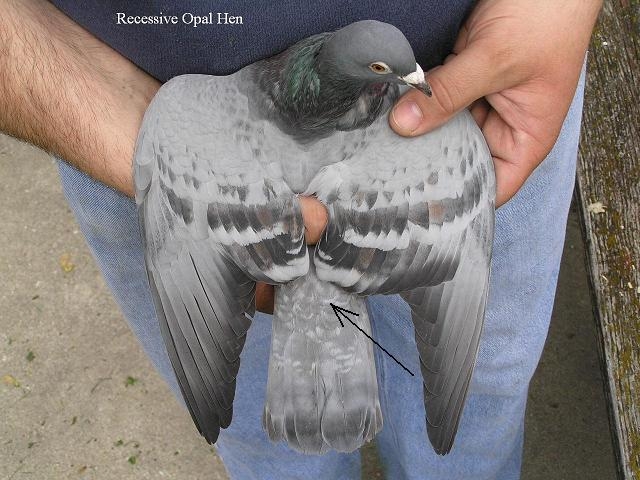
There
are two independent opal genes. One which is dominant
in its function and the other recessive in its expression.
For
this
reason they are called “Dominant opal” and
conversely
“recessive
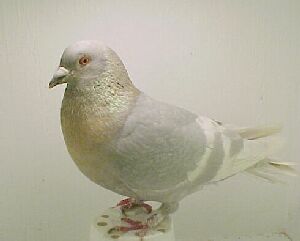
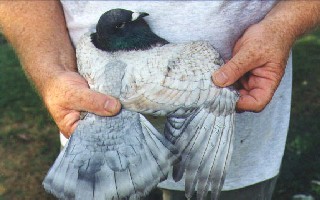
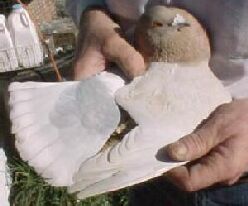
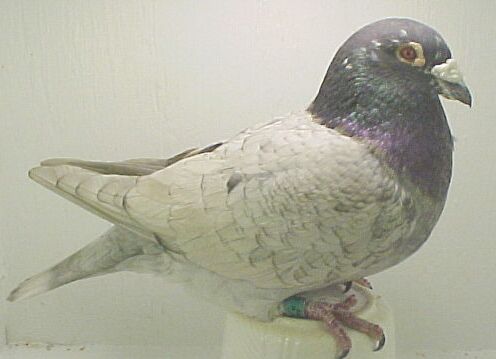
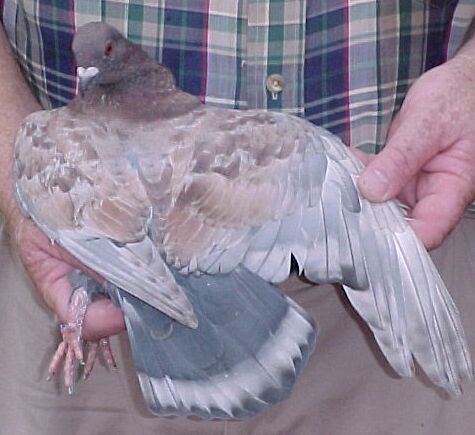
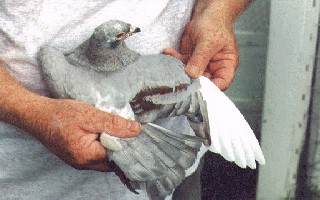
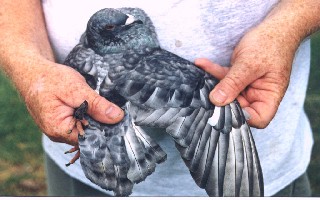
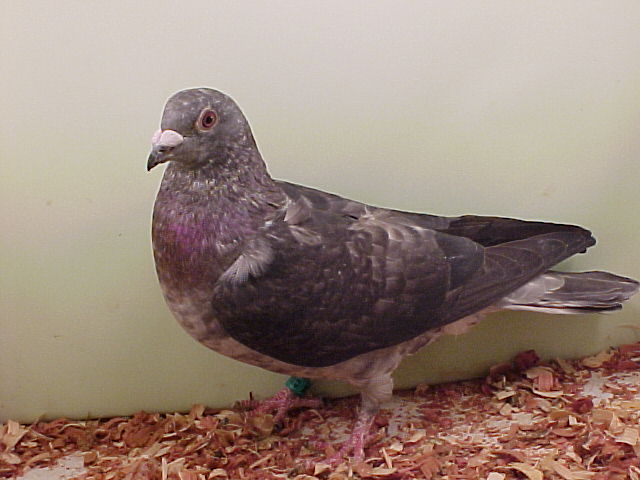
opal”. The ones shown below on the left
are examples
of various
forms of the Dominant opal
phenotypes. Those shown on
the right are
examples of recessive opals. Both opal forms are
similar in
their
phenotypes or appearances; and at times are often confused with each
another,
and another mutation known as "reduced". However,
reduced is
a
sex-linked gene found on the Z sex chromosome; while both forms of opal
are non
sex-linked genes, making them autosomal gene mutations. This
simply means
they are not sex-related and are to be found on any of the various
autosome
chromosomes.
Most
of the Opals shown here are in combination with the blue wild
type color base. However, due to the opals
effects on
color
modification, many of them rarely appear to our eyes
as being
typical
blues, browns or ash reds. Dominant opal can be expressed on all three
of the
basic colors of brown, blue and ash red. However, recessive
opal
which is
vividly displayed on blues is poorly expressed on brown and ash reds.
The
pattern markings (bars, checker etc.) of the blue form of
dominant opal is
a pinkish white with a dark border line along with a tail end
bar
being a washed out
whitish color. The pattern markings (bars, checker etc.) of the blue
forms of
recessive opals is a rust red color, and a tail of a metallic
baring
pattern typical for blue recessive opals. This tail marking is one of
the keys
to identification and distinguishes recessive opal from its sometime
look-alike, reduced and Dominant opal.
|
Dominant Opal (OD) 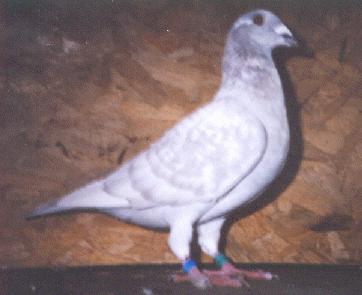 Tom Barnharts spread opal
Blue dominant opal, heterozygous gempel with white bars on the left, Blue dominant opal with white bars and checks on the right.
Dominant Opal
blue T-pattern left, dominant opal ash red T-pattern right.
Since Od is a dominant gene it may express itself when heterozygous, which simply means it is split for both opal and normal non opal. Homozygous or pure would mean the bird carried two genes for of the same factor or in this case (Od//Od). Note that I said it may express itself. I say may because dominant opal is variable in its expression. Some opals are poorly expressed while most are very striking in their colors. It will normally show some washing or whitening in the flights and tail with a washed out pale tail band. In some cases the wing bars will look pinkish or have a pinkish line on the outer part of the bar. On some these bars may even be white and this is usually due to the combination of opal and other color modifying genes. In the checker and T-pattern expressions, Dominant Opal becomes much more vivid. It shows itself in any number of differing shades of cream, pink and orange hues. In both checker and T-pattern it is one of the most striking of all modifiers. It losses this effect; however, when combined with Spread where it then takes on a washed out metallic look like the spread opal of Tom Barnharts at the top of this page.
Two T-pattern
heterozygous dominant opals; each on a blue color
base. The
first shown o the right is without any other major color modifiers.
However the bird on the right is both Indigo and dominant
Opal, It is the Indigo
gene in this bird shown above that gives it the beep blue tail and
washed out to nearly white tail bar. Indigo is also
the cause of the bronze colored head, neck, breast and wing shield
color.
The marbling metallic wing flights are more typical
of the opal effect and between these two color mutations, Indigo and
Dominant
opal, you have a very striking color combination.
One that is very eye catching as it
comes to the landing board with its vivid colors and wide
spread open tail on
display.
The four Dominant
Opals shown below are from Steve Caesar. They are
all blues, one in the bar pattern
and the other three of light checker patterns with white flights.
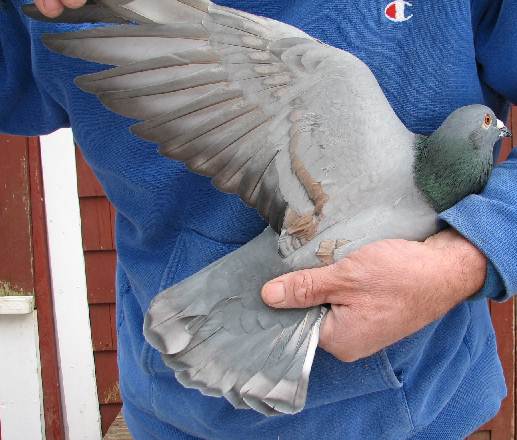 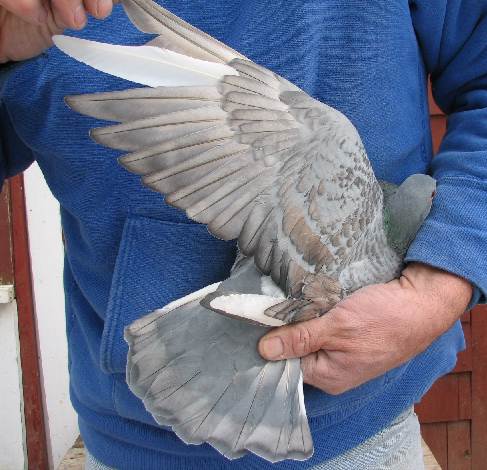 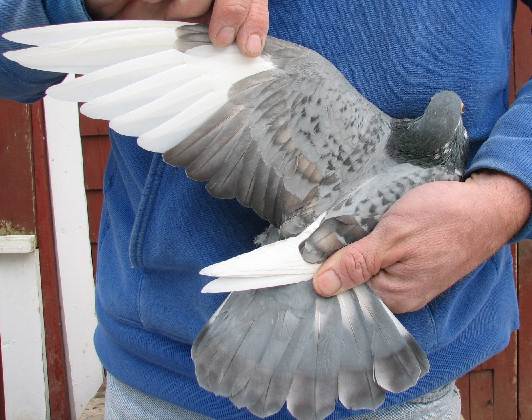 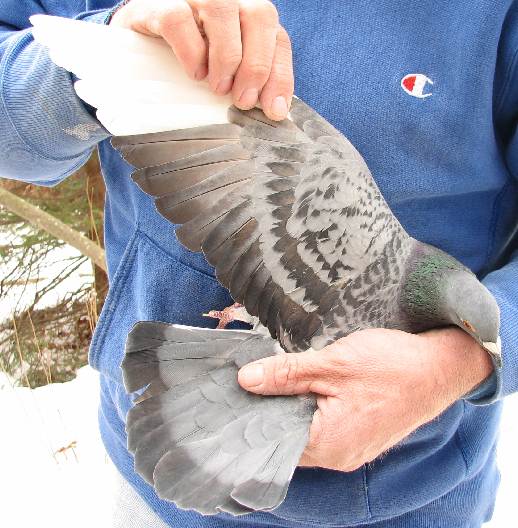 Note
how little the dominant opal effect is displayed on the this last blue
checker above on the right. It appears as
an almost normal looking blue check with white flights, but if you look
closley you will
find that opal is there in the center of the checker pattern marks.
Like recessive opal, the overall amounts, of the
opal effect, varies greatly from bird to bird.
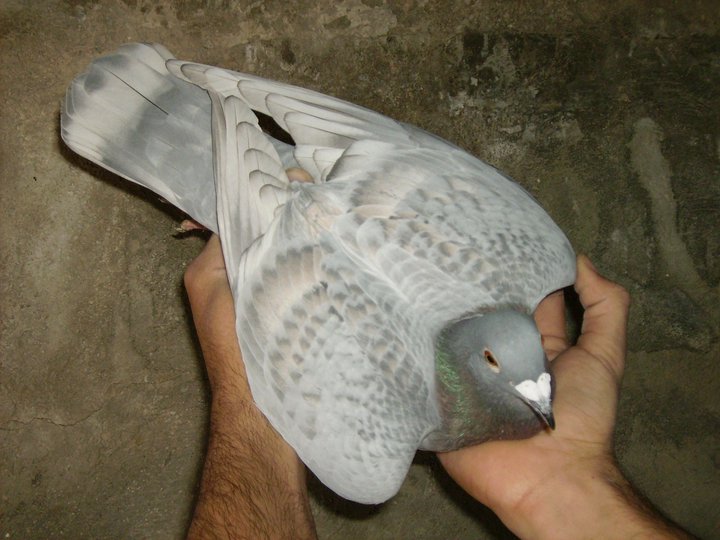 This Dominant Opal blue checker is submitted by Arnau Constans of Spain. It is a much softer color than the opal birds above; again demonstrating the variable of the dominant opal gene expression. Note the washed out tail end bar and wing shield markings along with the metallic color of the wing flights. This is dominant opal in full display on a blue check pigeon. |
Recessive
Opal
(o)
Red phase recessive opal bar Our other opal gene is known as “recessive opal” (o). Note the genetic symbol for this recessive form of opal also uses the letter "o" just as the other, more dominant gene form of Dominant opal (Od) does. These
two genes are not related in any way. Take note of the fact
that recessive opal is always
symbolizes in the
lower case while Dominant opal is in the upper case. Genetic
symbols are denoted in that way. In
other words, the dominant genes are listed
in the upper case while the recessive ones are given in lower case.
This helps
to keep their effects in mind while working out all the possibilities
of their
genotype (genetic make-up) and their phenotype (appearance). Recessive
opal (o) has been a gene in the homing pigeon breed for
a very long time. In fact, it may have been included in the genetic
package of
our earliest form of modern day racing homers. The
late Joseph W. Quinn in his book "The Pigeon Breeders
Notebook An Introduction to Pigeon Science" writes that between 1-2% of
most strains of racers are homozygous opal o//o and that between 15 and
20 %
carry the factor o//+. This
gene first showed itself in my loft after several years of breeding
to develop my own family of racers. Some of my original birds were
given to me
by my good friend Walter Hulden, who passed away at 93 years young and
these
birds were said to produce some odd colored pigeons from time to time.
Well I
had them in my loft for over ten years before it first manifested
itself. It
came from an uncle x niece combination of spread blacks. Recessive opal spread is a very metallic pastel color on a spread blue or black pigeon. It varies in form from very light, to medium, to almost black in shades. The tail is typical for the other recessive opal forms with a washed out color of gray and some baring throughout the tail feathers length; and not just at the feathers end. The body feathers are often laced with a darker outline.
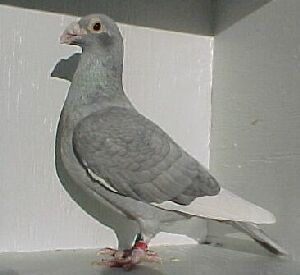 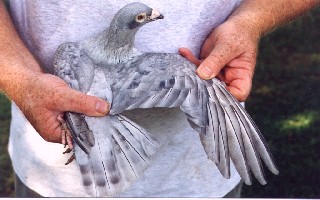 Reessive opal spread cocks Now
keep in mind that Spread is not a
pattern gene but a modifier of patterns. One that modifies
the way
pigment granules are placed on the bird. In the case of
spread, it hides
both clumped pigment and course spread pigment with additional smooth
spread
pigment. Smooth spread pigment is normally found at the birds
face area,
on the wing tips and the tails end bar. Therefore, a blue bar
with its
black wing tips and tail bar becomes a solid black when the spread
modifier is
present. However smooth spread of the wing tips and tail end
bar on a
typical blue color bases pigeon with recessive opal is seen as a
metallic color
so a spread recessive opal becomes a solid metallic color everywhere
pigment is
placed. In T-pattern, red phase recessive opal is almost a pastel red in pattern on an otherwise metallic gray body. The Hackle or neck is a metallic maroon to green luster. In the bared form, like the one shown above, it is often mistaken for an Ash Red bar or mealy. In the blue checker and t-pattern phenotypes it takes on what I believe to be the most beautiful of all pigeon phenotypes. It produces a lot of pastel reddish pink and metallic coloration which is very striking indeed. Recessive
opal as I have stated above is an autosome recessive gene.
Autosome means it is found on a chromosome other than the sex
(Z)
chromosome.
Therefore, recessive opal is not sex-linked. Both
male and female must have two copies of
this recessive opal gene (homozygous for the trait) for it to show its
opal
effects. The same is true for their allele Cherry.
Like recessive opal, cherry is also known to have a
direct linkage
to the birds
pattern gene found on this same autosomal
chromosome. Since these
two gene loci for opal and pattern are located closely on the
same
chromosome, they in effect
become linked to each other in the replication (reproduction)
process. The closer genes are to one another in the
chromosome
chain, the more likely they will remain linked together when replicated
in the DNA
of the egg or sperm. It appears these two
genes are so closely
linked that a crossover,
to
effect a breakage
of this link, seldom occurs.
Normally this
mechanism of crossing over provide a means to reshuffle genes on the
chromosomes but is less likely to occur when the genes are located
closely to
each other. So in the case of recessive
opal (or its allele cherry) along with the pattern
series gene present, the two genes of the same chromosome stay
together.
Example, if
linked to bar it is passed along with bar; when linked with checker it
stays
with checker.
Keep
in mind, it takes two recessive opal genes to make a
phenotype, so regardless of which pattern genes the bird carries, it
will
always be displayed in its dominant pattern form and only show
recessive opal
if both pattern genes are linked to a corresponding opal gene. In other
words
when (o//o) is present then it takes on the effect of the dominant
pattern in
recessive opal regardless of what the lesser dominant pattern is. Also
keep in
mind that Spread will always mask any and all of the pattern series
effects. Recessive Opal Blue Phase Recessive opal blue phase, are those that do not show very much red color in the pattern marking areas. Those that do show a greater amount of red, are known as red phase recessive opals. Blue phase recessive opals can look very normal on their wing shields however their tails will show the typical webbing or barring effect of recessive opal. They come in all patterns from barless to t-pattern. Spread has an effect on recessive opal and changes the pattern into a metallic coloration with the typical opal tail webbing or barring. Spread is also an autosome gene. It is not in the pattern series but is dominant to all of them. It only requires one factor to display itself. So regardless of what the pattern underneath the spread is, a recessive opal with one or two factors for spread will show recessive opal spread. The birds shown here are Spread Recessive Opal on blue bar. Opals in my loft were originally in
the bar pattern
with most masked by spread. Since crossover takes too long simply wait
for to happen and that results
in to many extra birds to feed; I had to trade for some in both the
check pattern and red phase to get what was looking for. Dark phase spread on the left, and very dark phase on right (typically these darker spreads are always hens while the cocks like the two above are lighter in metallic color).
Barless blue phase left, light check blue phase right.
A blue phase rec. opal cock by Larry Davis |
Cherry och
Cherry is an allele of recessive opal and it is only displayed when genetically on a wild type, blue color base; just as both red and blue pahse recessive opals do. Why the pattern colors is red and not black we do not know for sure.
Both Cherry and recessive opal are to be found in all the typical patterns from barless to t-pattern. Here the course spread of the pattern marking is turned into the opal red color. The more pattern displayed the more opal red there is to be seen. However when the spread factor is added, the red color of the course spread pattern area is masked by the effect of spread changing the course spread into smooth spread. Since smooth spread is not displayed as red, there are no phenotypes for red phase spreads. They are simply displayed in the same color as the blue spread forms. It is assumed that the same is true for cherry but I have not seen any to know for certin.


Cherry in bar form by Tom Barnhart on the left and one of my red phase dirty bar hens on the right.
These are not the same mutation but are alleles.


Red phase wing shield and tail pattern of the dirty bared bird above. Note the ribbing pattern in the tail so common with recessive opal.


These
two young birds are from Tom Barnhart's loft, red phase on
the left and cherry on the right.
Note how much lighter in ground color the cherry birds are. Also note how much lighter the cherry tail color is. This has nothing to do with the gene for dirty but is typical for the cherry mutation itself.
Cherry is a much closer mimic
for ash red than a red phase would be.

A cherry hen by Ronda Mariani of Circle Loft