


CLIMAX OF CARRIE DROPS IN AT INDIAN WEDDING
 Gurinder Chadha's It's A Wonderful Afterlife premiered this week at the Sundance Film Festival, and Dark Horizons' Paul Fischer wrote yesterday that the screwball comedy, which has been described more than once as My Big Fat Greek Wedding meets Shaun Of The Dead, has references to Frank Capra, as well as to Brian De Palma's Carrie. Now today, ScreenCrave's Brendan Walsh offers more details about the Carrie reference:
It’s a Wonderful Afterlife is entirely over the top. Ms. Chadha makes no attempt at subtlety in any regard; from the exposition of the plot via dialogue, to the makeup effects on the ghosts, even to the references to the films that inspired her as a filmmaker. In fact, there is a hysterical, if a little long, scene that is basically what would happen if the climax from Brian De Palma’s Carrie took place at an Indian wedding.
Screen Daily's David D'Arcy's review of Wonderful Afterlife provides yet more details:
The script salutes everyone from Capra to Ealing classics, Robert Altman’s Brewster McCloud, and the whole zombie-spoof genre. Chadha’s directing approach is warmhearted chaos. Characters collide with each other as food flies through the story, culminating in - what else? – a wedding, where the spirits settle scores in a spoof of Carrie with paroxysms of anything edible.
Posted by Geoff
at 1:46 PM CST
Updated: Thursday, January 28, 2010 10:18 PM CST
Post Comment | Permalink | Share This Post
Updated: Thursday, January 28, 2010 10:18 PM CST
Post Comment | Permalink | Share This Post
 A couple of reports in recent weeks suggest that Bollywood filmmakers are looking to collaborate with Brian De Palma and other Hollywood directors. According to
 Last week's episode of
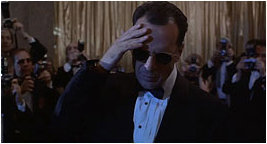
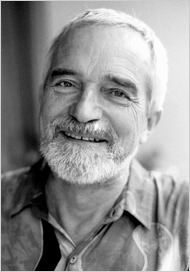 Robin Wood, author of the influential book Hollywood from Vietnam to Reagan, died Friday of complications from leukemia. Wood was 78. In the above mentioned book (the title of which can be seen as a direct inspiration to the core of David Greven's new book, Manhood in Hollywood from Bush to Bush) Wood devotes a chapter to Brian De Palma subtitled "The Politics of Castration," in which he states that De Palma's "interesting, problematic, frequently frustrating movies are quite obsessive about castration, either literal or metaphorical." In the chapter, written before Body Double was released, Wood cites Sisters and Blow Out as De Palma's best works. Of the former, Wood wrote, "Simply, one can define the monster of Sisters as women's liberation; adding only that the film follows the time-honored horror film tradition of making the monster emerge as the most sympathetic character and its emotional center." Of Blow Out, Wood concluded that for him, "no film evokes more overwhelmingly the desolation of our culture."