Roswell, New Mexico
1946-1967
 |
Walker
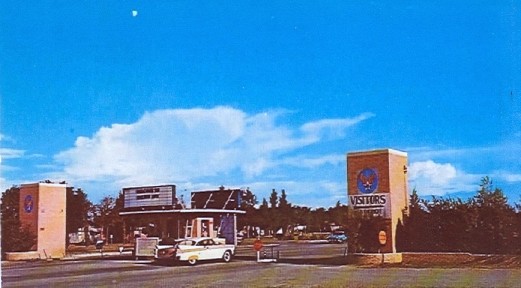
Air Force Base was
located South of Roswell, New Mexico and
started life as Roswell Army
Air Field in 1941.
During
World
War Two.
The base was home to Military Flying
Training Center and Bombardier
School, with several auxiliary fields in
the outlying area.
The area was spotted with training bases,
including Hobbs and
Carlsbad. Roswell AAF became Walker
AFB on January 13, 1948 and
was deactivated on June 30, 1967.
After closure Walker was taken
over by the city of Roswell and became the
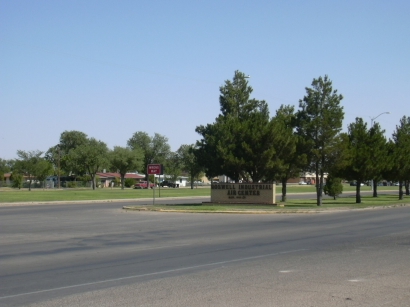
Roswell Industrial Air
Center.
Walker AFB was named after General Kenneth Newton Walker, who was killed during a bombing mission over Rabaul on January 5, 1943. During the post war period, Walker was a Strategic Air Command Base. From February 1, 1951 until June 30, 1963 the the units at Walker reported to the 47th Air Division. On July 1, 1963 That responsibility transferred to the 22nd Strategic Aerospace Division. From July 1, 1965 until March 25, 1967 the 18th Strategic Aerospace Division was in charge.
There seems to have been only three bomb units at Walker during its existence: The 6th Bombardment Wing, 468th Bombardment Group and 509th BW.
The 6th BW was activated at Walker on January 2, 1951, equipped with B-29s. During its stay, the 6th would also go on to fly B-36s, B-52s, KB-29s, KC and RC-135s and the Atlas F missile.
The 468th BG's tenure was short, from January 12, 1946 until deactivation on March 31, 1946, when the base was still Roswell AAF. During the stay the unit was equipped with B-29s. This was also in the era before Groups became Wings.
The most notable unit stationed at Walker was the 509th Composite Group, later redesignated the 509th Bombardment Wing. This was Paul Tibbets' unit tasked with delivering the Atomic Bomb over Japan. The unit arrived at Roswell on November 6, 1945 and stayed until June 30, 1958 when it was re-assigned to Pease AFB, New Hampshire. Being one of the "founding fathers" of SAC, the 509th flew a mixture of aircraft: B-29s, P-51s (F-51 after 1947), F-84s and C-54s. Later going into B-50s, KB-29s, B-47s and KC-97s. After its departure from Walker the 509th later flew B-52s, KC-135s and FB-111s.
Walker AFB was named after General Kenneth Newton Walker, who was killed during a bombing mission over Rabaul on January 5, 1943. During the post war period, Walker was a Strategic Air Command Base. From February 1, 1951 until June 30, 1963 the the units at Walker reported to the 47th Air Division. On July 1, 1963 That responsibility transferred to the 22nd Strategic Aerospace Division. From July 1, 1965 until March 25, 1967 the 18th Strategic Aerospace Division was in charge.
There seems to have been only three bomb units at Walker during its existence: The 6th Bombardment Wing, 468th Bombardment Group and 509th BW.
The 6th BW was activated at Walker on January 2, 1951, equipped with B-29s. During its stay, the 6th would also go on to fly B-36s, B-52s, KB-29s, KC and RC-135s and the Atlas F missile.
The 468th BG's tenure was short, from January 12, 1946 until deactivation on March 31, 1946, when the base was still Roswell AAF. During the stay the unit was equipped with B-29s. This was also in the era before Groups became Wings.
The most notable unit stationed at Walker was the 509th Composite Group, later redesignated the 509th Bombardment Wing. This was Paul Tibbets' unit tasked with delivering the Atomic Bomb over Japan. The unit arrived at Roswell on November 6, 1945 and stayed until June 30, 1958 when it was re-assigned to Pease AFB, New Hampshire. Being one of the "founding fathers" of SAC, the 509th flew a mixture of aircraft: B-29s, P-51s (F-51 after 1947), F-84s and C-54s. Later going into B-50s, KB-29s, B-47s and KC-97s. After its departure from Walker the 509th later flew B-52s, KC-135s and FB-111s.
An
Atlas F missile complex was added in the
early 1960s,
comprising twelve silos and a launch
complex, but after several
explosions of Atlas' (including three at
Walker) the missiles were
removed in 1965.
As with many SAC bases there were probably also alert fighter detachments provided by the Air Defense Command. The only ADC fighter squadron that I have identified to have been based at Walker is the 58th FIS, but the alert sheds on the northeast part of the field indicate that some unit had Dets standing alert. This might have possibly been fulfilled by active Air Force units, or maybe Air National Guard squadrons. During much of the history of Walker the Texas ANG and the Arizona ANG had ADC duties. For many years the 111th FIS (TXANG) stood alert at Holloman AFB. I would like to imagine Texas F-101s and F-102s standing alert during the 1950s and 60s. Another possibility is that units like the 331st FIS at Webb AFB could have stood alert as well. During the tenure of Walker's existence as an Air Force Base the 331st was variously equipped with F-86Ls, F-102As and finally F-104As.
Two Nike Hercules sites were activated in April, 1960 to protect Walker. Site WA-50 is about thirteen miles south of Roswell in Hagerman, NM. Site WA-10 is about fourteen miles east off of US380. Both sites exist to a point. These two sites were both deactivated in June, 1960, so both are almost a postscript to the history of the area.
As with many SAC bases there were probably also alert fighter detachments provided by the Air Defense Command. The only ADC fighter squadron that I have identified to have been based at Walker is the 58th FIS, but the alert sheds on the northeast part of the field indicate that some unit had Dets standing alert. This might have possibly been fulfilled by active Air Force units, or maybe Air National Guard squadrons. During much of the history of Walker the Texas ANG and the Arizona ANG had ADC duties. For many years the 111th FIS (TXANG) stood alert at Holloman AFB. I would like to imagine Texas F-101s and F-102s standing alert during the 1950s and 60s. Another possibility is that units like the 331st FIS at Webb AFB could have stood alert as well. During the tenure of Walker's existence as an Air Force Base the 331st was variously equipped with F-86Ls, F-102As and finally F-104As.
Two Nike Hercules sites were activated in April, 1960 to protect Walker. Site WA-50 is about thirteen miles south of Roswell in Hagerman, NM. Site WA-10 is about fourteen miles east off of US380. Both sites exist to a point. These two sites were both deactivated in June, 1960, so both are almost a postscript to the history of the area.
As already mentioned, Walker
became the Roswell
Industrial Air
Center. The city took over mostly intact
facilities and many
structures remain. Eastern New
Mexico University has a campus located there,
Novabus
Inc.
had a bus factory and a great many airliners
are stored on site.
There is also a museum
highlighting the history of Walker AFB.

November 17, 1947 - June 30, 1958Units:
47th Air Division
6th Bomb Wing
January 2, 1951 - April 30, 1962
6th Strategic Aerospace Wing
May 1, 1962 - March 24, 1967
33rd Fighter Wing
November 17, 1947 - November 15, 1948
58th Fighter Interceptor Squadron
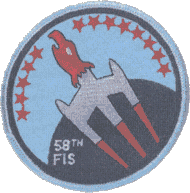
August 2, 1959 - December 25, 1960
2nd Strategic Support Squadron
April 25, 1950 - May 17, 1951
509th Bomb Wing
47th Air Division
6th Bomb Wing
January 2, 1951 - April 30, 1962
6th Strategic Aerospace Wing
May 1, 1962 - March 24, 1967
33rd Fighter Wing
November 17, 1947 - November 15, 1948
58th Fighter Interceptor Squadron
August 2, 1959 - December 25, 1960
2nd Strategic Support Squadron
April 25, 1950 - May 17, 1951
509th Bomb Wing
 |
 |
 |
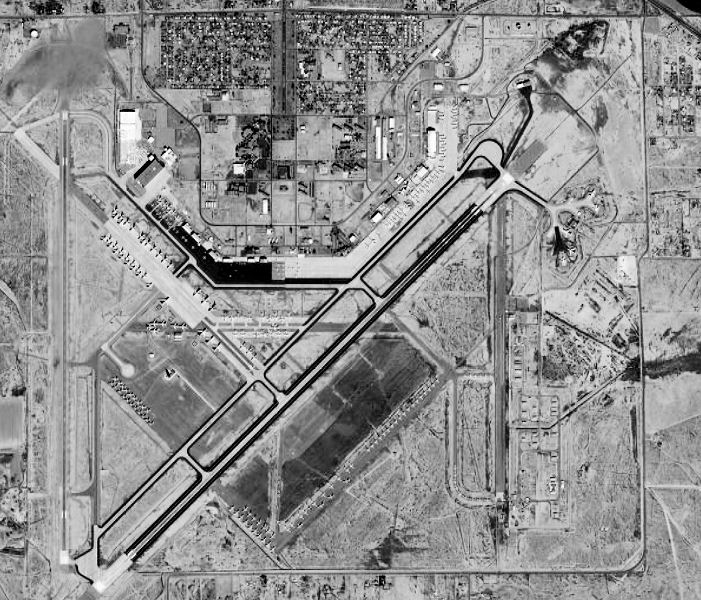 |
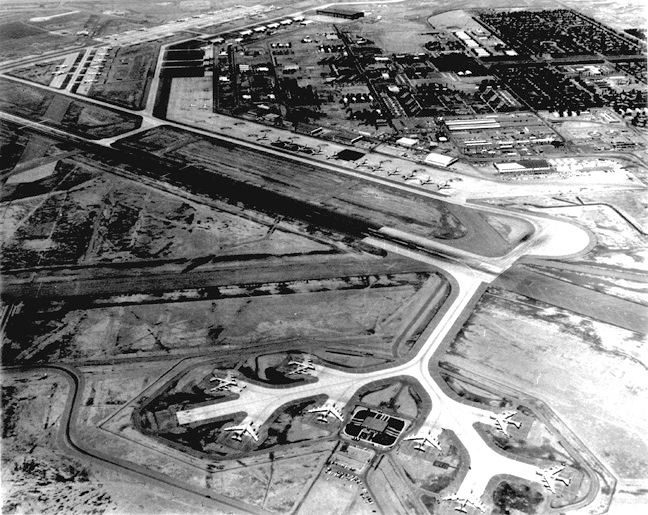
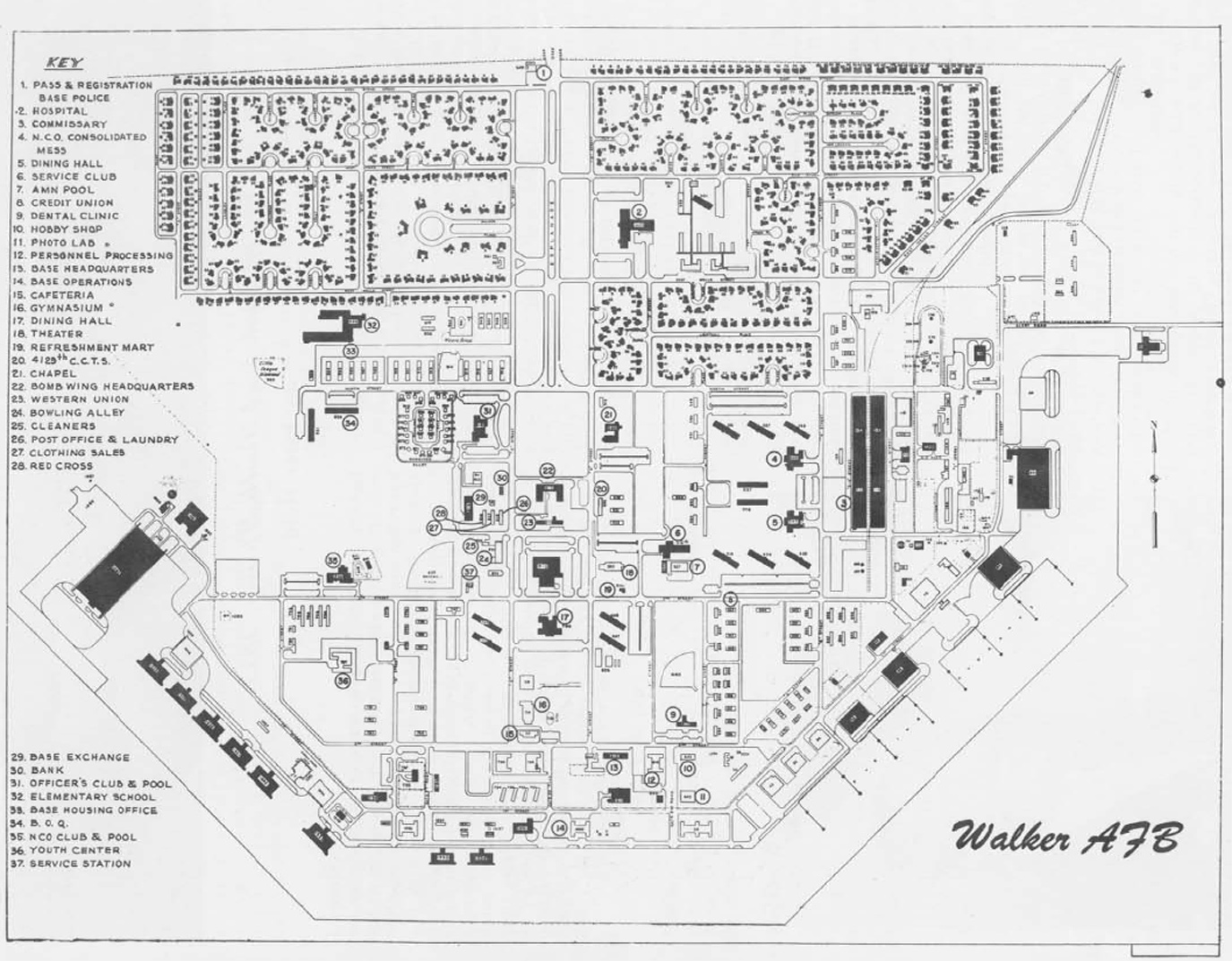
The photos and map above show the
layout of the base. The
first photo is during the 1960s era and
looks over the base towards the
west. B-52s and KC-135s are
present on the flight line. The
map shows the layout about 1963 and the
overhead view from 1997 shows
the present appearance.
The following photos were taken during several visits to the former Walker Air Force Base.
 |
 |
As with many former military bases
taken over for civilian use many of
the former structures remain. In the
case of the base hospital,
the structure is now used to house the New
Mexico Rehabilitation Center.
 |
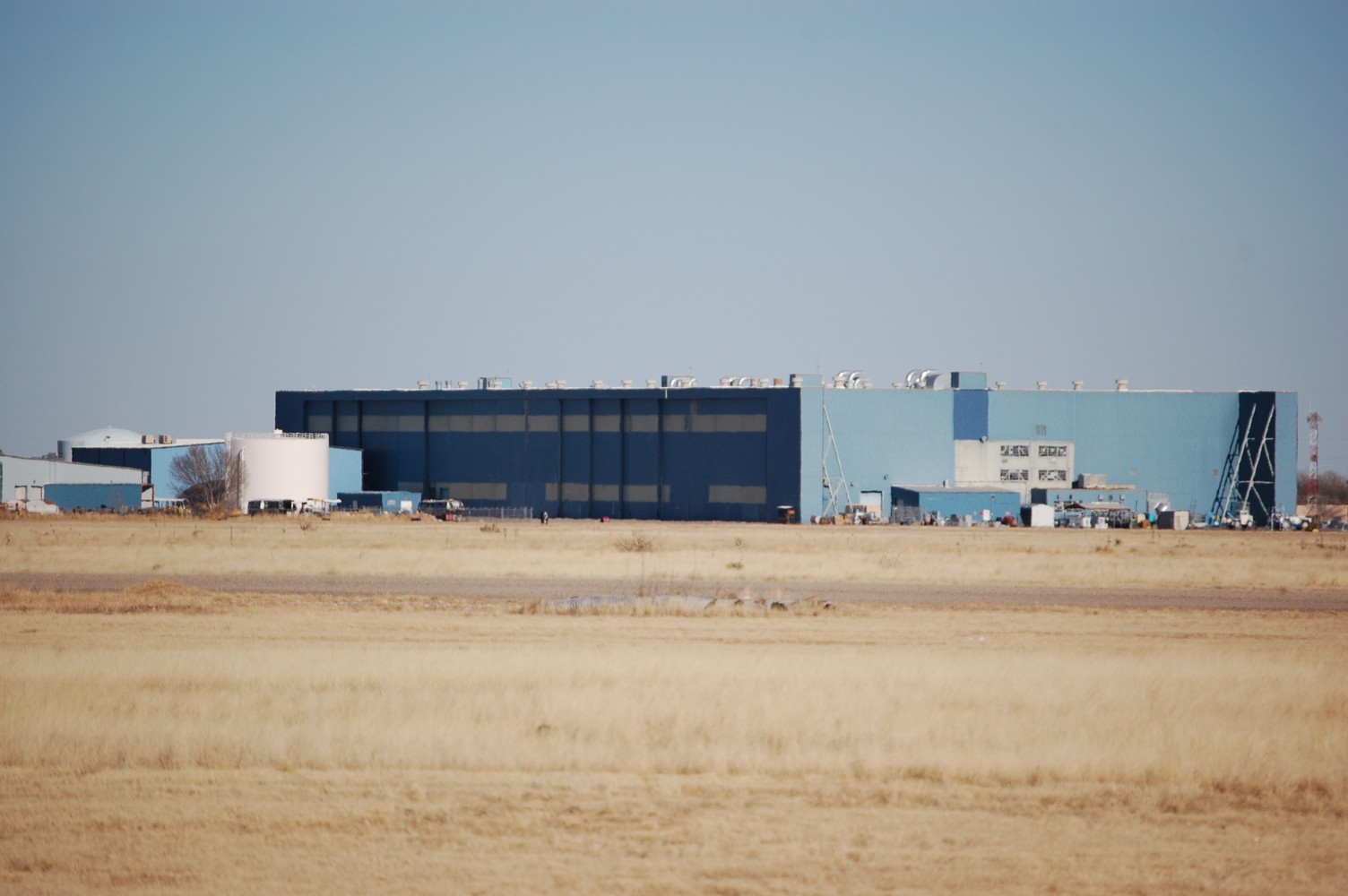 |
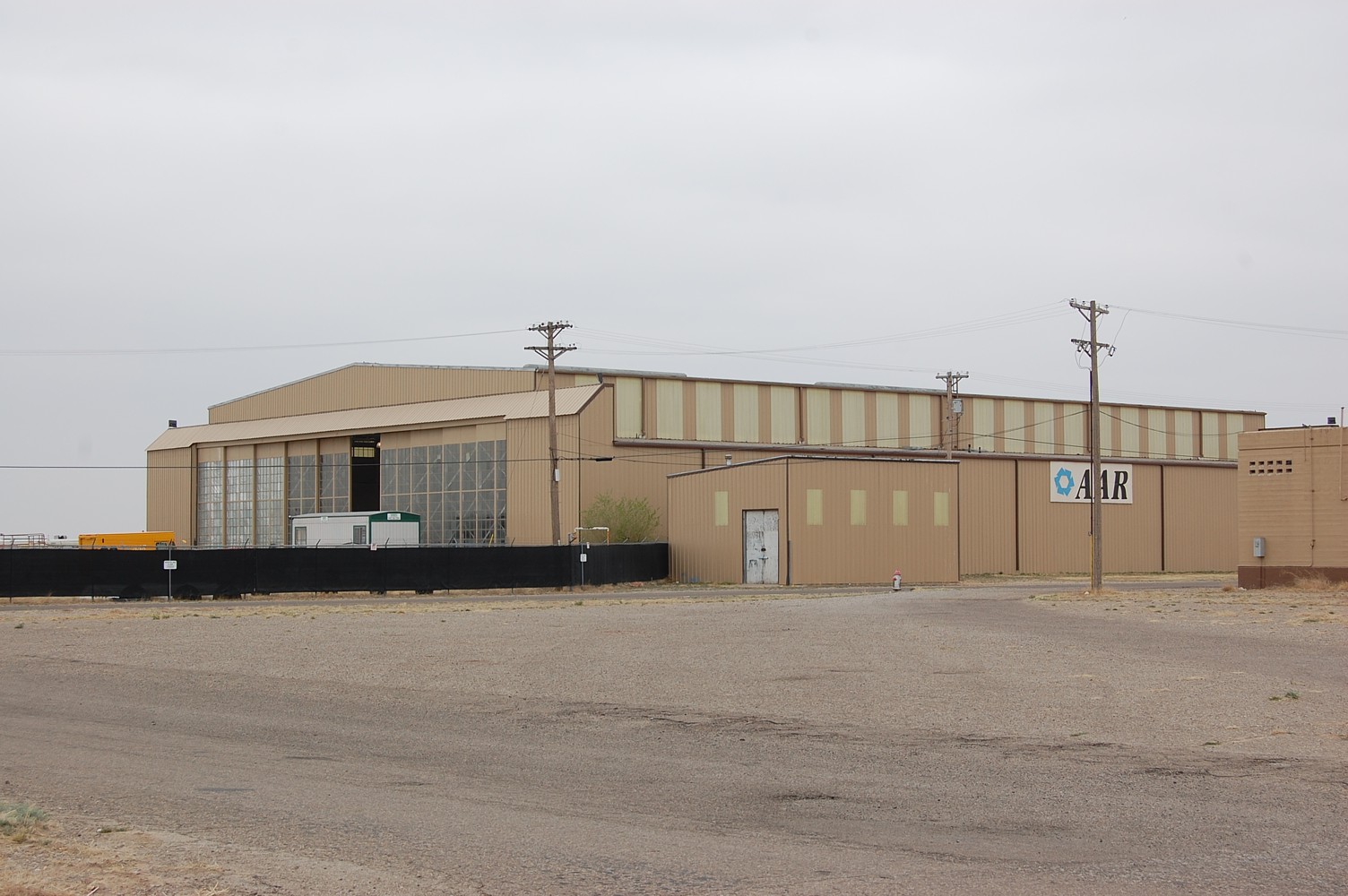
The massive B-52 hangar used to
house Novabus' bus factory. After
Novabus' demise the hangar was taken over
by Dean Baldwin Aircraft
Painting, the current tenant as of
January, 2011. This
massive hangar sits on the west end of the
flight line and is separated
from the majority of hangars on the east
side.
 |
 |
 |
 |
 |
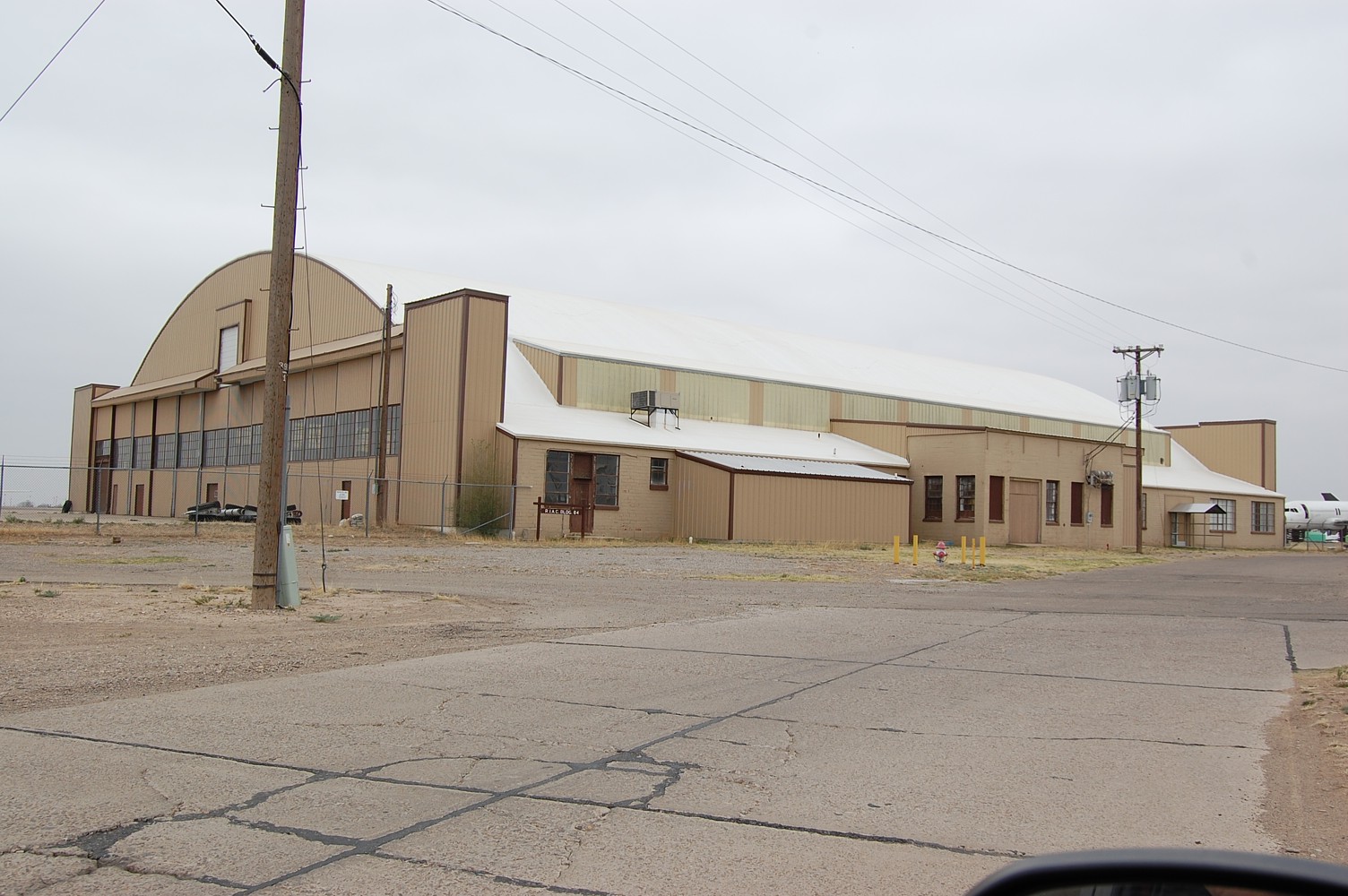 |
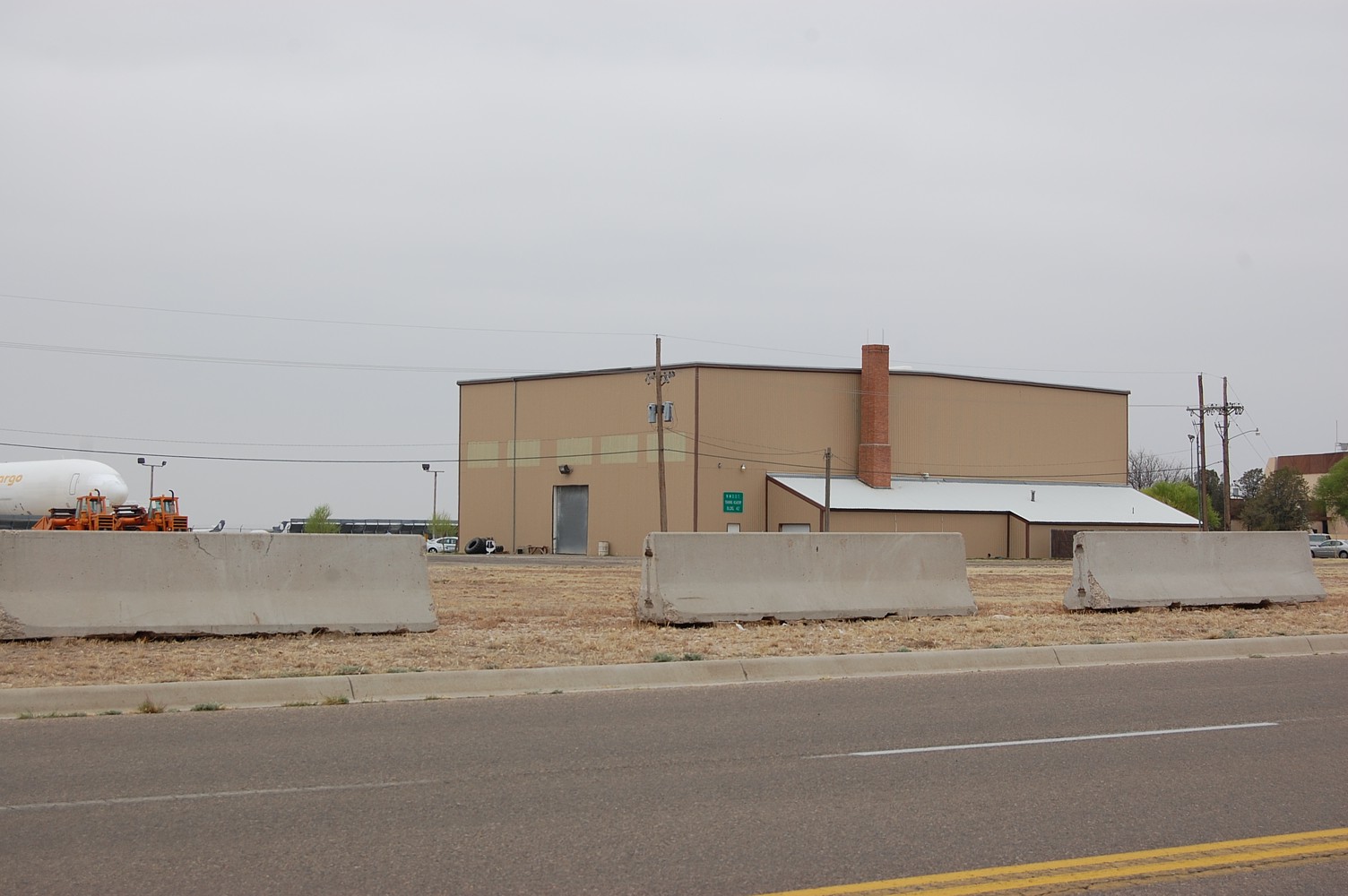
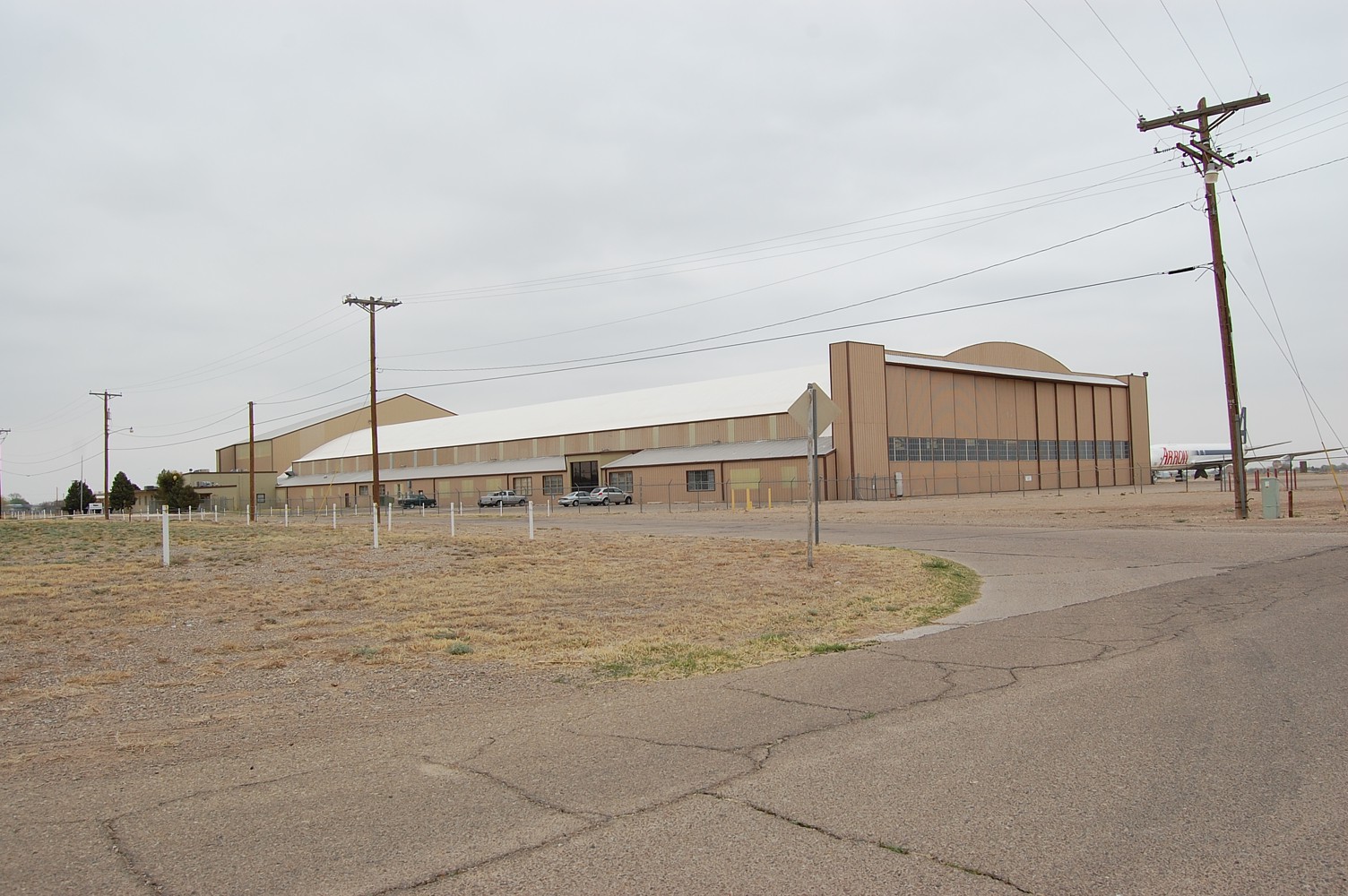
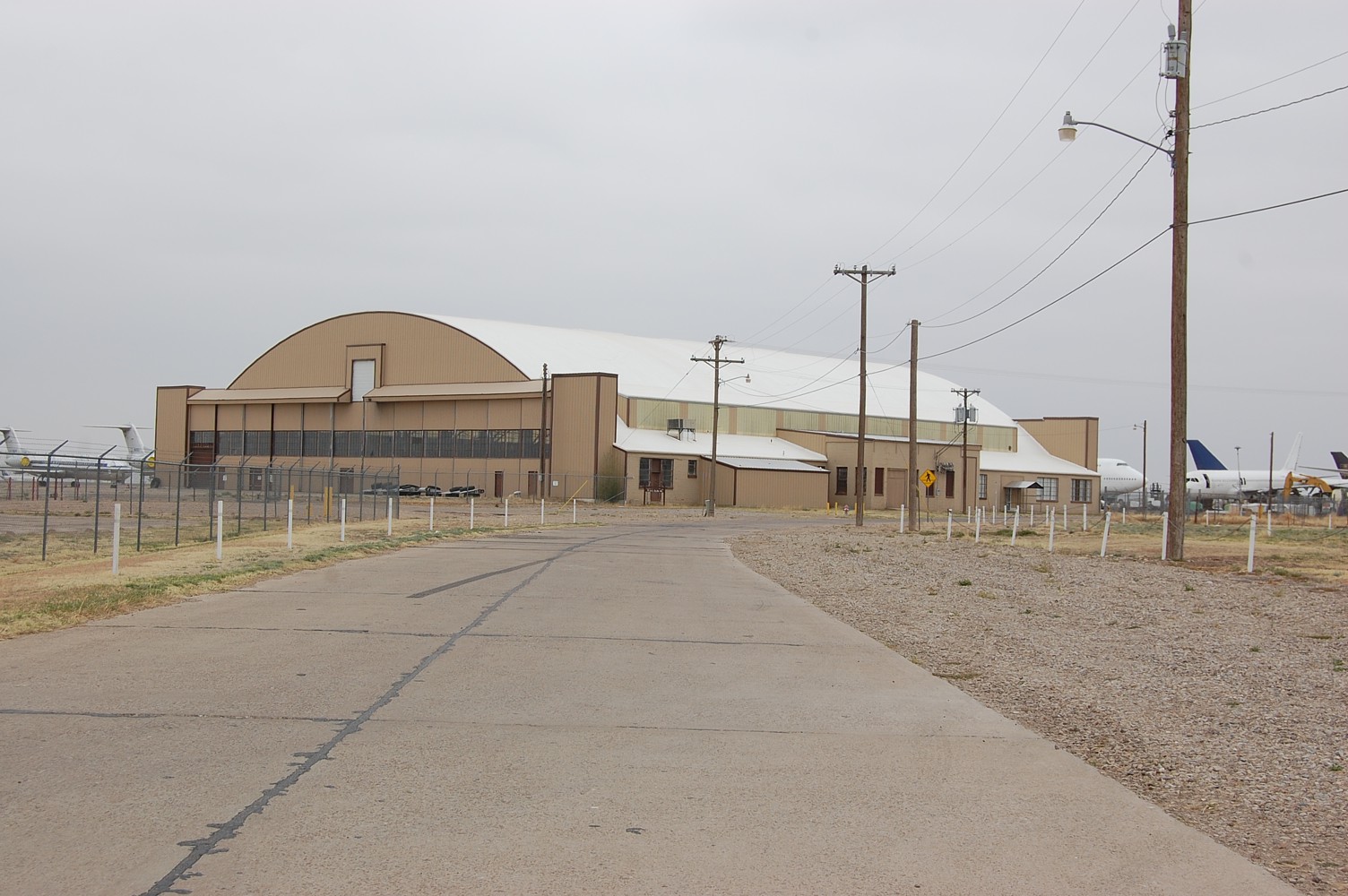
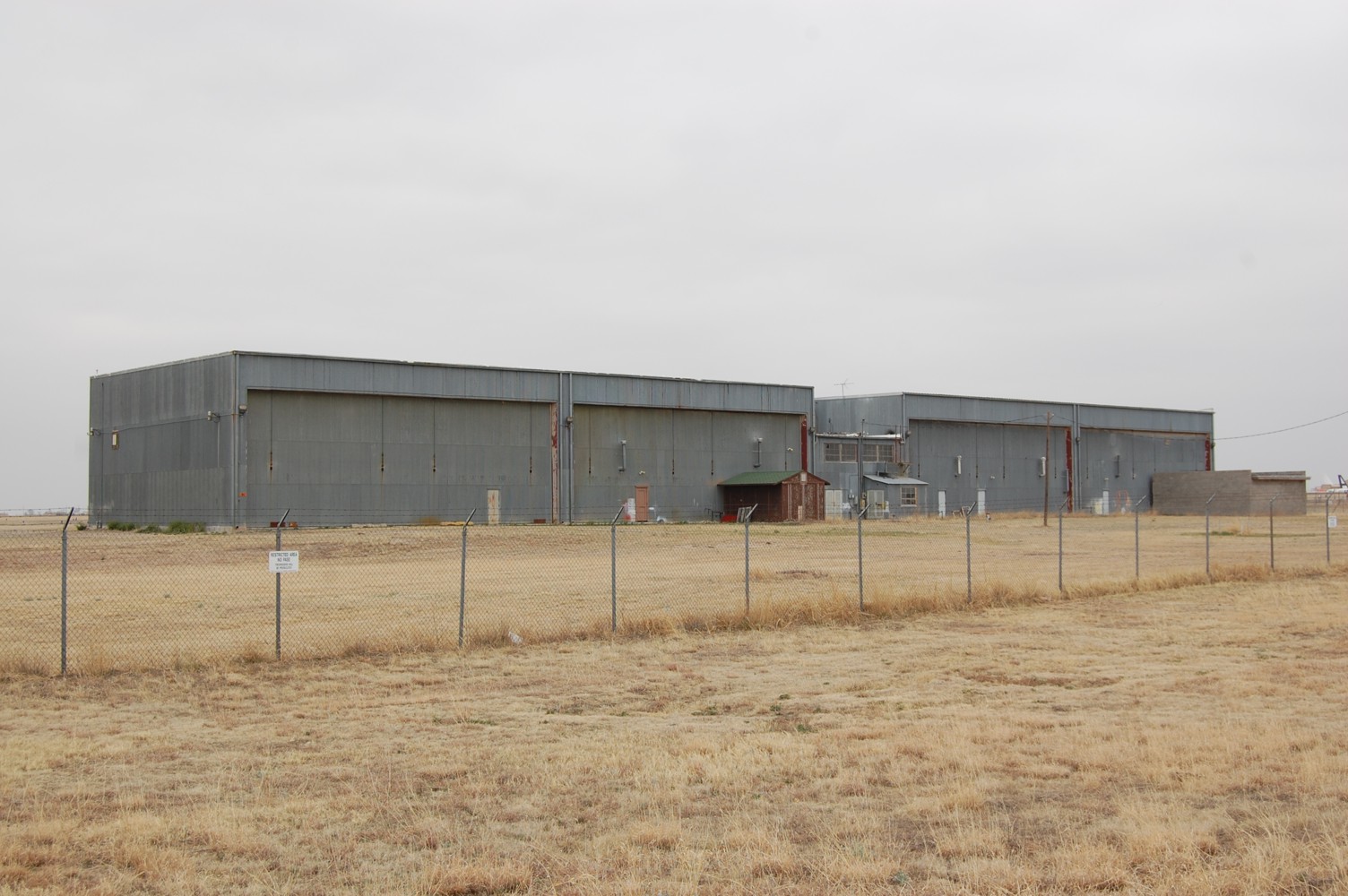
Most
(if not all) of the hangars still
stand. In the case of the
one on the left, it is one of several
similar hangars. While I
believe that it is from the days of Walker
AFB, I can not be
sure. It has the appearance of the
half hangars that an aircraft
like a B-29 (or B-50, KC-97, etc.) would
be partially pulled into to
allow work on the engines in a somewhat
protected environment.
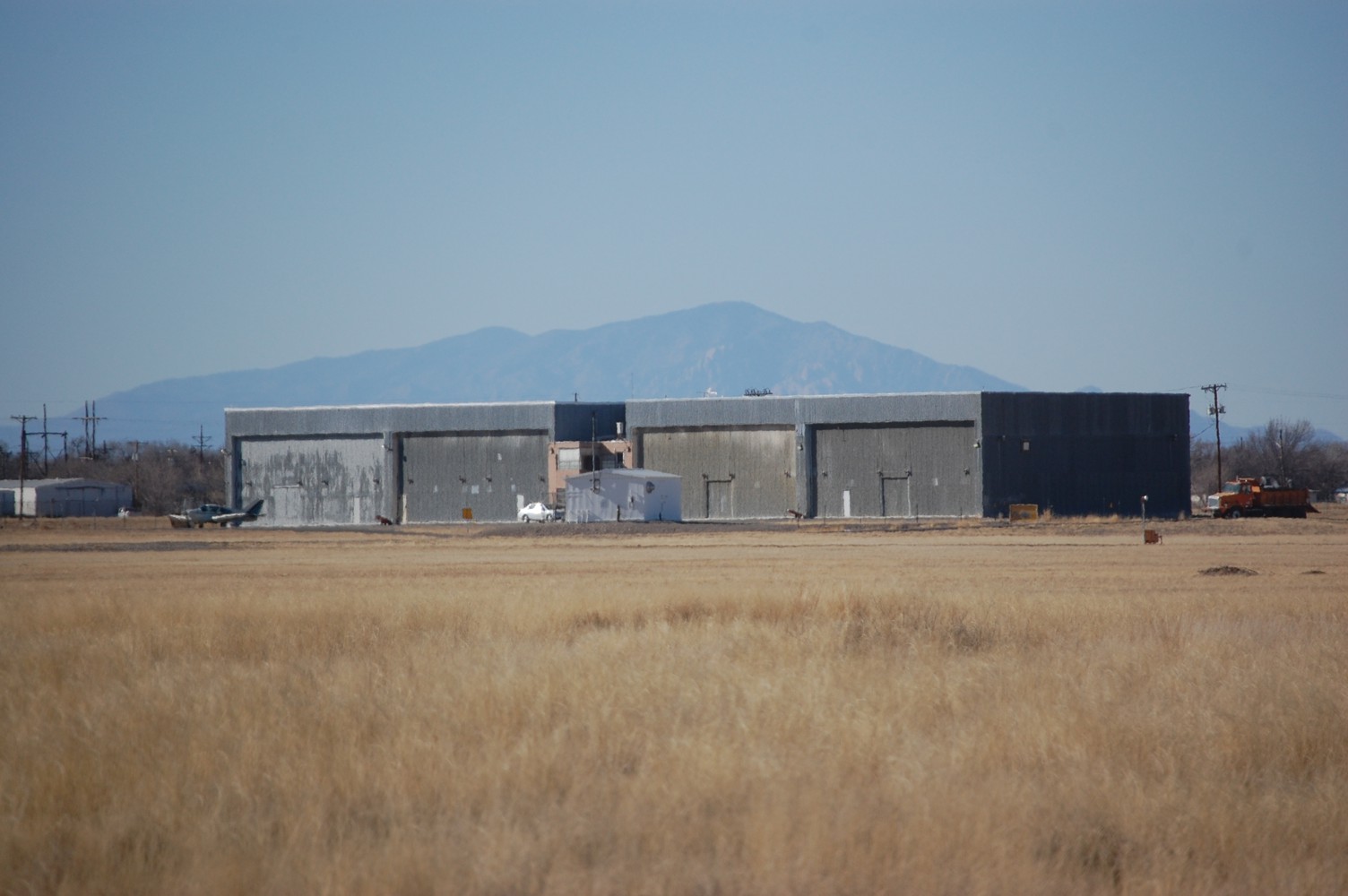
There are several engine less DC-8s in the
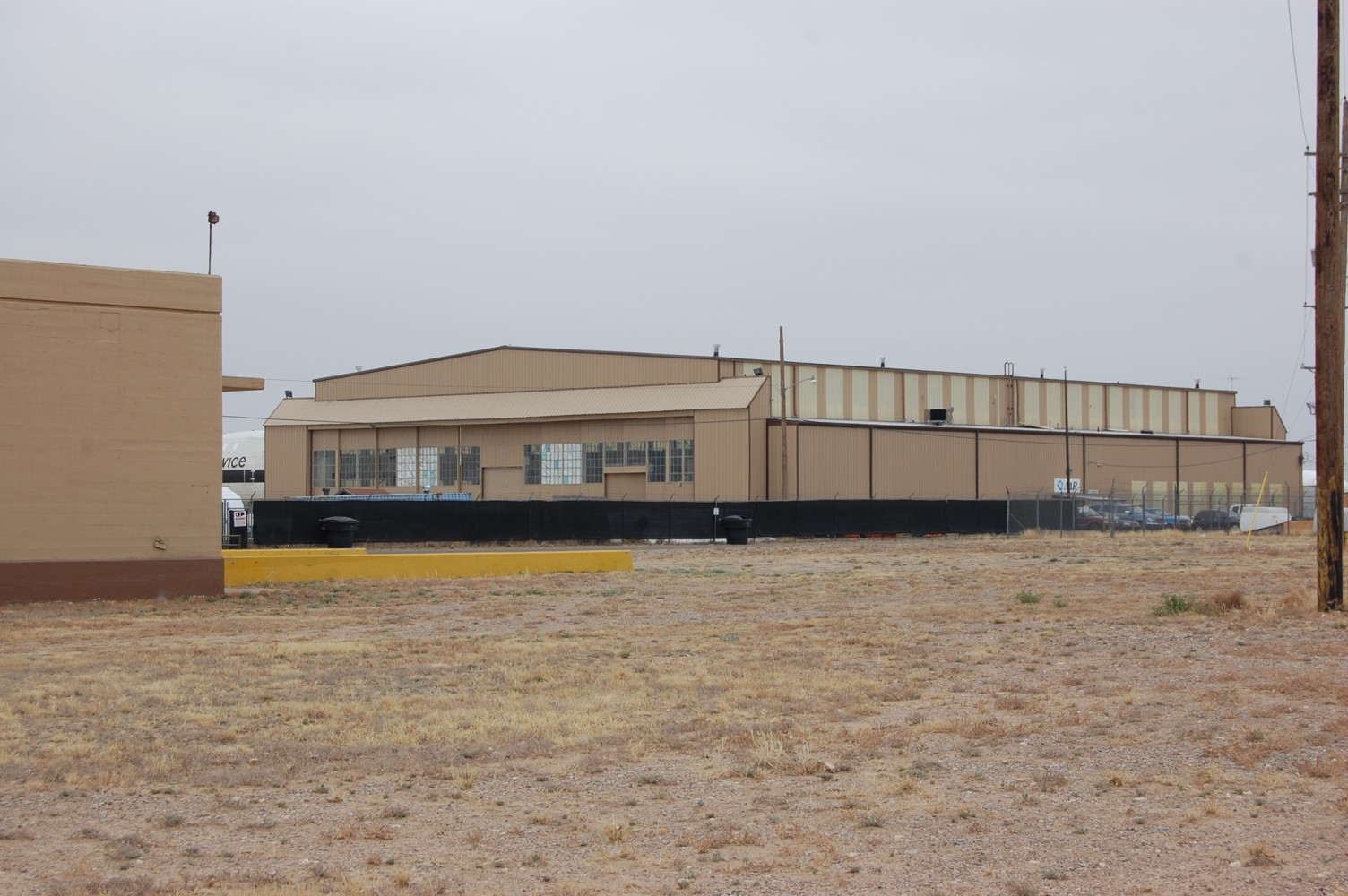
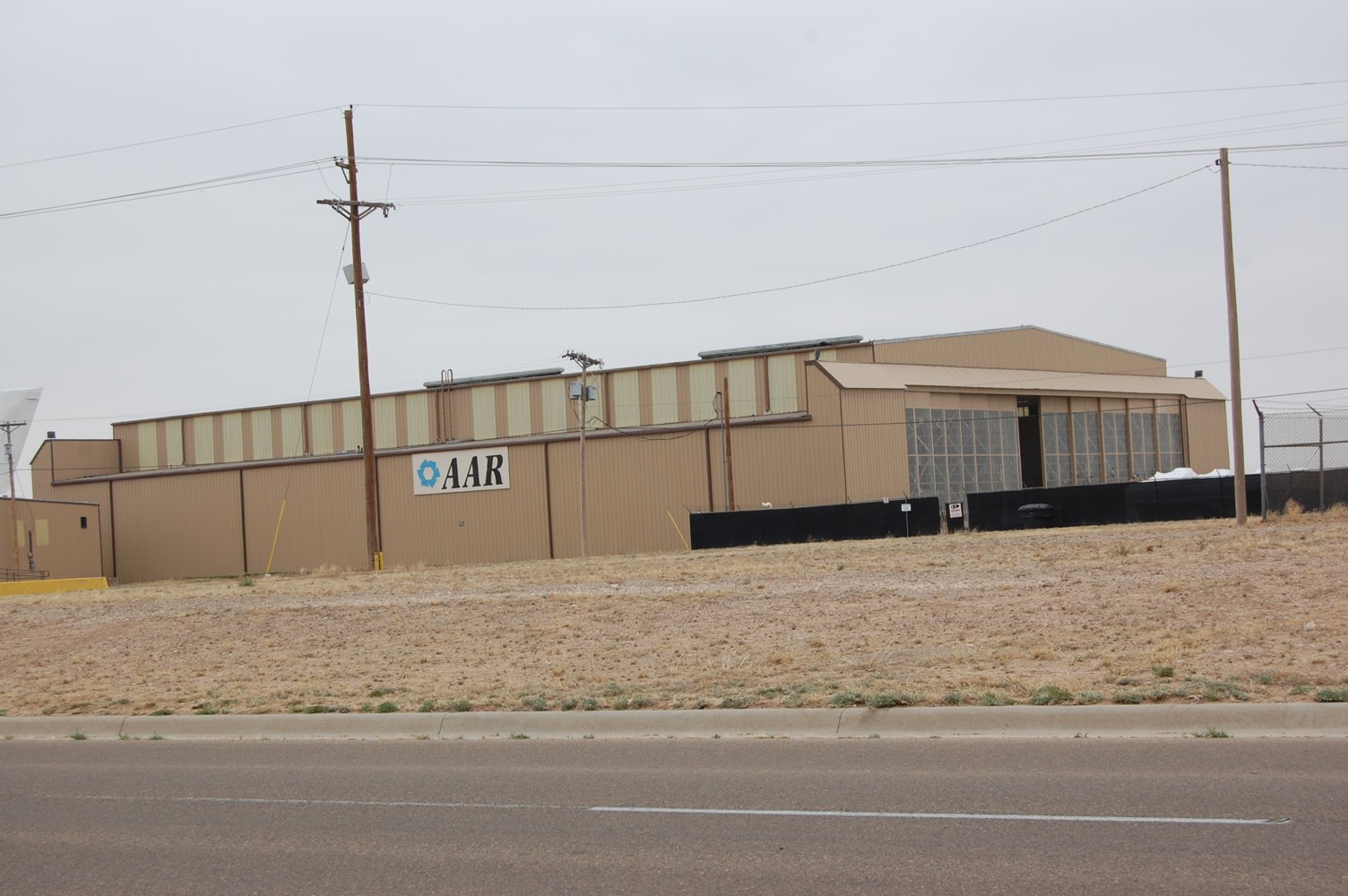
background. The hangar
in the center photo and on the right are
used by current tenants in
refurbishing and junking airliners.
They appear to date from the
era of the B-29. Notice the cut-out
for a vertical tail just
above the doors.
 |
 |
 |
 |
 |
Various other hangars that along
with the ones illustrated above run
down the east end of the flight line.
 |
An
ever present water tower...
 |
 |
 |
The
building to the
left looks like maybe it was Base Ops, or
possibly Transient Alert,
though it is somewhat set back from the
flight line. There are
still many workshops on the East side of
the base and the Fire Station
is still in use.
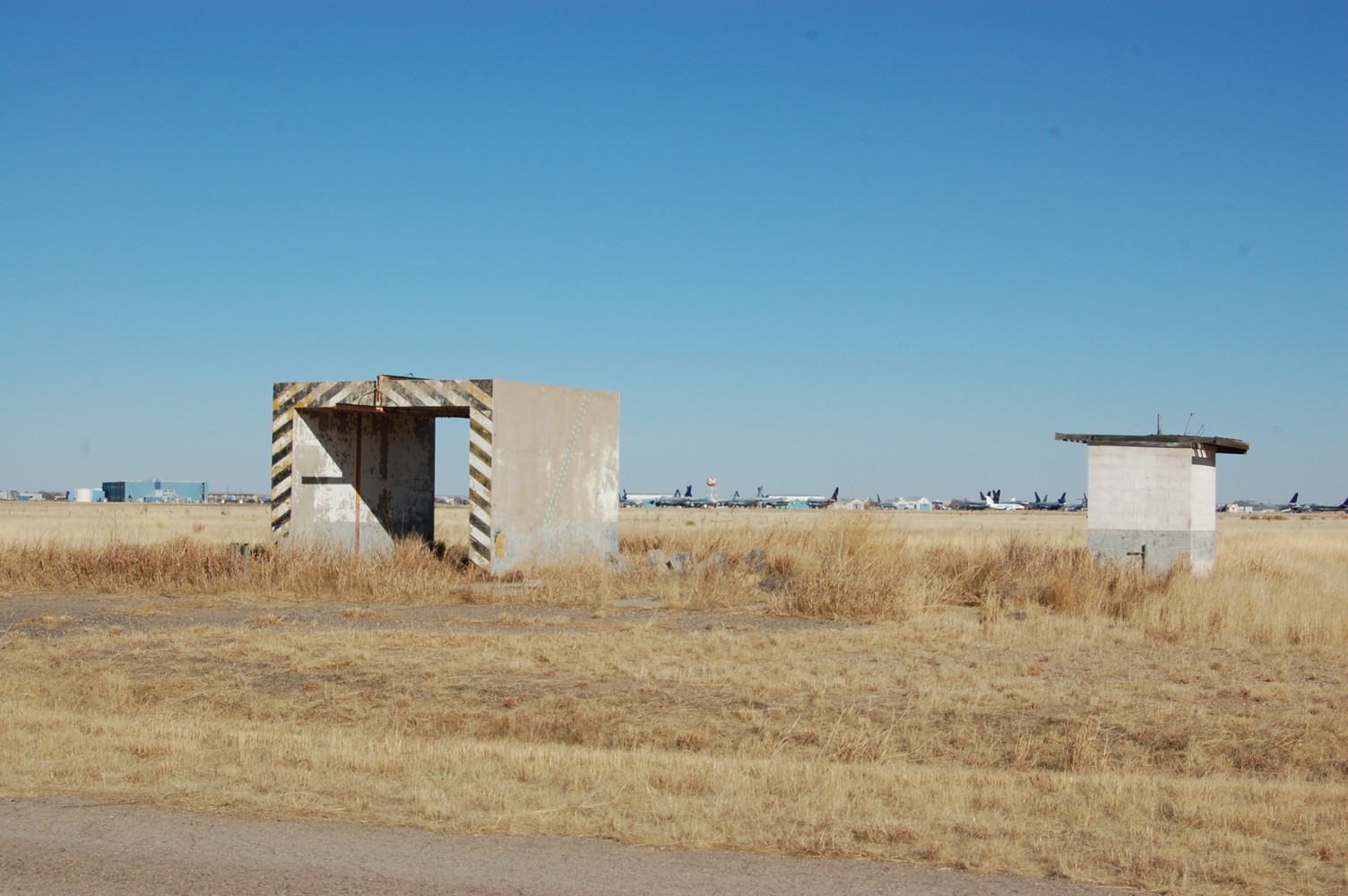
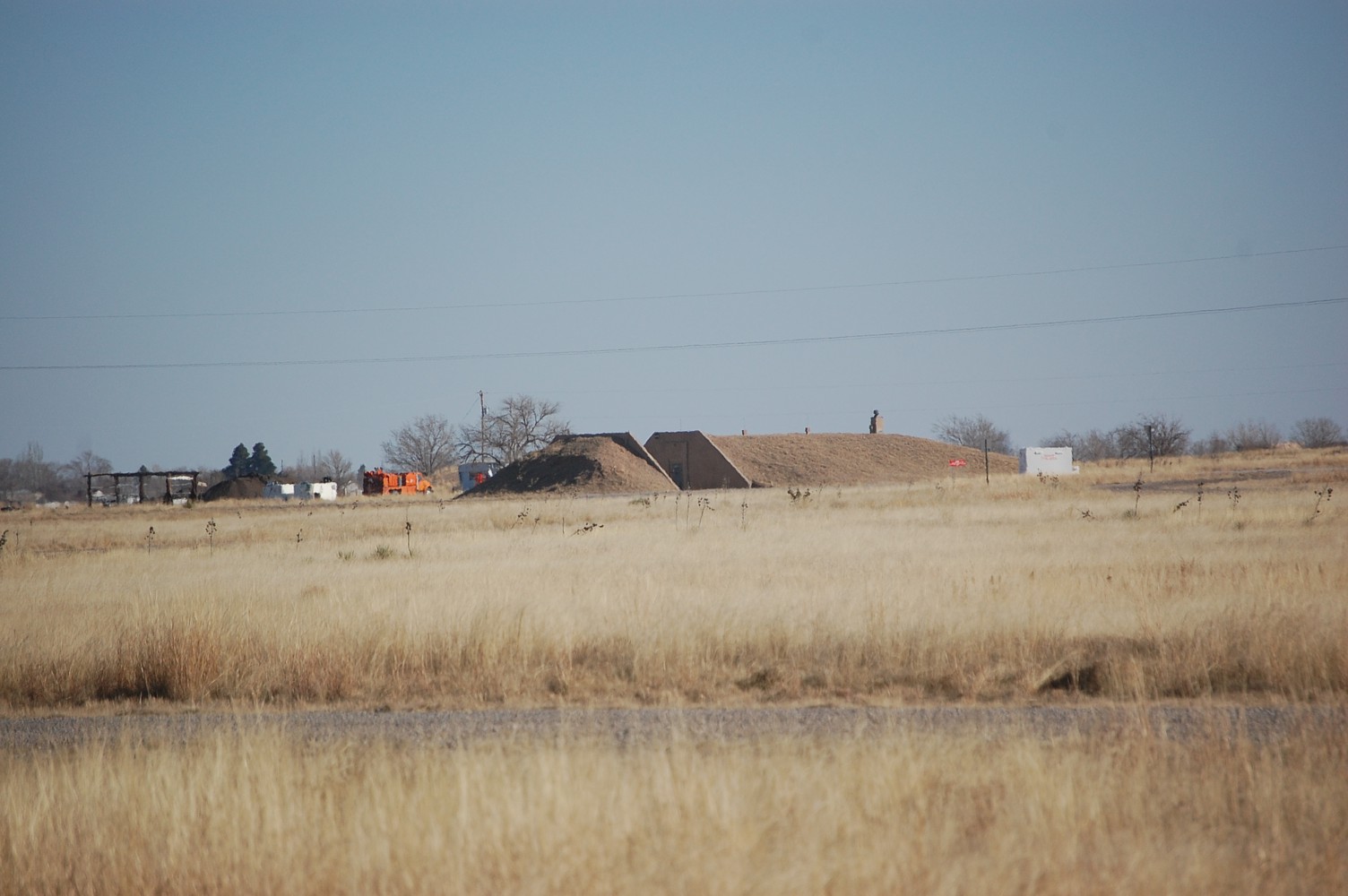
The former alert sheds are still in use for storage. The photo on the left was taken in April, 2008 and the one on the right in February, 2009. After ADC units ceased being based at Walker these buildings doubled as Alert Quarters for B-52 crews standing nuclear alert. MSgt Carl Combs (Ret) states: "The alert ‘sheds’ were alert quarters for the crew of at least three B-52s that were on constant alert (served the best chow in the Air Force)."
 |
 |
The former alert sheds are still in use for storage. The photo on the left was taken in April, 2008 and the one on the right in February, 2009. After ADC units ceased being based at Walker these buildings doubled as Alert Quarters for B-52 crews standing nuclear alert. MSgt Carl Combs (Ret) states: "The alert ‘sheds’ were alert quarters for the crew of at least three B-52s that were on constant alert (served the best chow in the Air Force)."
 |
 |
 |
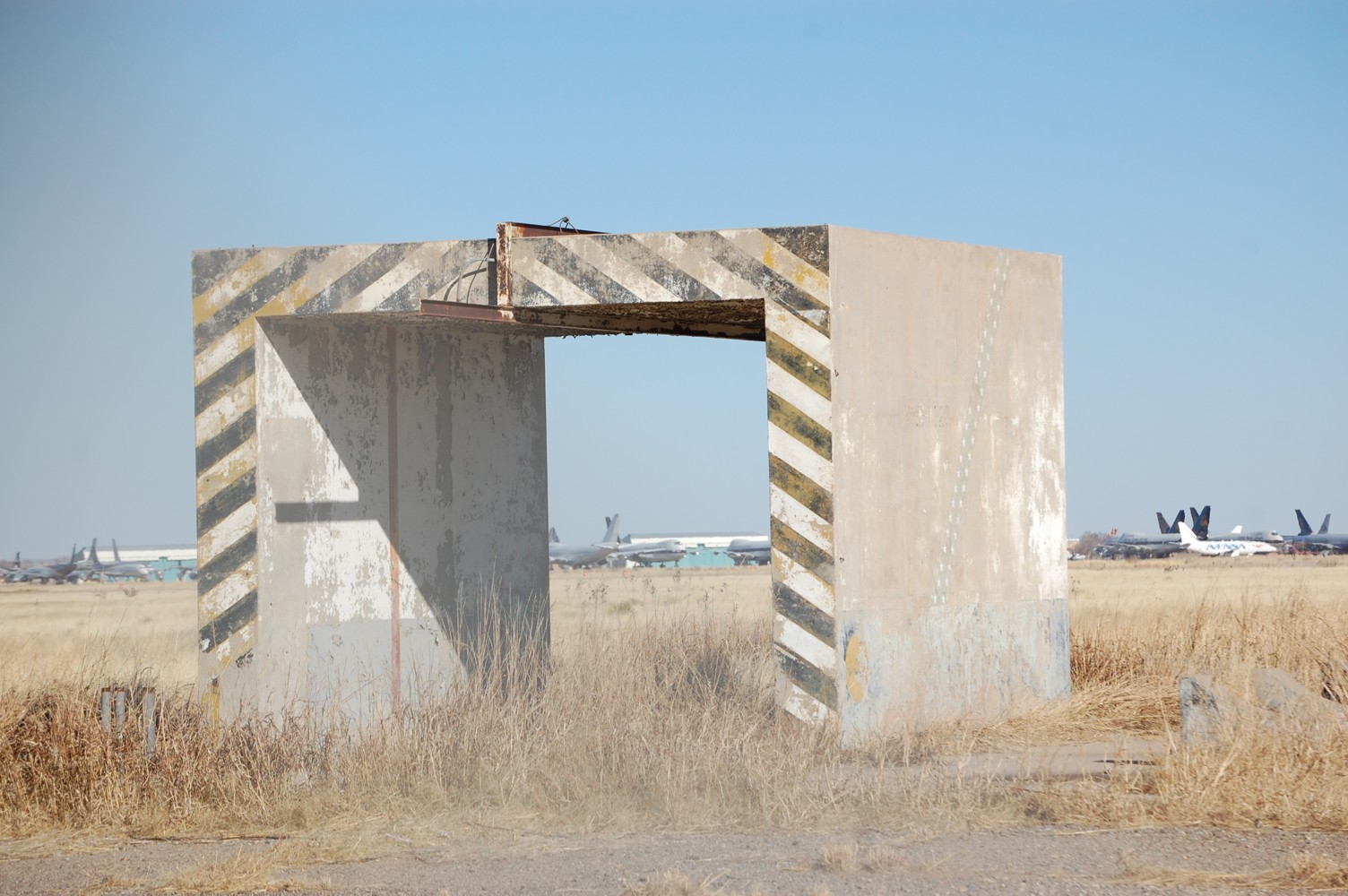
I
originally
misidentified this structure as a warhead assembly
building. It
is actually an engine test cell. These
photos were taken in February, 2009 and interestingly
after forty two
years a SAC band is still visible on the concrete
side!
 |
 |
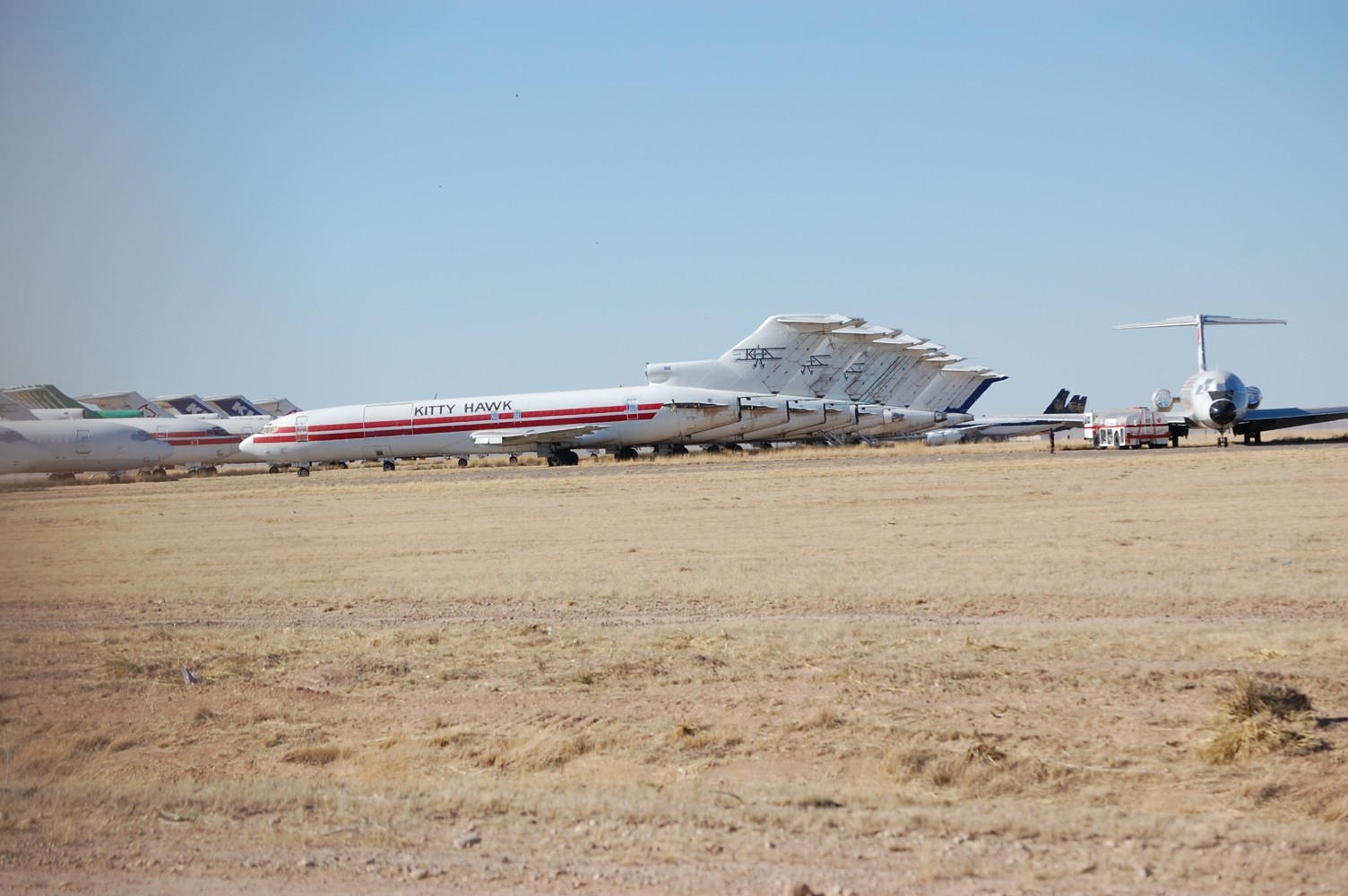 |
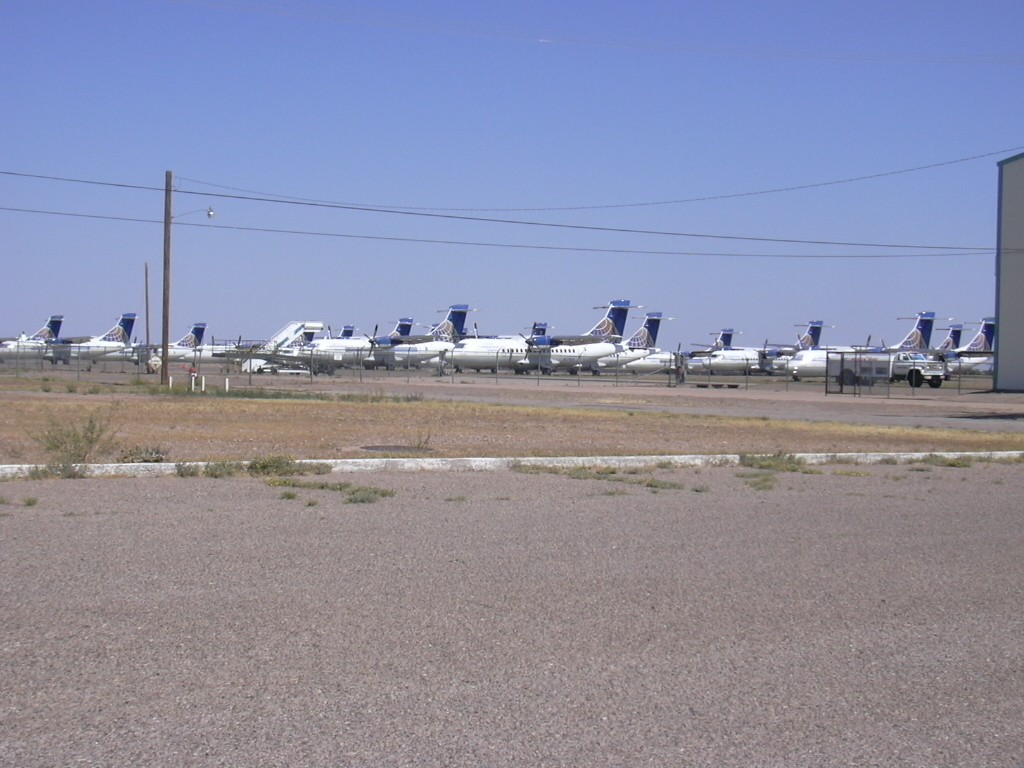
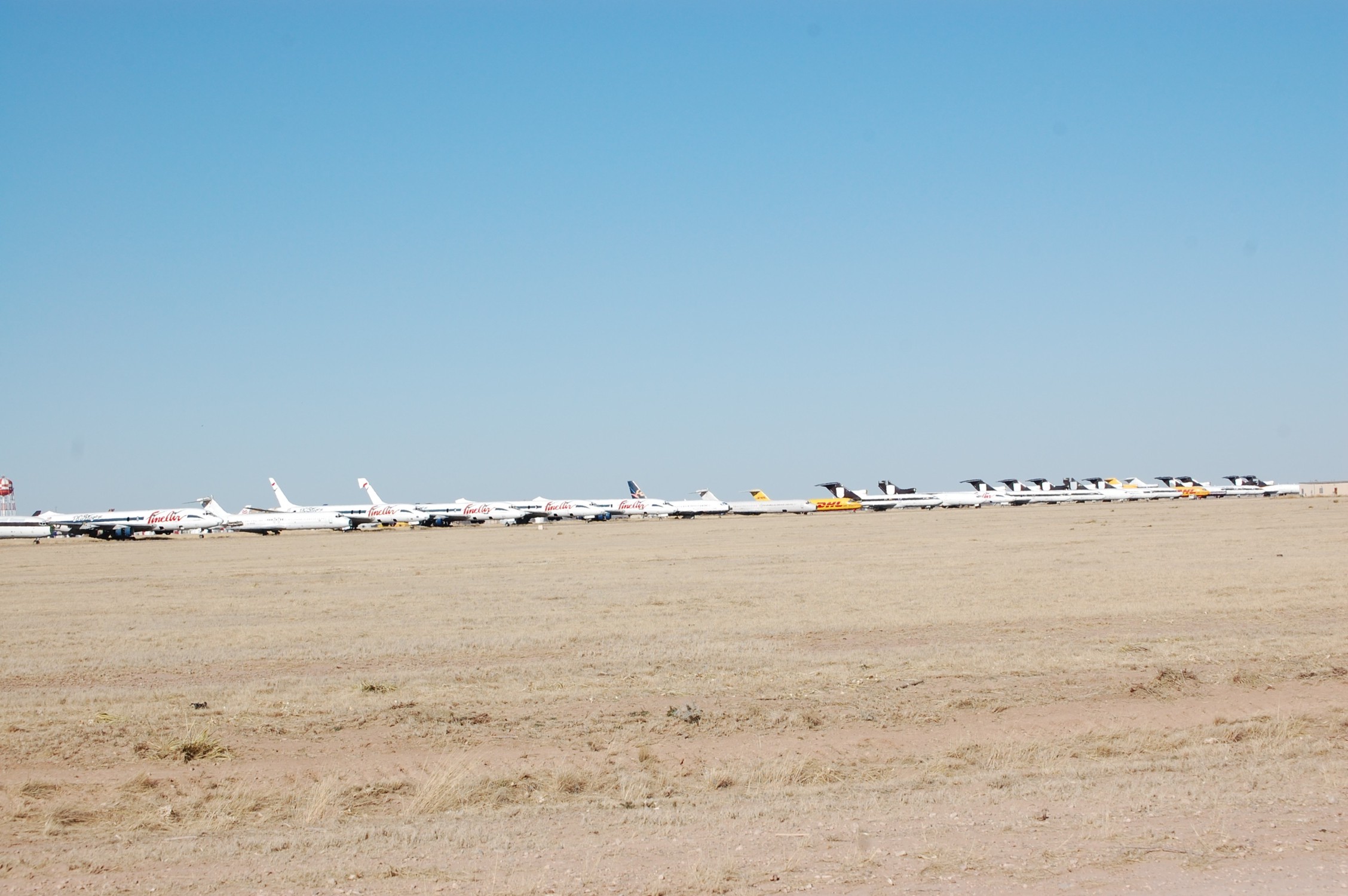
One of RIAC's major uses is for the storage of
airliners. The
Continental Express ATRs were in storage in
July, 2003 before being
sold off to other operators. The DC-8s and
B727s are in storage
as of March, 2009, but will more than likely be
broken up due to their
age and inability to meet noise abatement
standards.
 |
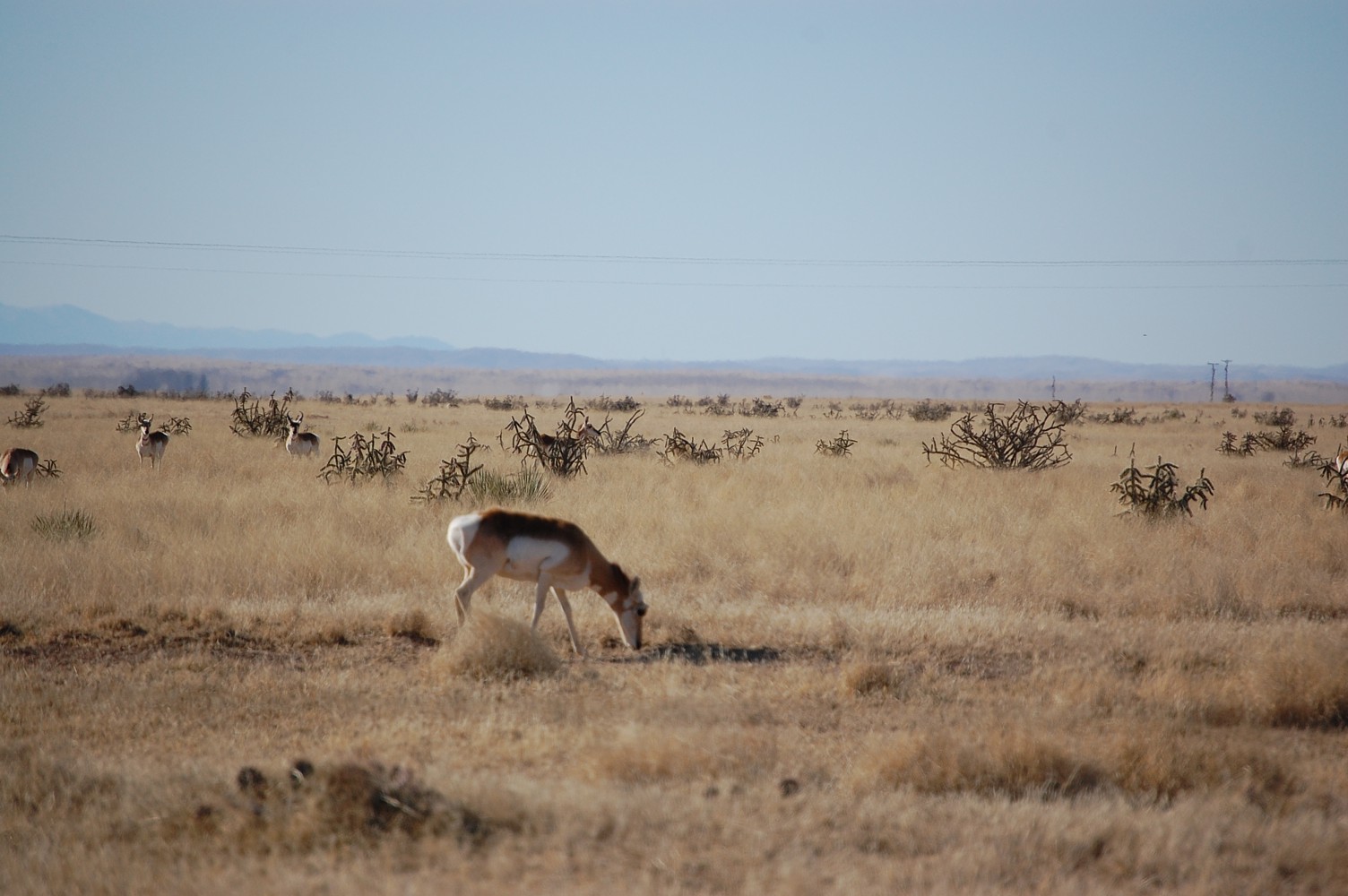 |
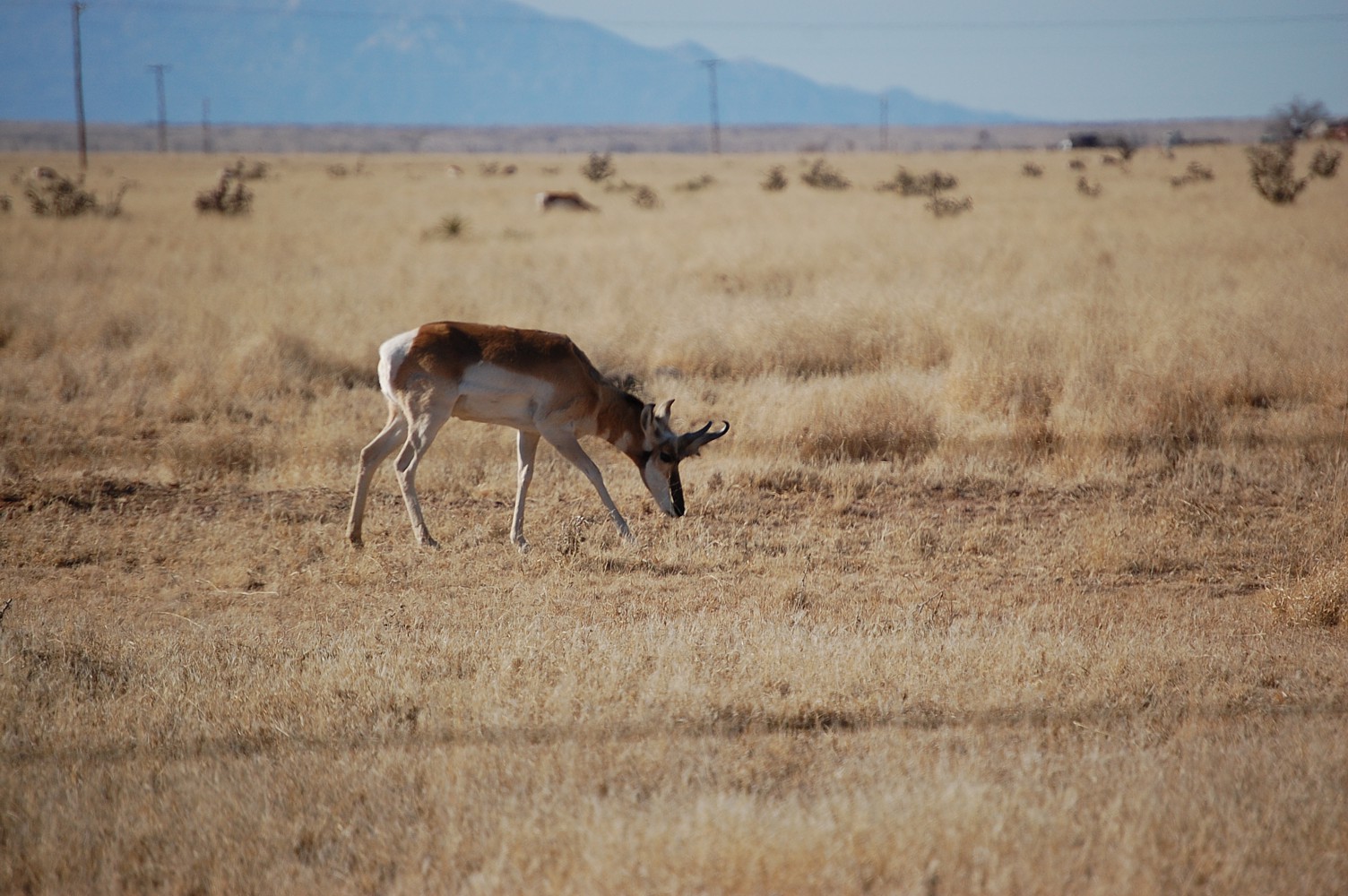
Parts of
the surrounding area is
still
sparsely settled and wildlife is common in the
area. These
Pronghorn Antelope were not the least bit
impressed by my presence on a
nice day in February, 2009.
To go to:
 |
 |
 |
 |
 |
For Comments and suggestions:

My guest book is on the main page.
Page created 11-27-04
Modified 01-02-14
Clifford Bossie
Modified 01-02-14
Clifford Bossie