F-4
Phantom II
Bits
and pieces
This page will be my attempt to illustrate a few details of the F-4 and
try and highlight some of the differences between models. It will
in no way be an in depth effort.
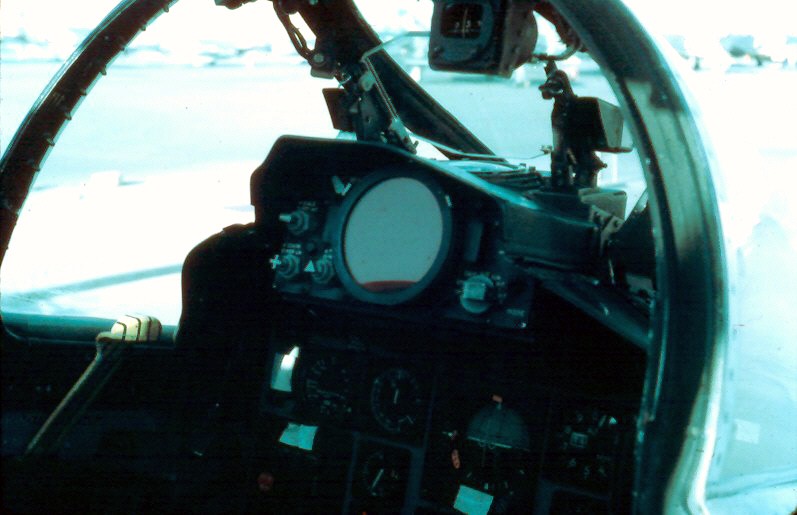
A good
place to start is with the office:
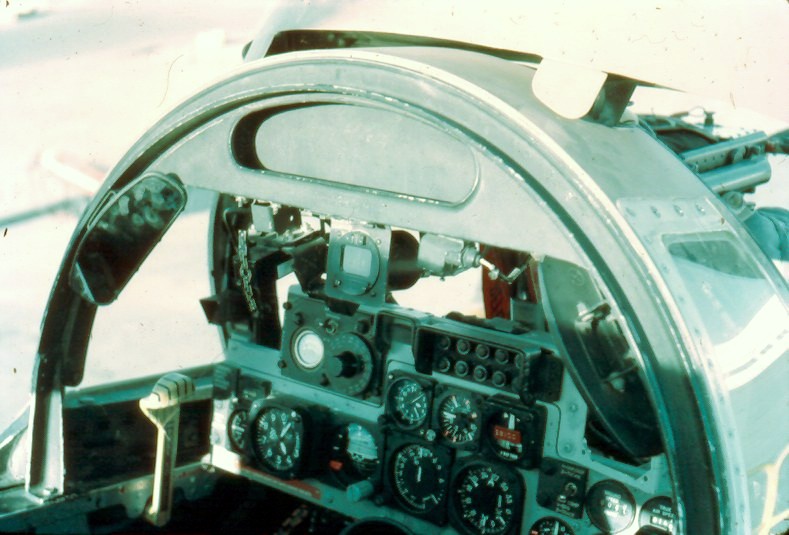
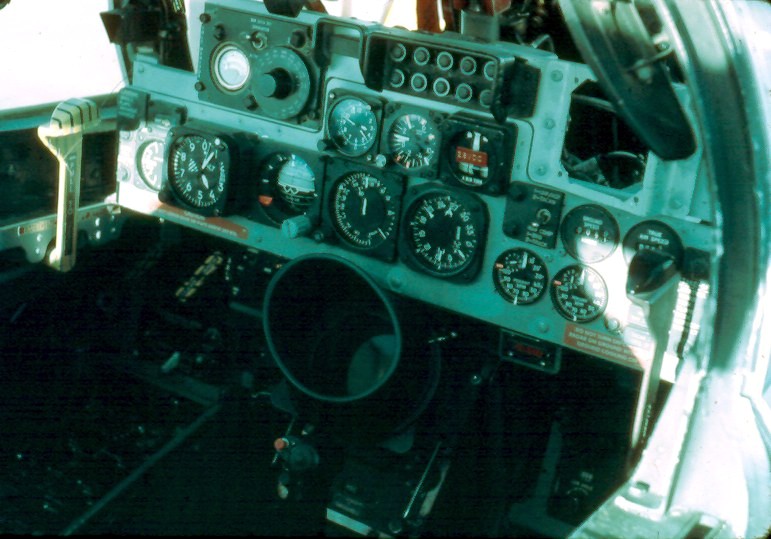
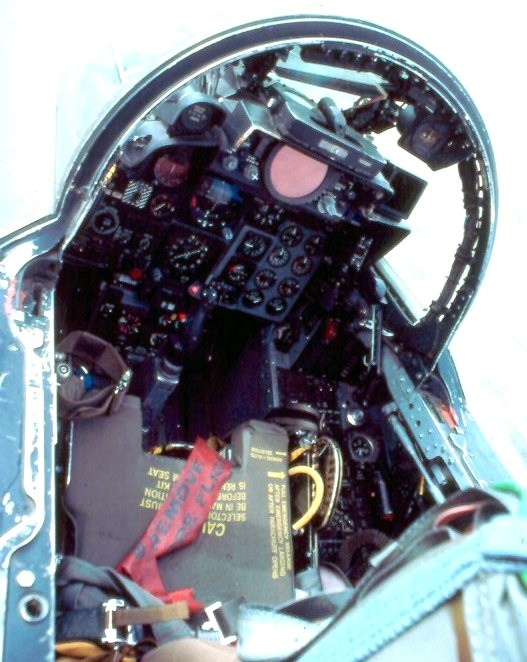
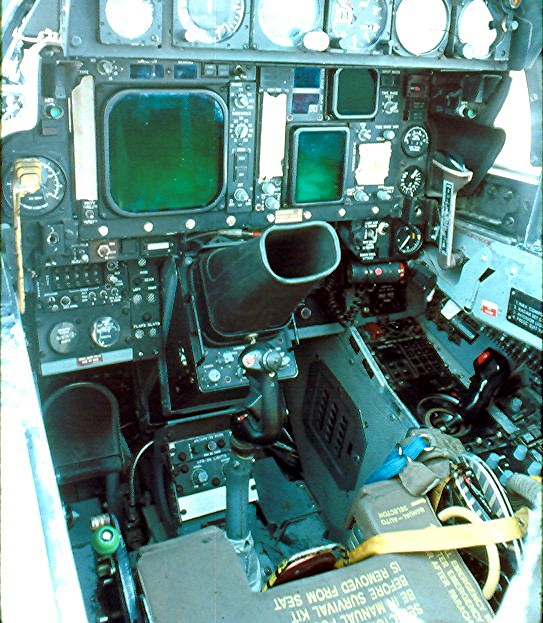
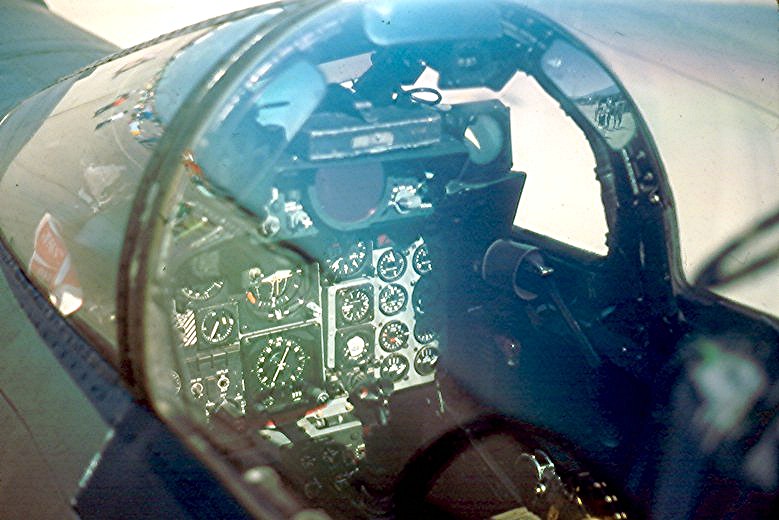
Cockpits
In the top row: An F-4D
forward instrument panel, and two shots of the rear of an F-4D.
The bottom row contain both an F-4G front and rear and an RF-4C
forward. These photos do not show a lot of detail, but the do
provide some idea of colors and panel arrangements.
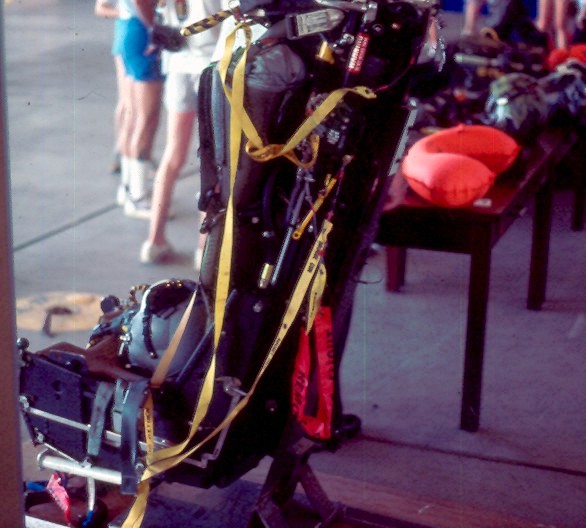
Seats
All F-4s used versions of the Martin
Baker ejection seat. (CB)
Pylons and fuel tanks
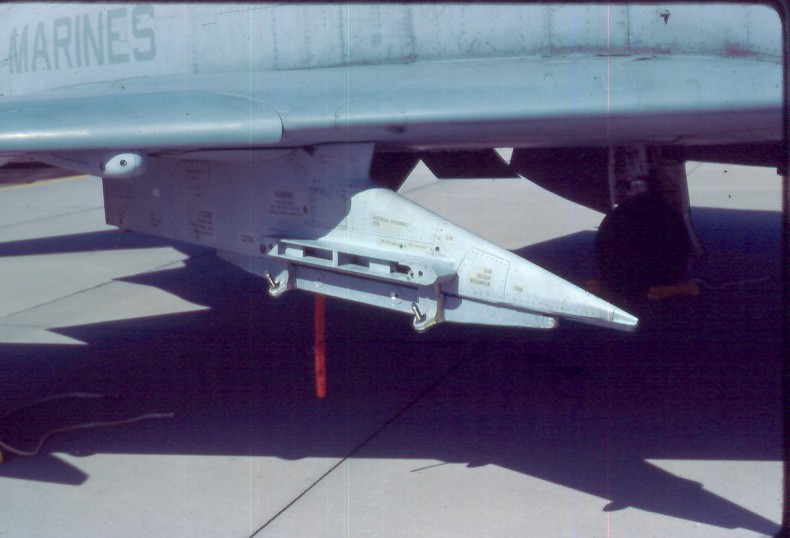
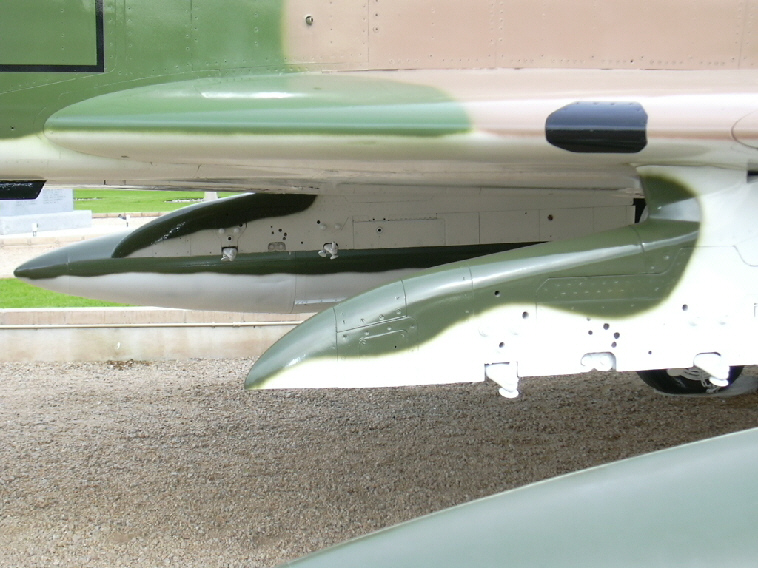
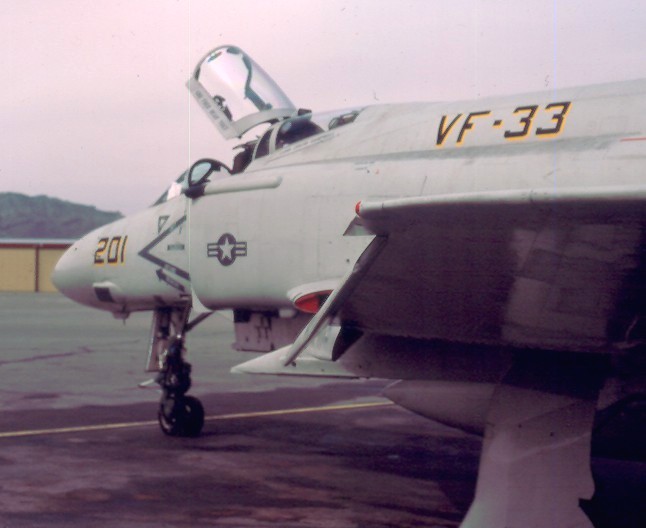
Two different types of inboard
pylons were used: A straight, pointed (triangular) pylon for Navy
F-4s (left) and a rounded one on Air Force aircraft (right). (CB)
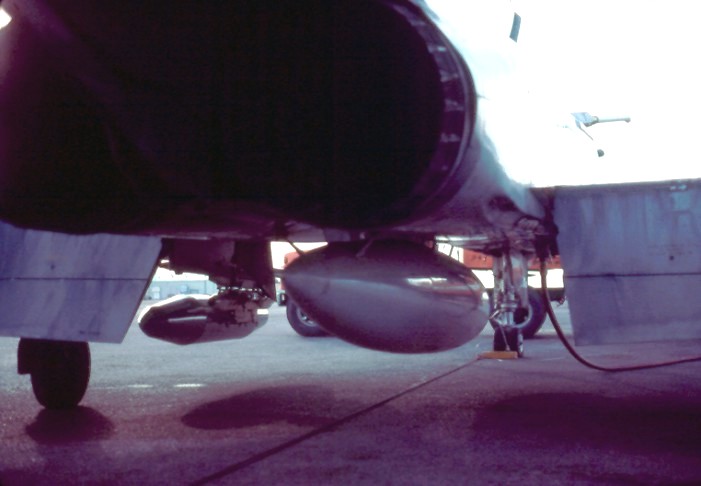
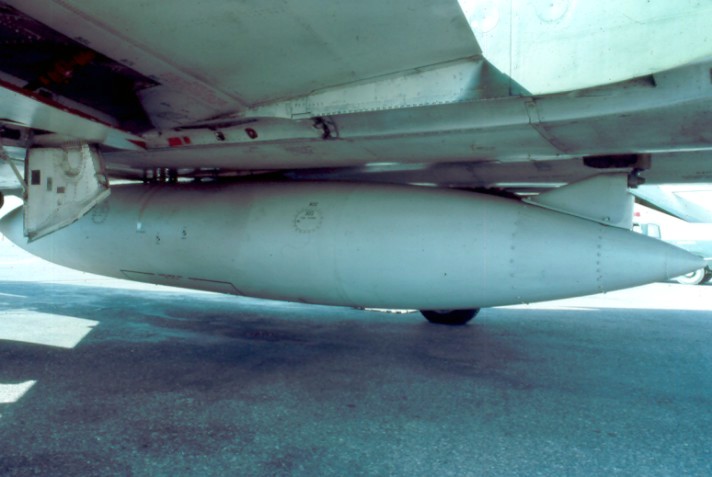
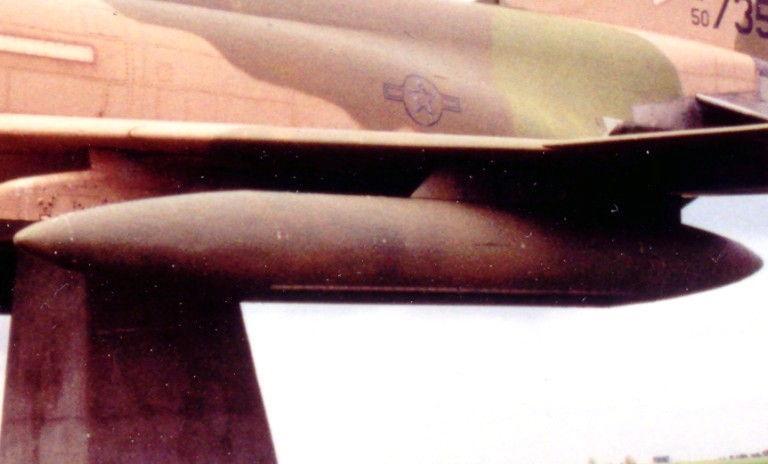
The F-4 usually carried 600 gallon
tanks on the center pylon and 370 gallon tanks on the outboard wing
pylons.
The photo on the left is of the first type of tank carried by
USN,
USMC and most USAF F-4s. The second one is of an F-15 tank later
carried on USAF aircraft. The photo on the right shows the 370
gallon
wing tanks. (CB)
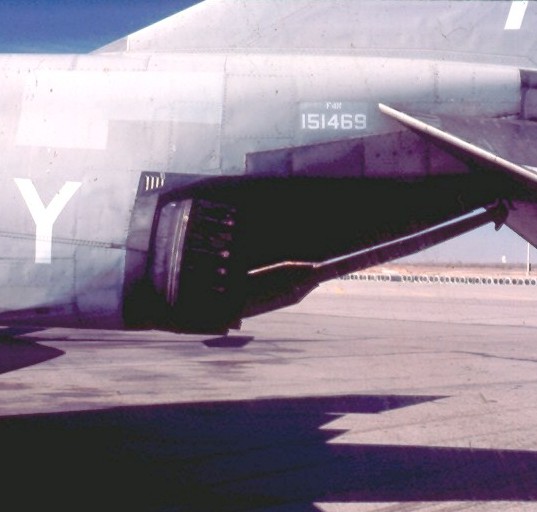
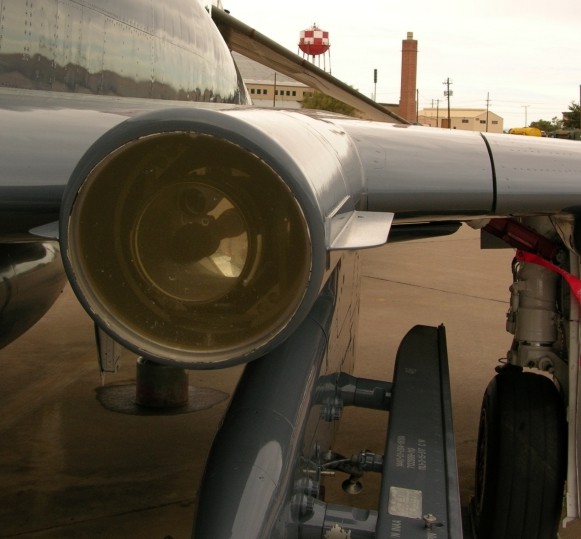
Exhaust
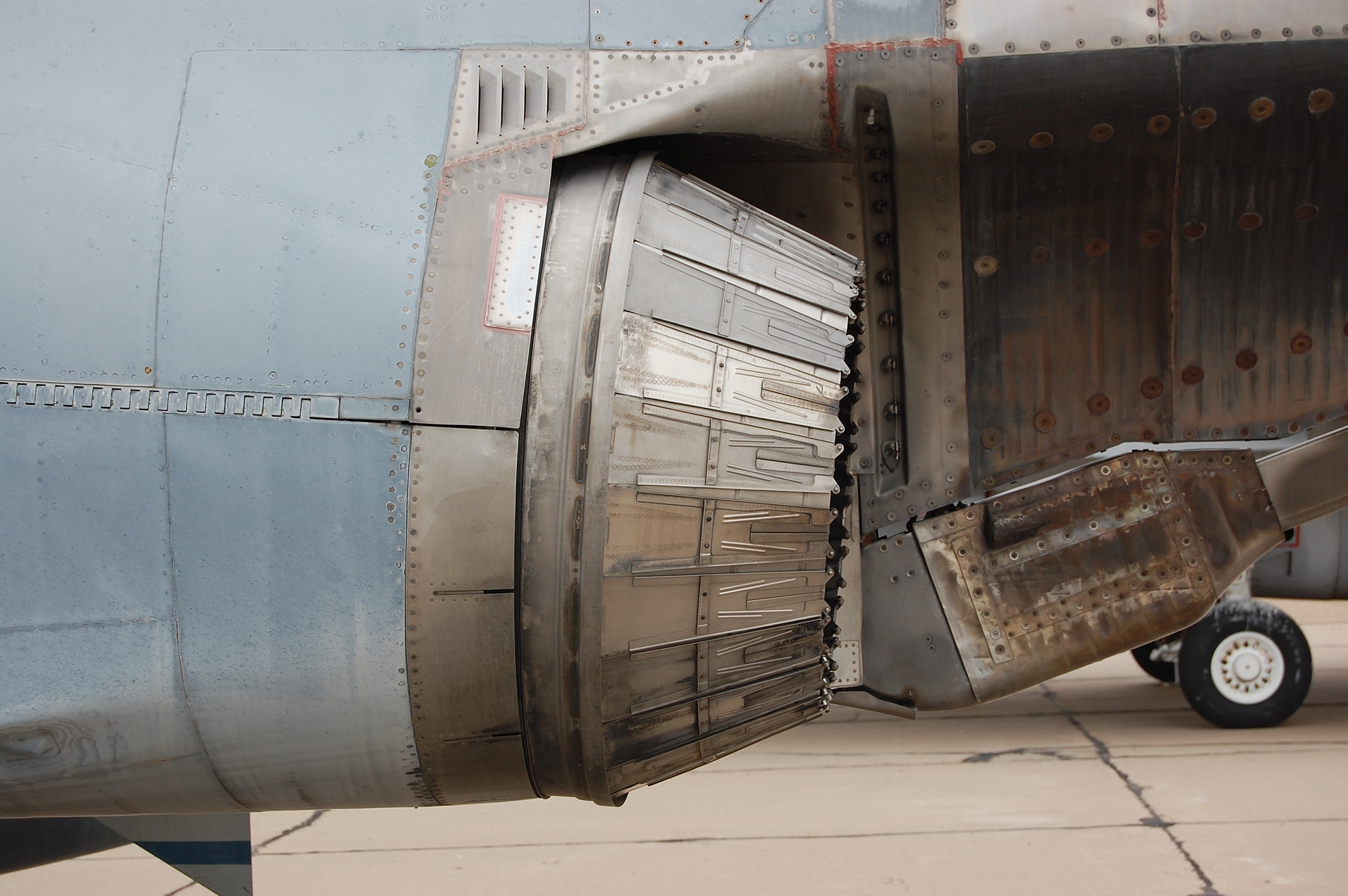
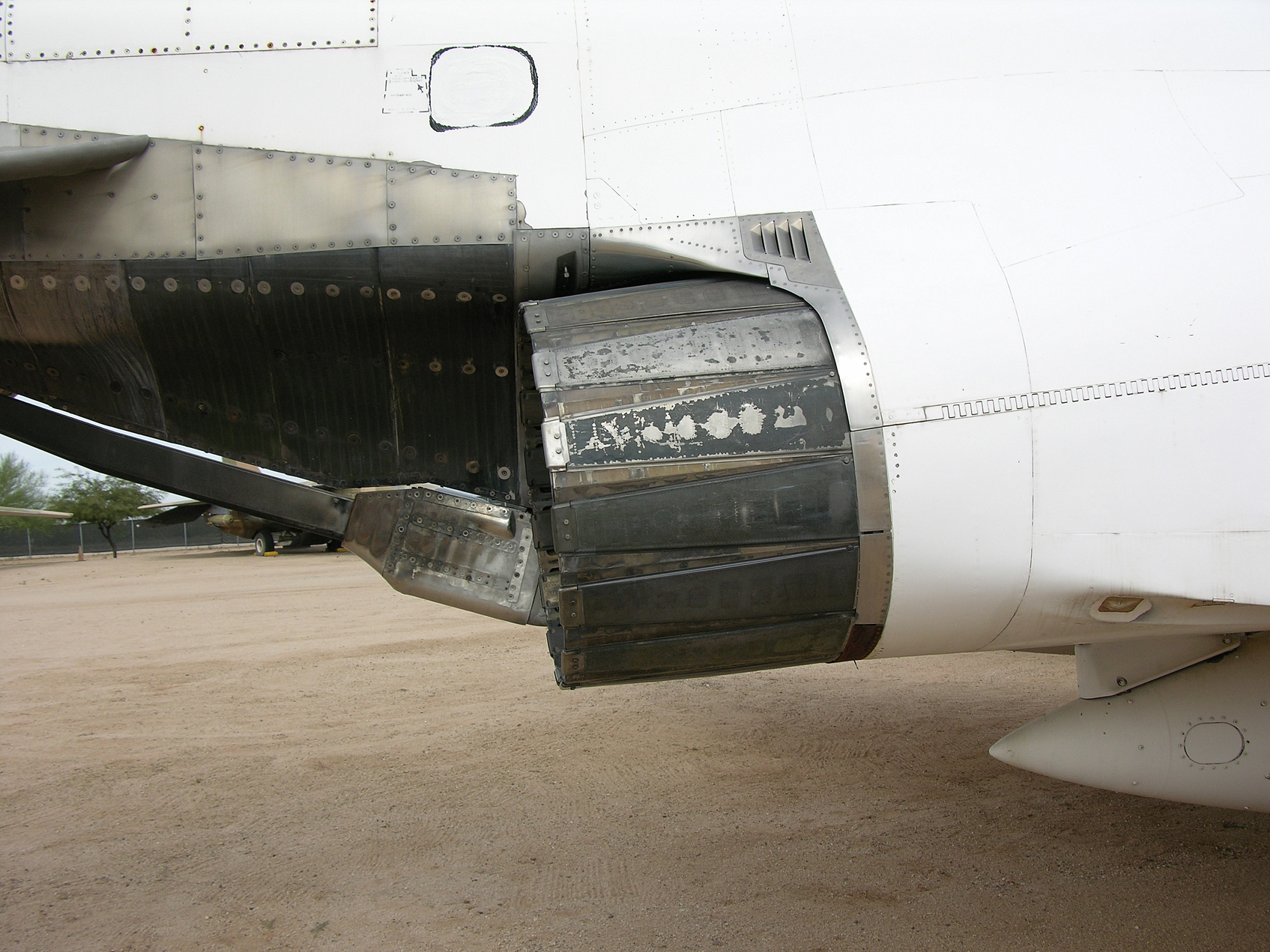
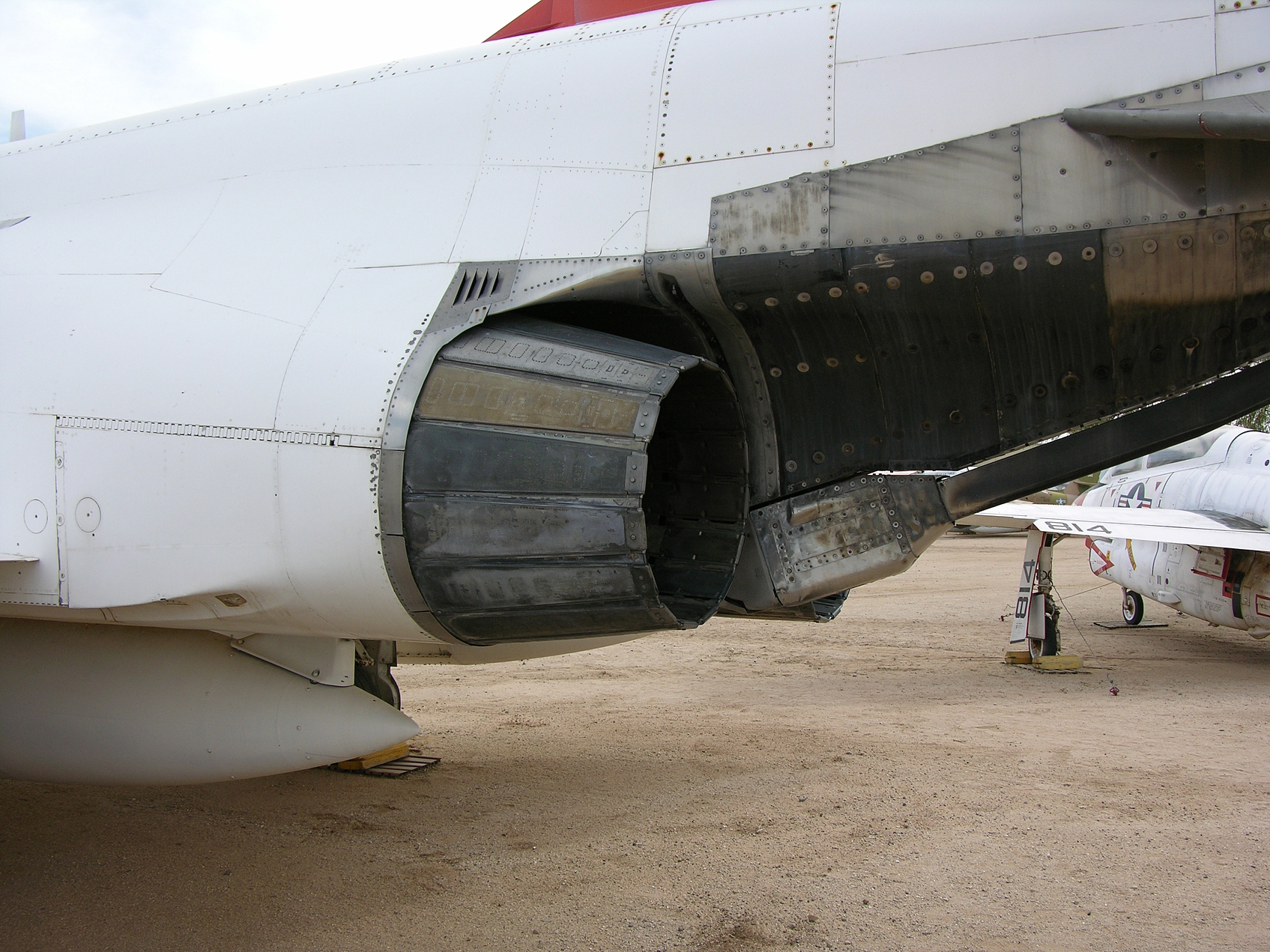
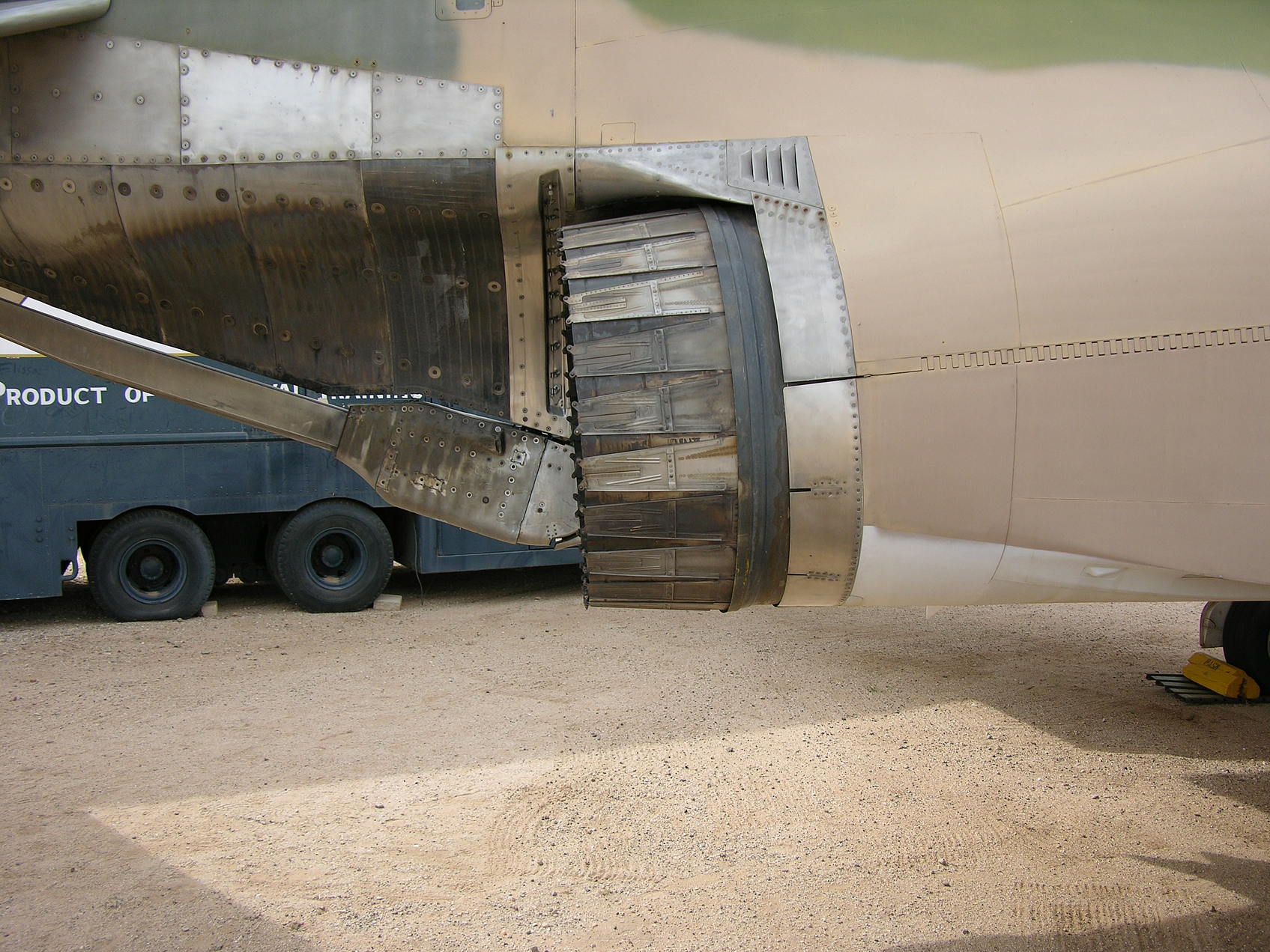
Two types of burner
cans were
used on the J79 powered F-4s. The one on the left was the shorter
version
used on the Navy's F-4A, F-4B, RF-4B, F-4N and the Air Forces' F-4C,
F-4D
and the RF-4C. (CB)
The longer version on the right was used
on F-4J, F-4S, F-4E, F-4EJ, F-4F, F-4G and RF-4E aircraft.
(CB)
The Rolls Royce Spey powered F-4K and F-4M (RN and RAF) had
a different style of burner can that looked like a large barrel.
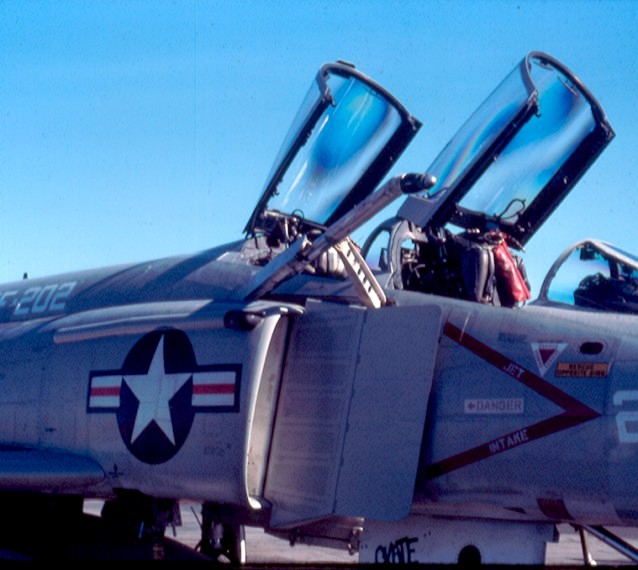
Navy refueling is via "probe and
drogue", using a probe on the receiving aircraft to engage a drogue (or
basket) reeled out from the tanker. The Navy F-4 accomplished
this using a retractable refueling probe on the starboard side of
the aircraft (left).
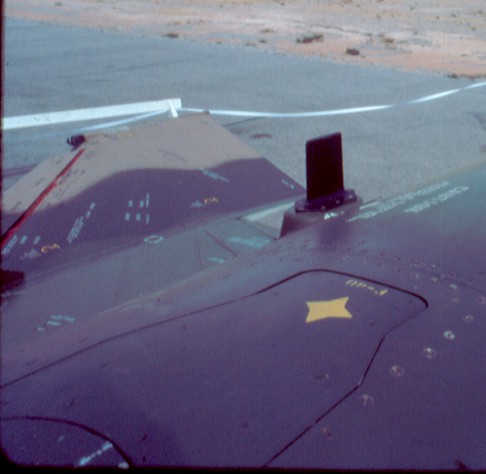
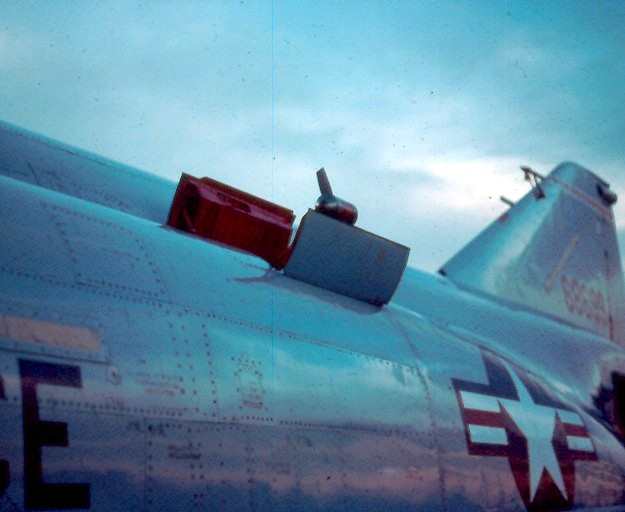
The Air Force uses a "flying boom" that is guided by a boom
operator aboard the tanker. The boom is actually flown close to
the
aircraft and a retractable probe is inserted into a receptacle on the
spine
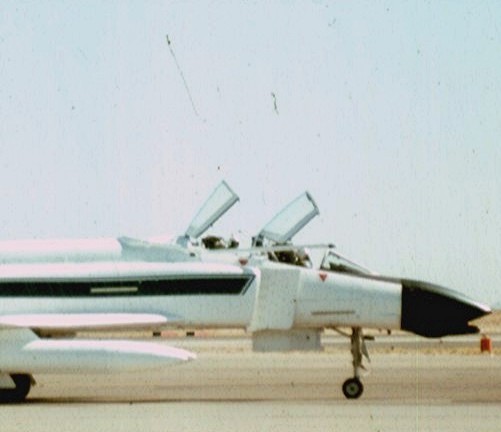
of the F-4 (center). A third type of refueling is accomplished
with
an add on unit that consists of a fixed probe attached to the right
side
of the F-4, with plumbing running up the right side of the aircraft and
into
the Air Force receptacle (right). The aircraft in the photo was
operated
by Flight Systems inc., and was modified to be able to operate and
refuel
with Navy needs. This system is also used by the Israeli Air
Force.
(CB)
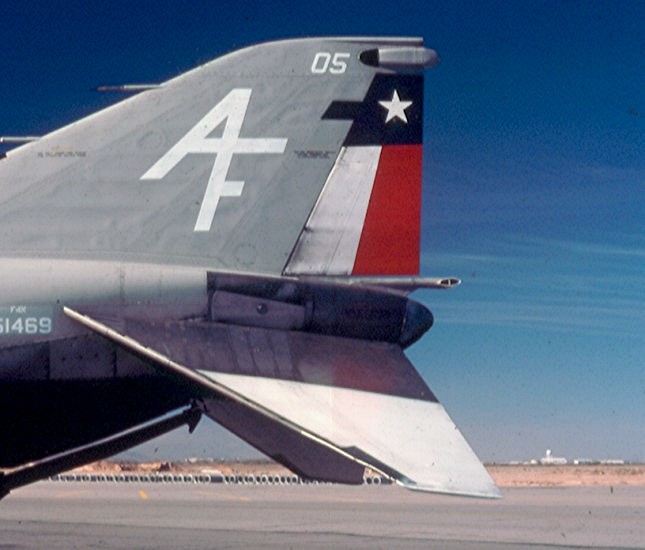
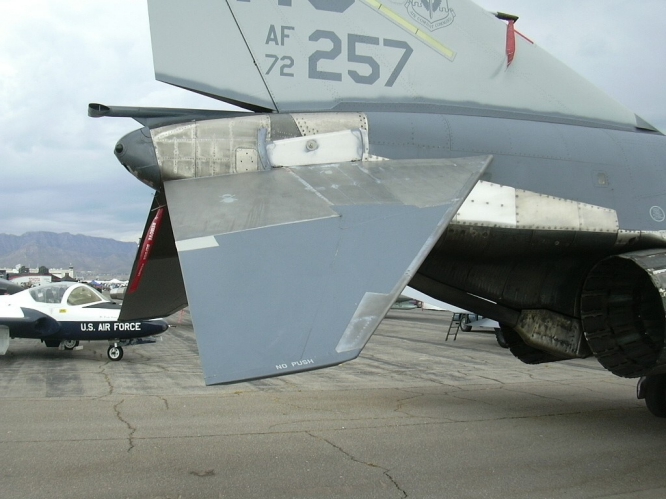
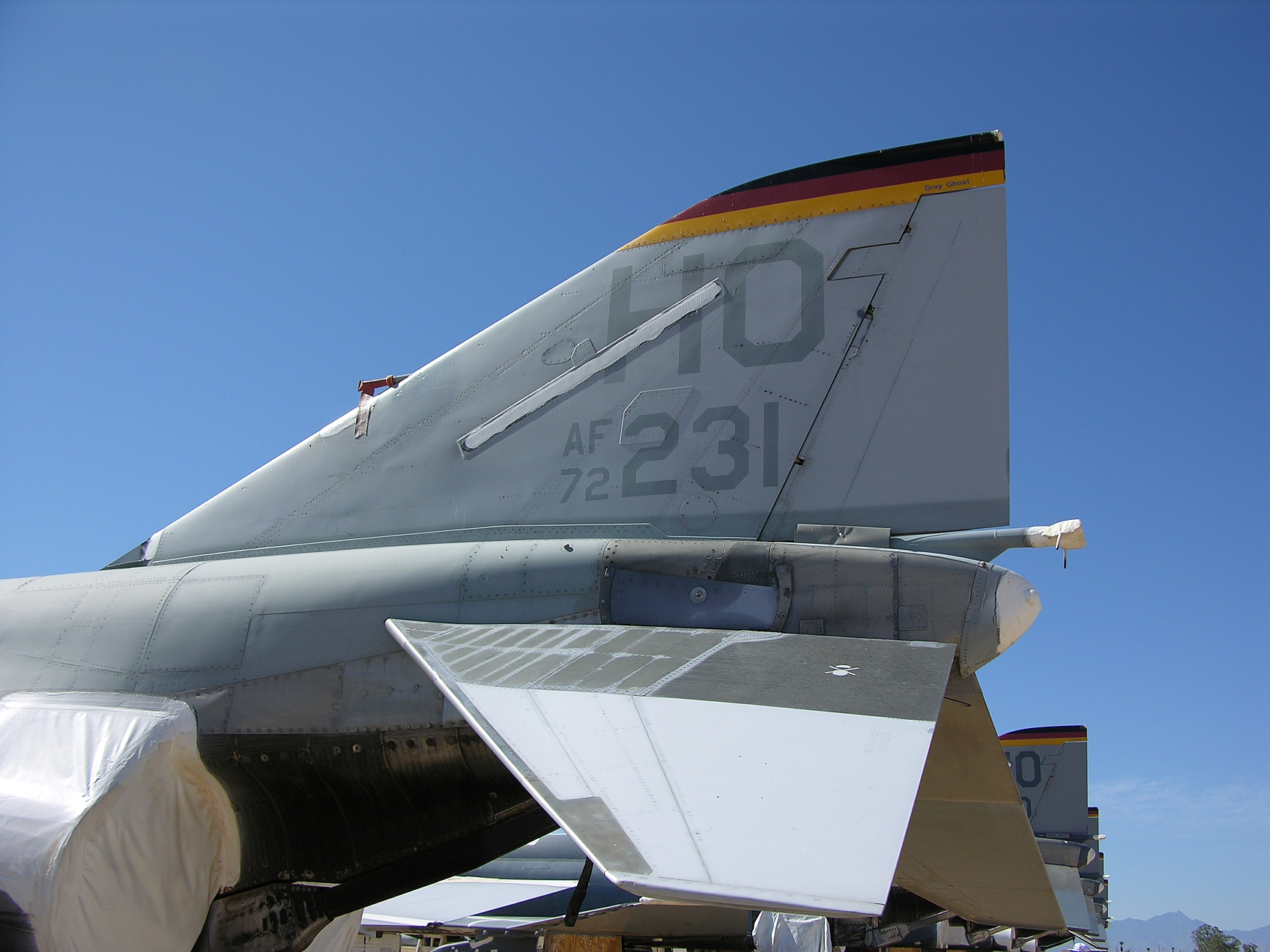
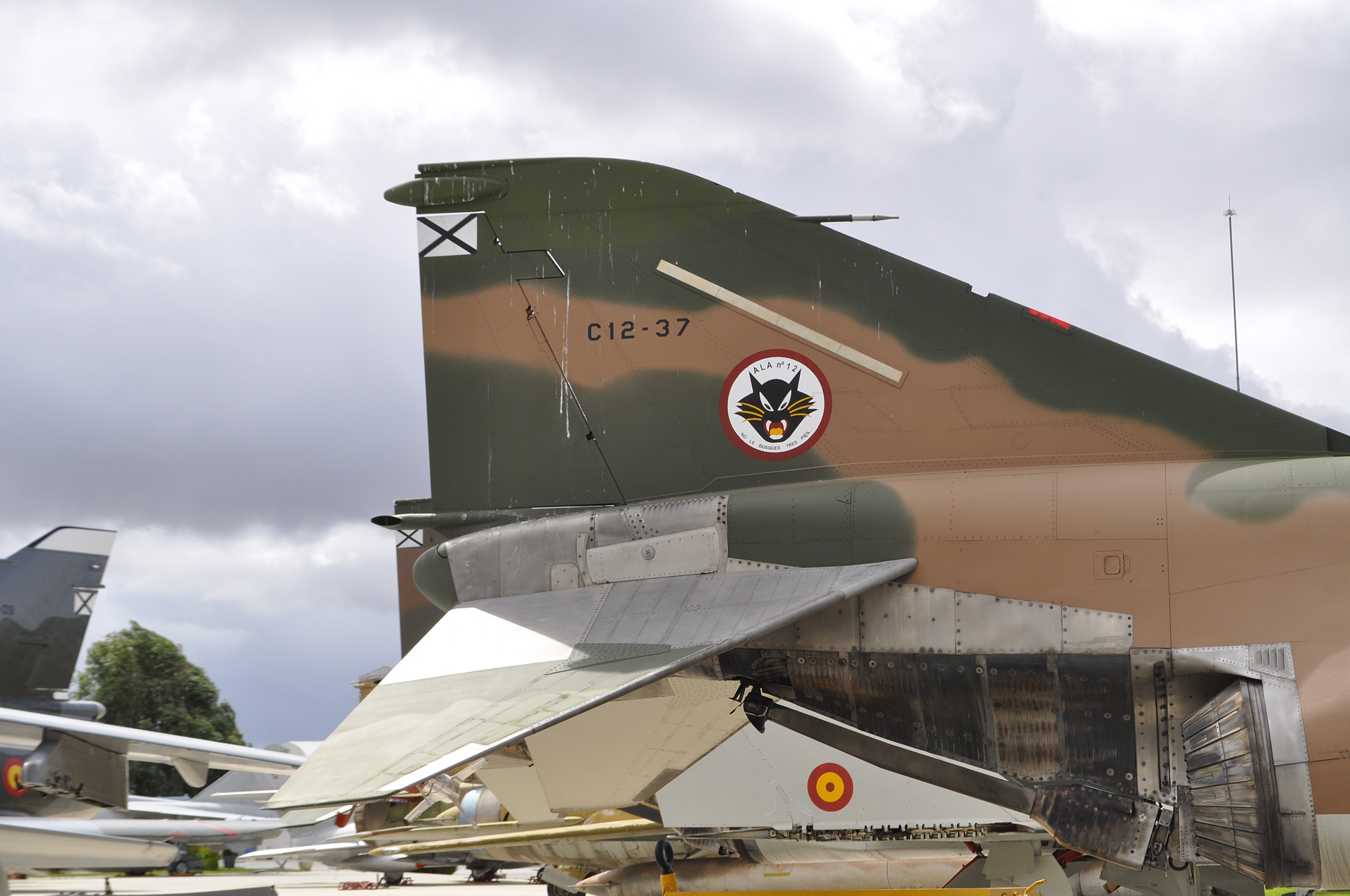
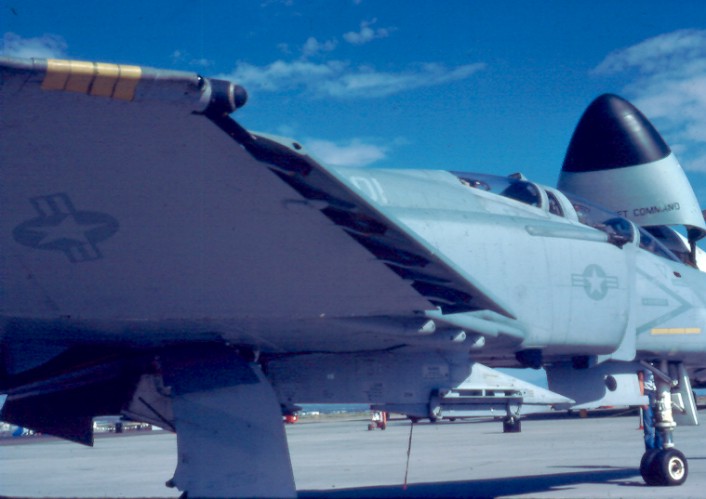
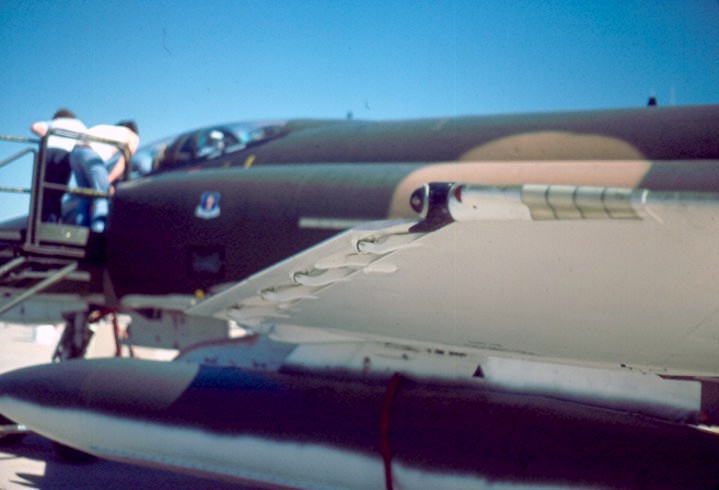
Stabilizers
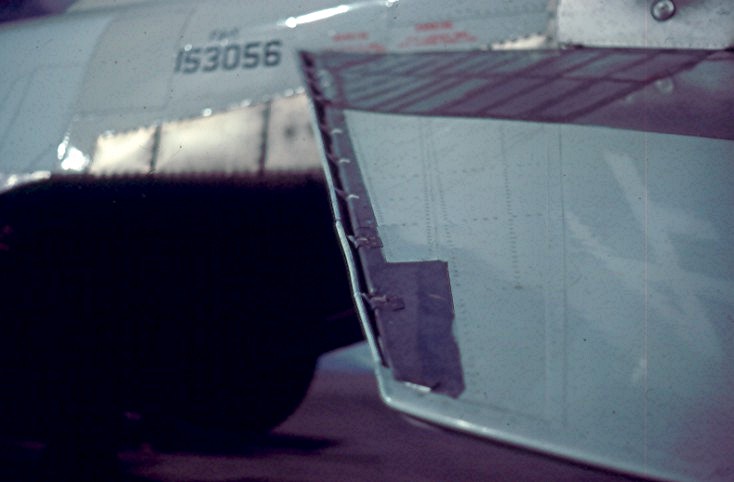
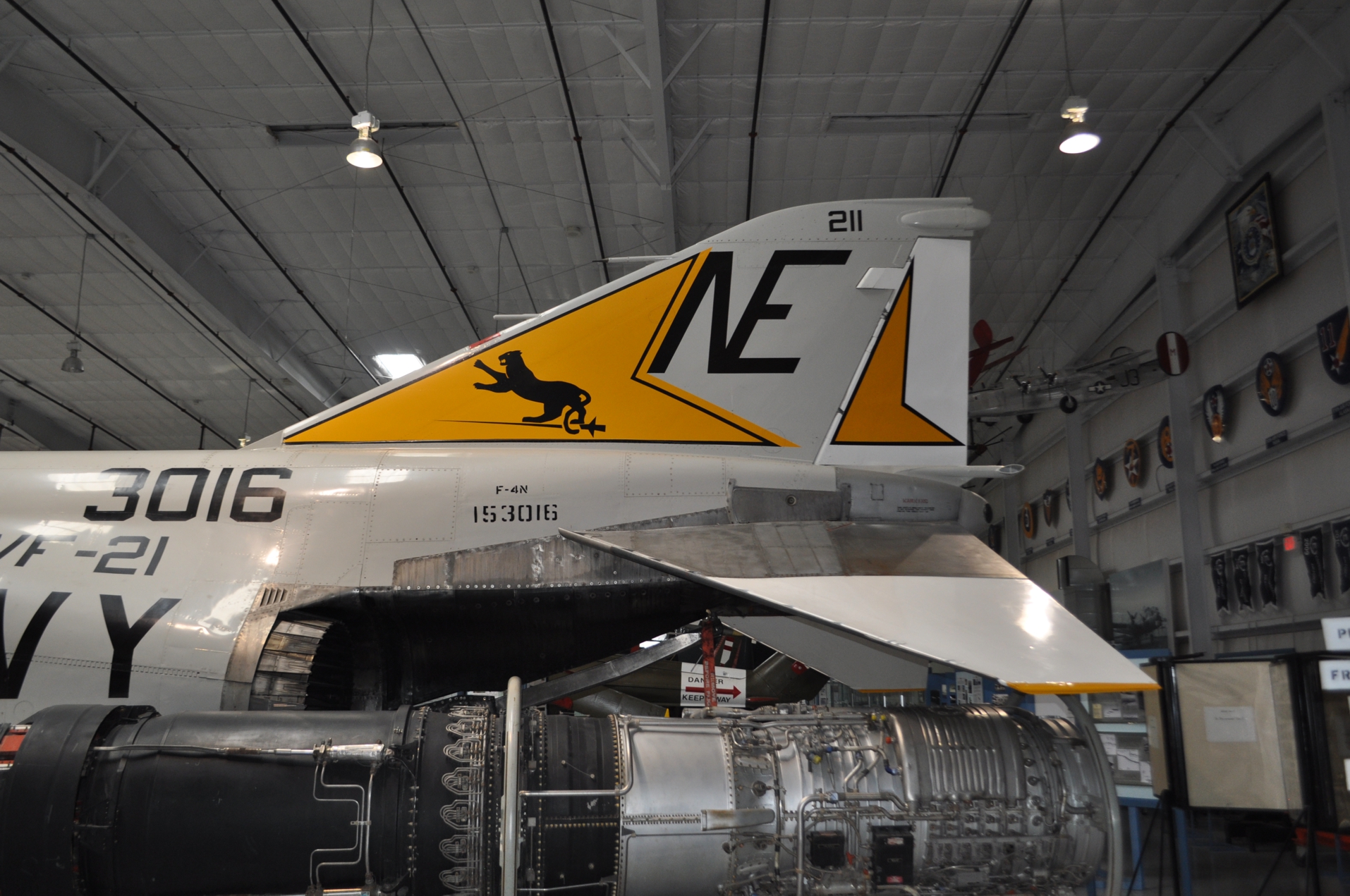
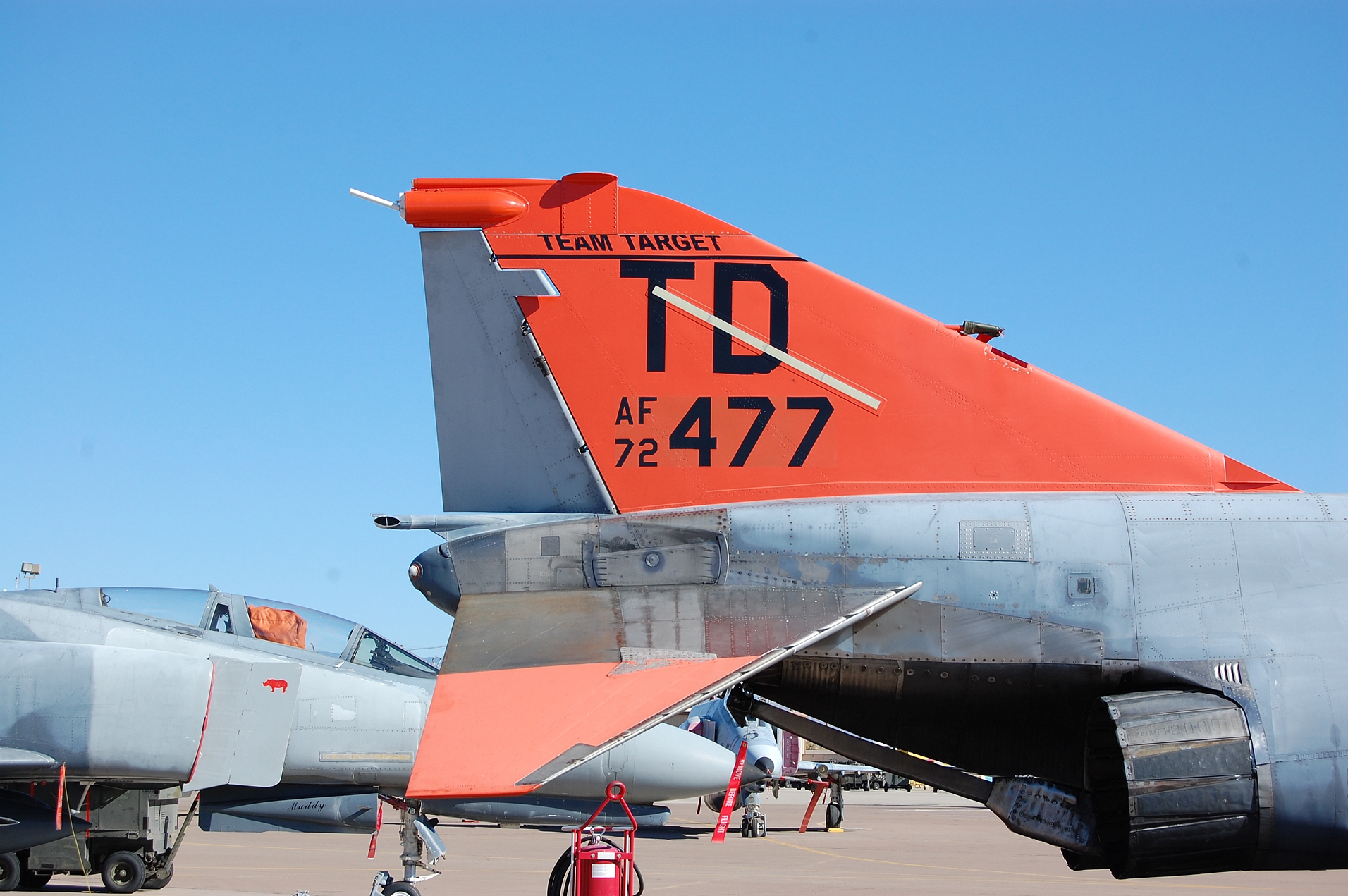
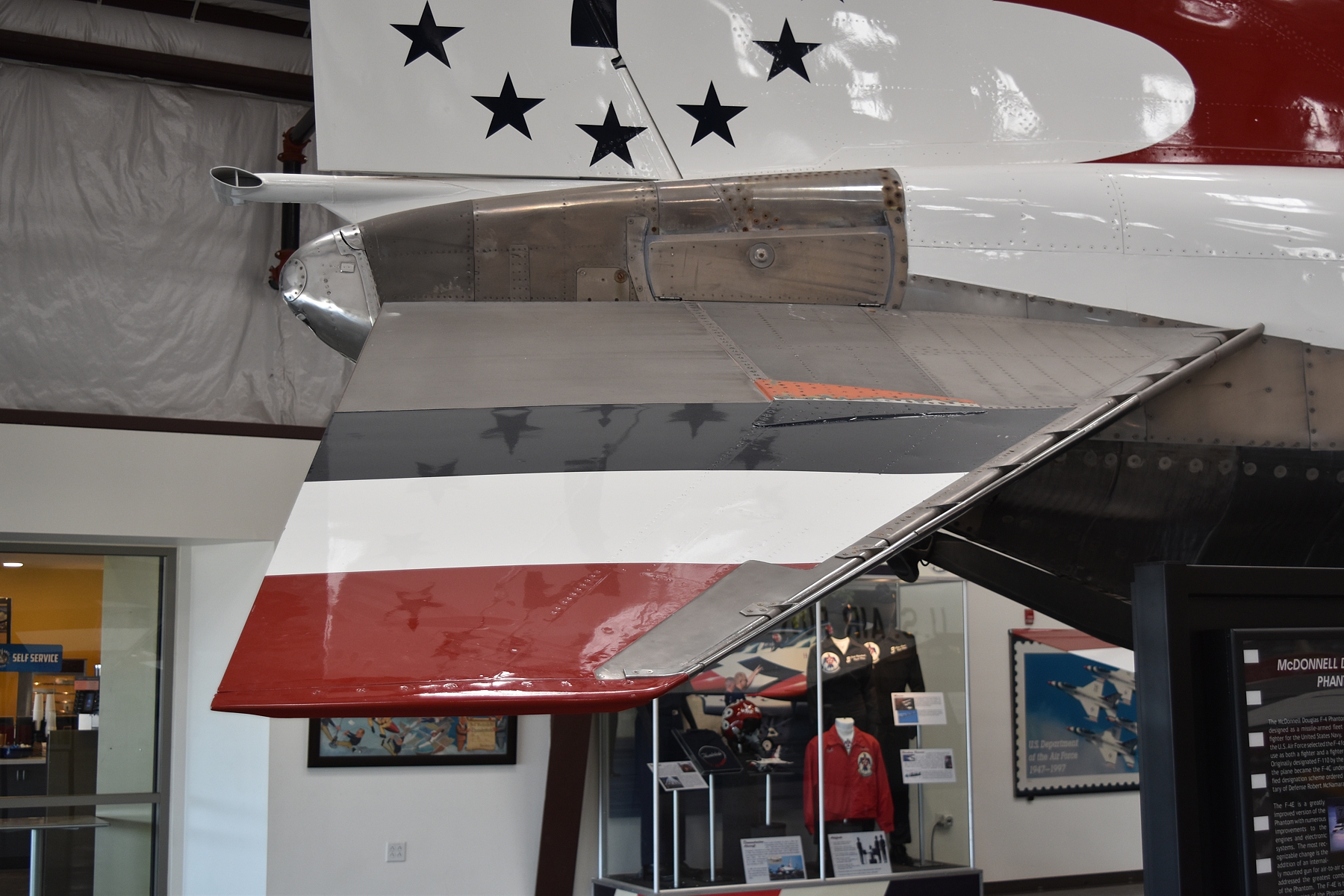
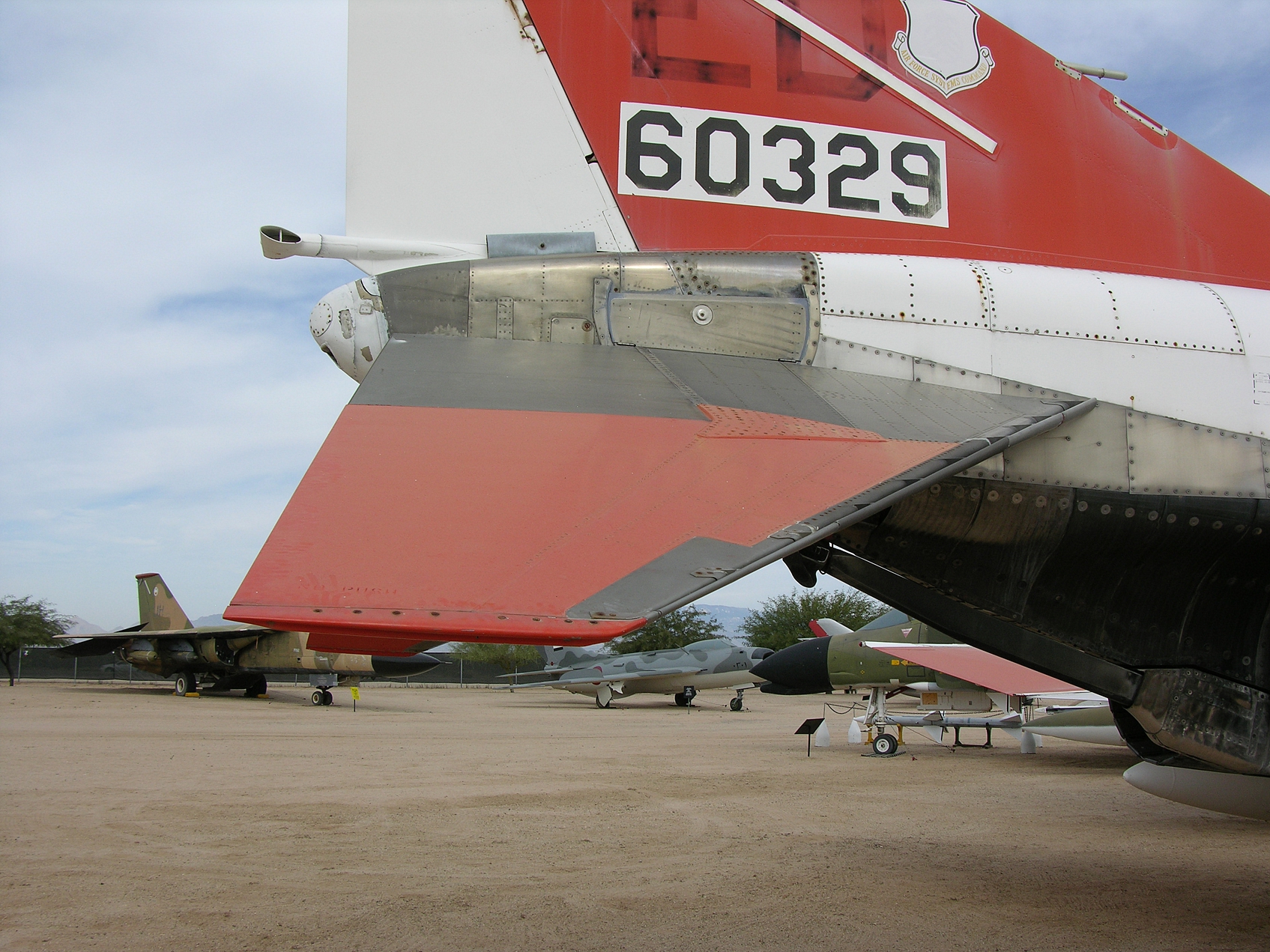
"Slotted" stabilizers
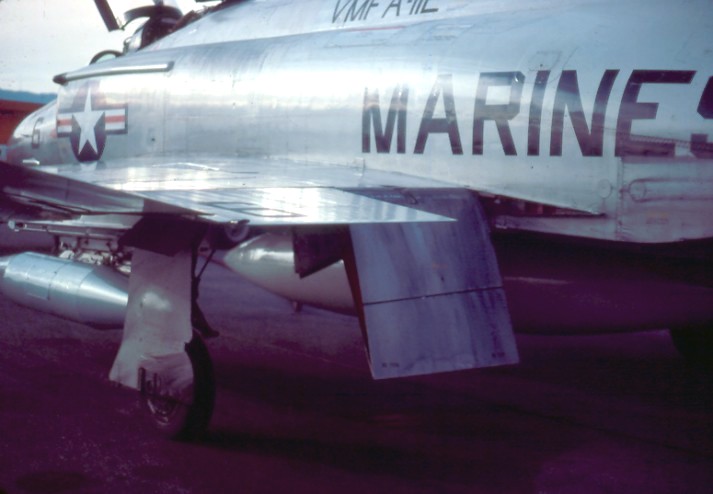
were fitted to most U.S. F-4s. The photo to the left shows the
slot fairly well. The aircraft is
an F-4N, the dents and dings on the leading edge are from the catapult
bridle rebounding from the flight deck and striking the aircraft during
launch. The was quite common on USN F-4s. The next photo
is also of the stabilizer on an F-4N. The next to last is
an F-4E and the final one is of a German AF F-4F. Note the "fish
plate" between the bare metal portion and
the painted portion. This was unique to USAF F-4s and GAF
F-4F. (CB)
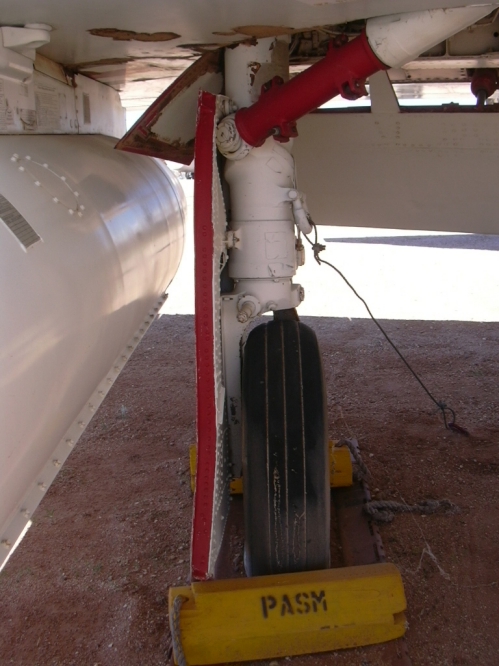
Wheels and
landing gear
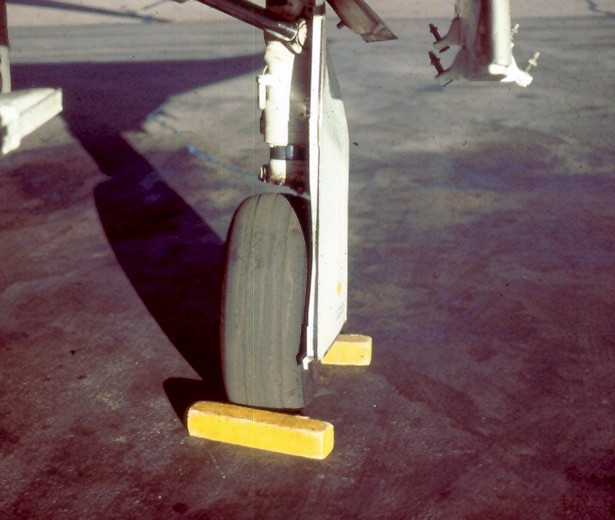
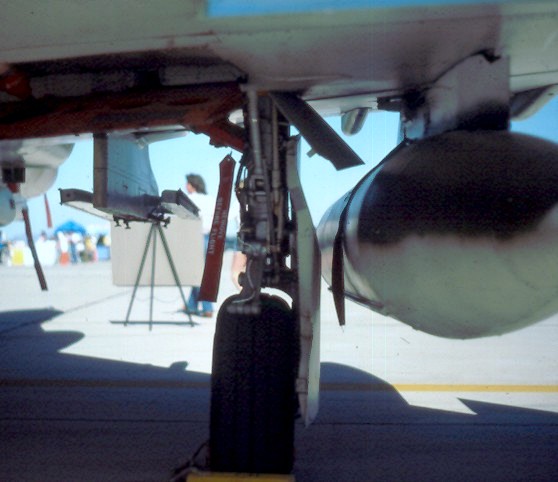
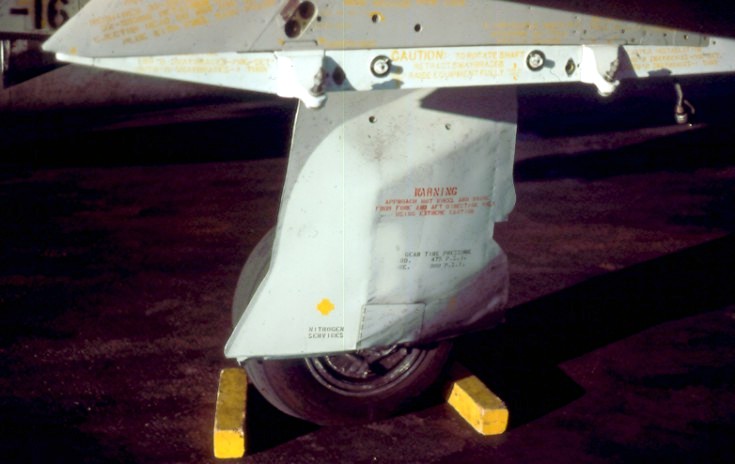
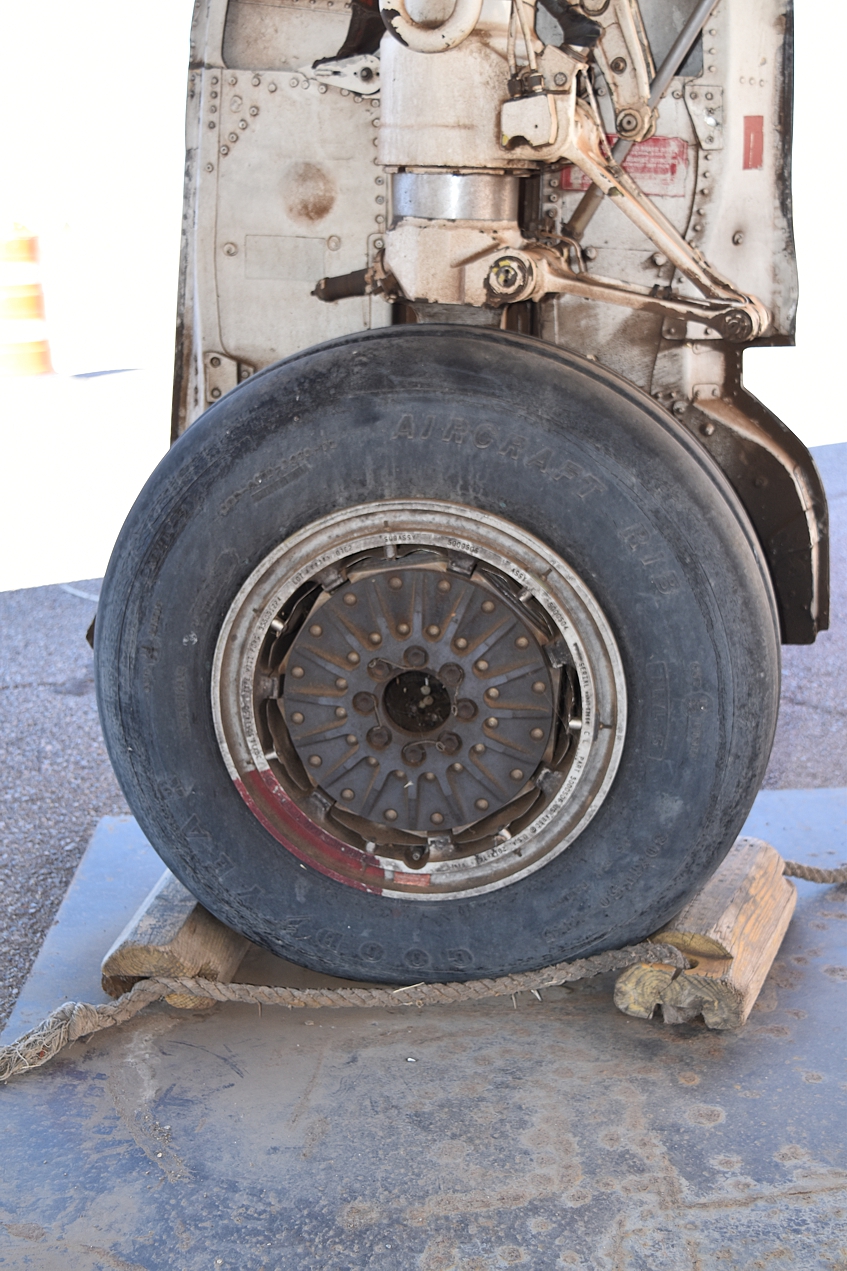
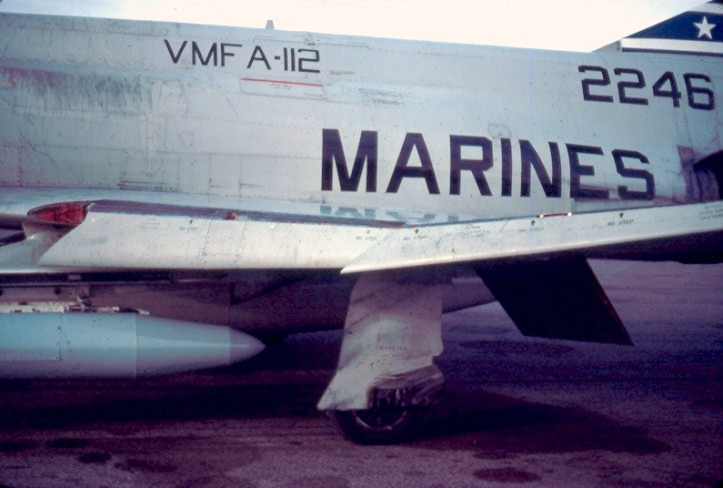
The early Navy F-4s
utilized a narrower main tire than later models. The F4H-1
(F-4A), F-4B and RF-4Bs up
to Bureau number 153115 used this type of wheel. The F-4s
with the narrower wheel had flat main gear doors and a smooth upper
wing.
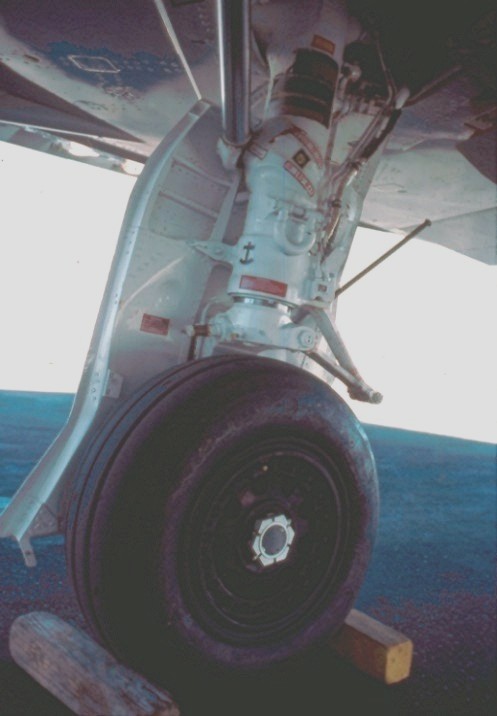
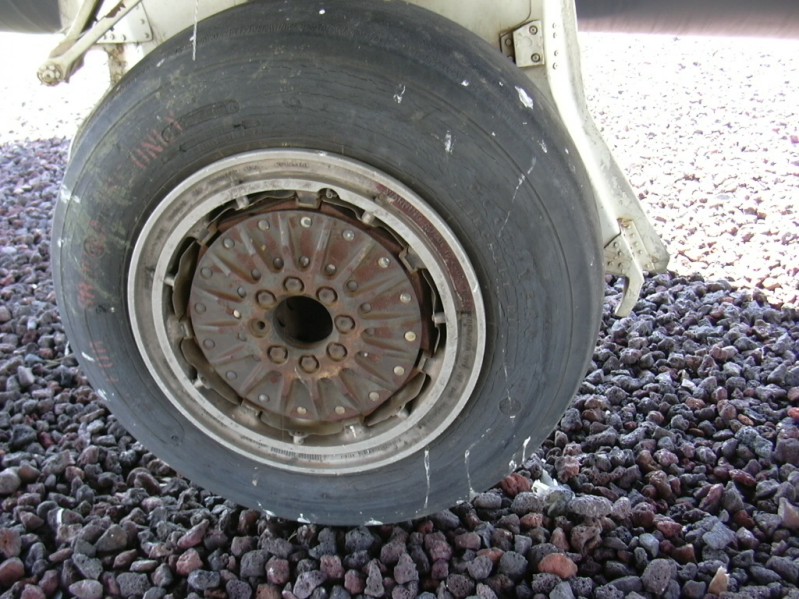
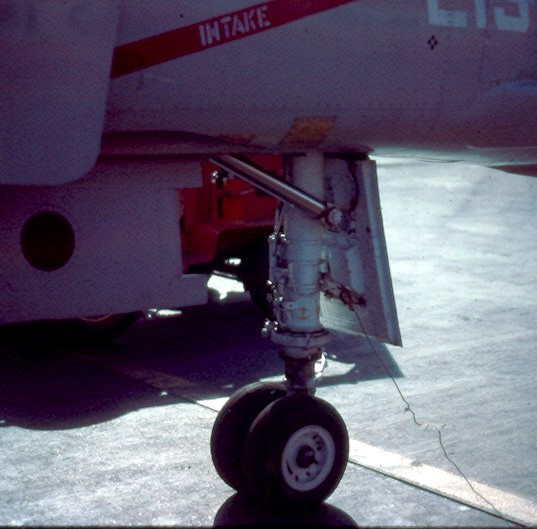
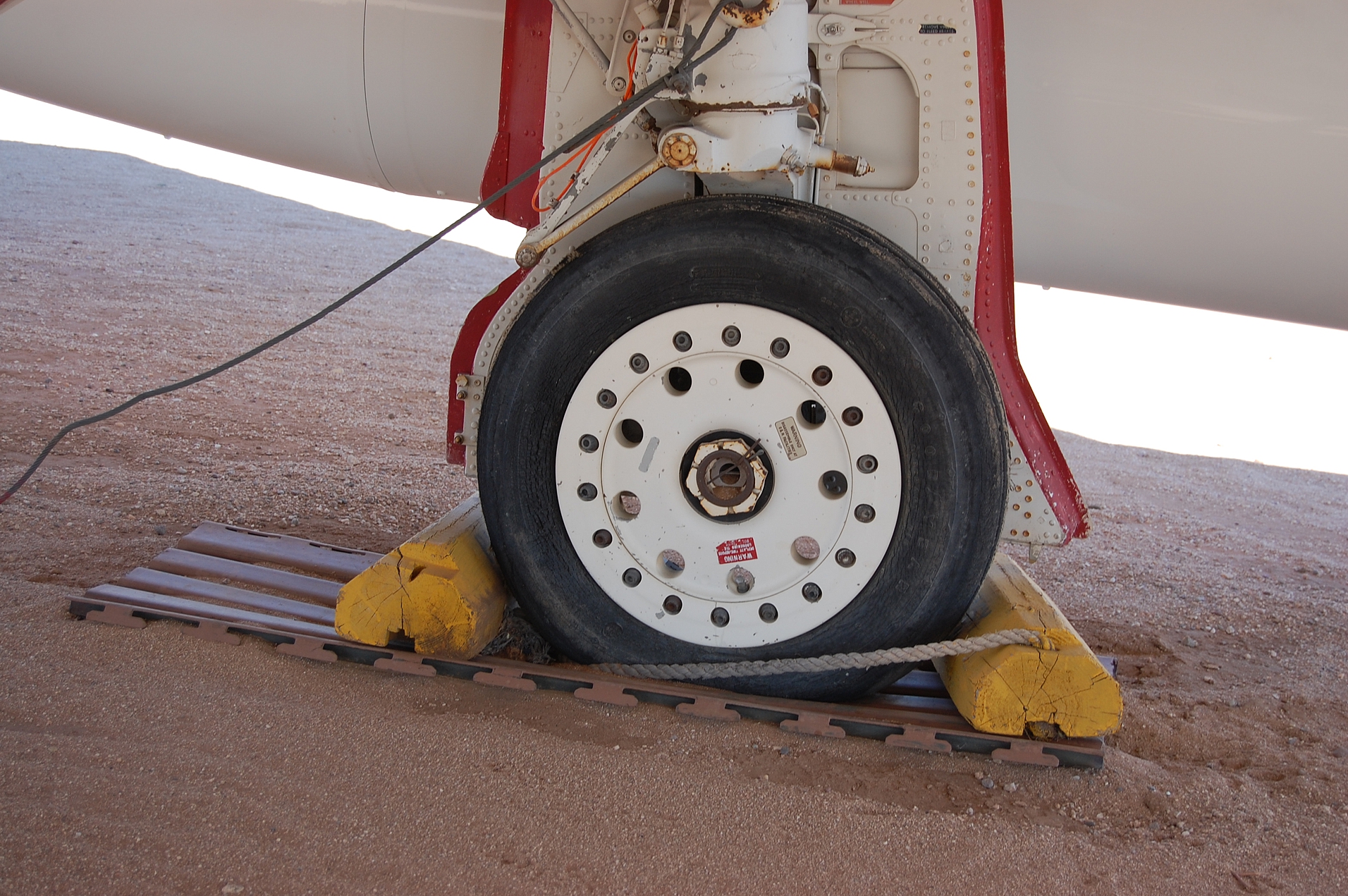
The next two shots are of the wider style of tire used on
the F-4J, RF-4Bs above Bu. No. 157342, all USAF F-4s and RF-4s and all
export models. The photo of the inside of an F-4 wheel is the
right
main tire of an F-4S. Navy F-4 wheels have a single nut in the
center
of the wheel, where as Air Force wheels have eight bolts attaching the
wheel
to the landing gear. The rod sticking up and back from the strut
in the photo of the Navy wheel is a "shrink link" that compresses the
main
gear as it retracts allowing it to fit into the gear well. The
outside
main wheel door shows the bulged door that allowed the fatter wheel to
retract
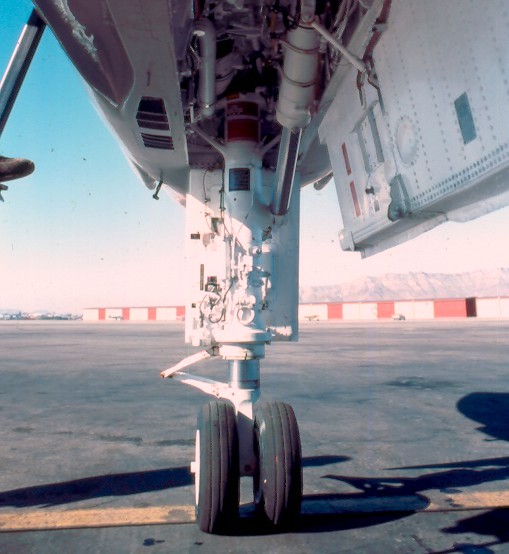
into the wing. The top of the wing was also bulged. Nose
gear
of an F-4N from the right side. All U.S. F-4 nose wheels were
similar.
The final Shot is of a nose gear from behind. Note that the
scissors link is offset to the left to clear the nose door. (CB)
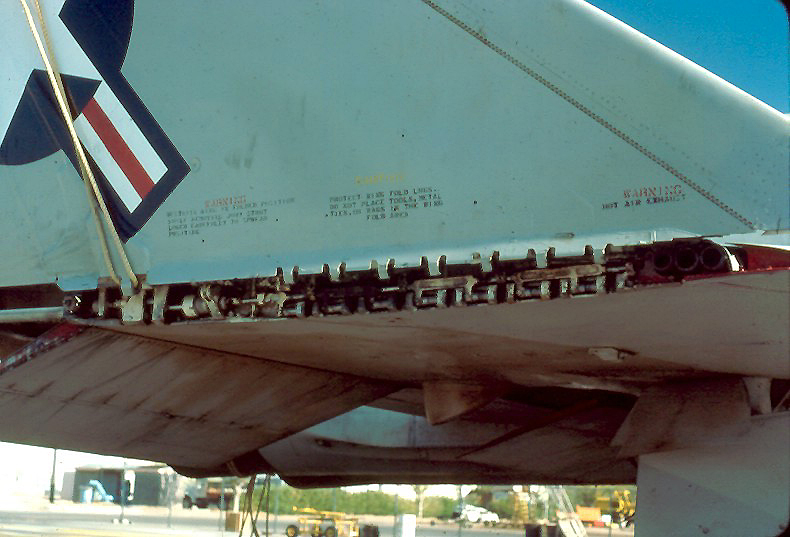
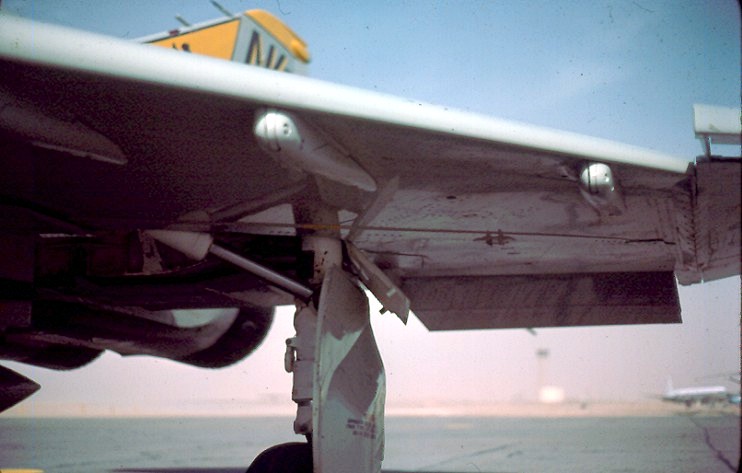
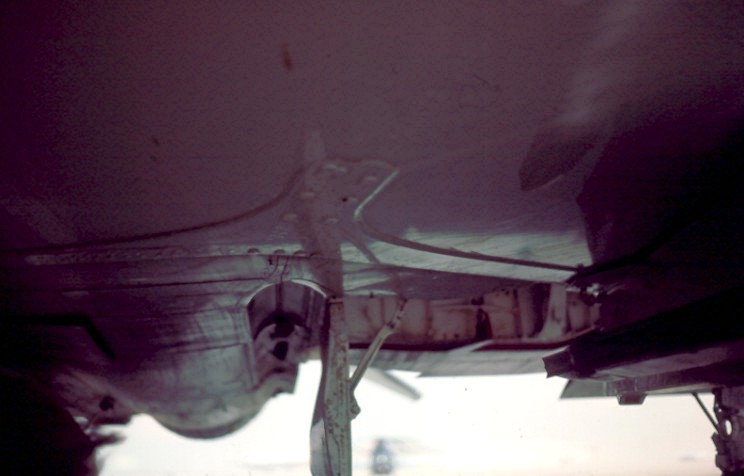
Slats and flaps
Most F-4s were
initially
produced with leading edge flaps and Boundary Layer Control (BLC).
The
F-4N on the left and The F-4J in the center show the leading edge flaps
in
the deployed position. The photo of the wing fold area on the
right
shows the duct work for the BLC in the leading edge of the wing.
Leading Edge Slats
(LES)
were retrofitted to F-4Js upgraded to F-4S standards. (Some of
the
first F-4S conversions had the updated avionics, but not the slats,
those
being added at a later time). Early F-4Es received slats as a
conversion
also, with later airframes produced with slats. The F-4Ss and
early
Es had external straps under the wing to "beef-up" the structure.
F-4Es
produced with slats had thicker skin to strengthen the wings.
From left to right: F-4S slatted wing, F-4E slats, and the
external under wing strap fitted to F-4S aircraft. (CB)
|
F-4
flaps were common among Phantoms, in this case an F-4N.
(CB)
Miscellaneous
|
|
The USN F-4s were
attached to an aircraft carrier's catapault by a bridle running from a
hook under each wing to the cat shuttle. When the aircraft became
airborne the bridle disengged the hooks. Upon occassion the
bridle would rebound into the air and strike parts of the aircraft.
It was not too unusual to see chips taken out of the trailing
edge of the flaps and dents on the leading edges of the stabilizors.
In fact most stabs on USN F-4s had dings in the leading edge.
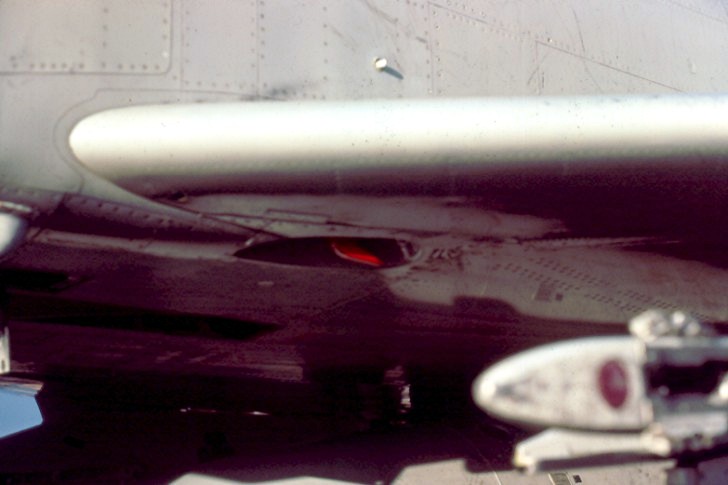
The photo on the left shows the cat hooks
(red) on the underside. (CB)
When most aircraft lose an engine (or two) they also lose hydraulics
and electrics. On jet aircraft with out an APU there is usually
some form of Ram Air Turbine (RAT) that is deployed to provide back-up
for both.
On the right is a RAT on an F-4D. (CB)
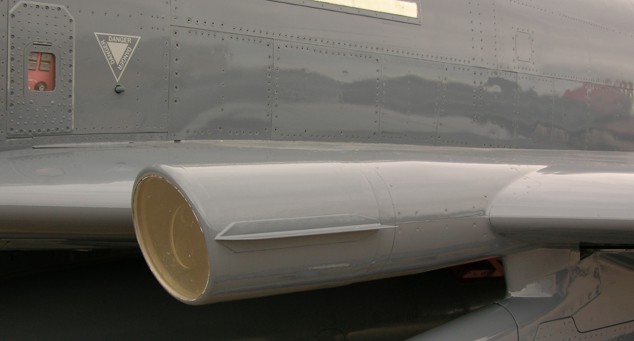
Late model F-4Es had the TISEO (Target
Identification System Electro-Optical ) system added to the left wing. This was a
steerable, stabilized, telescopic camera used to indentify targets
before engaging.
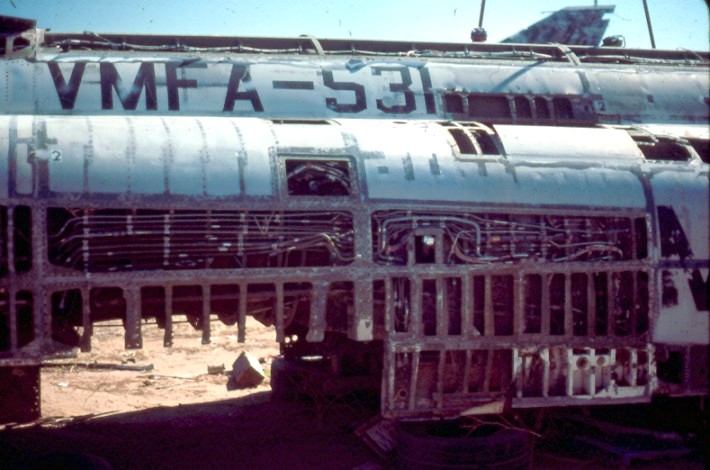
The end of the line... Most USN
Phantoms ended their days at MASDC/AMARC* donating piece to keep other
F-4s in the air. In this case an F-4B, Bu. No. 149446 has just
about reached the endo of its existance at MASDC in 1979. Ever
wondered what the inside of an airplane looked like? A former
VMFA-531 F-4N at AMARC in the late 1980s. (CB)
* The "bone yard" at Davis-Monthan AFB was identified as MASDC
until the 1980s. The acronym meant Military Aircraft Storage and
Disposal Center. The name was changed to AMARC (Aerospace
Maintenance And Regeneration Center), a new name for the same functions.
To
return to:
Please
send me your comments and suggestions;
Clifford Bossie
Page
created 05-31-03
Modified 03-29-05