Deming Army Air
Field
New
Mexico
1942 - September,
1946
Deming, New
Mexico is located about one hundred miles West from El Paso on
I-10.
Until the interstate highway system became a reality in th early 1960s
Deming was just a wide spot in the road. Even with the railroad
running through town it must have seemed pretty remote in 1943.
The Bombardier School at the Deming Army Air Field was established in
1942 and closed up in September, 1946. The first class of
bombardiers graduated on March 6, 1943. In the next three years
an estimated 12,000 cadets passed through the Deming school. With
the end of World War II, the bombardier training program at Deming
wound down, finally coming to an end in September, 1946. Deming
Army Air Field closed and the facility became the Deming Municipal
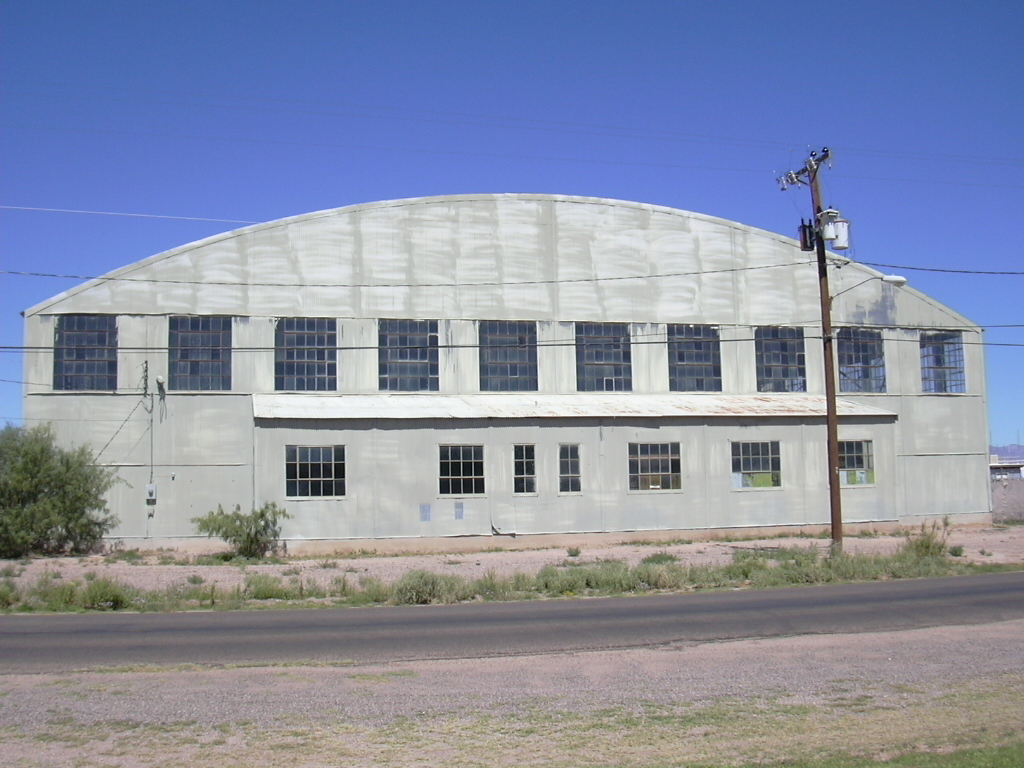
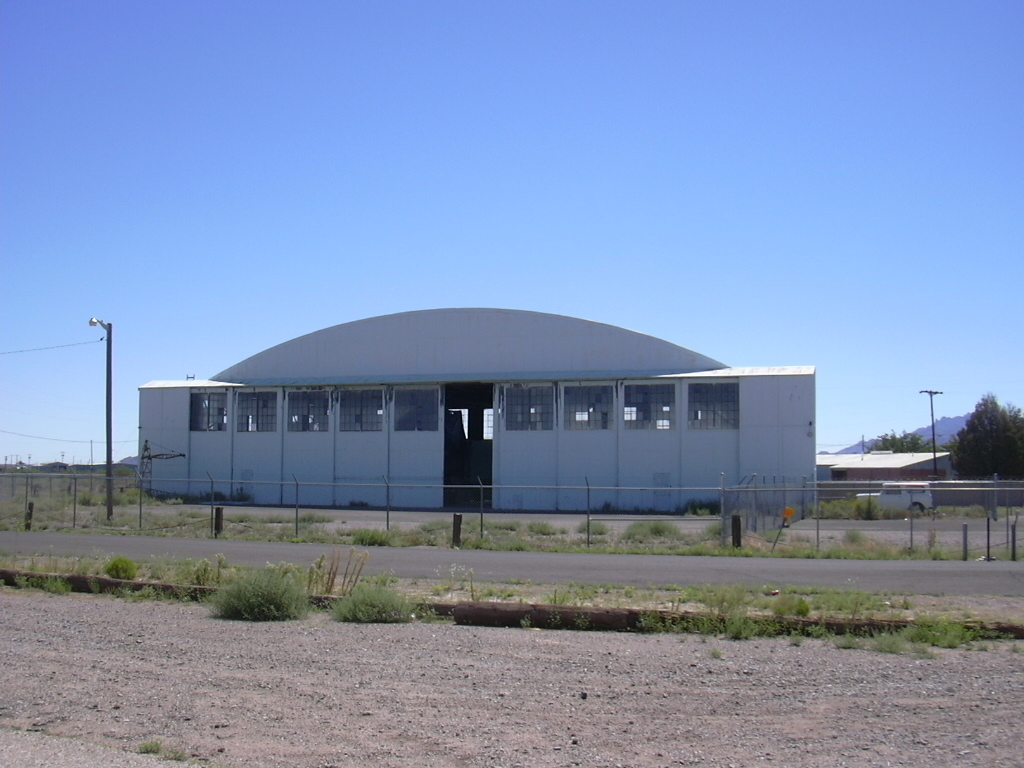
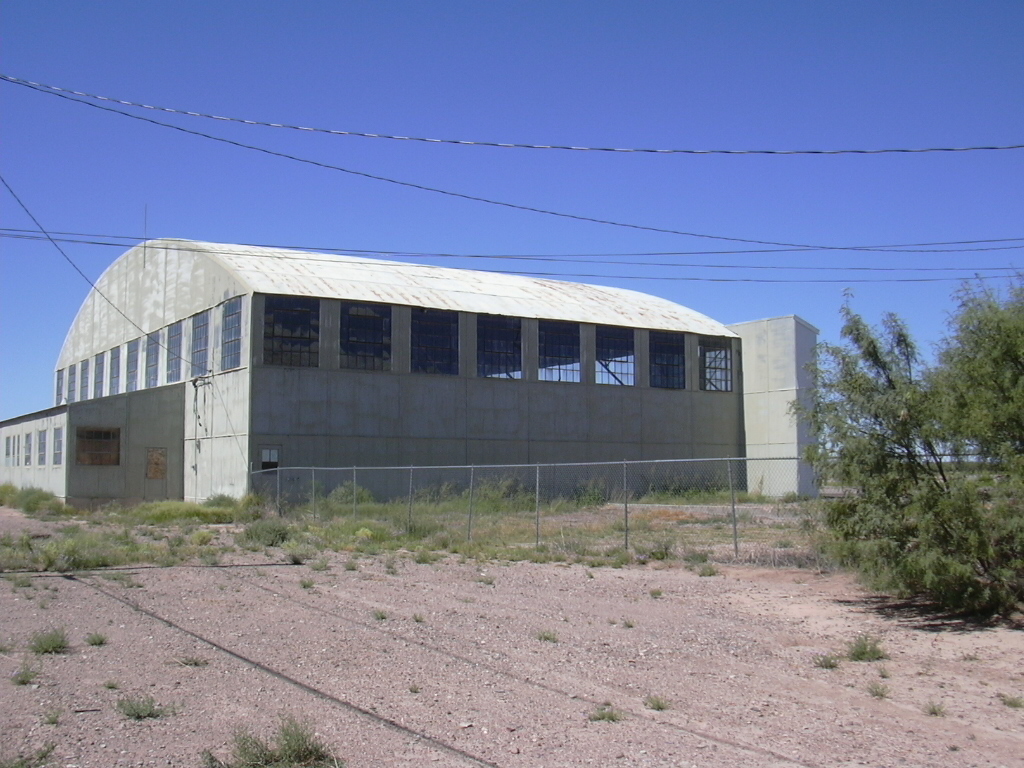
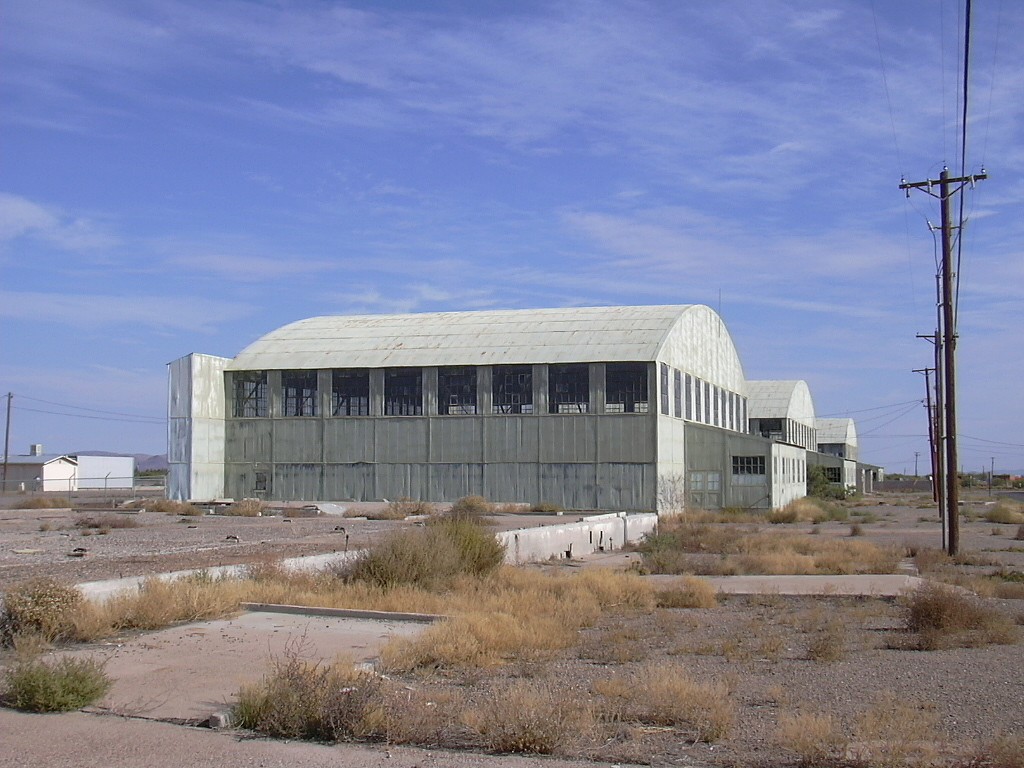
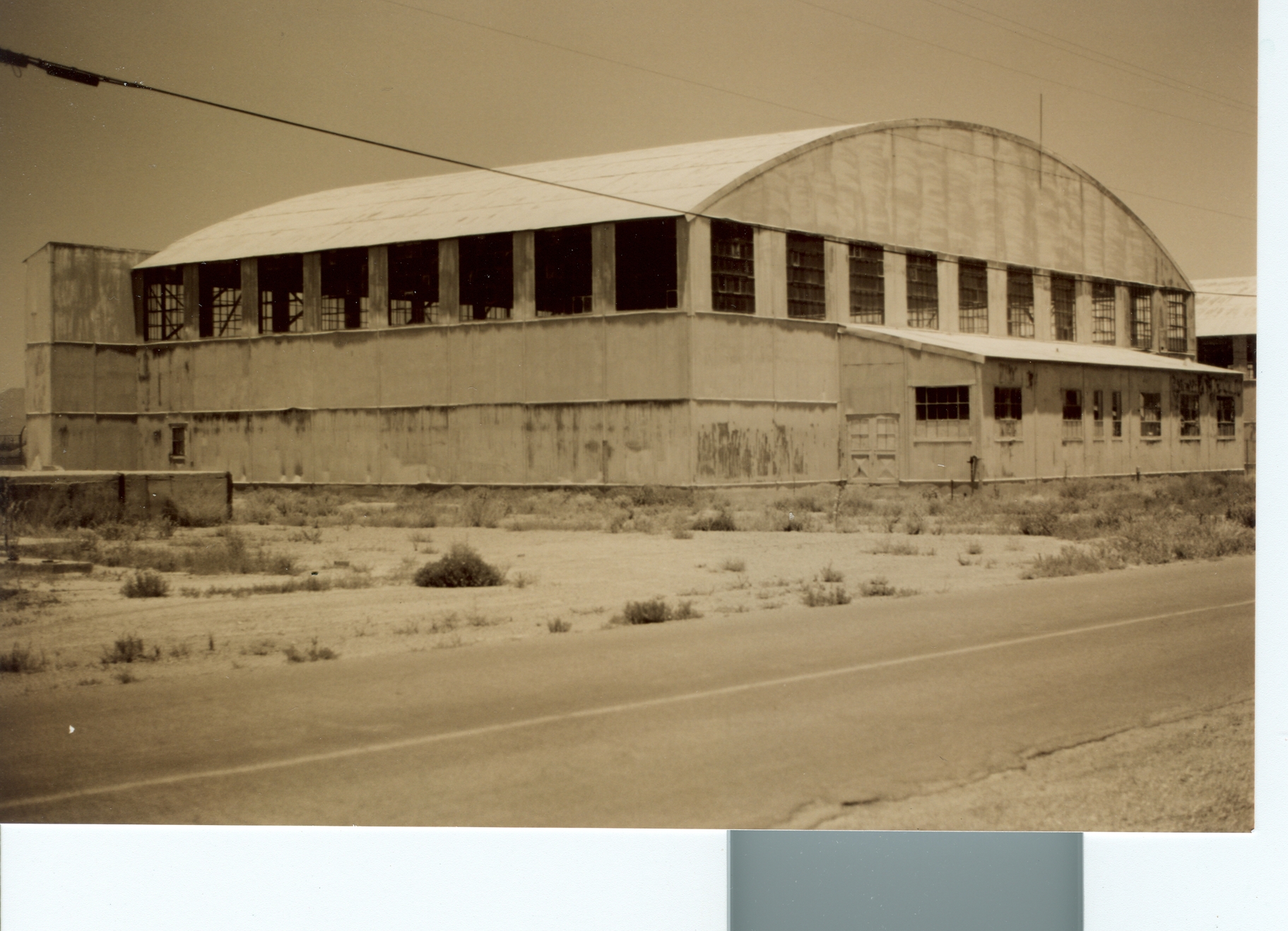
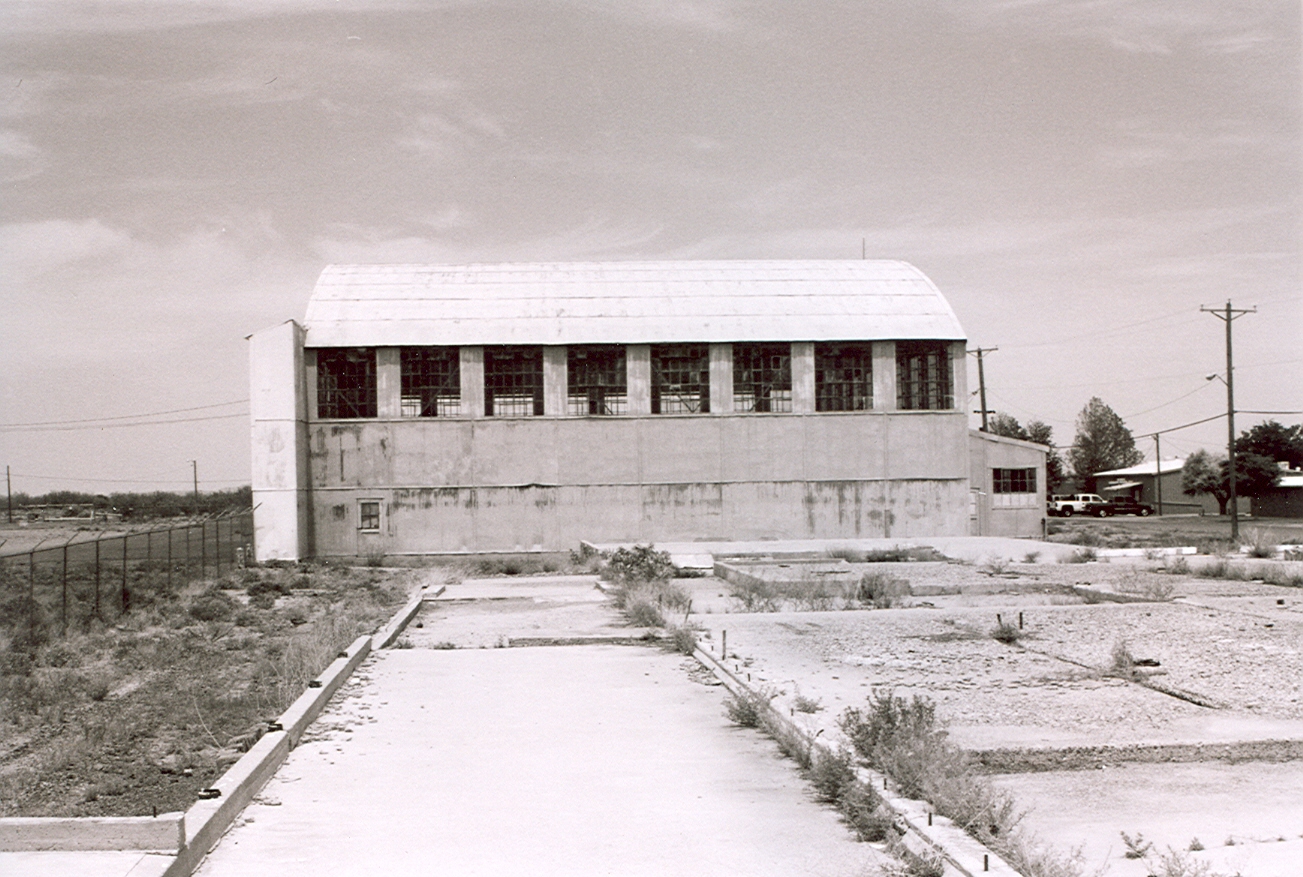
Airport. Currently (2005), some of the structures still stand,
including three hangars. The civilian operation has mostly moved
to the North side of the field, with the South side becoming somewhat
of a ghost town.
The units at DAAF appear to be in the following Structure, with the
321st
Bombardier Training Group containing the flying units (equipped with
AT-11s) and the 322nd BTG encompassing all of the ancillary units:
Army Air Forces
Bombardier School
Deming Army Air
Field
388th
Base
Headquarters and Air Base Squadron
321st
Bombardier
Training Group
Headquarters and
Headquarters Squadron
971st Bombardier
Training Squadron
972nd Bombardier
Training Squadron
974th Bombardier
Training Squadron
975th Bombardier
Training Squadron
976th Bombardier
Training Squadron
977th Bombardier
Training Squadron
322nd
Bombardier
Training Group
Headquarters and
Headquarters Squadron
Detachment 19
858th Signal Service Company (Aviation)
909th Guard Squadron
2053rd Ordnance
Company
Medical Detachment
Veterinary Detachment
419th Army Air Forces
Band
375th Aviation
Squadron
909th Quartermaster
Platoon
1014th Quartermaster
Platoon
Most of the following photos are taken from a yearbook style book
about the Deming Army Air Field published in 1943 by the Army And Navy
Publishing Company of Baton Rouge, Louisiana. This type of book
was published for the personnel stationed at various bases, but have
become increasingly difficult to find.
Deming
Army Air Field 1943
The
entire purpose of the base,

The Bombardier.
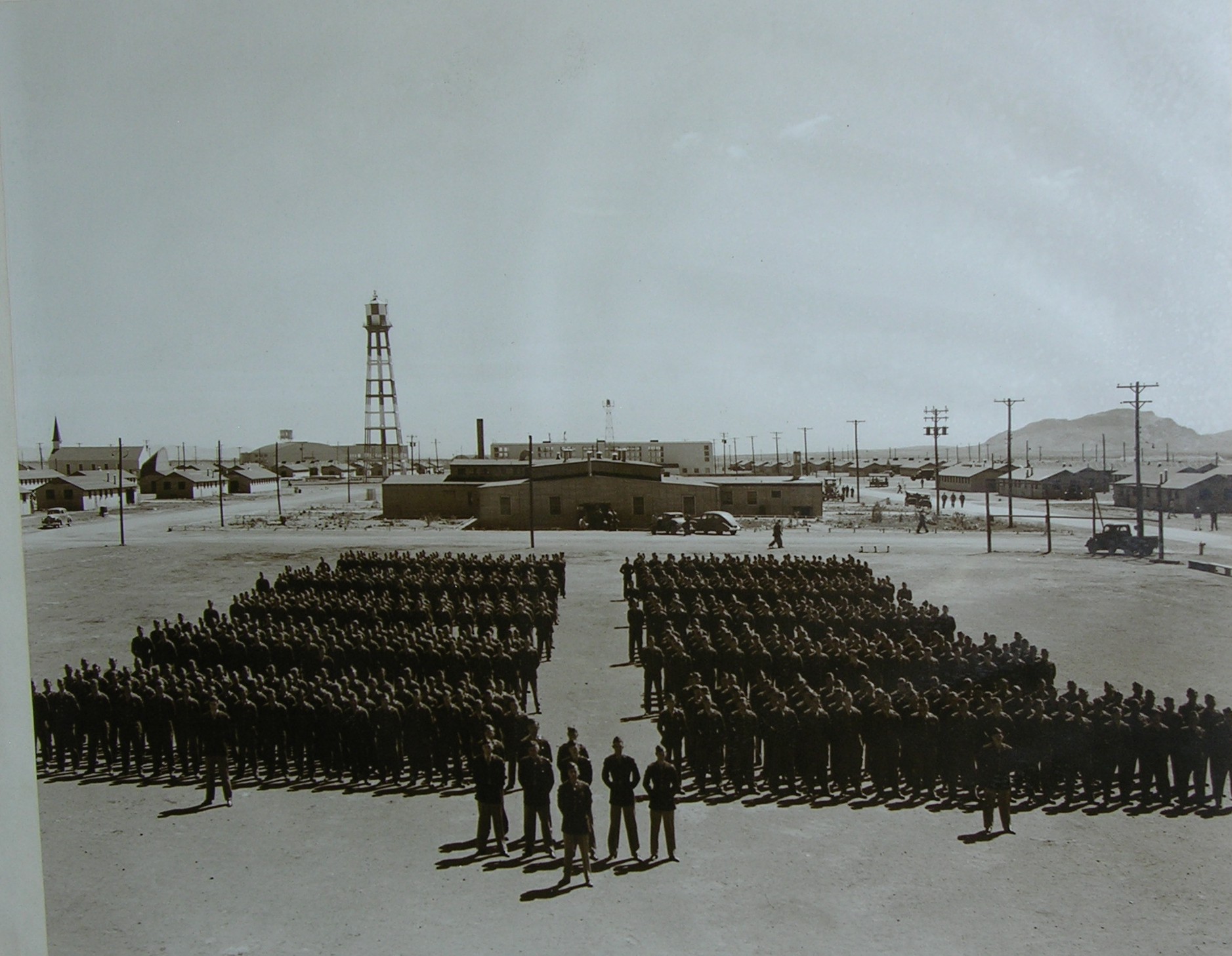
A new class of cadets in 1943. The base was just starting up, but
would be cranking out graduates at a steady rate for the balance of the
war.
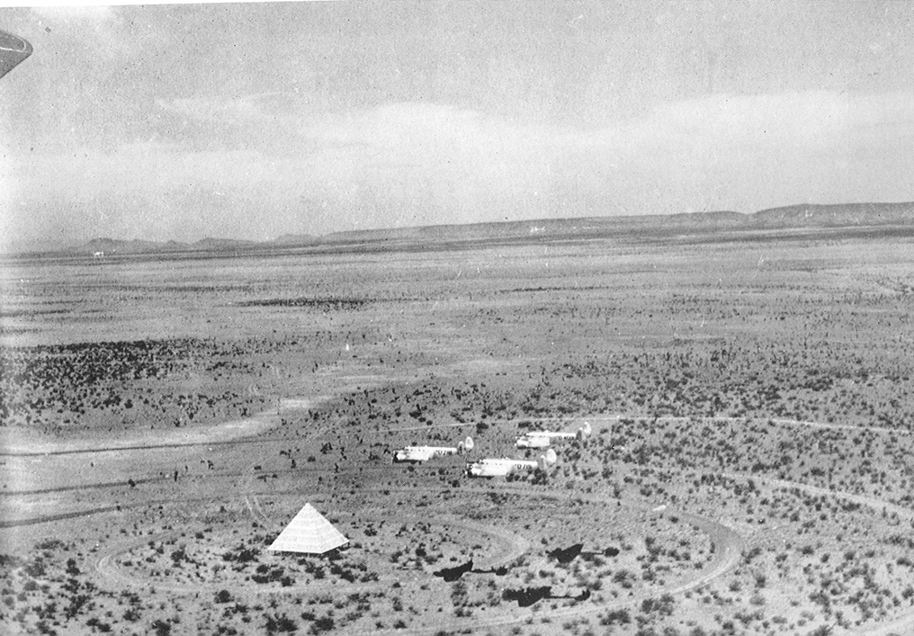
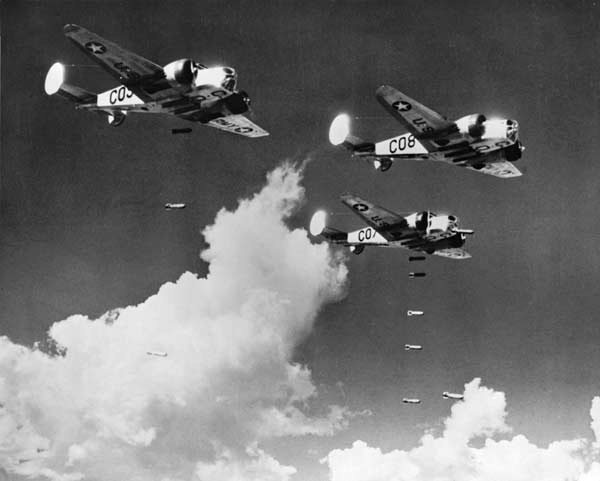
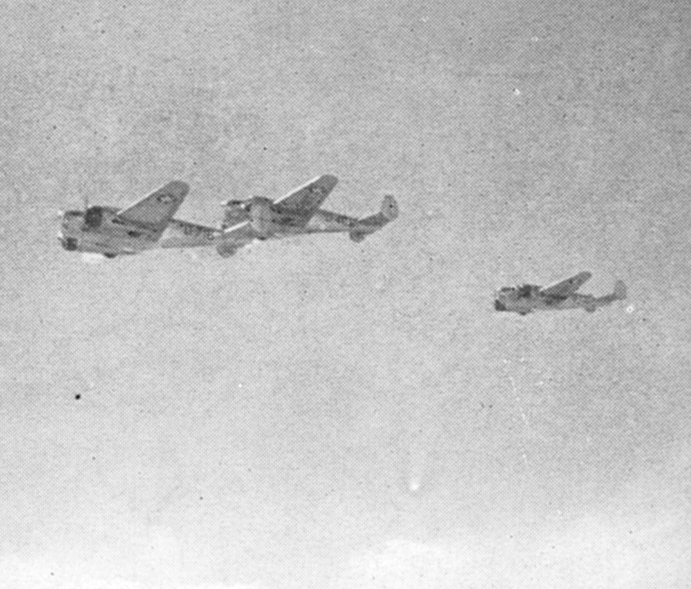
A trio of
AT-11s on a bombing mission in New Mexico.
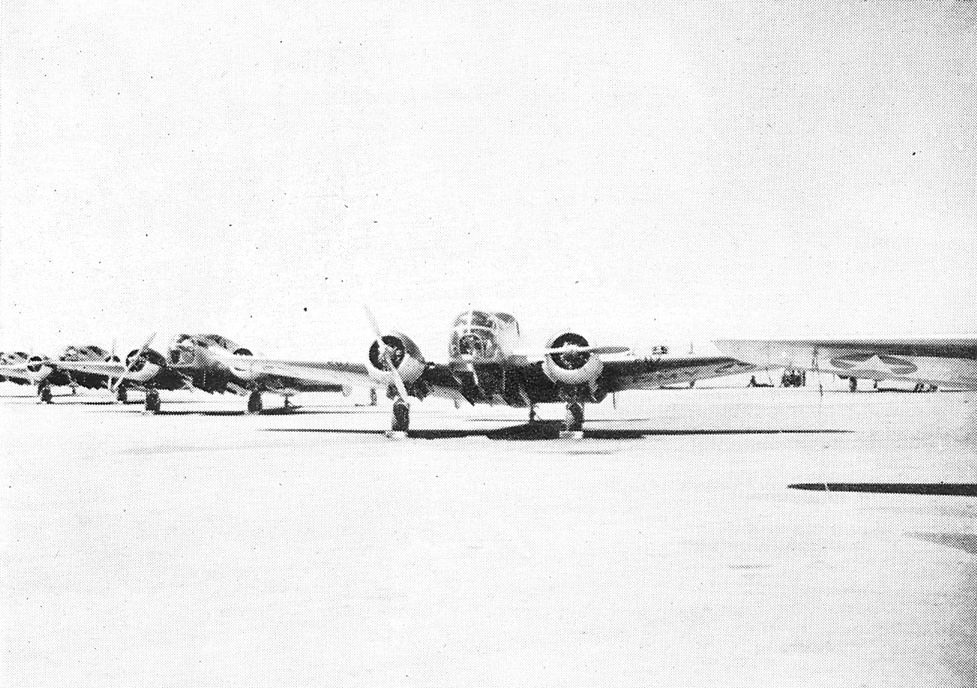
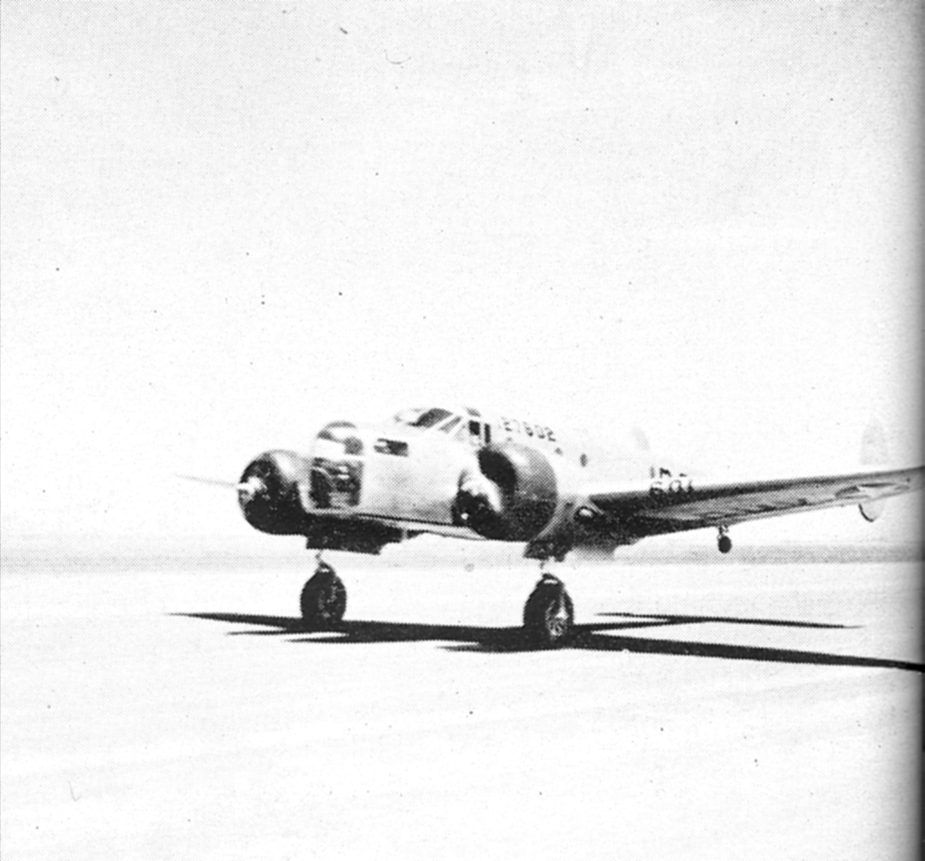
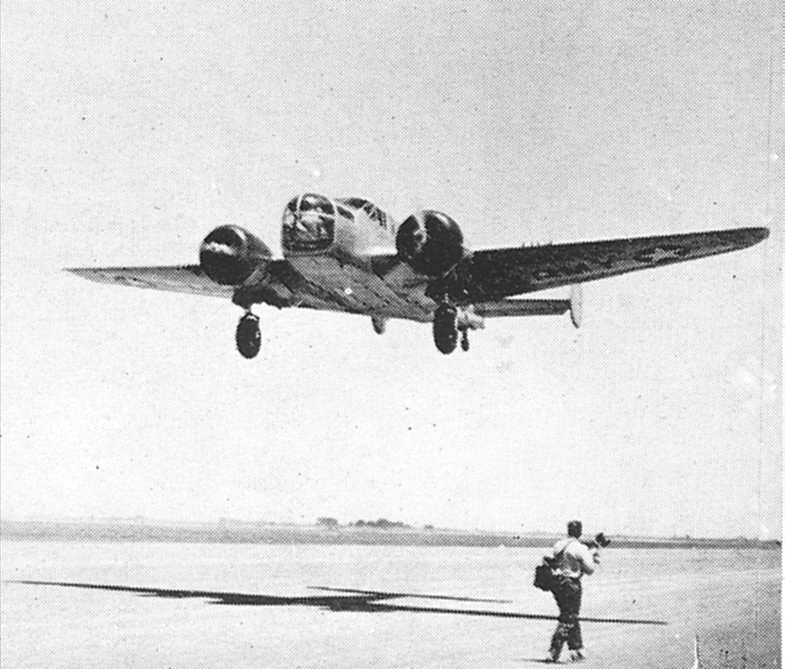
The most common bombardier trainer used by
the Army Air Force during World War II was the Beech AT-11, like the
C-45 it was a derivative of the classic Beech 18.
In the first photo several AT-11s sit on the ramp awaiting further
training flights. The second, third and fourth panels show
AT-11s 42-37241, 41-27600 and 41-27602 respectively. The
fifth panel is of an AT-11 on takeoff with a photographer along side
the runway. The last is of a formation of AT-11s forming up over
the field, these are the same aircraft as in the photo above.
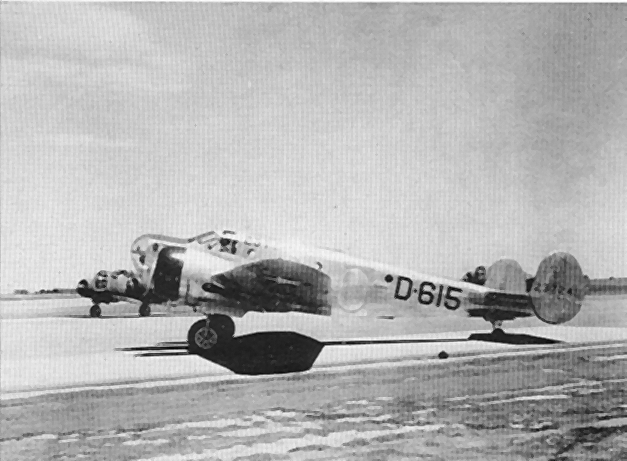
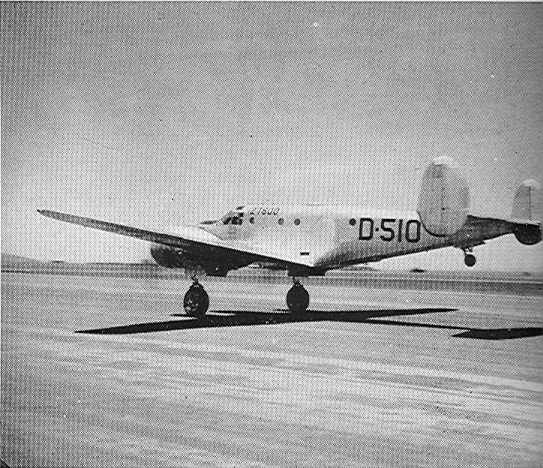
The letter "D" was used for Deming (makes sense) and
though I cannot find definite proof, I believe that the first number of
the aircraft code denotes the squadron: 1 for the
971st BTS, 2 for the 972nd and so on. The cowlings of some of the
aircraft also appear to be colored, but without color photographs it is
next to impossible to interpret what that means, if anything.
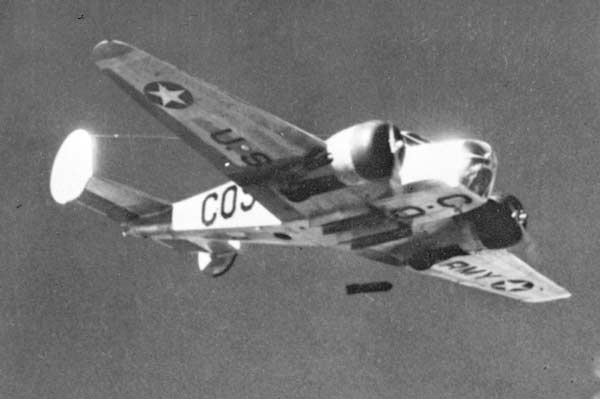
Three views of AT-11s in
flight. The first photo shows a three ship dropping practice
bombs. All three have their bomb bays open. The second photo is a
closeup of the right wing aircraft from the first photo and better
shows the bomb doors open. Both the first and second photos are
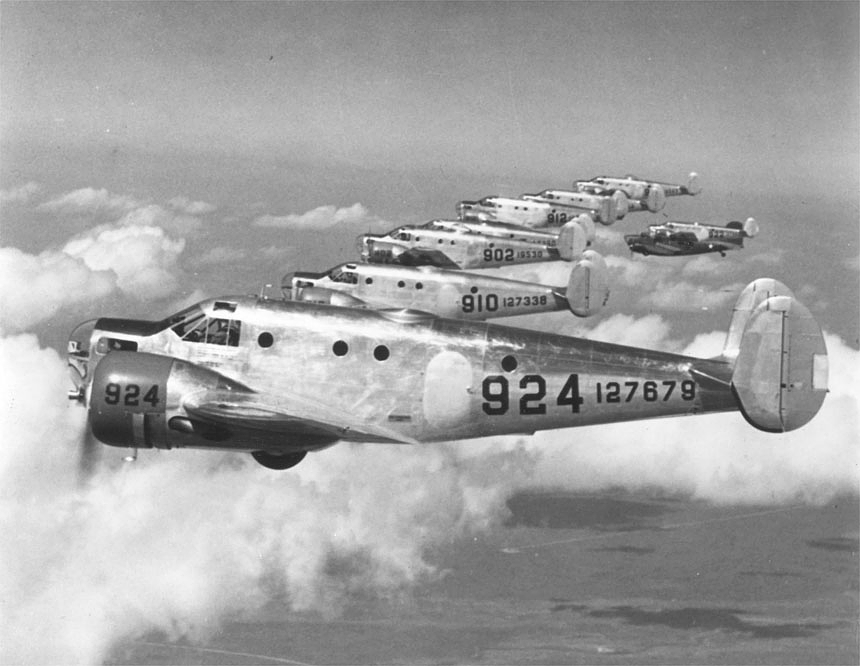
of Carlsbad AAF based aircraft. The third photo shows eight
silver AT-11s from an unidentified unit in formation with an Olive Drab
B-18A. The first three AT-11s in the last photo are
41-27679, 41-27338 and 41. - 9530
For every
bombardier trainee there were a large number of support personnel
necessary to keep the training aircraft in the air. Whether that
be the mechanics, fuelers, or ordinance groups. There are also
the personnel essential to every endeavor that seldom are recognized,
like cooks, bakers and even truck drivers. Two pages in the 1943
book are dedicated to Maintenance: "On
these two pages maintenance crews are seen at various repair
jobs. This work is the Air Forces biggest behind the scenes
job. The life of its pilots and efficiency of the planes depends
on the accuracy and skills of its maintenance crews."
Couldn't put it better myself.
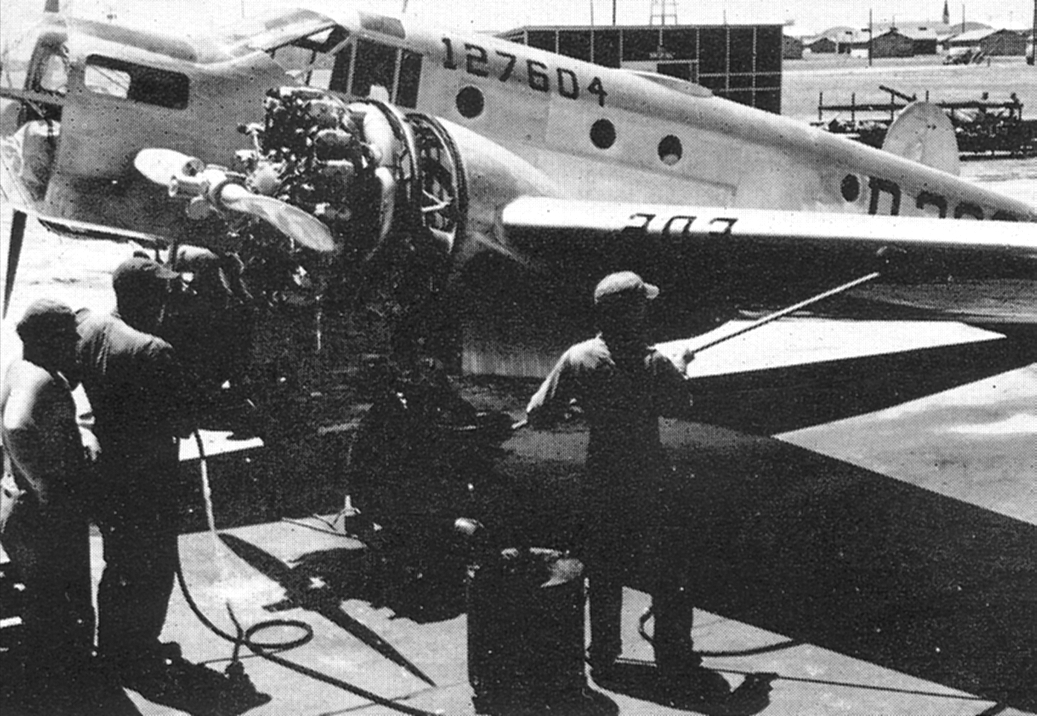
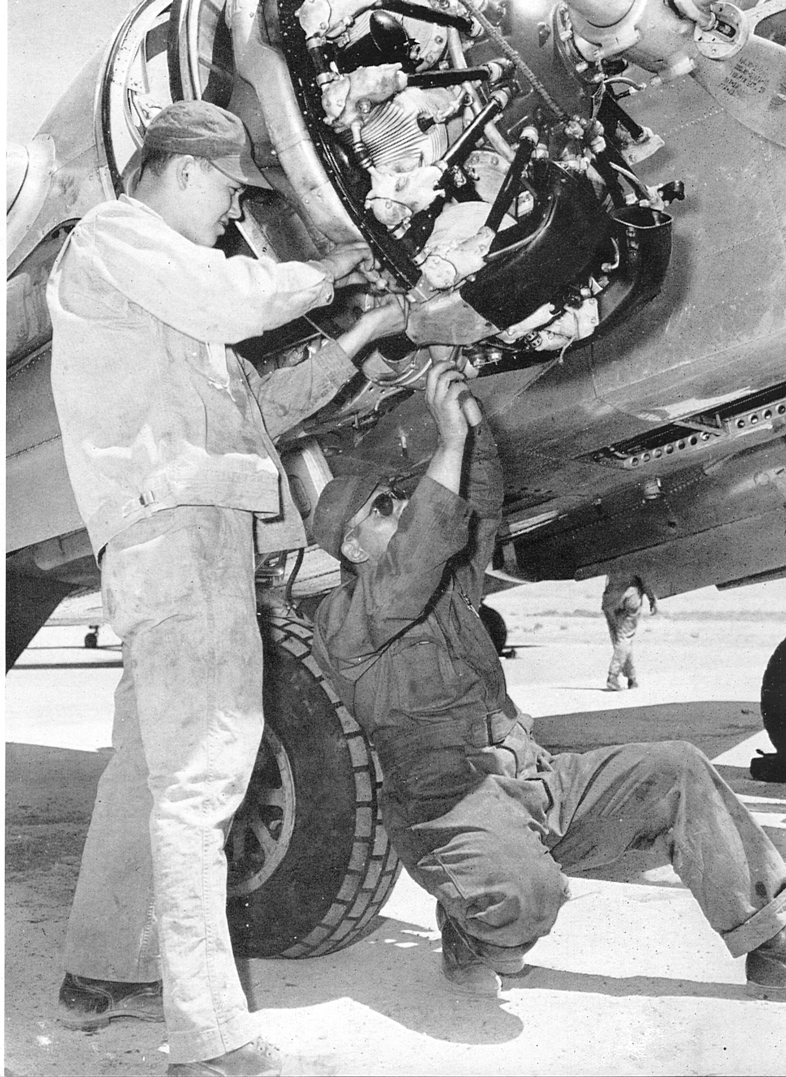
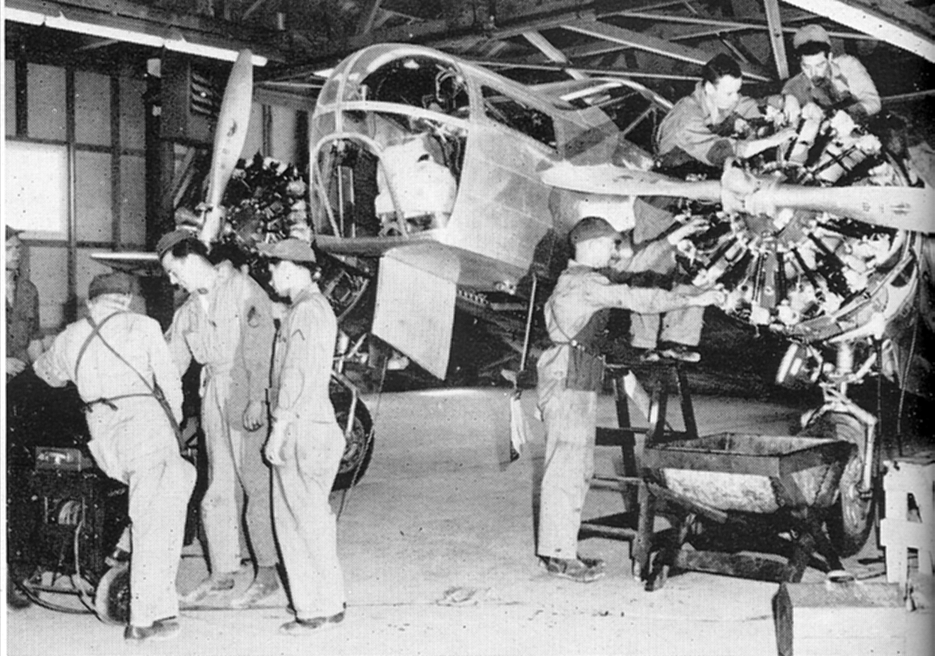
The above photos show
mainly engine maintenance, though the AT-11 in the hangar is most
likely going through a heavy check. The second and third photos
show the knuckle breaking, back aching work done to keep the Pratt and
Whitney R-975 engines in shape. Piston engines are a favorite
with enthusiasts, but require a great many man hours to keep in prime
condition.
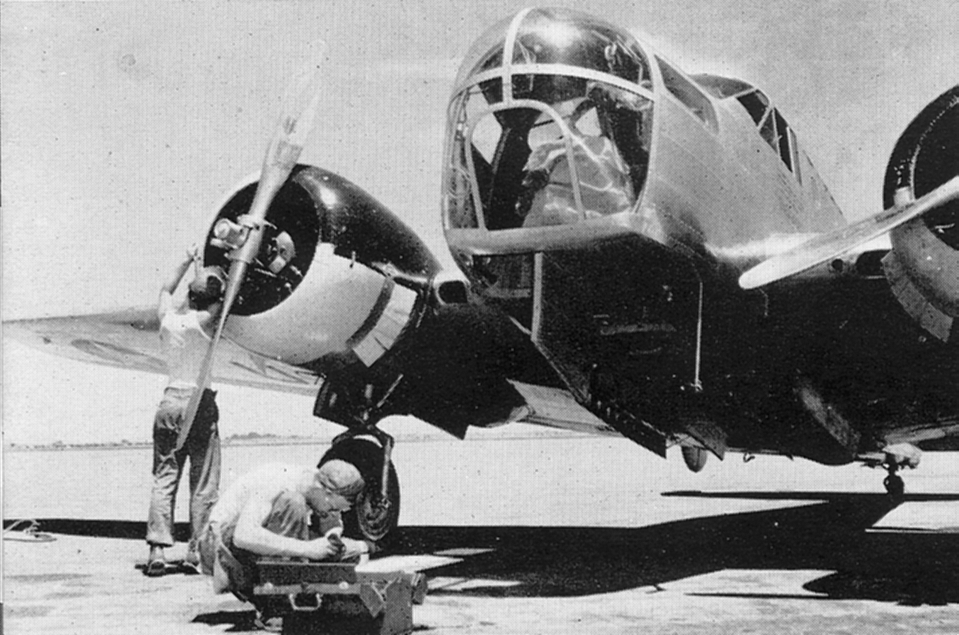
The first photo shows routine preflight, or post flight checks.
Most likely pre-flight as the Norden bombsight is mounted and "bagged"
in the aircraft. The bomb bay doors are also open (yes, the AT-11
did have a bomb bay).
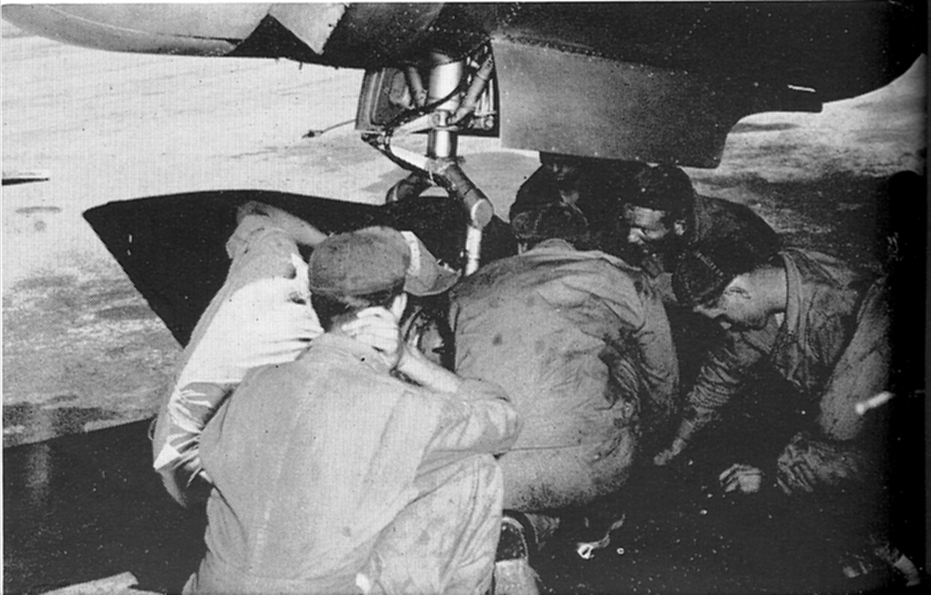
The second photo
involves some sort of mechanic pow-wow, with a noticeable amount of oil
on the overalls, which probably means serious work.
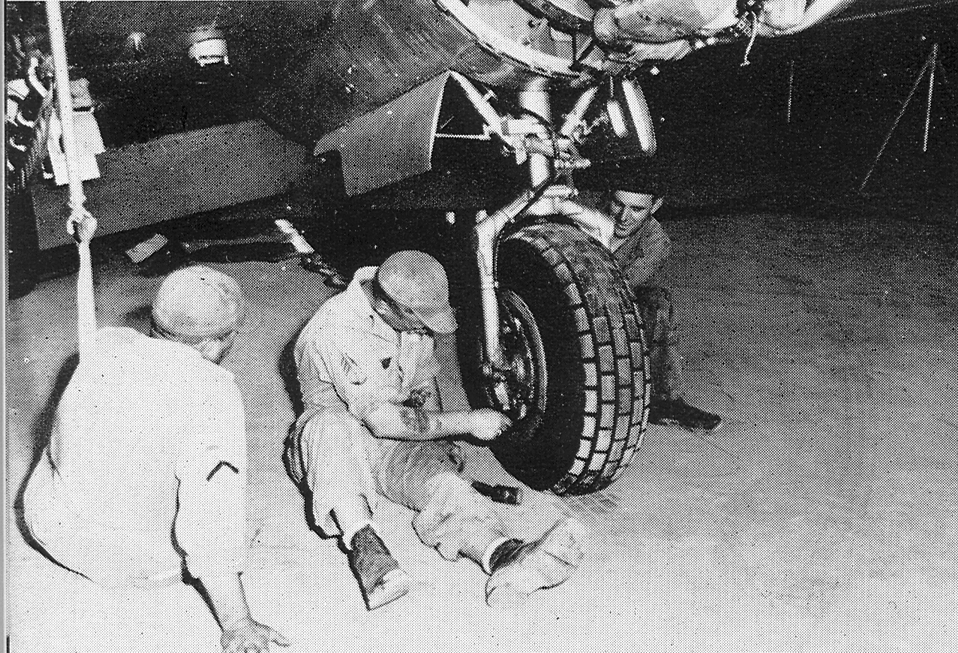
In the third photo
the mechanics seem to be servicing the brakes. Unlike the
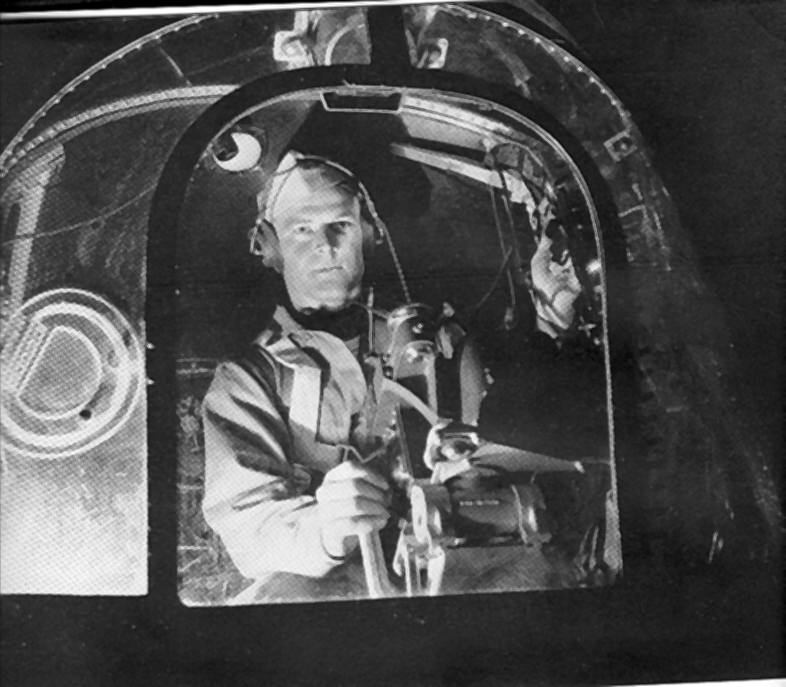
bombardier in the nose of the aircraft, this is a real photo, not posed.
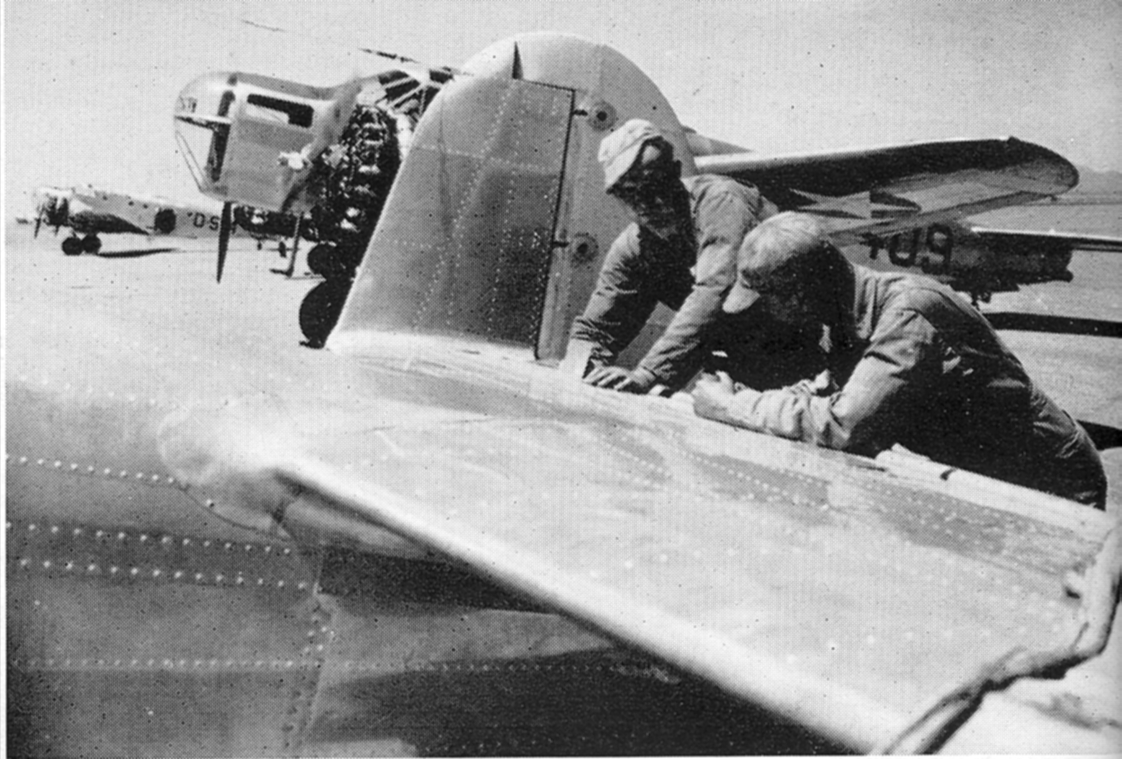
Though it looks
like these two mechanics are working on the tail surfaces, what I think
they are really doing is signing off a logbook. Some times that
takes longer than the repair.
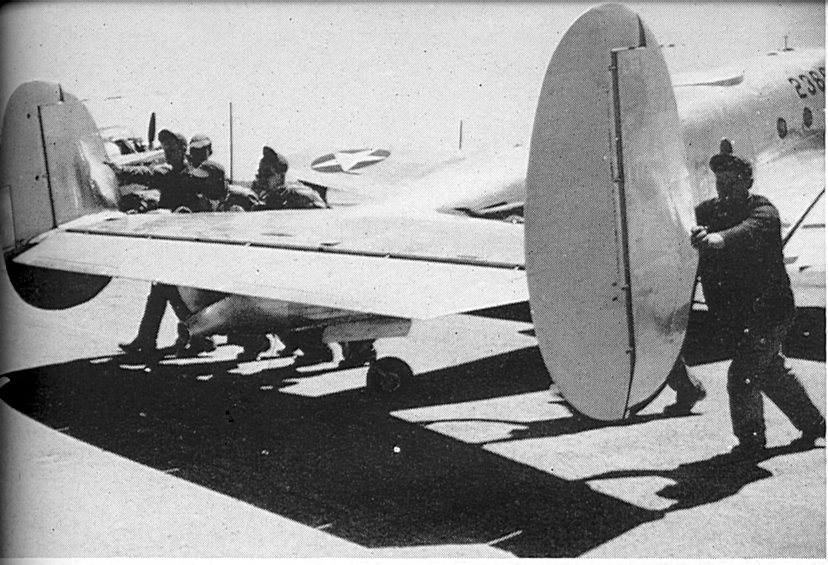
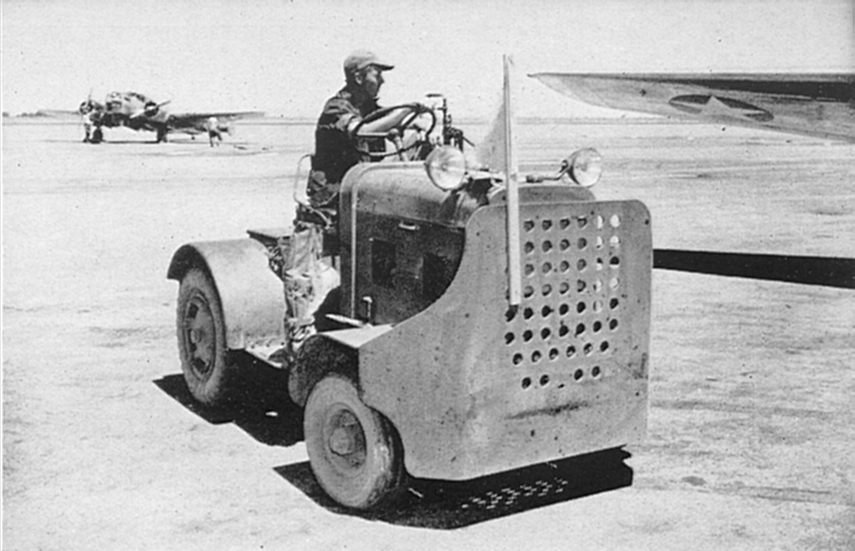
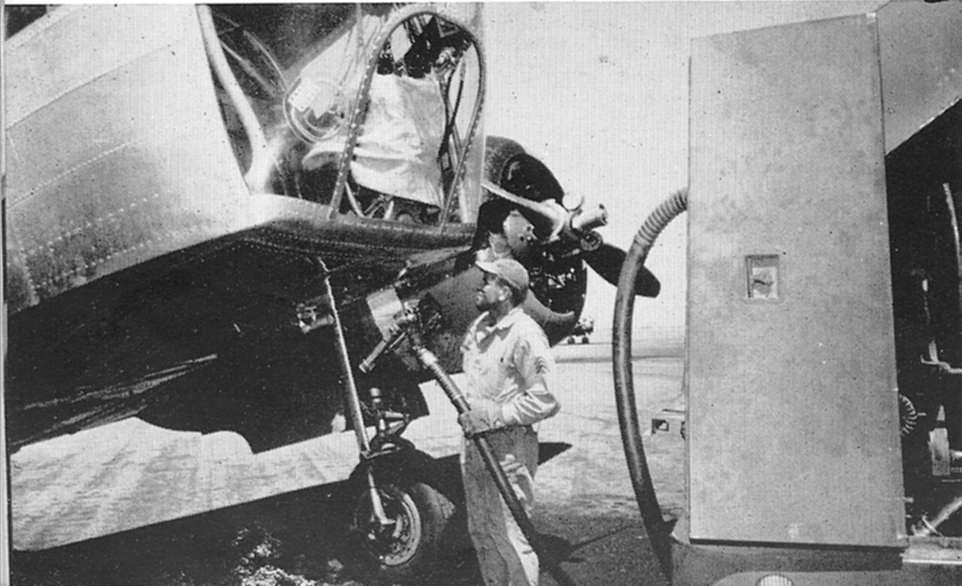
Repositioning an aircraft by hand can be a tricky task, one has to
wonder why they are not using the tug in the second photo. The
tug is a "Clartor-6 Aircraft Tractor" according to the USAAF.
Somehow tractor seems to imply "John Deere". An
AT-11 is being fueled in the third photo. Someone else will clean
the windshield and check the oil.
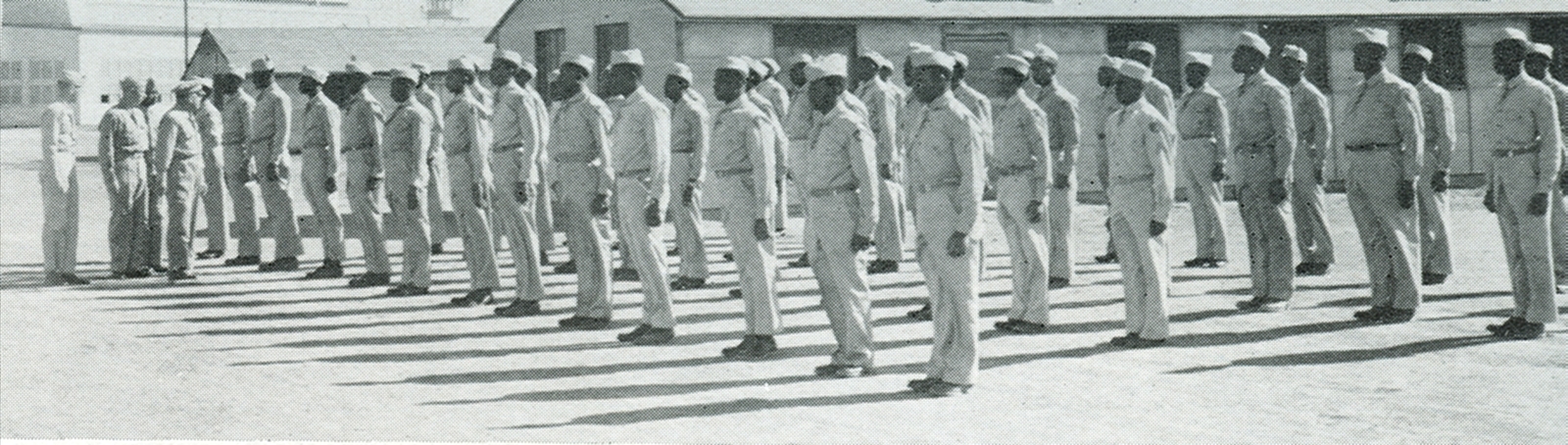
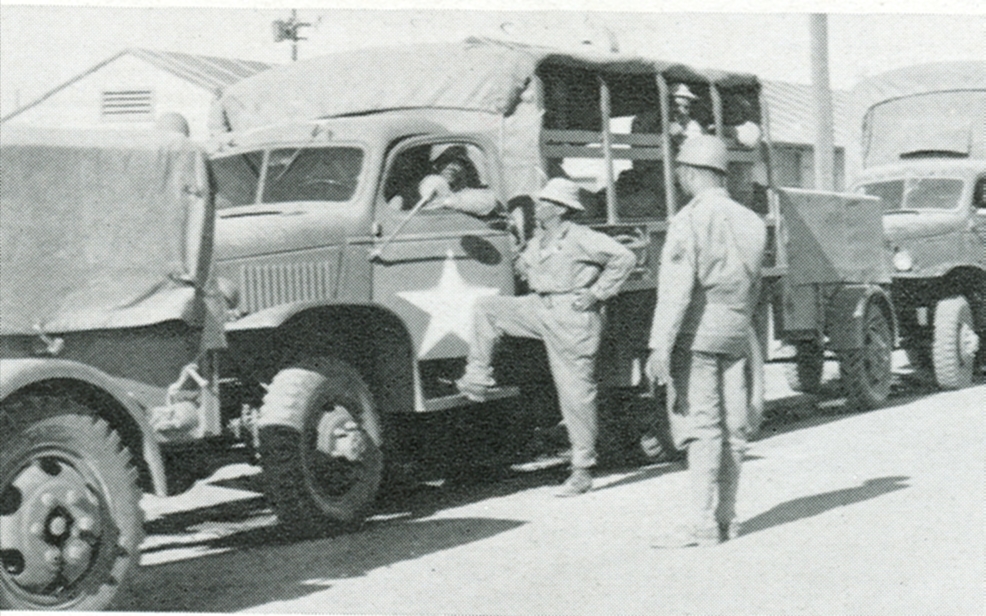
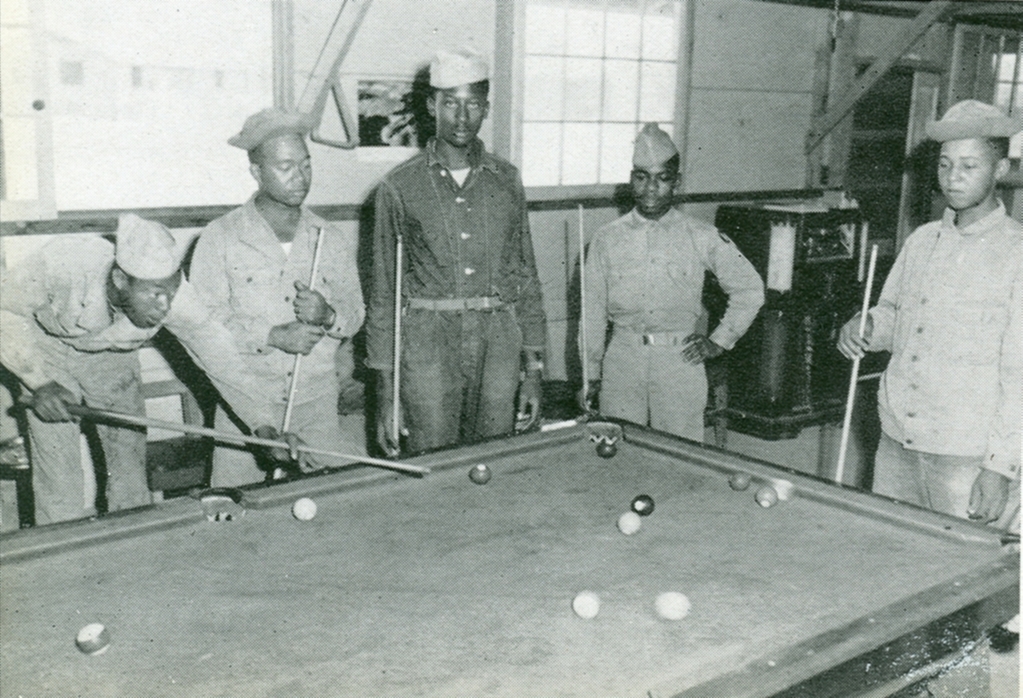
There are also the personnel essential to every endeavor that are
seldom recognized or appreciated, like cooks, bakers and even truck
drivers. The Army was still a segregated service in those days
and most black soldiers were confined to those support jobs. Jobs
that
the Army (and every other service for that matter) would not have been
able to function without. All American servicemen contributed and
all should be recognized as well.
The first shot is of a formation of troops at inspection. The
second shows the ubiquitous "Deuce and half", in this case a GMC built
CCKW-353. Pool tables in the rec hall were pretty much universal
in the military. Armies (and Air Forces) have always run on
paperwork.
Deming Army Air Field 2005
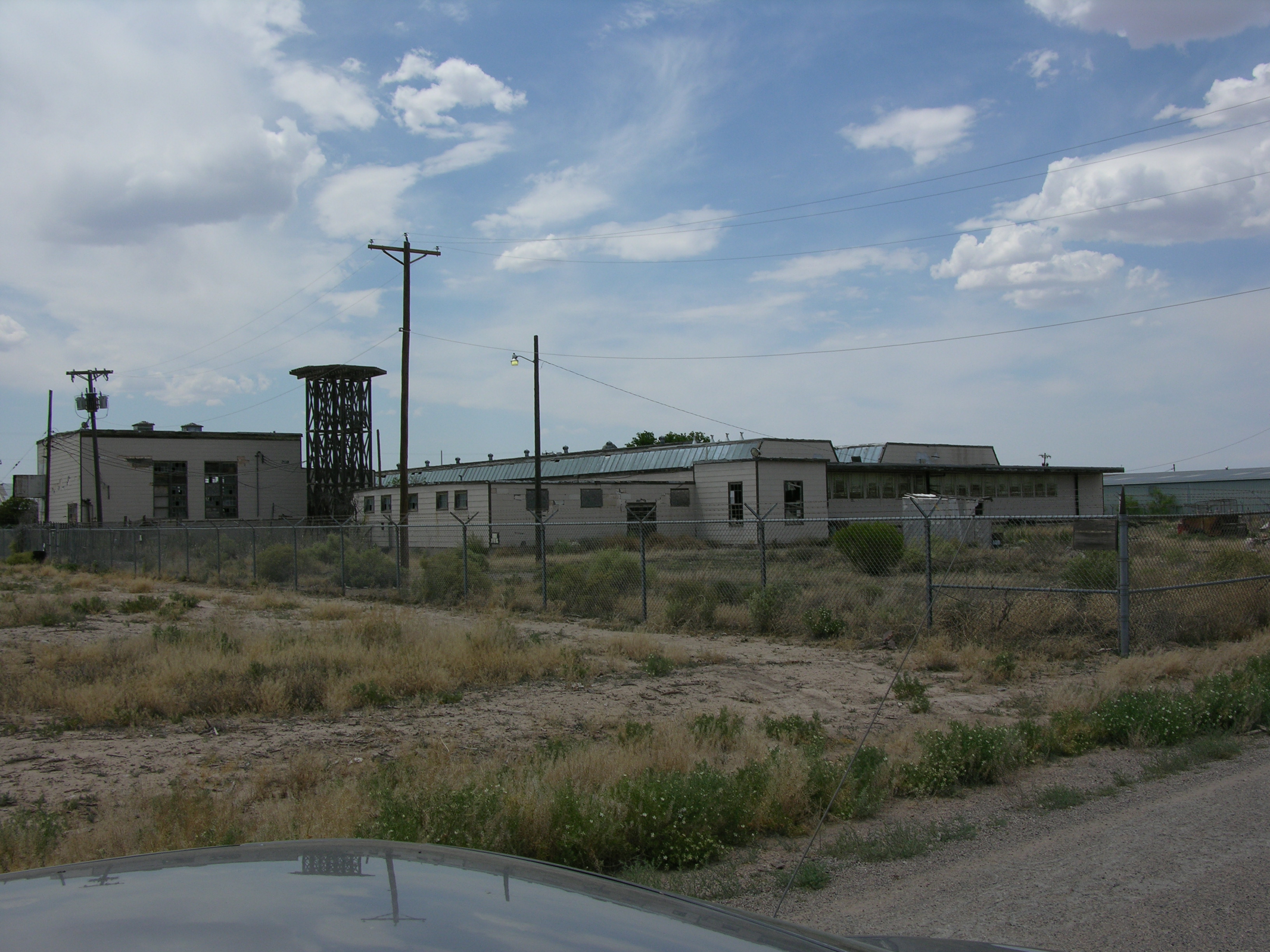
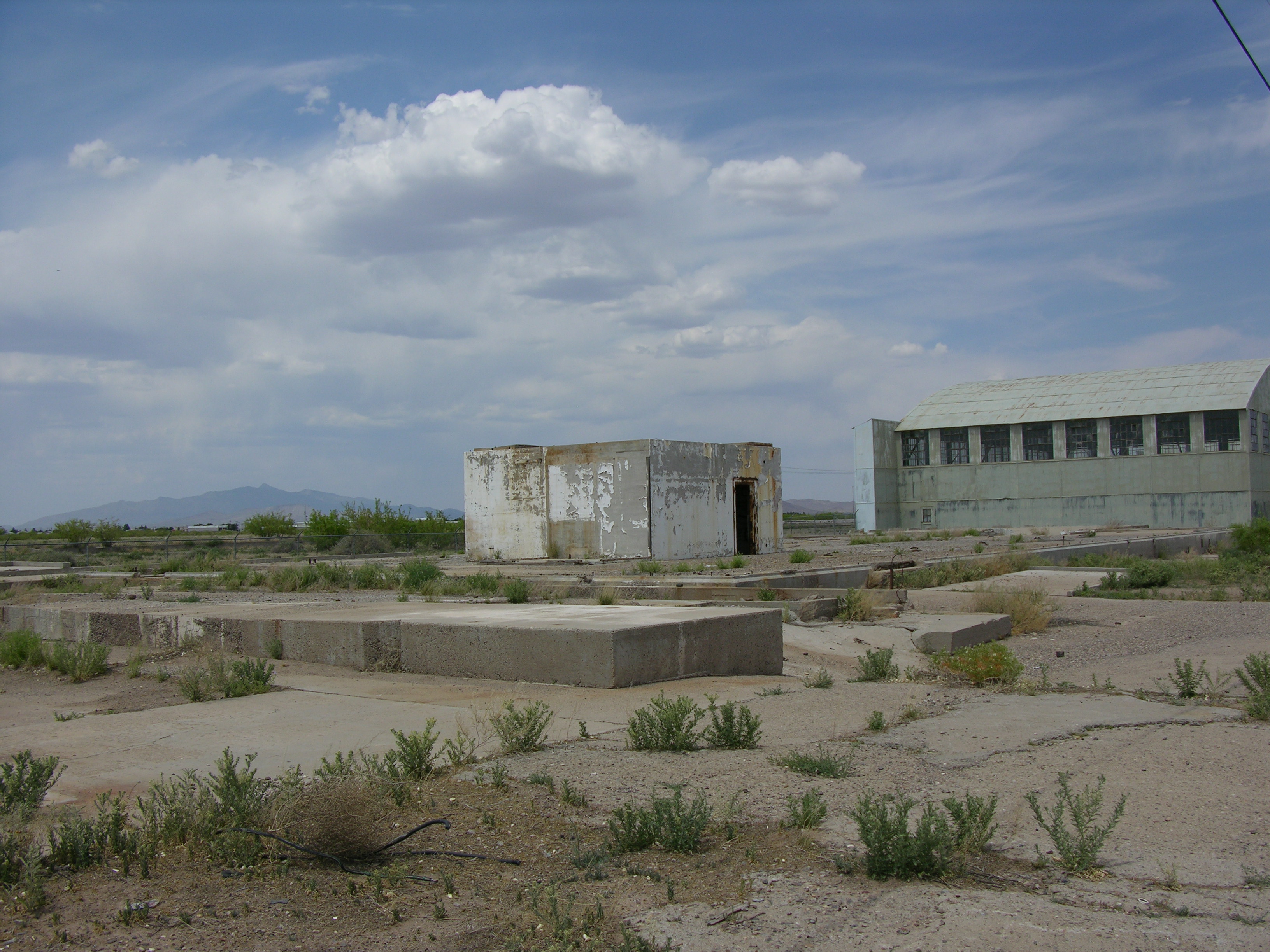
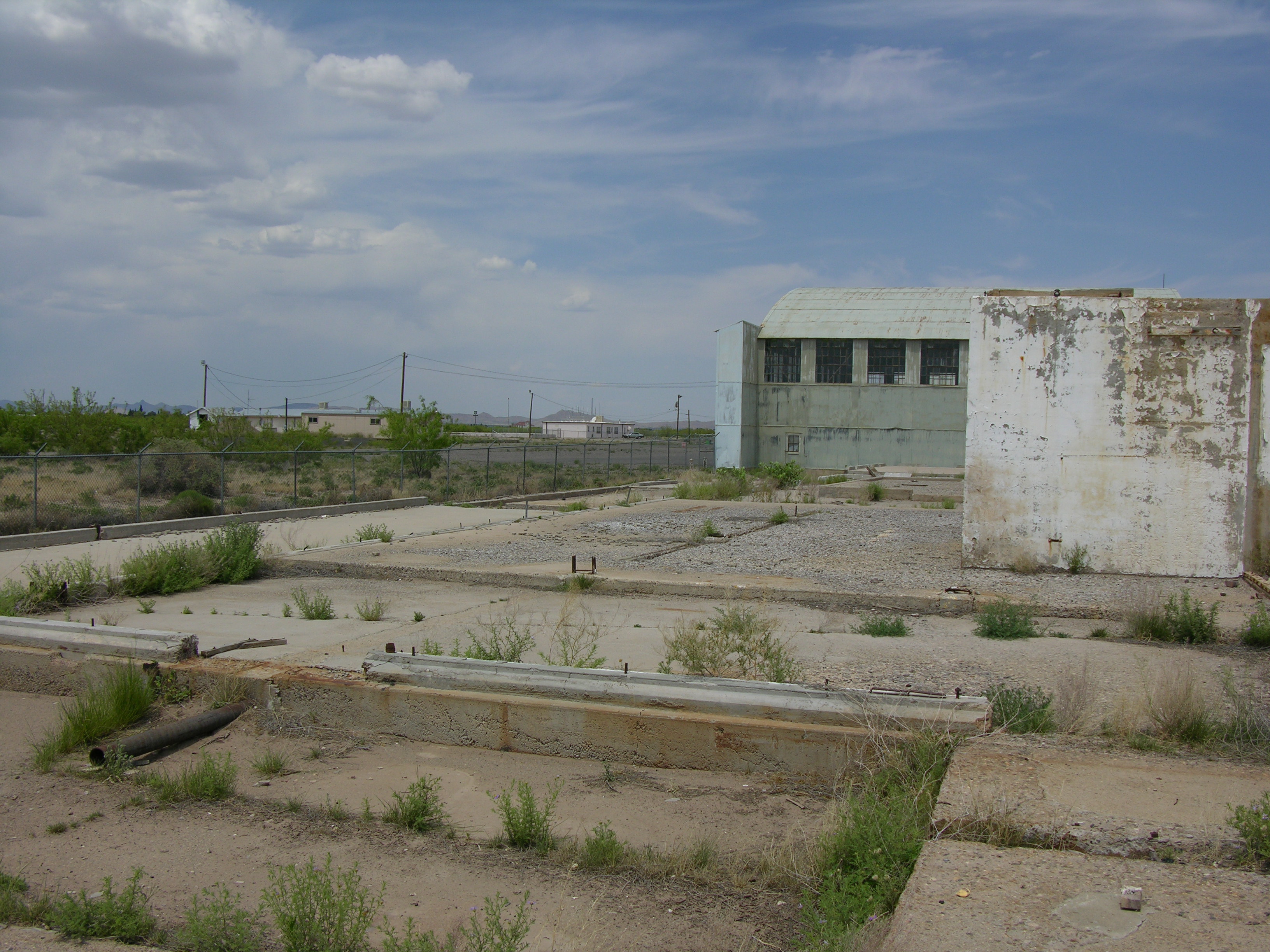
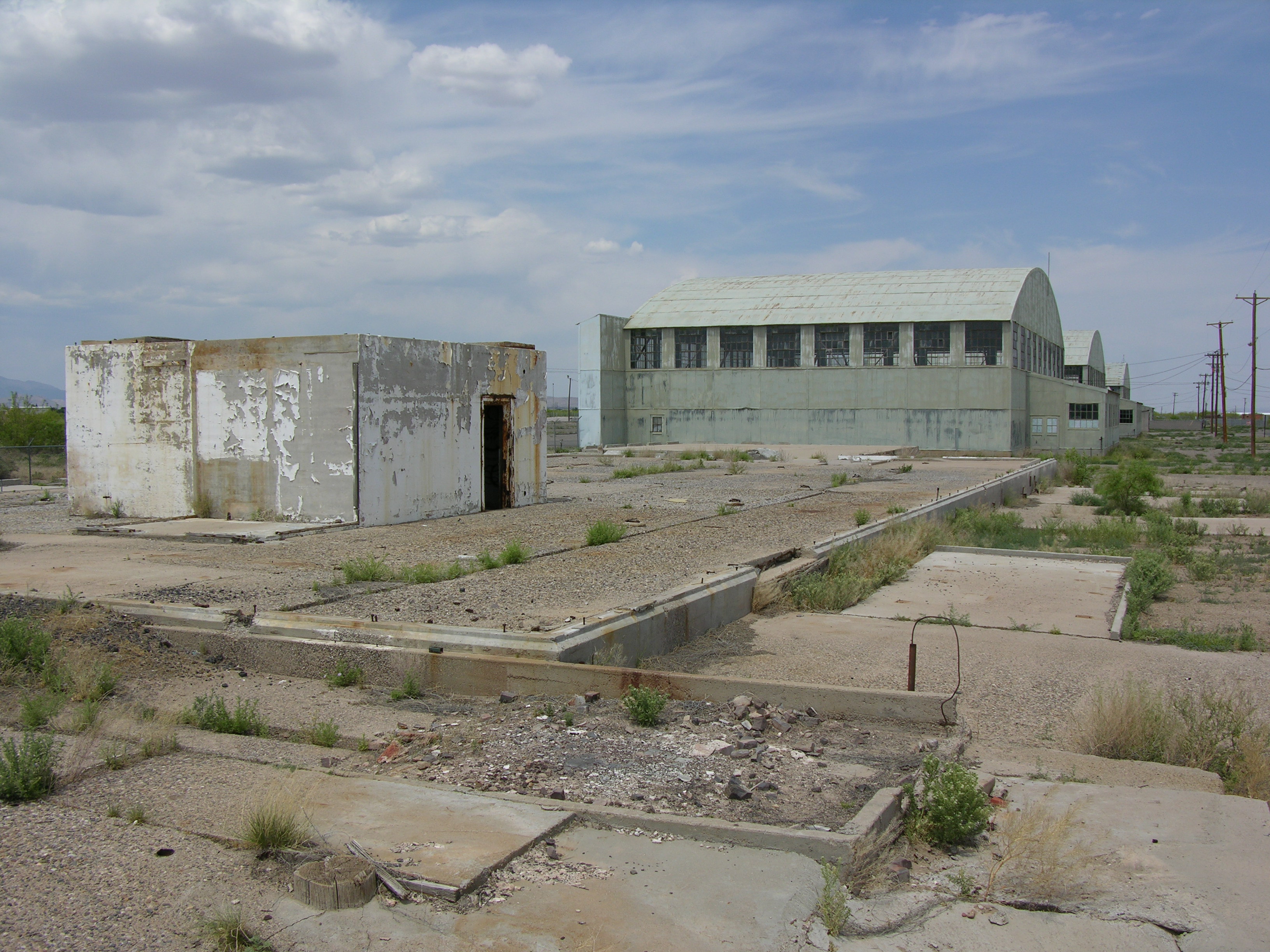
Some of the structures and many of the foundations still remain.
Some, like the hangars, are still occasionally used, while others such
as the former laundry are long abandoned.
The first photo is of the laundry facility as it
looked in May, 2005. To the left is the steam plant with the
remains of a water tower while the laundry is to the right.
The three following photos show the foundation of
the engineering building. The small concrete structure is
the vault where either Norden bombsights, or small arms were
repaired.
The final photo is of one of the two remaining
Norden
bombsight vaults. These would have been guarded during WWII.
These six photos show the hangars as they appear today
(2005). The three
hangars are almost identical. A fourth, larger wooden hangar was
located to the left of the engineering building in the above series of
photos, but it was torn down in the 1970s.


Pleases
send your comments and suggestions to:

My guest book is on
the main page.
Page Created 07-14-05
Updated 02-08-06
Clifford Bossie