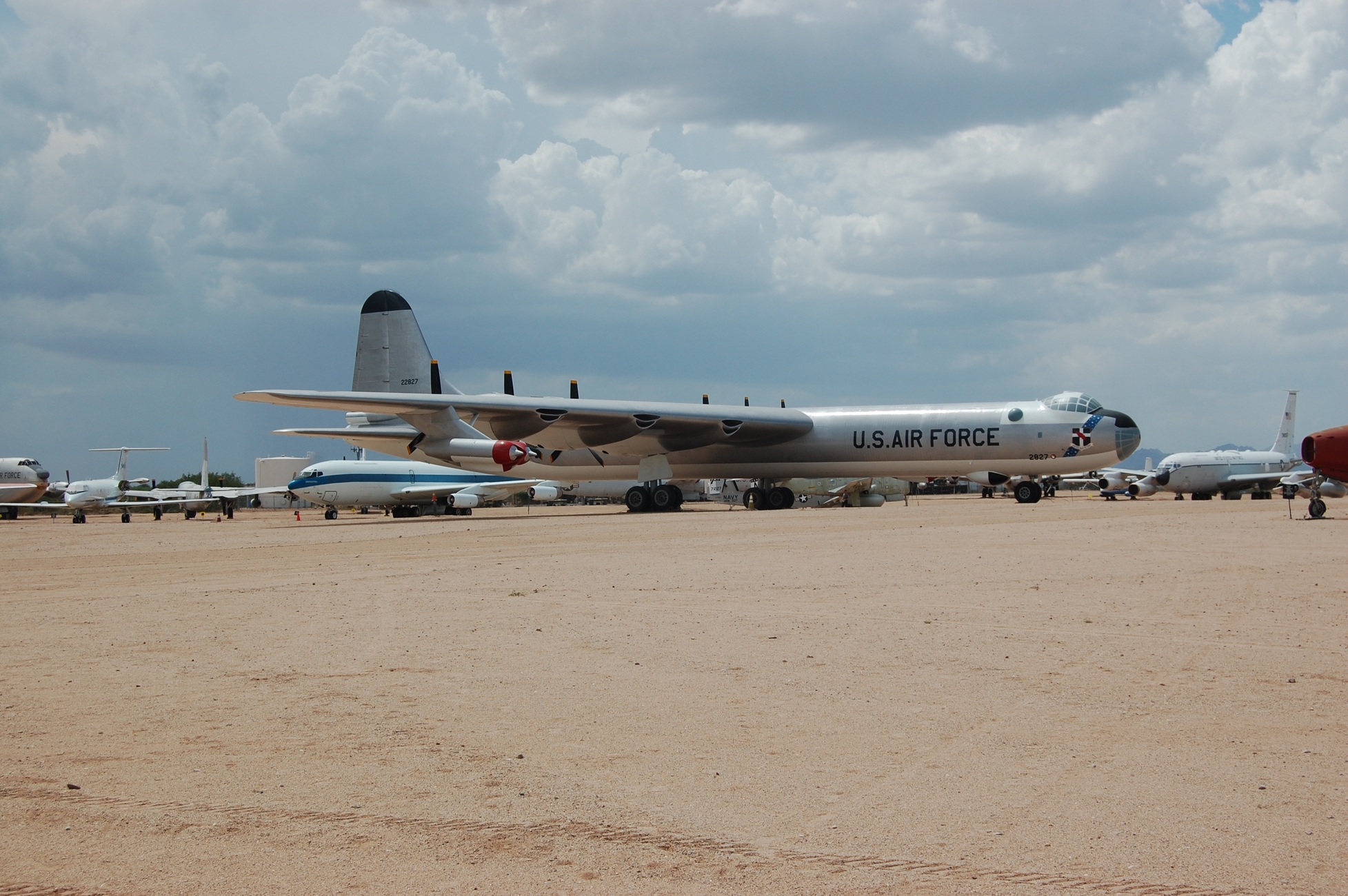
B-36 Peacemaker
This page is dedicated to the
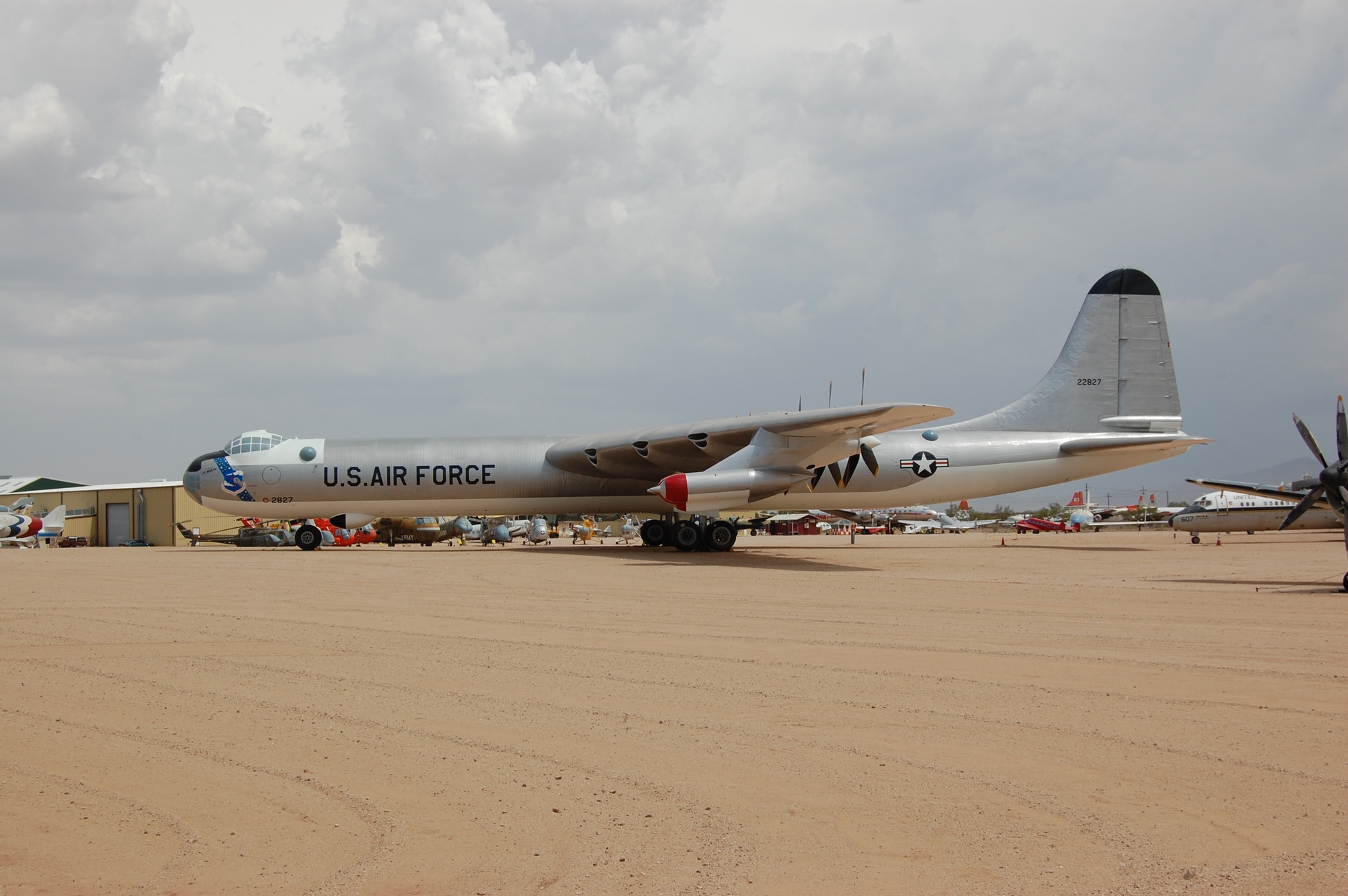
restoration of B-36J 52-2827 at the Pima Air &
Space Museum. It will also include details of the
B-36 in general.
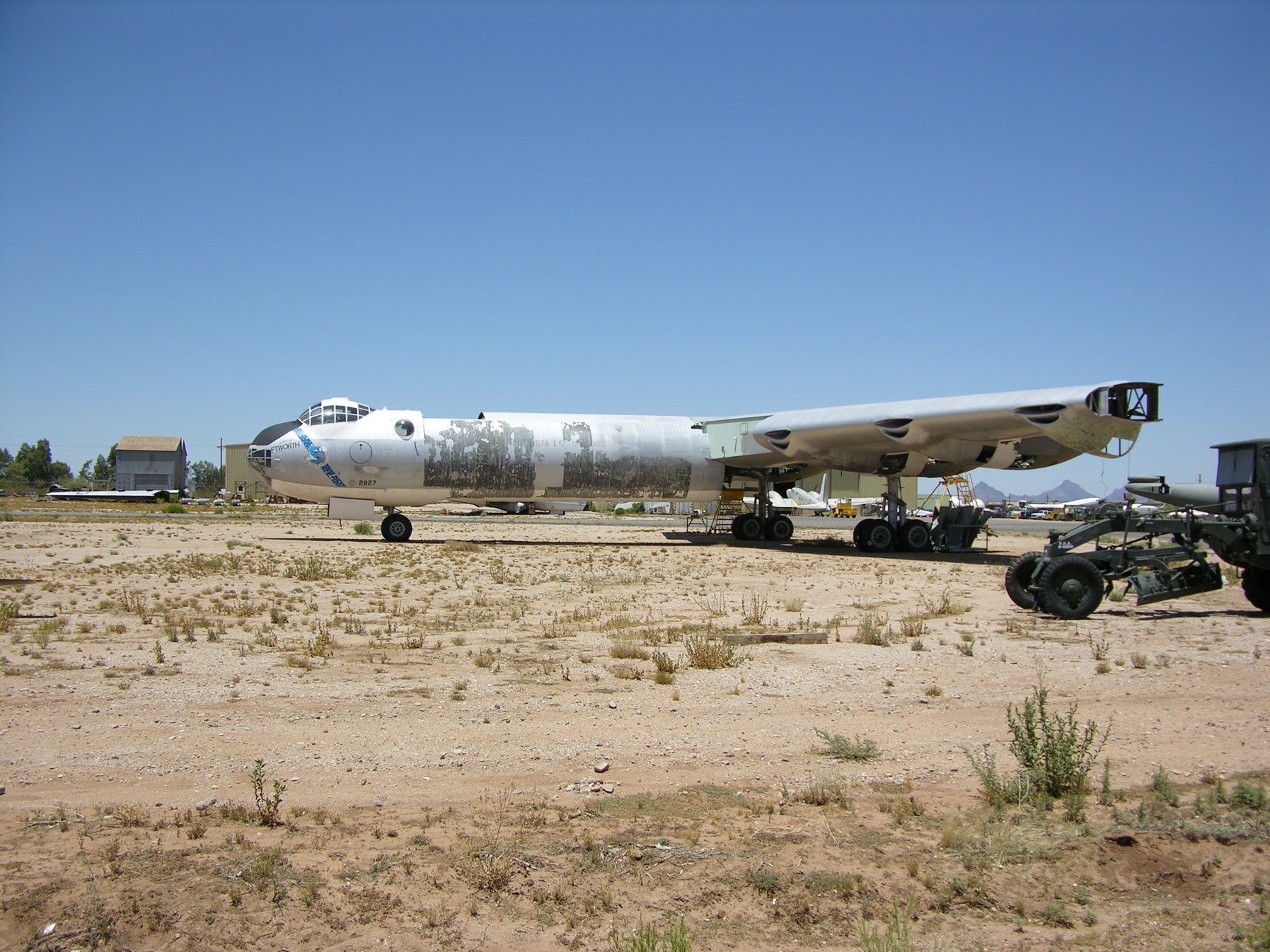
When 52-2827 rolled off the assembly line in
1954 she was the last of 383 B-36s built. One of the final
14 B-36Js she left the factory as a Featherweight III aircraft. In that
configuration the aircraft carried only tail guns, the nose and
retractable turrets being dispensed with. The purpose was
to lighten the airframe providing for better performance, both
in speed and altitude. Upon acceptance by the Air Force
2827 was assigned to the 92nd Bombardment Wing at Fairchild AFB,
Washington. In 1957 she was transferred to the 95th BW at
Biggs AFB, Texas before retirement in 1959. In February,
1959 the 95th BW finished conversion to B-52B aircraft and 2827
was retired to the Greater Southwest International Airport (also
known as Amon Carter).
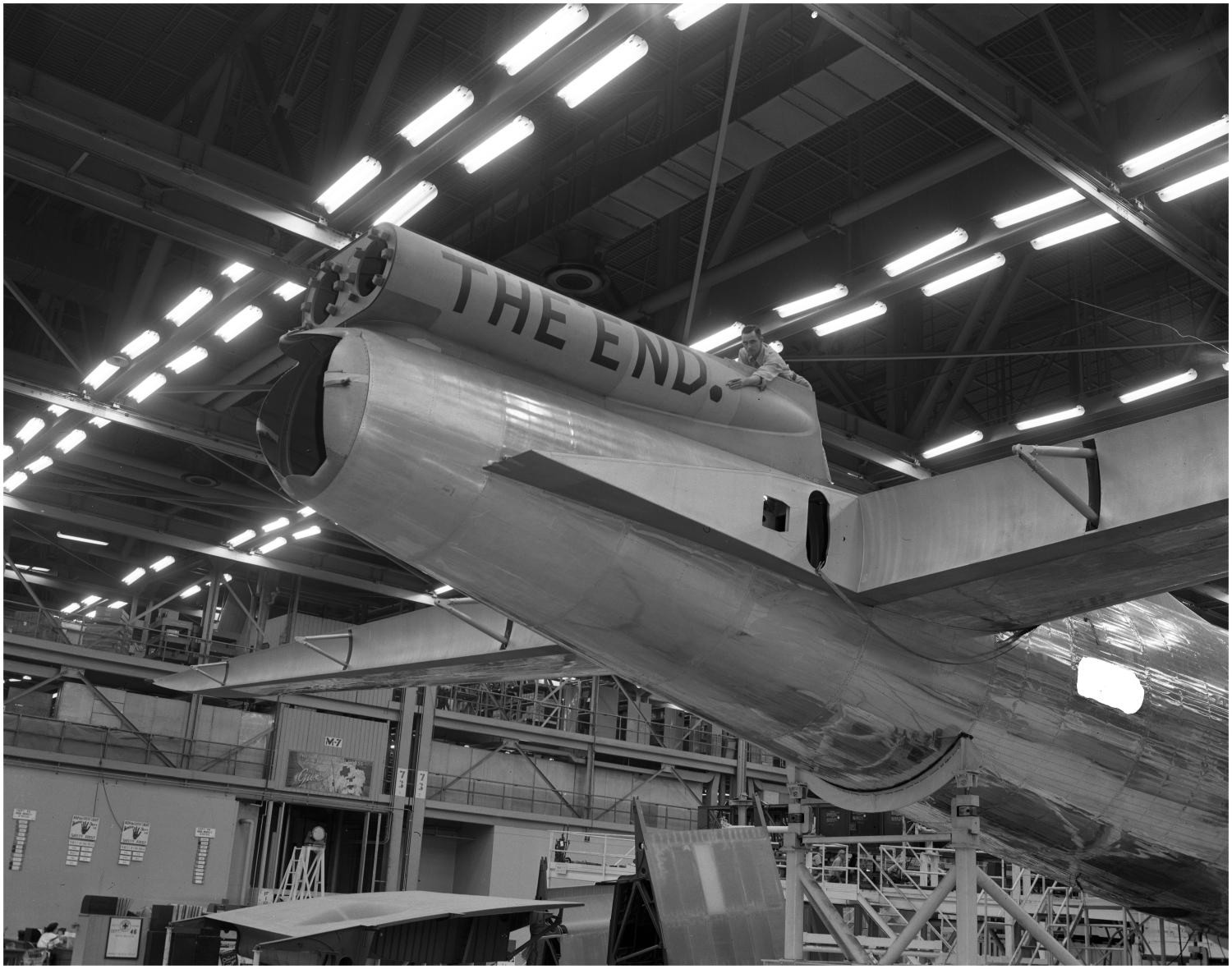
On the assembly line prior to completion at
the Convair plant in Fort Worth. Being the last of a major
program brought out a lot of sentiment as the aircraft neared
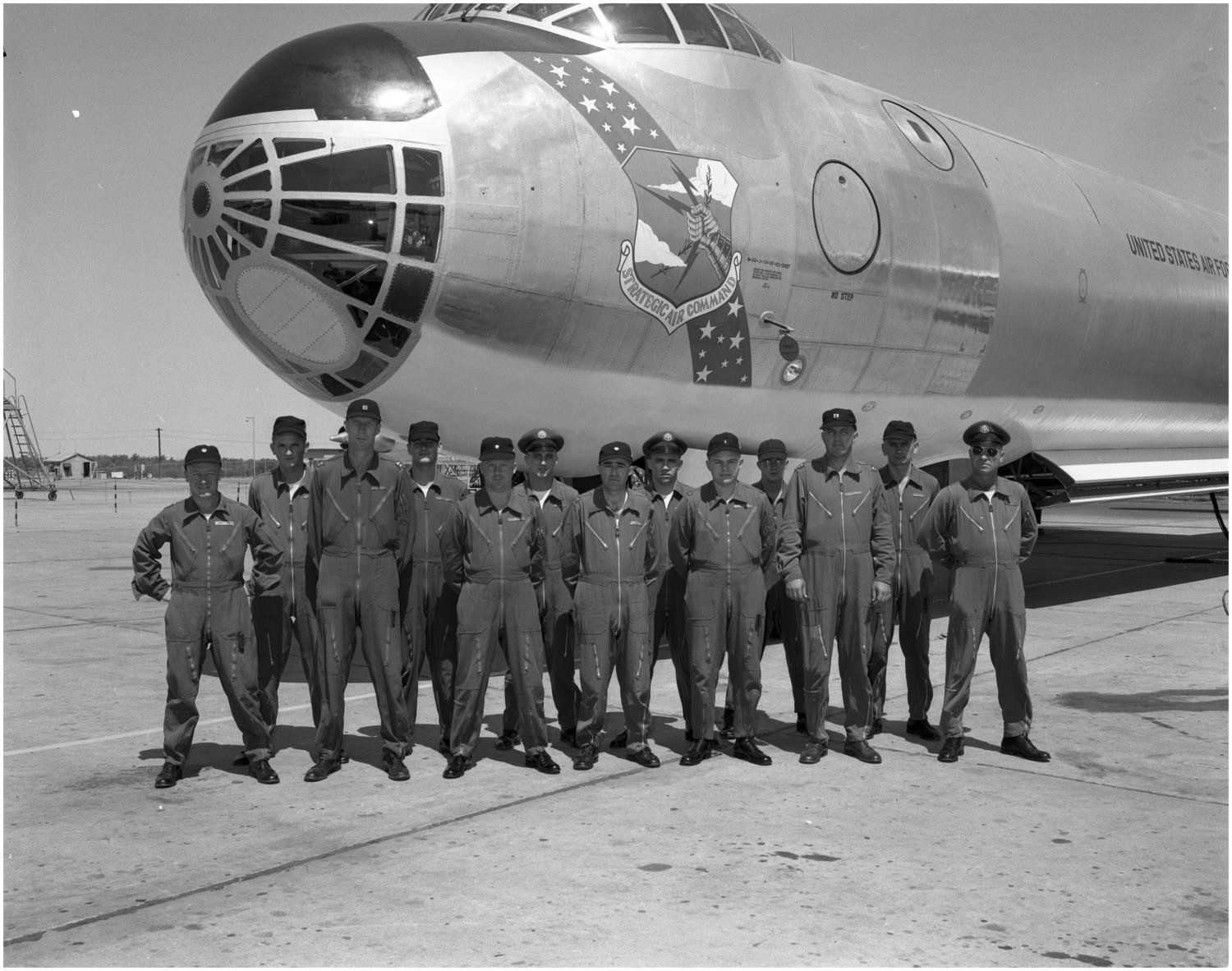
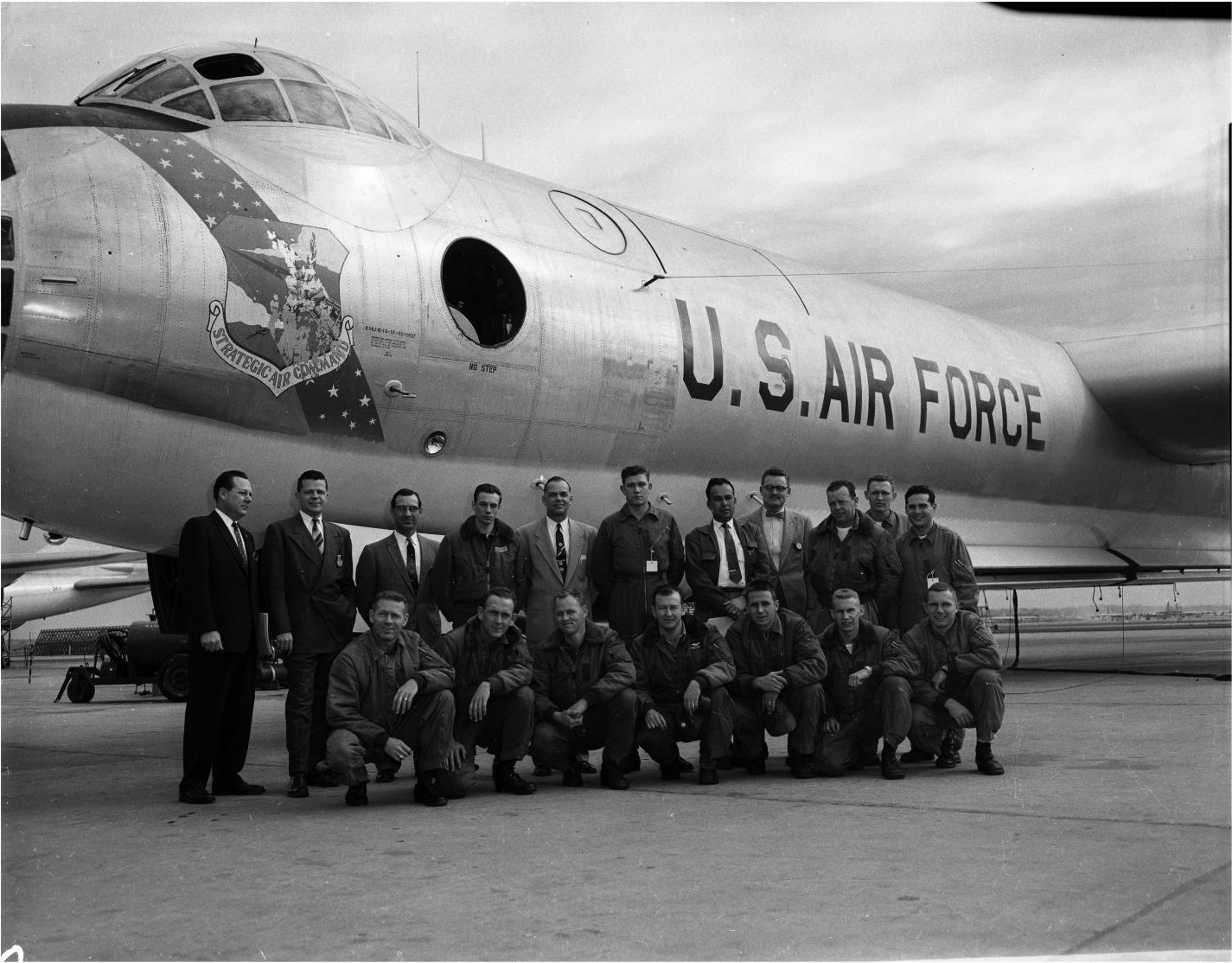
completion. The third photo shows the aircraft upon
delivery to the USAF. The small "UNITED STATES AIR FORCE"
lettering would soon disappear to be replaced by the larger
"U.S. AIR FORCE". The final photo probably shows 2827 when
she transferred to the 95th BW (University of North Texas)
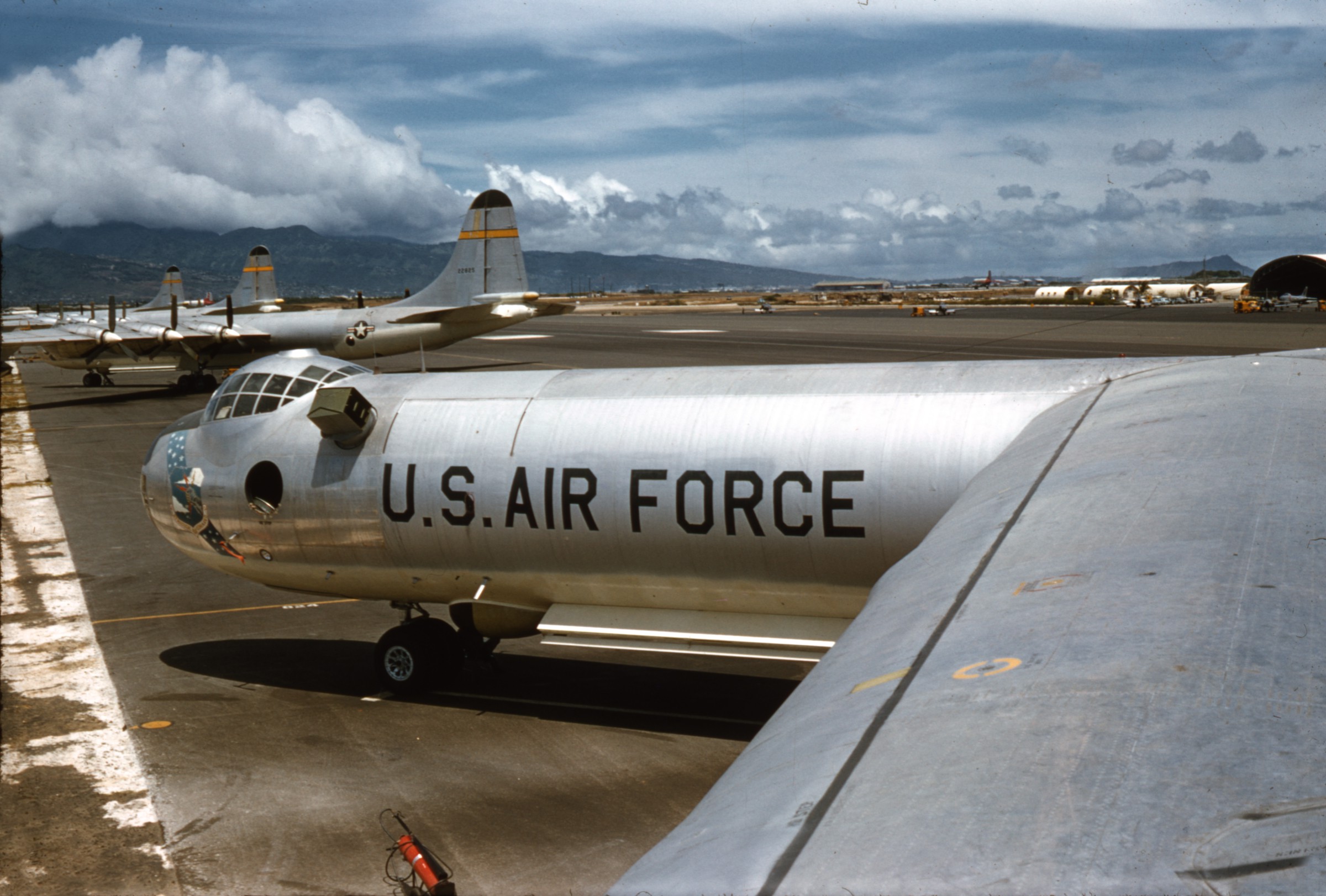
A line up of B-36Js in Hawaii during the
Spring of 1956. In the foreground is 52-2824 and in
the background are 2825, 2826 and 2827. The box
contraption on 2824 is a sampler to collect traces of fallout
from the upper atmosphere during reconnaissance missions.
(courtesy of Wayne Reece)
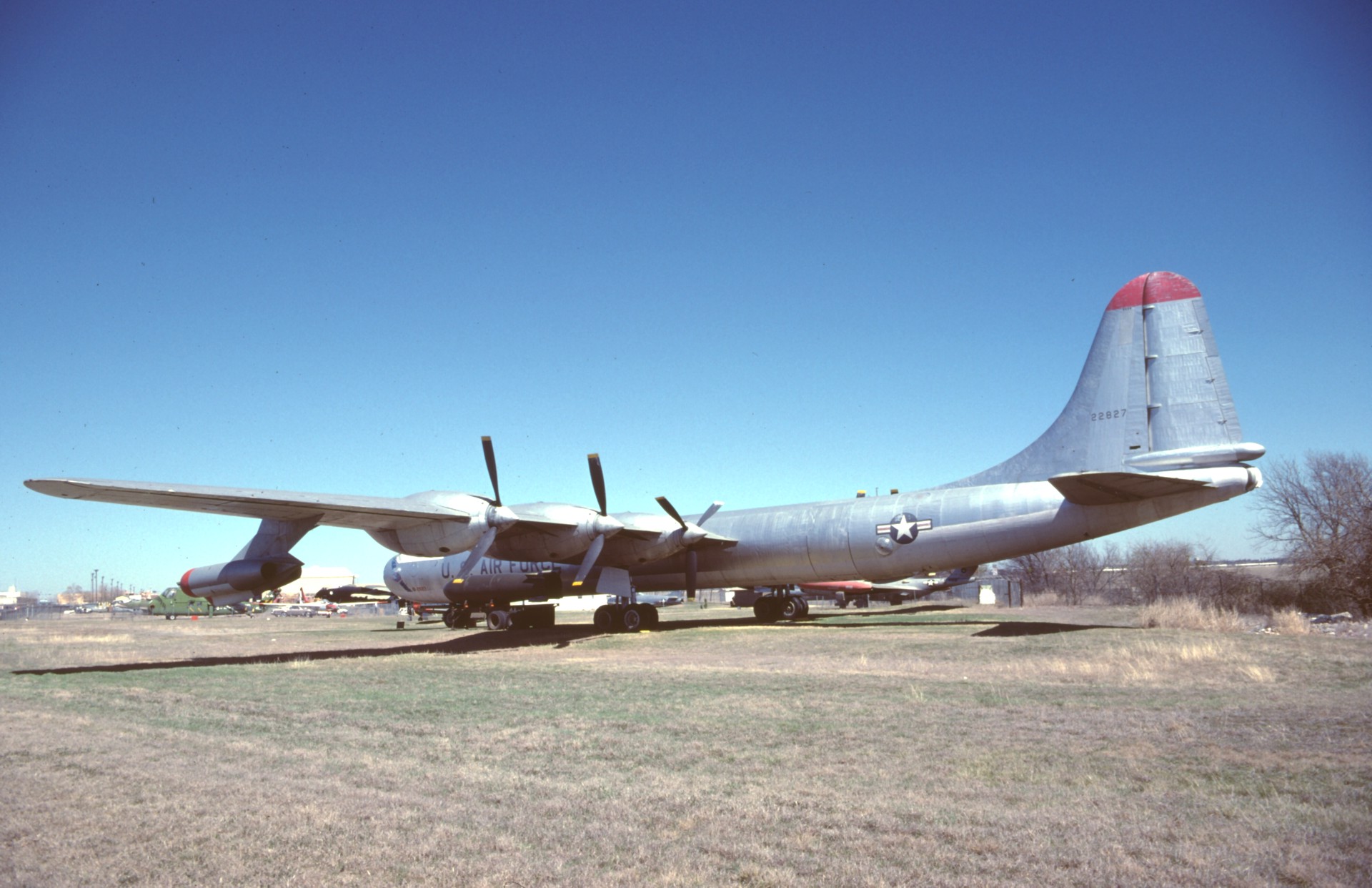
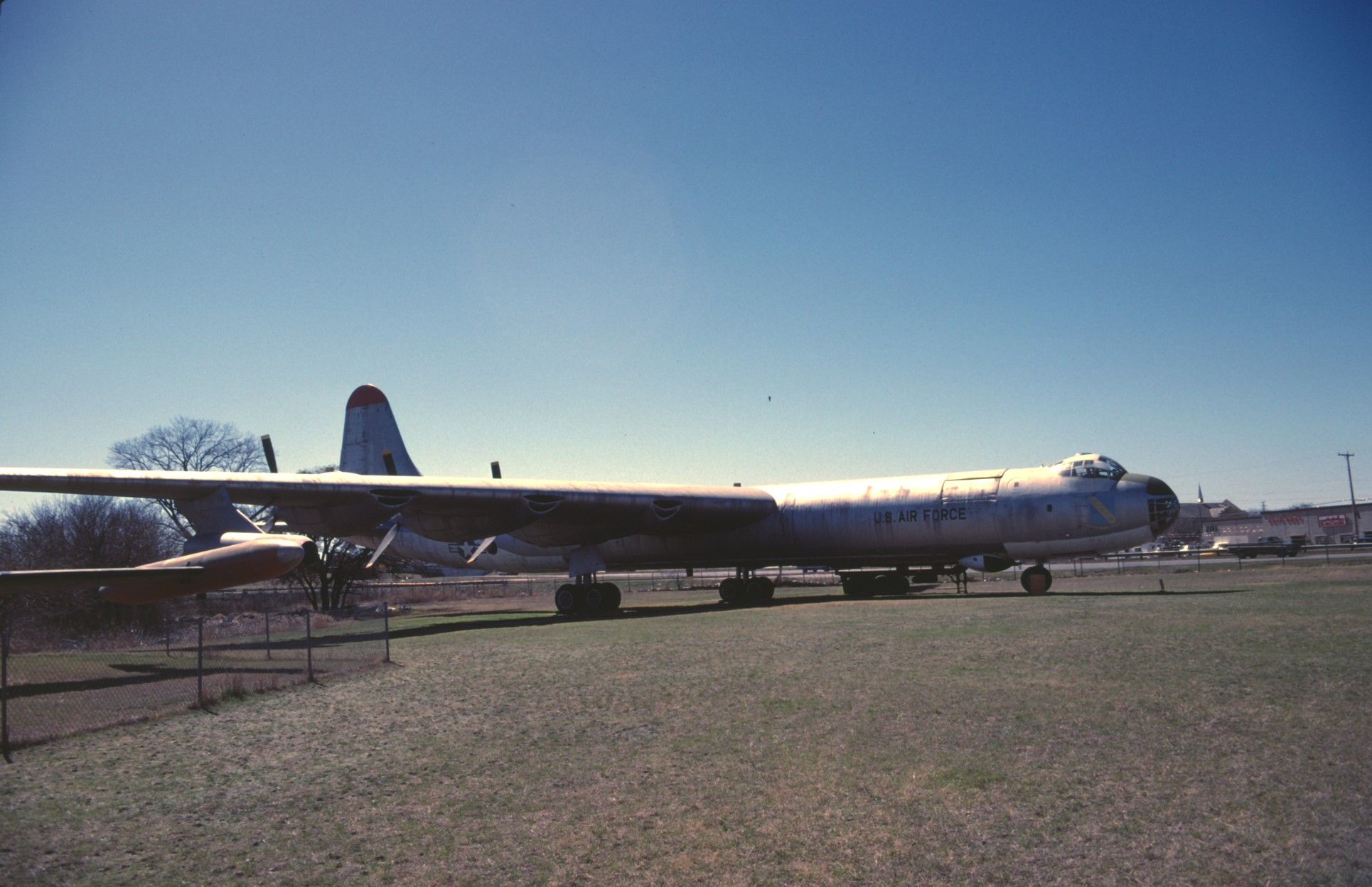
Carrying spurious 11th BW markings, 2827 is
on display at the Southwest Aerospace Museum in March,
1988. This museum was located outside Carswell AFB.
By this time the aircraft had been disassembled for the move
from the Greater Southwest Airport and reassembled at the new
location. This museum closed in the early 1990s leaving
2827 homeless. For several years volunteers worked on
restoring her at the General Dynamics plant in Fort Worth.
The GD plant had been Convair, this was to change again when
Lockheed-Martin bought GD.
In 2004 the USAF decided that the best course
of action to preserve 52-2827 was to loan the aircraft to the
Pima Air & Space Museum. In July, 2005 the aircraft
was moved to Pima
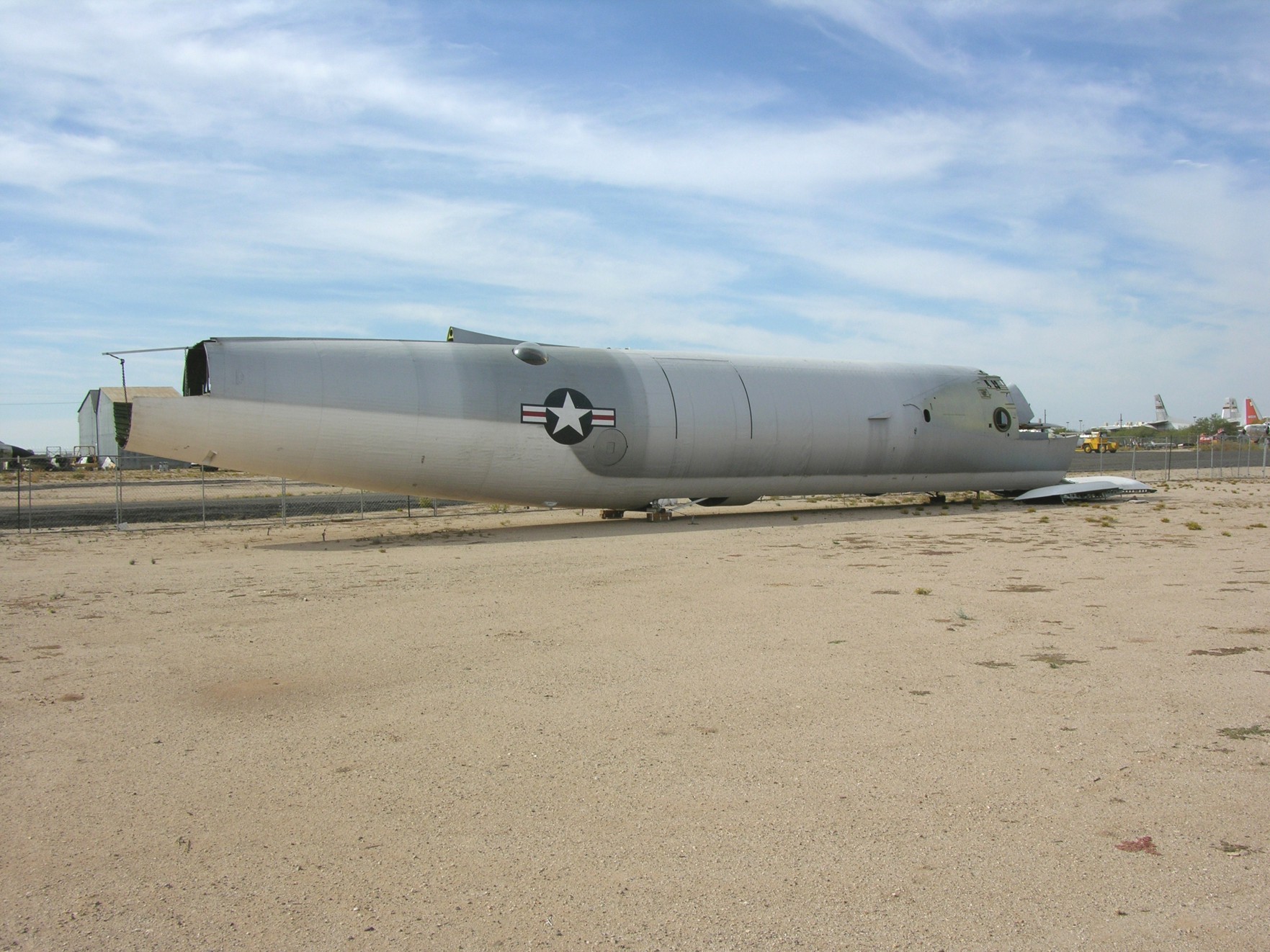
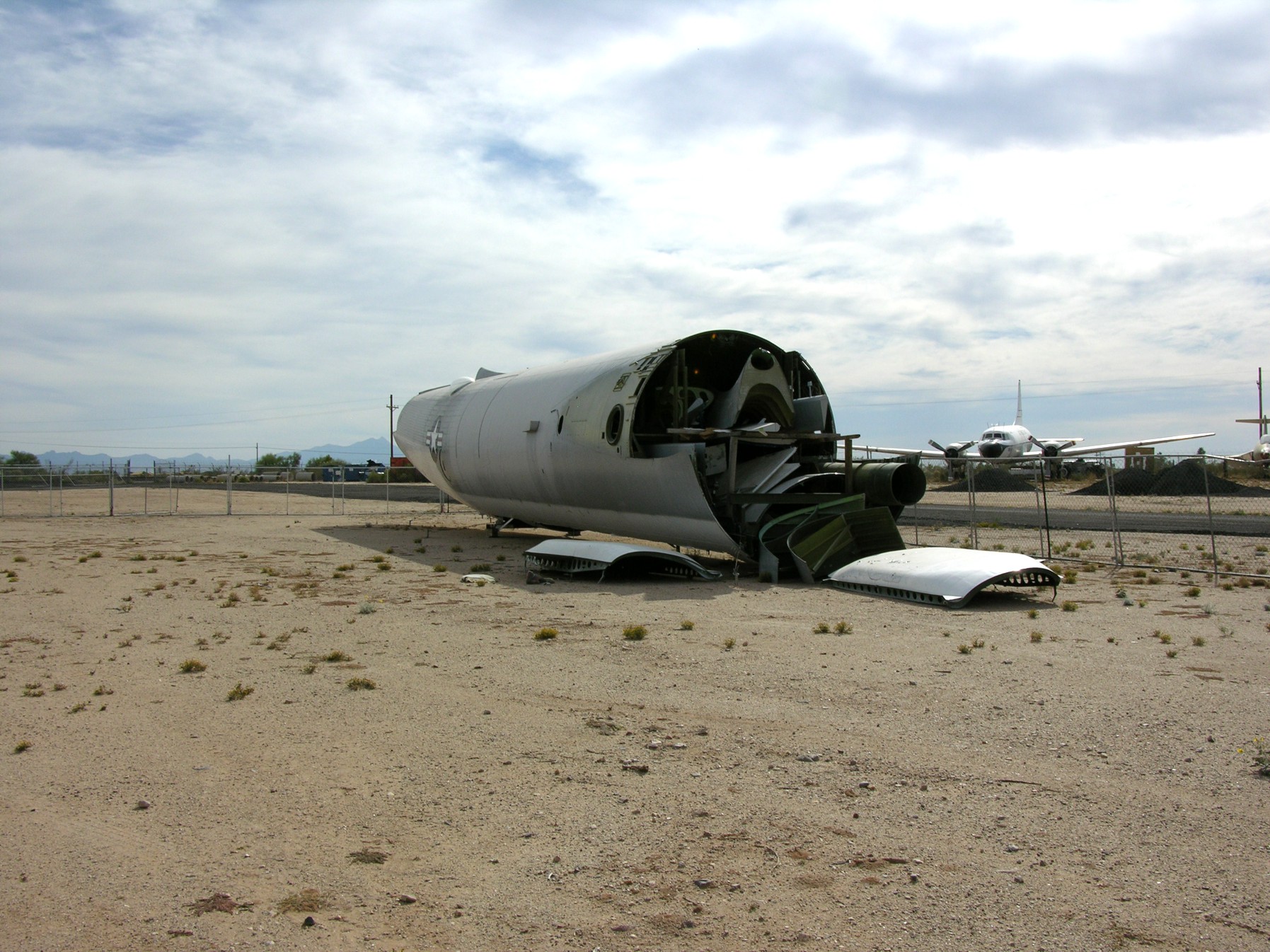
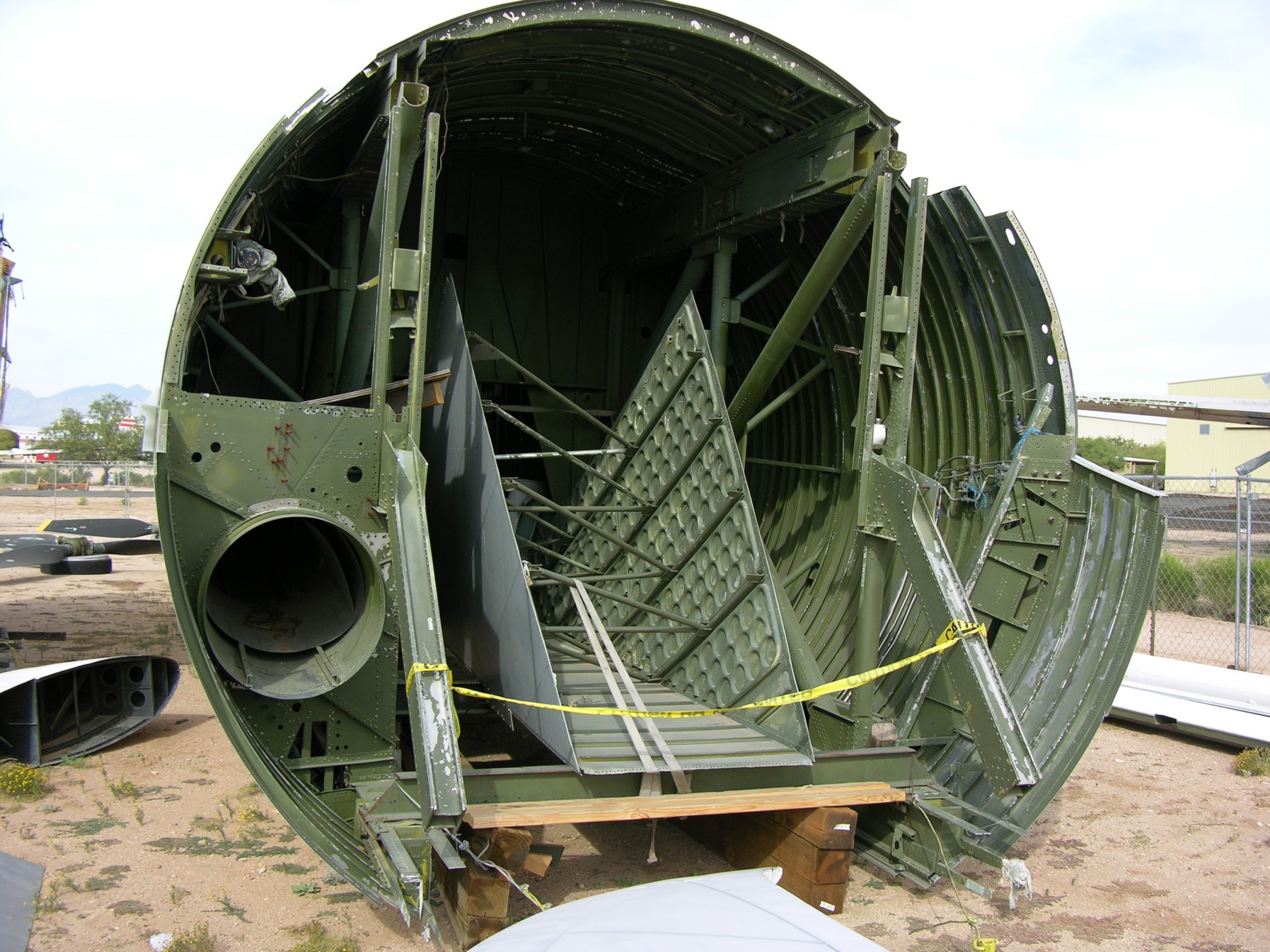
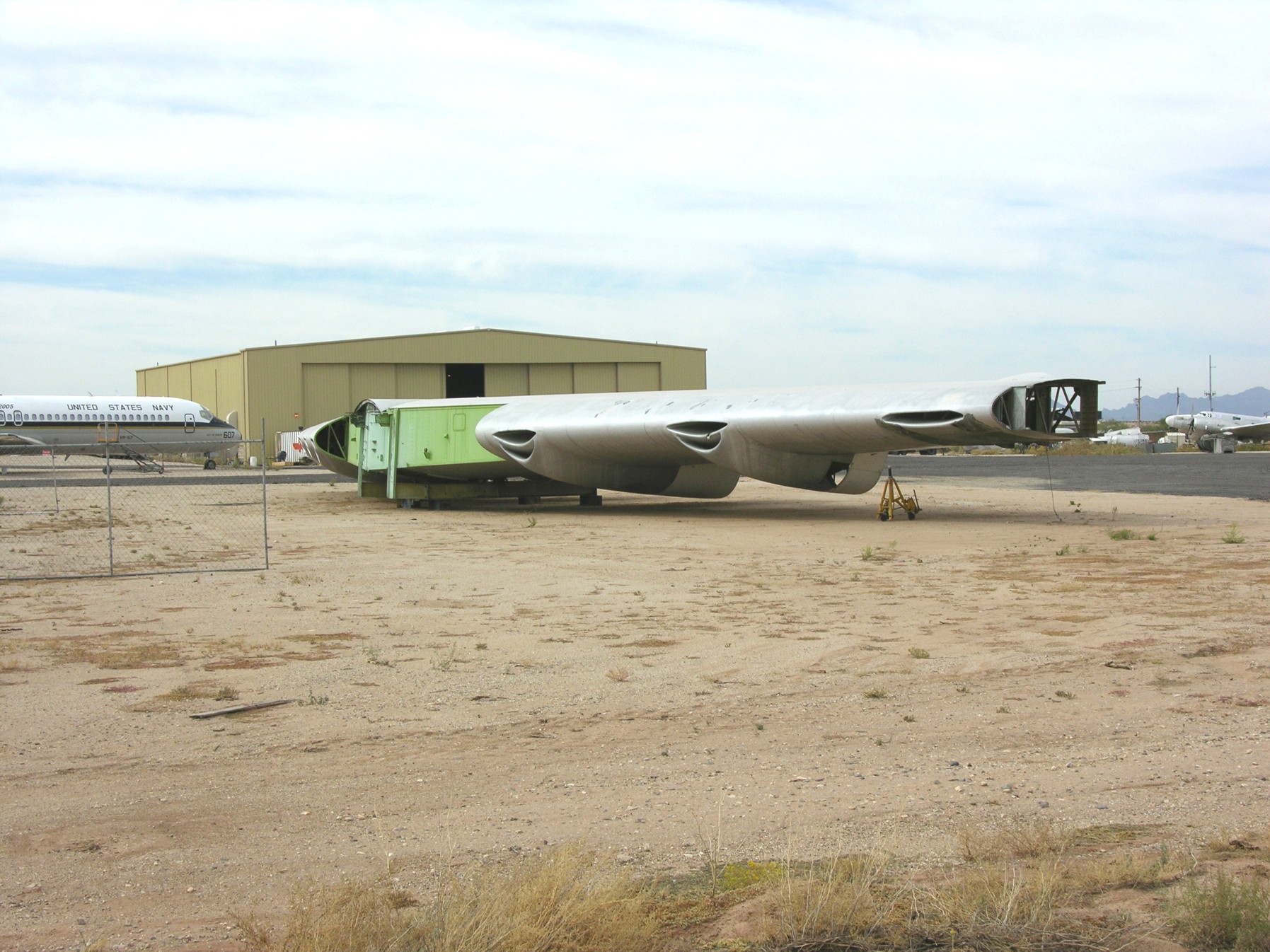
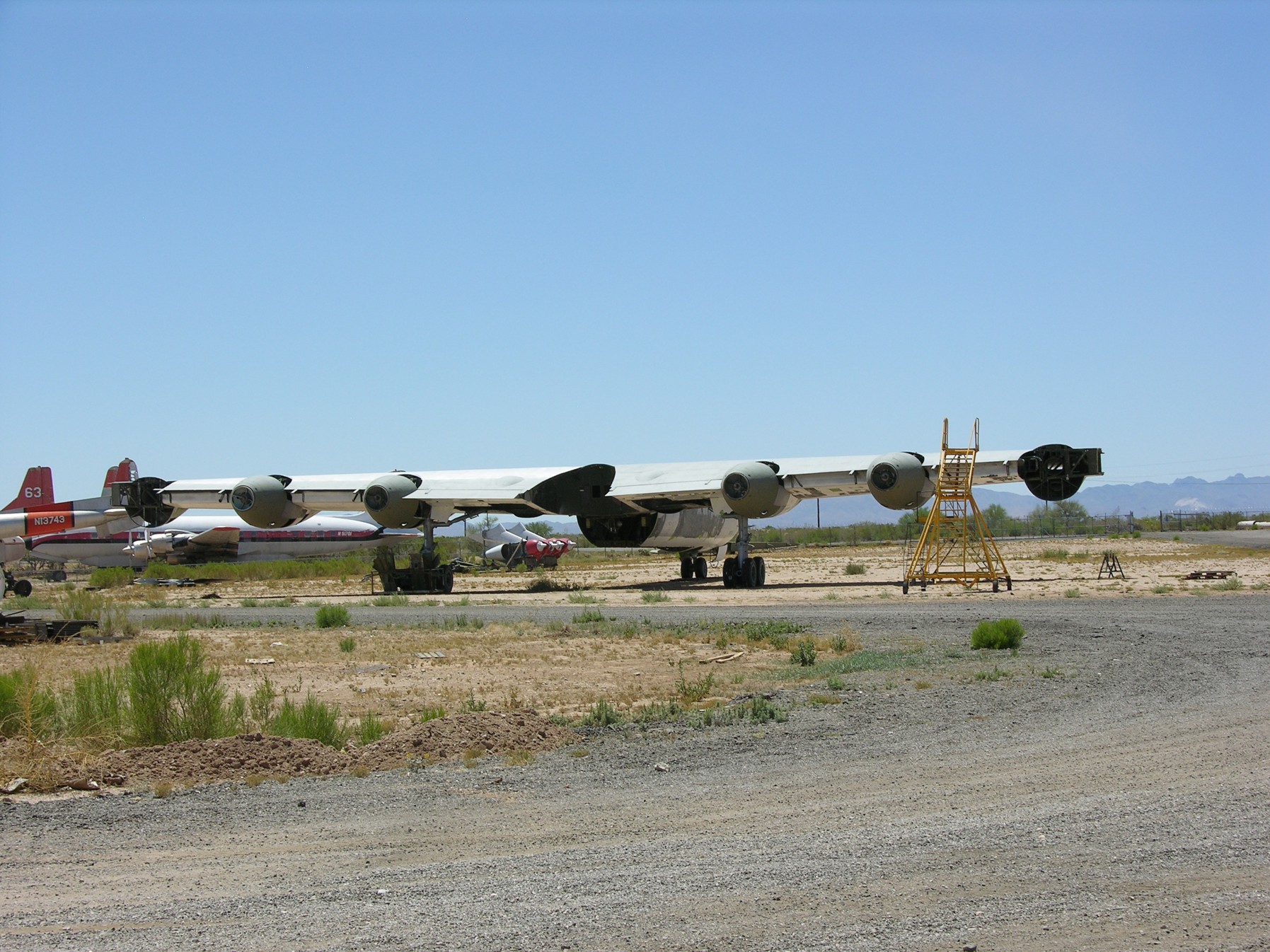
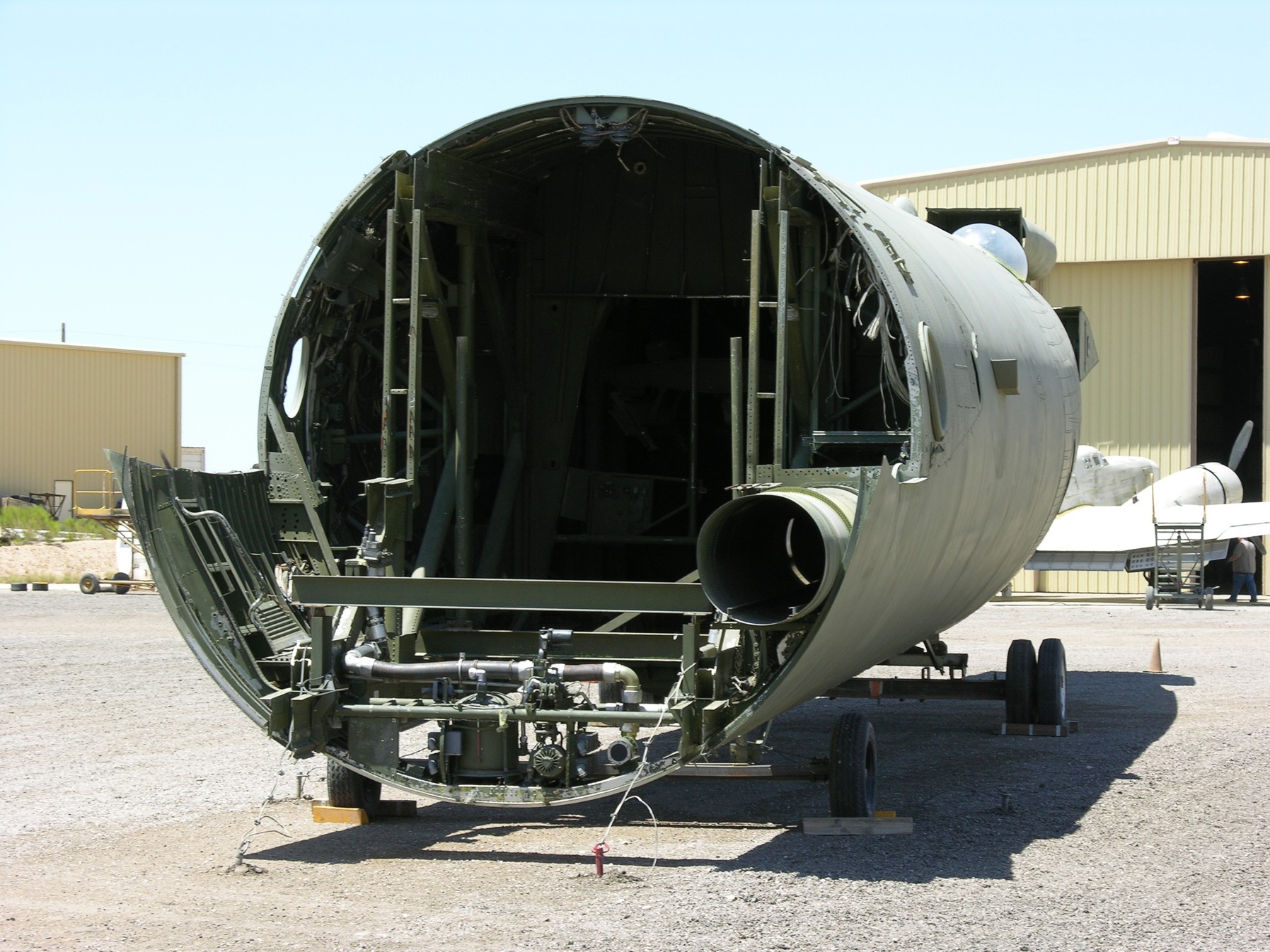
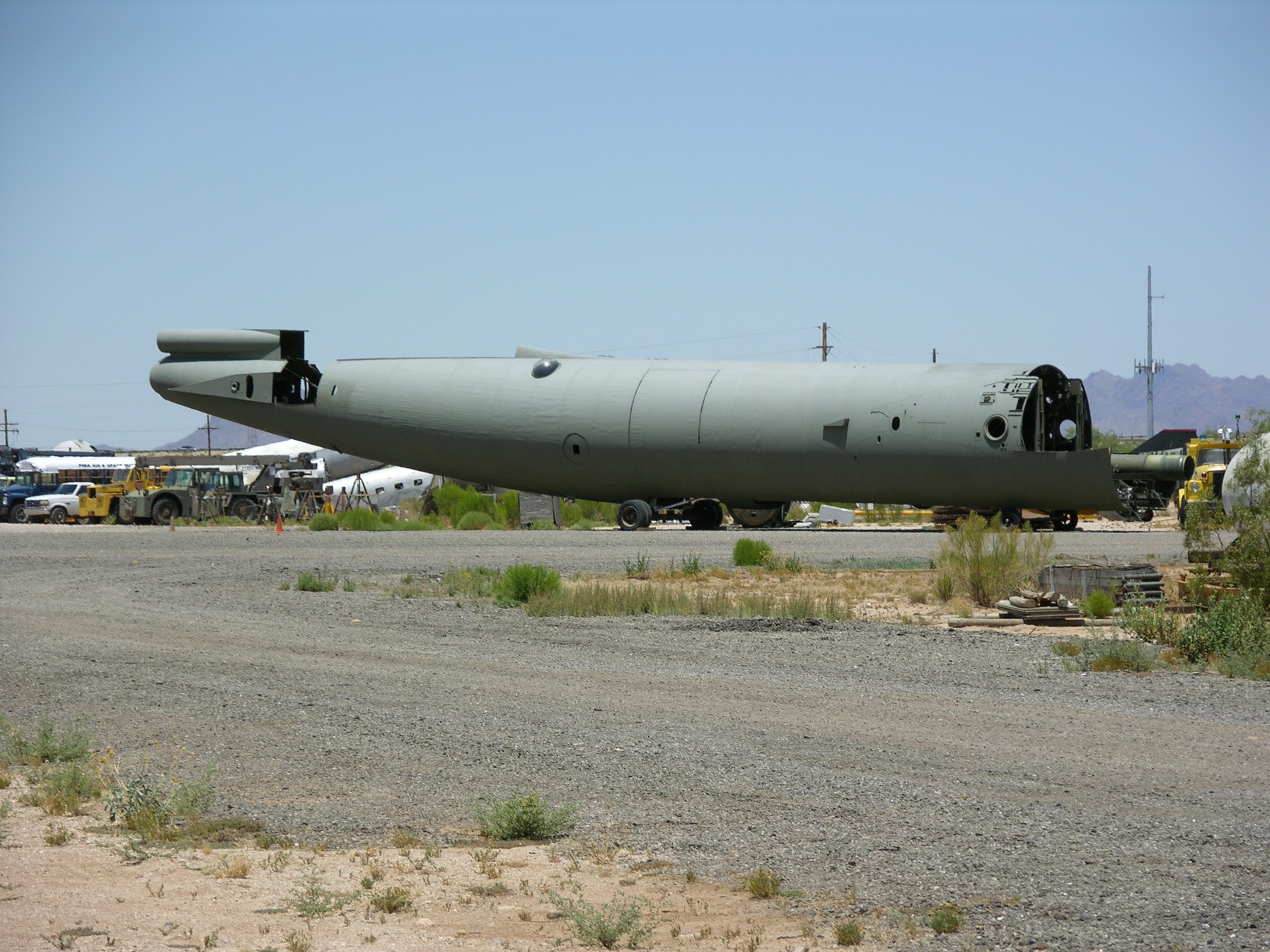
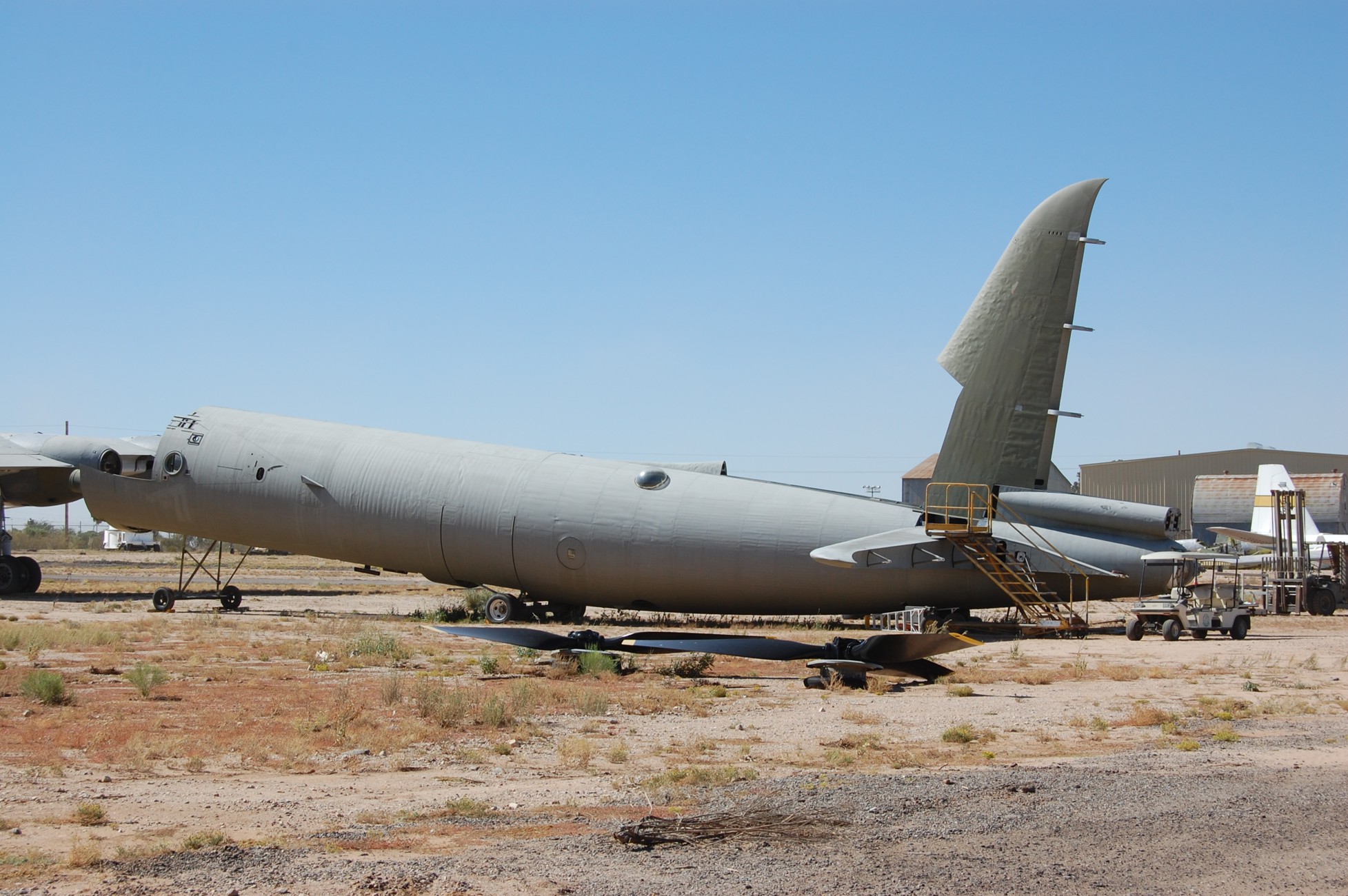
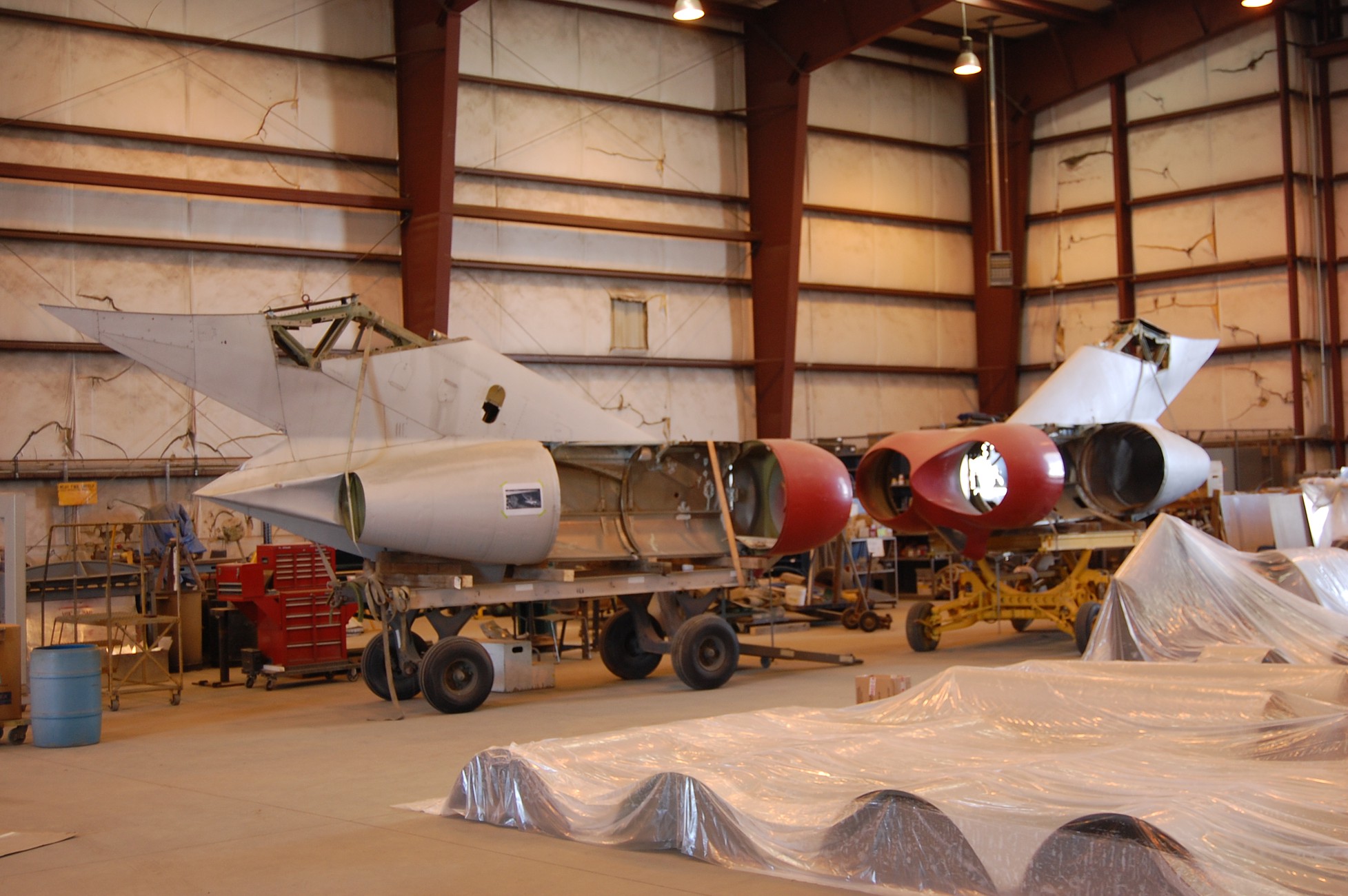
After arrival at Pima it took several months
of planning and surveying the condition of the airframe prior to
reassembly. The above photos were taken in November, 2005.
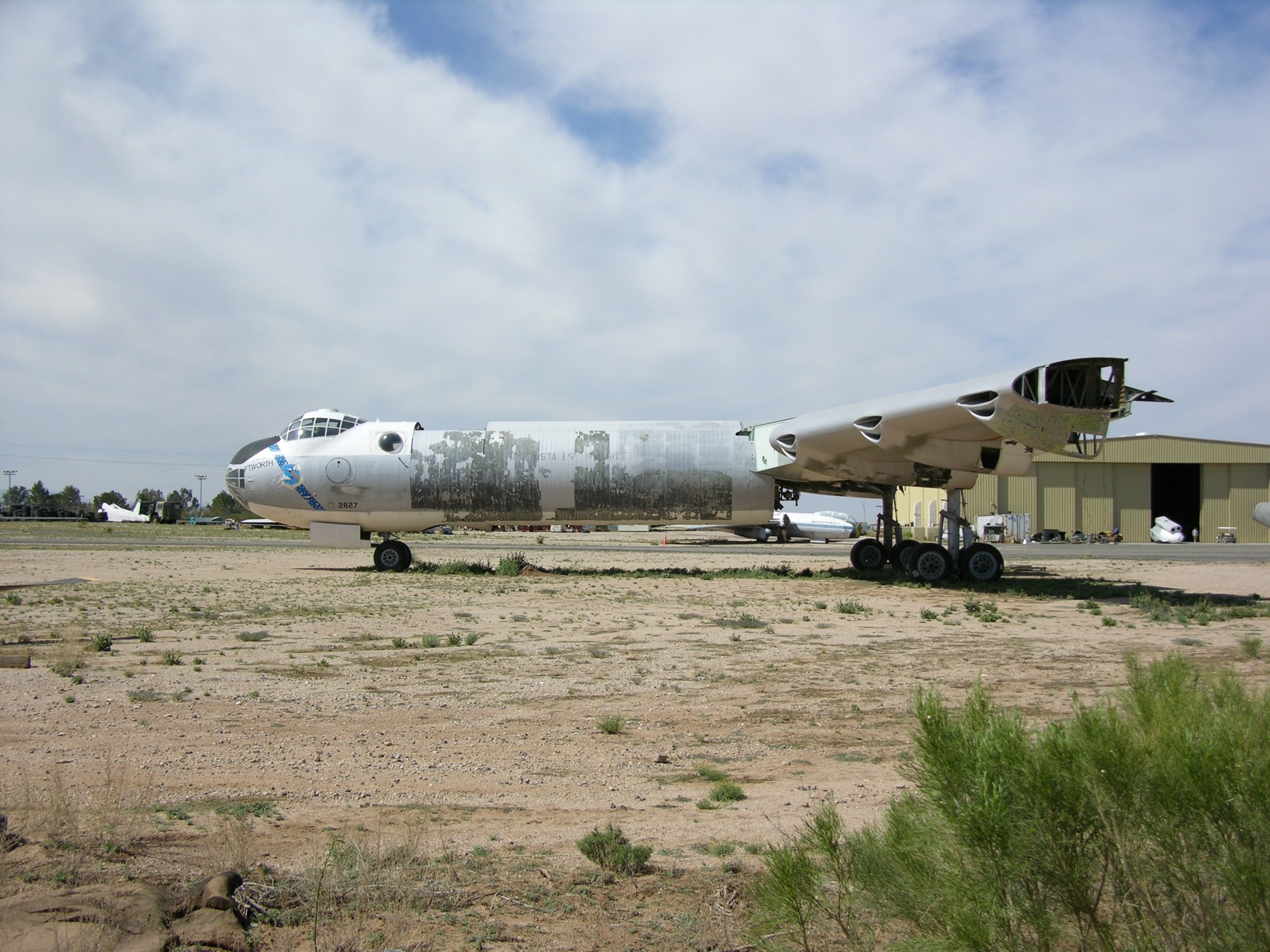
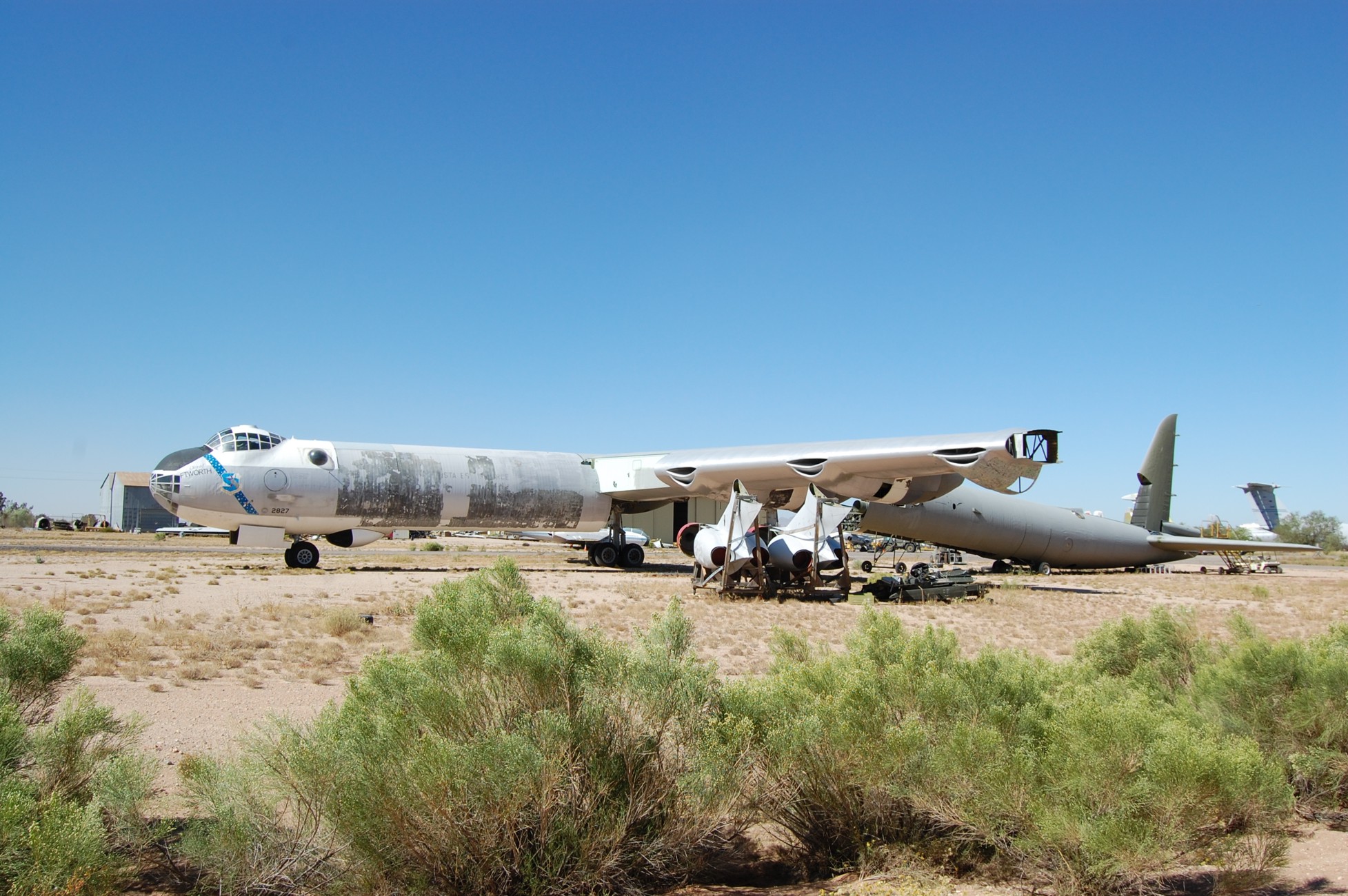
Reassembly started in late 2005, but
progressed slowly due to corrosion in the airframe that had to
be dealt with. Though a great amount of work had been put
into preserving the aircraft while still in Fort Worth the Texas
climate had been hard on the airframe. Photos date from
March, 2007.
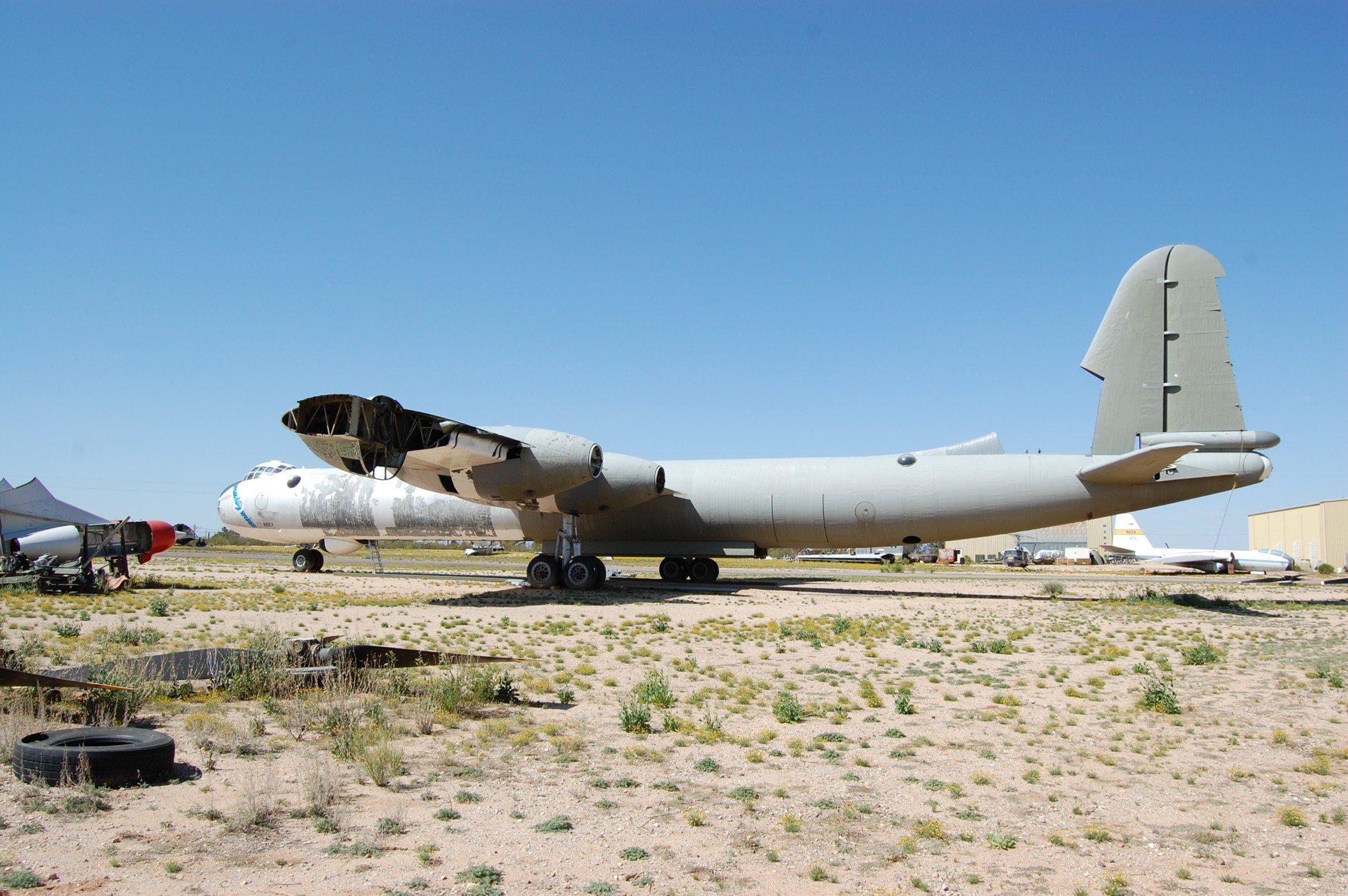
Progress in June, 2007 consists of attaching
the nacelles and work to the aft fuselage.
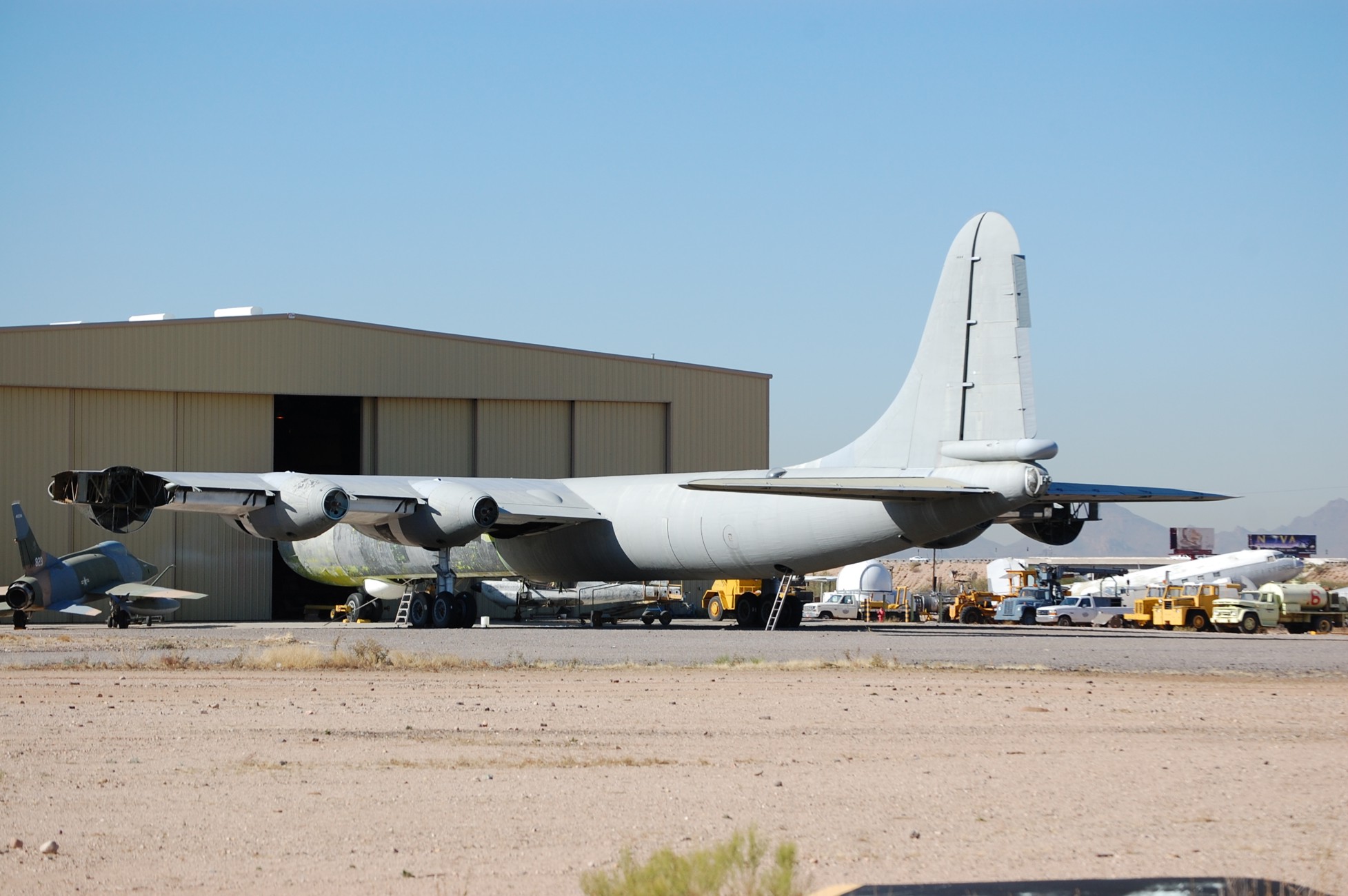
In October, 2007 work was well under way in
preparation of attaching the aft fuselage to the forward
section. This was accomplished late that year.
By the time these photos were taken in April,
2008 the aft section was attached and many of the smaller
components were under restoration inside the hangar. Note
the transit damage to the nacelle in the background of the first
photo.
By December 0f 2008 the major portions of the
airframe were assembled and painting was set to begin. The
Hun to the left was being prepared for repainting, which would
be completed in a few weeks.
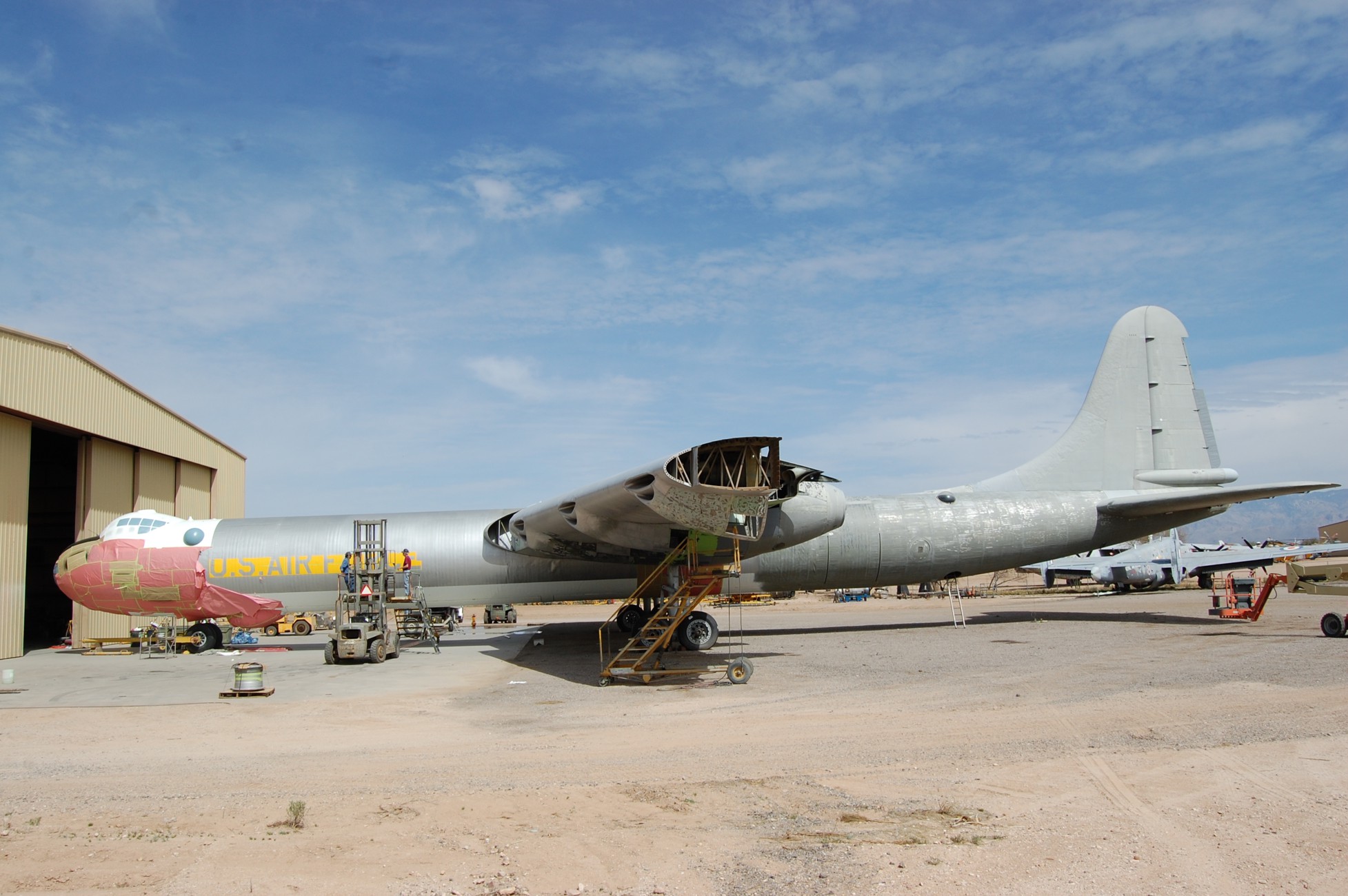
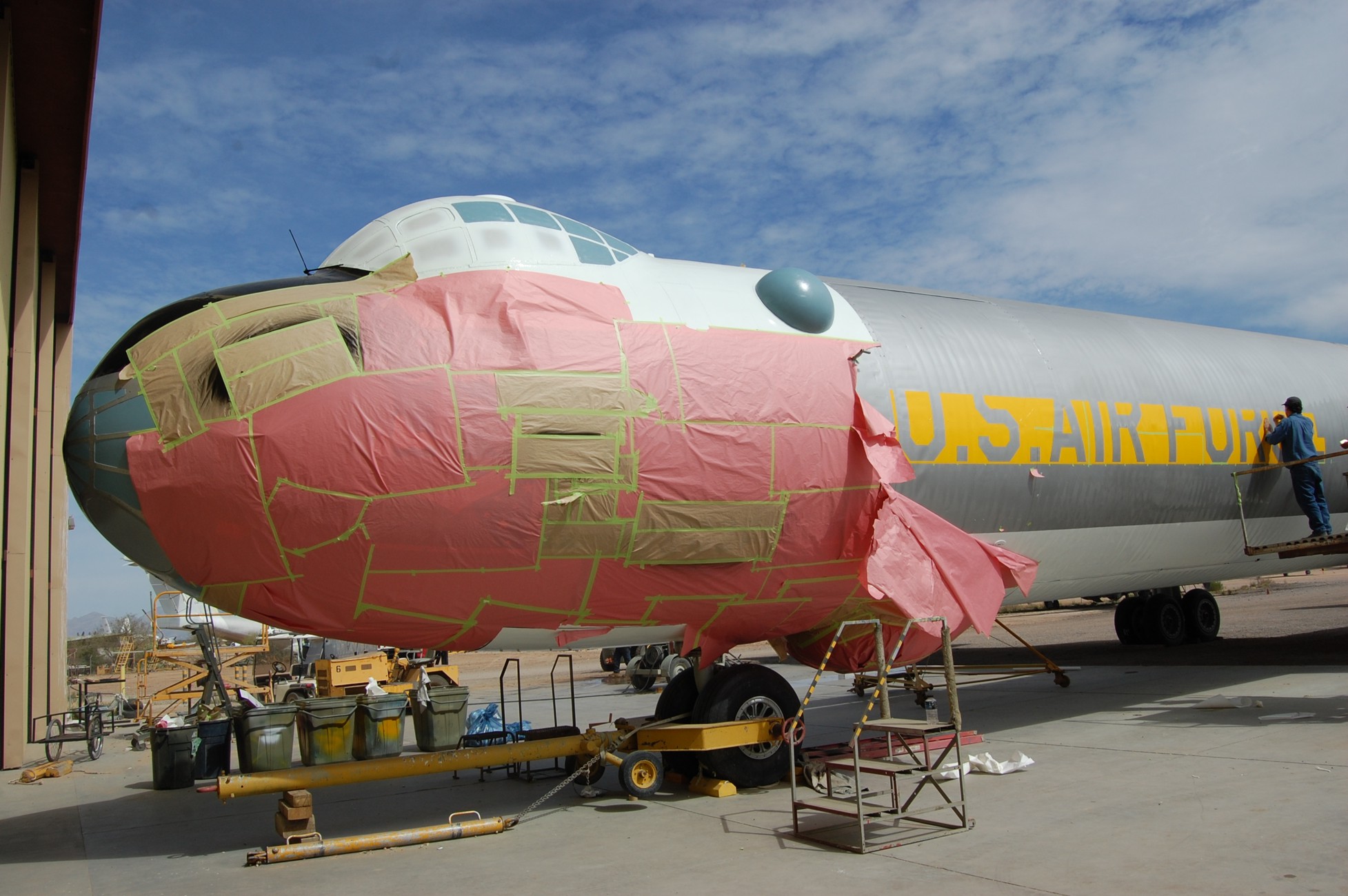
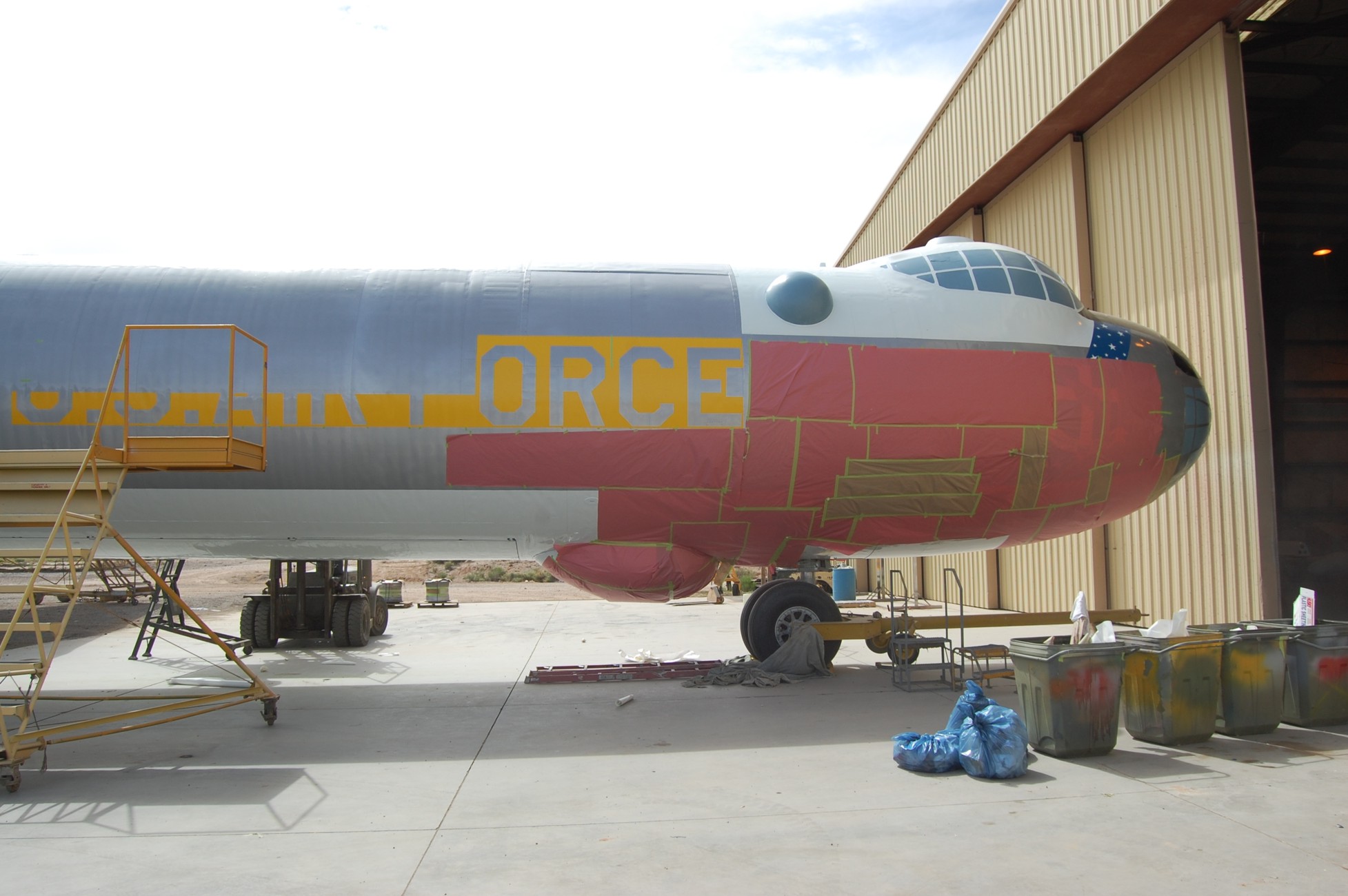
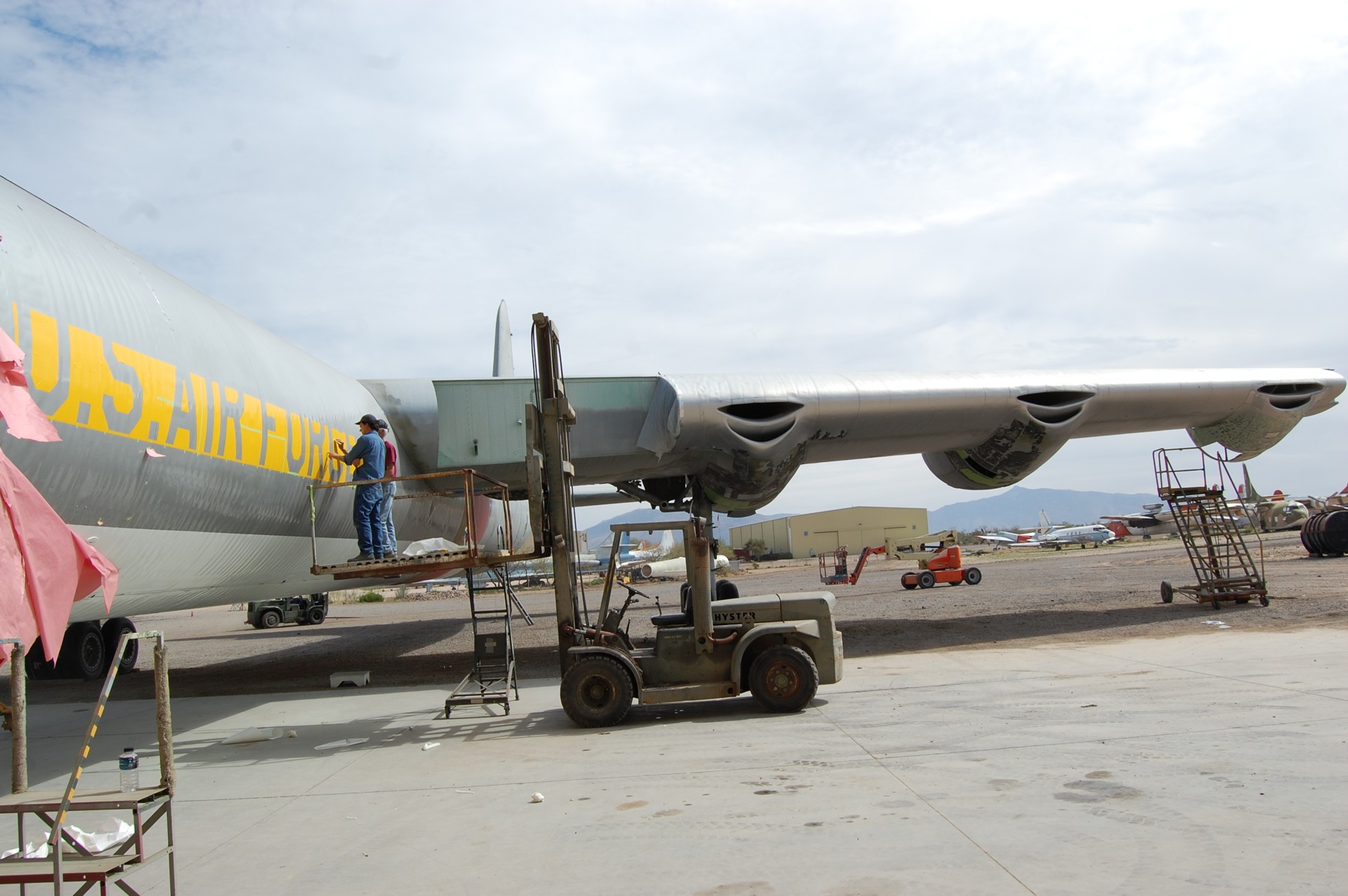
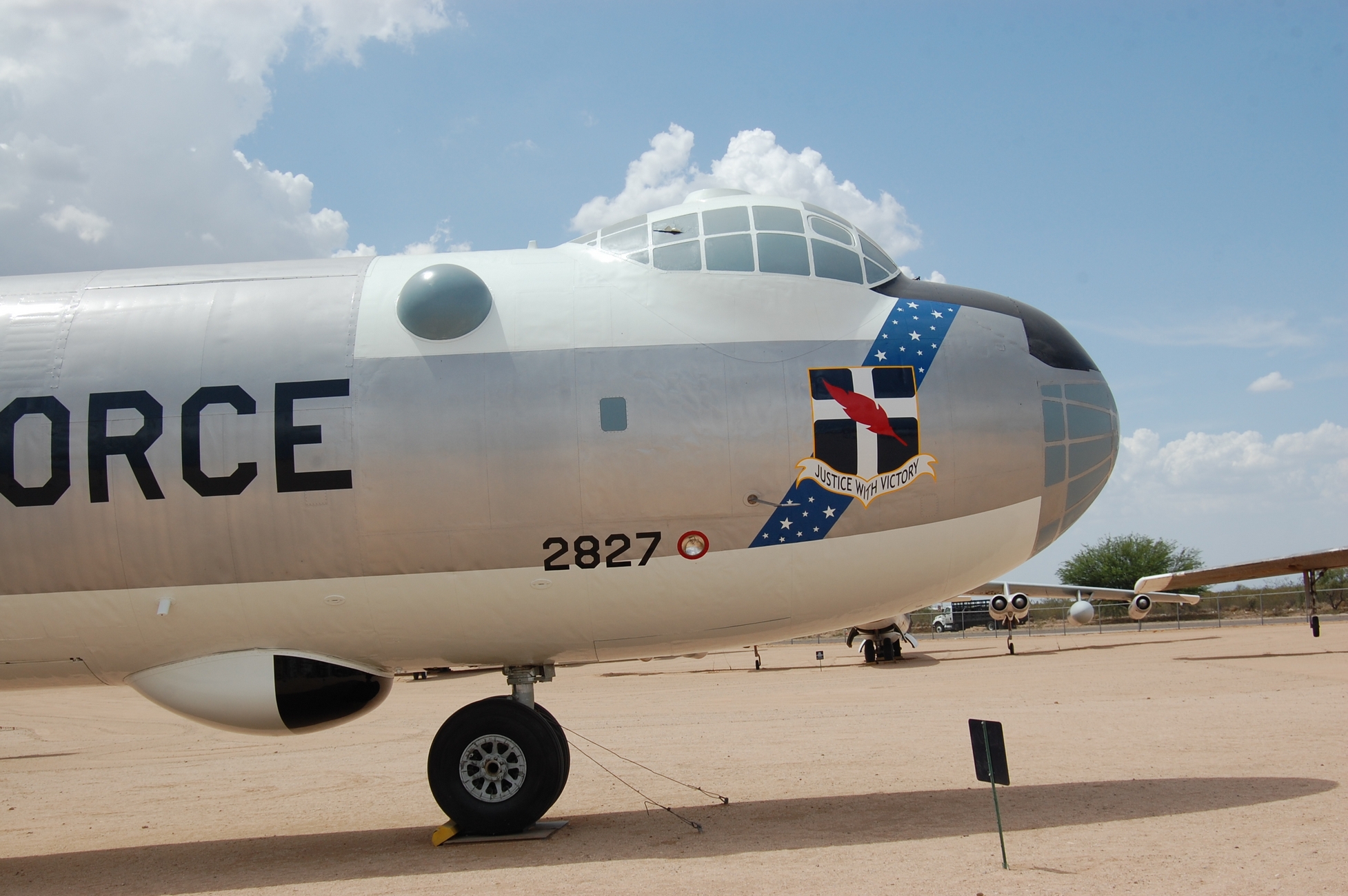
By March, 2009 a great deal of work had been
accomplished. The aircraft will be displayed in the
markings of the 95th Bomb Wing which it last served with prior
to retirement. The 6th and 95th Bomb Wings were unique in
having the area above the crew cabin painted white on most of
their airplanes. This was due to the extreme heat during
the summer at Walker and Biggs.
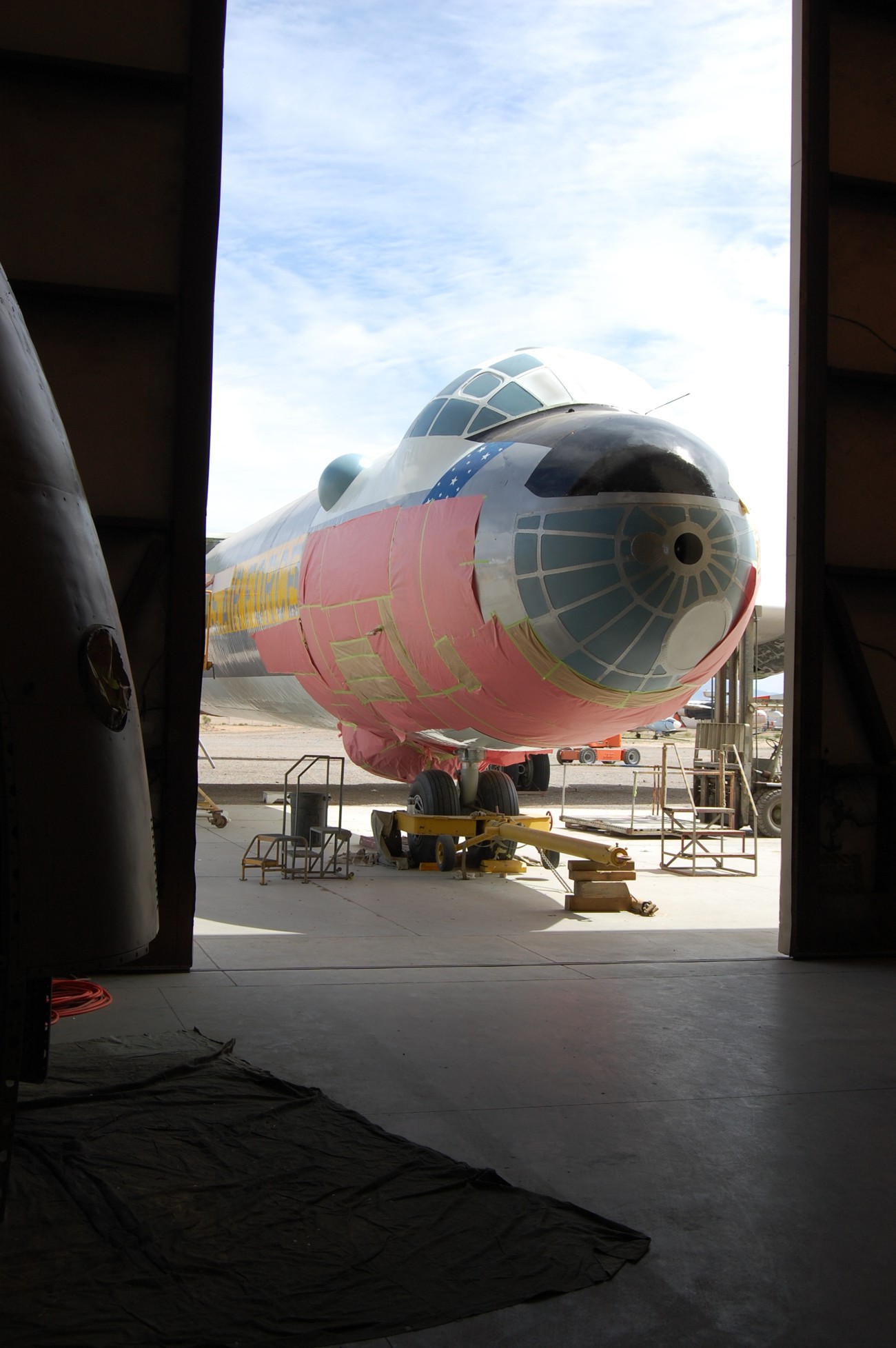
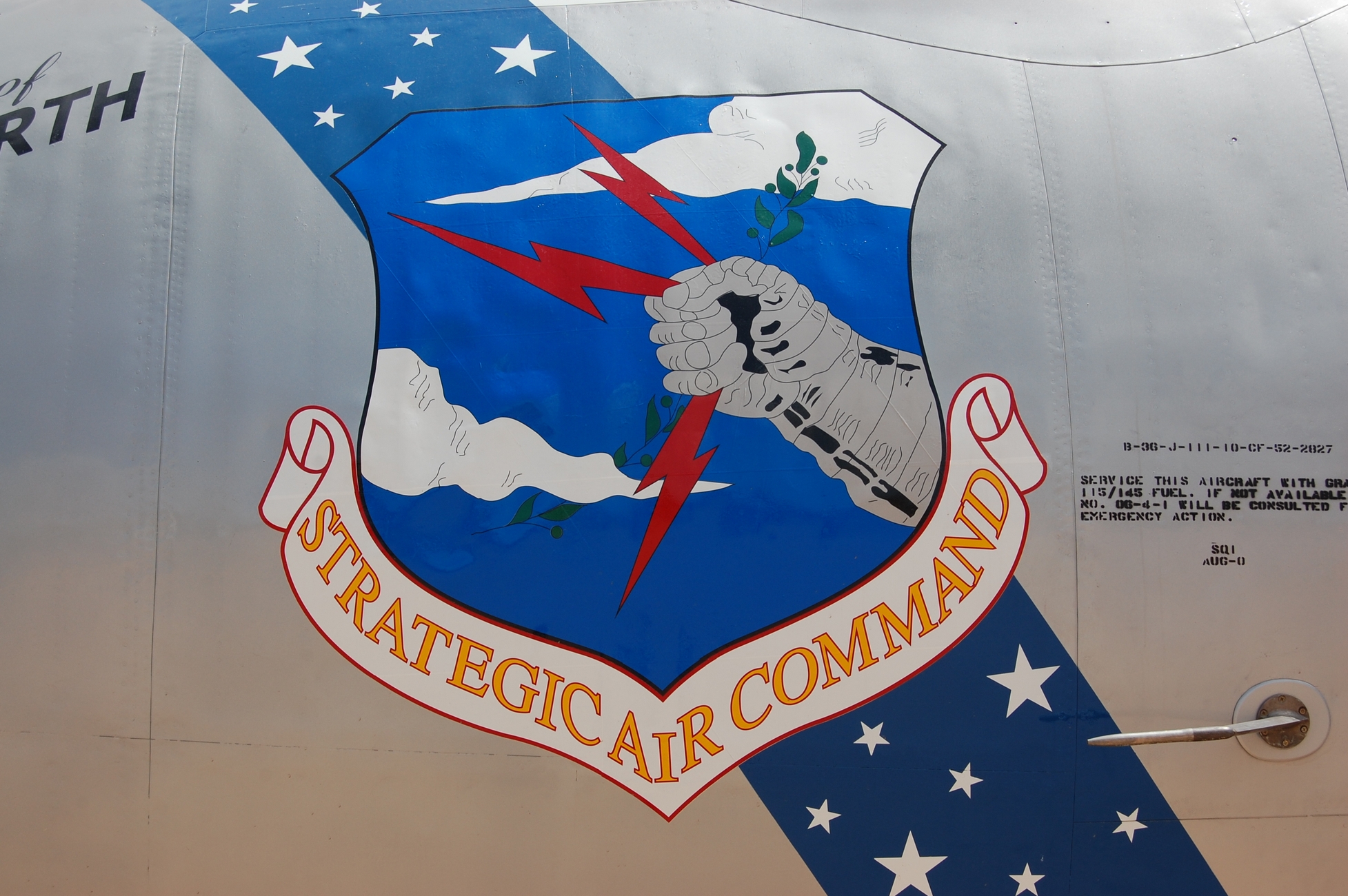
These photos were taken on Friday March 20,
2009. Over the weekend the protective paper was removed
revealing the SAC badge and the 95th emblem.
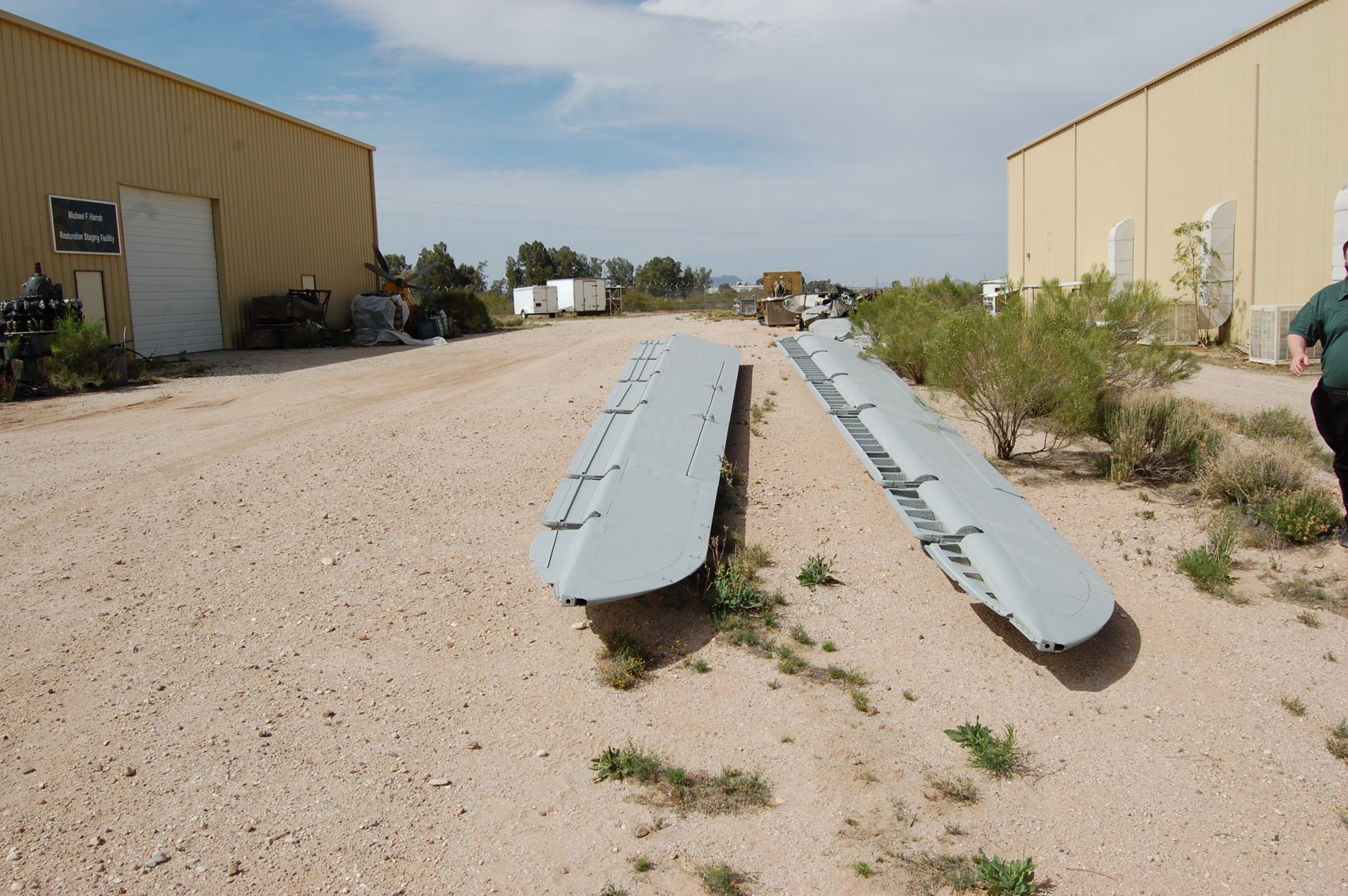
As of May 9, 2009 the outer wing panels were
in the process of being attached. I should have updated
photos within a few weeks. It is quite possible the
airplane will be ready for display by Memorial Day.
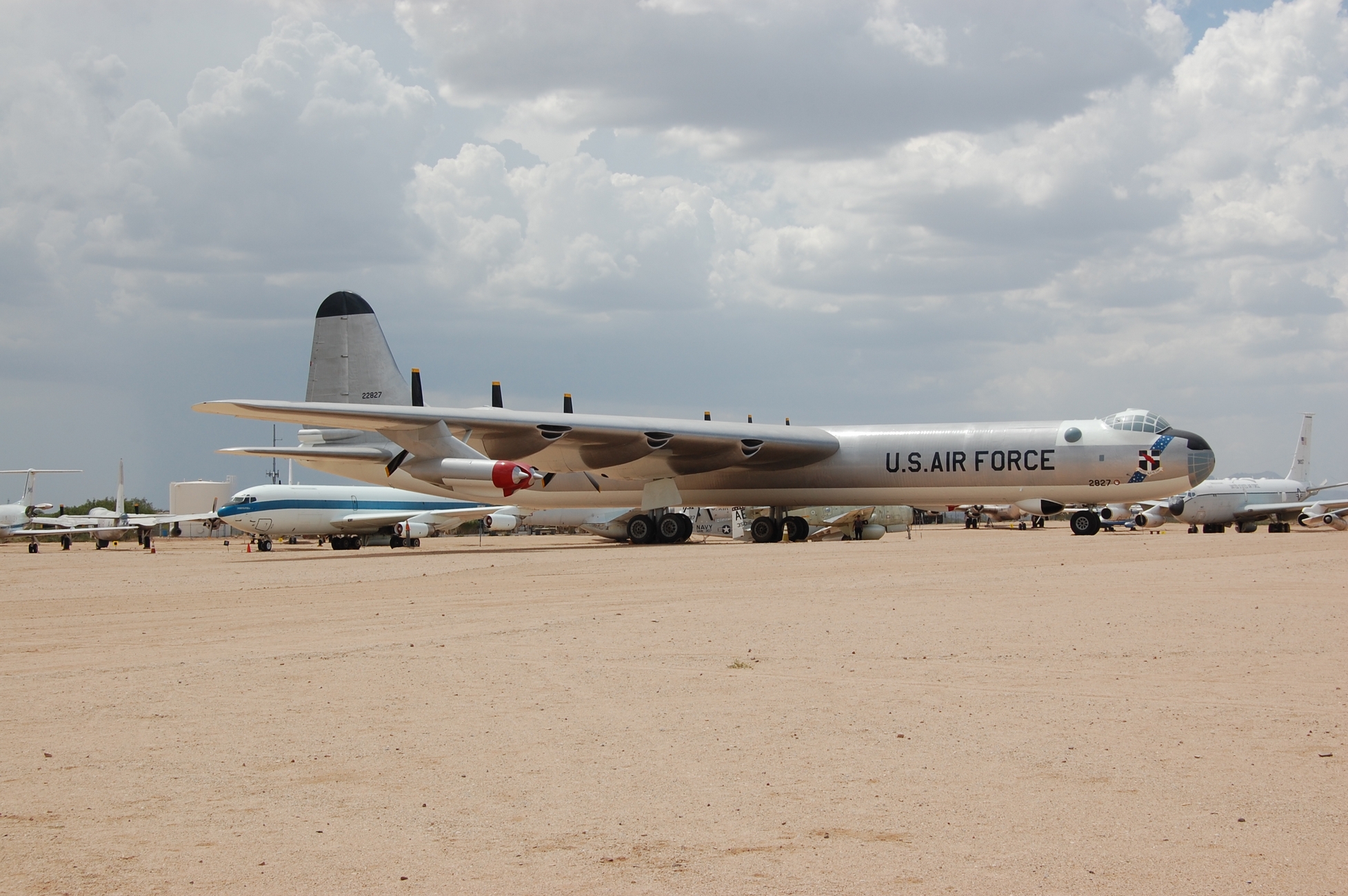
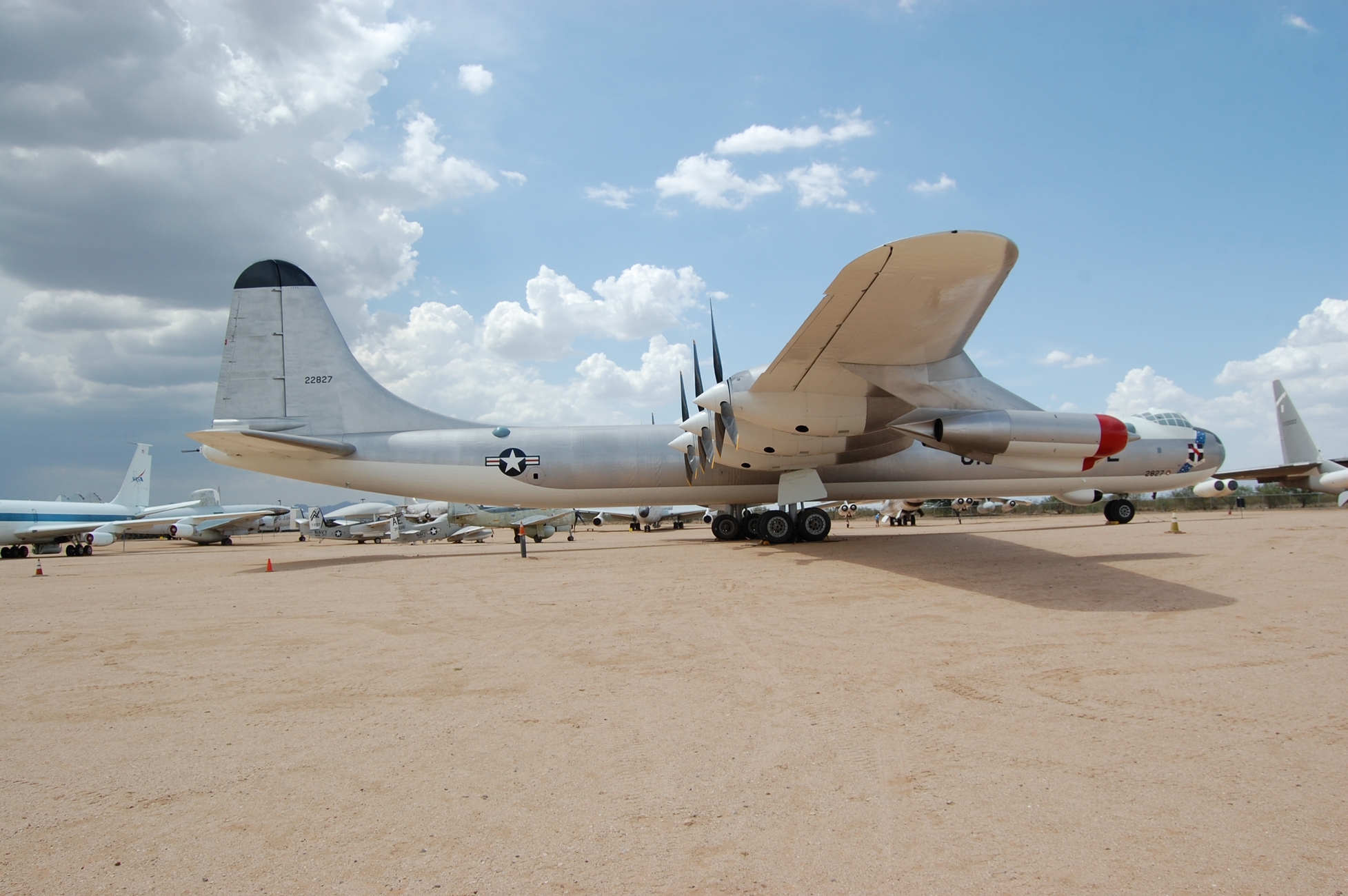
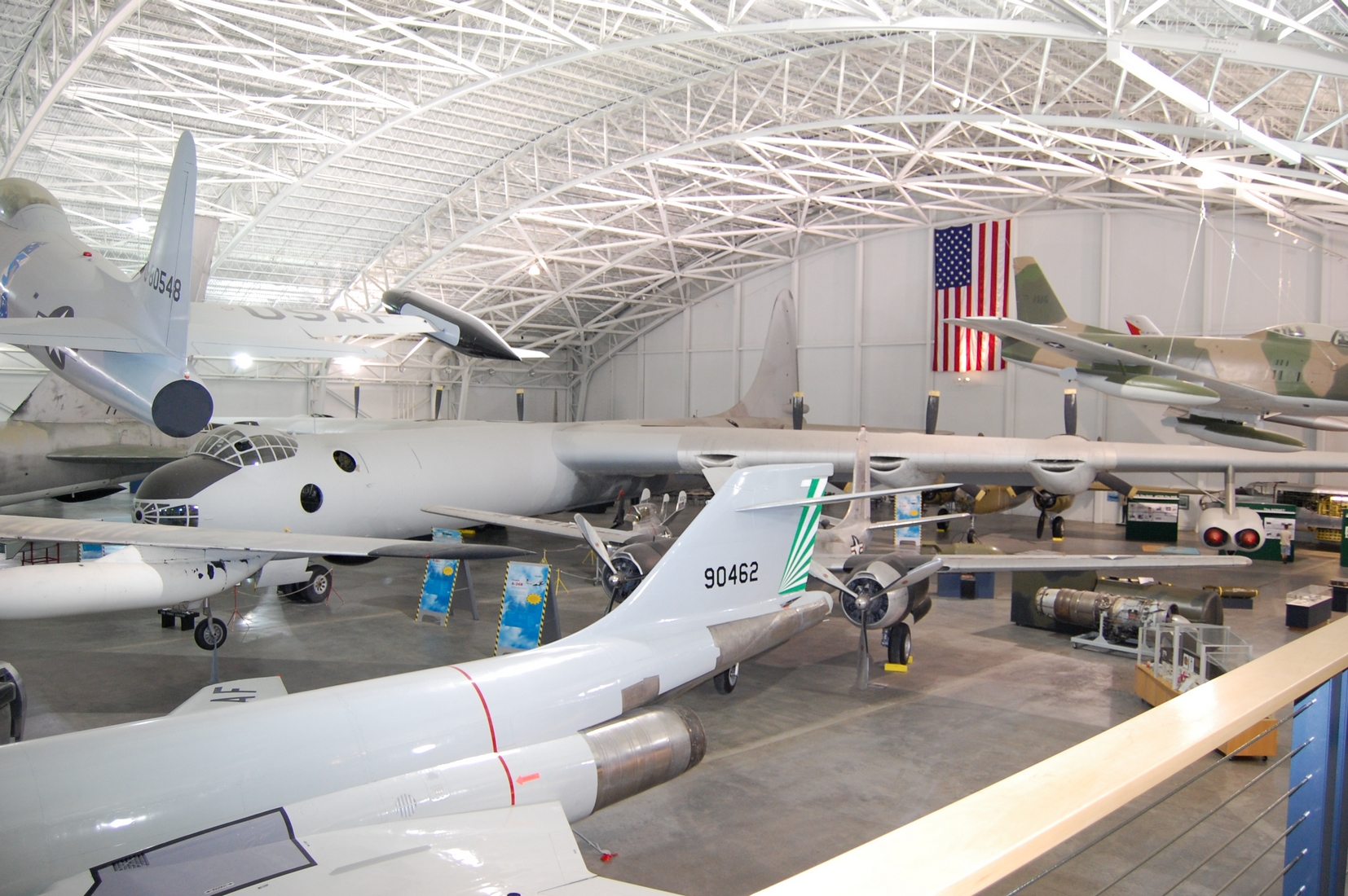
After four years
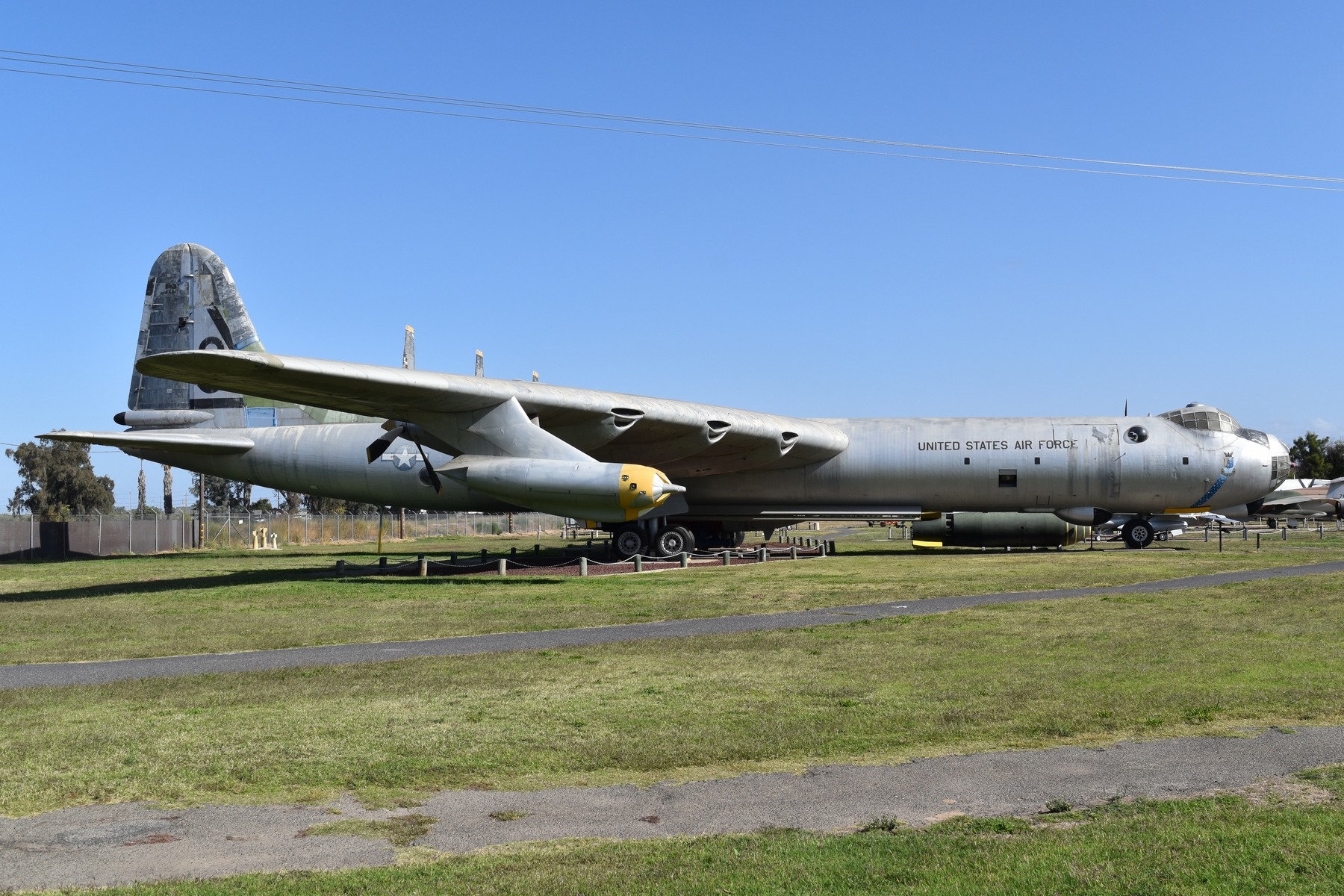
of hard work 2827 was placed back on public display in July,
2009. There are still some minor items to take care of and
probably will be for some time. It is hoped that
eventually the airplane will be displayed inside and future
plans call for a hangar large enough to house the monster.
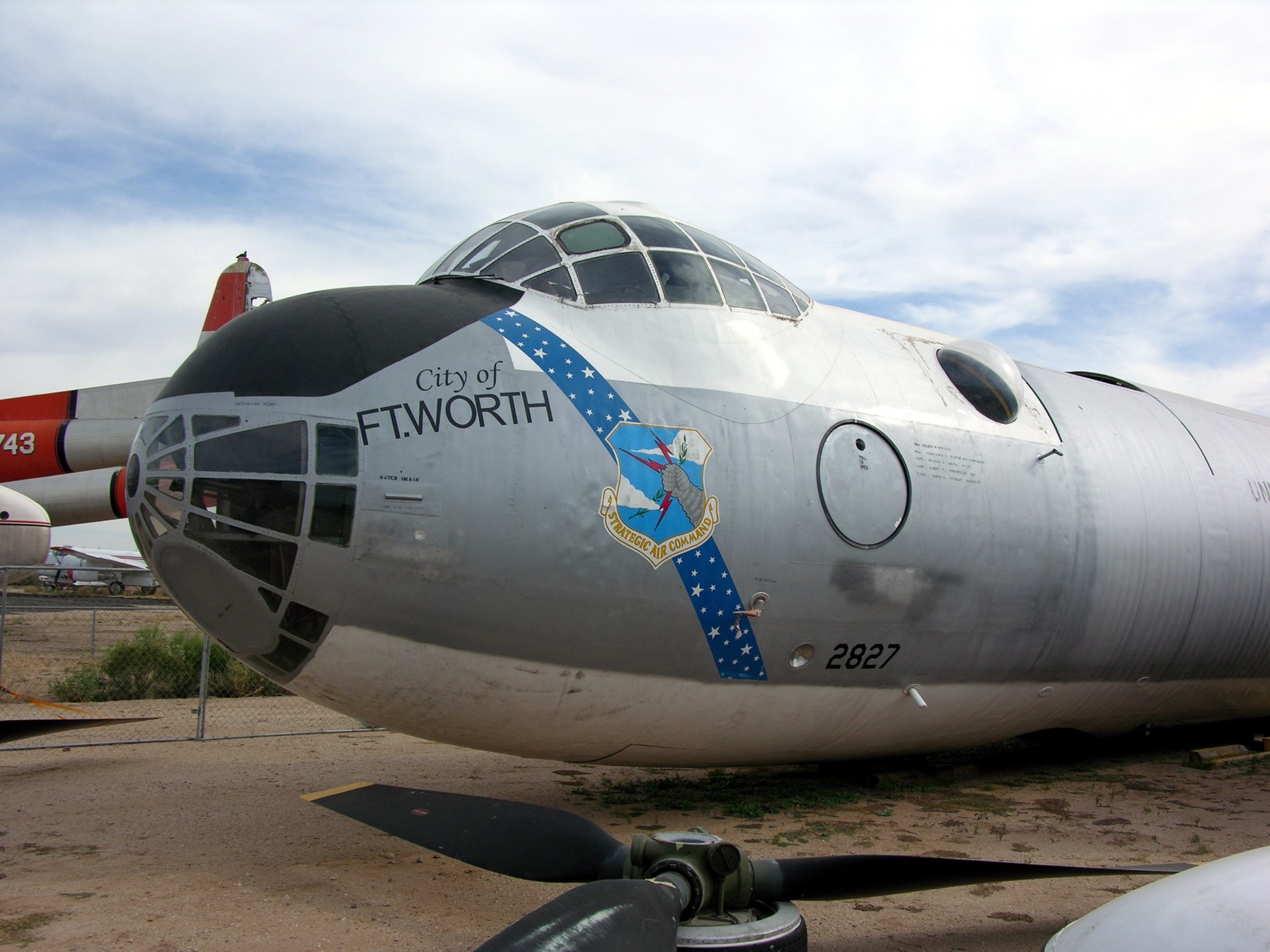
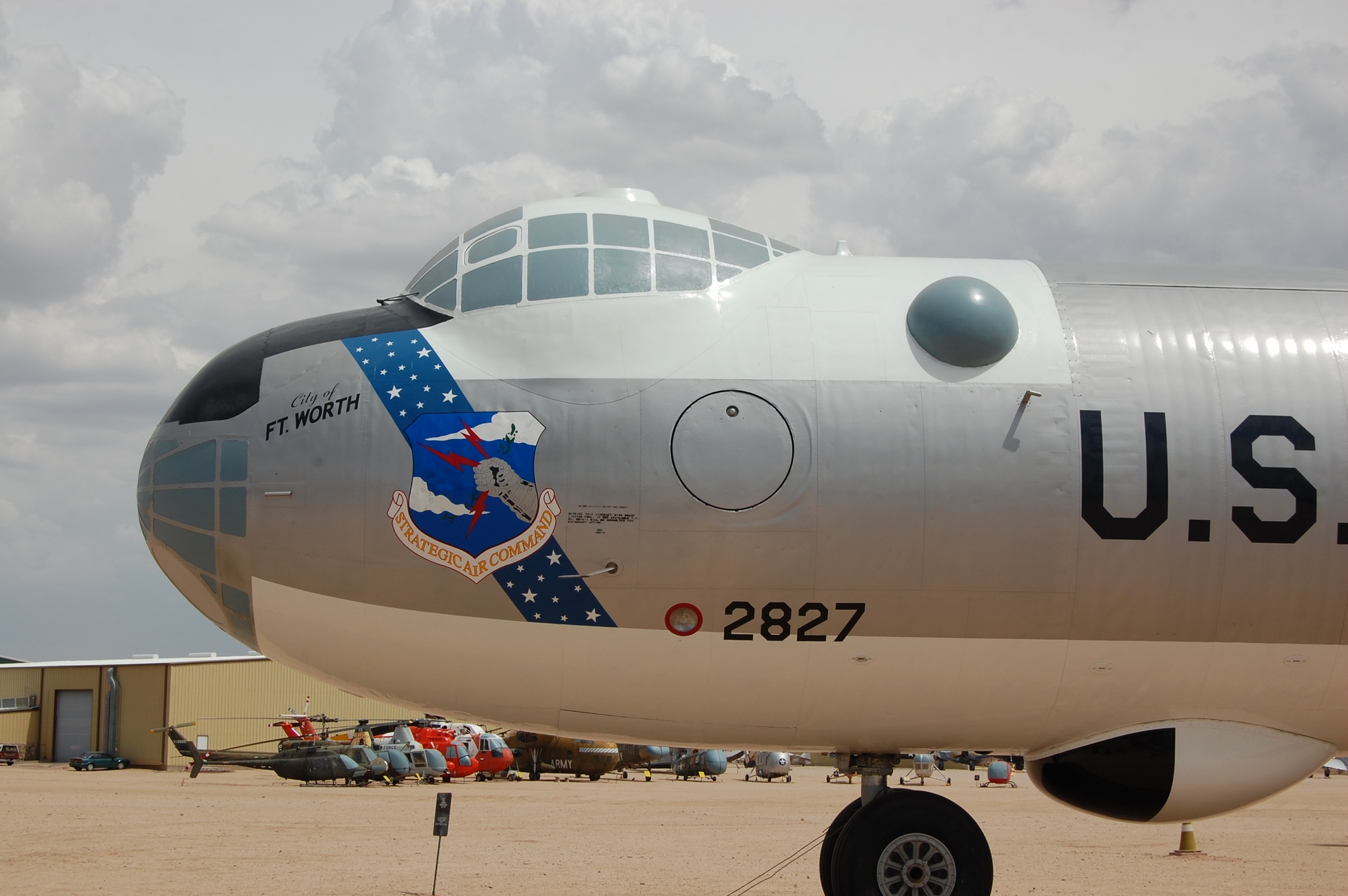
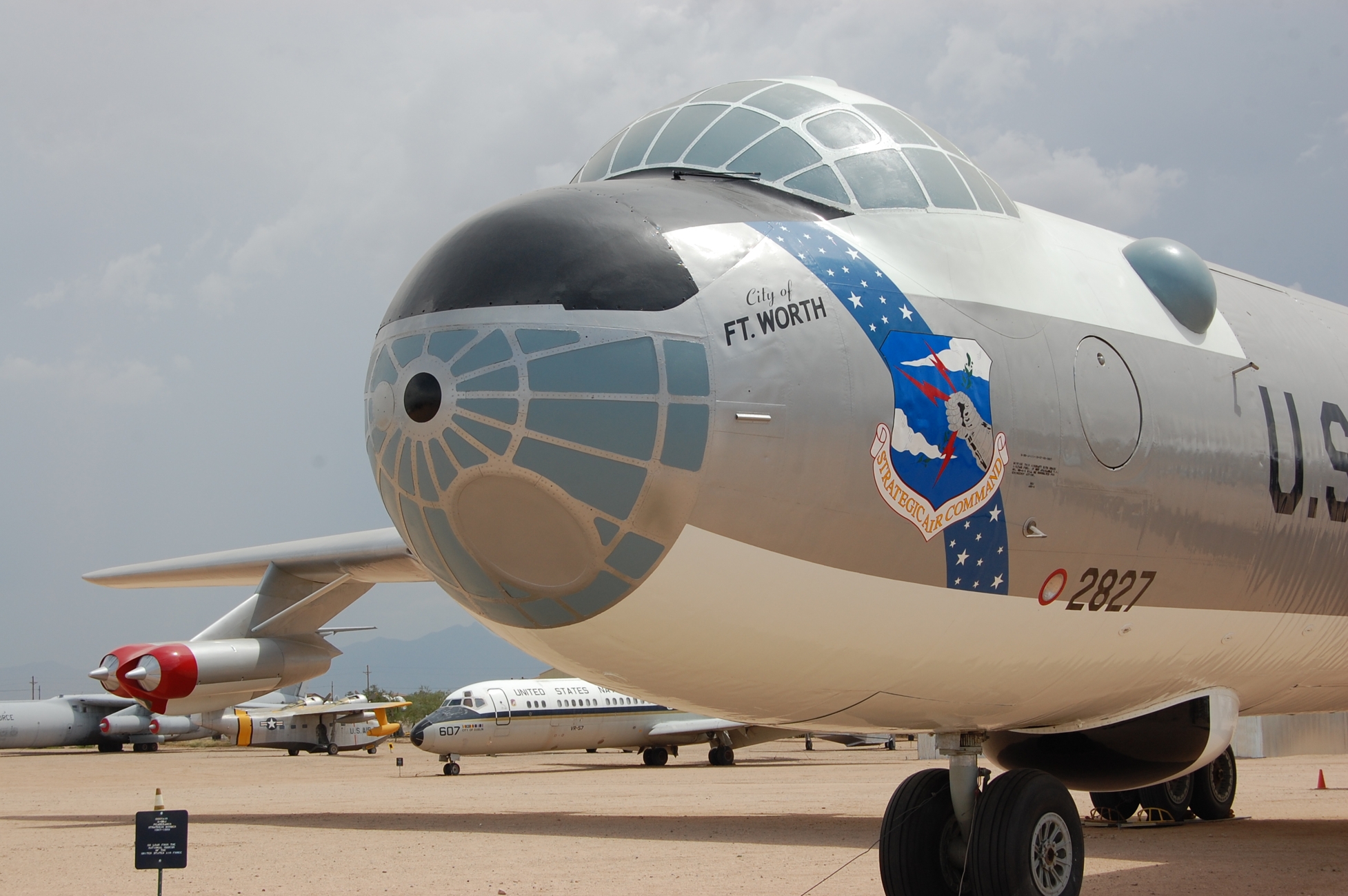
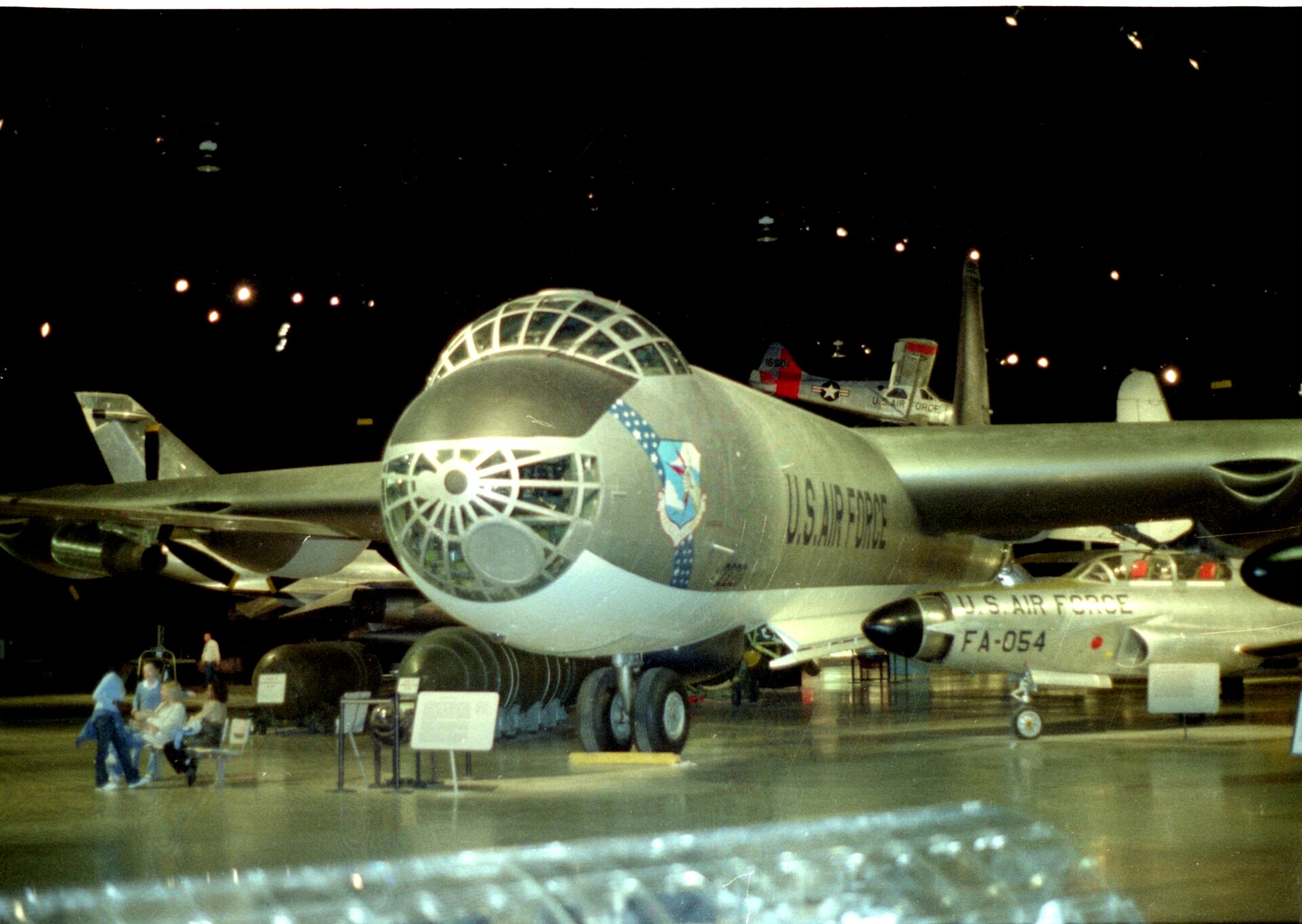
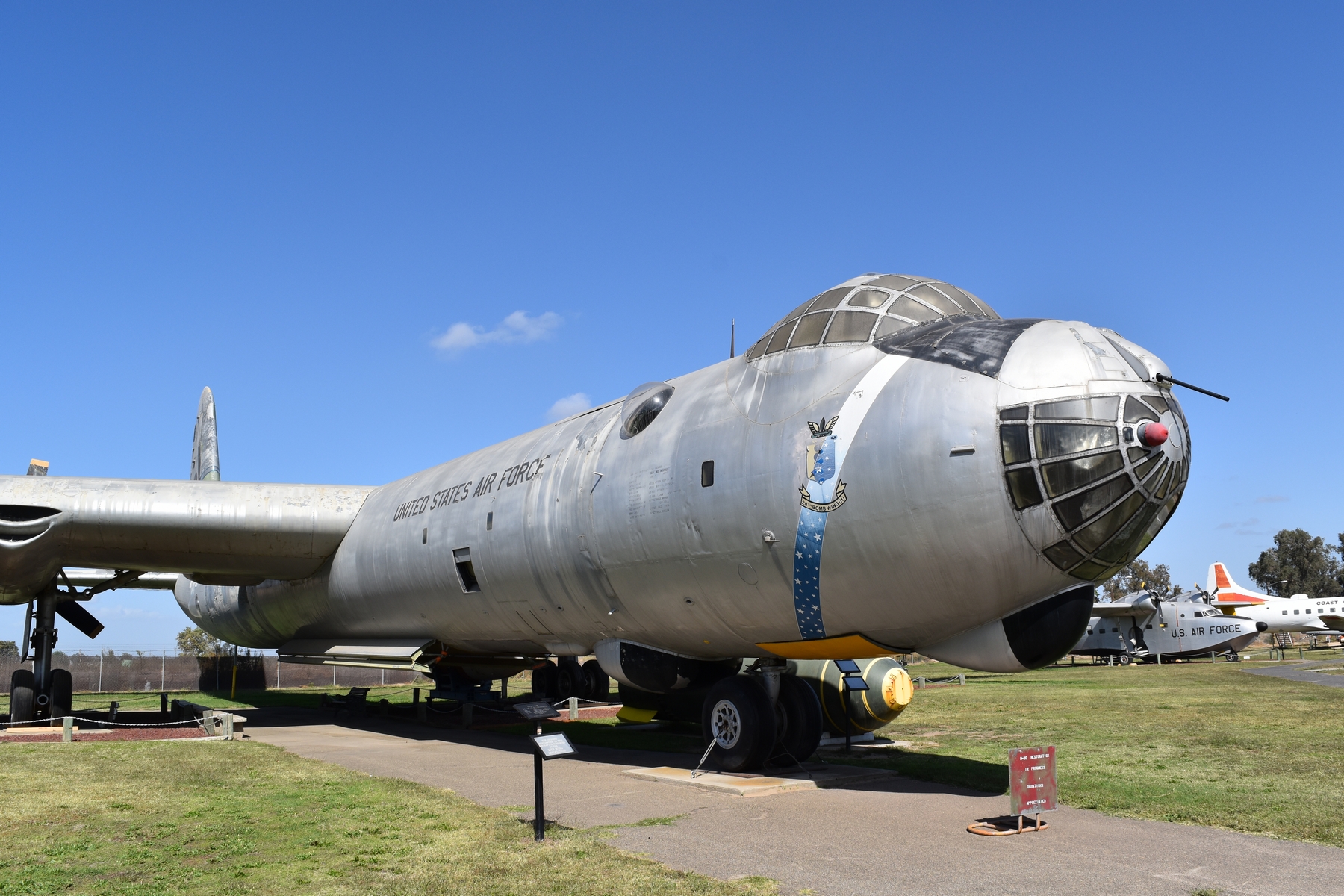
The inscription "City of Ft. Worth"
has been painted on the nose on and off since the airplane was
first put on display in Fort Worth. However, I have not
seen any documentation of that name prior to retirement .
While it could have been painted on during Operation Sayonara, it is
more than likely a sentimental name painted on during display.
(I have since been informed that it was named "City of Ft.
Worth" for its retirement flight.)
A few details:
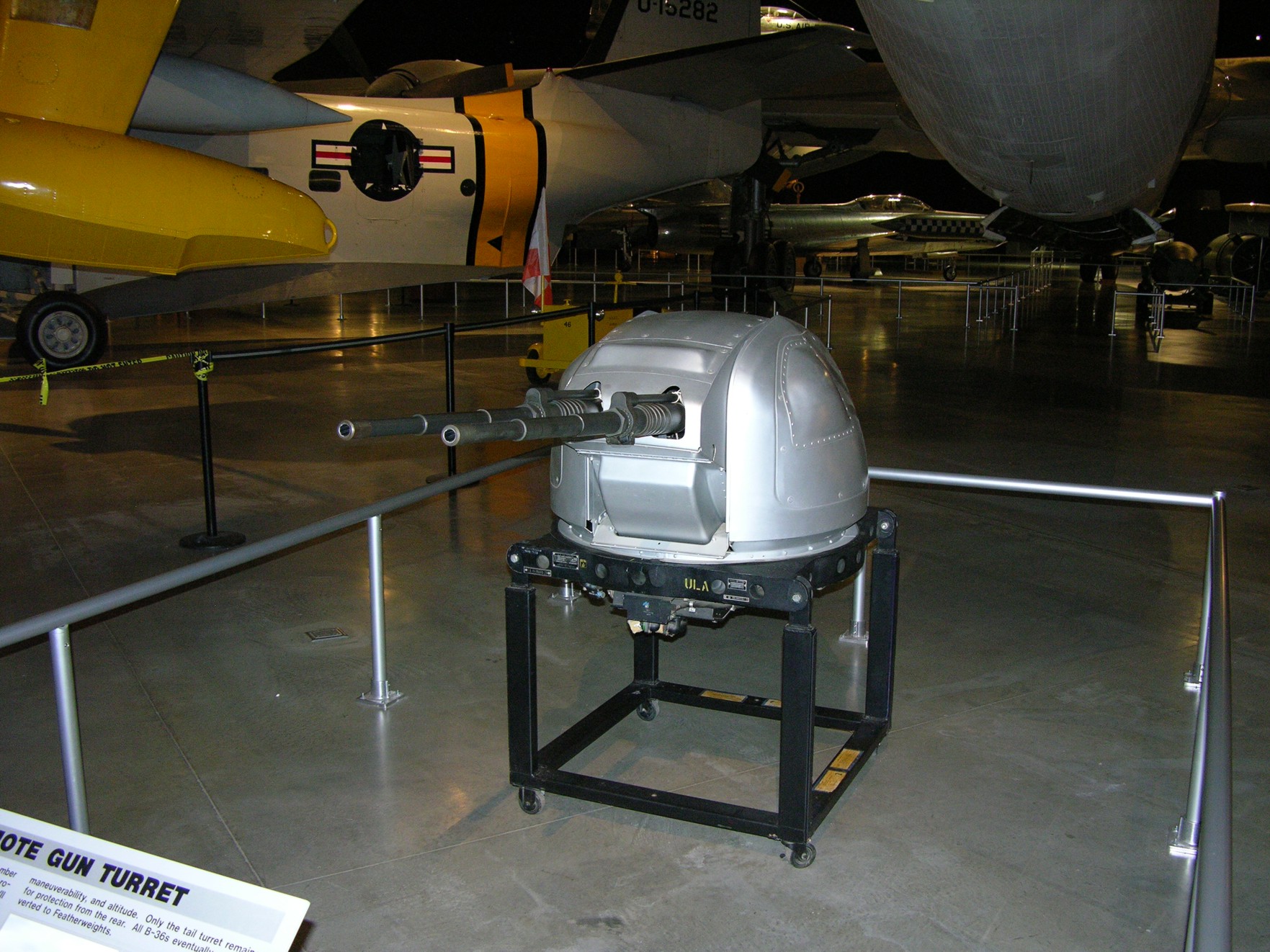
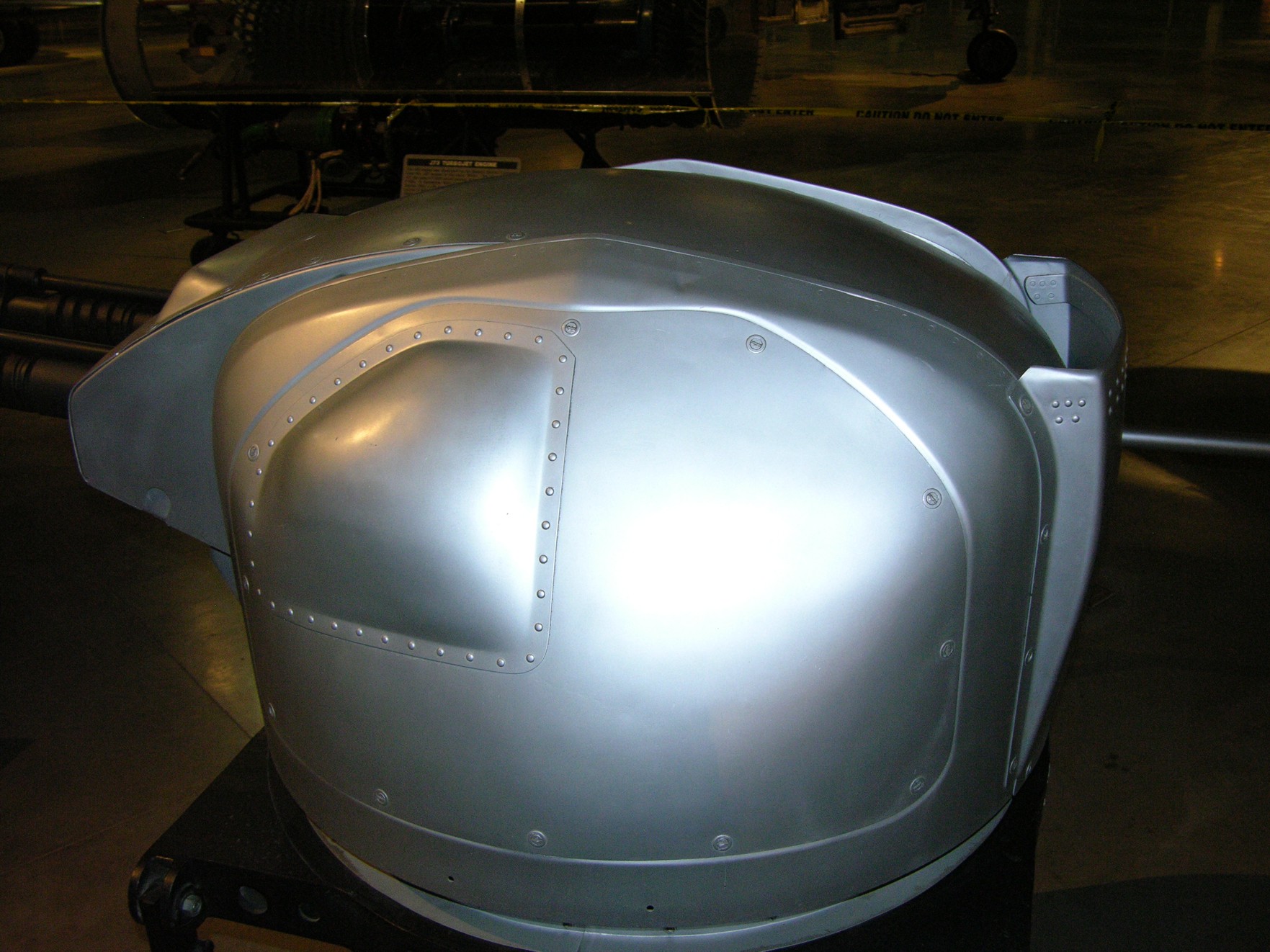
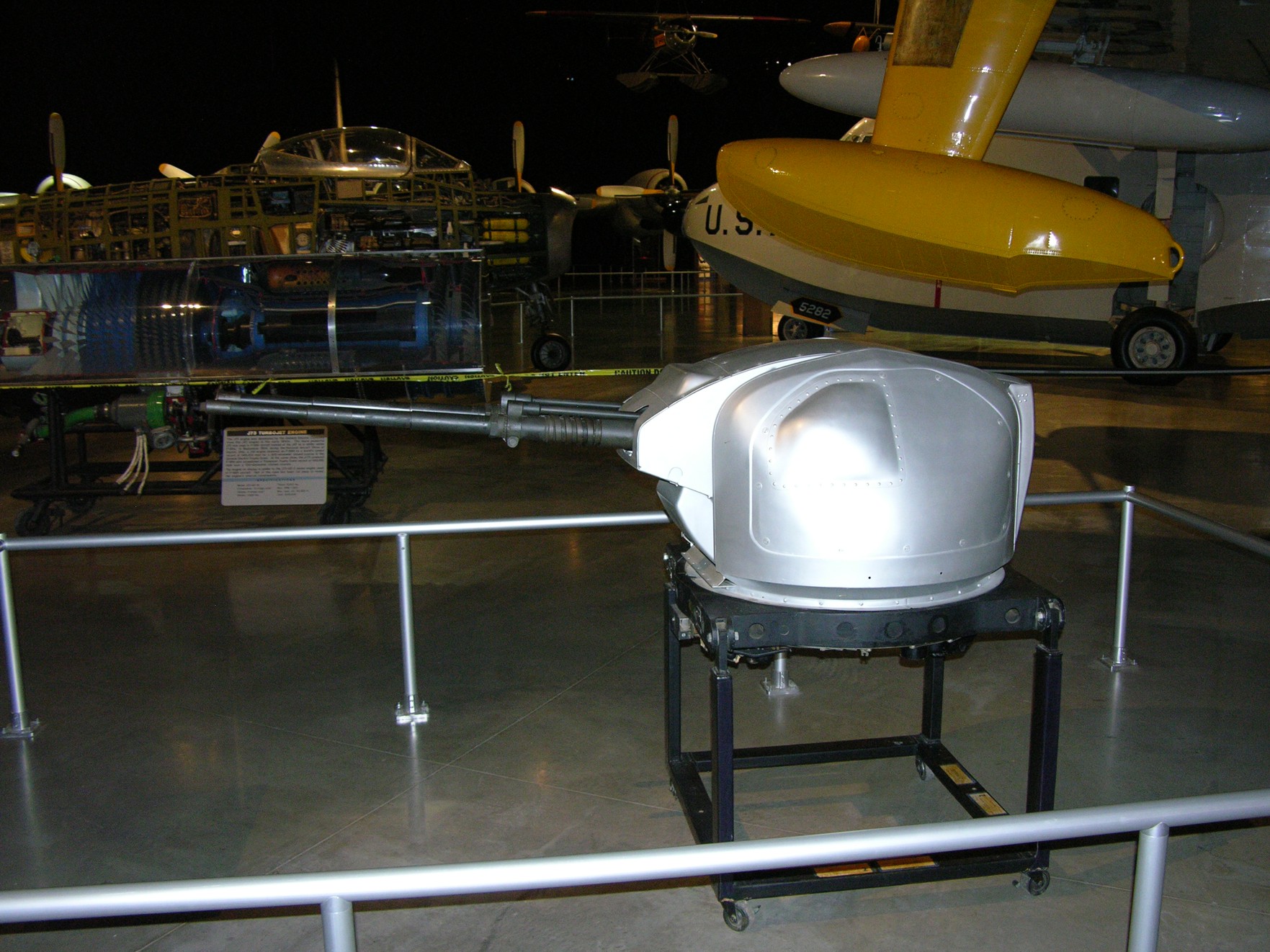
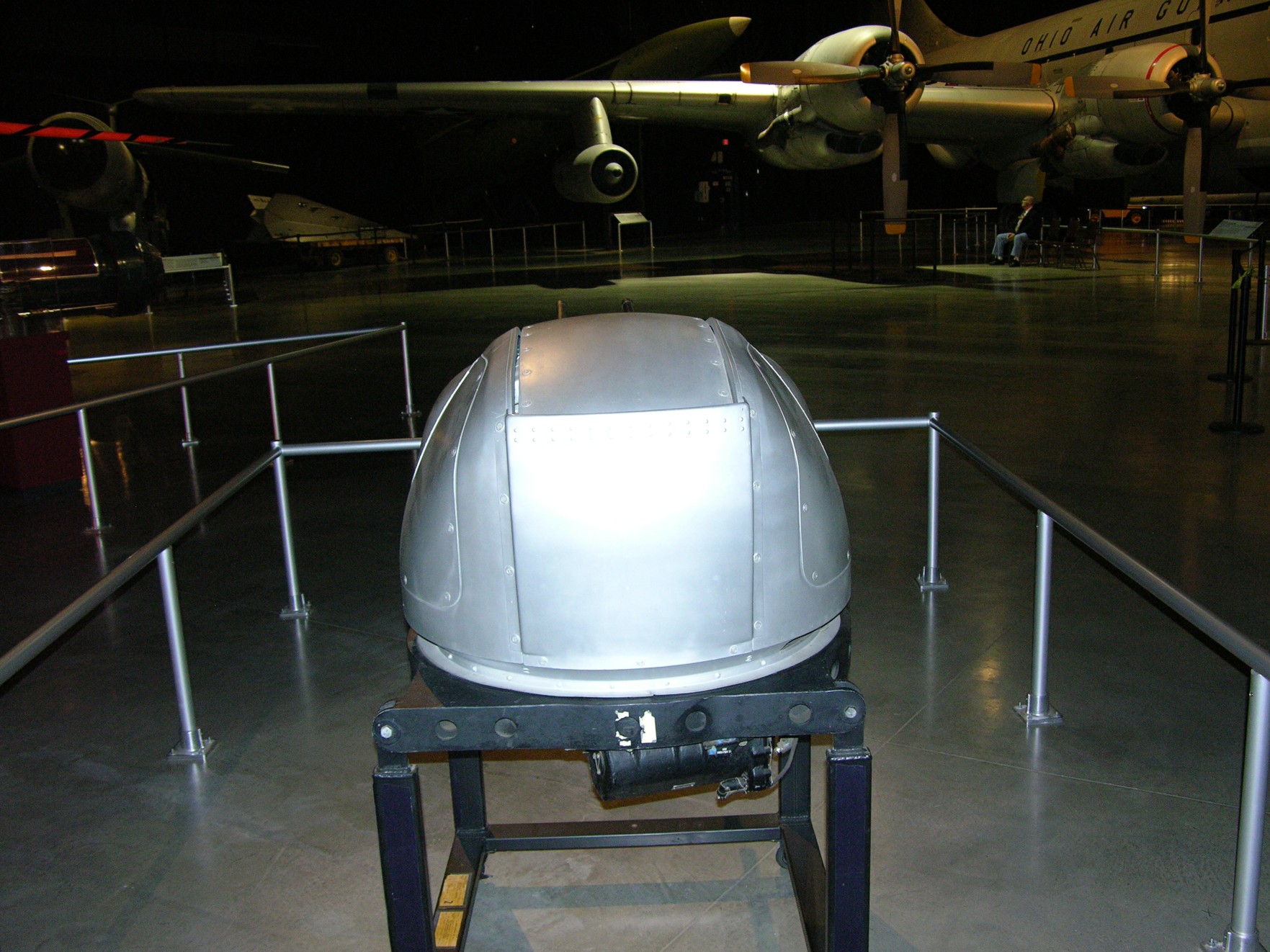
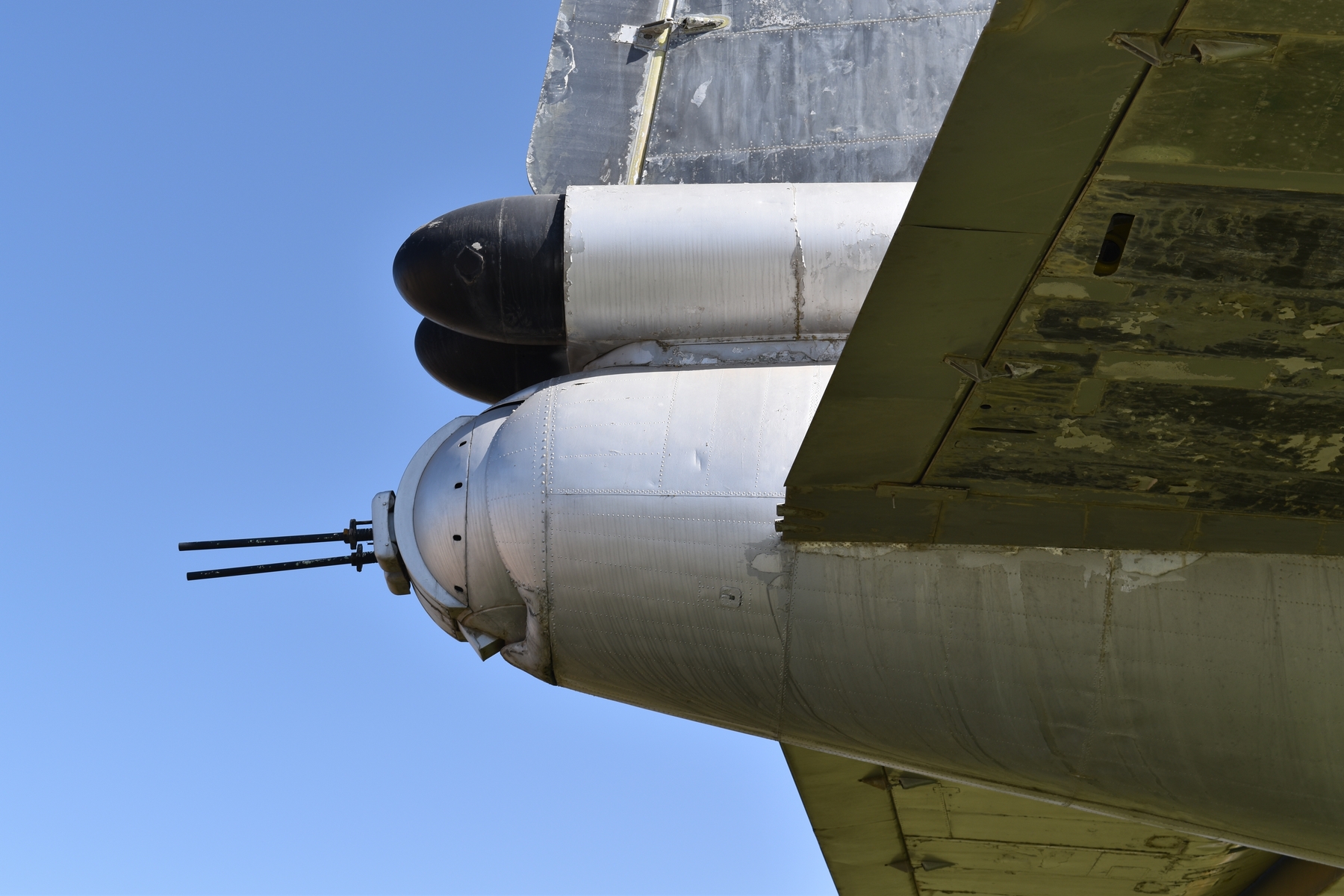
The B-36 was originally designed with
retractable turrets for self defense. They retracted into
the fuselage and mounted 20 millimeter cannons. The
turrets were deleted during the Featherweight programs.
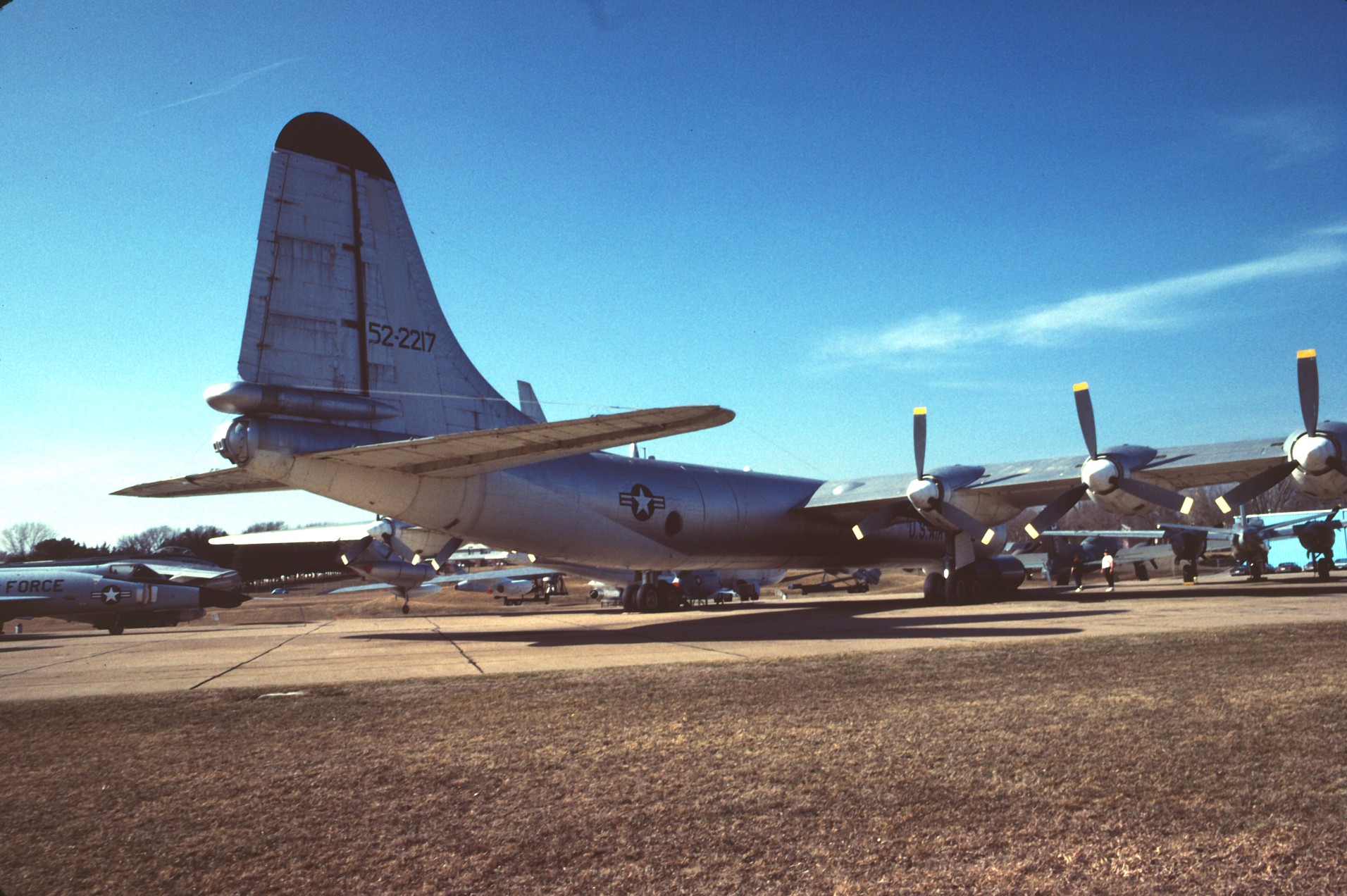
For many
years 2217 was displayed outside at the old SAC Museum just
outside Offutt AFB. In the late 1990s she was moved inside
to the new SASM. The first photo is from Mar, 1990.
The second shot dates from July, 1995 and the final shot is
inside in August, 2007.
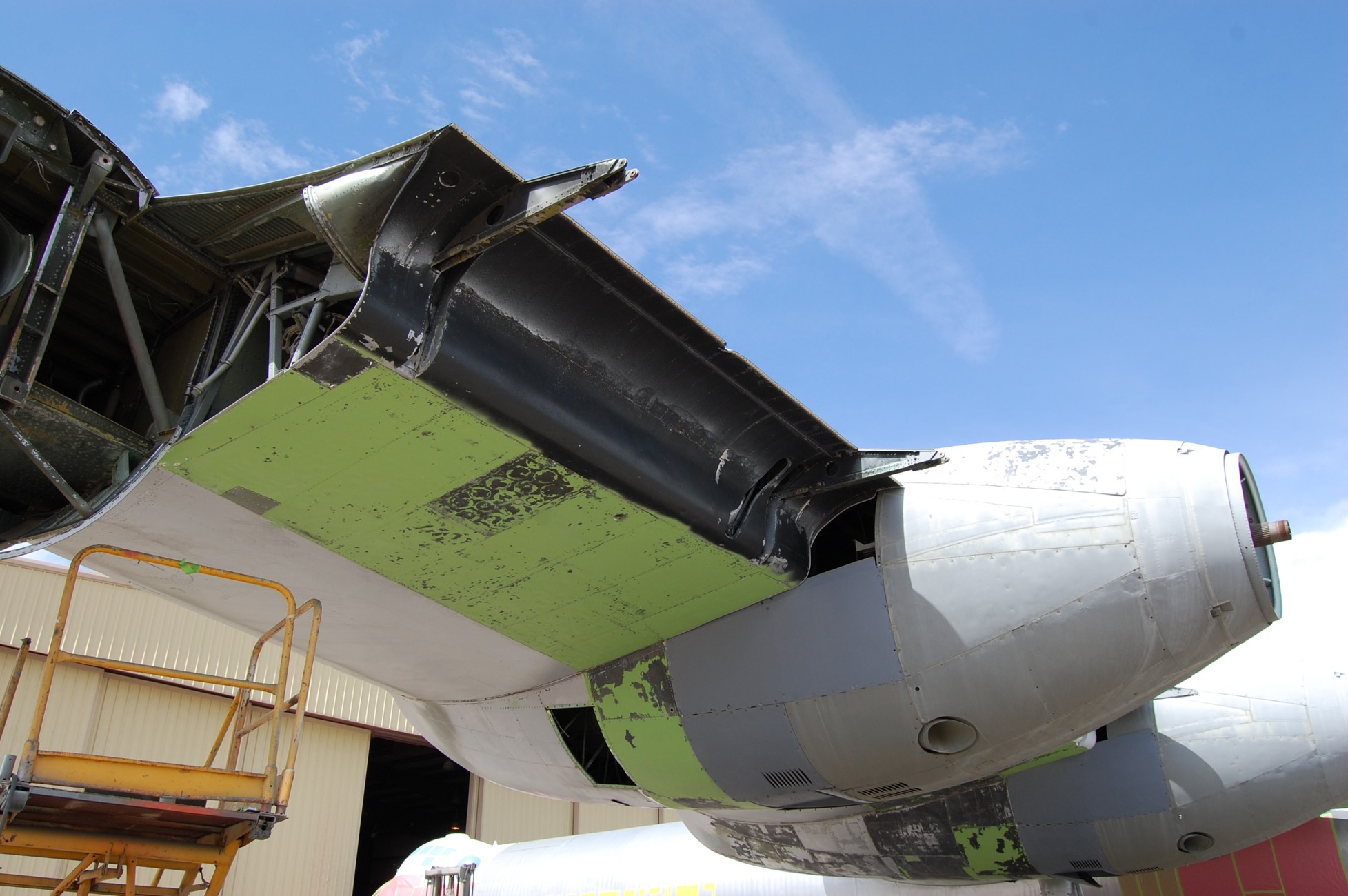
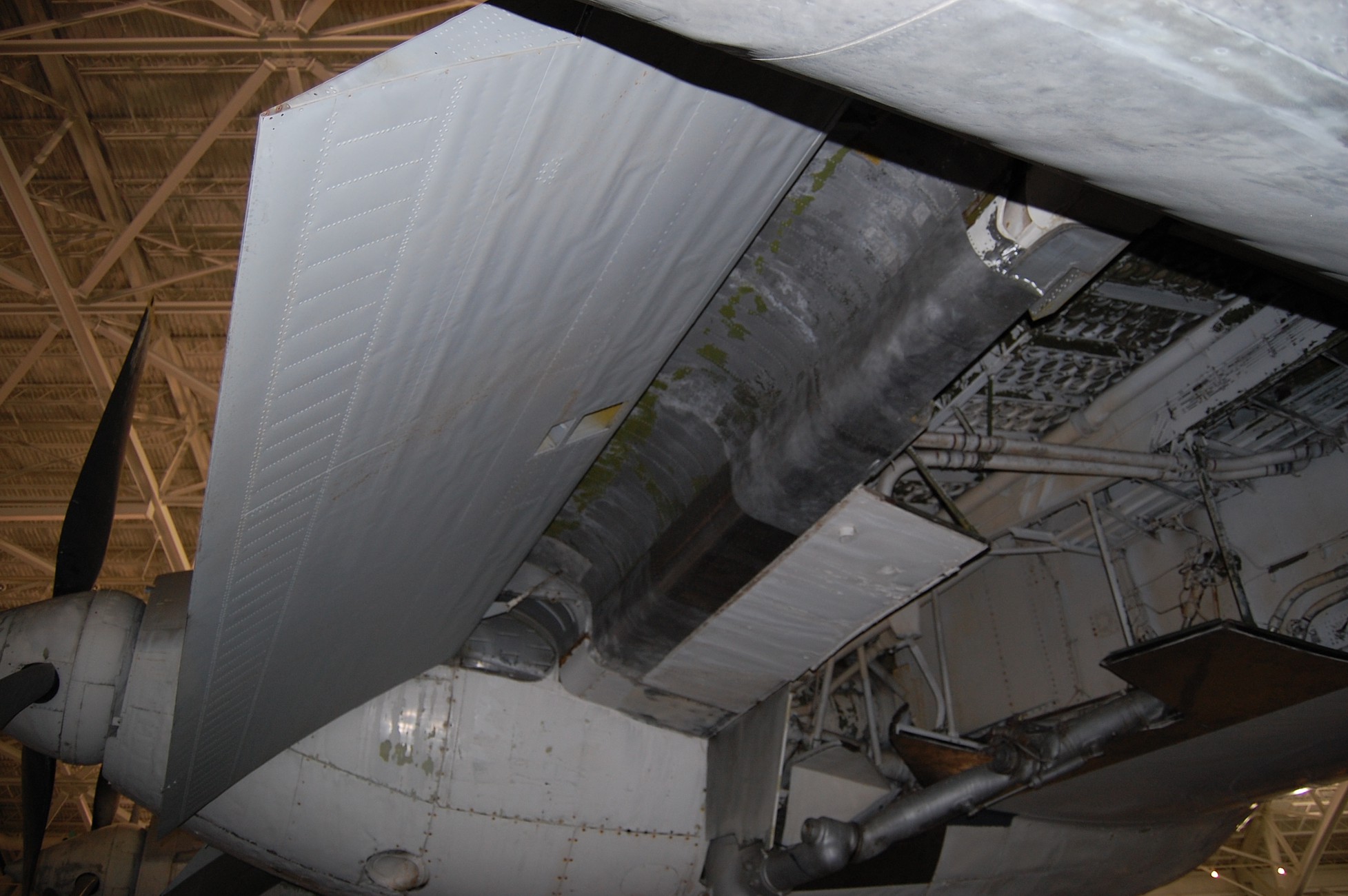
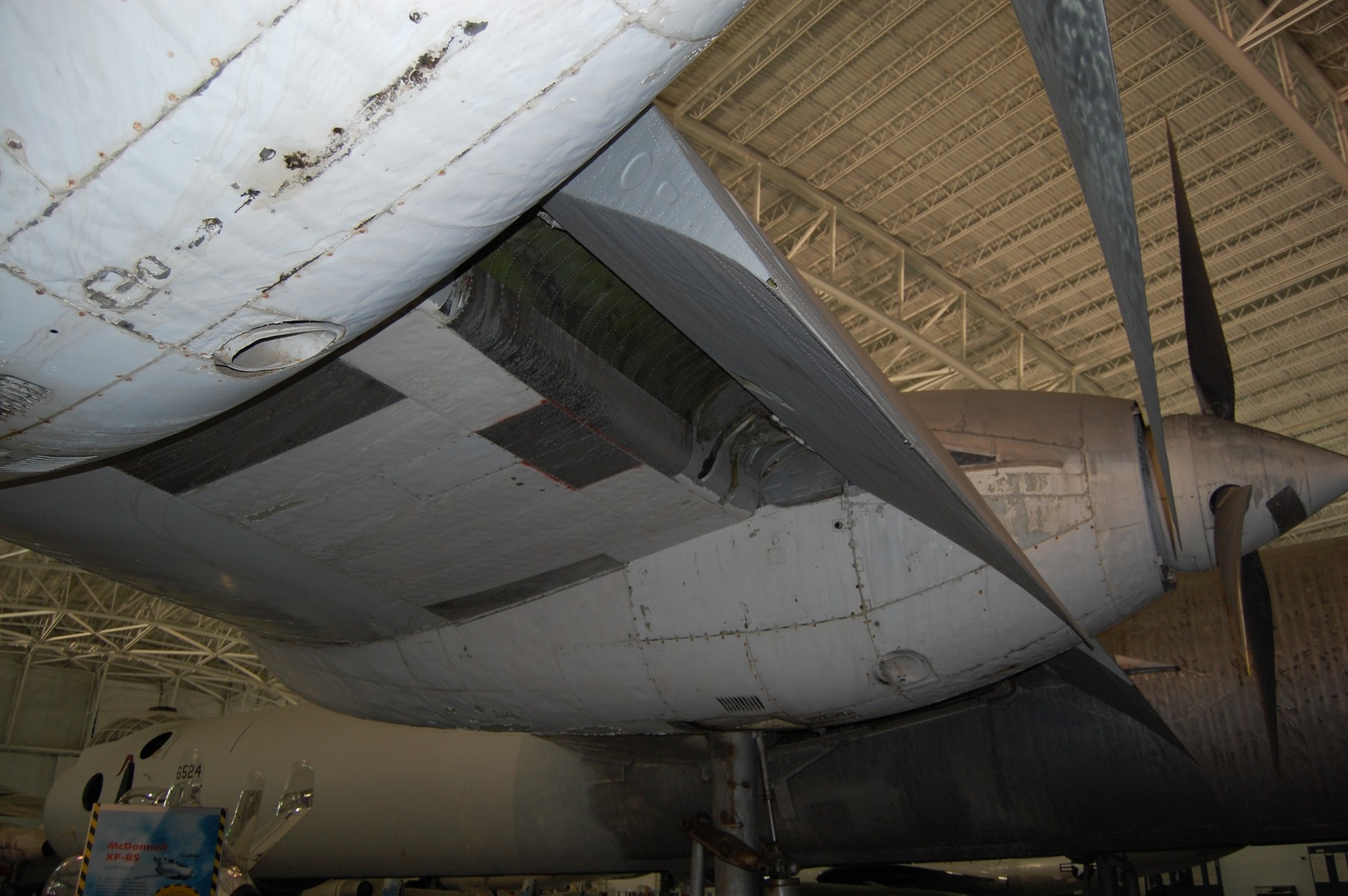
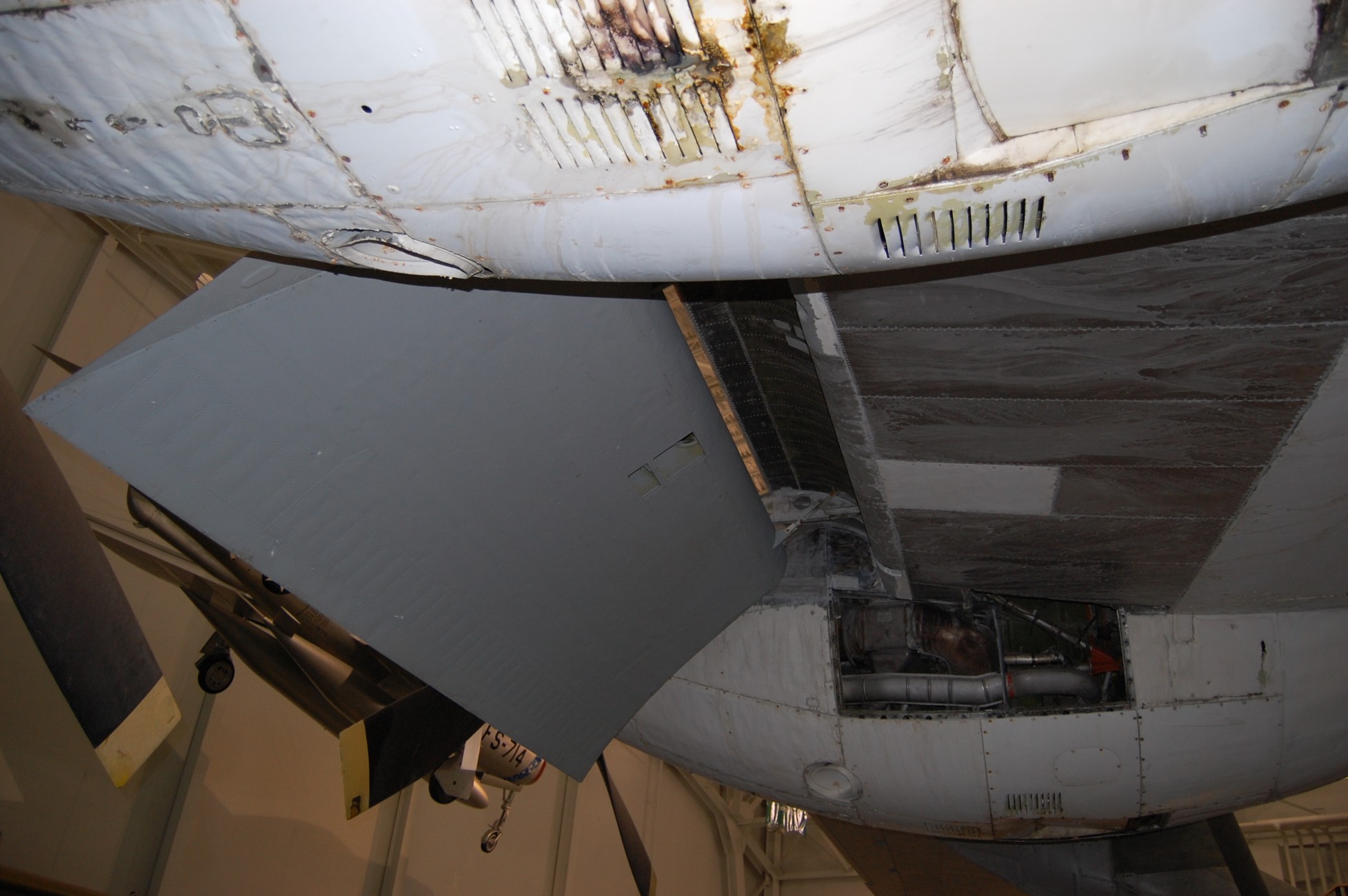
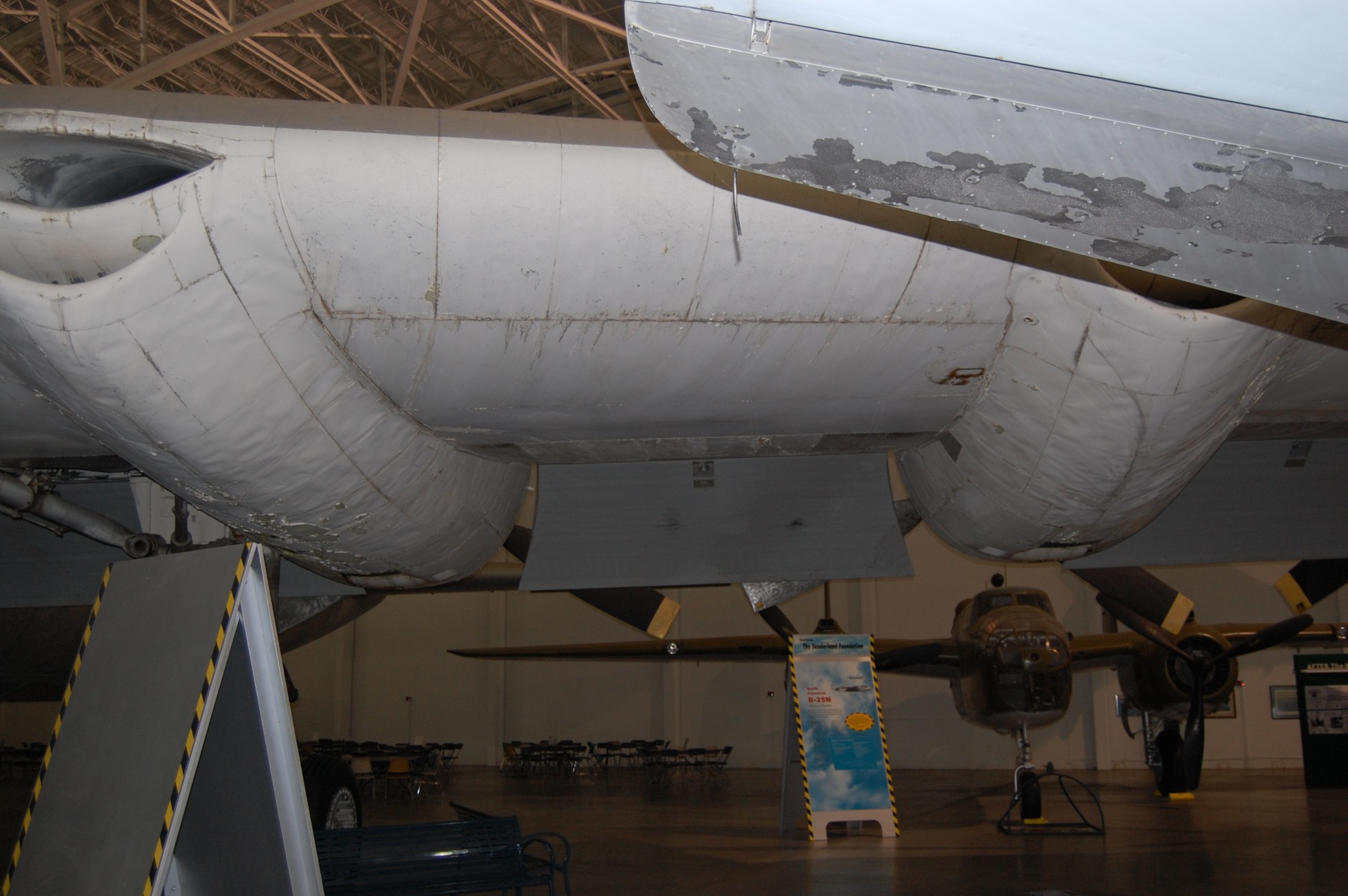
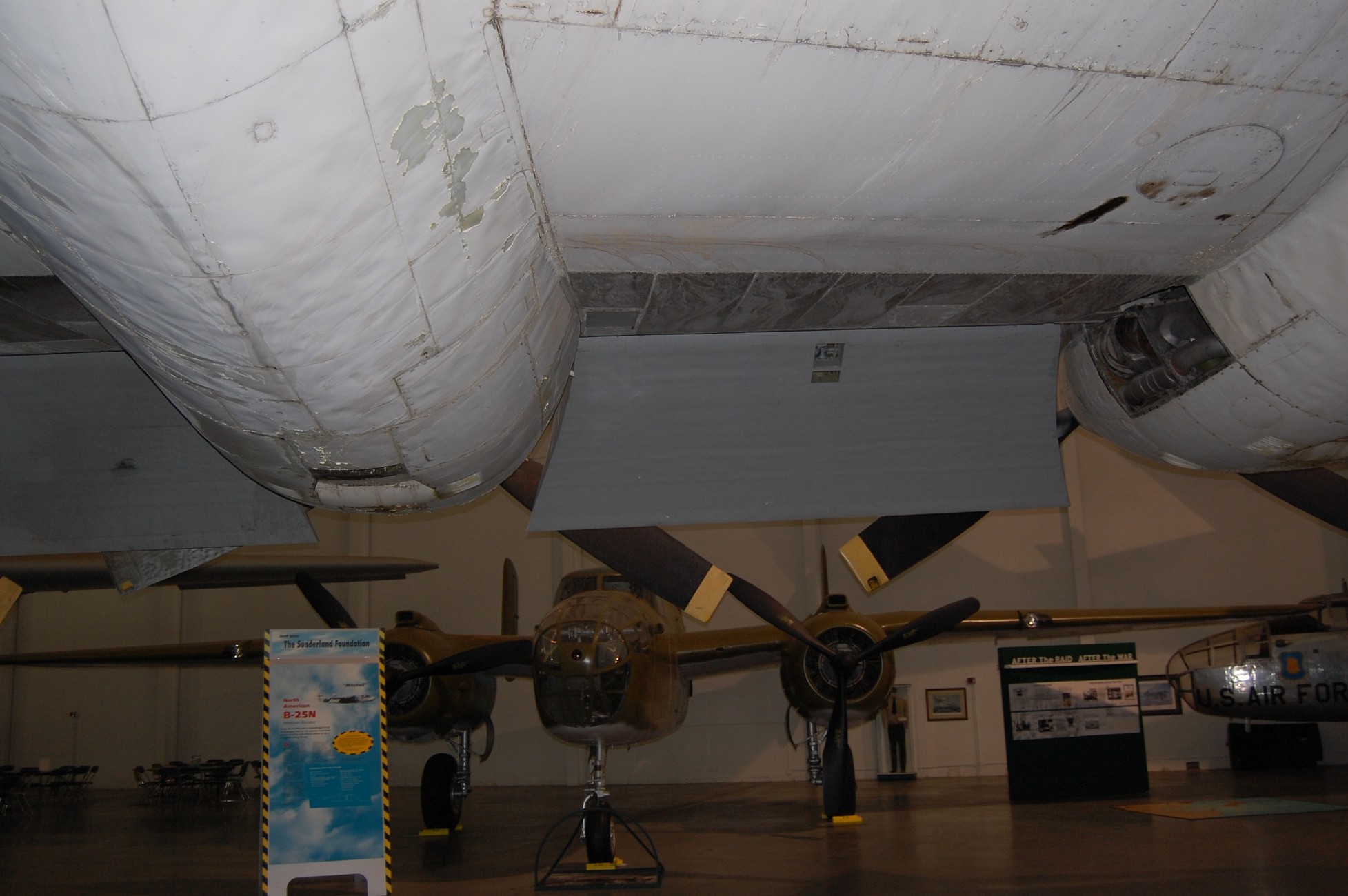
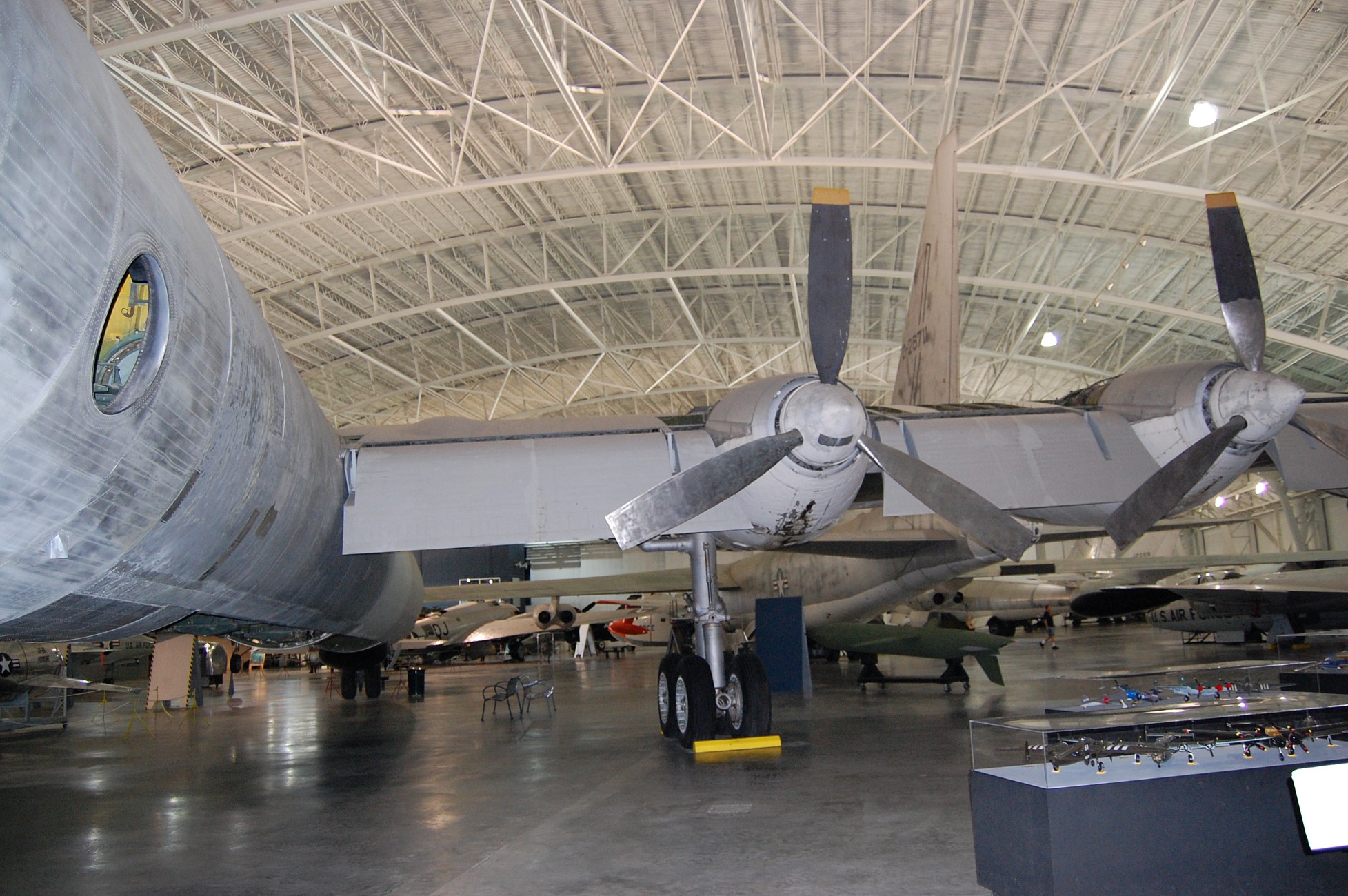
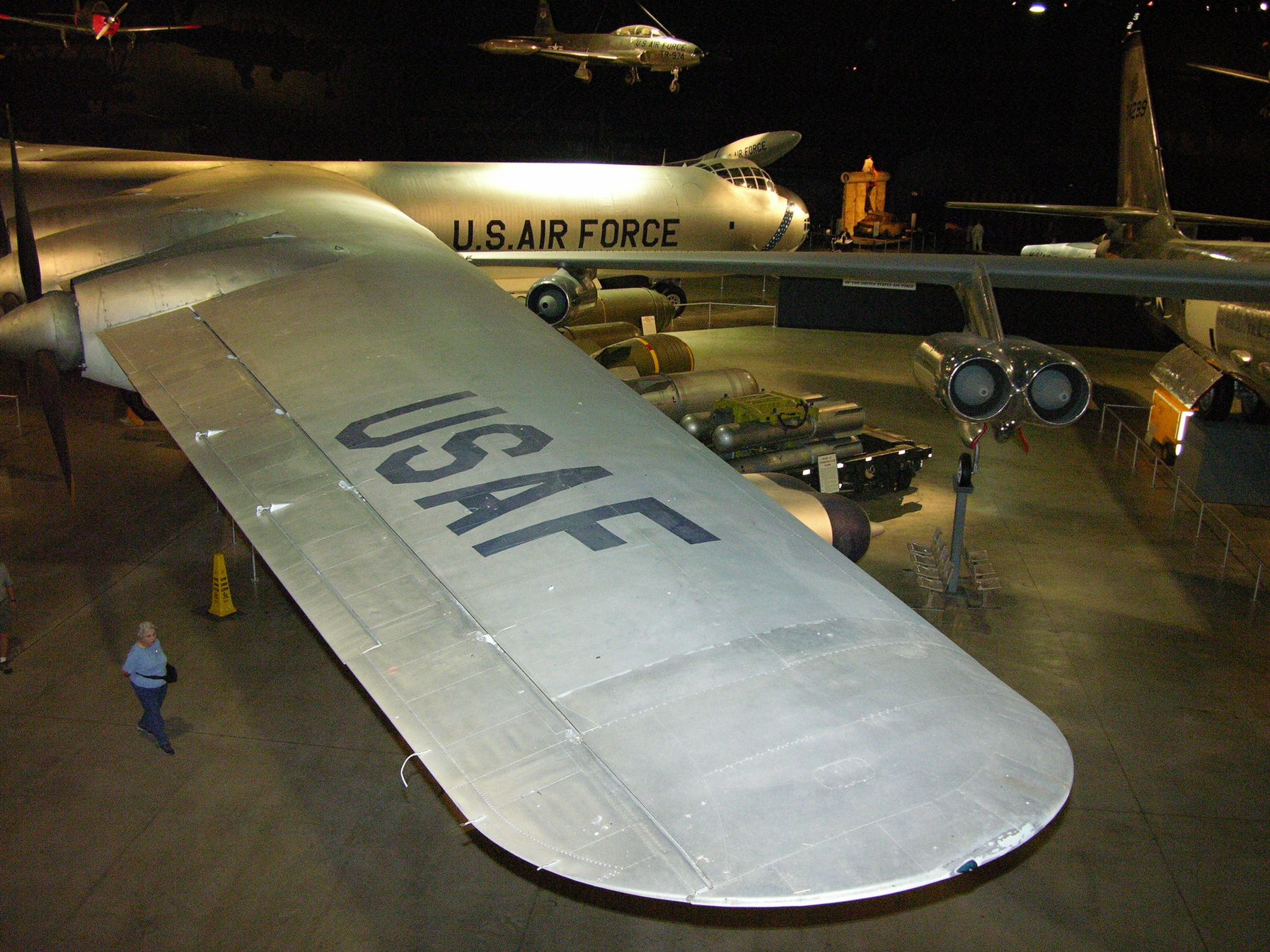
The B-36 had three flaps per wing and these
are shown starting from the inboard out. The view looks
toward the fuselage and the second looks outboard. Each
set of photos is arranged in the same manner. The final
two photos show the flaps from the front.
This view looking forward gives a good idea
of the size of the B-36's large flaps.
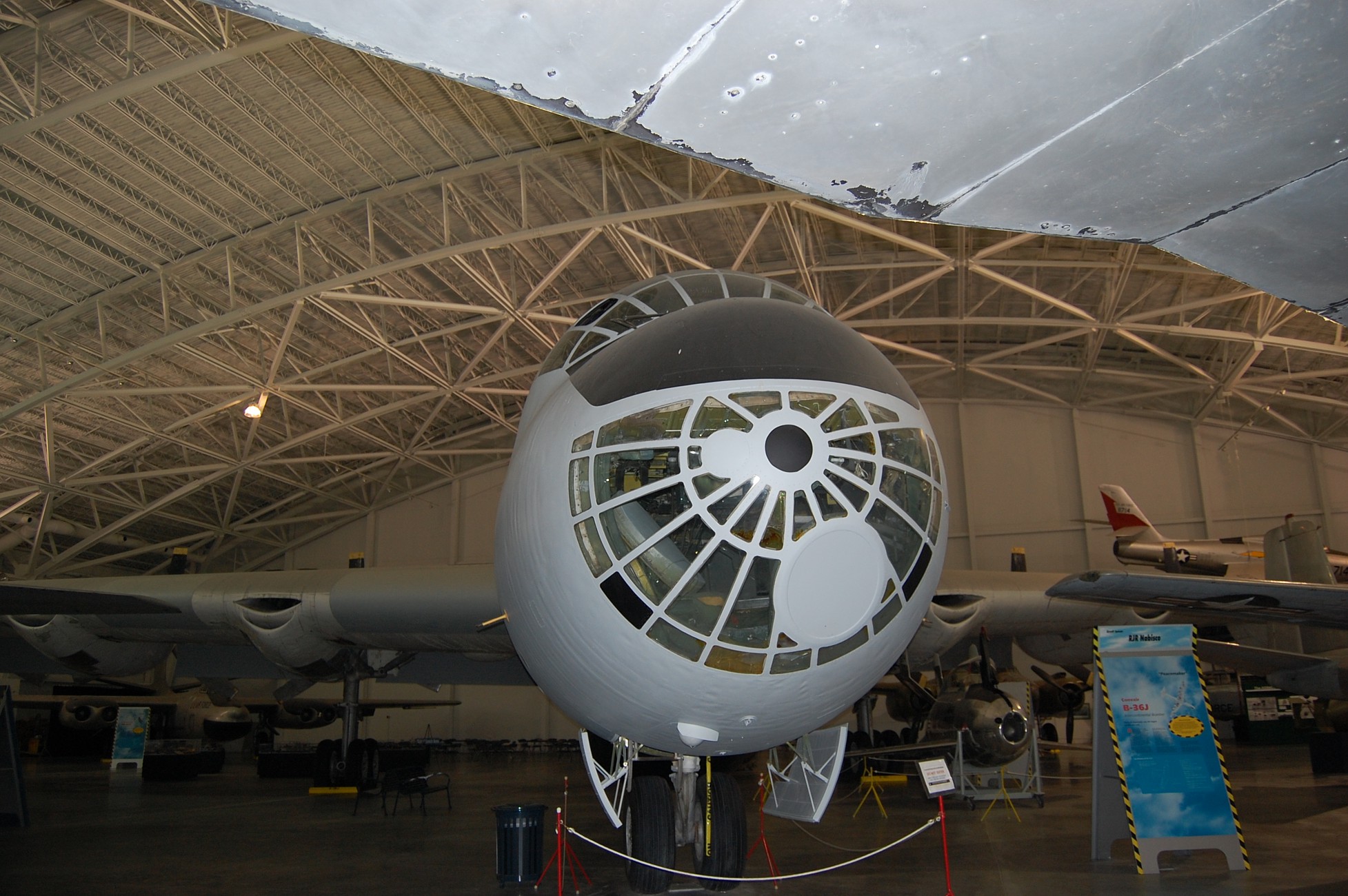
These views give a good idea of the amount of
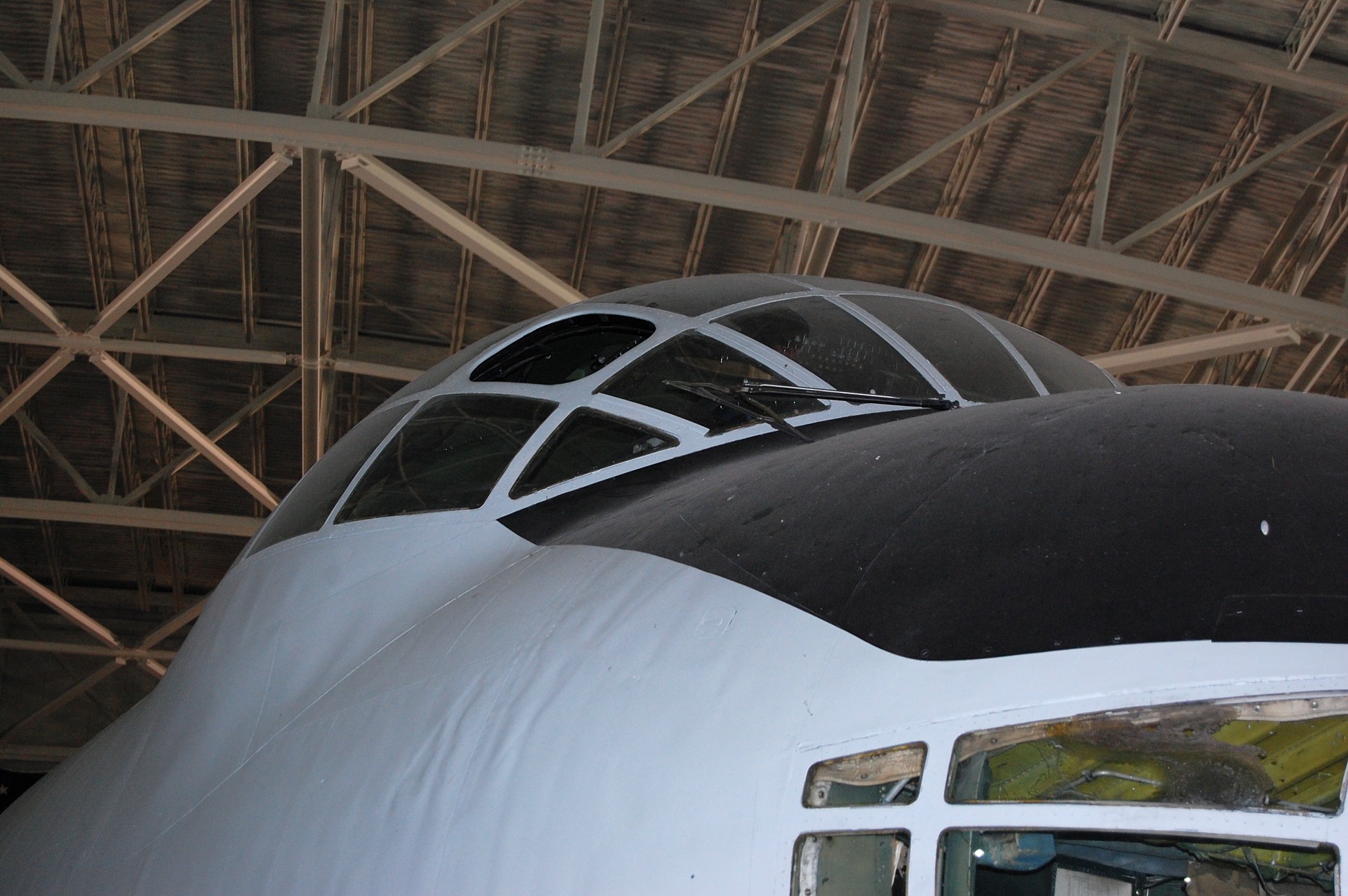
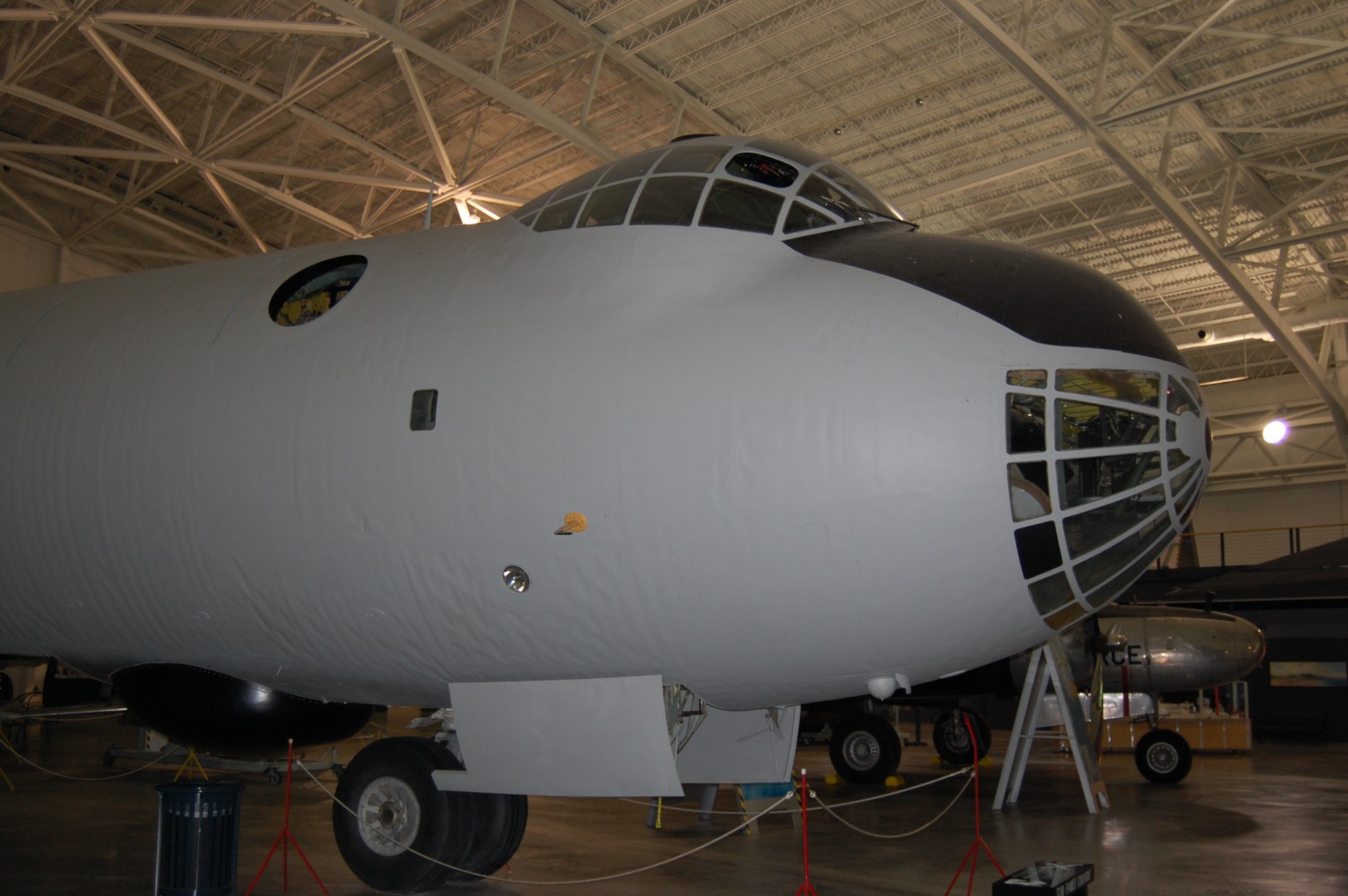
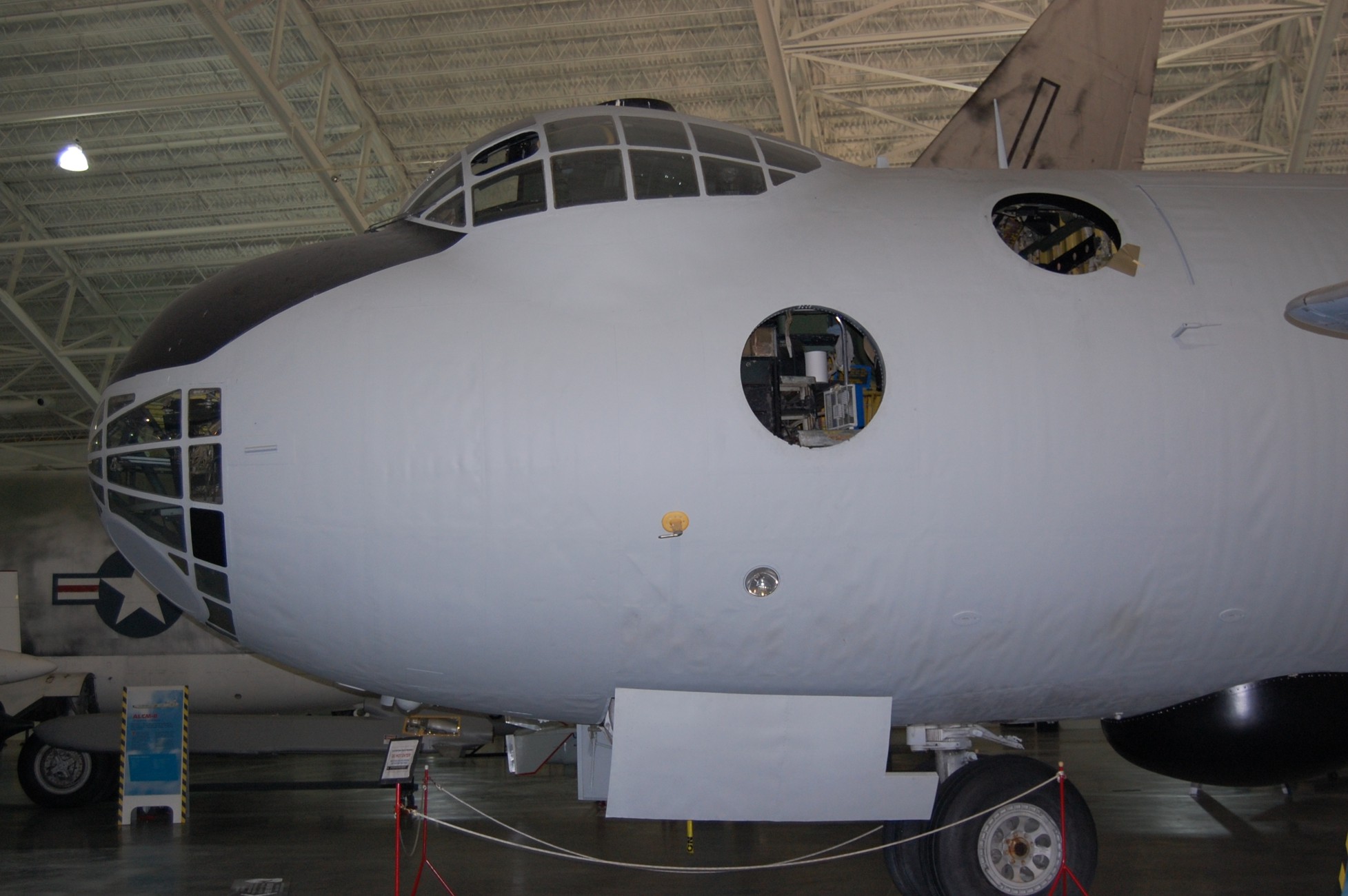
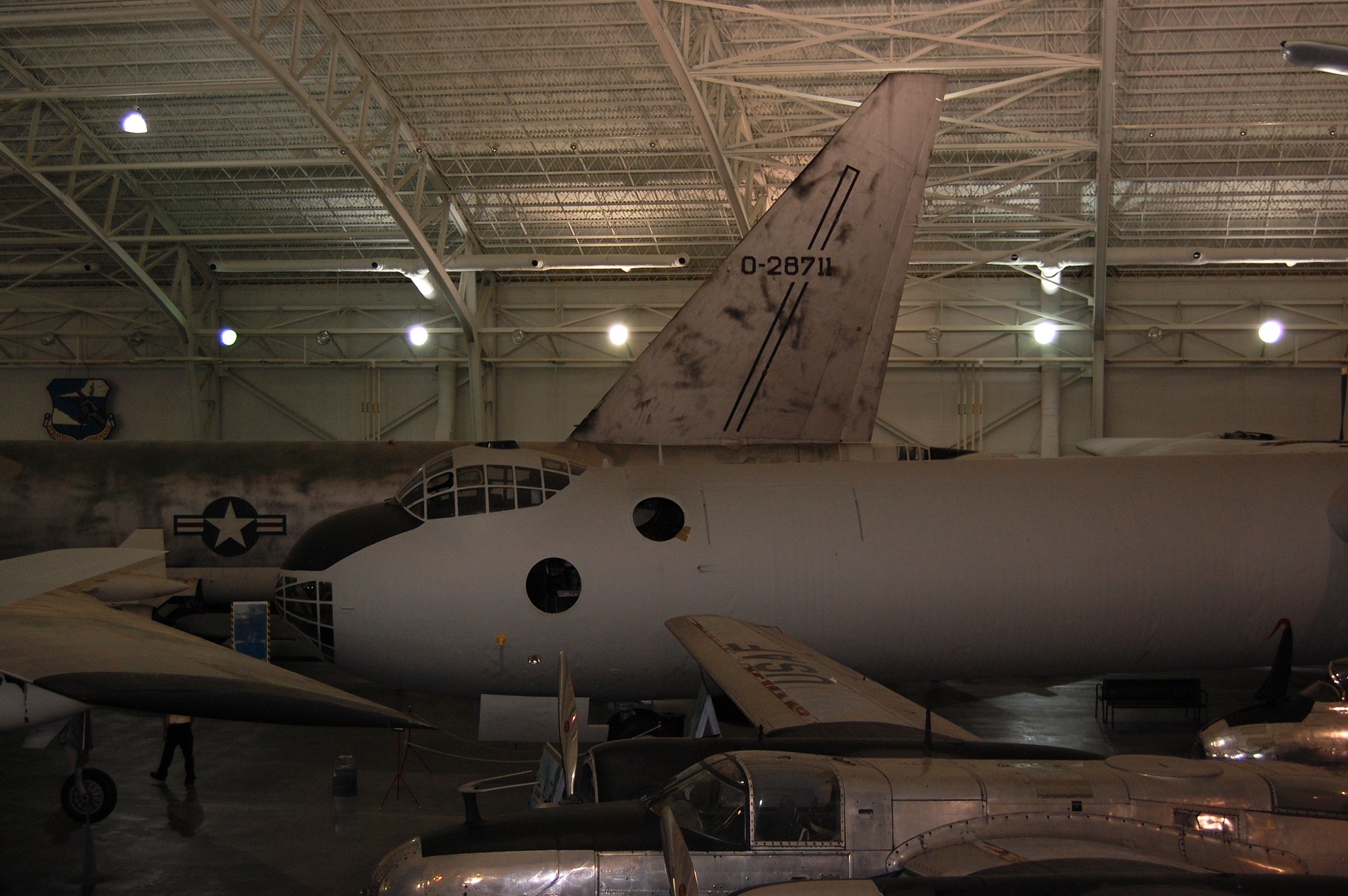
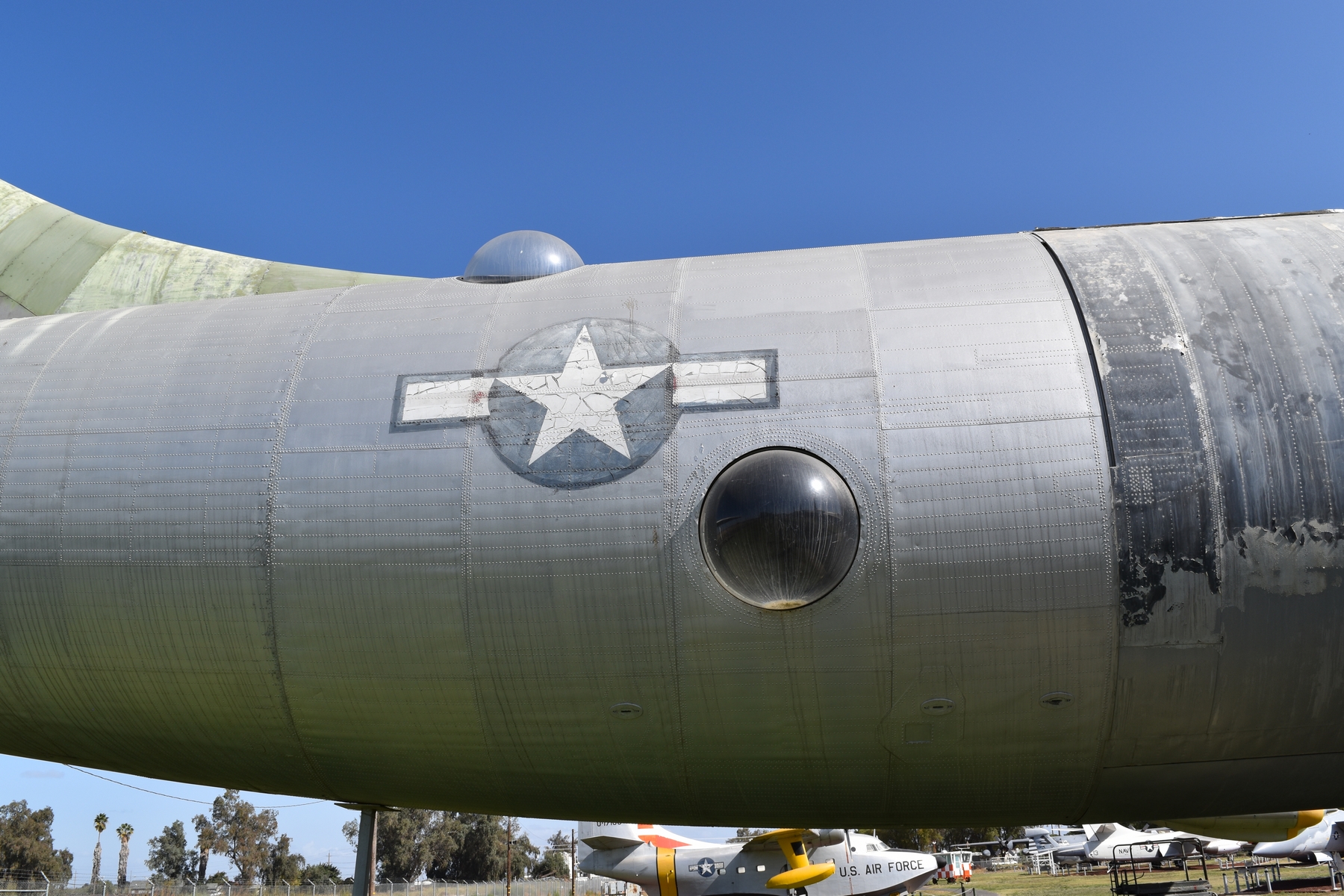
glass in the cockpit area. The round openings in the
fuselage are for scanning blisters on the upper part (both
sides) and crew access on the left. The scanning blisters
were replaced with flat plates on Featherweight aircraft, with
the exception of the lower rear blisters which were left in
place (or re-fitted) to allow observation of the flaps, main
gear and engines while in-flight.
The first photo is an August, 2007 view of
52-2217 undergoing a continuing restoration at the SASM.
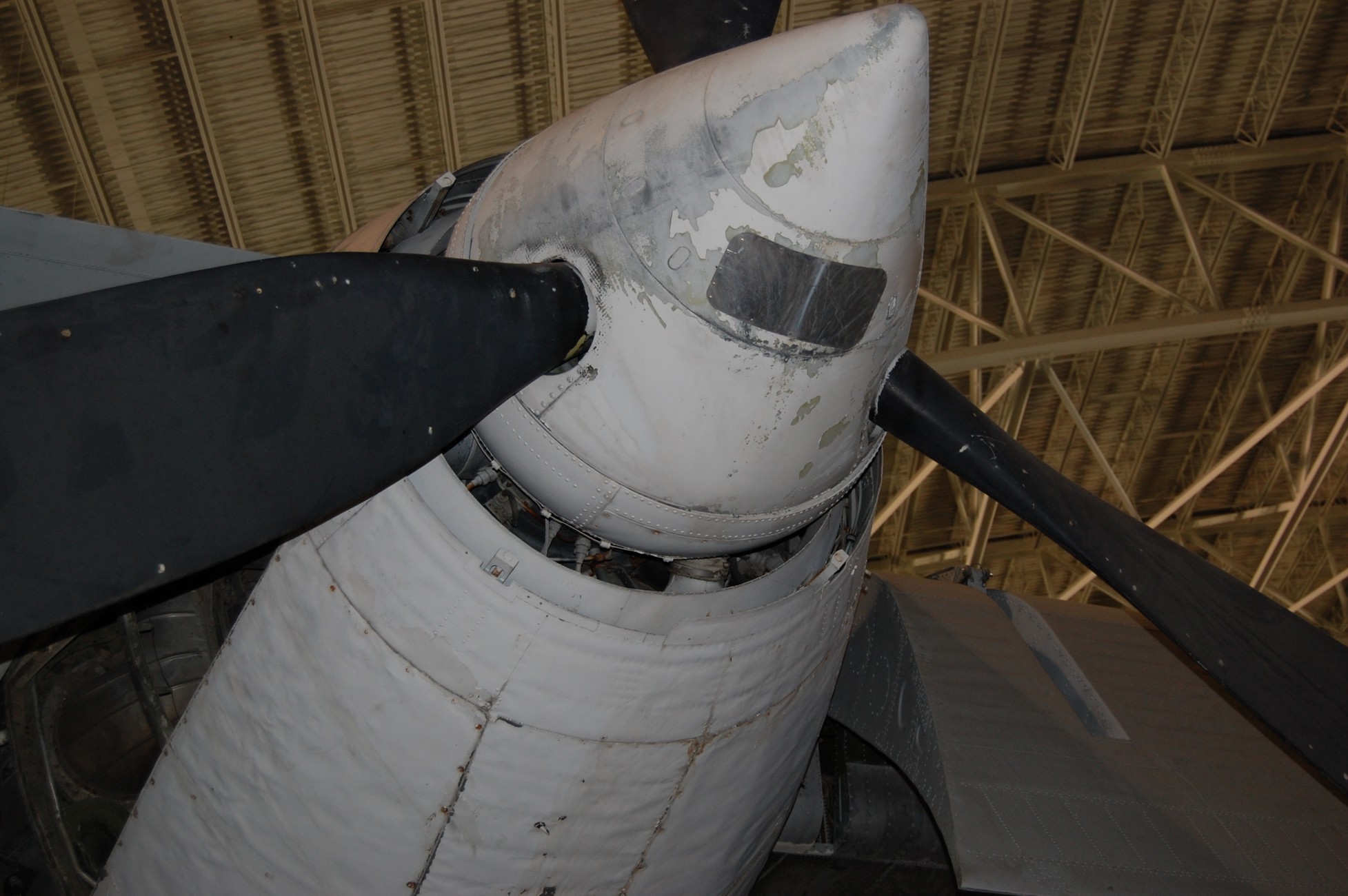
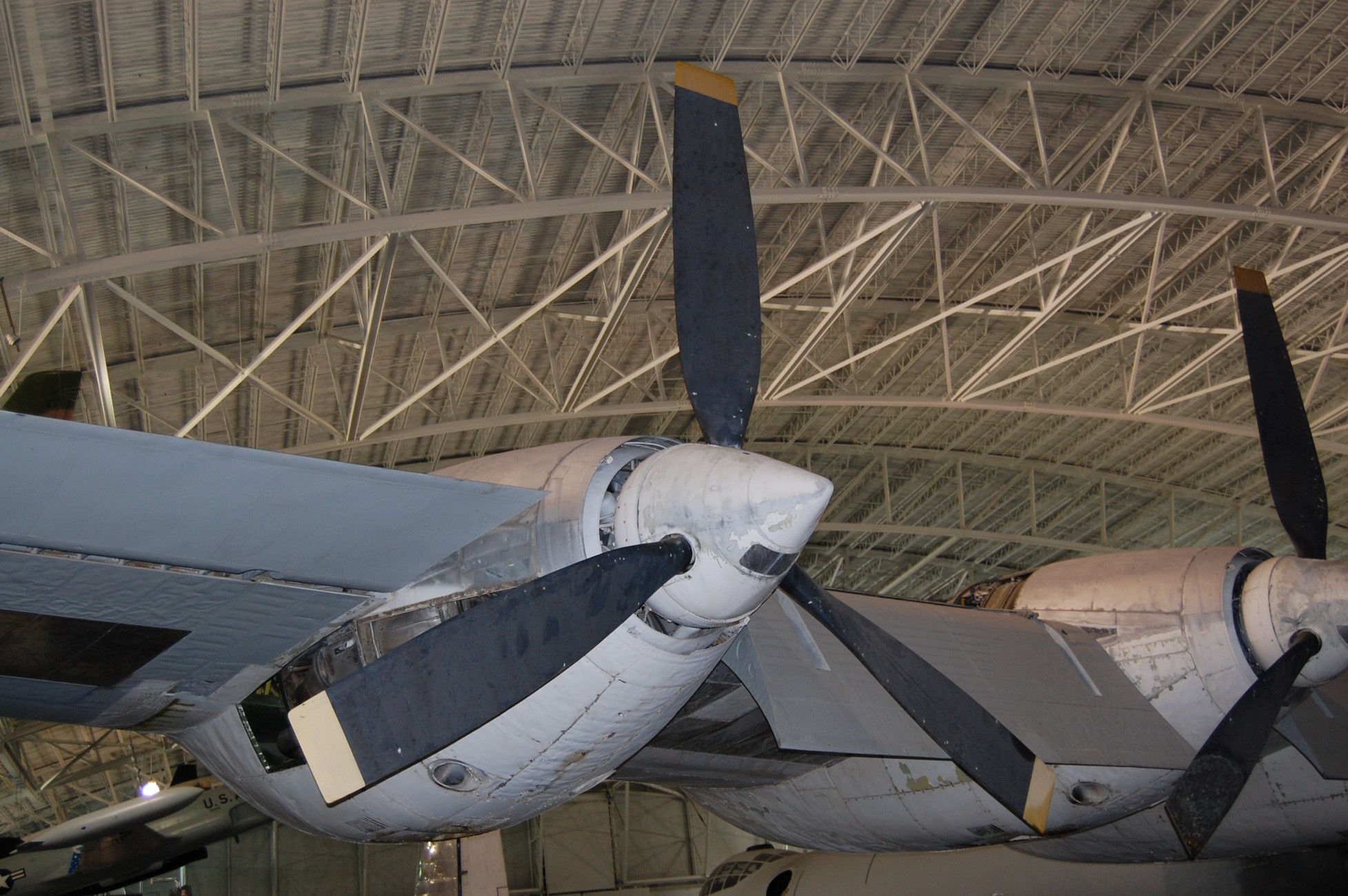
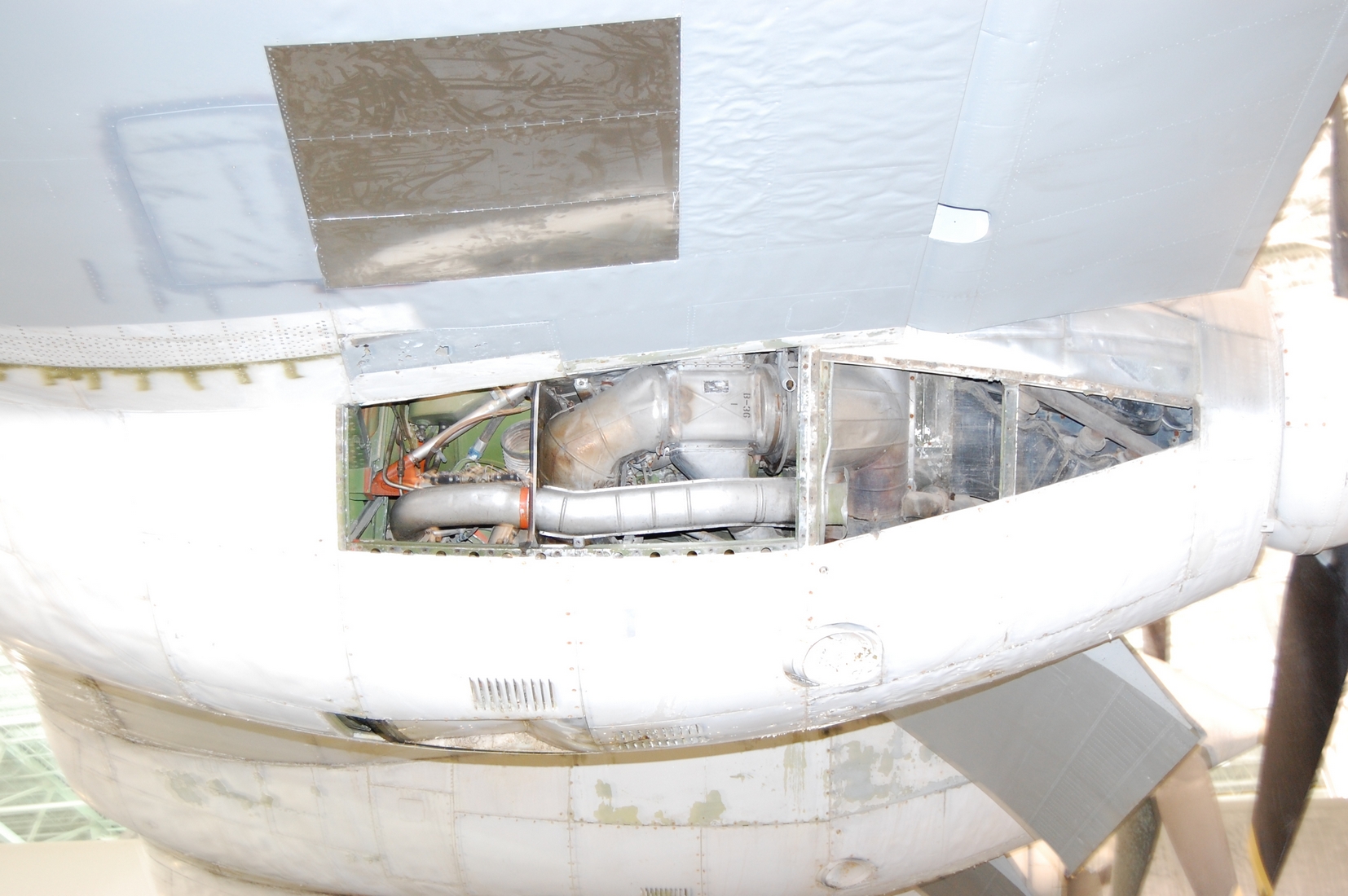
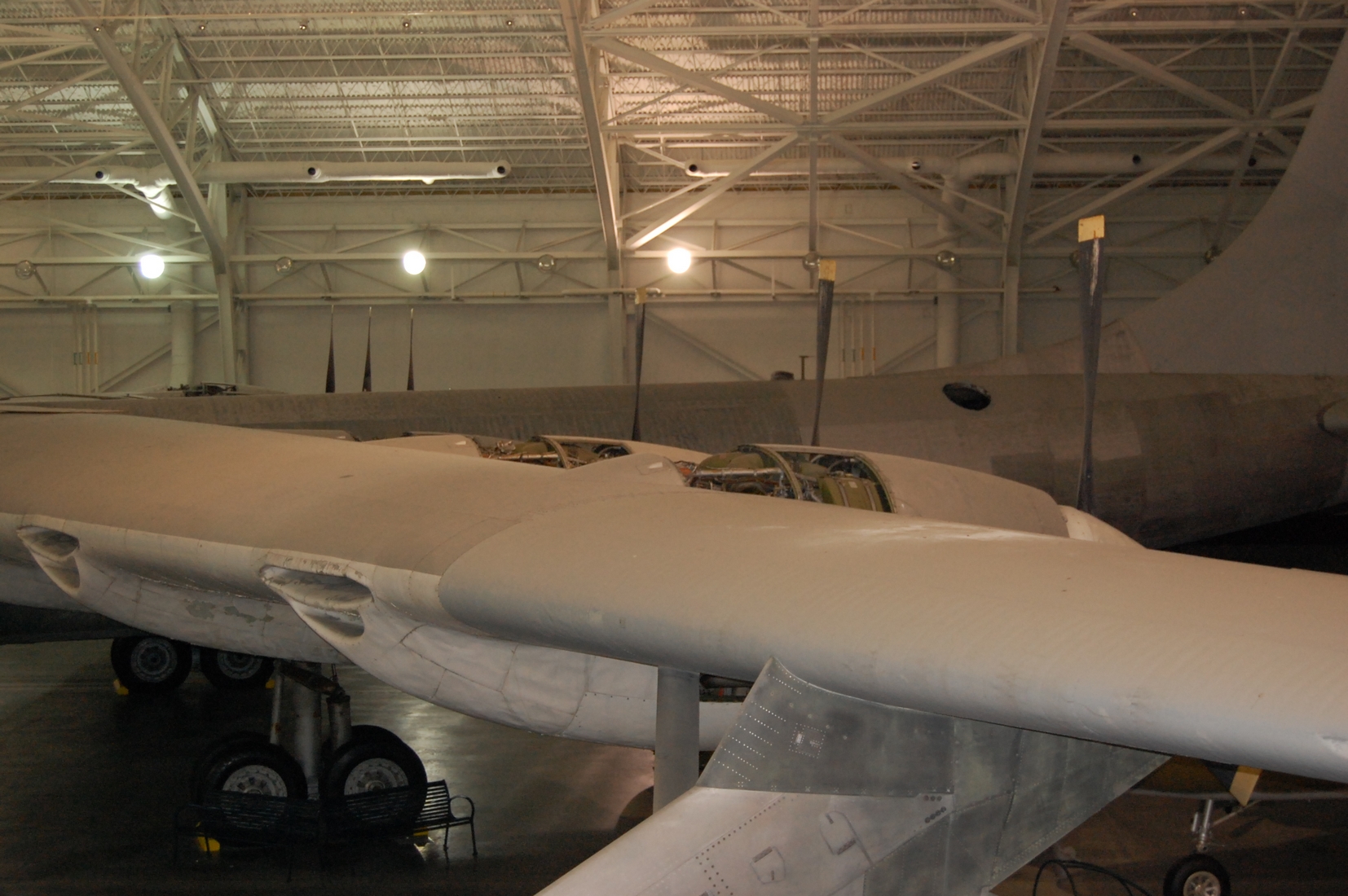
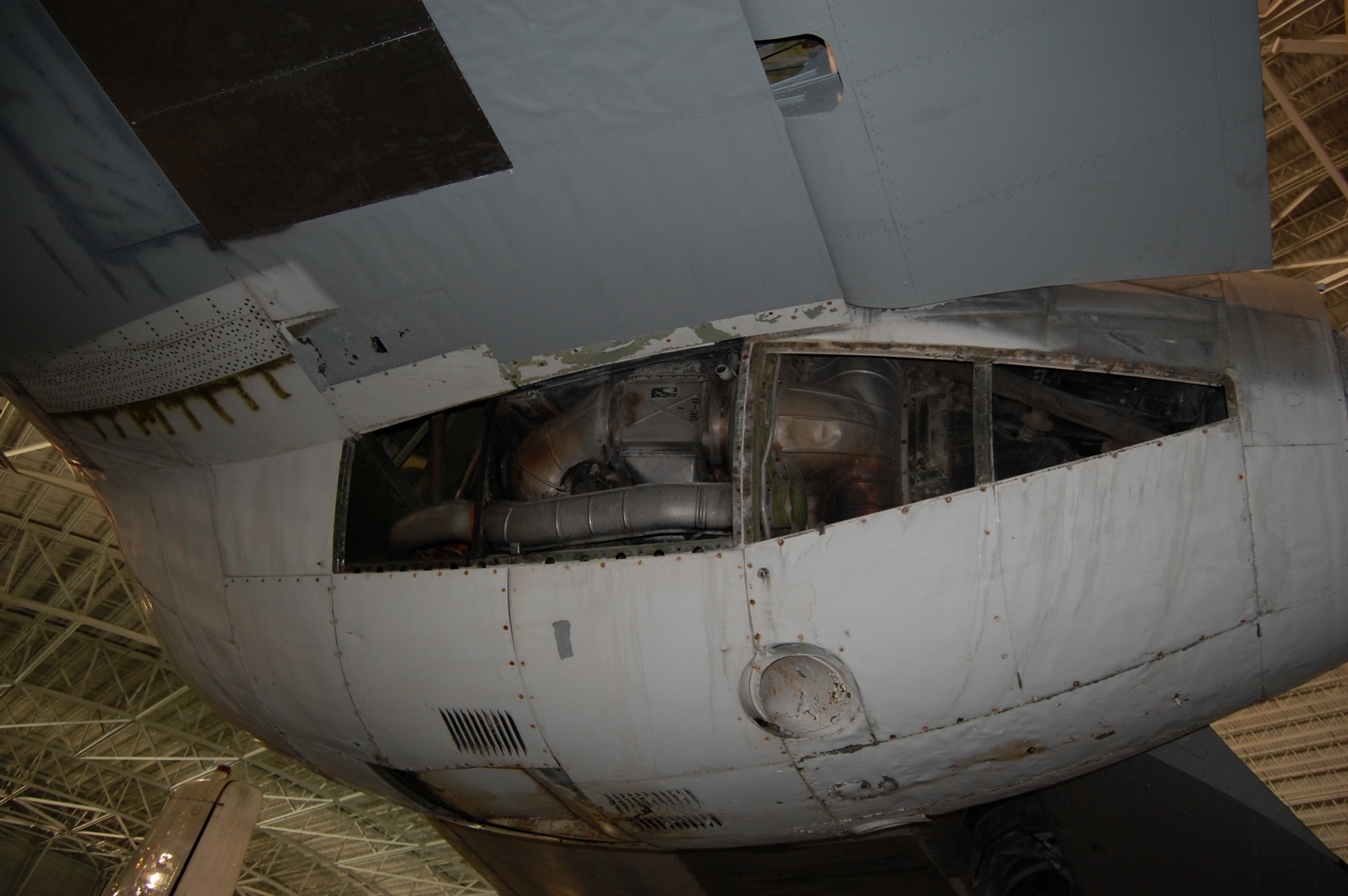
The second and third photos show the cooling outlet in the rear
of the engine nacelles. The airflow was controlled by the
ring forward of the prop. That ring would move backward
and forward to control the amount of air over the engines much
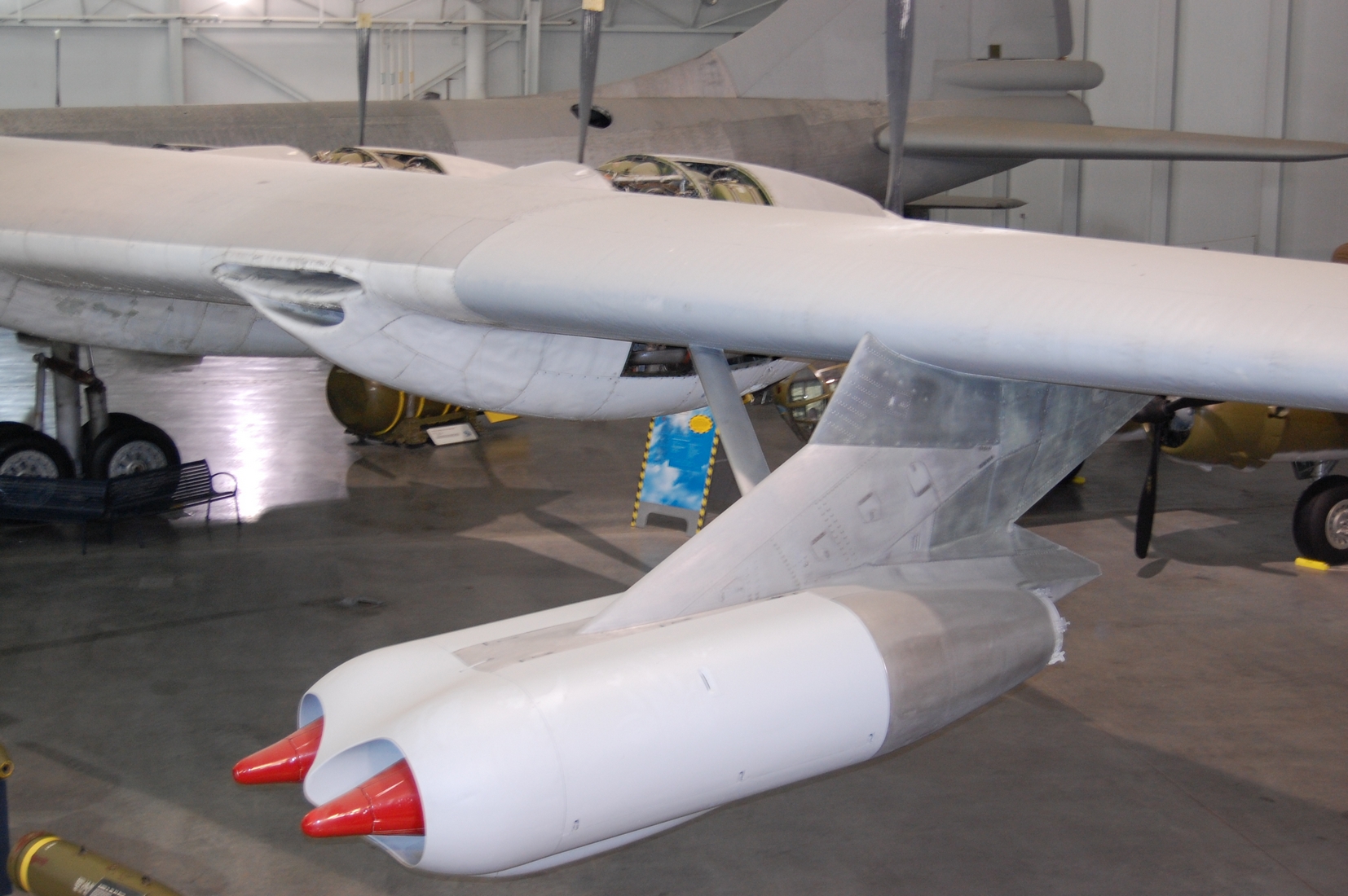
in the way cowl flaps control airflow. The fourth photo
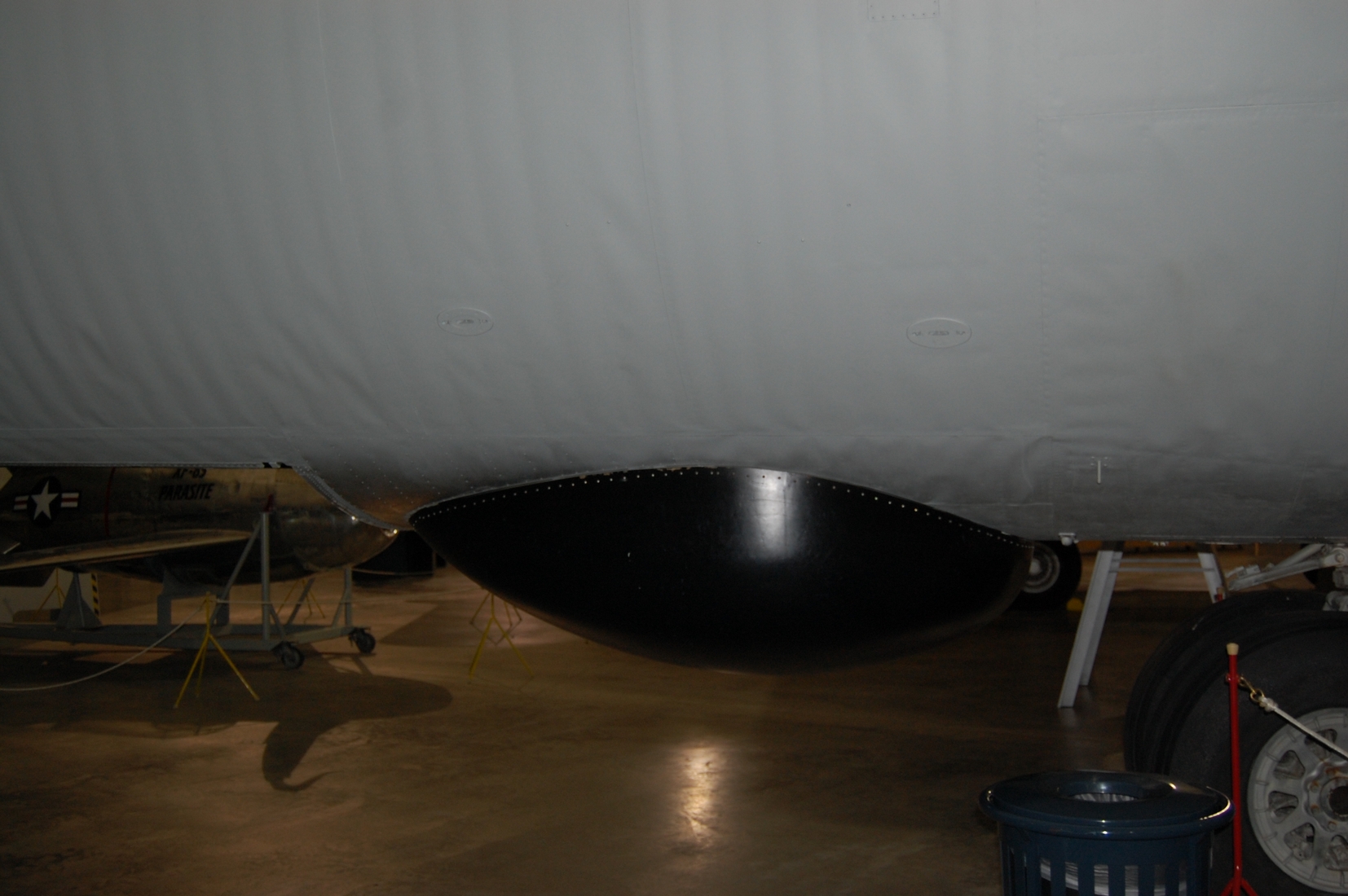
illustrates the twin J-47 pods.
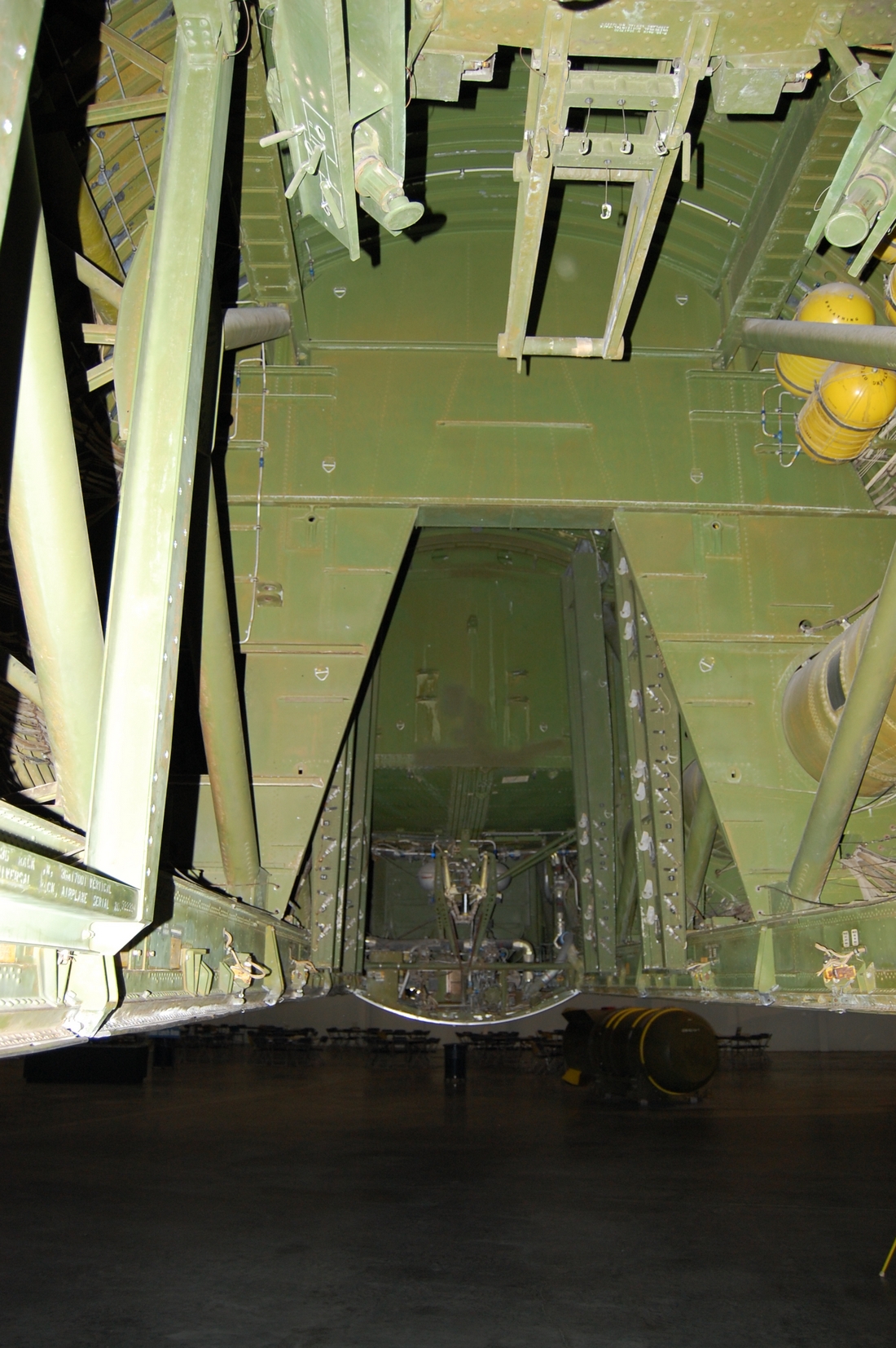
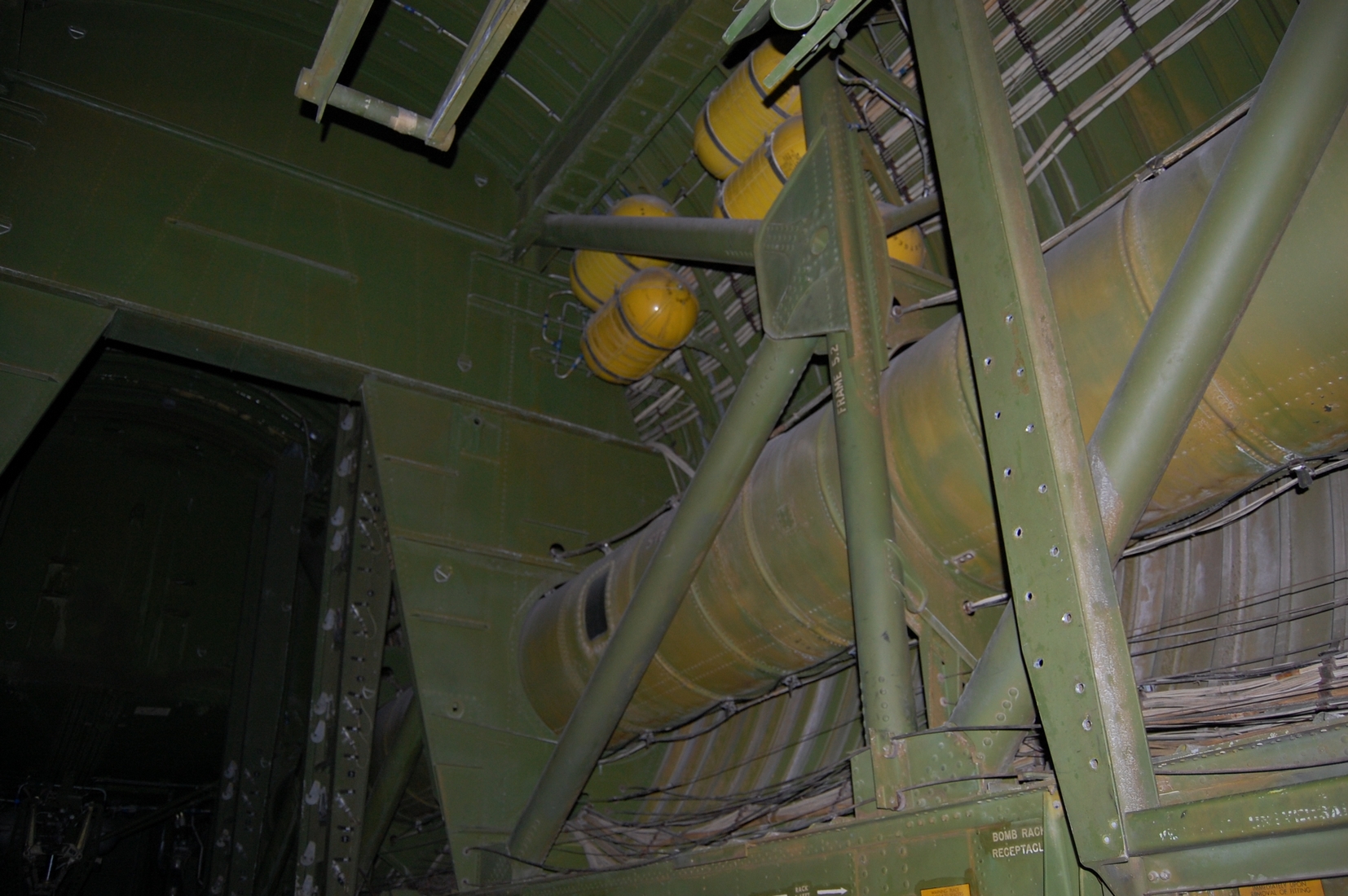
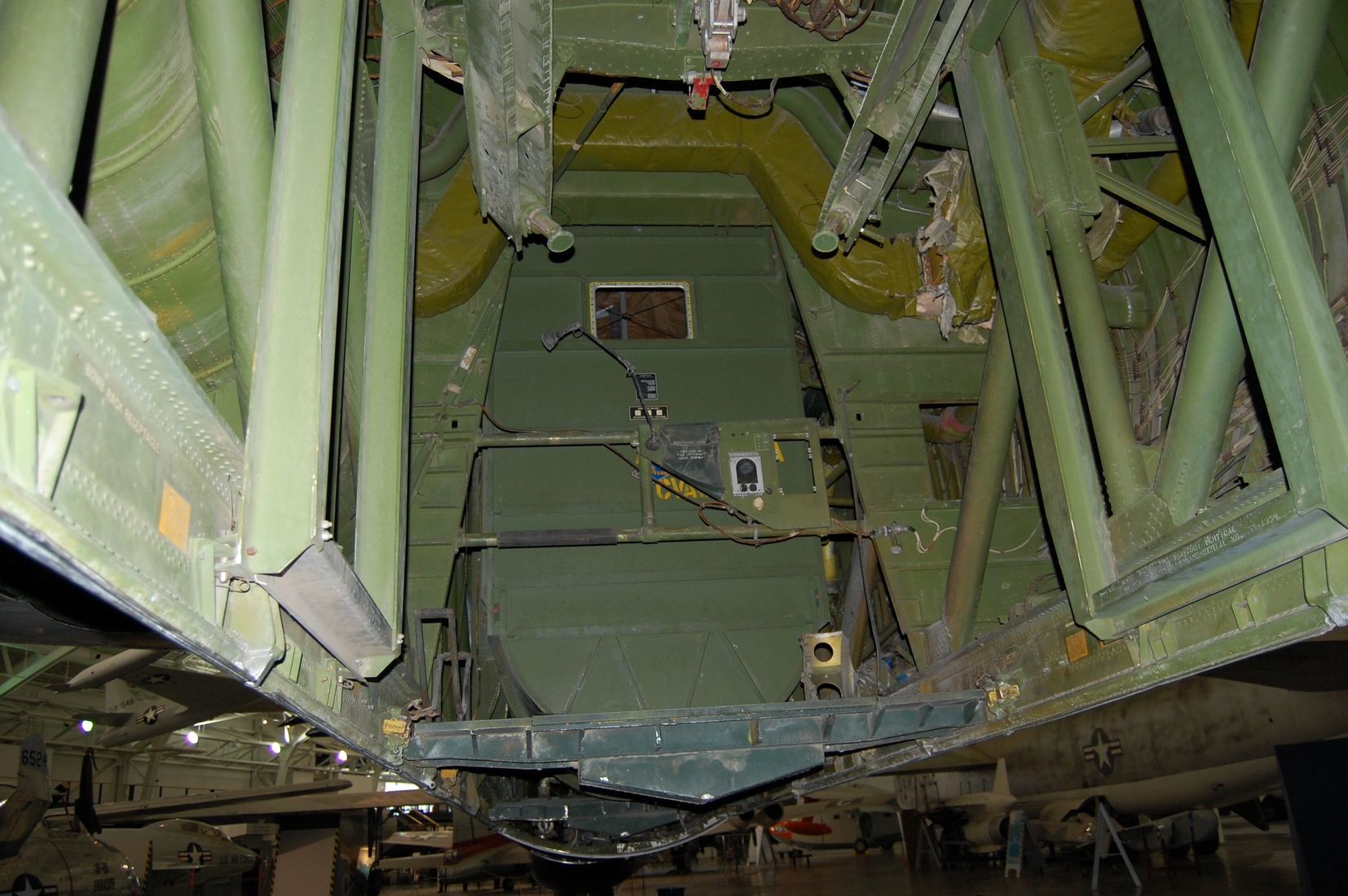
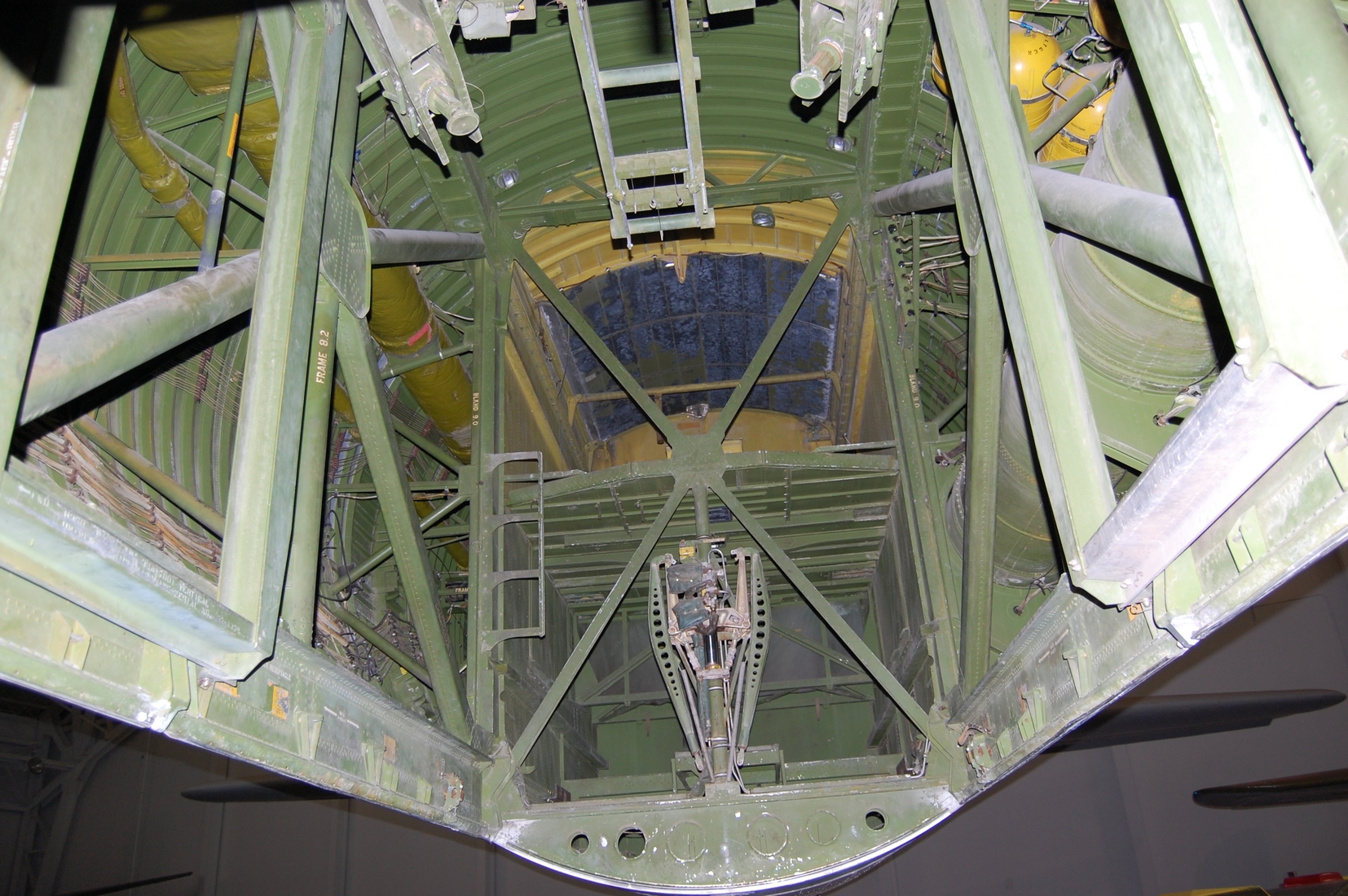
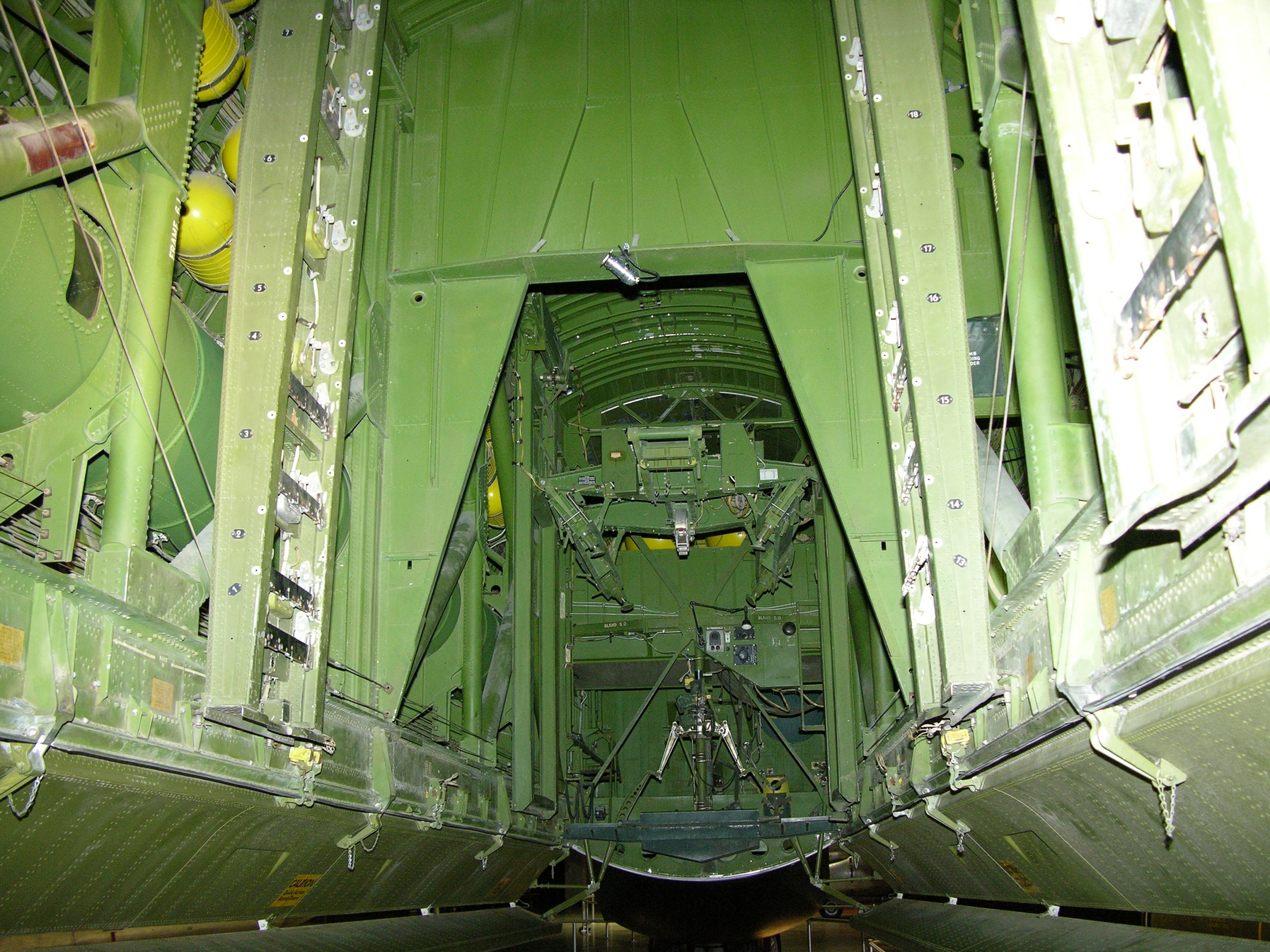
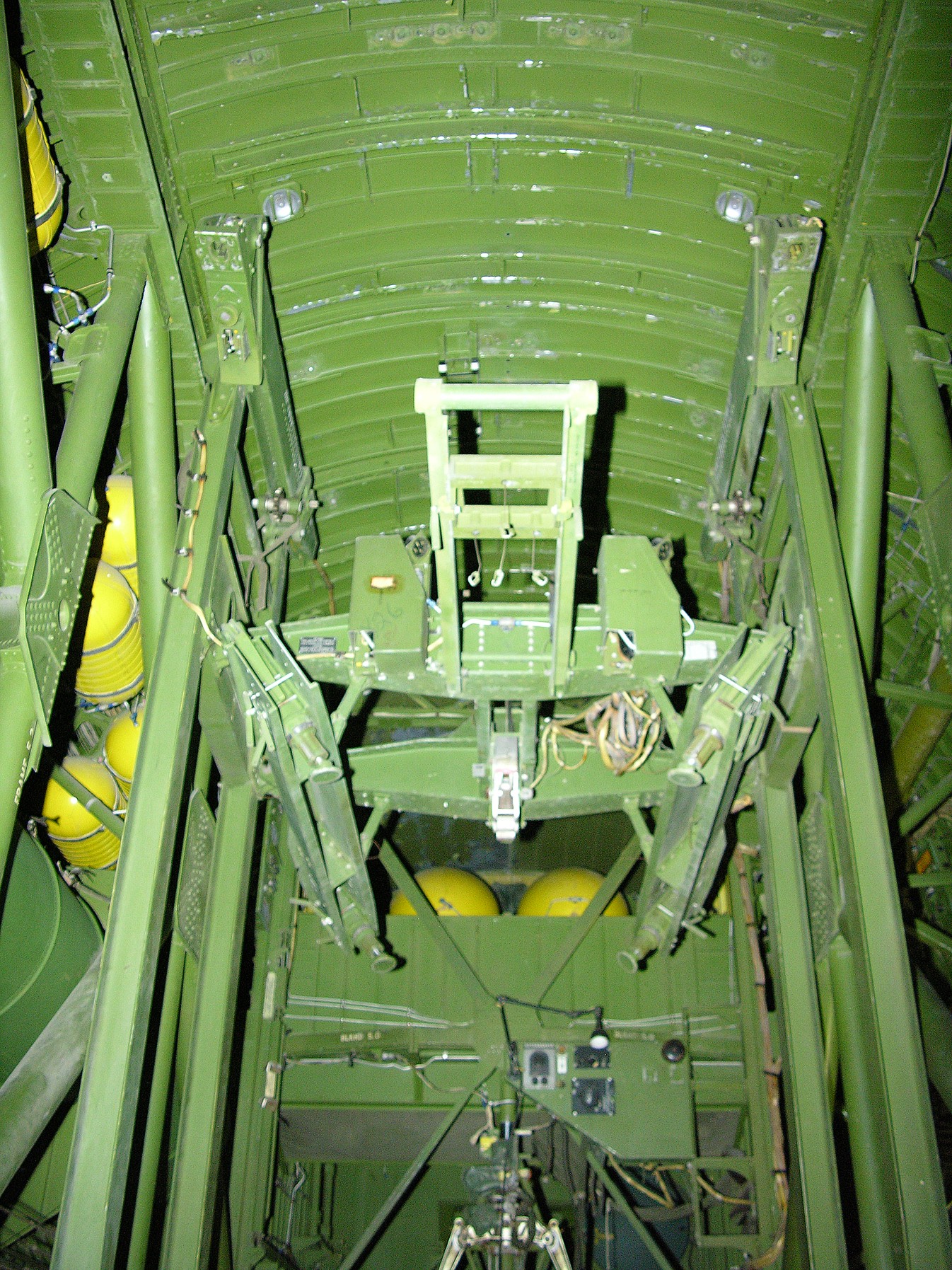
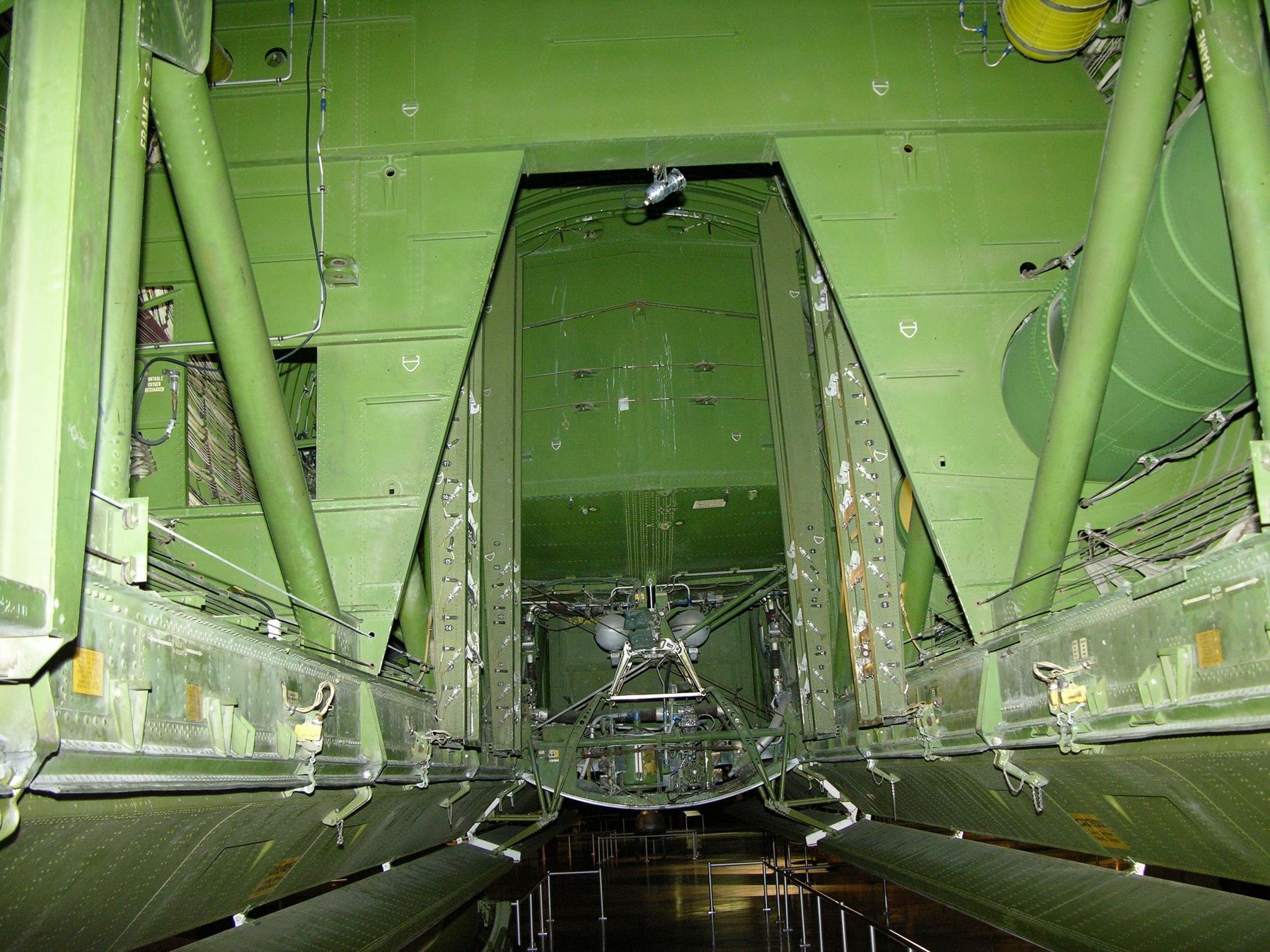
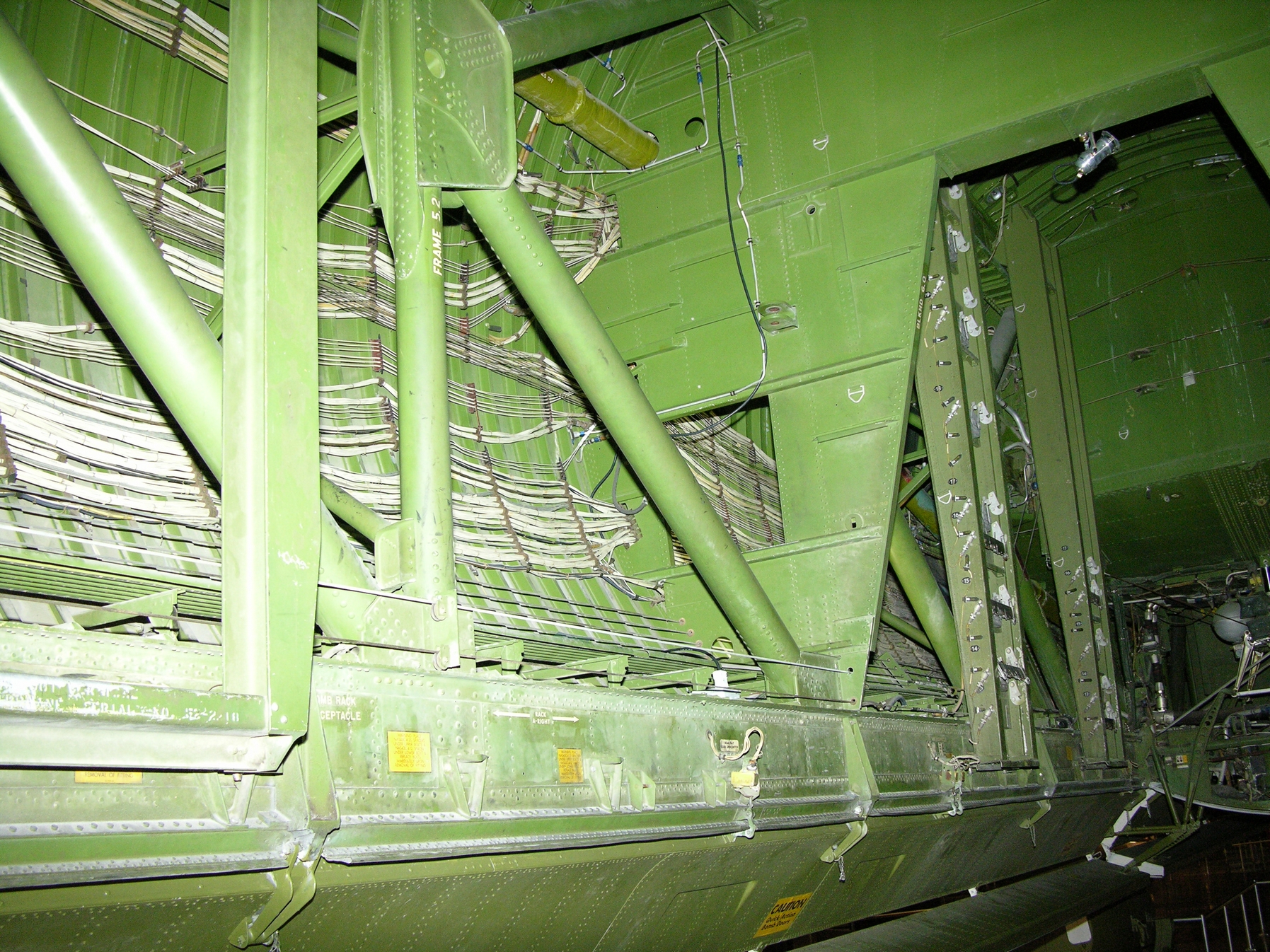
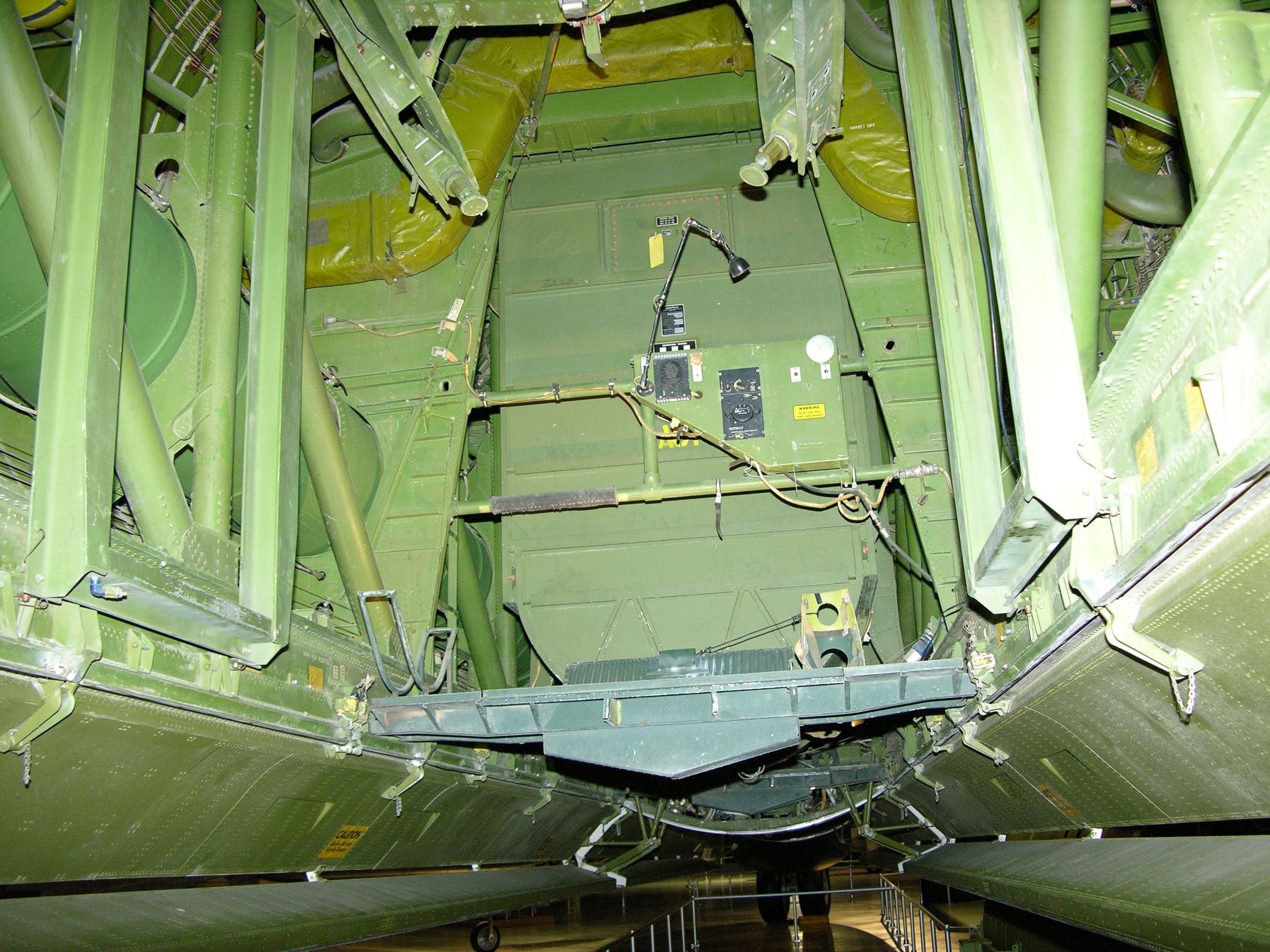
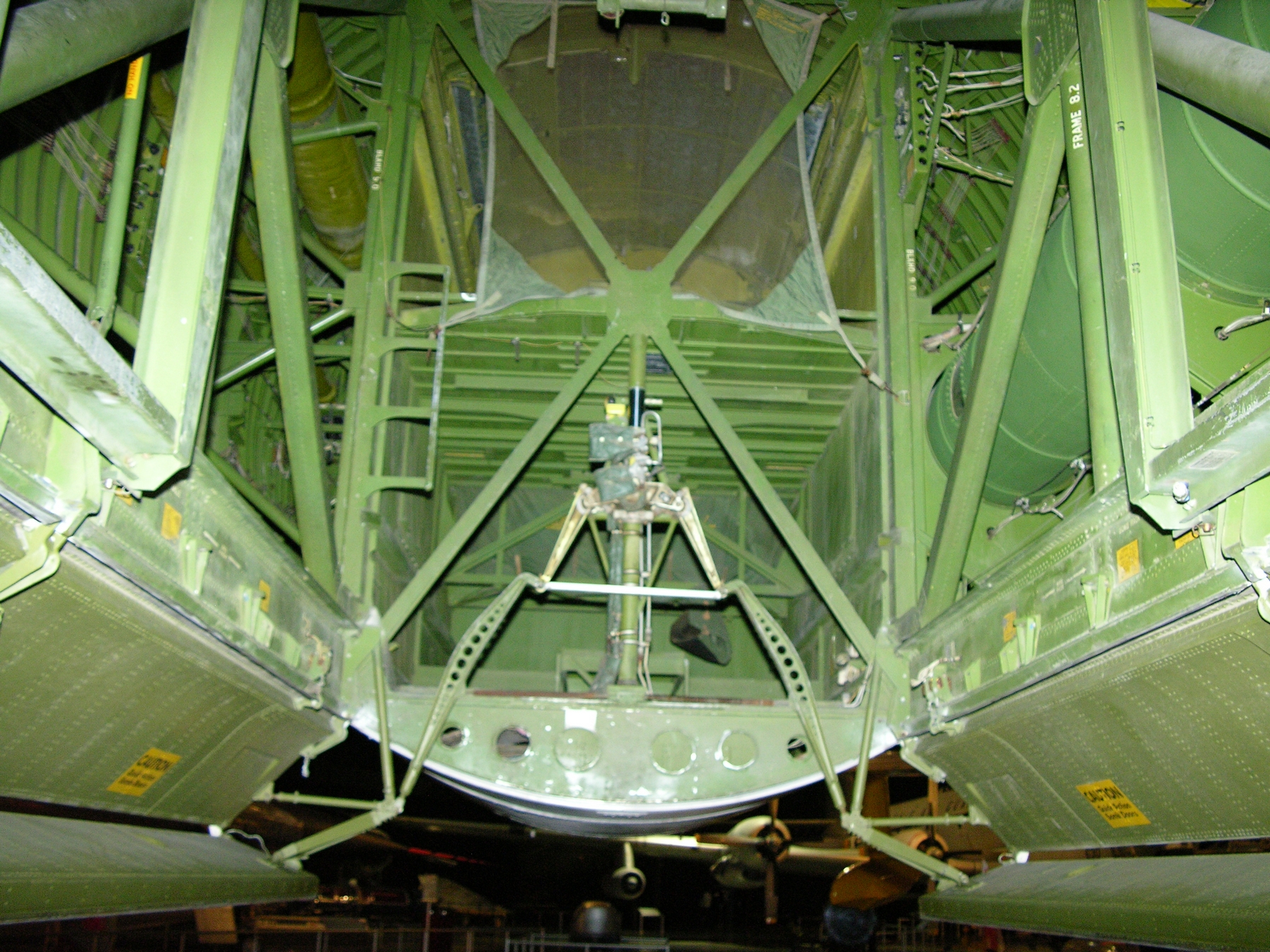
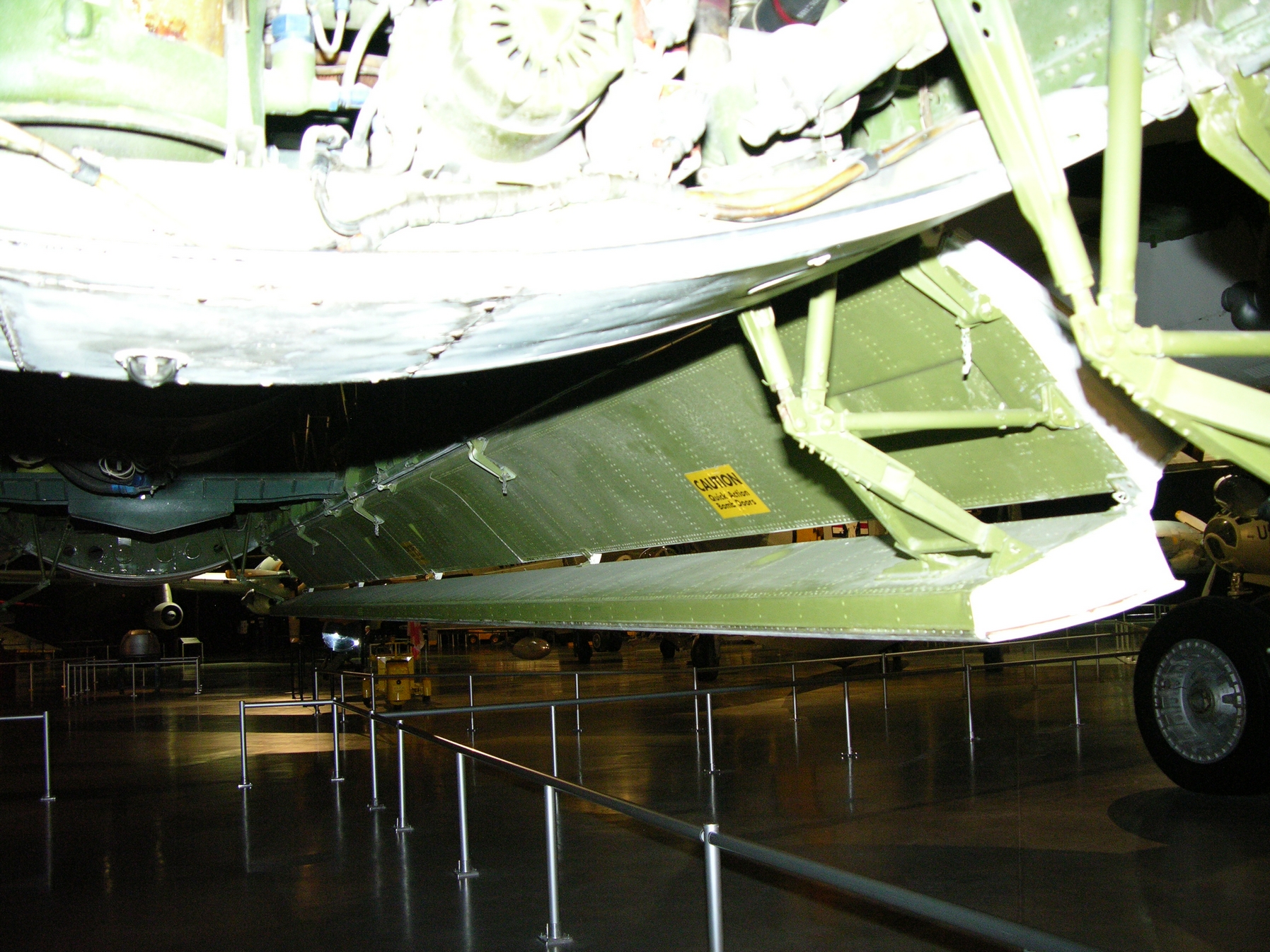
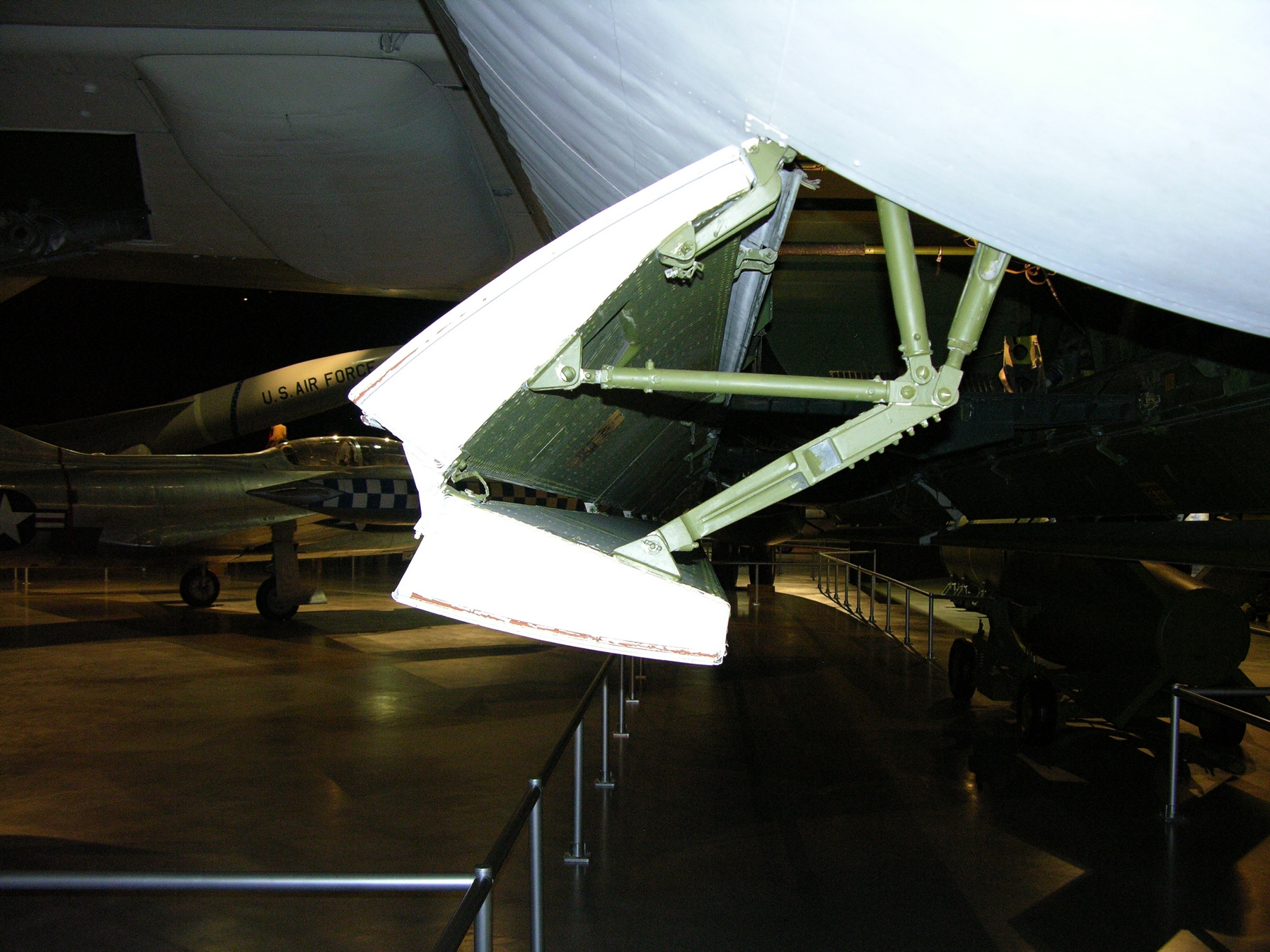
The above views
are of the forward bomb bays (looking fore and aft) and the aft
bays (looking fore and aft).
The following photos were taken
52-2220 at the National
Museum of the United States Air Force.
2220 has been displayed indoors at the NMUSAF for
many years. The dark lighting and tight
spaces make it a difficult aircraft to photograph.
The above
views are much the same as the ones taken of 2217.
The following photos were taken at both the SASM and the
NMUSAF.
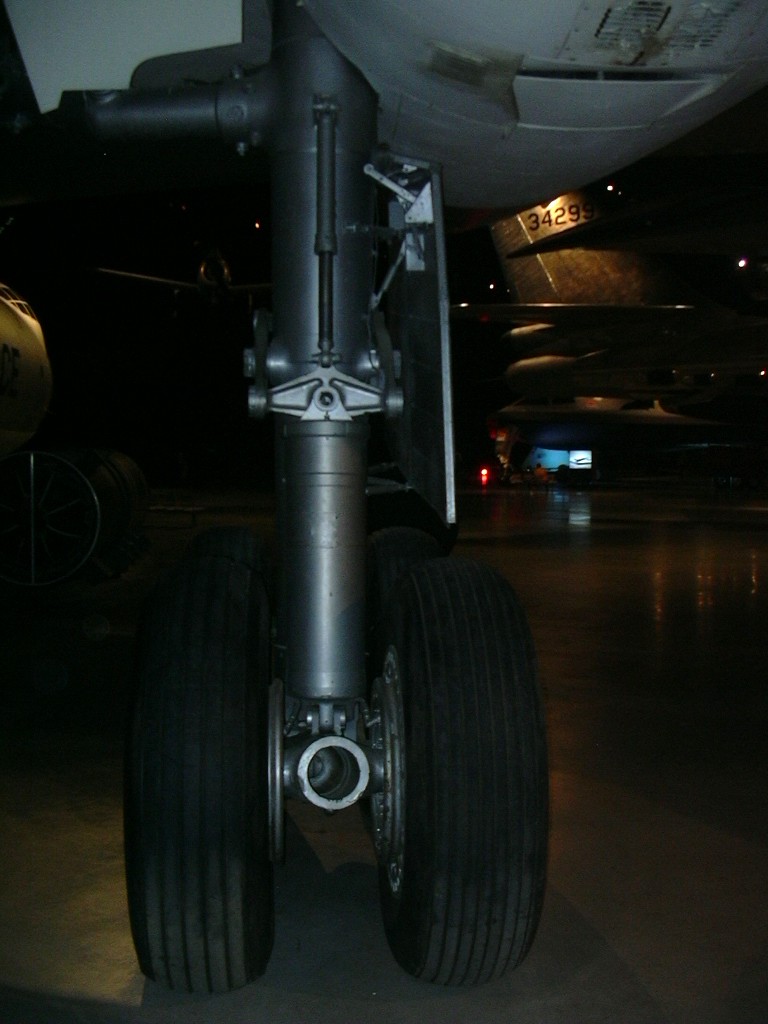
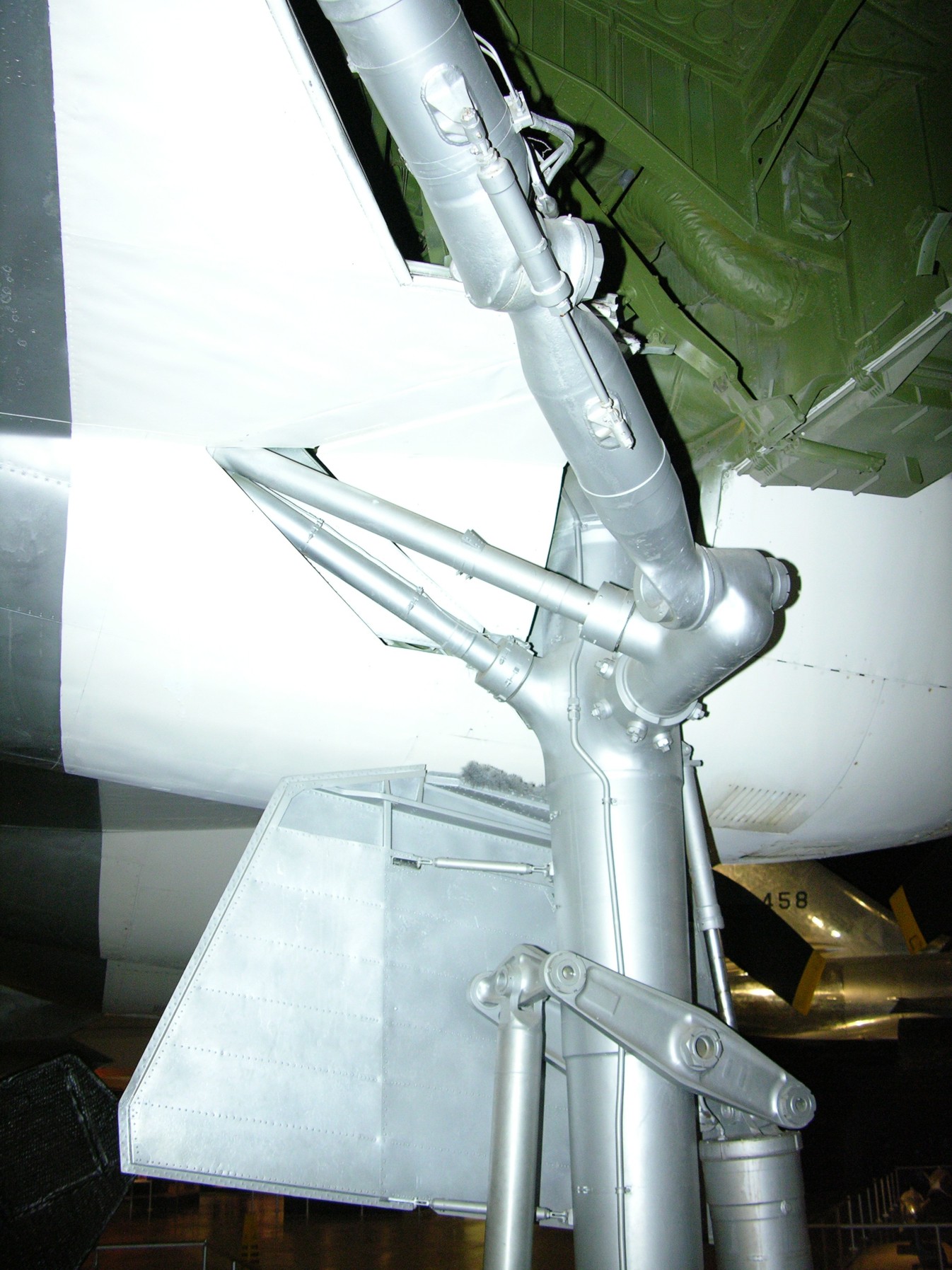
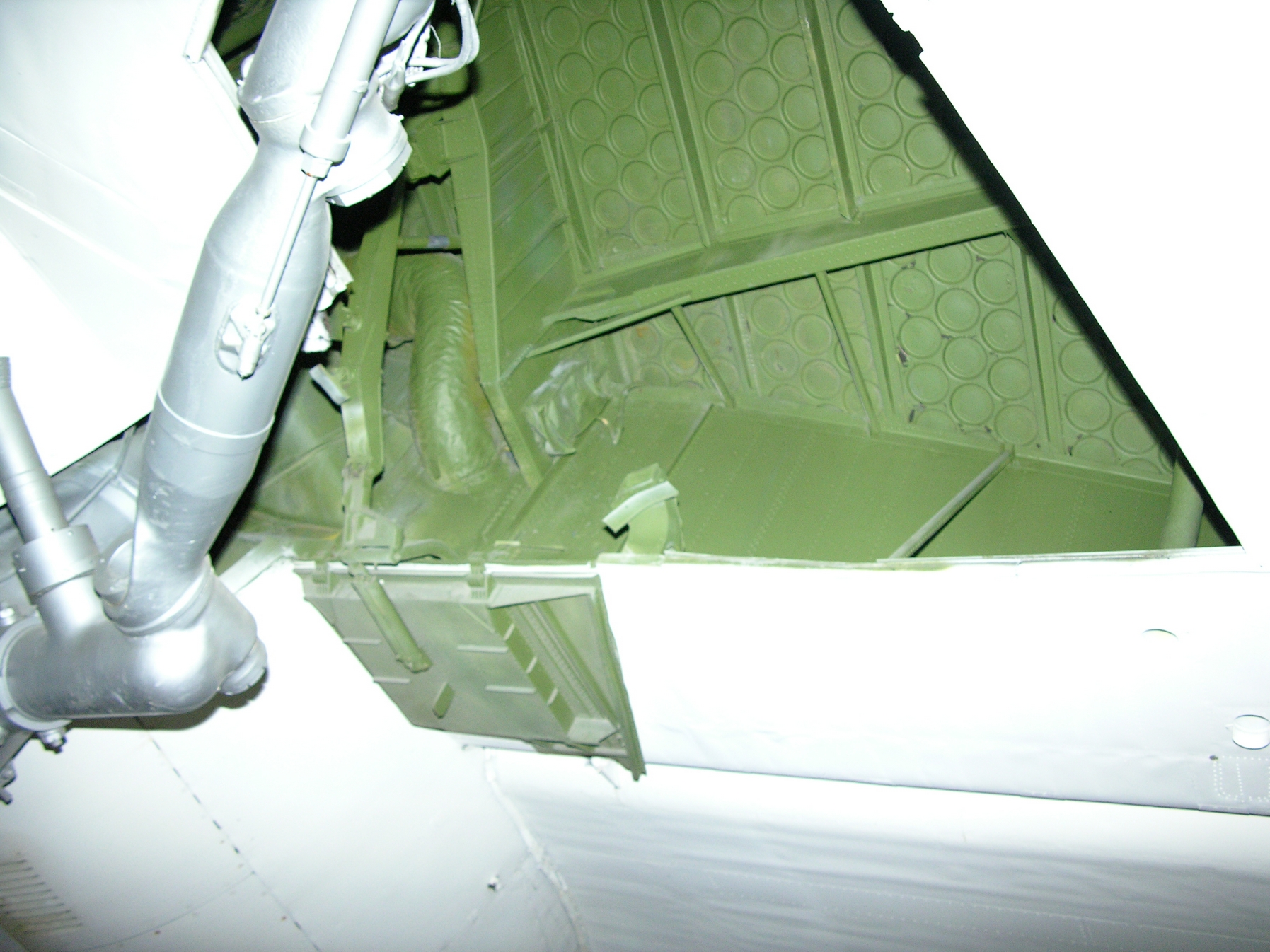
The nose gear
and a bad shot of the nose well.
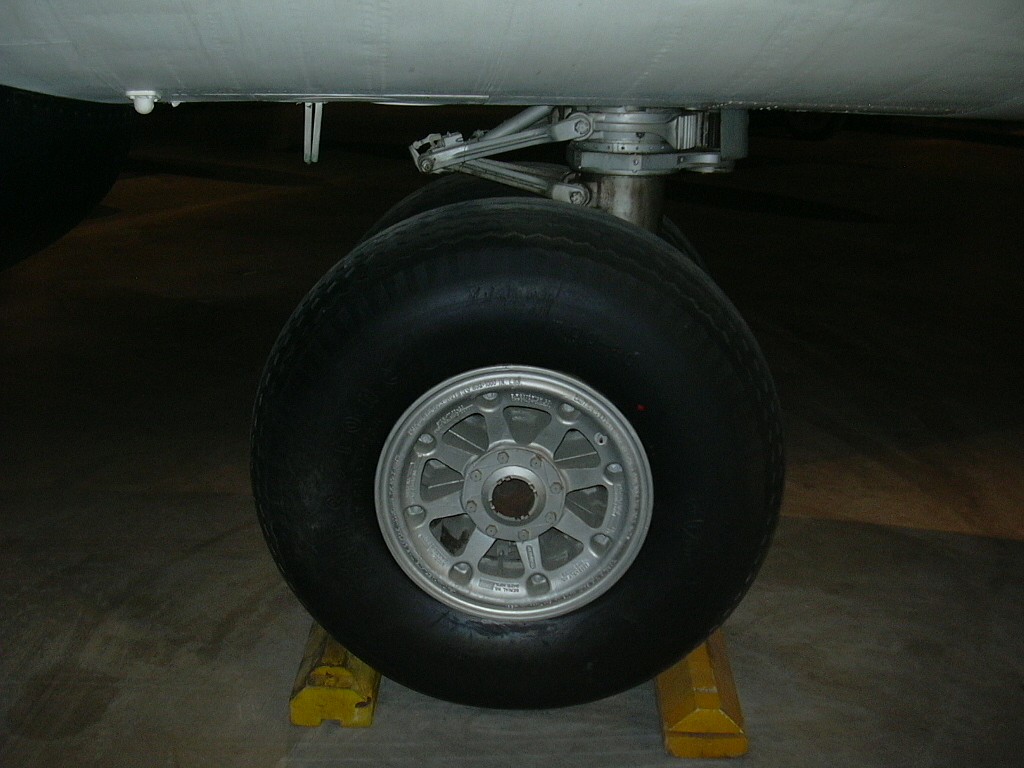
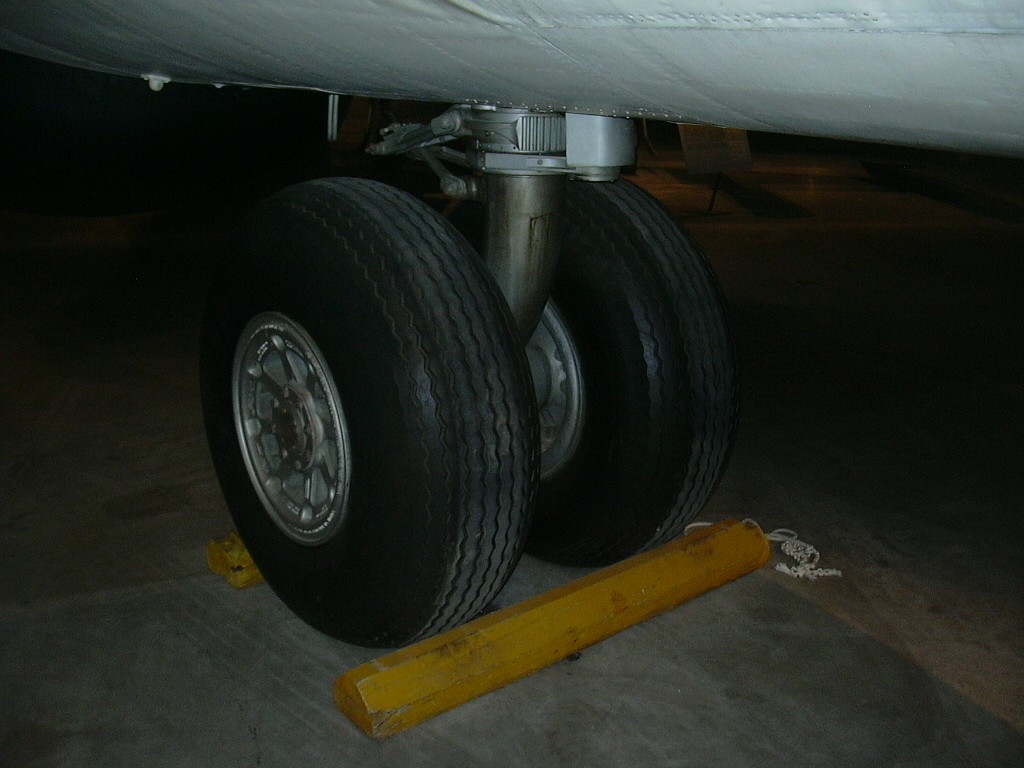
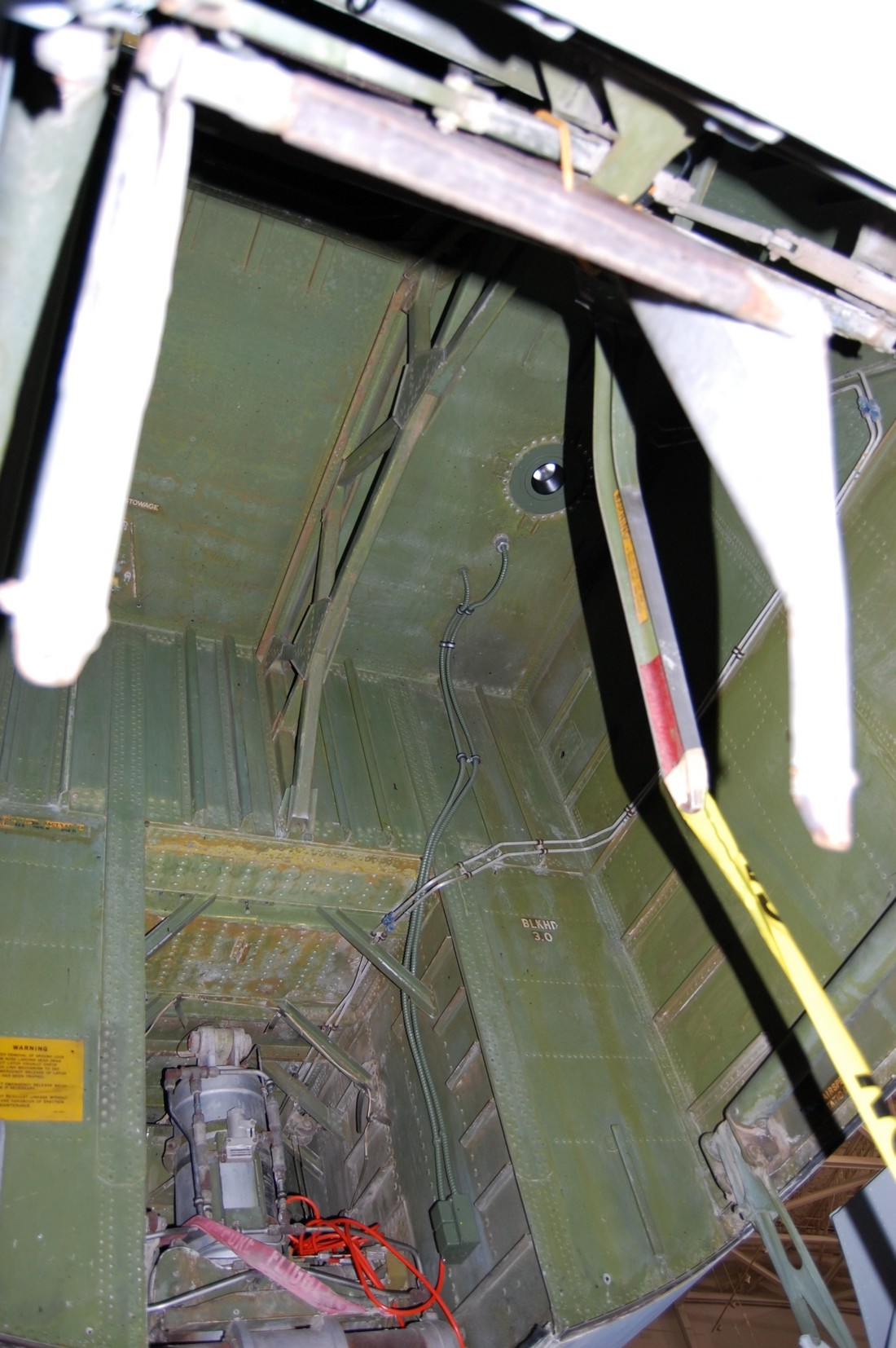
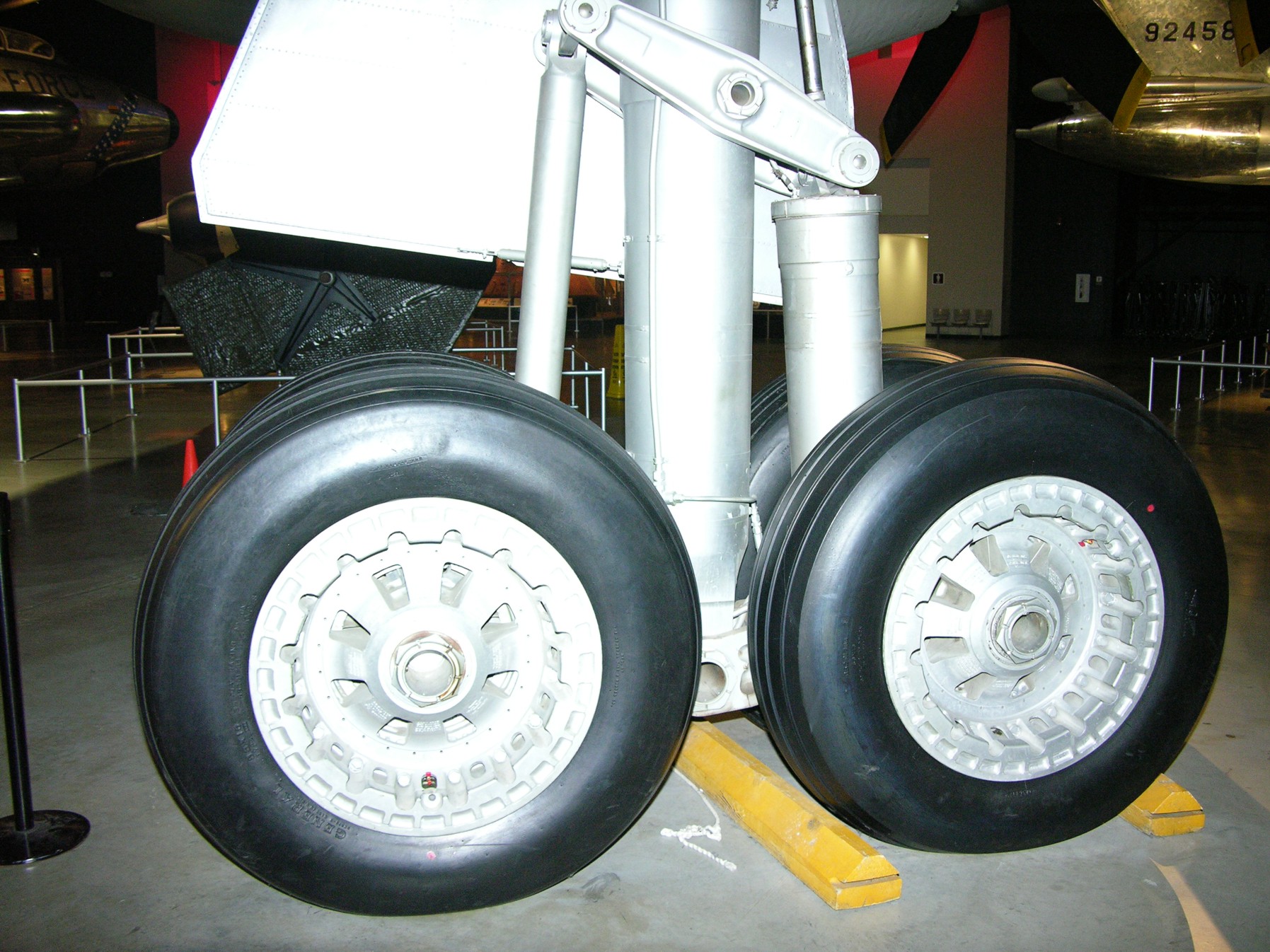
The main
gears and wells.
 |
 |
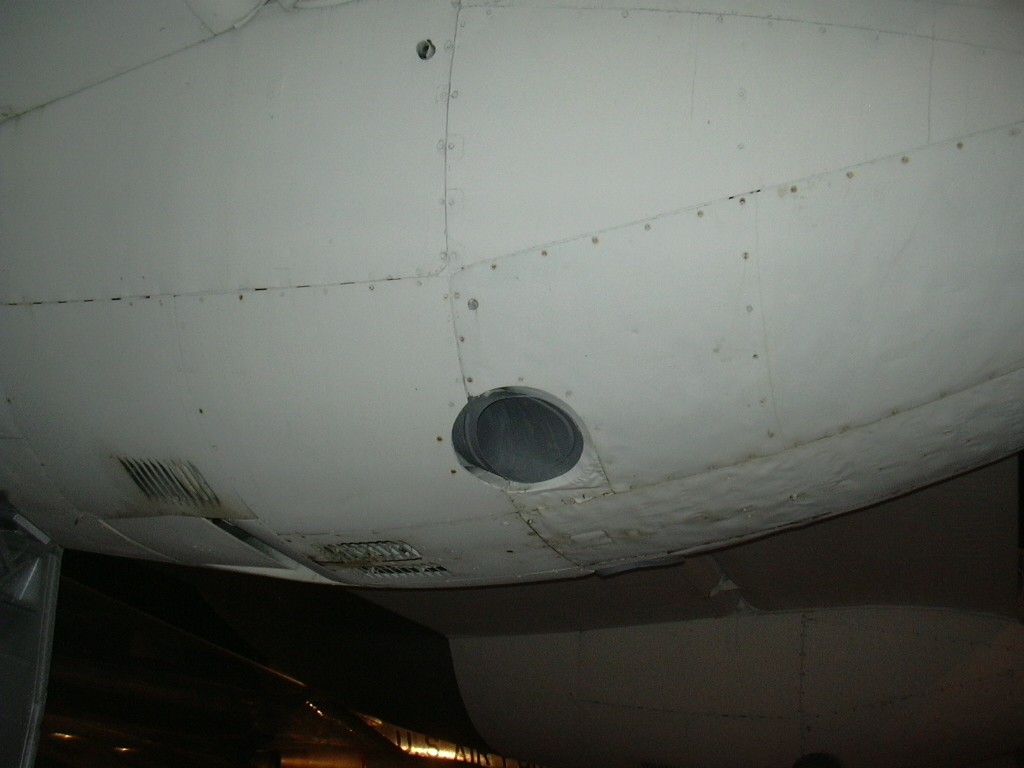
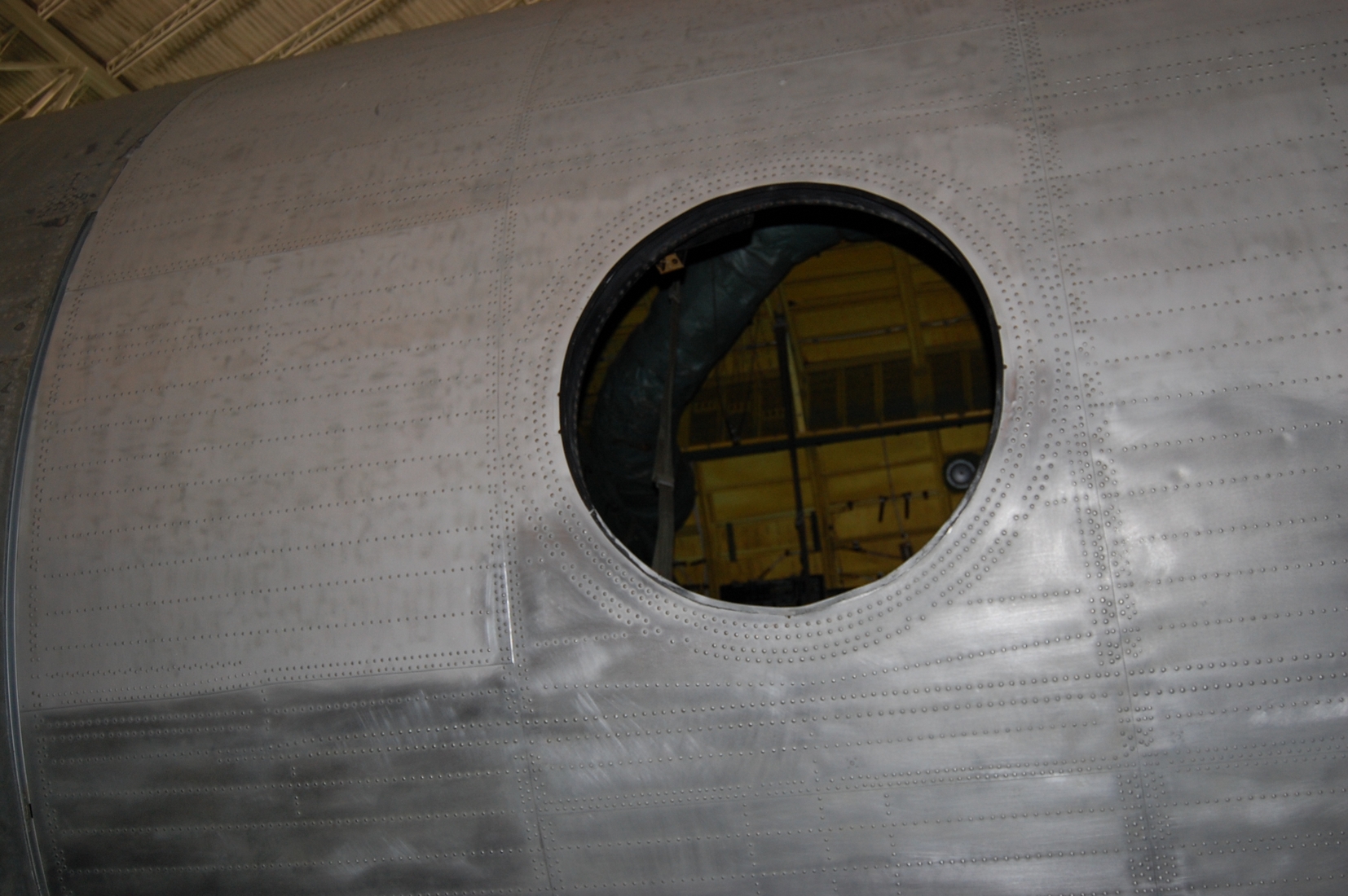
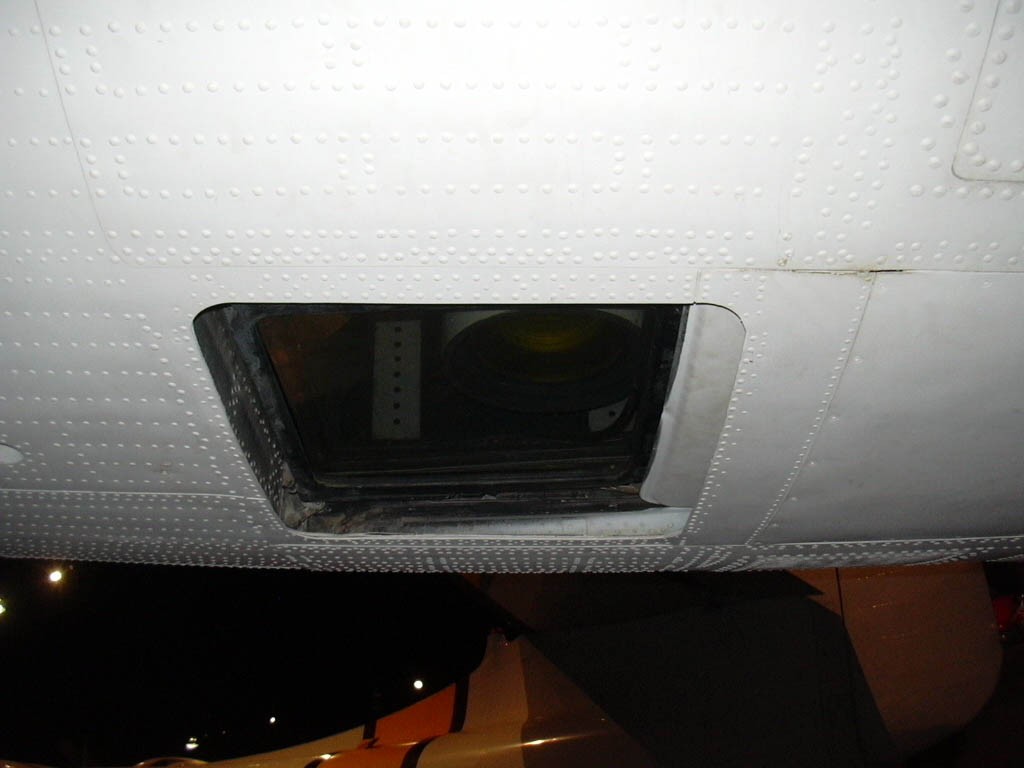
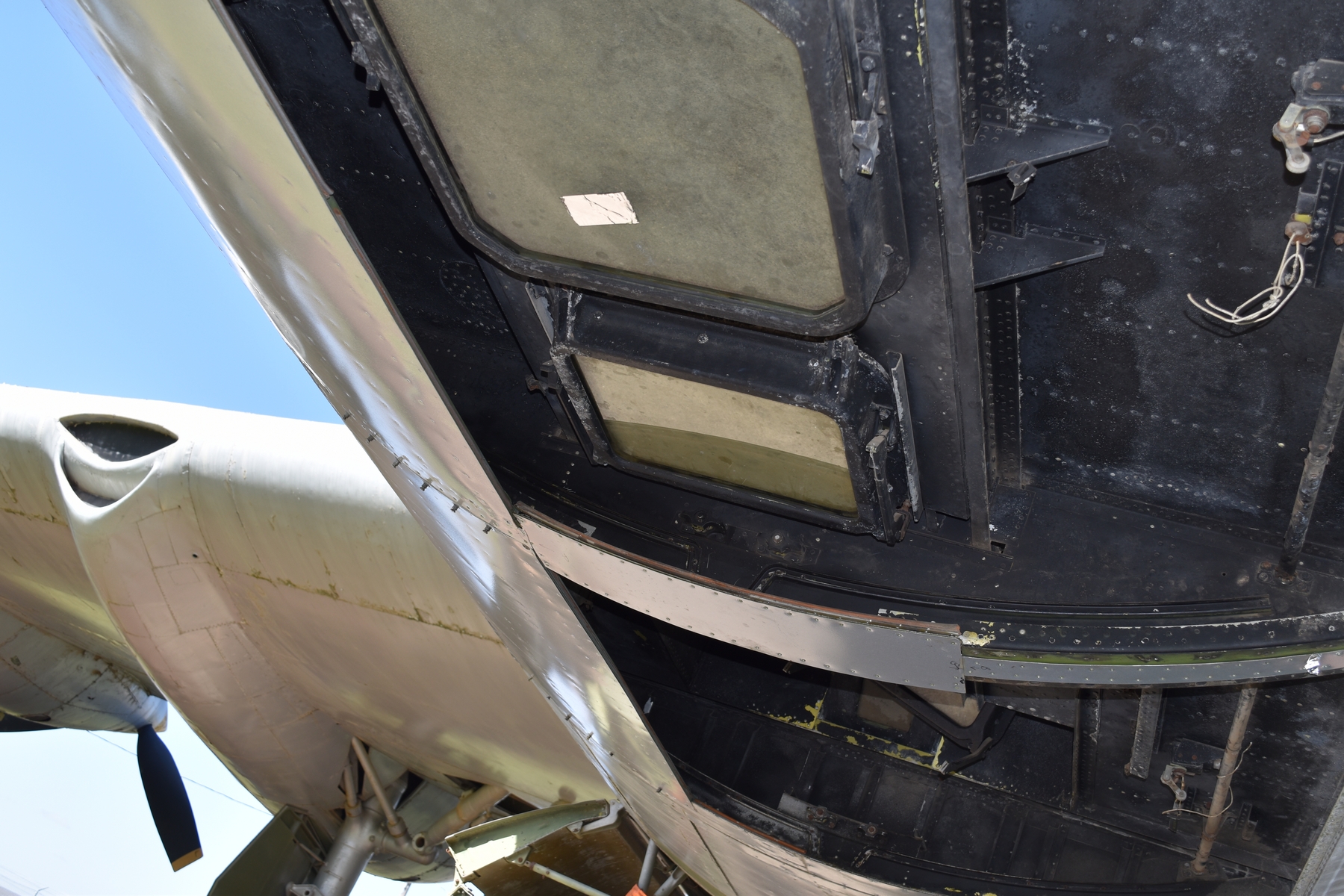
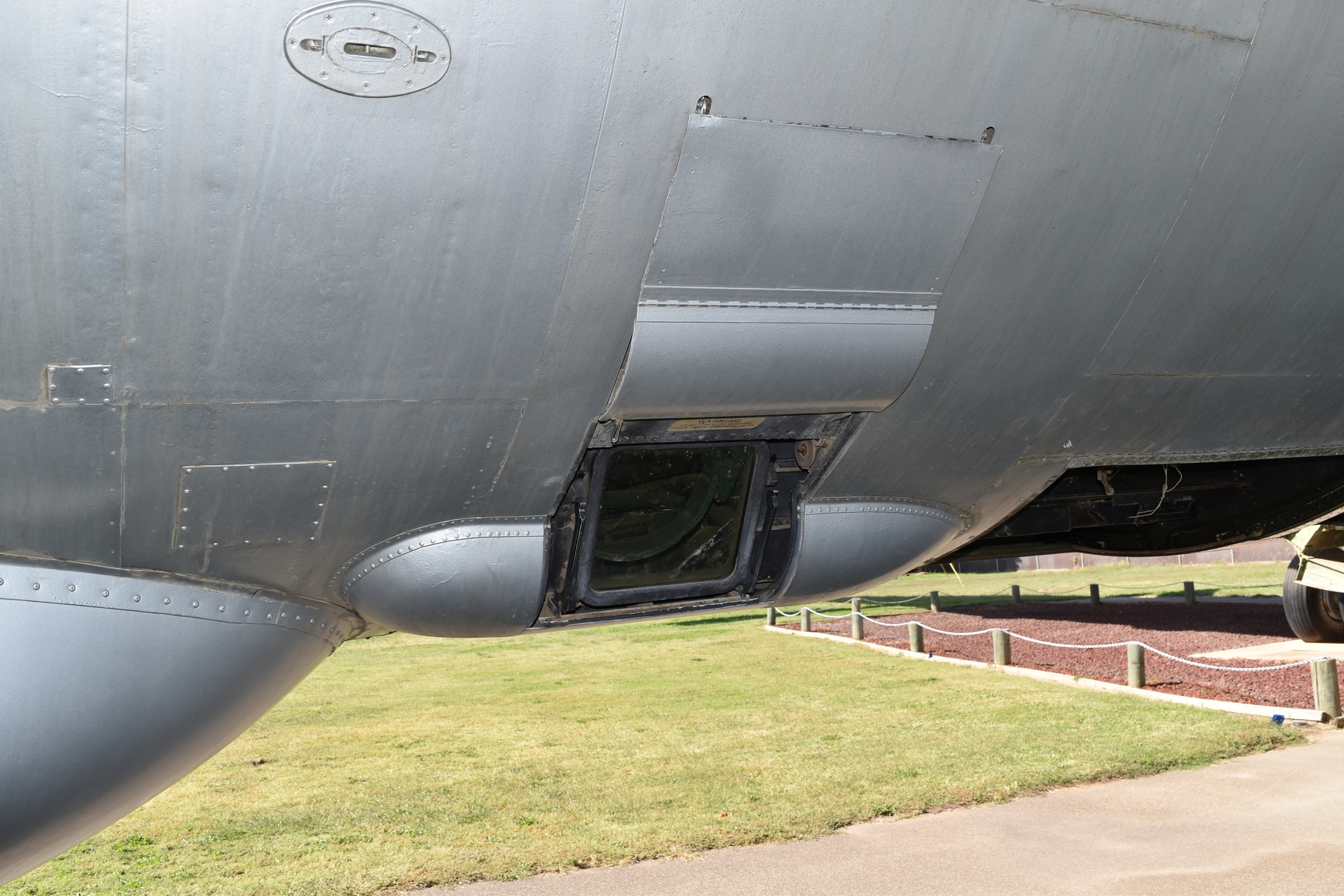
The
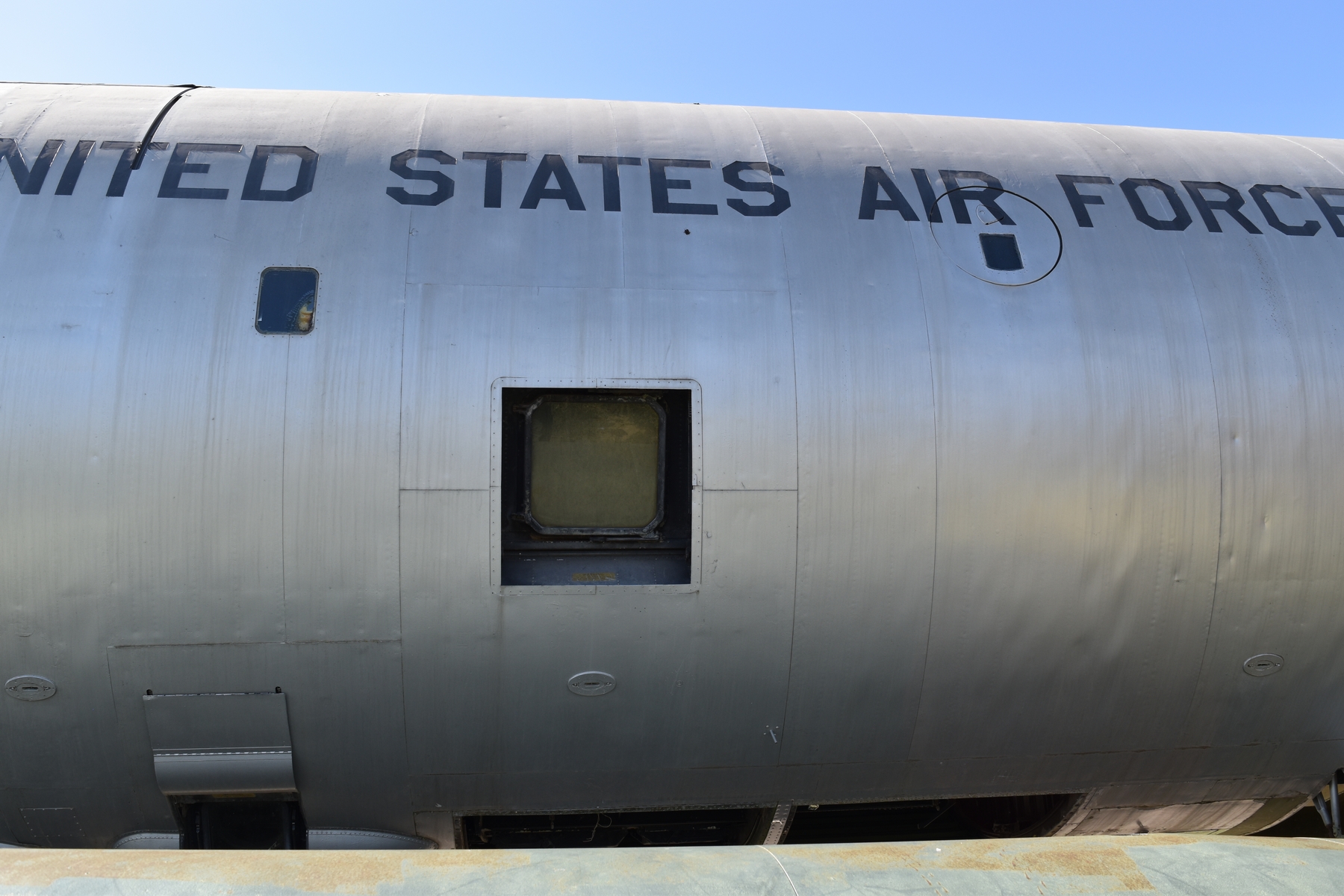
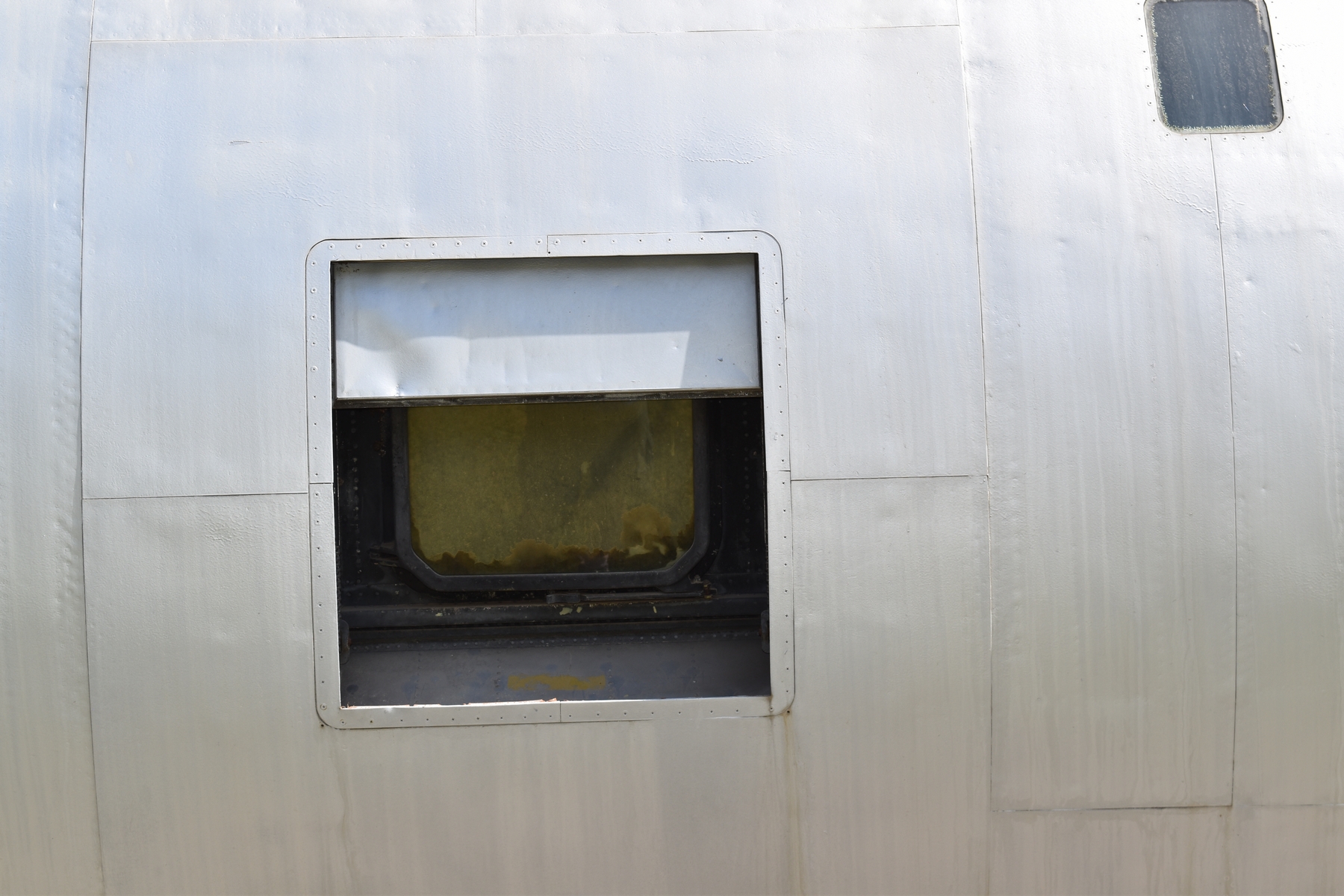
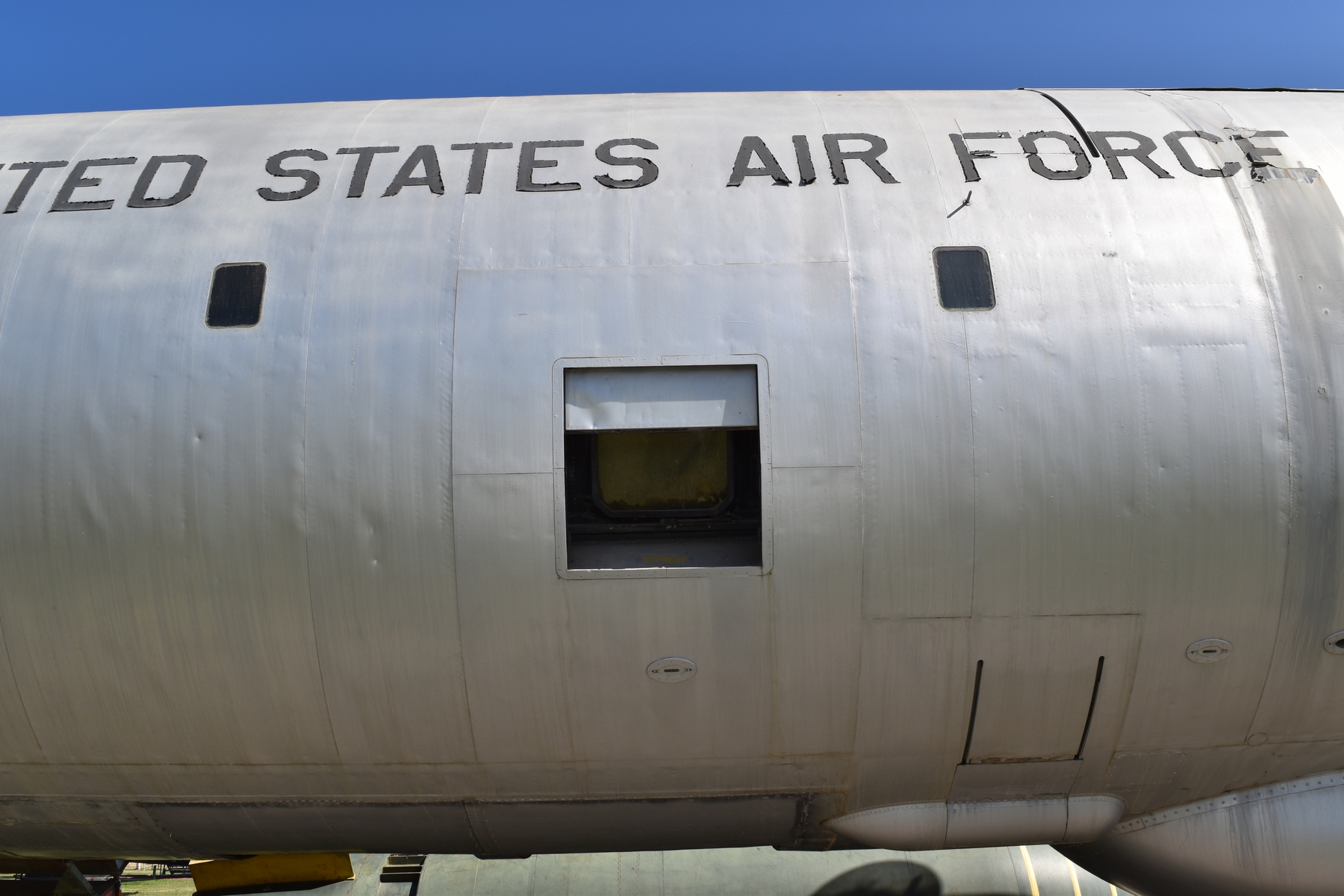
circular opening is the crew access and
the square window is a camera port.
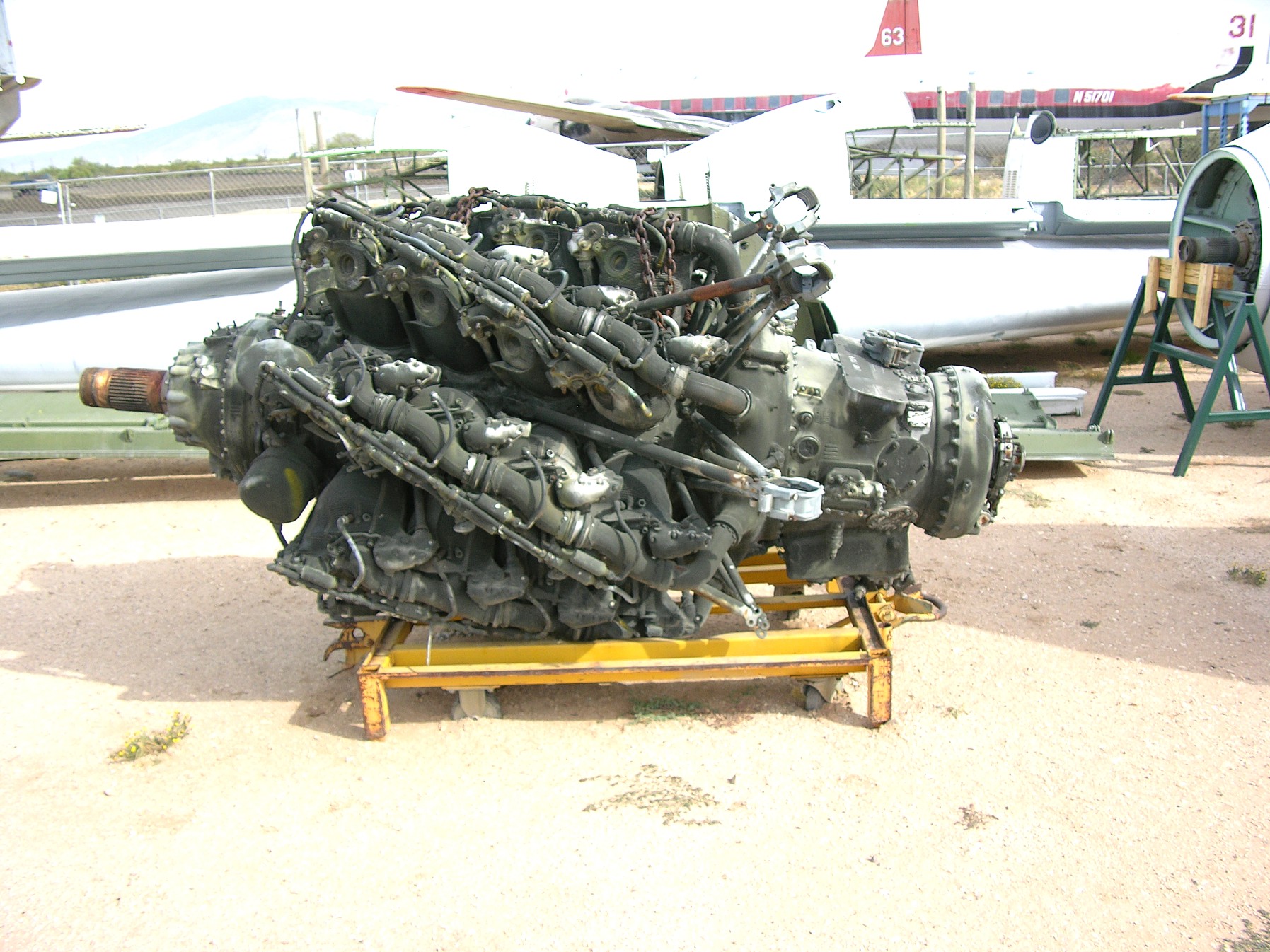
Engines
The
B-36
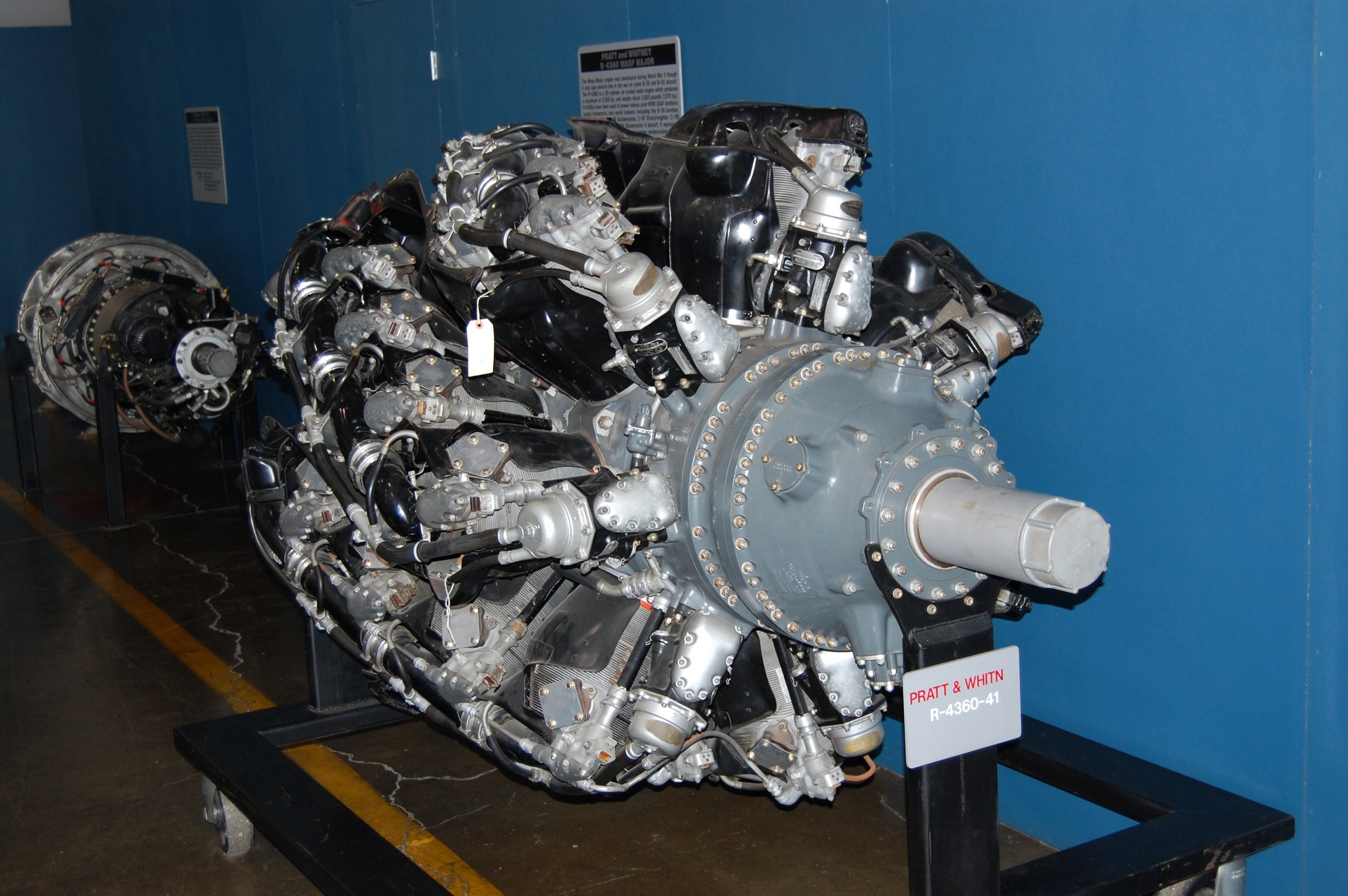
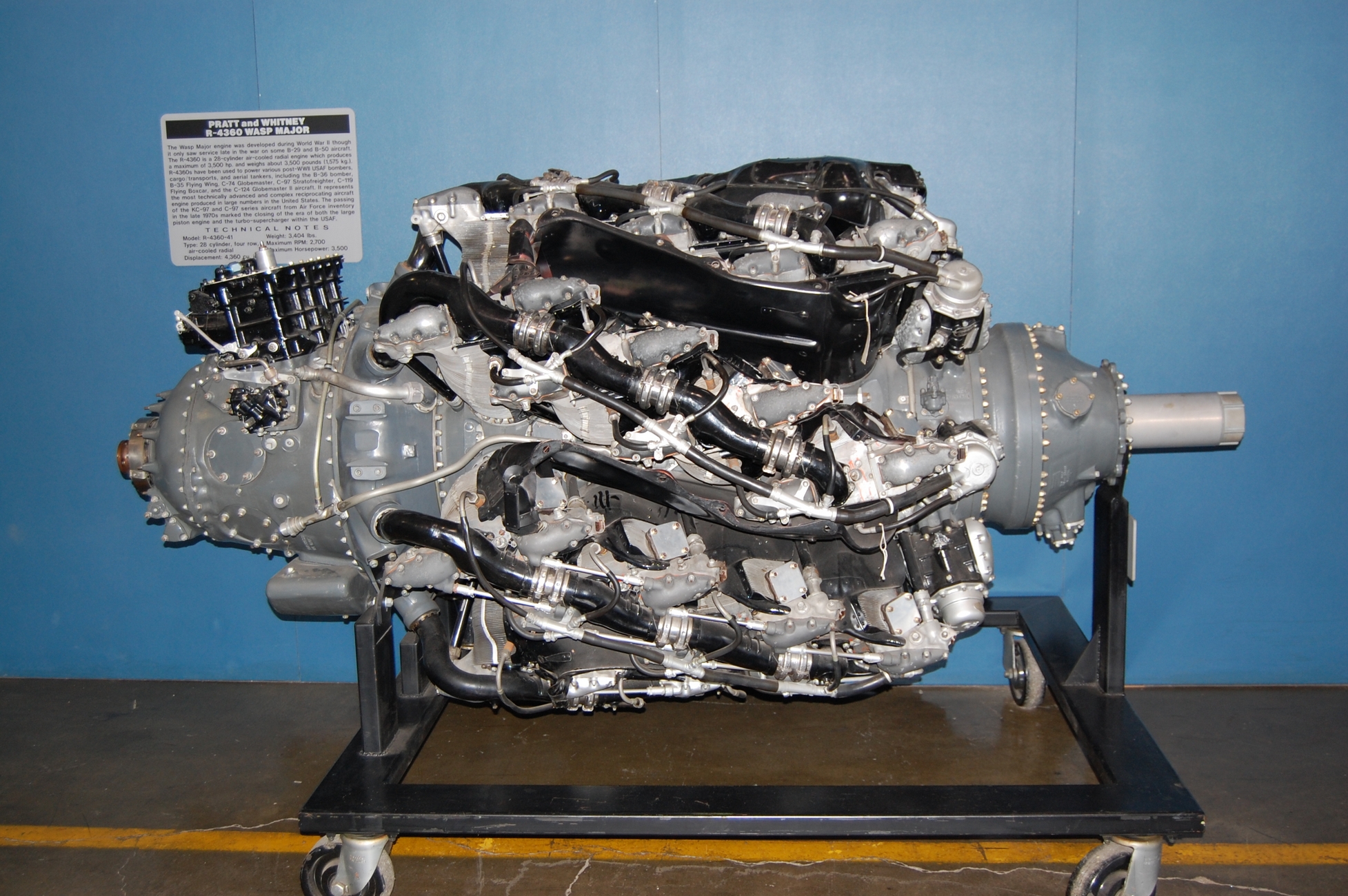
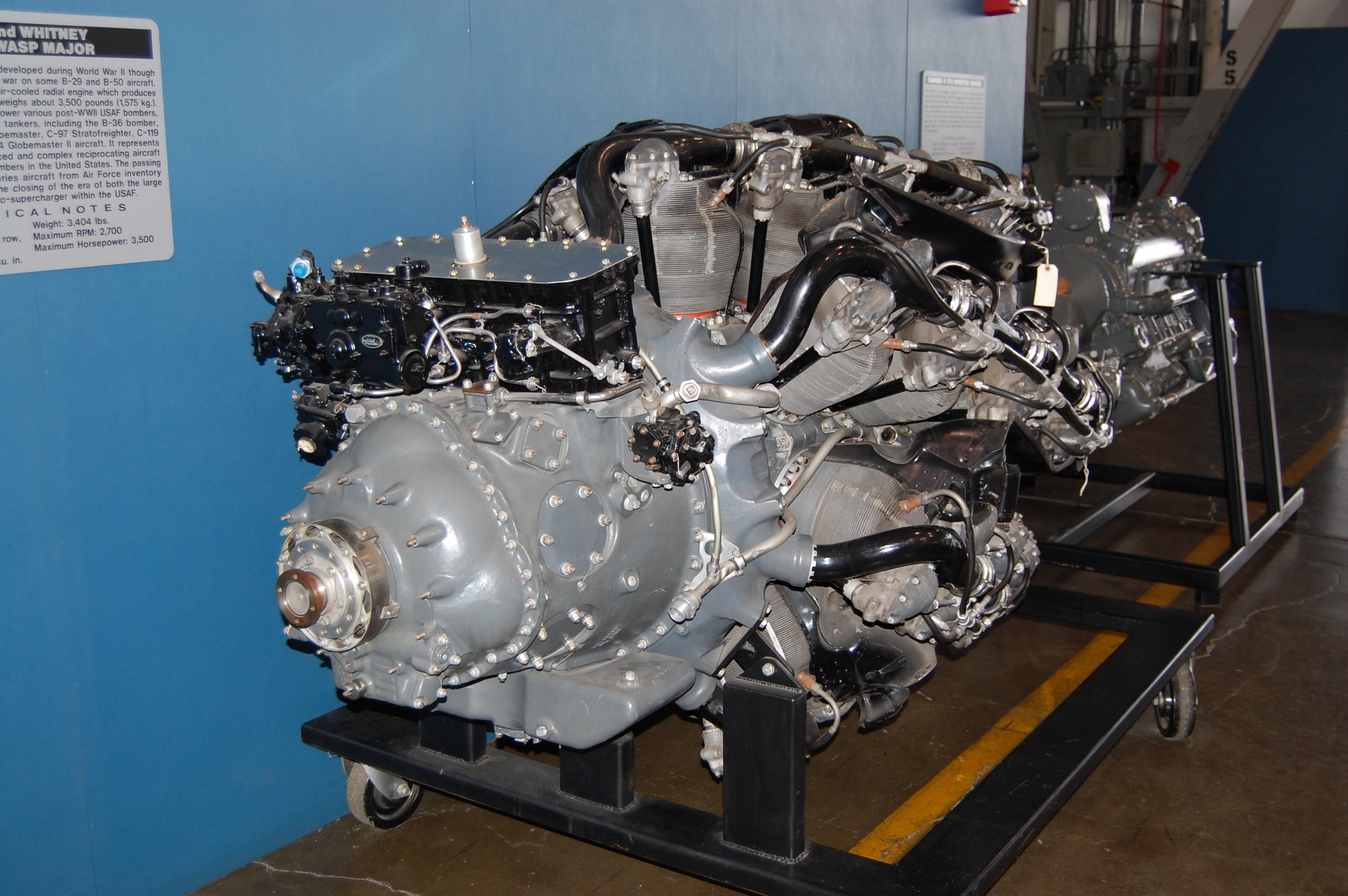
was designed around six Pratt and
Whitney R-4360 Wasp
Majors, a 3,000 hp
engine.
While the R-4360
never achieved the reliability of
the R-2800 it did become a workhorse
and went on to power several
airplanes in addition to the
B-36. Many air museums have a
Wasp
Major on display.
The first photo
is one of the engines out of B-36J
52-2827. It will be on display
at the Pima Air and Space
Museum. The second, third and
fourth shot are of an R-4360 on
display at the NMUSAF.
Later,
after
it was decided that the aircraft
could benefit from additional
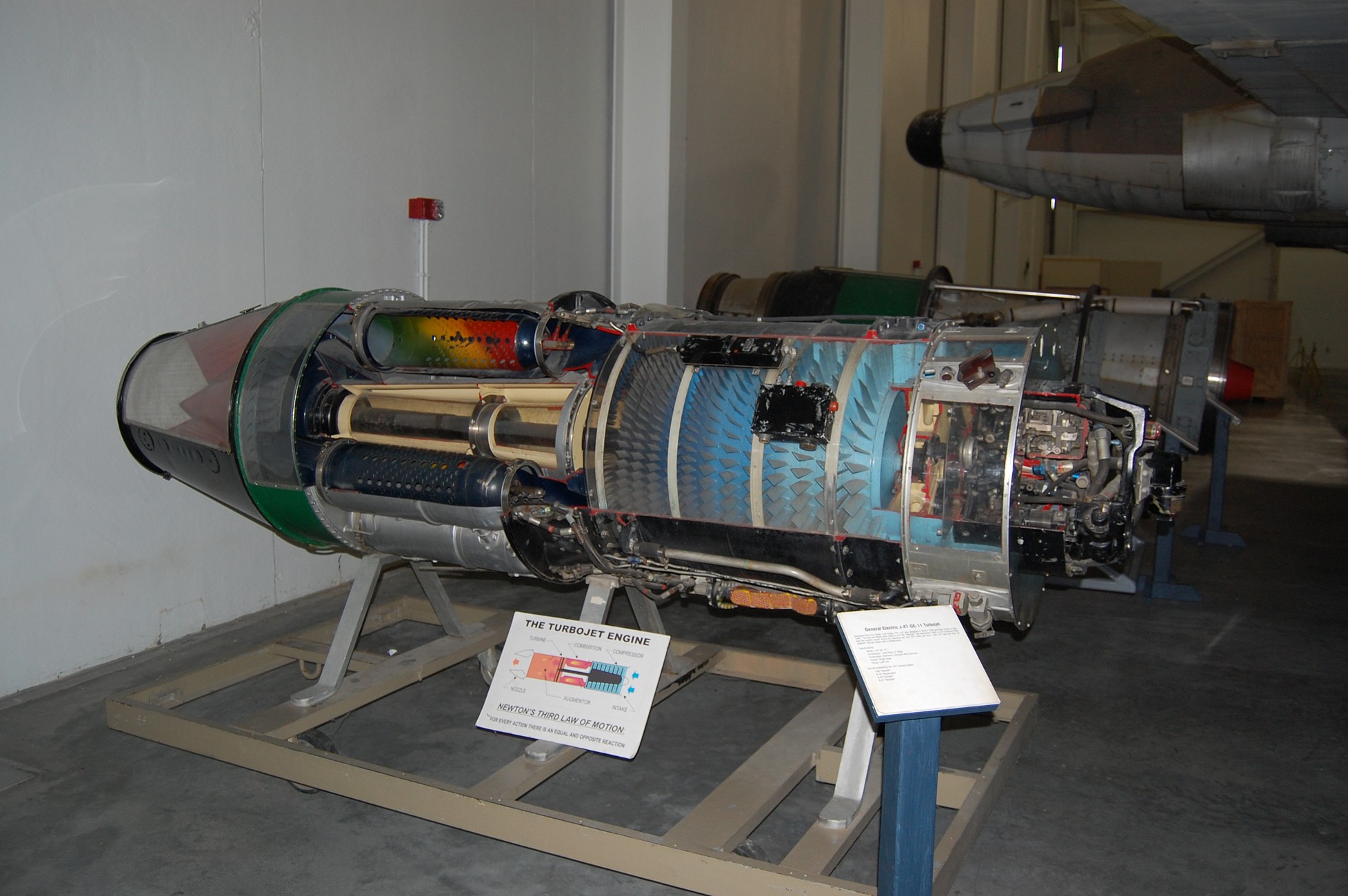
power, four GE J-47 jet engines
were added.
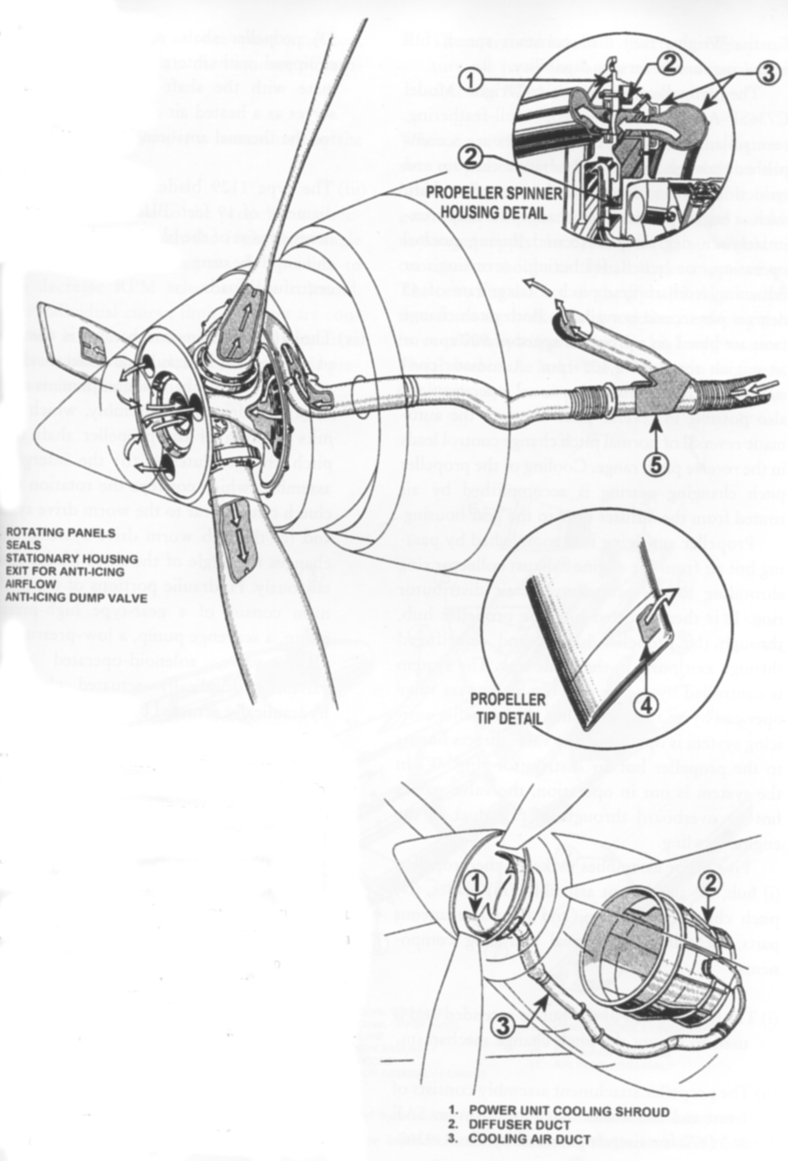
Props
The
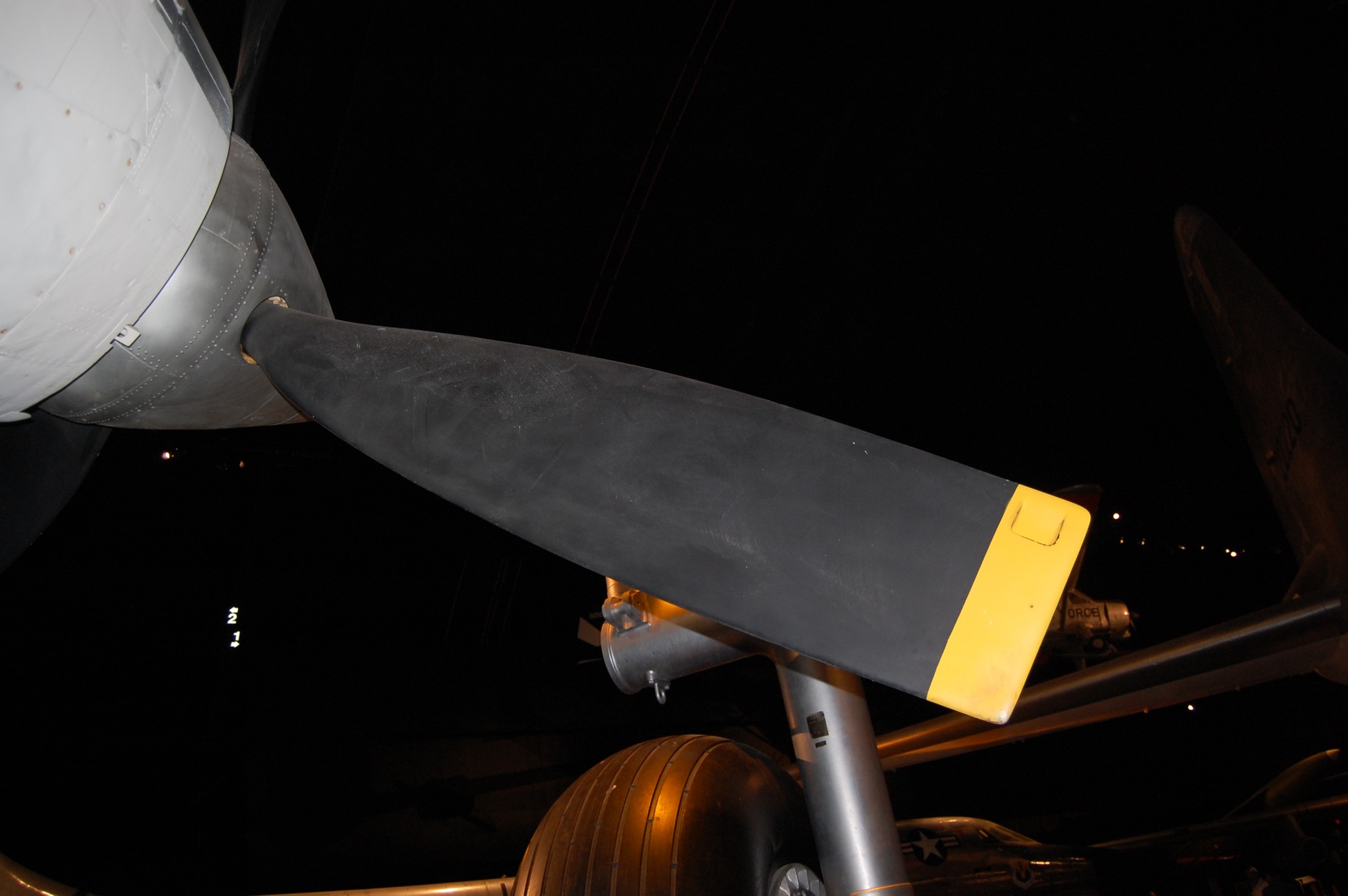
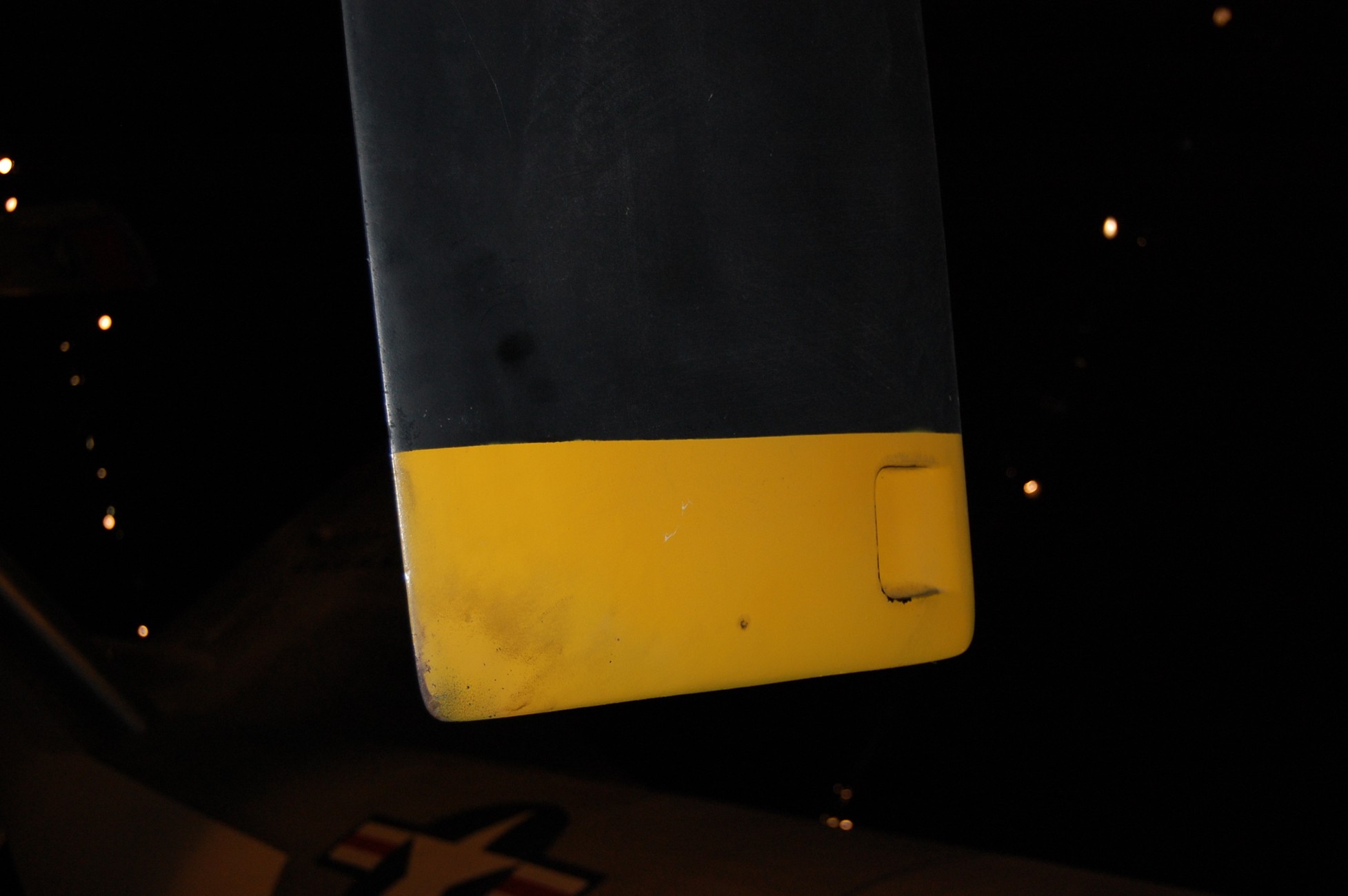
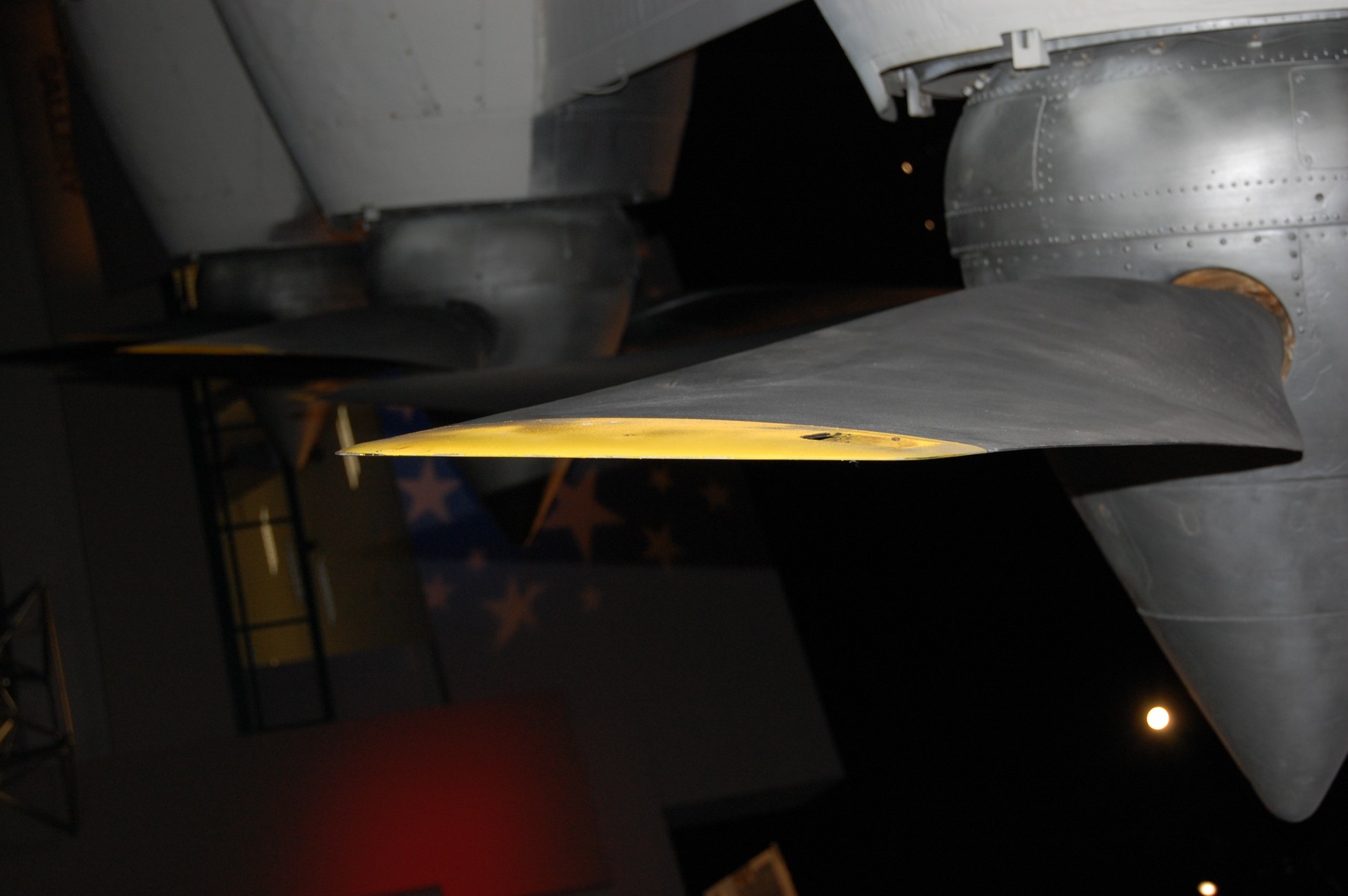
original propellers had round
tips. These were eventually
replaced with square tipped
blades. The hole in the front part
of the trailing edge is an exhaust port
for prop anti-icing. The schematic
drawing from the Erection and
Maintenance manual shows the routing of
warm air drawn from the cooling shroud
around the R-4360s, which eventually
flowed through the inside of the hollow
propeller blades and out of the vents.
Weapons
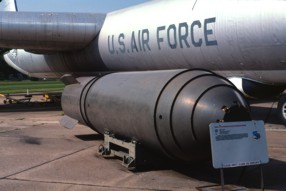 |
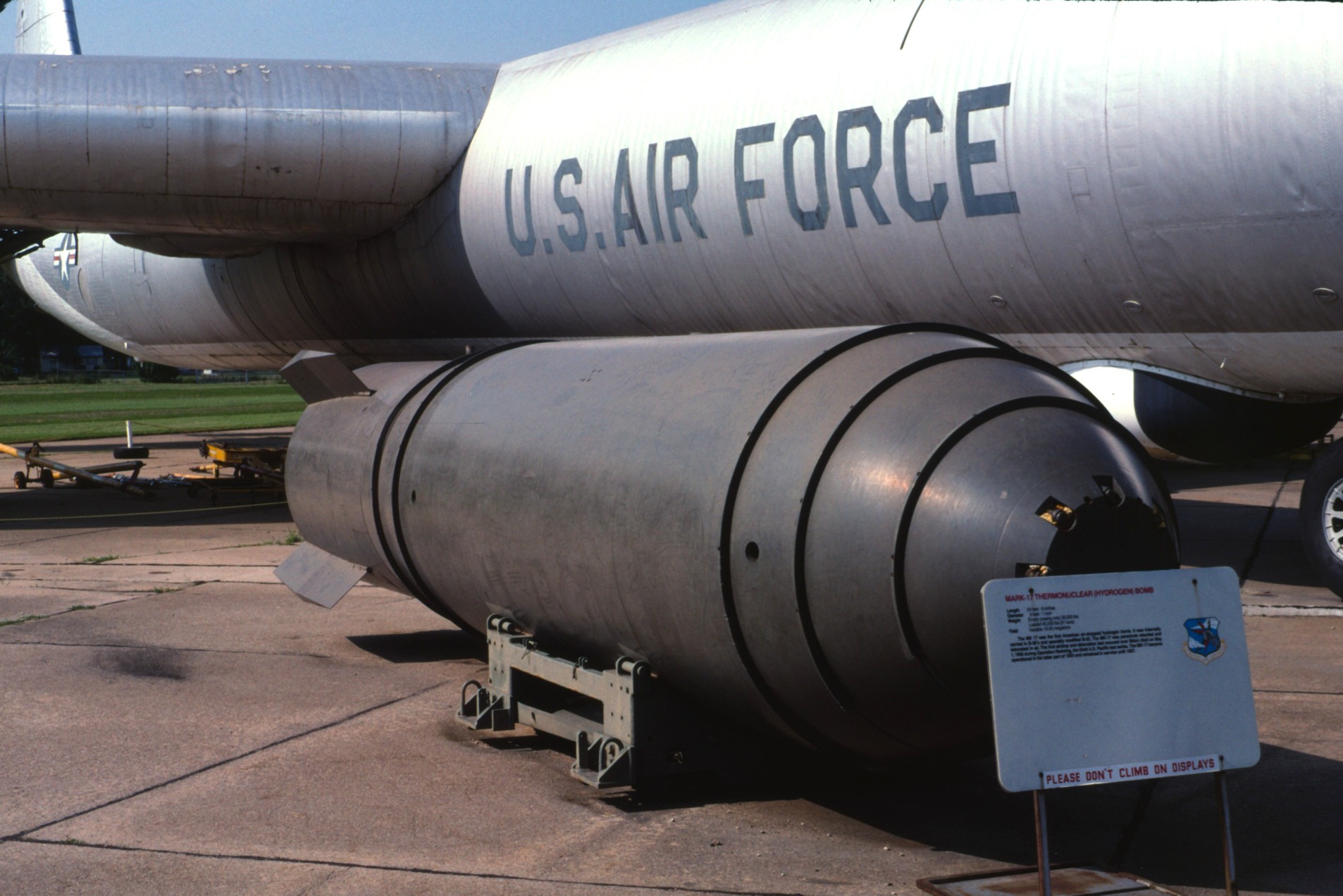
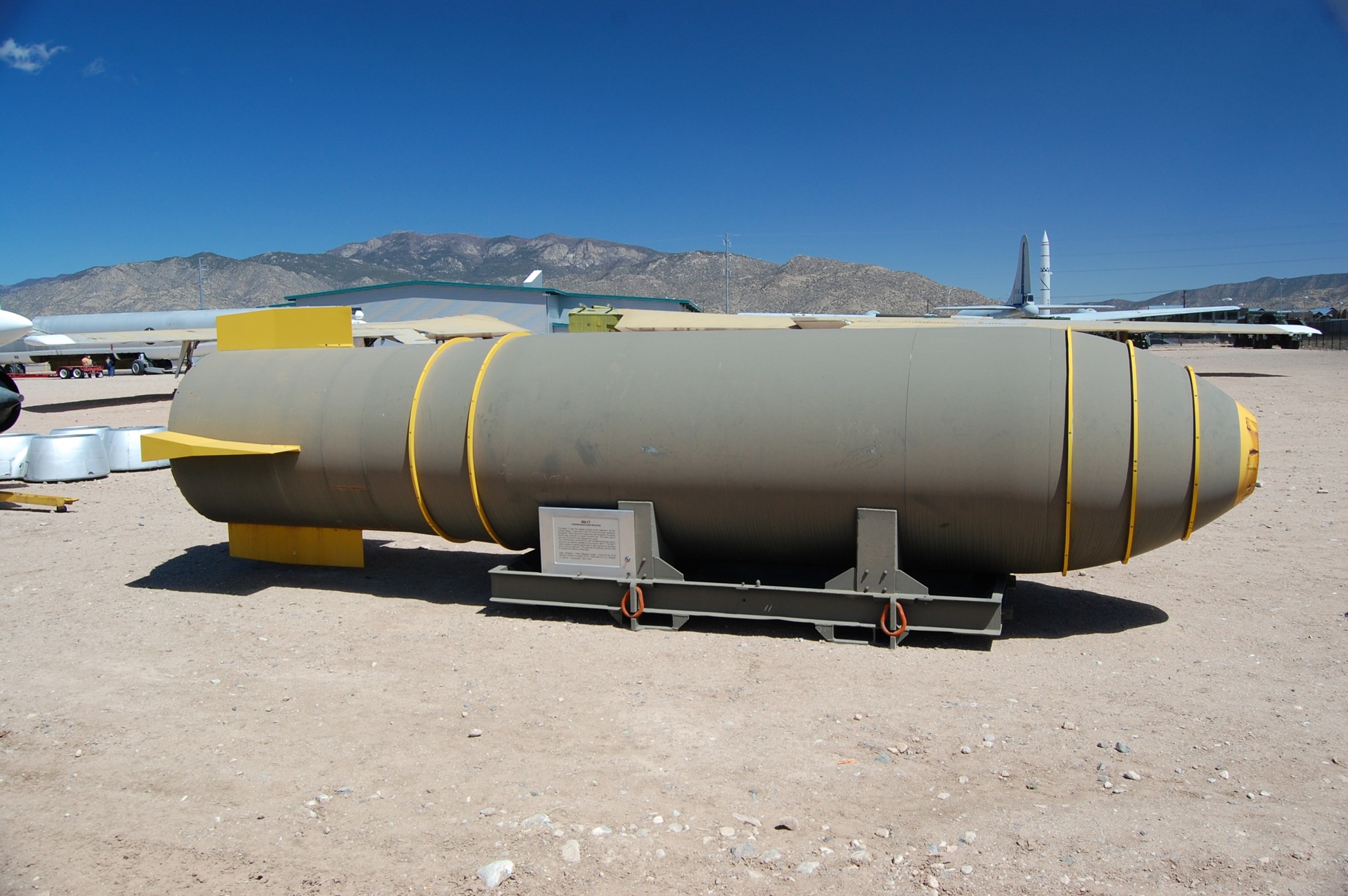
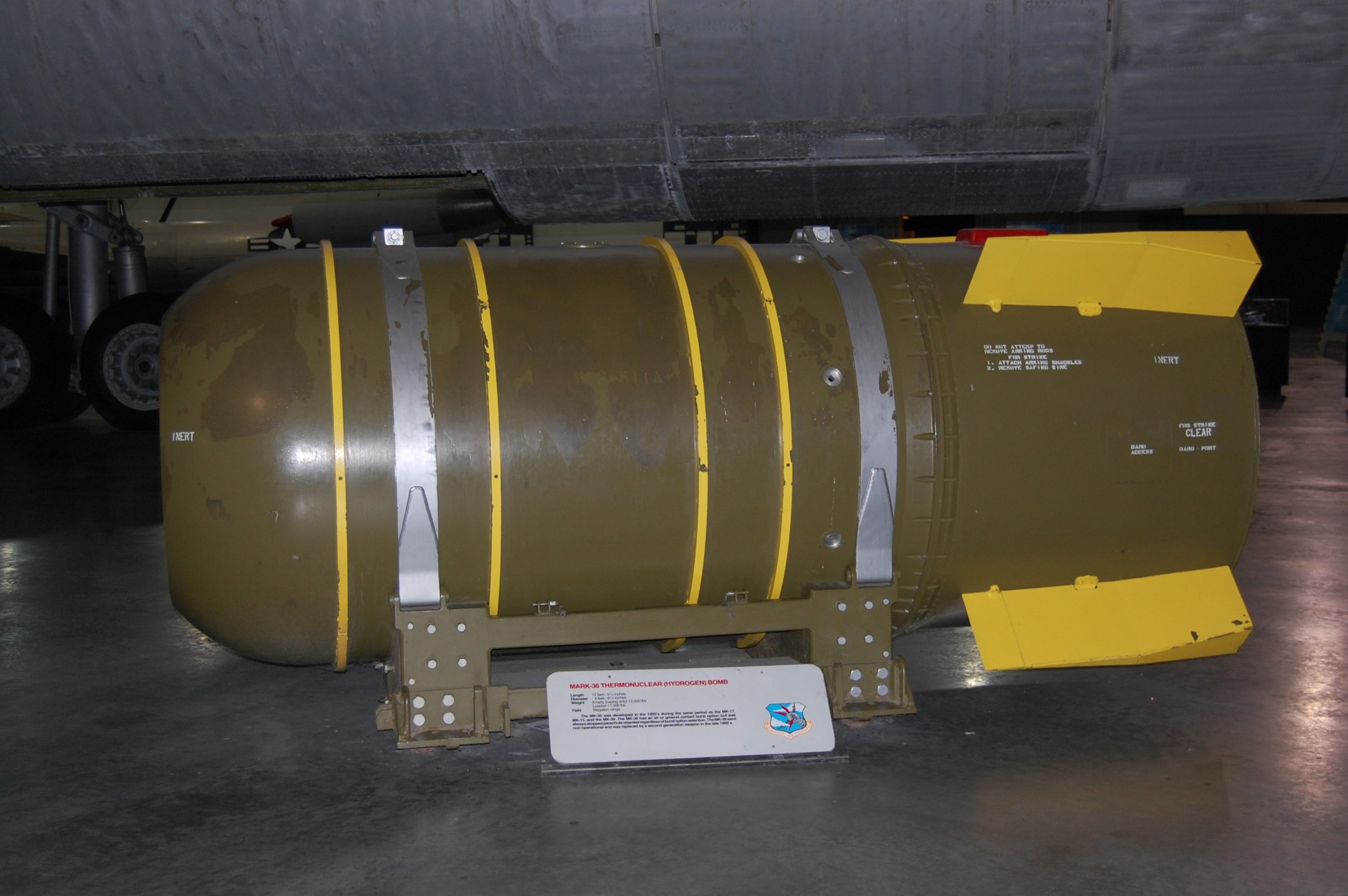
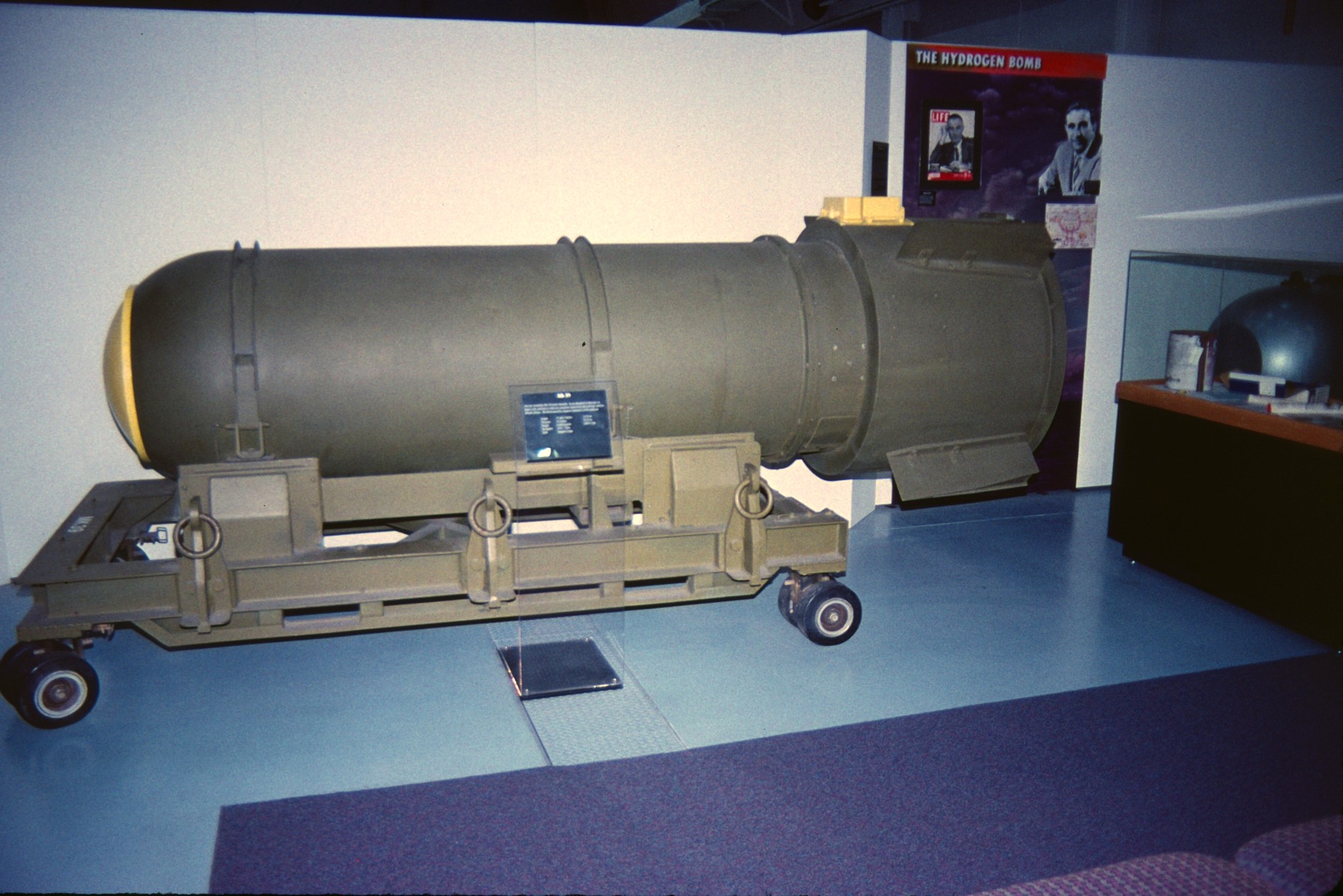
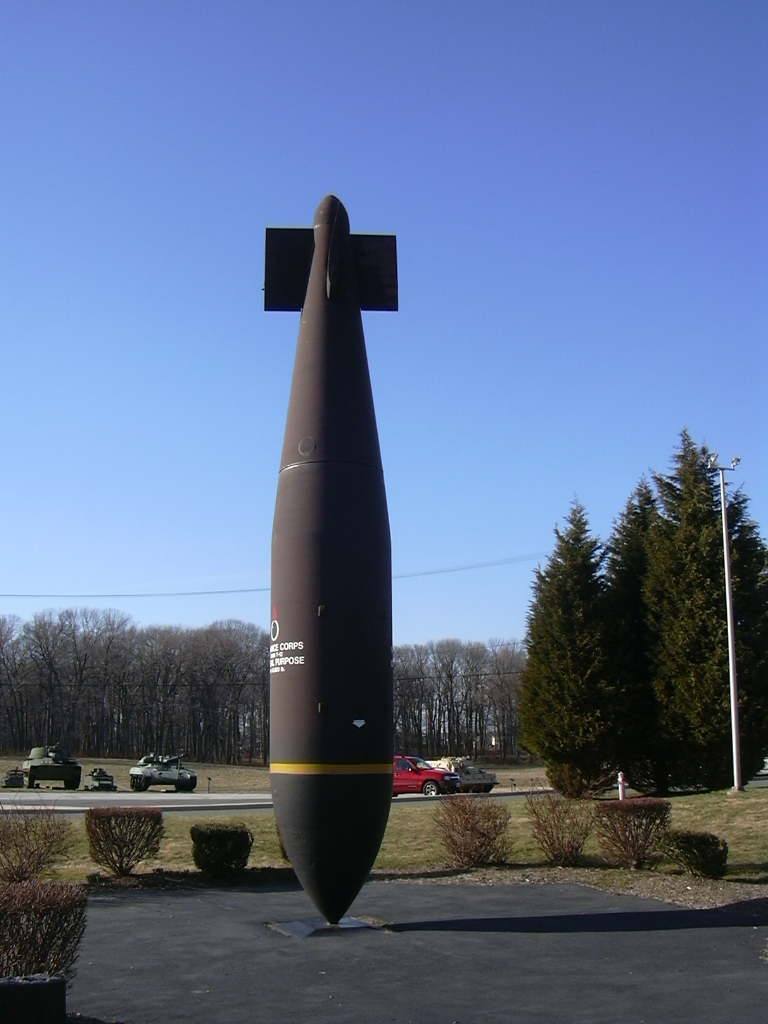
The Mark 17 thermonuclear bomb was the
largest bomb ever produced by the United States. The only
airplane that could realistically carry it was the B-36.
The above photo shows a Mk 17 displayed next to a B-36 at the
old SAC Museum.
 |
 |
 |
 |
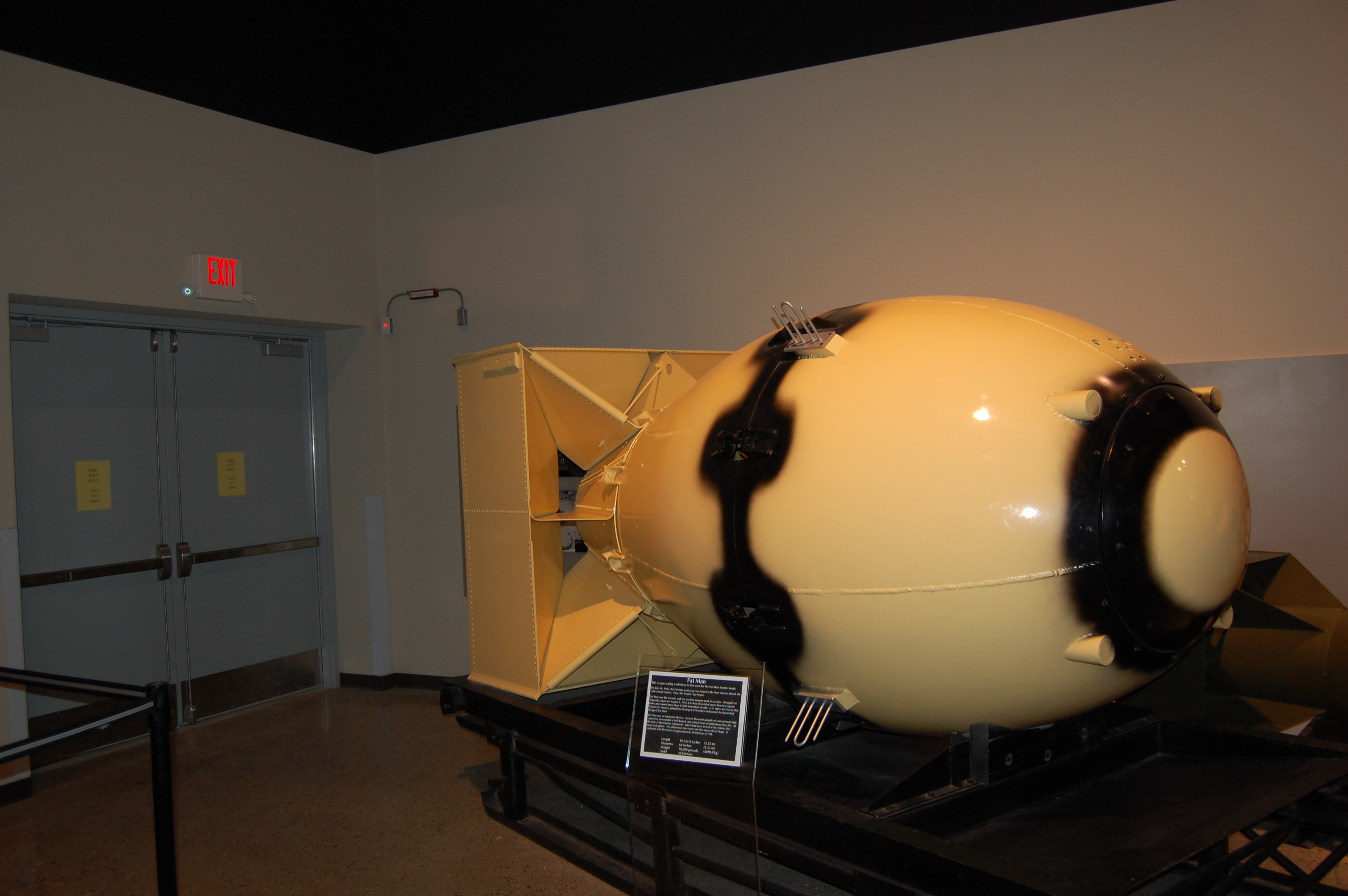
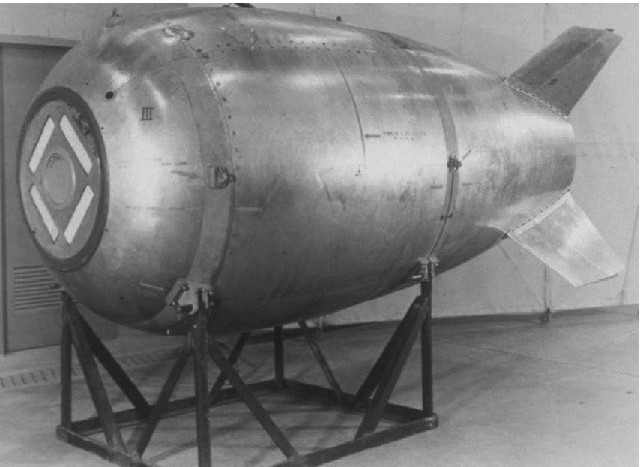
Mk 3 "Fat Man"
|
Mk 4
|
Mk 5
|
Mk 6
|
 |
 |
 |
 |
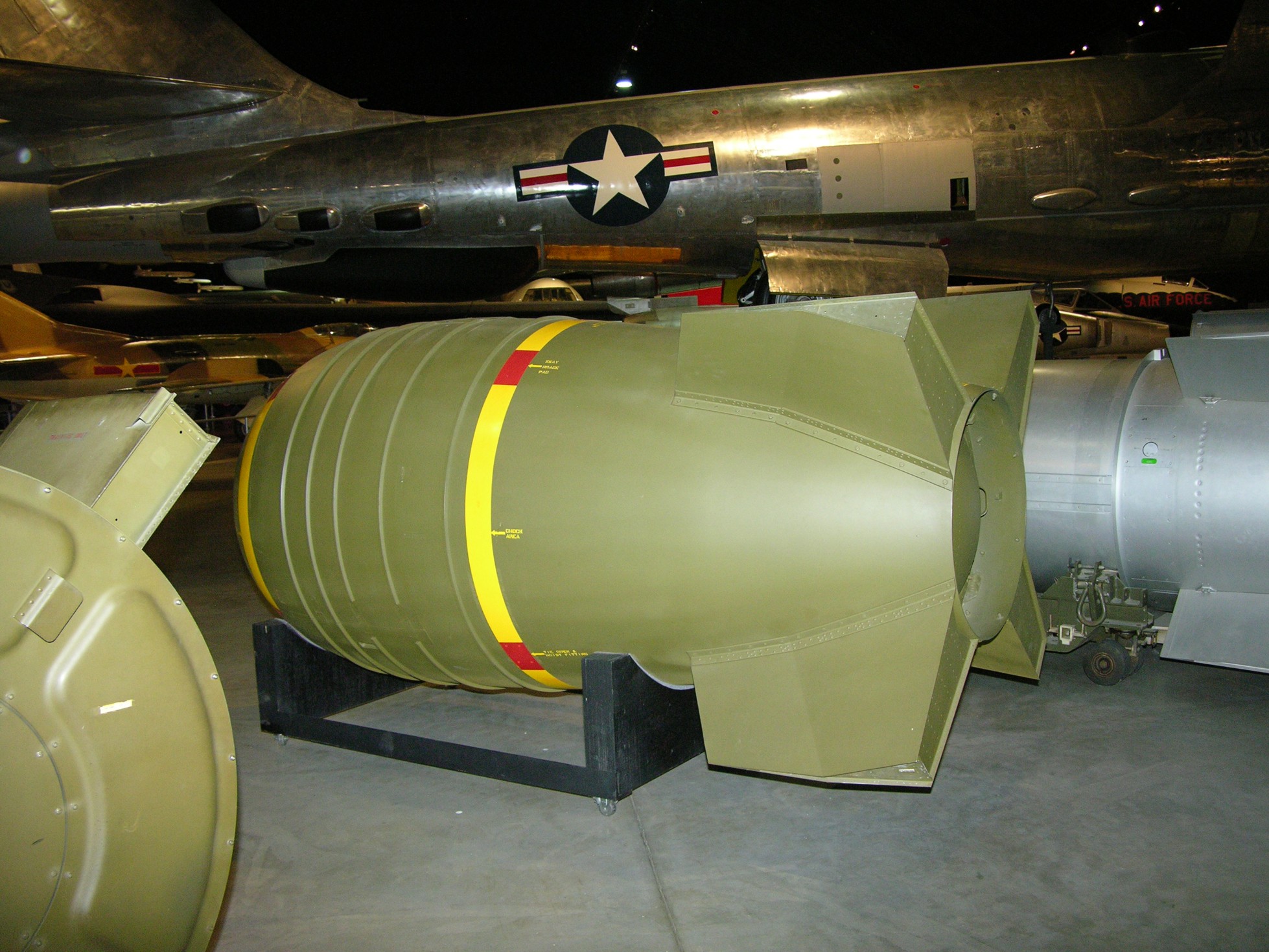
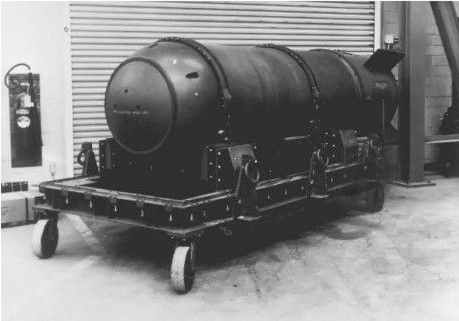
Mk 15
|
Mk 17
|
Mk 36
|
Mk 39
|
(Mk 4
and 15 photos USAF)
 |
 |
 |
AN/M30 250lbs Bomb
|
1,000lbs Semi Armor Piercing
Bomb
|
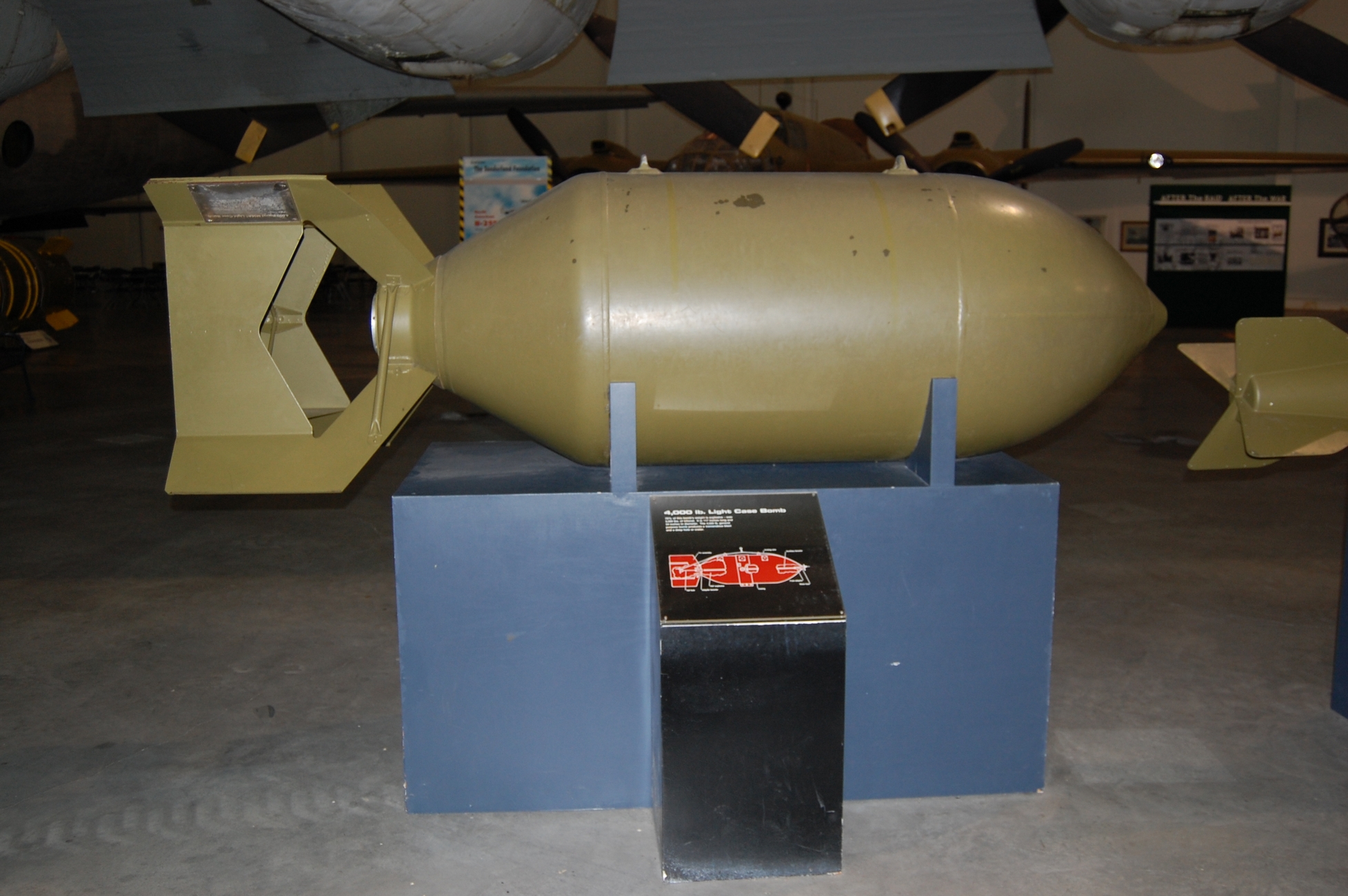
4,000lbs Bomb
|
 |
 |
 |
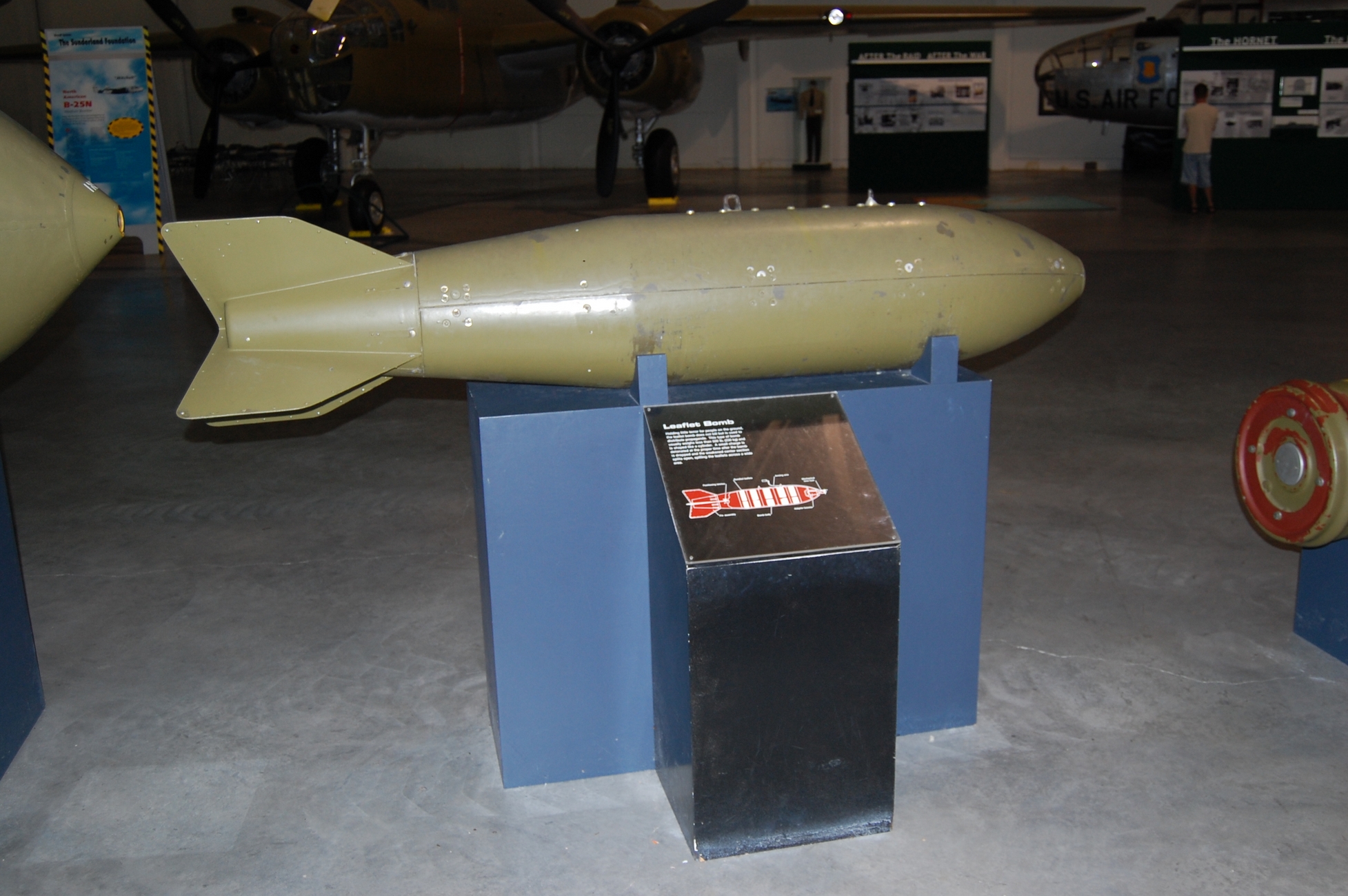
Leaflet Bomb
|
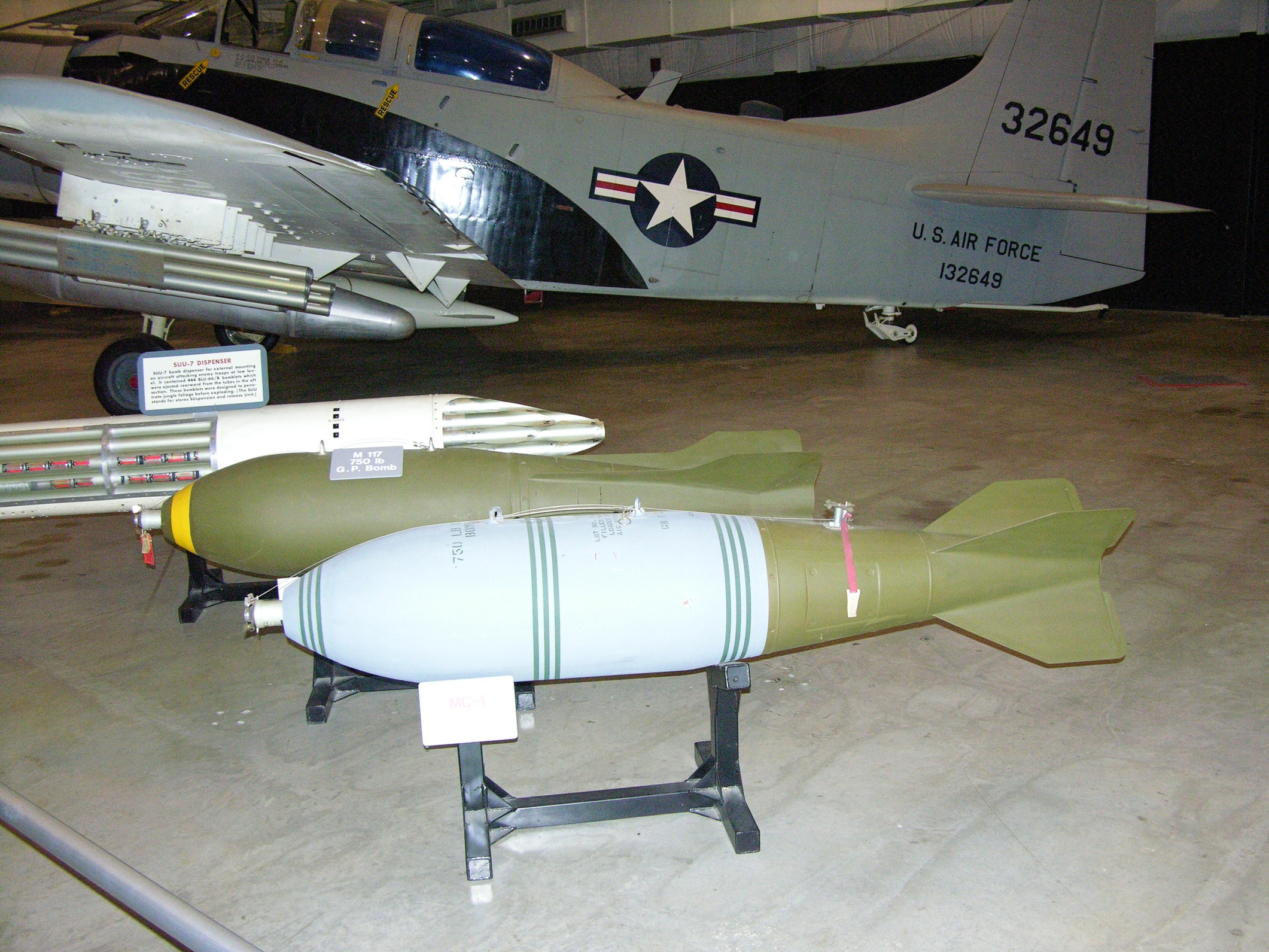
MC-1 Chemical Bomb
|
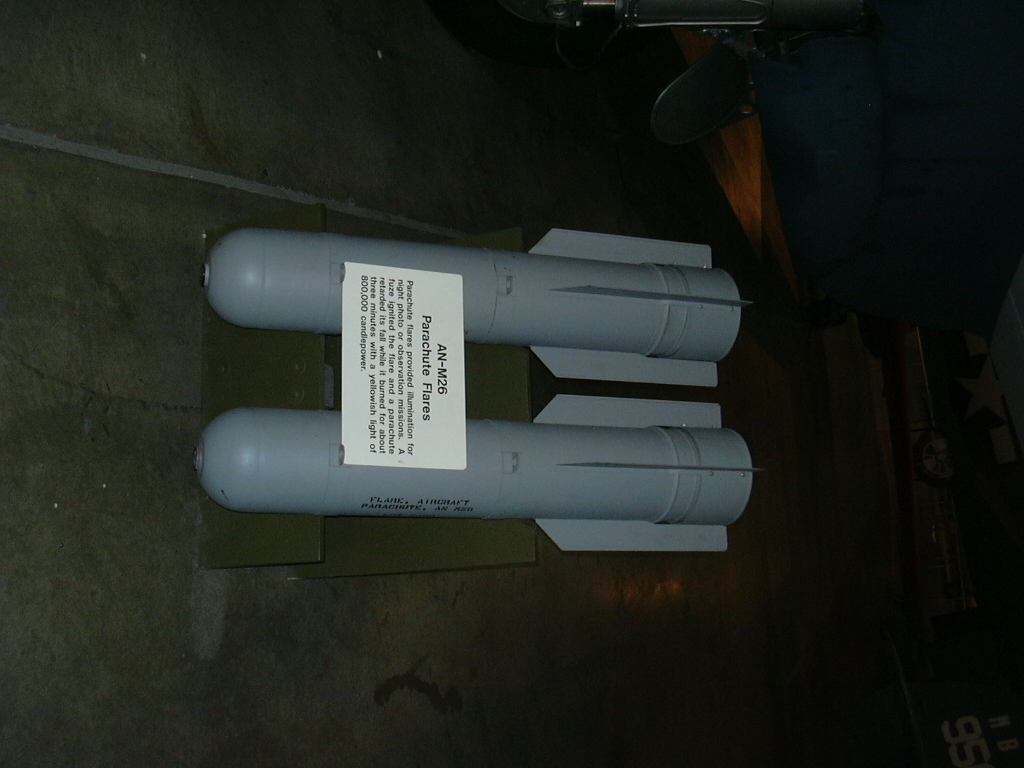
AN-M26 Parachute Flare
|

|
T-12 44,000lbs Bomb
|
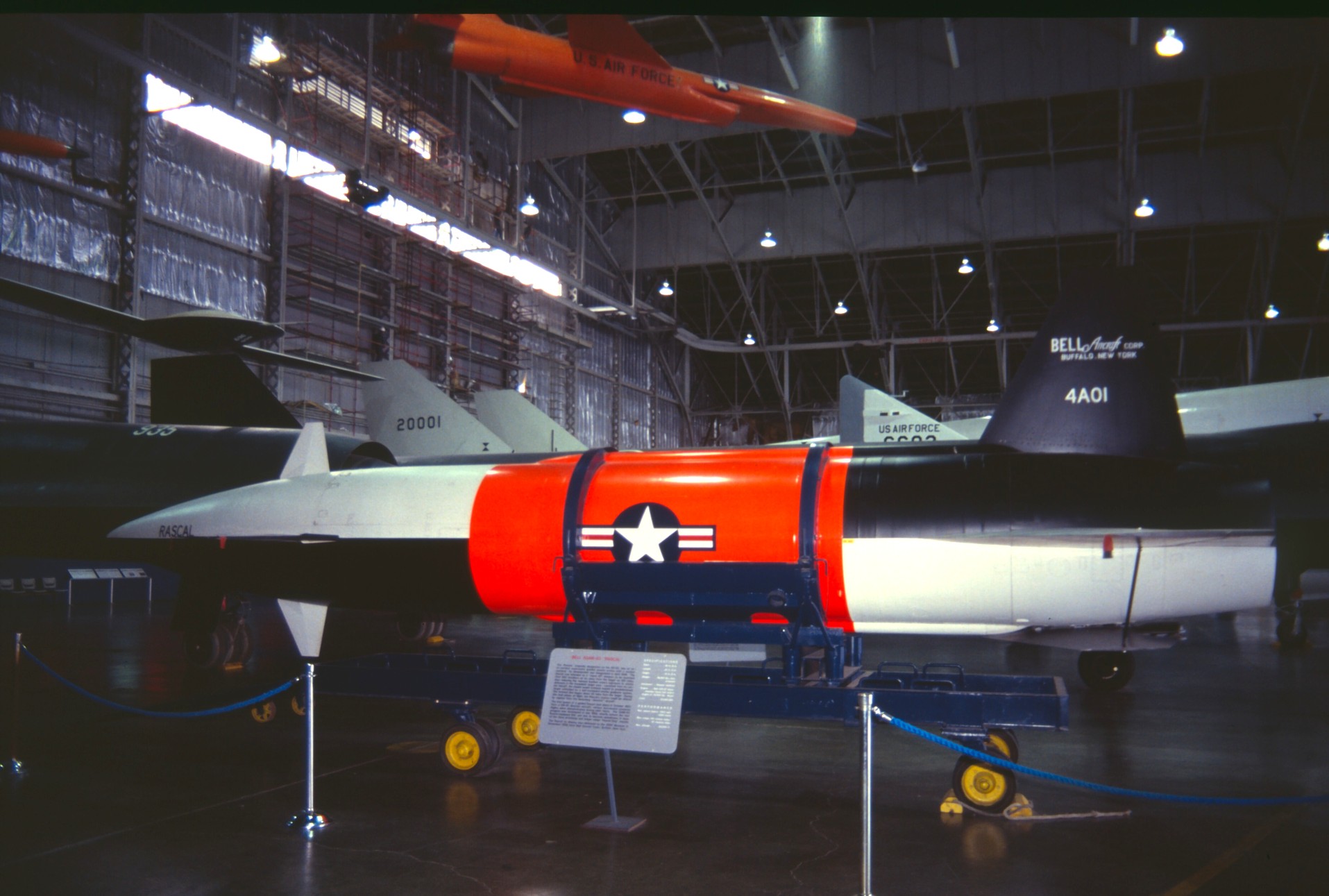
Though plans were made to equip B-36s with
RASCAL missiles they never fielded operationally.
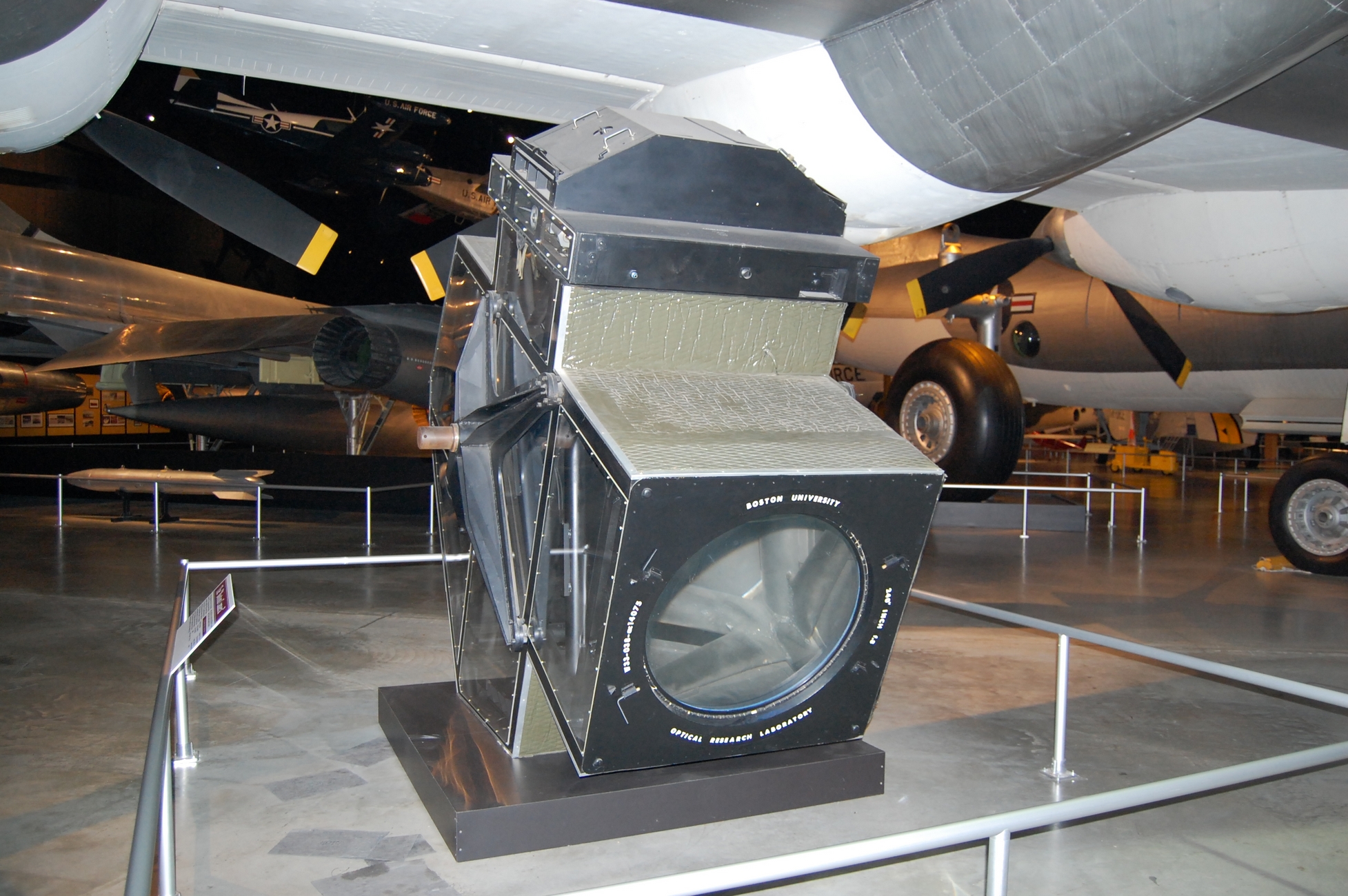
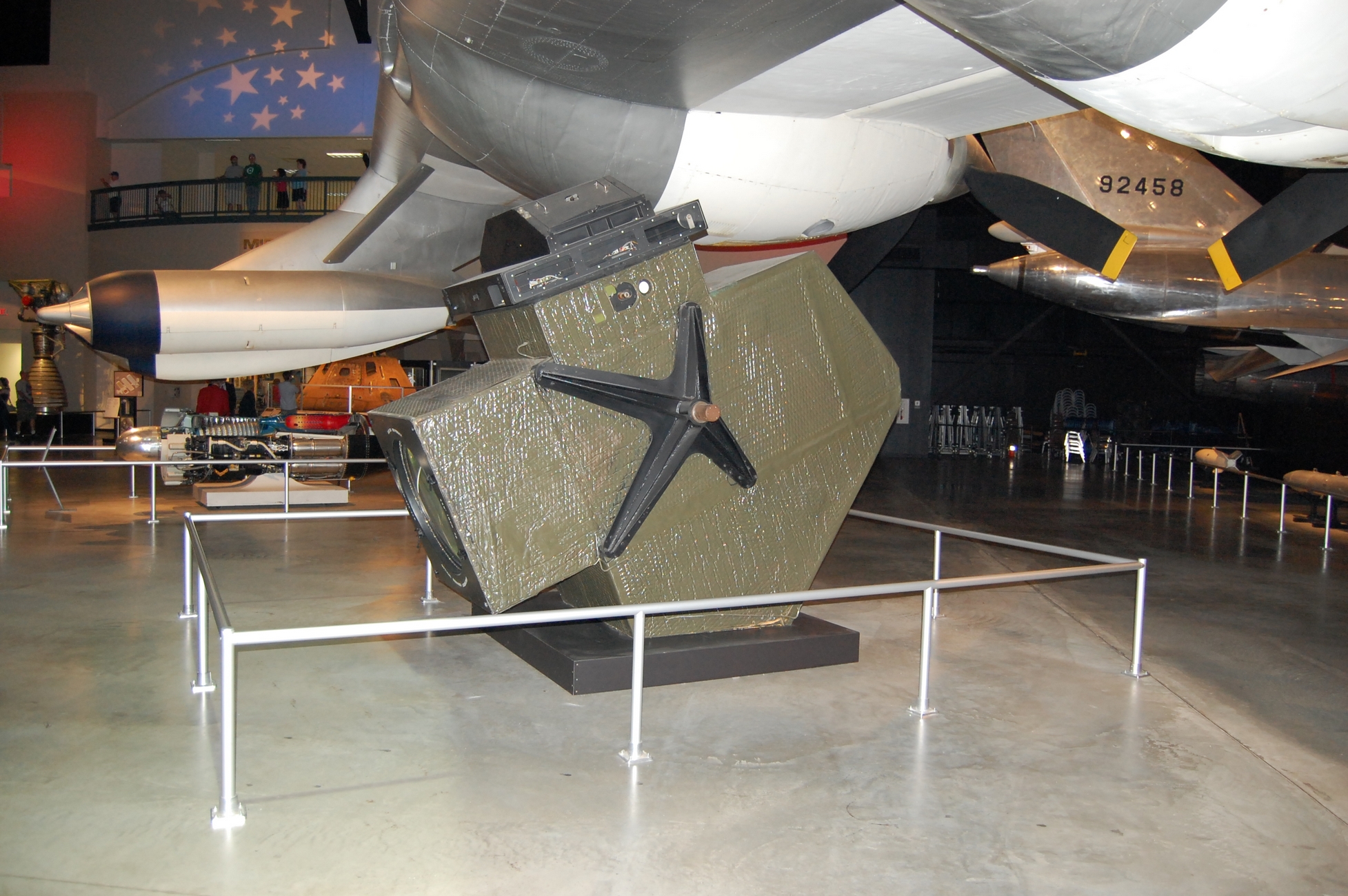
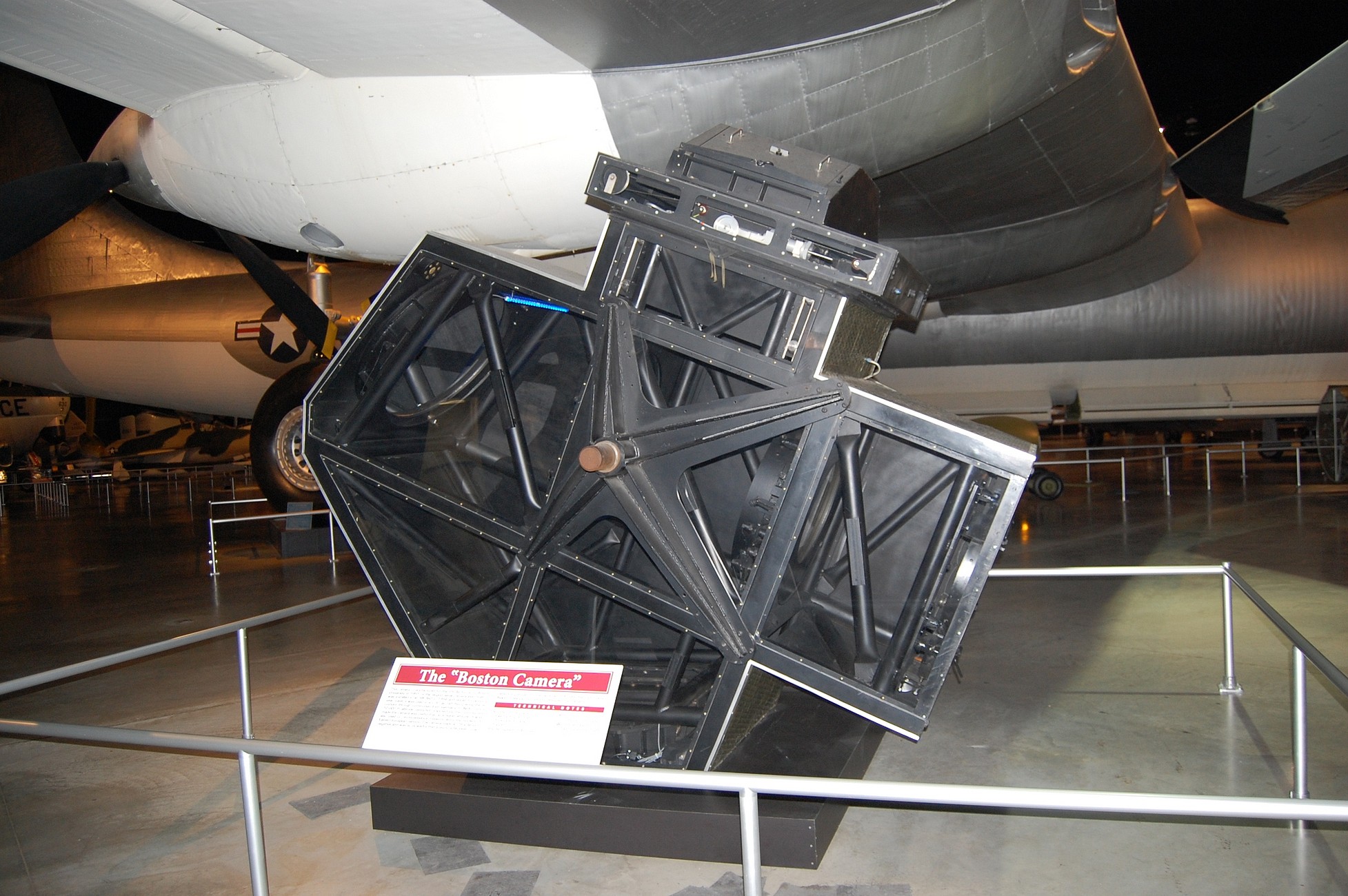
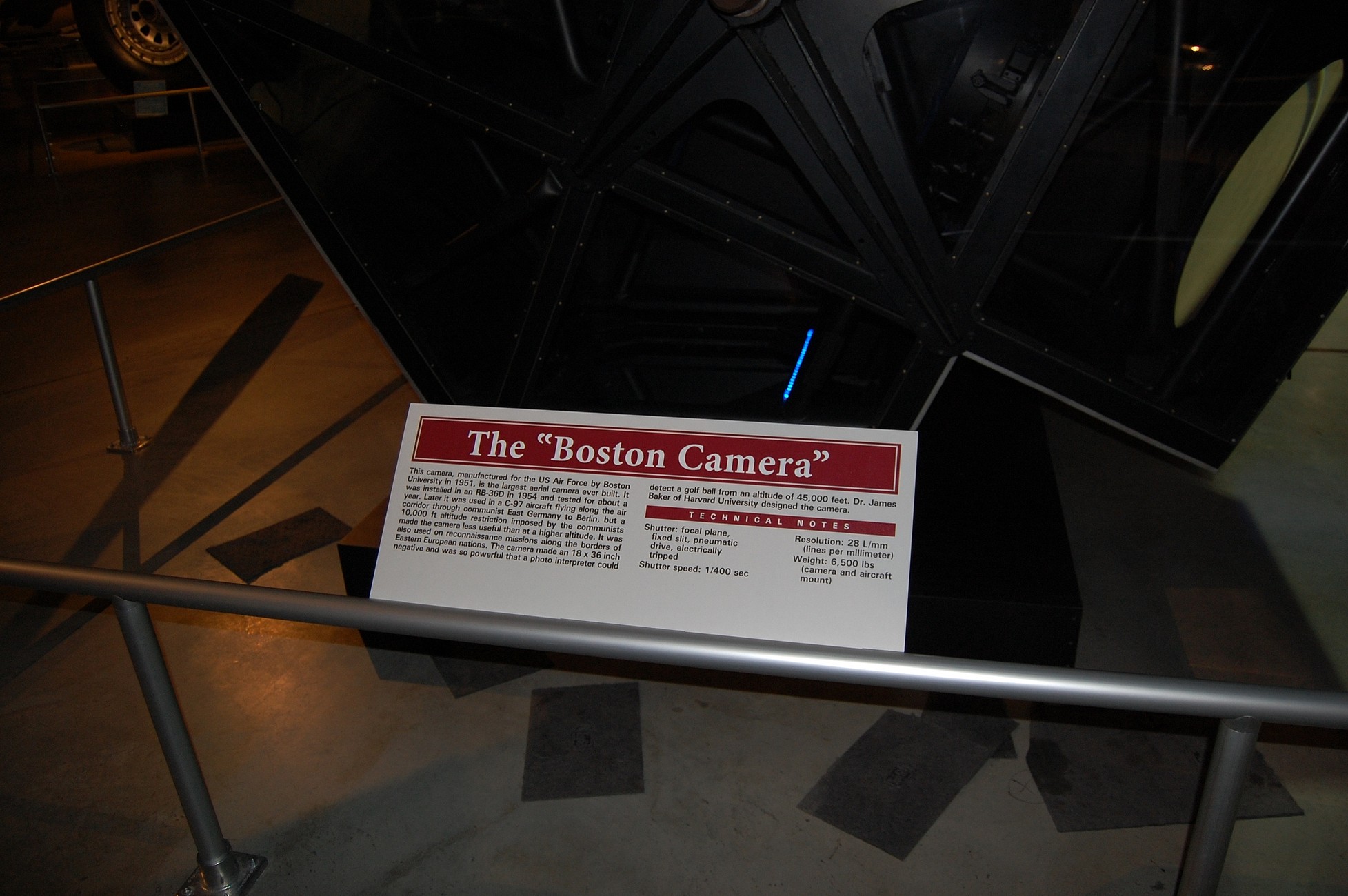
The so called "Boston Camera" that was
developed that was developed by Boston University for the USAF.
Color Schemes
When the B-36 first entered service it
was natural metal with Arctic red wingtips and tail.
That was often referred to "Conspicuity", or Arctic
markings. That scheme gave way to an overall natural
metal finish. The final scheme was the one shown above
of silver upper surfaces and white "Anti flash" lower
surfaces. By this time the silver was painted as were
B-52s in the same scheme. There were some additional
one off, or limited schemes, one of which was a highly
colorful one used on two EB-36Hs' in various high altitude
photographic tests.
The schematic shown above is from the
"T.O. 1B-36-895 High Altitude Camouflage" which is the
manual covering paining and markings for the B-36. I
am still searching for a complete copy.
Parasite Aircraft
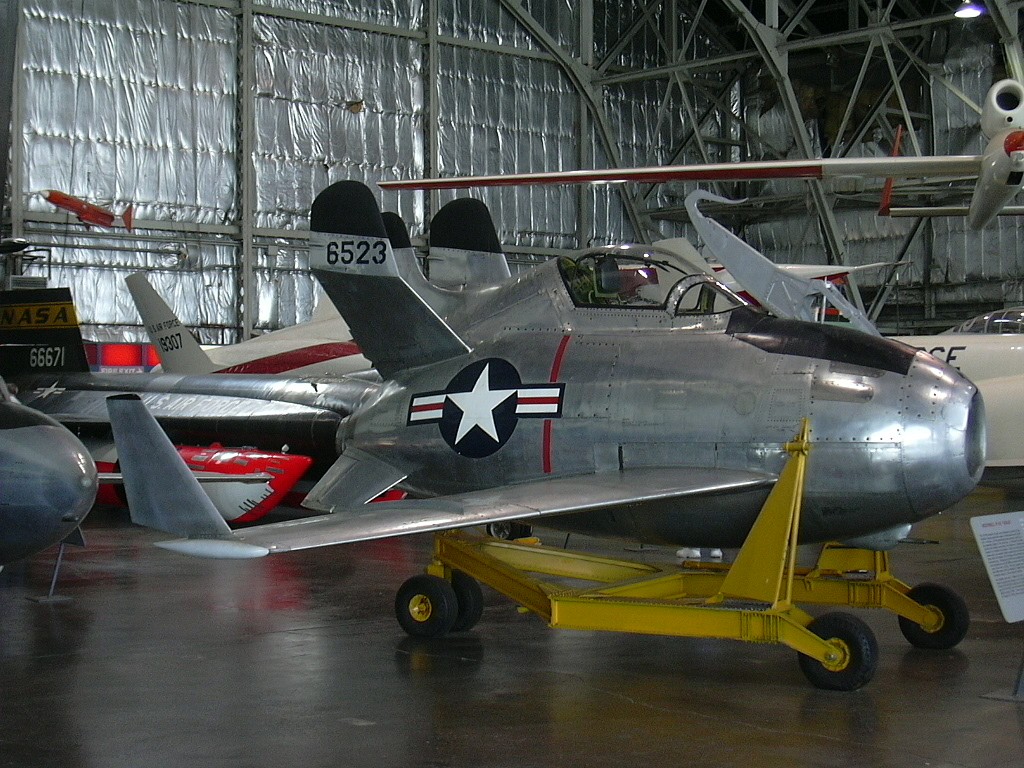
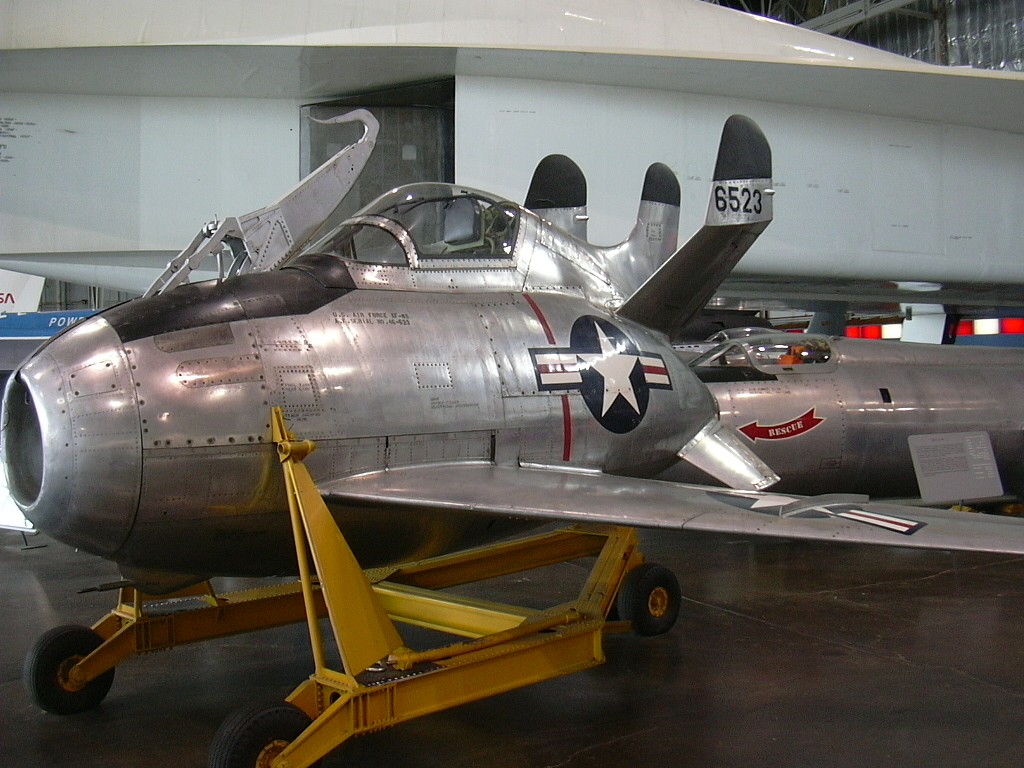
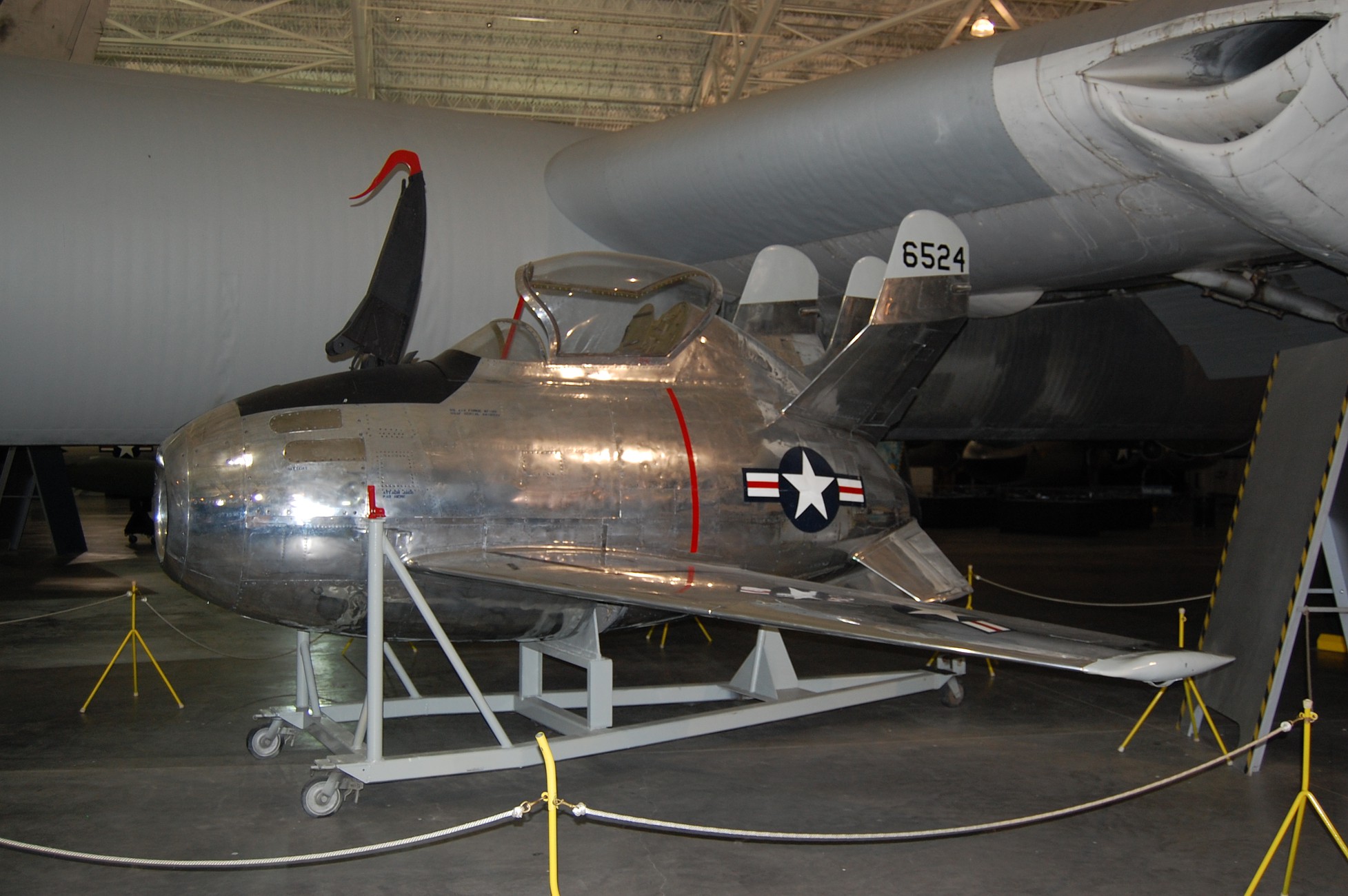
One odd program was the F-85 Goblin which was designed
to be carried in the belly of a B-36. The idea was to
provide fighter protection on long missions, but due to many
reasons the program was not a success. The little fighter
could be carried internally and released near the target to
provide fighter escort for the bombers. However, carrying
an F-85 reduced the bomb load and the Goblin was at a distinct disadvantage
compared to contemporary Soviet fighters. The idea was for
it to be retrieved by hooking up to a trapeze arrangement to
return home with the bomber, but in tests a successful hookup
was never made. Two airframes were completed and
ironically both survive. One in the NMUSAF and the other
in the SASM.
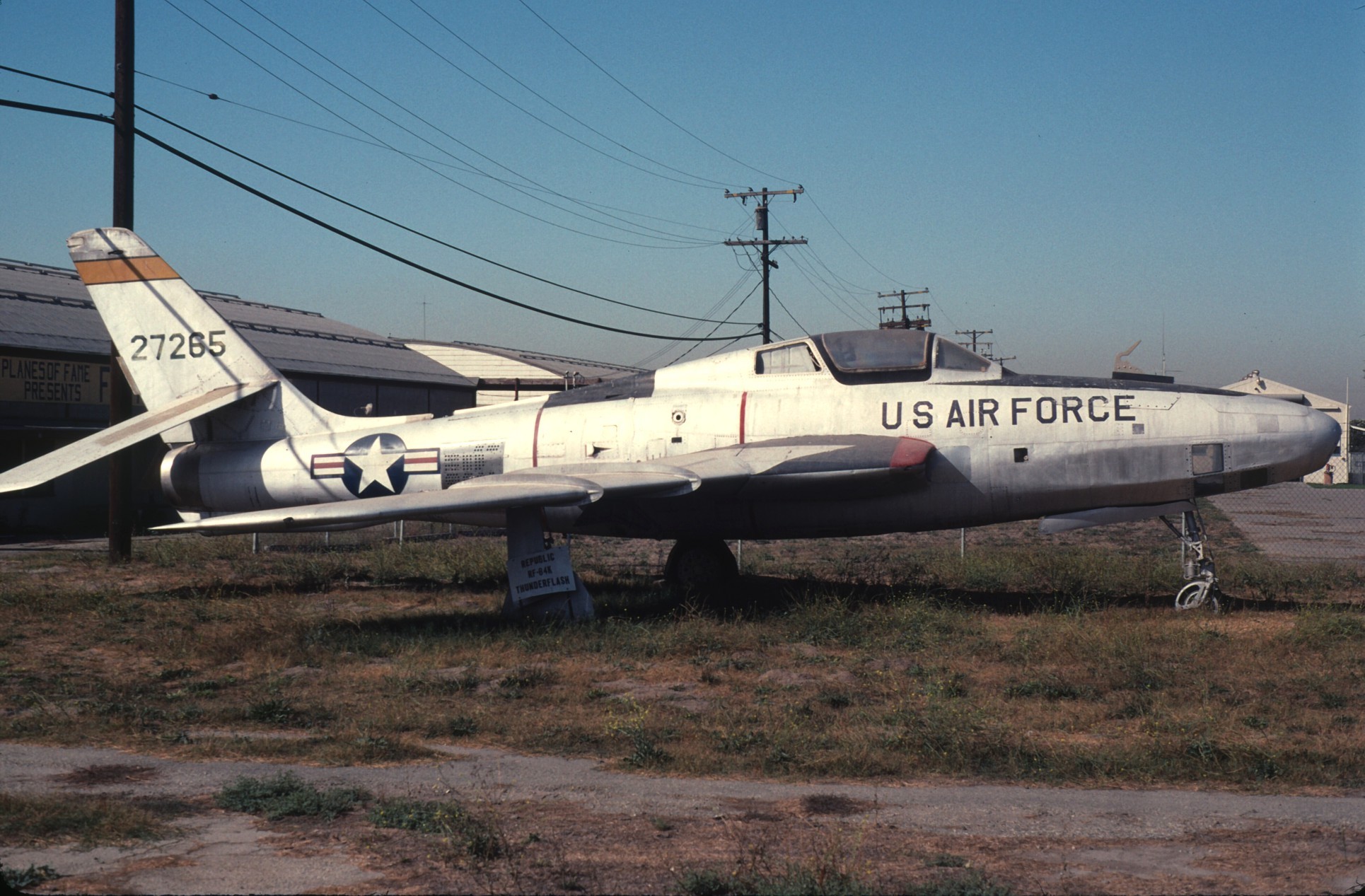
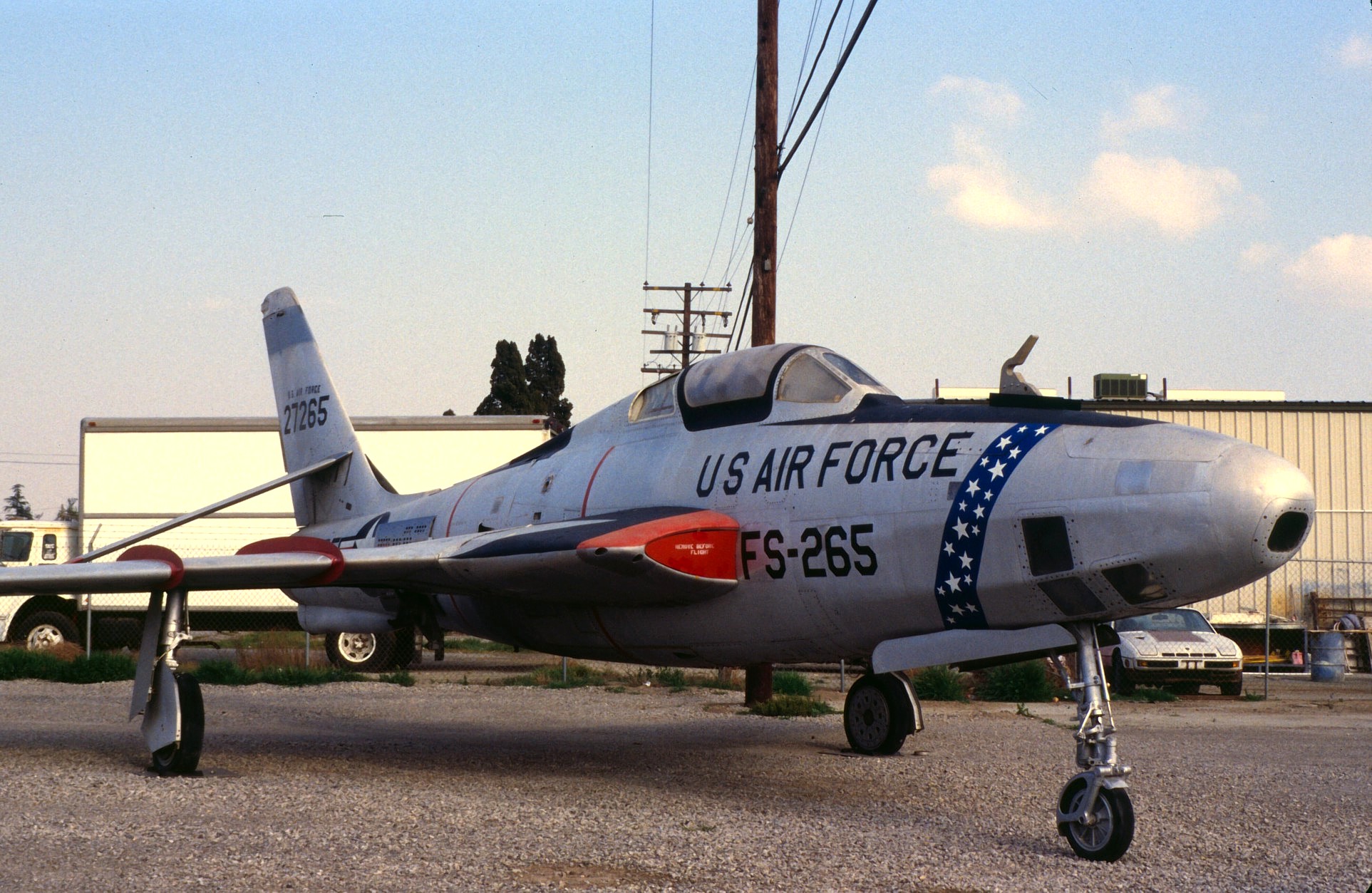
Another parasite program was FICON where a
B-36 would carry a recon plane to the target. 25 RF-84Ks
were special built for the project. Once again they were
to utilize a trapeze system for carriage by the B-36 mother
ship. While not a failure their role was soon taken over
by better reconnaissance aircraft and eventually satellites.
They later served with the 91st Reconnaissance Squadron.
This well worn example on the left is under restoration at the Wings Over the Rockies Air Museum.
The two photos on the right are of an RF-84K at the Planes of
Fame Air Museum.
Convair's B-36
Replacement
With the increasing performance of jet
aircraft it was obvious to Convair the the B-36 was rapidly
becoming an outdated design in comparison to the B-47 and
B-52. To compete against the newer aircraft Convair
designed an all jet version of the B-36 designated the
B-60. The B-60 was powered by the same J-57 engine that
powered the B-52, but saddled with the thick wing of the B-36
the B-60 fell far short of the performance of Boeing's
Stratofortress. As a result only two YB-60s were built and
only one ever flew.
All photos are mine unless
otherwise credited.
To return to:
For corrections,
information and suggestions:

Page
created: 05-09-09
Modified:
01-13-20
Clifford Bossie