**
This is a paper I wrote for College Geology. I got a 100 so I thought it was worth sharing, especially considering how important a matter this is.
Global Warming has been one of the most pertinently discussed controversies of recent decades. There are extremists on both ends of the spectrum who separately believe either that the impact of the phenomenon will be extreme, or that it is a nonexistent pseudoscience altogether. Though the amount of contention on the topic is baffling, there is substantiated evidence that does conclude beyond reasonable doubt that the issue does indeed exist. It is often difficult for people who have limited knowledge of scientific principles to reach a reasonable understanding on the topic, but specifications can be summarized to validate Global Warming affirmatively. In fact, most scientists believe in the phenomenon and have uncovered compelling evidence to support the theory into illumination.
First of all, to understand what Global Warming is and what worldwide effect it has, if any at all, the alleged phenomenon must be defined as a scientific field: Global Warming essentially is the study of the facts behind the various temperature increases in the Earth’s atmosphere, which include what its impact has been and will be to the wellness of the planet. Notwithstanding, this broad description still poses the question of why, exactly, does this scientific field receive such heightened attention both amongst the wide range of scientists as well as in the public eye? Green Facts, a resourceful website on the state of the planet’s well-being, summarizes that,
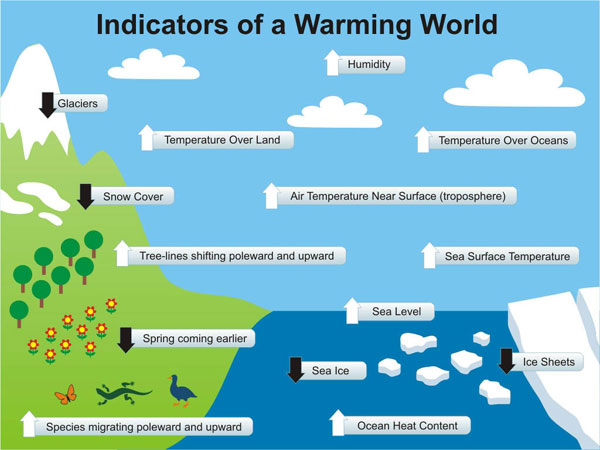
“Global warming has resulted in an increase of the average surface temperature, a decrease in snow cover and ice extent and a rise of the sea level. Moreover, global warming affects precipitation, cloud cover and extreme temperatures...[A]lthough more research is needed, Global warming models conclude that most of the warming in the last 50 years is likely to have been due to man” (Green Facts Partners, 2007).
Such provides a simple understanding of how the phenomenon has impacted the Earth’s weather patterns in a multitude of simple ways, some which seem more vital than others, but it also states that the future extent of Global Warming cannot be completely discerned without more information and discovery; therefore, the site respectably establishes itself right away as a source not tainted by radical affiliation. And moreover, the fact of the matter remains—as reported by the journalists at Science Daily—that even in 1997, “More than 1,500 of the world's most distinguished senior scientists, including the majority of Nobel laureates in science, signed a landmark consensus declaration urging leaders worldwide to act immediately to prevent the potentially devastating consequences of human-induced global warming” (Science Daily, 1997). Given that Global Warming certainly was receiving much less attention worldwide in the nineties, it hardly seems feasible that such a huge amount of scientific superiors would have together conspired to create false panic over a pseudoscience.
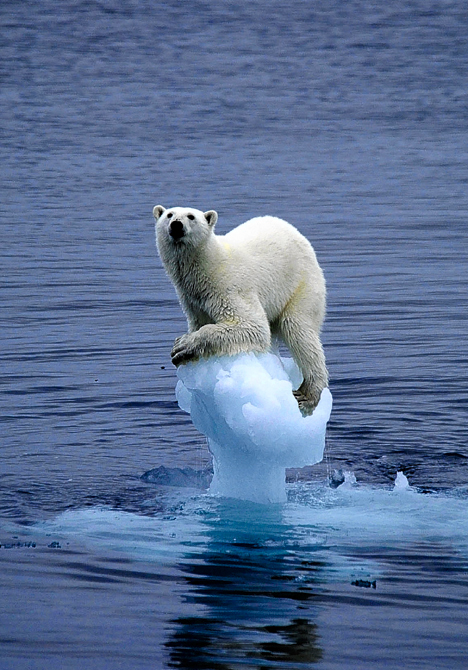
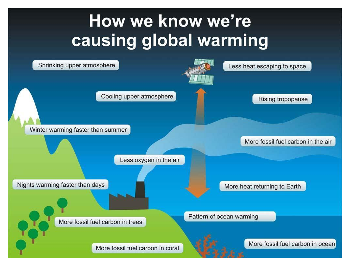
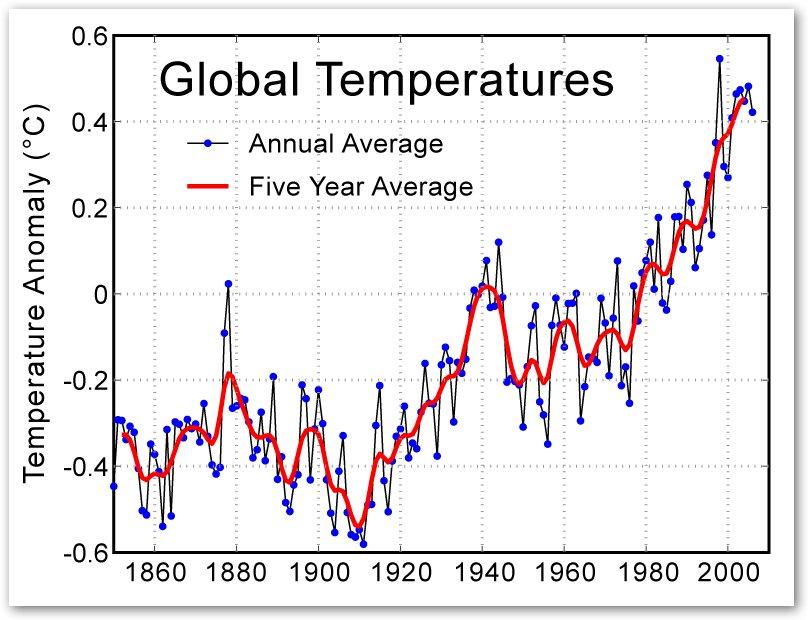
With now a comprehensible description of the topic and its undeniable relevance to human life, conflicting claims can be dispelled and verified alike. Firstly, according to reported data from National Geographic—a uniformly respected source of credible scientific information in the mainstream—there have been indeed clear temperature rises in the atmosphere. A recent article reads, “Average temperatures have climbed 1.4 degrees Fahrenheit (0.8 degree Celsius) around the world since 1880, much of this in recent decades, according to NASA's Goddard Institute for Space Studies” (National Geographic). Its NASA citation is absolutely invaluable considering the space program is quite literally the ultimate source of weather analysis. However, the real question is not whether Global Warming exists (at least not for realists), but whether leading advocates such as apologist Al Gore, former Vice President of the USA, are exaggerating the depth of forthcoming disaster that is to come from it. For starters, the current tangible evidence regarding Earth's climates, namely within the critical Antarctic and Polar Regions, substantially reveals the planet has gone through some intriguing geographical changes. National Geographic concisely lists just a few of these intriguing changes without pointed bias in its previously cited article, which reads, "Arctic ice is rapidly disappearing, and the region may have its first completely ice-free summer by 2040 or earlier. Polar bears and indigenous cultures are already suffering from the sea-ice loss [...] Glaciers and mountain snows are rapidly melting—-for example, Montana’s Glacier National Park now has only 27 glaciers, versus 150 in 1910” (National Geographic News, 2007). Given this proof of the continuous temperature rises on Earth, scientists supporting Global Warming provably have every right to compel that their research be taken seriously. The presumptuous peril described in just that short passage should alert concern and seriousness in all people inhabiting the Earth.
The above documentation lists out just some of the many global indications of drastic temperature rises within the Earth's atmosphere. In their conclusions, Global Warming supporters theorize that these observations foresee the reactive incoming of large and murderous, repeated natural disasters such as typhoons and tsunamis; the suggestion, hence, is that Earth’s temperature increase will hazardously excess and weather its force upon susceptible places like the borders of Asia and California. In order to come to unbiased conclusions, however, the level of significance in each Global Warming fact must be taken into proper context one-by-one. Is it highly dangerous if temperature increases and certain climate changes reveal slighted change throughout the period of centuries? Well, San Diego State University demonstrates its own non-bias in that regard, considering its list of facts, written by Victor Miguel Ponce, include the note, “Other patterns of land degradation—deforestation, overgrazing, overcultivation, desertification, and salinization—reduce the net uptake of carbon dioxide, indirectly contributing, however slightly, to global warming” (Ponce, 2010). If he hadn’t mentioned that these facts have a limited effect on Global Warming, the reader would likely be inclined to believe that they together had massive impact. Notwithstanding, Ponce also remarkably explains an overall great difference in world temperatures throughout short time periods, saying, “The year 2007 equaled 1998 as the second warmest of record. The ten warmest years have occurred in the twelve-year period 1997-2008” (Ponce, 2010). These rapid and sudden increases in temperature have stabilized in the past decade as the highest temperatures in the Earth’s atmosphere, and this alarming fact even at surface most definitely corroborates with supporters of Global Warming; after all, if Global Warming did not exist, and if these temperatures increases in the atmosphere have not and do not pose a grave danger, why are, for instance, parts of the Arctic and Antarctic regions melting with destructive progress?!
It must be made solidly emphatic how the topic in question remains, nonetheless, a major controversy even among the field of scientists who wholeheartedly believe in (and study) the phenomenon of Global Warming. This is because, again, full indisputable conclusions regarding its forthcoming impact to the planet are yet to be possible. Nevertheless, that is not to say—and this is where many people falsely disregard believers in the severity of Global Warming—that certain predictions and estimations cannot contain a broad level of significant validity beyond reasonable doubt. For instance, based solely on the present condition of the Earth’s climate and atmospheric condition, Green Facts helpfully explains, “The capacity of many ecosystems to adapt to change is likely to be exceeded this century if climate change and ongoing land use changes are unmitigated. With significant global warming (exceeding 1.5-2.5°C), 20 to 30% of plant and animal species assessed so far are likely to be at higher risk of extinction and major changes in ecosystems are expected” (Green Facts Partners, 2007). No one at all cannot argue that these likelihoods, described by what has already been shown to be a non-biased, concerned organization, theorize what would be a frightful mass of demolished species; even people who are not interested in the wellness of animals must realize that if 30 % of animal species indeed face perishes, there will be a striking imbalance amongst the animal kingdom that would result in, for one, a substantial decrease in food distribution between not only animals but for humans, too. The animal kingdom’s food chain is absolutely essential to the human species, always has been, and if a third of it becomes extinct or anywhere near it, the human population will suffer to fend for itself as well.
These such elaborate interpretations base specifically on transparent understandings in regard to the former-listed prediction alone. But nevertheless, just as well, Green Facts corroborates the point further, adding perhaps even more assuredly, “It is likely that larger and more numerous areas will be affected by droughts, while more frequent heavy precipitation events will increase flood risk. The amount of water stored in glaciers and snow cover is expected to decline, reducing water availability in regions where one-sixth of the world population currently lives” (Green Facts Partners, 2007). Again proving no intention of bias, unlike many radical believers in Global Warming, this resource does not horrify its readers by saying that all of this will be surely happen just as described despite what the nonbelievers say. This source does not seek to implement wide-ranging hysteria, but alone is not enough. A study performed by renowned Swiss scientists reveals conclusive evidence that Global Warming will, “In particular, they found that if global temperatures increase by 2 degrees Celsius (3.6 degrees Fahrenheit), then large floods that occurred about once every 100 years could occur up to 5 times more often” (Science Daily, 2010).
Jess Henig, correspondent of highly respected website "FactChecks.org"—a nonpartisan organization that double-checks and, when needed, corrects the misfortunate, everyday notorious rhetoric disseminated in the world of politics with clarity and education—discredits certain statements among radical claims made by Al Gore, saying as such, “The north polar ice cap is melting at rates that are certainly cause for concern. But it’s not going quite as fast as Gore says. Gore’s 40 percent figure is outdated. Arctic ice levels, as measured by the National Snow and Ice Data Center at the University of Colorado at Boulder were 40 percent lower at the end of the summer of 2007 than the average observed from 1979 to 2000” (Henig, 2007). The information provided excellently cites the data collected by the respective research from the University of Colorado, explains it, and disproves Al Gore’s exaggeration while admitting that Global Warming is simply not a pseudoscience. In fact, the site goes no further than to, without inclusions of subjective speculation of any kind, incriminate skeptics in their corrections, noting for instance, “"World Meteorological Organization" announced on Dec. 8 that the 2000-2009 decade would likely be the warmest on record. This is based not only on the CRU data but also incorporates data from the U.S. National Aeronautics and Space Administration (NASA) and the National Oceanic and Atmospheric Administration (NOAA)” (Fact Check, 2009). Not only does such provide its most respective of assurances, it gladly also points out that, “Other quotes that skeptics say are evidence of "data manipulation" actually refer to how numbers are presented, not to falsifying those numbers” (Fact Check, 2009).
In culmination, all of these collected facts prove first and foremost that regardless of where each individual chooses to stand in regards to Global Warming and how much it "really" matters, it DOES exist; and second, that the disingenuous nature of Global Warming nonbelievers and skeptics is not only irrefutably unprecedented, but also DANGEROUS, given, of course, the progressively surmounting peril of facts pertaining to Global Warming and its future impact on the planet. It is obvious that, indeed, many radical believers in Global Warming, namely even former Vice President Al Gore, have seemingly inserted their own exaggeration into facts in order to promote interest in the topic, but so have the ardent nonbelievers as well. There will always be extremists on either end of any issue as passionate and inevitably controversial like this, and because of it the facts of Global Warming have been skewed to misunderstanding. Nonetheless, more obvious and more important than these highlights is the direct danger posed by Global Warming, its undeniable worldwide impact that enlightens a progressing presence more and more (not that it hasn’t taken mentionable impact already). Nonetheless, it serves always as an overwhelming reminder of the topic’s immediate importance that 1,500 of the world's leading scientists (only a FEW of which have been previously mentioned above) pleaded to world governments about Global Warming as far back as 1997, and found it desperate enough even then to emphasize as a universal ultimatum that, “...[G]overnment leaders base their global warming policies on climate science, not politics” (Science Daily, 1997). All in all, there is simply no conspiracy. There is but a planet, and vital resources that must be preserved, understood, and salvaged in order for humanity to survive. For when all things are said and done, we as a species are ultimately dependent on it, our precious Earth, as our only means of life.
American Geophysical Union (2010, January 22). Global warming increases flood risk in
mountain areas. ScienceDaily. Retrieved April 22, 2010, from http://
www.sciencedaily.com /releases/2010/01/100121164054.htm
Green Facts Association. (2007). Scientific facts on climate change. Retrieved from http://www.greenfacts.org/en/climate-change-ar4/index.htm#5
Henig, Jess. (2009, 10 December). Hacked e-mails show climate
scientists in a bad light but don't change scientific consensus on
global warming. Retrieved from
http://www.factcheck.org/2009/12/climategate/
Henig, Jessica (2009 18 December). Palin vs. Gore Climate Showdown. Retrieved from http://factcheck.org/2009/12/palin-vs-gore-climate-
showdown
National Geographic News. Global Warming Fast Facts ( 2007.) Retrieved from http://news.nationalgeographic.com/news/2004/12/1206_041206_global_warming.htm
Ponce, V.M. (2010, March 01). The 33 facts about global warming. Retrieved from http://globalwarming.sdsu.edu/
Union Of Concerned Scientists. "World's Nobel Laureates And Preeminent
Scientists Call On Government Leaders To Halt Global Warming." ScienceDaily 2 October 1997. Retrieved from http://www.sciencedaily.com /releases/
1997/10/971002070106.htm