

This is the third of the Scrapboard articles on strategy, complimenting that on counter-guerilla conflict and military vehicles.
Airpower is without a doubt a very powerful modern military capability. If used incorrectly this great power can be counter-productive and likely to hinder strategic success rather than facilitate it.
Firstly I intend to look at some of the missions modern military aircraft are used for. Later I’ll look at some of the requirements that future aircraft will need to be designed to meet, and how the air force may need to adapt to be more effective in future conflicts.
Air superiority missions, and its ultimate goal, air supremacy, are designed to remove threats to the operation of friendly aircraft and therefore allow the performance of other airpower missions.
In the west we usually think of air superiority being the product of the successful use of fighter aircraft. During the 1973 Arab-Israeli war the Egyptians gained air superiority for several days by the use of effective anti-aircraft systems such as SA-6. The Israelis only regained the capability to use their air-power after they managed to suppress such systems by a combination of ground and air forces acting in close cooperation.
In 1957 the British government made the naive decision to halt all fighter development in favour of surface to air missile systems. A missile can only destroy a target. It is of no use for the cat and mouse intercept missions that were a daily occurrence during the Cold War.
How likely we are to achieve air supremacy has been a topic of much debate. Many RAF pilots believed that the only air they could be sure of during a NATO-Warsaw Pact conflict would be that they were about to fly into, so trained for low-level high-speed flight. Desert Storm and subsequent conflicts have seen the west enjoying air supremacy, although few could have predicted that Iraq would choose not to contest this and would instead hide its air force in the territory of a former enemy.
Some writers have assumed that the US will always enjoy air supremacy and that this implies there is no need for ground-based air defence systems. I’ve heard stories that during the first Gulf War a single Mig made a surprise attack on an allied unit. Even if this did not happen, the potential is there that an assumption of dominance means a lessening of vigilance. Ground defence units are needed, although it would be useful if they were capable of other missions. Air defence guns of all calibres have proven to be very effective against ground targets. Missiles such as ADAT and Starstreak have anti-vehicle capabilities and systems such as Avenger can mount 2.75" FFAR rocket packs instead of Stinger SAMs.
SEAD is a facet of air superiority. Obviously destroying enemy surface anti-aircraft systems allows the operation of friendly aircraft. As well as guns and missile systems radar stations and any other form of detection or control are viable targets. Aircraft can be used to destroy anti-aircraft systems, although this is of course playing to an anti-aircraft systems’ strength. Often ground forces such as infantry, artillery or armour can prove to be very effective against ADA systems, particularly if operating in conjunction with aircraft.
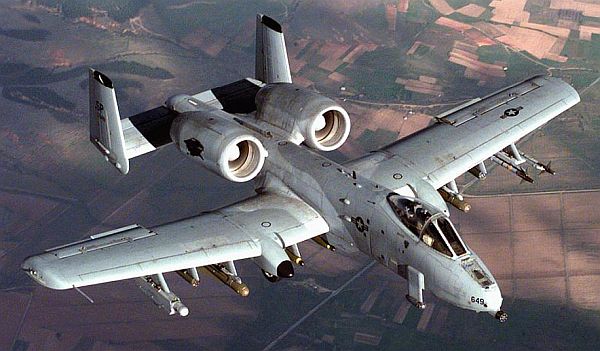
CAS is fire-support from aircraft conducted to support ground troops engaged with the enemy. It is analogous to direct-fire from tanks, machine guns or artillery fire, but originating from airborne platforms.
A basic truth that seems to escape too many people is that there is no point in calling in artillery or an airstrike unless the enemy is still there when the ordinance arrives. The fundamental tactic of the guerilla fighter is to hit and run. Calling in airstrikes as a response has no value unless ground units have been able to contain or pin down the intended target.
To be useful CAS needs to rapidly responsive. When air support is called for it is usually needed urgently. Recently in Afghanistan aircraft have taken more than two hours to provide support. Two methods have proved effective to cut down response time in the past. The first is that of the forward operating base (FOB). The RAF has proved the viability of this with its Harriers in numerous NATO manoeuvres and in various other parts of the world. Turn around time between missions is down to less than 30 minutes. Various other aircraft capable of rough field STOL or STOVL operation can be used in the same way. The alternate strategy, widely used in the Second World War, is the “taxi-rank” or “Air Alert” system. Aircraft cruise at high altitude, out of range of the smaller anti-aircraft systems. When called for they dive down to lower altitudes to attack their targets. This strategy has fallen from favour due to its high logistical demands: keeping modern aircraft in the air greatly increases fuel and maintenance demands. Taxi-ranks may be necessary if FOBs can not be established for some reason. This implies that CAS platforms should be designed for a long loiter time and economical cruising. If taxi-rank formations are used in the future it is likely they will include EW/ECM aircraft for additional protection.
The other requirement of CAS is that it is accurate, since there is a high potential for fratricide. The capability to drop a bomb with pinpoint accuracy from miles away is of less importance than being able to positively identify the target. A CAS pilot needs to be fully confident in his ability to identify friendly, allied and enemy equipment and personnel. Electronic IFF for ground units and other guidance from ground troops will help, but it is likely that for a long time yet CAS pilots will need to make visual contact with their potential targets. Many A-10 pilots have been investing in hand-held binoculars to help them in this role. Aircraft with two crewmen are likely to prove more effective in a CAS role since the observer can concentrate on identifying targets while the pilot is occupied flying.
Many modern aircraft have too high a minimum speed to be effective CAS aircraft. Although a quick turn of speed can avoid ground fire, attack and observation passes will often need to be made at low speeds to insure accurate identification and weapon placement.
Helicopters do have a part to play in CAS, but due to their low speed they are only useful if in relatively close proximity to the ground element.
There is a line of thought that CAS should be an option only for emergencies. Attack aircraft should roam ahead of a ground force, attacking targets of opportunity and locating ambush sites by reconnaissance-by-fire. An important capability of aircraft is that a widely dispersed force can quickly be concentrated anywhere within the area of operations. A call for a close air support mission could therefore result in all available aircraft descending on a location like a swarm of angry bees, dealing a decisive blow.
A theory currently popular with many airmen is that effective close air support can be performed from altitudes of 15-20,000ft. This seems to ignore that battlefields are fluid and enemies mobile. It ignores the possibility of low cloud. It overlooks the fact that PGMs are not 100% accurate and seem to have a significant probability of malfunction. The greater the range and altitude above the target the wider the area endangered by stray bombs. This means an even greater risk to allied personnel and non-combatants.
The risks are further exacerbated by the deficit of effective Forward Air Control aircraft such as the OV-1 Mohawk or OV-10 Bronco.
Another issue that needs addressing is procedures to allow CAS aircraft to operate in support of ground forces without them being endangered by friendly mortar and artillery rounds which pass through the same airspace. Part of the solution may be to merge the control of artillery and air-power. For infantry battalion mortars the solution is probably one of training.
The dictionary defines “Interdiction” as:
Interdiction can therefore be defined as using aircraft to attack enemy forces not currently engaged by friendly ground forces. Interdiction missions would include attacking formations of enemy troops moving towards or fleeing the battle area. It involves the destruction of enemy supply columns and routes. It might also include the destruction of terrain features such as bridges to prevent the advance, retreat, resupply or reinforcement of enemy forces. The attack of enemy depots, staging areas or command posts might be either classed as interdiction or strike. The difference here is really one of semantics, since the platform requirements are much the same.
Interdiction missions are sometimes further classified as “Deep-Interdiction” or “Battlefield Air Interdiction”, depending on the proximity of the targets to the battlefield area. Battlefield air interdiction is defined as that category of air interdiction that is flown in the battlefield area and can have a direct effect on the enemy’s ability to continue operations.
I have an autobiography of a German soldier serving on the Western Front during the First World War. He recounts how one day a small plane was spotted above their position and how the earth suddenly began to explode.
“He’s dropping bombs” cried one man.
“No” came the reply “he’s spotting for guns”.
The artillery spotter plane was far less welcome than any bomber. A bomber would drop its bombs then depart. A spotter could hang overhead for hours calling in the fire of whole batteries of big guns, with each salvo becoming more accurate.
Forward Air control is a variation of Artillery Observation, replacing the ground or ship based guns with ordinance carrying aircraft. Modern AO/FAC aircraft should incorporate laser designator systems.
Combat air patrol is a defensive mission intended to deny the airspace above an area or force to enemy aircraft. When conducted in support of a naval force aircraft may also be required to take action against surface targets such as small missile boats.
Anti-submarine warfare is a specialized patrol/search and destroy mission to which aircraft are very well suited. During World War Two 80% of U-boat kills in British waters were attributed to flying boats.
Reconnaissance and the observation of friendly or enemy troops is one of the military aircraft’s oldest missions. Since observation balloons were used in several 19th century wars this mission actually predates the aeroplane itself. Reconnaissance aircraft range from sophisticated high-tech platforms such as Joint STARS to light aircraft needed to over-fly convoys and spot likely ambush sites.
The high vantage point that an aircraft offers makes it a very useful place to mount radar systems. Airborne radar can survey a far greater area than surface radar systems and are less likely to be effected by terrain features.
The high vantage point that an aircraft offers also makes it the idea platform for electronic warfare, allowing broadcasts to be made over a far greater area. The increasing use of high-tech weapons and communication systems is likely to see electronic warfare and counter-measure systems seeing even greater use in the future.
“Maneuver Air Support” is a term coined by Chuck Myers and the 1st Tactical Studies Group, and refers to aircraft used as the airborne component of a three dimensional combined-arms ground maneuver force.
Chuck Myers: ’Ground Combat Elements (GCE) performing three-dimensional maneuver operations in hostile territory need all the external help they can get without incurring additional logistical or manpower burdens. Interviews with scores of combat veterans (retired and active) reveals the need for a COntinuous Overhead “Presence” (COOP) of perceptive air crews working as a integral part of the GCE.
The expressed need is for a virtually organic airborne partner who understands the commander’s intent and can provide the following functions with minimum interruption to ground maneuver:
The desired package of services is named Maneuver Air Support (MAS). MAS is provided by combinations of aircraft (manned and unmanned) flown by specially trained crews executing new variations of Joint Air Attack Team (JAAT) tactics tailored to exploit the very low altitude region that has been virtually vacated for missions referred to as “Close Air Support” and “Battlefield Air Interdiction”.
In some respects the first four functions can be likened to the traditional role of light cavalry, but with the advantage of a higher vantage point. The MAS element scouts ahead and around the formation, attacking or marking enemy targets as necessary. MAS pilots will also act as Forward Observers and Forward Air Controllers.
Transportation of men, materials and machines is probably the most important mission conducted by military aircraft. Operations include deployment, employment, redeployment, sustainment, aeromedical evacuation, humanitarian assistance and non-combatant evacuation. Airlift is a cornerstone of global force projection.
Transport elements range from helicopters or light aircraft that carry only a handful of men to large transports that can move main battle tanks. Although the USAF appears to have a considerable airlift capability, being supplied with large transport aircraft such as the C-5, C-17 and C-130, this is not the case. Gen. Shinseki’s concept of a brigade that could be deployed in 96 hours was little more than a pipe dream. Even if he had not chosen the woefully inappropriate LAV Stryker the air force simply does not have the airlift assets to move such a force. Incredibly, most USAF C-130s are not fitted with in-flight refuelling kits.
Destroying an enemy’s airfields and aircraft while they are on the ground has obvious military benefits. So too does attacking fuel dumps, staging areas and ammunition depots or sinking his navy. Other deep attack missions are more controversial in their strategic worth.
From September 1940 to May 1941 the Luftwaffe conducted a bombing campaign against London and other British cities. Docks and industrial areas were attacked, but so too were civilian residential areas with no strategic significance. Each raid would drop around 200-700 tons of high explosive and hundreds of incendiary bombs. The intention was to terrorize the British public and break their will. Many military theorists believed that a sustained bombing campaign would destroy a nation’s morale. The theory was that the population, in constant fear of a sudden and violent death, would put pressure on their government to surrender. If that government did not surrender, then the population would take to the streets, riot and overthrow the government.
During the Blitz the Luftwaffe made 127 large-scale night raids. Of these, 71 were targeted on London, which received over 18,000 tonnes of high explosive (18 kilotons), more than the rest of the country put together. By May 1941, 43,000-60,000 people had been killed across Britain and 87,000 were seriously injured. Of those killed, the majority lived in London. 1.4 million had been made homeless. Two million houses (60 per cent of these in London) were destroyed. As we know, this bombing campaign and those that occurred in later years did not break the will of the people. Nor did the air campaigns aimed at the German people. If the people of the world’s oldest democracy were not going to pressure their government into surrender, those of a murderous totalitarian regime are certainly were not likely to.
“It is improbable that any terrorization of the civil population which can be achieved by air attack could compel (force) the government of a nation to surrender. Air offensives should consistently be directed at military and communication centres.”
Mike Sparks: “Political leaders seeking low risk ways to wage war are constantly tempted by air strikes. They expect the other side to collapse in fear at the very thought of bombing. During the early stages of Vietnam, the Johnson administration seriously hoped that the air campaign would constitute the essence of the war or, to be more honest, as an alternative to waging war. Now, there are some cases in which this may happen. That is a case where the issue at hand is of only marginal importance to the people being bombed. But it is not effective when the campaign is against a country pursuing its fundamental national interest. In that case, the only thing that can dissuade the nation is to take actions that threaten the very survival of the regime or even of the nation.”
Now, just as then, there are pro-airpower advocates who claim that air-power can win wars on its own. Modern advocates claim that Precision Guided Munitions (PGM) can destroy a target country’s infrastructure with minimal civilian casualties. The results of the Blitz and other bombing campaigns would suggest that this would be even less likely to cause a government to capitulate than intensive bombing.
The 10 week air campaign over Kosova against the Serbs involved around 38,000 sorties. We now know that most of the Serbian equipment destroyed were decoys that cost less than the bombs destroying them. The destruction of most of the real targets that were attacked had little effect on Serbian operations or movement.
At the time the Kosovan air campaign was widely touted as validation of the idea that air-power alone could win a conflict. It now becomes apparent that the air campaign achieved none of the desired strategic or political aims and was a phenomenal waste of time and money.
During the later years of World War Two it was recognized that bombing was more likely to yield useful results if it was used to destroy Germany’s capability to manufacture arms and munitions.
Factories, power stations and oil refineries were bombed. Rail systems and bridges were attacked, and canal and river systems mined to prevent the movement of war materials. One strategy involved targeting Germany’s ball-bearing production. This was discontinued when no results were apparent, and it was only after the war that it was learned that Germany had been reduced to a single ball-bearing factory.
Attacking a nation’s ability to produce war materials has little value unless existing stockpiles are being consumed. Such an air campaign would have had little value if more traditional forms of warfare were not being waged at the same time. Although the air campaign against German industry did have effects the Germans still managed to keep much of their manufacturing capability in service.
We’ve seen that precision guided munitions are far from perfect, and that a certain proportion will miss. Many enemies will exploit such collateral damage for propaganda purposes to weaken support for the campaign at both domestic and international levels. The more weapons we drop, the greater the chance that such weapons will produce unintentional casualties. GPS based JDAM systems can be jammed while other systems can be blinded by obscurants. Only a small proportion of the bombs dropped in Iraq have been guided. Even more worryingly, we’ve seen evidence of cluster bombs with delayed detonation bomblets dropped into residential areas.
At the start of the Second Gulf War many journalists were asking “When will the bombing begin?” A more relevant question should have been “What is the bombing trying to achieve?”
During the Kosova campaign NATO suffered considerable embarrassment when a train moved onto a bridge that was about to be hit by PGM. Since there were no friendly ground forces in the area, why bomb the bridge?
If the objective is to liberate or create stability then bombing people’s homes, heritage and loved ones is not a good start. This statement from March 2003 sums it up nicely:
“I felt horrible that Baghdad was being reduced to rubble. With every explosion, I knew that some vital part of it was going up in flames. It was terrible and I don’t think I’d wish it on my worst enemy. That was the beginning of the ’liberation’... a liberation from sovereignty, a certain sort of peace, a certain measure of dignity. We’ve been liberated from our jobs, and our streets and the sanctity of our homes... some of us have even been liberated from the members of our family and friends.”
An unfortunate aspect of air-bombardment is that it is often used by politicians and politically-motivated servicemen to create the illusion that something positive is being done.
The Israeli air-strikes against “rocket launch sites” in 2006 are an obvious example of this practice. As many readers will be aware guerilla rockets or mortars can be set up on any flat piece of ground and the launch team can be long gone before their rounds land. Residents of a chosen launch site have little choice in the matter. Those that object will be beaten, maimed or murdered. Treating the firing points of such weapons as legitimate targets for air-strikes only has the consequence of inflicting civilian casualties and encouraging the victims to support organizations such as Hezbollah.
The Scrapboard has adopted the policy of dividing military operations under three broad categories:
Our acquisition and design of future and existing aircraft systems must reflect the requirements of such missions and the forms they take in the modern world.
For the foreseeable future most military operations are likely to be expeditionary in nature. We will usually be operating in territories other than our own or those immediately adjacent to our territory. Since air-power on its own cannot achieve most of our objectives some presence of ground forces will be necessary. Air-power will be needed to defend our troops and assist their actions. An important consideration for expeditionary operations is to build up a strong ground presence as quickly as possible. Airlift capability is therefore an important capability and one that probably needs to be expanded. Airlift capability is relevant to MTW, LIC and LAMO.
A significant proportion of materials or resupply is still likely to be moved by sea. In a MTW conflict many enemies will be likely to try and disrupt this using their air and naval forces. Naval CAP, ASW and anti-shipping capabilities will be necessary to defend against such actions.
There will still be a need for aircraft such as the F-22, but we have to realistically look at just how many such systems we really need. The USAF wants at least 339 at $70-125 million each, yet Desert Storm only involved 125-150 F-15s, the aircraft the F-22 is supposed to replace. Possibly systems such as the air-to-air missile carrier could supplement fighter cover.
Air-strike will continue to be a useful capability, but it needs to be wielded with better understanding and finesse. Propaganda or adverse publicity can lose wars, so there is a need to refine tactics and technology that minimize the risk of unintentional casualties.
For counter-guerilla operations the main problem is finding or catching the enemy. Air interdiction against the “Ho Chi Min trial” essentially involved trying to use multi-million dollar warplanes to try and kill peasants pushing bicycles: a clear example of a mission not appropriate for air-power. Main combat system for such conflicts is the infantryman and tracker dog.
Reconnaissance/observation/surveillance capabilities for COIN missions needs to be improved since this is likely to be one of the most common military operations of the near future. Electronic Warfare capabilities must be include the jamming of mobile phone communication over a large area.
Fighter aircraft need to fly high and fast and be able to detect and destroy enemy aircraft. This has necessitated increasingly more sophisticated and expensive platforms. Each F/A-22 Raptor will cost at least $70 million. Not only are such aircraft expensive to lose, they are too expensive not to use. For this reason most modern fighter aircraft are designed to be multi-role, although some designs seem to be more multi-role than others.
In the past fighters have often been used for long range reconnaissance. Current dogma is that such missions can be performed by satellites and UAVs. Whether this will remain the case remains to be seen. There is obvious potential for an enemy to try and jam the control signals of a remotely piloted vehicle.
Recent use of modern fighters for close air support missions has not proved to be satisfactory, although in fairness this was as much due to lack of training and practice in such missions as to the aircraft used. Many modern fighters seem to lack the low-level and low-speed performance that good CAS platforms need. Whether such will be the case with future designs or will be included as a design consideration remains to be seen.
The most likely alternate mission for fighters is that of interdiction and strike. The F-22 was recently redesignated F/A-22 but armament seems to be limited to two 1000lb JDAMs or eight GPS guided “small-diameter” bombs of c250lbs. This doesn’t seem to be a particularly suitable load to attack a supply column or dispersed guerilla force with. Other weapons will hopefully become available.
An alternate idea advocated by some is that of an “Air Superiority Missile Carrier”. This would be a bomber or cargo aircraft carrying a large number of long-range air to air missiles: essentially a flying version of an ADA missile battery. Such aircraft would either act in conjunction with AEW aircraft or acquire targets with their own sensors. Such a system would not totally replace the fighter, but would be a useful supplement. It would be especially useful where the desire was to enforce a “no-fly zone”. Such an aircraft cannot totally replace the interceptor. In most situations it would be necessary for a pilot to first visually identify a target before firing and this requires an aircraft with sufficient speed and climb rate to get close to the target.
Interdiction missions can be performed by both fighter aircraft, attack aircraft and bombers. Which are used will depend on various factors such as availability and distance to the target. Absence of friendly forces and non-combatants in close proximity allows the use of relatively heavy bomb loads. Against a convoy or overnight encampment bombing can prove to be very effective.
Air-strikes can be employed very effectively against forces that have been located by ground forces but not yet engaged. An example of this may be an armoured unit causing the enemy to occupy a hasty defensive position on a hilltop. Instead of engaging immediately the commander calls for an air-strike on the position. When employed correctly such an air-stike can have a useful shock effect on the enemy that can be exploited by the nearby ground forces. Potentially such a strategy can eliminate the enemy with minimal losses to one’s own ground troops. Such a scenario is time dependent, however. If the air-strike is delayed too long the enemy will have had time to dig in, making bombing less effective and ground assault more difficult.
Against an enemy who has had time and inclination to prepare his position an air attack may be less effective. Competently prepared defensive positions will often include deep shelters to protect soldiers from artillery and airborne bombardment. Some of these constructed in the First World War were up to 50ft deep and similar levels of protection were used by the Japanese and Viet Cong. Many VC-controlled villages had a deep shelter of this kind beneath them. Many urban areas have cellars or sewers that enemy forces are likely to use in the event of bombardment. In certain situations “calling in the bombers” may do little more than kill civilians and provide rubble that facilitates the enemy’s defence.
Ground attack missions for either close air support or interdiction have also been performed very effectively by gunships such as the AC-47, AC-119 and AC-130. Another idea is to use the missile-carrier/arsenal plane idea described above to launch air to surface missiles. Bombers such as the Backfire have already been used this way in an anti-shipping role but there is also potential for use against land targets, especially if used in conjunction with a sensor system such as JointSTARS.
Intelligence, reconnaissance and surveillance (ISR) covers a very broad range of capabilities and several different types of platform will be needed. The current vogue is for RPVs and UAVs. Whether these are the wave of the future or a dead end remains to be seen since these systems are potentially vulnerable to electronic countermeasures.
Current UAV reconnaissance systems lack the situational awareness of a human pilot so the operator is probably not aware that his UAV is being fired on. A UAV may be cheaper than a manned aircraft and its destruction involve no loss of life, but each destroyed is one less pair of eyes. If NTC OPFOR can destroy 50-75% of UAVs in each exercise so too can our real enemies. UAVs may have to become considerably more sophisticated if they are to survive the future battle airspace.
Aerostats and airships offer several advantages as surveillance platforms. The former are being used by Israel.
Airborne reconnaissance (of any form) can only do so much. An aircraft can spot a party moving across the savanna, but it will take contact with a ground unit to establish if these are guerillas, herders or guerillas posing as herders. JointSTARS can spot vehicle columns, but other systems will need to establish if the column is an armoured unit or just a decoy.
Ground forces have various techniques to avoid observation by aircraft. Some NVA troops carried frameworks of chicken wire/bamboo and vegetation on their backs. If they saw or heard an aircraft they simply dropped to the ground and froze until it was gone. Using such techniques the NVA infiltrated whole divisions unnoticed. In Afghanistan blankets were used to shield against detection by thermal imager.
This is not to say, however, that airborne surveillance cannot be very effective in a COIN role. Existing camera systems can read a car number plate at 12,000ft slant range, on the move.
A former British soldier comments:
“I’ve seen footage of an IRA suspect walk out of his house, go to a shed, pick up a weapon and go to his car. All shot from an aircraft, so far away, he later said he couldn’t hear or see it. The picture were good enough to put him in jail!”
Serious consideration needs to be given to developing a specialized Night reconnaissance/surveillance aircraft with very low acoustic and thermal signature.
The most obvious shortfall in current reconnaissance aircraft is in the field of battlefield observation. Missions include overhead security and control of artillery and air strikes. Light helicopters have been used in this role but helicopters are slow, vulnerable and thirsty. Such an aircraft will often encounter ground fire, so armour and countermeasures are going to be needed as much as sensor systems. Light armament should also be fitted. Predator UAVs used in Kosova were fitted successfully with Hellfire missiles when it was realized that targets spotted had often dispersed and escaped by the time strike planes had been flown from Italy.

The battlefield observation aircraft described above would also double as a MAS platform. Light cannon and heavy machine gun armament can pin down ambushers long enough for ground forces to recover and attack. M156 white phosphorous 2.75" FFAR rockets have anti-personnel and anti-material capability but also mark the targets’ location for attack by mortars, artillery, direct-fire or air-strike.
Several candidates have been suggested as a MAS platform. Probably the most likely is to adapt the agile T6 Texan II trainer (right). The Buzzard COIN aircraft that I have proposed has also been suggested as a good choice.
The two seat version of the A-10, the OA-10B, would be a useful MAS platform and we may see two-man version of the F-35 JSF used in this way. Such aircraft would probably carry additional sensor and observation systems in place of the weapon load of their attack stable-mates.
A CAS aircraft needs to be capable of operating from rough field forward bases and capable of a long overhead loiter time for “taxi-rank” patrols. Agility and speed may help avoid ground fire but it must also be capable of operating at low level and low speeds when necessary. Although a feature currently out of vogue, a swing wing configuration may be useful. Armour and countermeasure systems will be needed.
The “honour roll” of effective CAS aircraft includes many one-man aircraft such as the A-1 Skyraider, P-47 Thunderbolt, Il-2 Shturmovik, Hawker Hurricane, Typhoon and Tempest. A two-man crew may facilitate better target identification, particularly if no other Forward Air Control is available. One possibility is a flight may include both single and two-seat aircraft, with the “backseater” directing the single-seat attack planes if necessary.
Armament is a matter of some debate. The 30x173mm Avenger cannon used by the A-10 is a devastating weapon, but does it justify the weight? Are pilots better off using stand-off weapons such as missiles to avoid ground fire? Might lighter cannon or machine gun systems be more effective against guerillas? 25x137mm GAU-12 or 30x113Bmm Aden/M230 cannon rounds have proved sufficiently effective against the top armour of tanks such as the T-72. Aircraft operating from FOBs can carry a relatively small weapons load, since they can easily return to base to “top-up”. Aircraft used in a taxi-rank may need more substantial and varied weapons loads.
Despite the importance of CAS the USAF doesn’t appear to be particularly enamoured with this mission. There are no moves to upgrade the A-10 fleet yet the Air Force has resisted passing responsibility for fixed-wing CAS over to Army Aviation so the Army can support its own troops like the USMC already does.
The USAF’s next attack platform will be the F-35 JSF, which includes a STOVL variant. How effective this will be in a CAS role is as yet unknown since capabilities such as low-speed handling and damage resistance have not been publicized.
Chuck Myers proposes the Lockheed ATLAS for CAS, an aircraft with a GE unducted fan in a pusher configuration. Capabilities include STOL, long loiter time, armour, redundant control systems, good low speed qualities and 450kt speed when needed.
Armament would most likely be a 25mm or 30mm Gatling, the latter probably the four-barrel model used in the GAU-13 pod
The effectiveness of seaplanes in the anti-submarine role has already been mentioned. A modern seaplane can land whenever it wants and use dunking sonar rather than a limited supply of expensive and non-recoverable sonobuoys (in fact a seaplane could land and recover any sonobuoys it dropped). The seaplane is faster than a helicopter and has a longer endurance, allowing it to patrol a far greater area. For ASW missions it may conserve fuel further by flying Wing-In-Surface-Effect (WISE), while other missions may require a higher vantage point. Such an aircraft would also be useful for missions such as maritime search and rescue or the interception of surface vessels. A seaplane can not only find surface ships but can also land, board and search such vessels: a useful capability when the smuggling of drugs, terrorists or narcotics is suspected.
In the 1960s the US Navy built the P-6M Seamaster jet seaplane that was 100mph faster than a B-52 bomber. The P-6M was a strategic nuclear bomber, so a modern jet seaplane is more likely to be smaller: something no bigger than PBY Catalina would probably be right. The “Black Cats’” were the original stealth bombers. They could be operated from tiny island and their night attacks accounted for thousands of tonnes of Japanese shipping including the supply vessels that island garrisons relied upon. A jet amphibian of this size could use many inland waterways, and in the event of unusually rough seas or other circumstance such as a medical emergency could land directly on an aircraft carrier.
Strategic bombing is highly unlikely to be a war winner on its own. Long-range strike capabilities can be used to eliminate or neutralize individual targets without the need to risk ground troops. However, it is evident that in the past such capabilities have been overused and used inappropriately. Many of our foes will happily position military equipment close to population centres, schools and hospitals. They have no qualms about fooling a warplane into attacking a refugee column or disrupting the guidance of a PGM so that it causes collateral casualties.
If we are to use strategic strikes we must accept that certain targets cannot be attacked in this way. Ignoring this will result in Pyrrhic victories. Strategic strike must be surgical in its application. The essence of good surgery is knowing when and where to cut and when not to.
Some writers have suggested that future deep strike capabilities should be based on three types of system : Nuclear Strike, Precision Guided Munition Strike and Electronic Strike.
Nuclear weapons are unlikely to be used expect in a major war. Use of large thermobaric FAE bombs may be an alternative when large-scale destruction of a target is needed and politically acceptable. Likely targets might be an isolated terrorist training camp or chemical weapons factory.
Precision Guided Weapons are going to need careful target selection and reconnaissance, including HUMINT. Combat experience with such weapons seems to indicate that they are best used sparingly, since dust and debris caused by the impact of preceding bombs has caused some guidance systems to lose their lock on the target. Striking before the enemy is aware he is under attack prevents the activation of other possible countermeasures. Targets of high value are likely to be either elusive or well-protected. The latter may require weapons with very high levels of concrete-penetrating capability.
“Electronic Strike” includes software weapons such as computer viruses and logic bombs, but also includes more recognizable hardware such as non-nuclear EMP bombs and High Power Microwave devices. Like more conventional munitions, such devices must be employed with caution. Military and financial institutions can be expected to have some defences against EMP, while local hospitals will probably not have. An EMP bomb used against an airfield would offer the option of temporarily paralysing its aircraft and other systems with little lost of life, allowing a strike plane to complete another mission.
Aircraft are not the only way to deliver strategic strike capabilities. Unmanned systems such as cruise missiles are most appropriate for stationary targets. Other systems can or must be delivered by infiltration. Covert and Special forces could make use of man-portable rocket systems such as the single barrel versions of the Chinese Type 63 107mm or Russian 122mm Grad-P 9P132 to launch thermobaric, electronic-strike or guided warheads. Ground Hellfire might also be used in this way.
The potential of the capabilities described above is not to say that manned aircraft are not still needed. One important capability of manned aircraft is that of easy recall.
The above considerations suggest the need for an aircraft with long range and the ability to penetrate deep into enemy airspace. This implies an aircraft with good stealth capabilities. It should be capable of carrying the full range of weapons described above and delivering them with great accuracy. Aircraft such as the F117 Nighthawk and F/A-22 Raptor suggest themselves, although quantity and type of bomb load seems a little limited. The proposed two-man FB-22 Strike Raptor may be more useful, having a range more than 1,600 miles, compared with the F-22’s 600-plus and may possibly carry 30 Small Diameter Bombs rather than only 8 like the F-22. A two-man crew would allow the weapons officer to concentrate all his attention on guiding munitions.
As has been discussed above, air-power in isolation can only destroy targets, it cannot win wars. A comment often attributed to Gen. Patton is that it is the infantryman who makes an enemy sign a peace treaty. It is equally true that it is tanks rolling into the city centre, not aircraft overhead that let a foe know he has lost.
Possibly the most important missions of the air force are reconnaissance and transportation. The Army’s stated desire of being able to deploy “one brigade within 96 hours, one division within 120 hours and five divisions within 30 days” just cannot be met by the air force, even if a more transportable vehicle than the LAV Stryker had been selected.
The proposed Stryker brigade has approximately 366 Strykers, but for each of these there would also have various other vehicles, artillery pieces and countless tons of munitions, spares and stores. USAF has approximately 425 Airlift C-130s (2001 figures). Most C-130s in US service are not equipped with in-flight refuelling capability (fitted as standard on the C-130s of some other nations). A C-130 can carry only a single Stryker, and because of its excess weight can carry it less distance than the vehicle can move under its own power. The C-17 Globemaster was designed to have both an inter-theatre and intra-theatre role although the latter use is not currently common practice. A C-17 can only carry two Strykers and is better used carrying more effective vehicles such as Abrams and Bradleys or a larger number of M113s. Clearly a whole brigade could not be moved in four days, even if the 104 C-5s, 58 C-17s and 88 C-141s (being phased out) are also available.
What can be done? There are obvious measures such as installing the in-flight refuelling kits on all C-130s as standard. Purchase of the new C-130J variant needs to be stepped up, and fleet size needs to be increased. The army must admit to itself that the Stryker is not the correct vehicle for its needs and start to utilize the smaller, lighter, more capable and already paid for M113s it has stockpiled.
In addition to the Hercules we also need smaller STOL transport aircraft that can operate from aircraft carriers and land on roads, golf courses or minor airfields. Ideally such a transport could carry an 11-ton M113, though this may not be practical. The Russian Mi-26 has proven that transport helicopters that can carry M113s internally are possible : the Mi-26 can carry 20t BTR vehicles. There is also evidence that indicates a helicopter with two engines of Mi-26 power levels can transport a M1 Main Battle Tank. Availability of such aircraft would give US forces a formidable air-mech strike capability.
Airlift requirements can be increased if aircraft such as the B-747 are used to move military equipment. Each such aircraft can carry six M113s or vehicles of similar size and weight. Twenty four 747s can move the combat elements of an entire brigade. Most parts of the world have airports capable of handling 747s. 747s can be used to build up a force and free C-130 for intra-theater airlift.
Another useful inter-theatre transport system will be the new generation of large cargo airships that are now possible. Although not as fast as conventional heavier than air aircraft, LTA transports can move loads similar to seagoing cargo ships, but at much greater speeds.
Ref.By the Author of the Scrapboard : | |
|---|---|
 | Attack, Avoid, Survive: Essential Principles of Self Defence Available in Handy A5 and US Trade Formats. |
 | |
 | Crash Combat Fourth Edition Epub edition Fourth Edition. |
 | |
 | |