
1.5 The “DIFFERENCE ENGINE” and the
“ANALYTICAL ENGINE”
1.7 HOLLERITHS TABULATING MACHINE
2 The first generation of computers
(1936-1956)
2.1 The Atanasoff-Berry Computer
2.2 The Harvard Mark 1 (Howard H.
Aiken-Grace M. Hopper)
2.3 The ENIAC (John W. Mauchly-John P.
Eckert)
2.4 The EDVAC (John Von Neumann)
3 The second generation of computers
(1956-1964)
3.1 The replacement of lamps by
transistors.
3.2 Computers in service of science
and industry.
3.4 Higher programming languages
3.4.1 Higher programming laguages as
there are:
3.5 The rise of new professions
4 The third generation of computers
(1964-1971)
4.1 From transistor to IC (Integrated
Circuit)
4.2 The self-managing computer
5 The forth generation of computers
(after 1971)
5.2 New surrounding apparatuses
changes the outer looks of the computer
5.3 New developments because of new
devices.
5.5 A hard battle between two ‘dogs’
over a bone and the third takes it!!!
5.6 Non-procedural and
object-orientated programming
Humans have been searching for tools to make additions since ancient times. The oldest device known is the stone tablet, discovered in 1899 on the Greek island Salamis, probably from Babylonian origin. The tablet date from some 300 years BC, and shows some symmetric lines and Greek symbols.
This kind of calculatingboard is called abacus. They have been popular till today as aid for simple cipher. An abacus was not meant to add, substract on it’s self, the final mathematic still happened by heart. The abacus was more a mnemonic, with which already caculated results could be represented, thus one could proceed to the next calculation without losing the previous results. They were used by merchants, end therefore widely spread.
Around 1200 after Christ, in China, the first “modern” abacus appeared, a ball-frame with two rows of coral balls. Via Japan this ball-type counting device reaches the western world in the 17th century, and stayed till the 20th century as a popular and handy aid for counting.
à
more info: http://www.ee.ryerson.ca/%7Eelf/abacus/
In 1642, Blaise Pascal, developped at his 19 years of age a mechanical countingmachine, with which numbers with 8 figures could be added and substracted automaticaly. From this time on, the machine, only a shoebox big, did the counting for you.
à
More info: http://www.cee.hw.ac.uk/~greg/calculators/pascal/About_Pascaline.htm
In 1671, Baron Von Liebniz, developped an improved verion of the Pascaline. His machine, the “Stepped reckoner”, could besides add and substract also multiply and devide, this through converting the operations in steps of adding and substracting. Leibniz’s machine could handle numbers with 16 figures, but blocked often.
à
More info: http://www.maxmon.com/1670ad.htm
The Arithometer was the first commercial calculator. Produced in 1820 by the Frenchman Charles Xavier Thomas de Colmar (1785-1870). The machine was based on the technique of Leibniz, but was easier to use. It could add, substract, multiply and devide. The Arithometer was technological not innovatory, but was the first caculator that was produced and commercialized on a huge scale. It stood the test of times till the 20th century.
à
More info: http://www.museon.nl/objecten/567.htm
Charles Babbage saw that there was a parallel between counting and machines. Indeed machines were perfect for exact and repetitive operations, what one can easily find in a caculation process. People often made mistakes while counting. Babbage was convinced in 1822 that he could build a machine, power with electricity, which could do calculations automatically, and print the results. In charge of the British governement he started to work on this gigantic project.
The machine, he called the “Difference Engine”, was the size of a train locomotive. Babbage worked for about 10 years on it, but it doubtfull that he ever succeeded in making a full functional machine. Still now some fragments of this machine are kept in musea.
In 1833, Babbage, started a second, even more ambitious project. He wanted to make a machine that not only could calculate but also analyse. The machine would make use of “punchcards” and would be able to determine which calculations were needed to achieve a correct result. To assist him was Lady Ada of Lovelace, daughter of the English poet Lord Byron, the very first female computerprogrammer.
The “Analytical Engine” remained a fantastic idea on paper, because in 1941 the British governement stopped his financial aid, so he was forced to give up. It took more then a century later when Babbage ideas could be seen as usefull. Lot’s of his ideas are now to be found in modern computers.
In 1910 his son, Henry, builded the mathematical part of the “Analitical Engine”, but it appeared to make to many errors.
à
More info: http://www.fourmilab.ch/babbage/sketch.html
George Boole (1815-1864) was the son of a shoemaker. He defined the world of Aristoteles with mathematics. Internet users around the world today still enjoy the fruit of his work. He was a selfmade man an didn’t enjoy particular grades at university’s. He was a teacher and because he was upset by the lousy schoolbooks he started to write his own. In 1844 he got the attention of the Royal Society who gave him a golden medal.
In 1847 his work, “The Mathematical Analysis of Logic”, appeared.
In 1849 he was nominated professor at the university of Cork (Ireland). Since then he wrote several books about logical reasoning and it’s mathematical form.
Operands like AND, OR and NOT, which relates wordgoups on internet searchmachine are from his hand. His work was known from few people till after his dead in 1864, his theory’s were used by researchers in electronics.
à More info: http://www.advbool.com/Misc/boole.html
http://www2.sjsu.edu/depts/Museum/boole.html
http://www.maths.tcd.ie/pub/HistMath/People/Boole/CalcLogic/CalcLogic.html
In 1887, Herman Hollerith, presented his tabulating machine. With this machine static data could be retrieved automatically by using “Punchcards”. In reality his technique was made out of two machines. One to make punchcards and one to read them. Very soon Hollerith realised his invention could become a commercial success and he patented both the machines and the punchcards. In 1896 he started a company to produce and sell his machines (The Tabulating Machine Company). Later in 1924 it became International Business Machines still known today as IBM. The punchcard technique remained very popular till fer into the 20th century.
à
More info: http://www.computinghistorymuseum.org/museum/old/punch/hollerithindex.html
 John Vincent Atanasoff (1903-1995) the forgotten father of the
computers.
John Vincent Atanasoff (1903-1995) the forgotten father of the
computers.
à More info: http://www.cs.iastate.edu/jva/jva-archive.shtml
and at http://www.scl.ameslab.gov/ABC/Biographies.html
à More info:
Howard H. Aiken
http://search.britannica.com/search?ref=A01015&query=aiken+howard+hathaway&exact
Grace Murray Hopper (1906-1992): Rear Admiral of the US naval and mathematician who invented the computer compiler (called the A-O) in 1952. Her compiler revolutionized computer programming, automatically translating hight-level instructions(easier to understand to common people) into machine code (the cryptic, native language of the central processing unit). Hopper and her team developped the first userfriendly business programming language, COBOL (Common Business-Oriented Language). There is an uncomfirmed story that Hopper determined that an error in the early MARK II computer was caused by a moth that was trapped in it; she then coined the term “COMPUTER BUG”
John Mauchly (1907-1980) American electrical engineer and co-builder of the first electronical computer (ENIAC= Electronical Numerical Intergrator and Computer)
John Presper Eckert (1919 –till now) American electronical engineer and co-builder of the ENIAC.
In October 1973 a US federal court decided the ENIAC patent as invalid and named Atanasoff THE inventor of the electronic digital computer.
à More info: http://search.britannica.com/search?query=ENIAC&ct=&fuzzy=N
and http://ftp.arl.mil/~mike/comphist/eniac-story.html
John Von Neumann (1903-1957) American mathematician, born in Hungary, laid the foundation for game theory and for the development of computers. His fetch-decode-execute principles are still to be found in modern microprocessors. EDVAC (Electronical Discrete Variable Automatic Computers) handled stored-program digital computing for the first time. His paper from june 1945 called “First Draft of a report to the EDVAC” discribed the basic organes still needed in modern microprocessors, namely a Mermory, a Calculating unit and a Control unit.
à More info: http://ftp.arl.mil/~mike/comphist/61ordnance/chap3.html
and http://www.maxmon.com/1946ad.htm
and also look at http://www.maxmon.com/1944ad.htm
The Universal Automatic Computer (Univac) is an computer for commercial use and was developped by Eckert and Mauchy ( see The ENIAC) at the end of the 40ies. The revolutionary milestone of this machine is to be found in the fact that it has inbuild programs and receives its data through high speed magnetic tape rather than trough perforated cards (punchcards). UNIVAC Sperry a division of Sperry merged with Burroughs corporation to form Unisys corporation.
à More info: http://www.cc.gatech.edu/services/unisys-folklore/
The programs of the first computers (lamp diode) were written in machine language, in bits and bytes that excisted of ones and zeros in the binairy scale. These programs were applied on the machine and were immediately executable. The writing however of such programs demanded an extreem technical knowledge of the machine. Such programmers were real specialists and worked at an university or for the United States Army.
Germanium based transistors replaces the lamp diode. Computer became much more powerful and find their intrance into scientifical, military and commercial midst.
à
More info: http://ourworld.compuserve.com/homepages/Andrew_Wylie/homepage.htm
John Bardeen: American physicist who was cowinner of the Nobel Prize for Physics in both 1956 and 1972. He shared the prize with William B. Shockley and Walter H. Brattain for their joint invention of the transistor in the Bell (Graham Bell inventor of the telephone) Laboratoties from december 1947 on.
à More info: http://search.britannica.com/search?ref=A01015&query=bardeen+john&exact
The LARC (Langley Research Center) Langley Samuel Pierpont(1834-1906) American astronomer, physicist, and aeronautics pioneer who contributed to the knowledge of solar phenomena as related to meteorology and built the first heavier-than-air flying machine to achieve sustained flight. This computer was first in use for weather previsions, astronomical calculation and space flights. Now the LARC based in Virginia (USA) is under NASA tutelage àMore info: http://www.larc.nasa.gov/
The IBM 1401 (Industrial and Business Machines Corporation) founded in New
York in 1924 (see previous HOLLERITHS
TABULATING MACHINE)  source: http://www.geocities.com/SiliconValley/Lakes/5705/1401.html
At the end of 1940 a new way to make computer execute a program made it’s entrance. Because working with 1 and 0 didgits was difficult, time wasting, vast and only for insider specialists, they invented a semantic language called Assembler. Users could write programs in which instructions were based on the English language. A special program (the assembler) translated these instructions into binairy machine language comprehensive for computers and immediately executable.
HEX
0010
org
code
RX ( - c (13+5i+3j)
--st
ts, [sp]
begin
mov 8
#, ts
and
fl, ts
nz?
until
nz?
in g1
or 4
#, fl
begin
and
fl, ts
z?
until
z?
and 1 #, fl
ret&
mov g1, ts
end-code
An
piece of an Assembler program.
Since the end of the 1950’s new technological developments (Transistors!!) defined needs for more modern and more specific programming languages. These languages we call higher level programming languages because the instructions are written in a more man’s signature and level. The instructions are “translated” into machinelanguage by a so called “COMPILER” (or “interpreter” in case of Basic). Due to the development of these higher programming languages the IBM 1401 became a commercial success, since programming was much more accessible for people and easy to learn.
FORTRAN (FORmula TRANslation language designed by John Backus for IBM in the late 1950’s. It’s still popular today for scientific applications that require extensive mathematical computations. The two most common are Fortran IV and Fortran 77. A new ISO and ANSI standard FORTRAN-90 was developped in the early 90’s)
COBOL(see p.5) (Common Business Oriented Language used mainly in mainframe computers. Developed in the late 50’s begin 60’s Cobol is the second oldest high-level programming language. Very wordy programs written in COBOL tend to be much longer than the same programs written in another language. This can be very annoying when you program in COBOL, but the wordiness makes it easy to understand programs because everything is spelled out. Although disparaged by many programmers for being outdated, COBOL, is still the most widely used programming language in the world).
BASIC[1] (Beginner’s All Purpose Symbolic Instruction Code language is an infantile easy to learn language. The fact that Microsoft took a generally stagnant variation of BASIC running on mainframe and microcomputers and imported it to a usable form on all the microcomputers of the late ‘70s and ‘80s was a major factor in the growth of computers.)
getcom:
CLS
PRINT
"Enter 1 or 2"
a$ =
""
WHILE
a$ = ""
a$ =
INKEY$
WEND
SELECT
CASE a$
CASE
"2"
COM$
= "COM2: "
n% =
2
CASE
"1"
COM$
= "COM1: "
n% =
1
CASE
ELSE
GOTO
getcom
END
SELECT
tref
= TIMER
OPEN
COM$ FOR RANDOM AS #1
ON
COM(n%) GOSUB getdata
fave
= 60
COM(n%)
ON
CLS
PASCAL( An ALGOL-descended language designed by Niklaus Wirth on the CDC 6600 around 1967-’68 as an instruction tool for elementary programming. This language primarily designed to keep students from shooting themselves in the foot and thus extremely restrictive from a general-purpose-programming point of vieuw, was later promoted as a general-purpose tool and in fact became the ancestor of a large family of languages including MODULA-2 and ADA.
Till just before the commercial breaktrough of computers, the designers of software and hardware were the one and the same people. Often they were also the ones to operate them. They were called computerspecialists, a profession that was accesible only for the very best engineers and professors. When the higher programming languages arrives it becomes more accesible and makes it way to new professions and specialities.
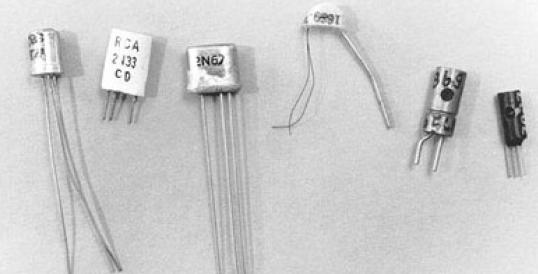
the transistor changed the face of the world
Jack S. Kilby a Texas Instruments engineer invented the intergrated circuit in 1958, along with Robert Noyce. Both unaware of each others activities, invented an almost an identical germanium-based IC, nicknamed ‘the chip’, at almost the same time. The electronic hand-held calculator, of which Kilby was the co-inventor, successfully commercialised the integrated circuit. The integrated circuit virtually created the modern computer industry, transforming yesterday’s room-size machines into today’s array of mainframe, minicomputers and personal computers. The JK flip-flop was named after him.
In the early days of the computer was starting it up alone a whole task with vast operations. The starting sequences and routines had to be given manually to the machine. With the appearance of computers with an intern memory the task became easier but still a precarious enterprise. Meanwhile only one program could be run at the same time, this unabled the use of its full capacities. Therefore in the ‘60s the first Operation Systems saw the daylight. It took care of the start-up and enabled multi tasking like running several programs at the same time. It also took care to optimize the computers memory. The IBM 360 from 1966 (picture below)
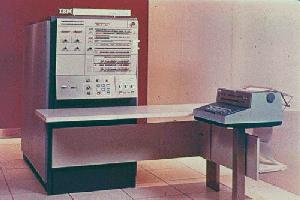
and the PDP-8(Paralell Data Processing from DEC-computers)
à More info: http://www.cs.uiowa.edu/~jones/pdp8/ and http://www.36bit.org/dec/ for IBM: http://www.geocities.com/SiliconValley/lakes/5705/360.html
 From IC to Microprocessor
In 1970 Intel produced her first commercial microprocessor, the 4004-processor (MCS-4 Micro Computer System 4-bits). à More info: http://www.alpertron.com.ar/4004.HTM This chip was not a big success, it was very hard to get programmed correctly, but was the first breakthrough, while the demand of more performing and smaller machines got higher on the market
A microprocessor combines in fact the functions of several IC’s together. Hence computers could be made smaller and cheaper. Futhermore it was possible to make computers for multiple purpose, while in the time before it was build for a specific task. The invention of the microprocessor was essential for the success of the PC (Personal Computer). Since 1970 the microprocessor did it’s entrance in automated household apparatus like: washingmachines, kitchenrobots, microwave ovens, television- and Hifi sets, it’s allaround us and yet unthinkable without microprocessors. Also in automobile industry the microprocessor meant a real revolution.
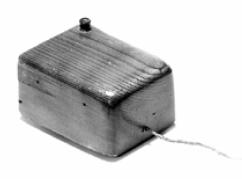
the first computer mouse

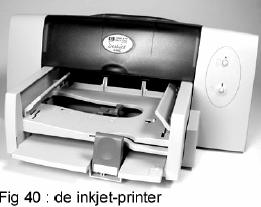
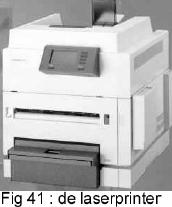
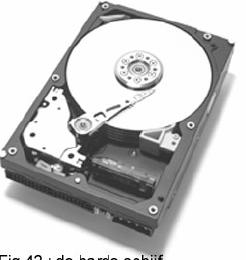
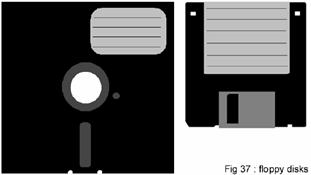
The hard disk already excisted in the ‘50s. But because magnetic tape could withhold much more information, these were more popular for a long period. For a microcomputer which we call now a PC these magnetic tapes were too voluminous.instead they had one or two floppy disk stations, some microcomputers even could be connected to a cassetterecorder. The HD (Hard Disk) was smaller and faster.back to top
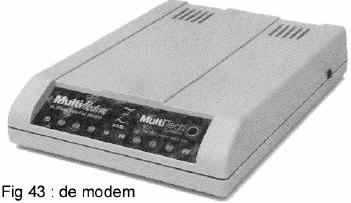

Each of these new devices engender whole new technologies. From whom the inventors would never even dreamt of.
From the ‘70s the computer was an ‘in vogue’ object for home hobbyists. Not for the practical use of it but farmore for the high putter-value of it and the complacency of programming. Computers were bought in bits and parts. Monitors, keyboards, memory devices(like taperecorders or diskdrives were very optional.back to top


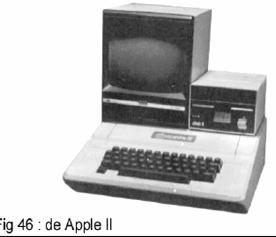
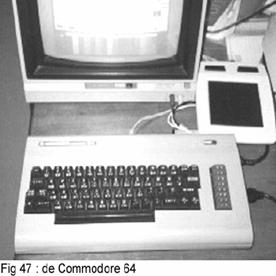
What follows the introduction of the IBM XT, is a harsh battle between IBM-compatible PC’s and the computers of Apple-Macintosh. IBM had allowed other manufacturers (Compaq) to dupplicate their system, or use parts of it in own design. In that way very soon the IBM-clones came on the market, who used cheaper parts than IBM. But what all these clones needed to run was the operating system that IBM bought for her XT to a very small company Microsoft (Bill Gates), the MS-DOS.back to top
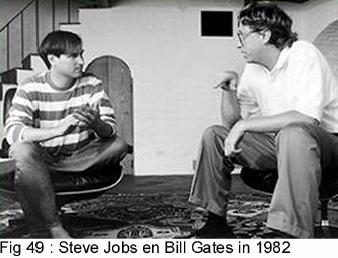
Finally IBM was blown from the market by companies like Compaq and Dell. Microsoft came out the global winner…for a battle that started over two players IBM and Apple.
IBM-compatible systems had need of reliable microprocessors. IBM itself went to INTEL for her XT and use Intels’ 8088-processor. Till now Intels’ leading market position in the field of microprocessors is due to that fact. Intels’ concurrents are AMD and Cyrix.
Apple (Steve Jobs) shielded it’s system completely and prohibited any copy’s of it. The manufacturer swore fidelity to her own MacIntoch hardware and used only (more expensive) Motorola processors. That’s why they were kept behind in the race with IBM-compatibles concerning sales figures. Still they maintained a vast number of adherents, because of their beter quality, greater easiness in use and a more stabel operating system.
Because the IBM-compatible PC’s and Apple computers worked on a total different base, files could not be exchanged between the two systems till deep into the ‘90s. There is also the one touched mouse which Apple took a patent on. But this was badly taken because when Microsoft came with it’s mouse with two bottons (left and right) the court saw no terms to withhold Steve Jobs complaint. And again Microsoft was the winner.
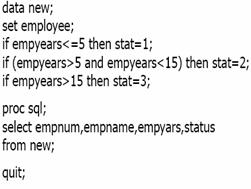
Non-procedural programming languages started in the beginning of the ‘80s. In the classic higher programming languages the programmer had to not only give in what the computer had to do and but also in what order it had to execute the instructions. In non-procedural languages this was no more necessary. Though these languages could only be used for a specific task it offered great advantages. The most known is the SQL language that is used in database applications.
An example of SQL programtext
Object-orientated languages are the most recent in development. In these laguages objects are the center of importance not the instructions. Objects can be data but since the arrival of graphical operating systems like Windows, objects can be dropdownmenu’s, fill-in fields or even whole windows. The most known object-orientated programming languages are C++, Visual Basic and Java. These languages are getting more and more popular because they are platform-independent, which means they can function on different operating systems. This is very handy for applications via internet or a computernetwork with different types of OS.
 an example of programming in Visual Basic.
In the cold war during the ‘60s the threat of a nuclear missile attack was real. The US army forces had 10’s of computers all over the USA with vital army information. If one of those computers was to be nuked, this information would disappear, what would result in a weakness of the US defense system. The solution was to be settled by ARPA(Advanced Research Projects Agency) in 1968 and decommissioned in june 1990. In 1969 the first computers are to be interconnected and ARPA developed during the ‘70s the TCP/IP-protocol. This open protocol for datacommunication via networks would soon be joined in by universities and big companies. And thus the internet as we know it was born. In 1984 the US army stopped it’s cooperation with ARPA and this was to die slowly in 1990. But then the internet had taken over.
In the ‘90s the internet knew a real boom, since small factories, schools and everybody could join it. The world wide web was born.
You really want to know? Look at this guy, Steve Jobs (see
5.5
), presenting his fastest PC of the world the G5 (QuickTime 6.3 needed)
here http://stream.qtv.apple.com/events/jan/macworld/2005/macworld_hi_300_100_56_ref.mov
and think about what the others could do…sounds promising doesn’t it? Yeah,
the future is bright!!
abacus, 2
AMD, 15
Apple-Macintosh, 15
Arithometer, 3
ARPA, 17
Assembler, 8
Atanasoff, 5
Babbage, 3
BASIC, 9
Blaise Pascal, 2
Boole, 4
C++, 16
COBOL, 5
Common Business Oriented Language, 8
Compaq, 15
COMPILER, 8
Cyrix, 15
Dell, 15
EDVAC, 6
ENIAC, 5
FORTRAN, 8
Hard Disk, 13
IBM XT, 15
Integrated Circuit, 11
INTEL, 15
invention of the transistor, 7
Java, 16
Kilby, 11
microprocessor, 12
Microsoft, 15
mouse, 12
Operation Systems, 11
PASCAL, 10
PC, 14
SQL, 16
Stepped reckoner, 2
TCP/IP-protocol, 17
Texas Instruments, 11
The Tabulating Machine Company, 4
UNIVAC, 6
Visual Basic, 16
Von Neumann, 6
world wide web, 17
[1] Computers like C/PM machines, PET, TRS-80, MITS, Altair, Commodore, Apple, HP, Sinclair, Zenith, Atari, Xerox, Lanier, Kaypro, Health and others ran variations of BASIC, mostly from Microsoft (also in its infancy). Most were ROM based and most were Z-80 CPU based; all were 8 bit machines. Many had only 4KB of RAM memory while a large computer had 64KB. While the language was growing, most computers were foppy-disk based or cassette tape based. The popularity grew because BASIC was somewhat easy to learn and to use. Non-computer people became programmers to some degree. Basic, since Microsoft accepted the role of heading up BASIC development for a flagship user language, has grown to a full fledged language that is used more then any other computer language. The current Microsoft version for Windows is Visual Basic. Revision 6 in mid-2000 is still current and it’s still 99% backwards compatible in instruction form with the original MBASIC from Microsoft; quite an accomplishment in our book. In th year 2000 more software is written in Visual Basic than any other language for any computer. Visual Basic is the backbone of the Visual Development Suite that features several languages written or re-written by Microsoft for Windows enviroments. The later versions of DOS had a version of BASIC called QBASIC with it. BASIC is also available from several other vendors and comes in both interpretive and compiled versions. Since the introduction to BASIC on microcomputers, the usage on mainframes and microcomputers has grown significantly. There is some version of BASIC available for every computer marketed. Simple BASIC program ‘HELLO WORLD’
10 PRINT ‘HELLO WORLD’
20 END
